
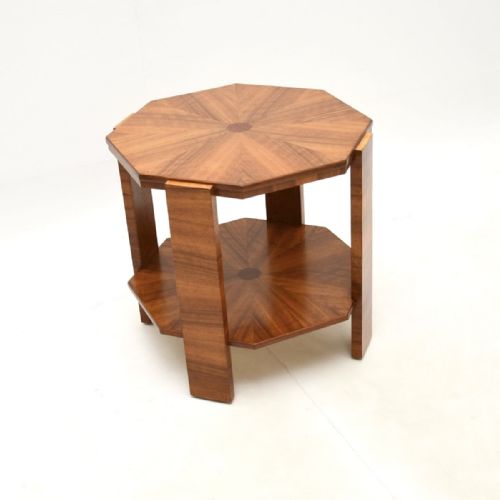


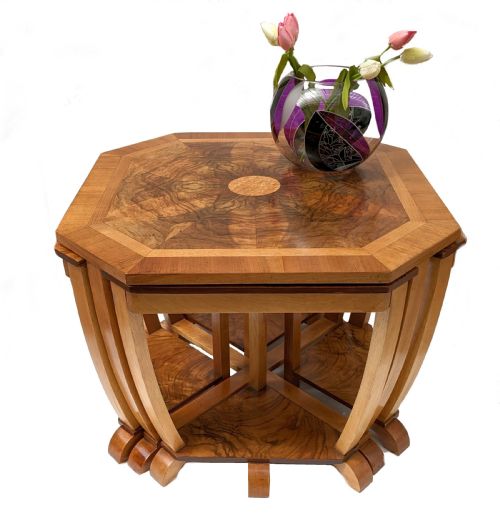


A 2026 Guide by Sellingantiques
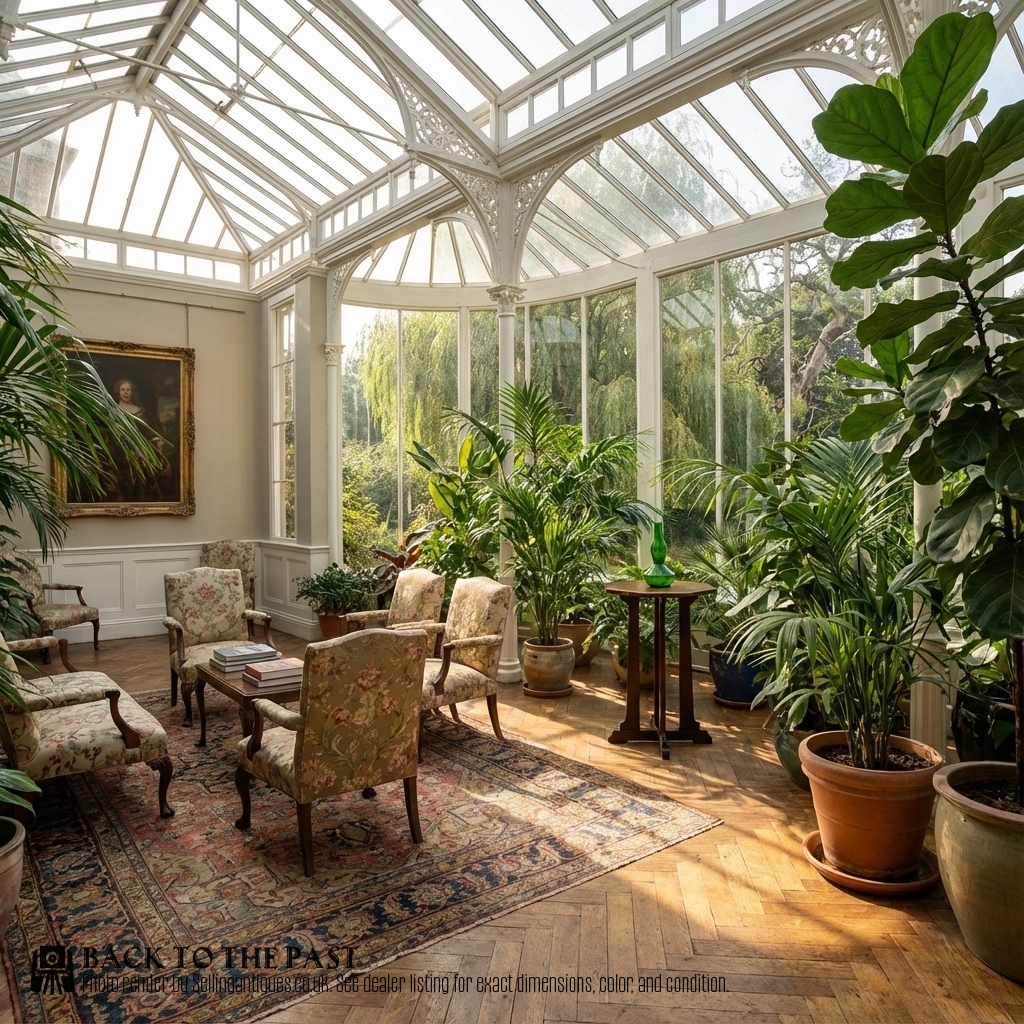
Cotswold School Octagonal Rosewood Occasional or Lamp Table, Circa 1900, 1900
Priced at £495 from Surrey Antiques by Gary J Hall
Popularised during the nineteenth century to serve a growing middle class looking to furnish new suburban homes.
The Victorian era saw antique octagonal tables shift from grand library centrepieces to much smaller, lighter parlour fixtures designed for cramped spaces.
Look for early examples designed specifically for cards with green baize surfaces.
Moorish and Gothic revival movements often favoured this complex eight-sided shape for drawing rooms, matching the busy architectural details of the wider interior scheme.
Used heavily as display surfaces for oil lamps before the arrival of electric lighting changed how people lit their homes.
Gillows of Lancaster stamped several robust octagonal library tables during the Regency period.
Ebonised Anglo-Japanese versions produced by Collinson and Lock to designs by E.W. Godwin.
Search for the stamp of Liberty & Co. Their late Victorian Moorish designs often feature intricate turned screens and small gallery tiers below the main top.

Octagonal Aesthetic Movement Table, 1900
Priced at £790 from Baggott & Co.
The 2026 retail price guide for Antique Octagonal Tables is drawn from a proprietary archive of over 1.1 million retail prices indexed by Sellingantiques since 2003. This guide relies exclusively on their own internal data; no external sources or auction records are used.
Analysing nearly 25 years of UK antique market history alongside current retail values, the data indicates that typical UK retail prices for Antique Octagonal Tables range between £400 and £2,600. Entry-level prices generally fall under £400 and premium examples upwards of £2,600.
A central pillar resting on a platform base or a tripod is typical for this form.
Frieze drawers fitted seamlessly into the alternating faceted sides. This allowed makers to provide concealed storage without breaking the continuous geometric line of the apron.
Notice the heavily turned legs on later aesthetic movement pieces imitating bamboo.

Late C19th Octagonal Walnut ‘Reformed Gothic’ Style Walnut Centre or Library Table Retaining the Original Tooled Moroccan Leather Inset Top., 19th Century
Priced at £1,200 from M Lees and Sons
Earlier cabinetmakers cut the eight-sided top from solid timber planks jointed together with hidden dowels.
Expect to see complex veneering techniques. Craftsmen had to match the grain carefully to cover the sharp angles without the timber splitting over time.
Turned underframes with pegged mortise and tenon joints replacing the earlier pedestal bases in later decades.
"The shape allows more people to sit closely together than a standard square frame permits."
"Count the drawers. Many makers included hidden compartments in the alternating blind frieze panels to maintain symmetry while offering secret storage."
"Built specifically to fit neatly into the bay windows of Victorian suburban villas."
Based on almost 25 years of Sellingantiques UK antique market data, Antique Octagonal Tables appeared 1737 times (out of 1,100,000 antiques) which gives it a rarity score of 71/100.
This score measures scarcity within the Sellingantiques archive only and is not a survey of the entire antiques market, so these statistics may not be indicative of the general availability of Antique Octagonal Tables elsewhere.
You have to address the main joint. The block connecting the pillar to the tabletop usually relies on a large wooden thread or long iron bolts. Over time the wood shrinks and the glue doesn't hold.
Taking it apart is the first step. The old animal glue needs cleaning off before cramping it back together with fresh adhesive. Sometimes a cabinetmaker will need to pack the joint if the shrinkage is bad.
Yes, the leg arrangement alters the function. Tables with a single central column were often used as centre tables. People could pull chairs right up to the edge without banging their knees on the legs.
Four-legged versions usually served as occasional tables. They sat against a wall or in a window bay holding lamps and plants. The legs provided stability for heavy items but made seating awkward.
Start with a damp cloth wrung out until it is nearly dry. Wipe away the surface dust gently. Do not leave sitting water on the veneer.
Apply a good quality beeswax polish once or twice a year. Rub it in sparingly with a soft cloth and buff it off.
Most nineteenth-century tables left the workshop with those castors attached. Furniture of that period was heavy and rooms were rearranged frequently. Servants needed to roll pieces aside to clean the carpets.
It is common to find replacement castors. The original brass wheels wore down or snapped off at the pin. If they match the style of the leg they're likely original to the piece.
Please note: This Antique Octagonal Tables guide and its associated pricing data are provided for general informational purposes only. It does not constitute formal financial, investment, or appraisal advice and should not be relied upon as the sole basis for any commercial activity, purchasing, or sales decisions. Sellingantiques.co.uk accepts no liability for any actions taken in reliance on this information. Always consult with a qualified professional or independent appraiser.
