

A 2026 Guide by Sellingantiques
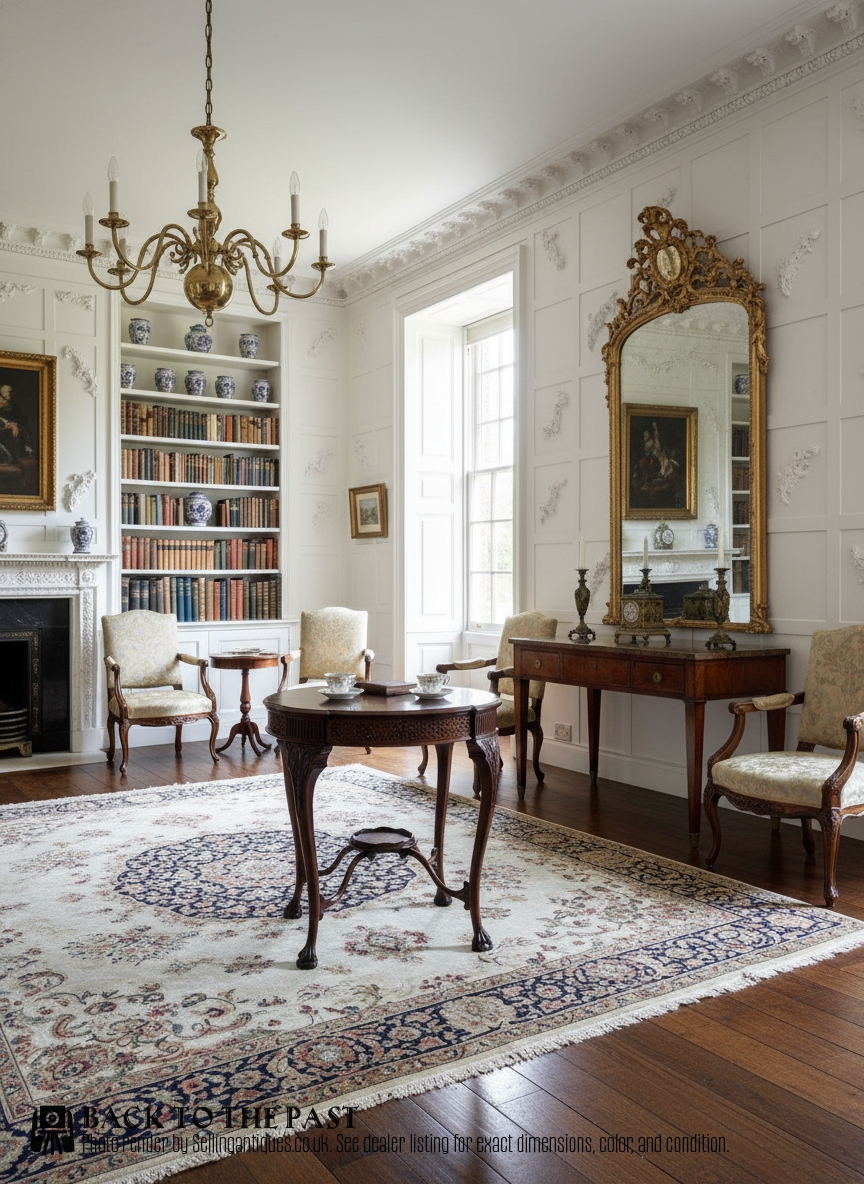
Quality Antique 'Chippendale Revival' Mahogany Centre Table
, 1880
Priced at £1,285 from London City Antiques
Eighteenth-century floor plans shifted to bring furniture away from the walls. Antique centre tables emerged to anchor these open spaces.
During the Regency period they became focal points in libraries and drawing rooms. Books and lamps sat on them.
Look at the social function. Guests gathered around these free-standing pieces to talk or play cards in wealthy households.
Victorian layouts demanded heavier forms to support large displays of ornaments and floral arrangements in the middle of the parlour.
Gillows of Lancaster produced hundreds of solid mahogany versions during the late Georgian and Regency periods. Their stamp sometimes sits on the drawer edge.
Thomas Hope designed elaborate Egyptian-influenced forms in the early nineteenth century. Surviving examples feature heavy bronzed mounts and paw feet.
Keep an eye out for George Bullock. He made spectacular oak and brass marquetry examples between 1810 and 1818.
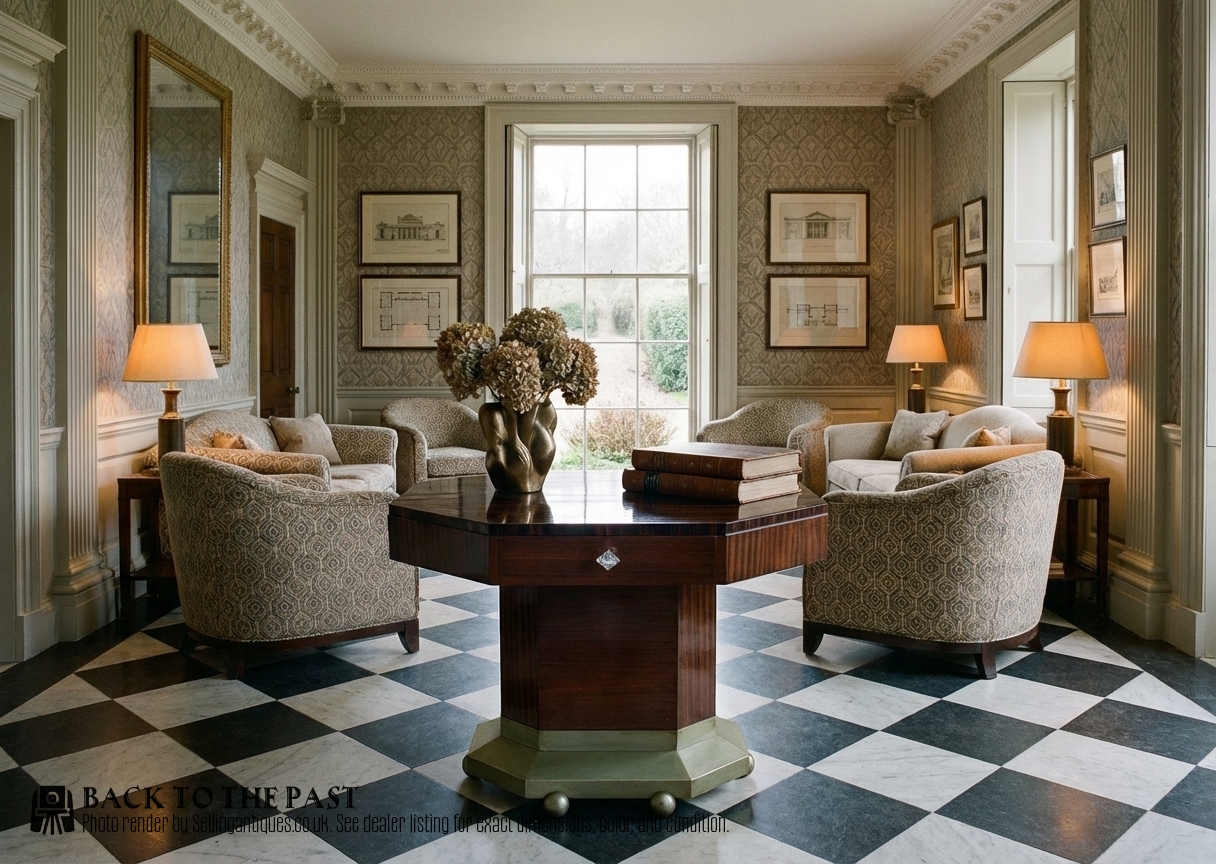
Art Deco Modernist Centre Table in Ebony Macassar, Circa 1935, 1930
Priced at £1,550 from Art Deco World
The 2026 retail price guide for Antique Centre Tables is drawn from a proprietary archive of over 1.1 million retail prices indexed by Sellingantiques since 2003. This guide relies exclusively on their own internal data; no external sources or auction records are used.
Analysing nearly 25 years of UK antique market history alongside current retail values, the data indicates that typical UK retail prices for Antique Centre Tables range between £1,000 and £5,500. Entry-level prices generally fall under £1,000 and premium examples upwards of £5,500.
Finished edges run around the entire perimeter. An antique centre table has no flat back intended to sit flush against a skirting board.
Base structures usually feature a central column or pillar. This allows people to sit around the piece without knocking their knees against corner legs.
Castors often sit under the feet. Servants used these brass wheels to move heavy tables across thick carpets when clearing the floor.
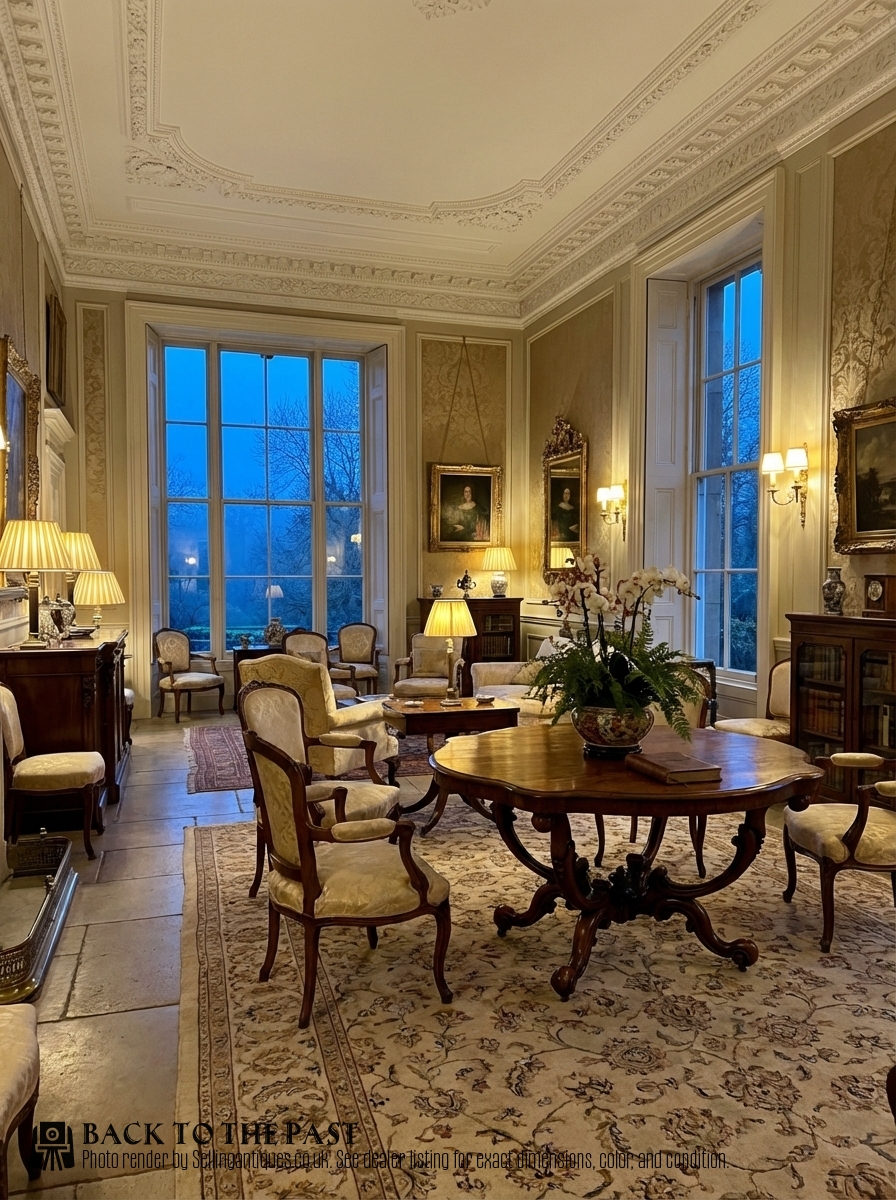
Outstanding Quality Antique Victorian Rosewood Centre Table, 1880
Priced at £4,950 from Unique Antiques by Emma Jade
Early nineteenth-century cabinetmakers used thick saw-cut veneers. They applied these over solid pine carcases to create complex grain patterns.
Examine the central pedestal joints. Heavy threaded wooden dowels secure the main column firmly to the base block.
Carved detailing requires dense timber. Craftsmen worked solid mahogany by hand to shape the heavy acanthus leaves seen on Regency bases.
"Many feature hidden compartments built straight into the frieze. The drawers pull out smoothly using concealed grips underneath instead of brass handles."
"Some heavy tops detach from the base. Wooden blocks and brass latches let the owners dismantle them to move between rooms."
"The tilt-top versions function as sound baffles. Placed upright in a corner they bounce conversation back into a large echoing hall."
Based on almost 25 years of Sellingantiques UK antique market data, Antique Centre Tables appeared 7426 times (out of 1,100,000 antiques) which gives it a rarity score of 23/100.
This score measures scarcity within the Sellingantiques archive only and is not a survey of the entire antiques market, so these statistics may not be indicative of the general availability of Antique Centre Tables elsewhere.
Use a soft cloth dampened with a weak solution of warm water and mild soap. Wring it out well before wiping the surface.
Dry the wood immediately with a clean microfibre cloth. Never leave standing water on old French polish or wax finishes.
Most pedestal bases have a thick threaded wooden dowel or a metal rod running down the centre. If the timber shrinks over time, this connection loosens.
You can often tighten the hidden bolt under the base block with a spanner. Sometimes a restorer needs to pack the joint with a thin timber wedge to make it rigid again.
Most bases handle heavy books without any trouble.
Just keep the weight balanced near the middle.
Most antique centre tables sit slightly lower than standard dining furniture. The deep frieze that runs around the edge usually blocks high chair arms from sliding underneath.
They work better with low-backed nursing chairs or stools pulled up beside them. Measure the clearance from the floor to the bottom edge if you plan to use it for dining.
Please note: This Antique Centre Tables guide and its associated pricing data are provided for general informational purposes only. It does not constitute formal financial, investment, or appraisal advice and should not be relied upon as the sole basis for any commercial activity, purchasing, or sales decisions. Sellingantiques.co.uk accepts no liability for any actions taken in reliance on this information. Always consult with a qualified professional or independent appraiser.
