
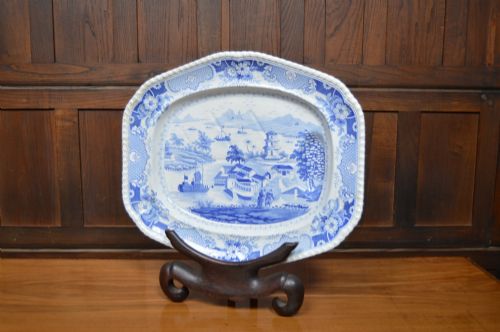


A 2026 Guide by Sellingantiques

Superb Early 20thc Chinese Blue & White Ming Dynasty Style Porcelain Teapot Ewer, 1920
Priced at £390 from Artsonline
Middle Eastern potters first combined cobalt with white slip in the ninth century.
Chinese kilns refined the technique during the Yuan dynasty. They secured imported cobalt to decorate porcelain destined for Middle Eastern markets, mastering high-fired underglaze decoration.
Look at the seventeenth-century shipping records. European merchants brought back millions of pieces to meet soaring demand.
Printed patterns on earthenware eventually emerged from British factories. Mass production in Staffordshire changed who bought decorated plates and allowed ordinary households to own matching sets.
Josiah Spode perfected the underglaze blue transfer printing process around 1784.
Jingdezhen kilns dominated Chinese production from the Ming dynasty onwards. They supplied both the imperial court and the heavy export trade for centuries.
De Porceleyne Fles operated in Delft from 1653. They made massive tin-glazed chargers and tulip vases for wealthy Dutch merchants wanting to mimic imported porcelain.

Antique Chinese Blue and White Porcelain Ginger Jar, 1850
Priced at £800 from Mark Jones Antiques
The 2026 retail price guide for Antiques Blue And White is drawn from a proprietary archive of over 1.1 million retail prices indexed by Sellingantiques since 2003. This guide relies exclusively on their own internal data; no external sources or auction records are used.
Analysing nearly 25 years of UK antique market history alongside current retail values, the data indicates that typical UK retail prices for Antiques Blue And White range between £200 and £1,900. Entry-level prices generally fall under £200 and premium examples upwards of £1,900.
Trapping the pigment beneath a clear glassy layer protects the pattern. This underglaze method stops the design rubbing off.
Transfer prints often show a faint seam. You will notice where the tissue paper sections meet on curved shapes like jugs, leaving a small gap or overlap.
Check the borders for variation. A hand-painted band changes in spacing and line thickness across the surface of the plate.
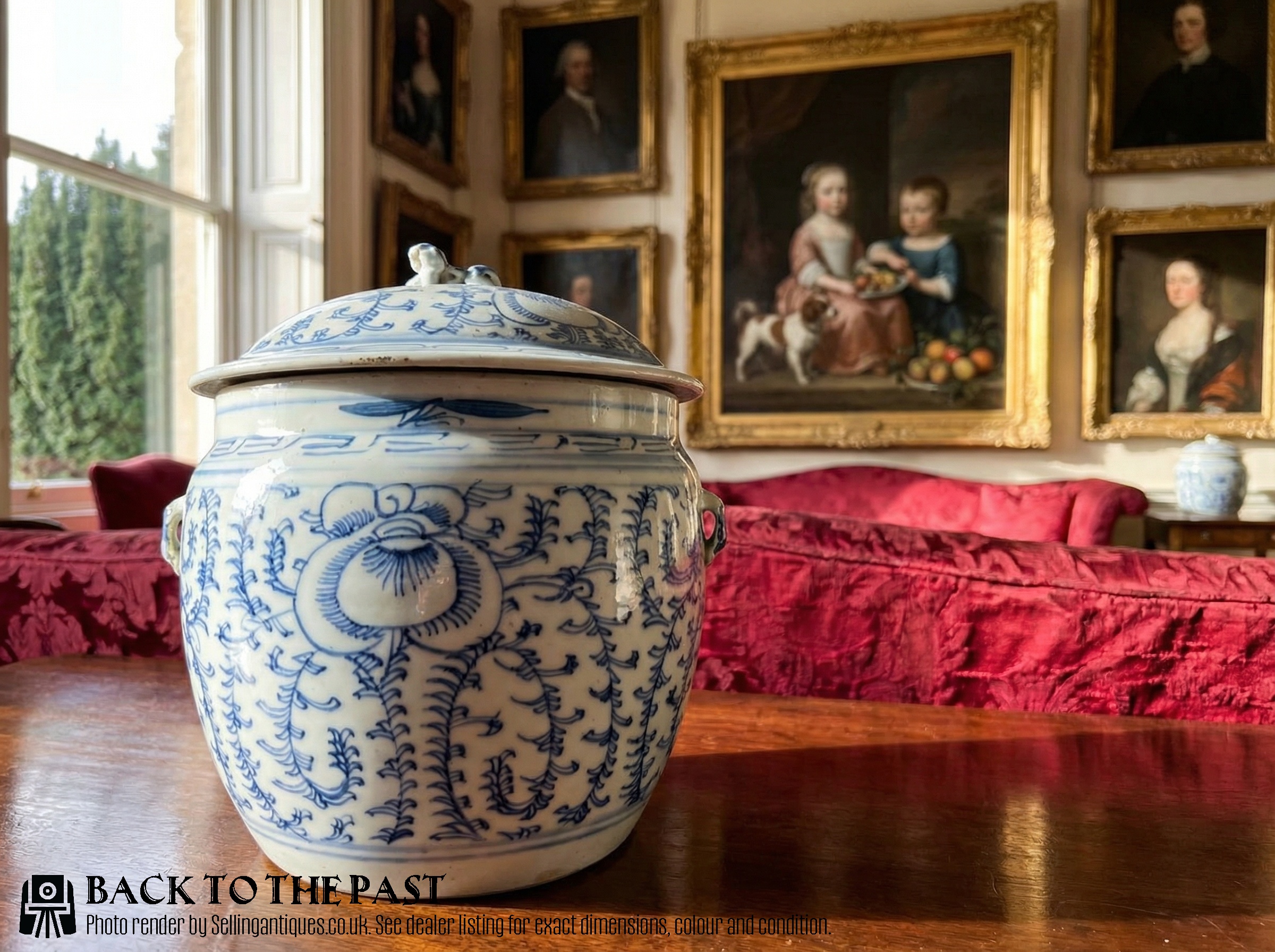
Antique Chinese Blue and White Porcelain Kamcheng Jar, 19th Century
Priced at £285 from Antique and Unique
Early decorators painted every leaf and border by hand in the workshop.
Engraved copper plates changed the Staffordshire trade. Printers rubbed cobalt ink into the metal lines before pressing tissue paper against it.
The paper transfer went directly onto the porous biscuit clay. Water washed the paper away, leaving just the sharp blue design behind ready for glazing.
"Raw cobalt oxide looks black before it enters the kiln."
"Some patterns feature tiny hidden initials. The engraver worked their own name into the background foliage of the copper printing plate just for fun."
"Smalts provided the blue tint used by laundresses. The same ground cobalt glass that decorated plates also kept white linen looking crisp on wash day."
Based on almost 25 years of Sellingantiques UK antique market data, Antiques Blue And White appeared 4321 times (out of 1,100,000 antiques) which gives it a rarity score of 42/100.
This score measures scarcity within the Sellingantiques archive only and is not a survey of the entire antiques market, so these statistics may not be indicative of the general availability of Antiques Blue And White elsewhere.
A blurred blue mark often indicates a flow blue piece. The makers added lime or ammonia to the kiln during firing to make the cobalt run. This masked minor printing errors and gave the pattern a softer edge.
Sometimes the mark blurs simply because the printer applied too much wet ink. You find this on cheaper domestic wares where speed mattered more than precision.
Dinner plates from the nineteenth century usually measure an inch smaller than modern ones. People ate different portion sizes back then.
Shrinkage in the kiln also affected the final size.
Those channels manage meat juices. The carver pressed the joint of beef or mutton on the flat section, and the hot fat ran down the grooves into the deep well at the end.
Servants then used a ladle to scoop up the collected juices. They poured this liquid back over the sliced meat or used it to make gravy in the kitchen.
The metal mounts hide damage. Owners rarely threw away a good piece of imported Chinese porcelain just because the rim suffered a chip. They took it to a brass worker to have a neat collar fitted over the broken edge.
This repair technique kept the jar functional. It shows how much people valued blue and white ceramics before mass production made them cheaper to replace.
Please note: This Antiques Blue And White guide and its associated pricing data are provided for general informational purposes only. It does not constitute formal financial, investment, or appraisal advice and should not be relied upon as the sole basis for any commercial activity, purchasing, or sales decisions. Sellingantiques.co.uk accepts no liability for any actions taken in reliance on this information. Always consult with a qualified professional or independent appraiser.
