


A 2026 Guide by Sellingantiques
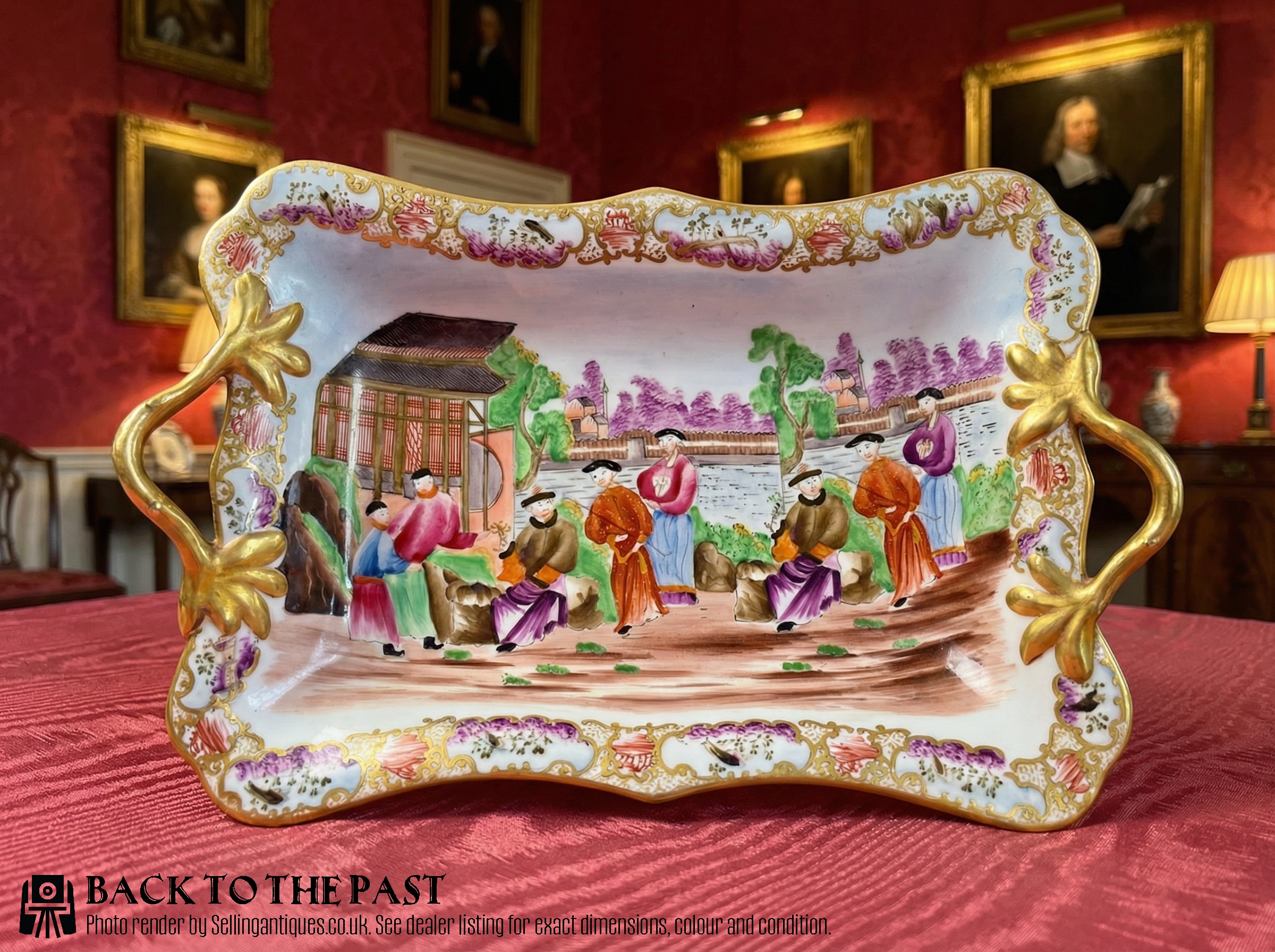
Swansea Porcelain Comport "Mandarin" Chinoiserie Pattern, C 1815-1817, 1800
Priced at £860 from Touch of Time Antiques
Dining habits shifted during the nineteenth century. The antique comport became essential for displaying desserts across the table centre.
Notice the shapes change. Earlier Georgian examples sit quite low, while Victorian versions often tower over the settings.
Sweetmeats required dedicated serving vessels to keep them away from savoury dishes.
Look for sets. Wealthy households ordered these in pairs or groups of four to balance the visual spread.
Minton produced elaborate majolica examples during the late nineteenth century. Their pieces often incorporate naturalistic figures around the central column.
Sowerby dominated the pressed glass market. They pressed their peacock head trademark into the inside of the bowl.
Wedgwood created Jasperware versions. They mounted these matte ceramic dishes on contrasting silver-plated stands.
The 2026 retail price guide for Antique Comport is drawn from a proprietary archive of over 1.1 million retail prices indexed by Sellingantiques since 2003. This guide relies exclusively on their own internal data; no external sources or auction records are used.
Analysing nearly 25 years of UK antique market history alongside current retail values, the data indicates that typical UK retail prices for Antique Comport range between £200 and £1,500. Entry-level prices generally fall under £200 and premium examples upwards of £1,500.
The bowl is usually shallow and wide. This stops softer fruits from crushing each other under their own weight.
Stems often feature central knops. They make the antique comport much easier to lift and pass down the table.
Inspect the base width. A broad foot is necessary to stop a loaded dish tipping over during service.
Glass factories pressed molten material into iron moulds. This method left seams down the sides of the stem.
Silversmiths spun flat sheets of metal on a lathe to form the bowls. They soldered cast borders on afterwards.
Look at how ceramic bodies are fired in multiple pieces. The stem and bowl were joined with slip before glazing.
"Some designs hide small matching plates underneath the bowl. These detach for individual guests to use."
"The hollow stems in some glass pieces were designed to catch light. They bounce reflections upwards into the fruit."
"Makers sometimes painted the underside of clear glass versions. The pattern shows through to the top surface."
Based on almost 25 years of Sellingantiques UK antique market data, Antique Comport appeared 494 times (out of 1,100,000 antiques) which gives it a rarity score of 91/100.
This score measures scarcity within the Sellingantiques archive only and is not a survey of the entire antiques market, so these statistics may not be indicative of the general availability of Antique Comport elsewhere.
Use a soft brush rather than a cloth to avoid snagging threads on the sharp burrs.
Clean the gaps with a cotton bud.
They held fresh or preserved fruit, nuts, and dry sweets. The height kept these dessert items safe from spilled gravy and sauces.
Hostesses often built small pyramids of grapes and apples on them. The broad flat surface supported the fruit without bruising the lower layers.
Never subject antique tableware to modern dishwashers. The harsh detergents etch older glass and strip away silver plate.
The high heat is also a risk. It causes thermal shock which snaps glass stems and crazes ceramic glazes in seconds.
Wash them by hand in warm soapy water instead.
Many plated examples have a threaded bolt running up the centre. This bolt loosens over time with repeated handling.
Turn the piece over and look under the foot. There is usually a single nut holding the whole assembly together.
Tighten it gently by hand to stop the bowl spinning.
Please note: This Antique Comport guide and its associated pricing data are provided for general informational purposes only. It does not constitute formal financial, investment, or appraisal advice and should not be relied upon as the sole basis for any commercial activity, purchasing, or sales decisions. Sellingantiques.co.uk accepts no liability for any actions taken in reliance on this information. Always consult with a qualified professional or independent appraiser.
