36,728  PAGES BROWSED TODAY PAGES TODAY • 118 ANTIQUES UPLOADED TODAYNEW ARRIVALS
GIFTS
118 ITEMS ADDED TODAY
Sort Order
Items Per Page
Browse Categories
Sort order
Items per page
ID #SA983349
SOLD
Email Phone
Save
1866 Reuters Commemorative Anglo Prussian Telegraph Cable Sample
Sold by Jason Clarke Antiques
sold SA983349
Sorry, but this item has been sold.
Jason Clarke Antiques

Jason Clarke Antiques

Sellingantiques Verified Since Jul 2015
Browse dealers 78 items
Id #SA983349
PDF SHARE
SAVE

1866 Reuters Commemorative Anglo Prussian Telegraph Cable Sample

19th century
Sold 9 November 2024 · Jason Clarke Antiques
This “1866 Reuters Commemorative Anglo Prussian Telegraph Cable Sample” found a buyer.

It was listed by Jason Clarke Antiques. Sold pieces stay on Sellingantiques as a record of what has passed through, and the next one is rarely far away.

Description

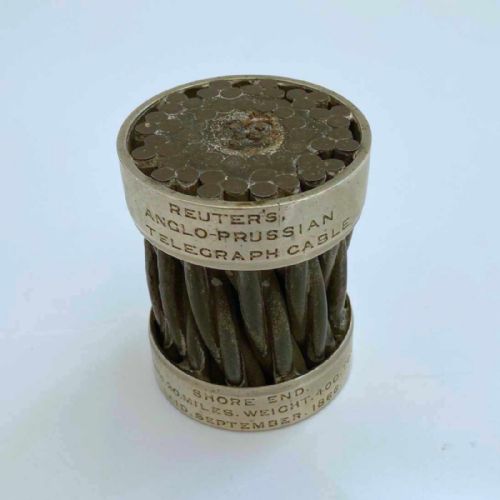
For sale, a very rare and large commemorative shore end section of 1866 Anglo-Prussian telegraph cable by The Reuters Telegraph Company Limited.

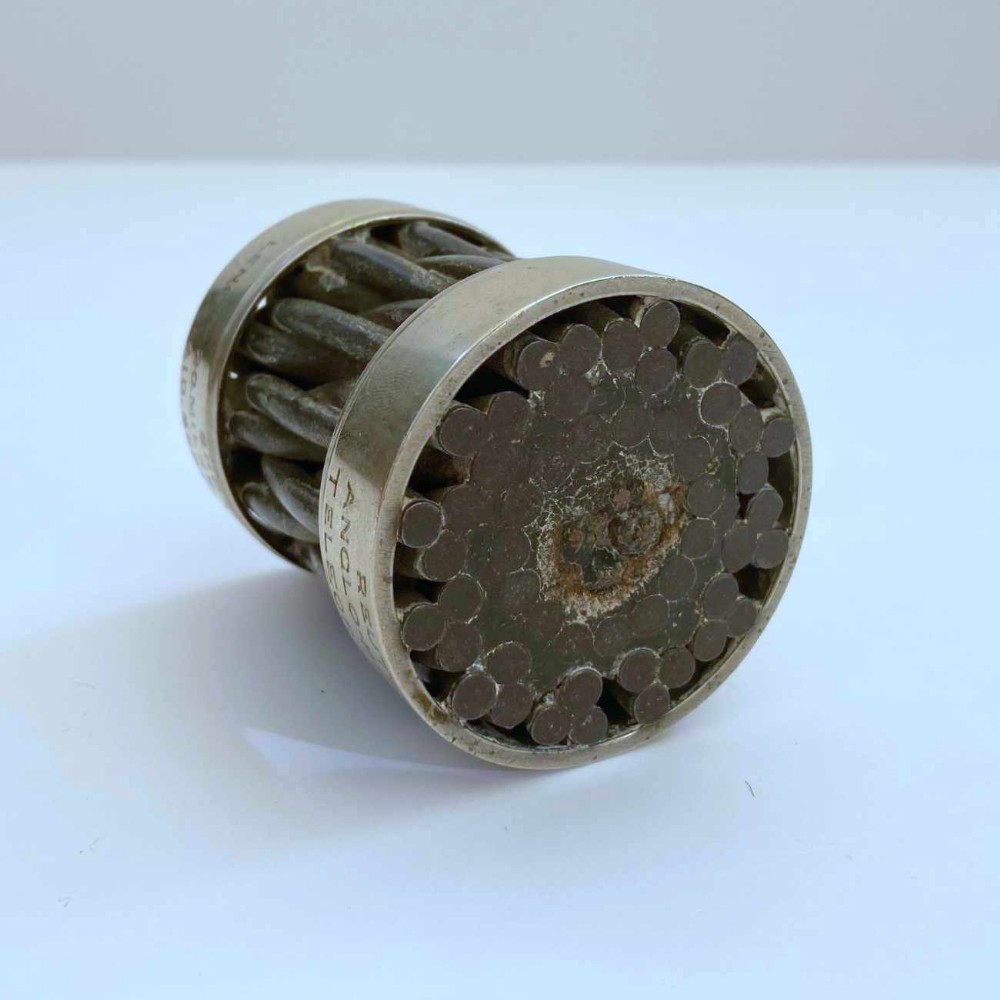
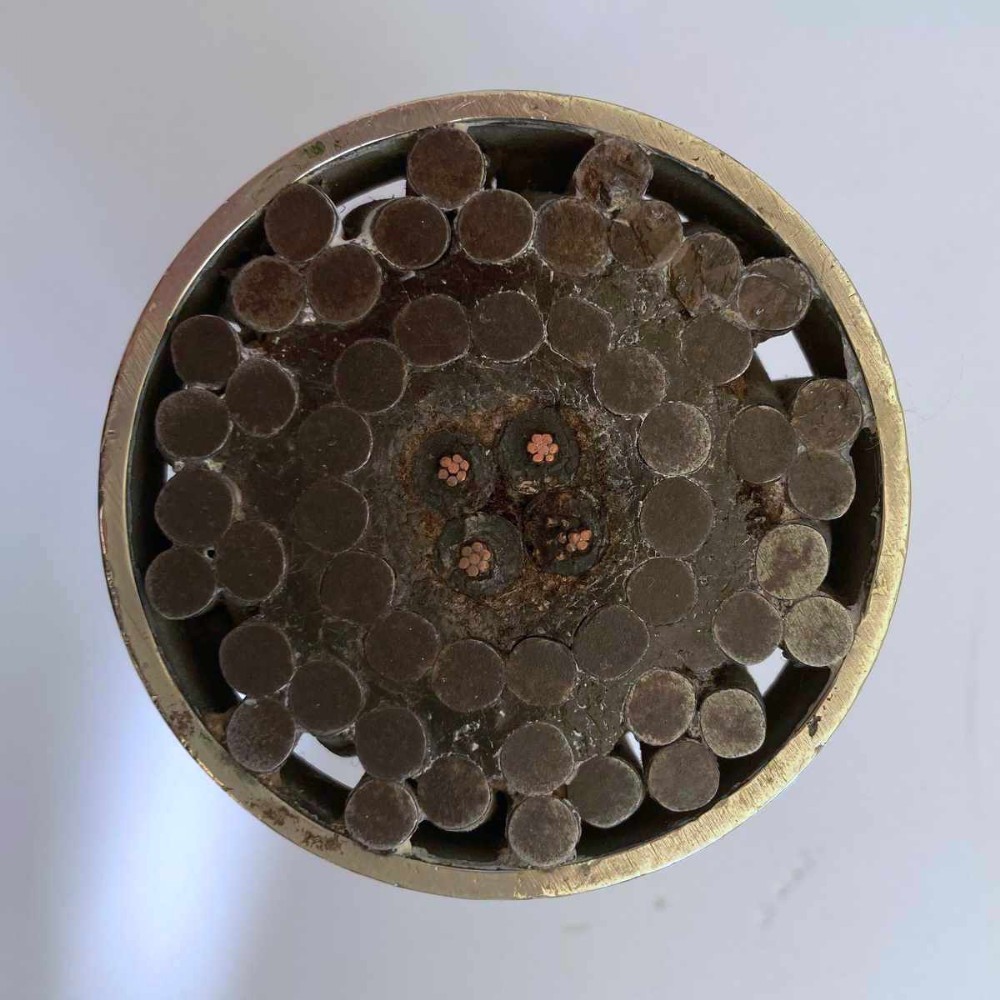
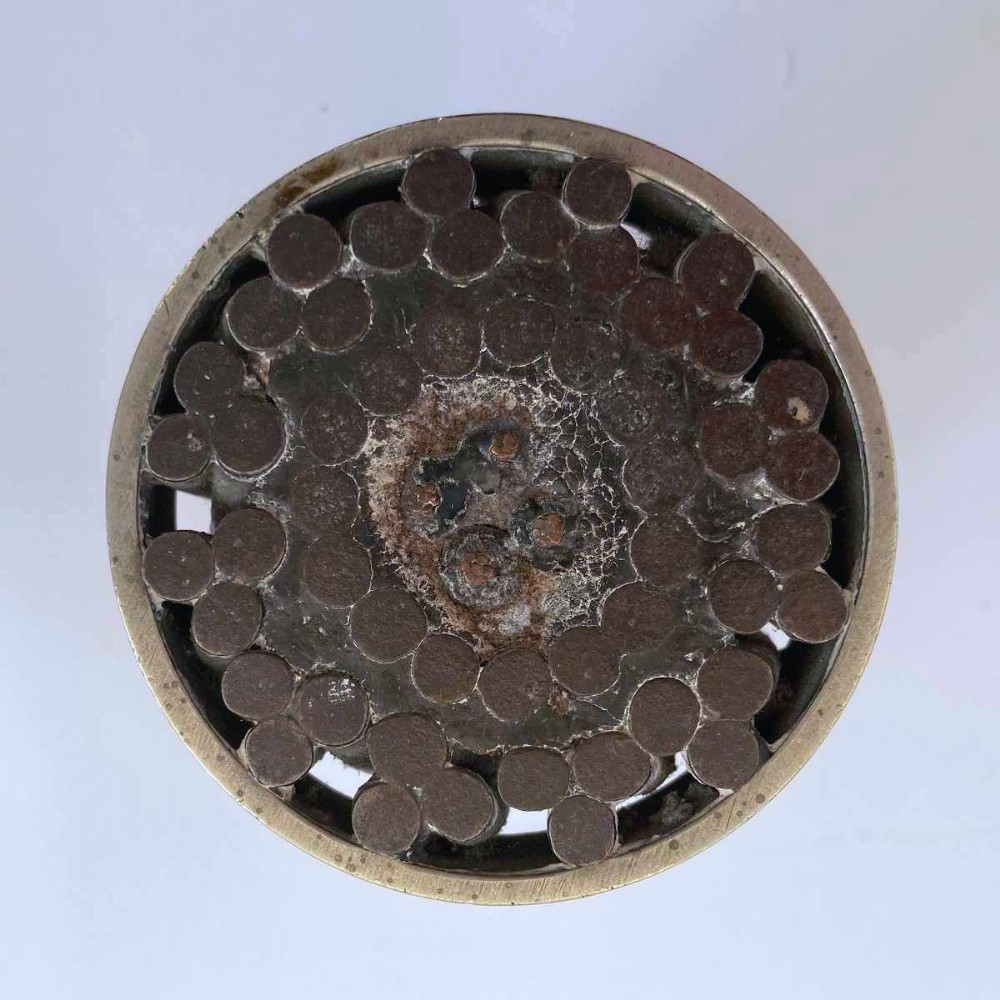
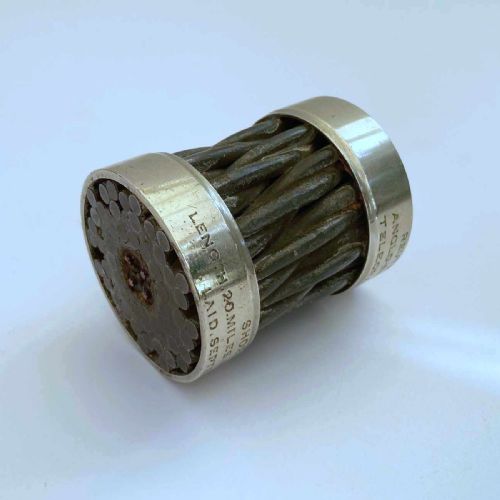
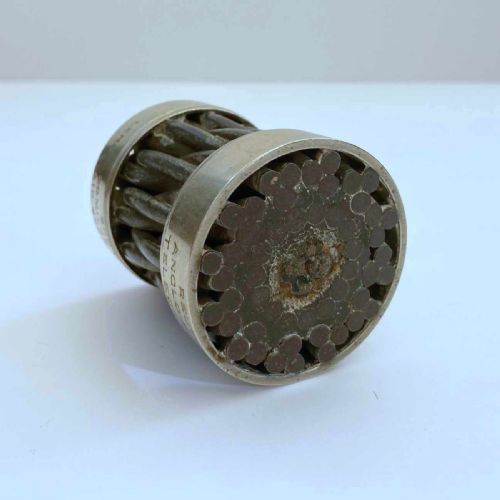
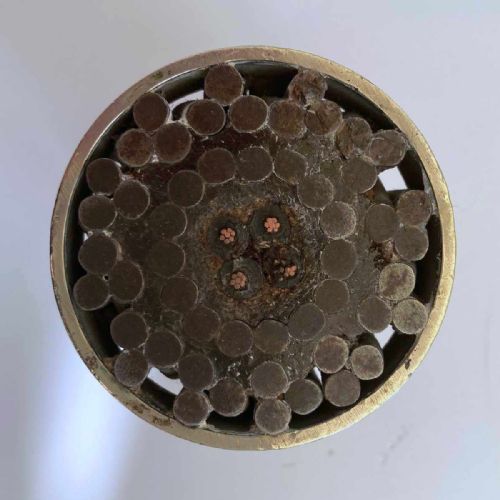
This museum quality piece is comprised of four copper conductor core surrounded by gutta percha and tarred hemp. The shore end cable was also surrounded with numerous galvanised iron wires which would have been further wrapped in hemp.
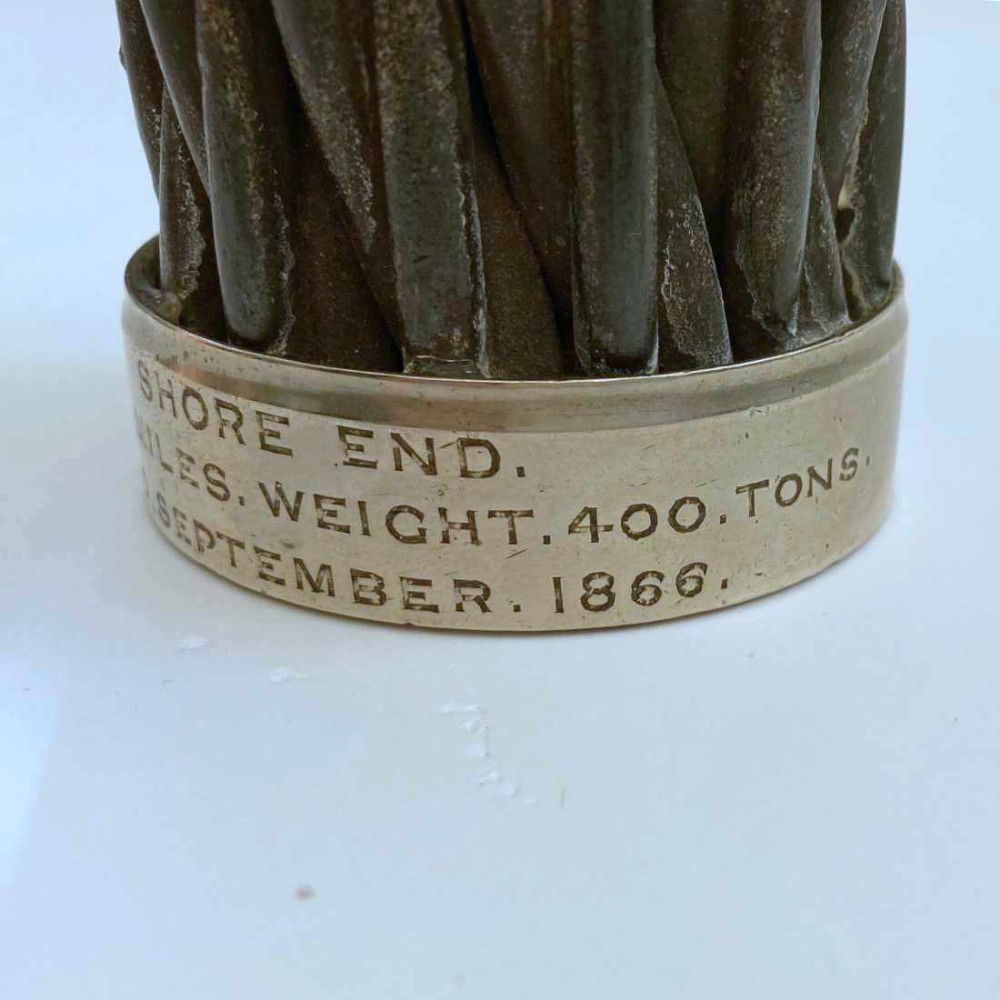
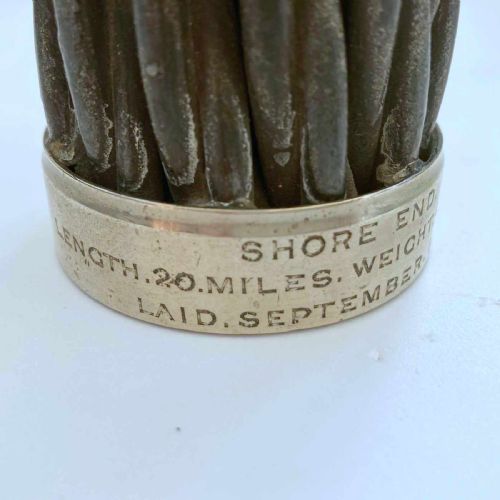
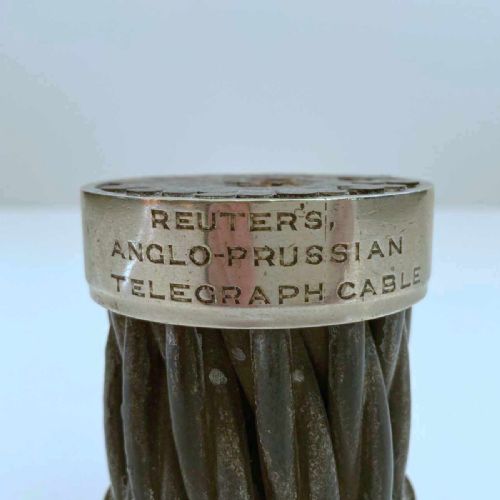
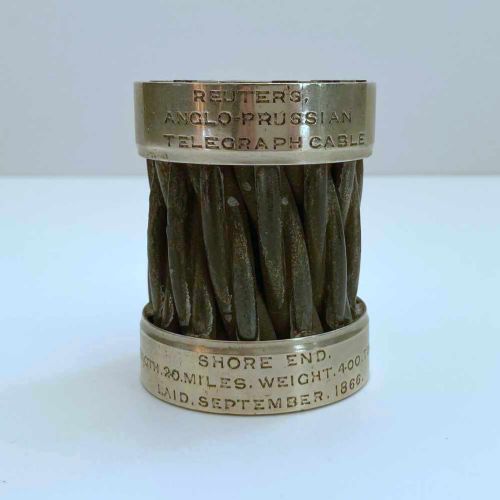
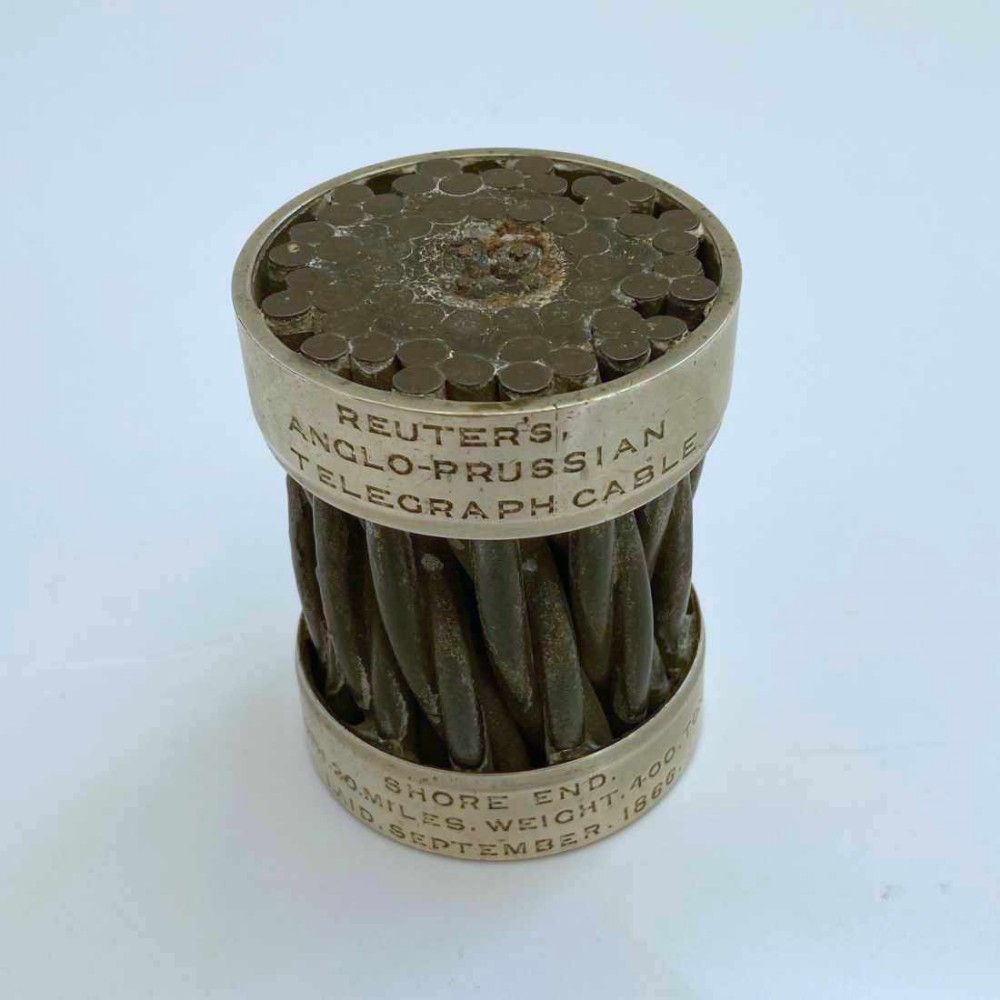
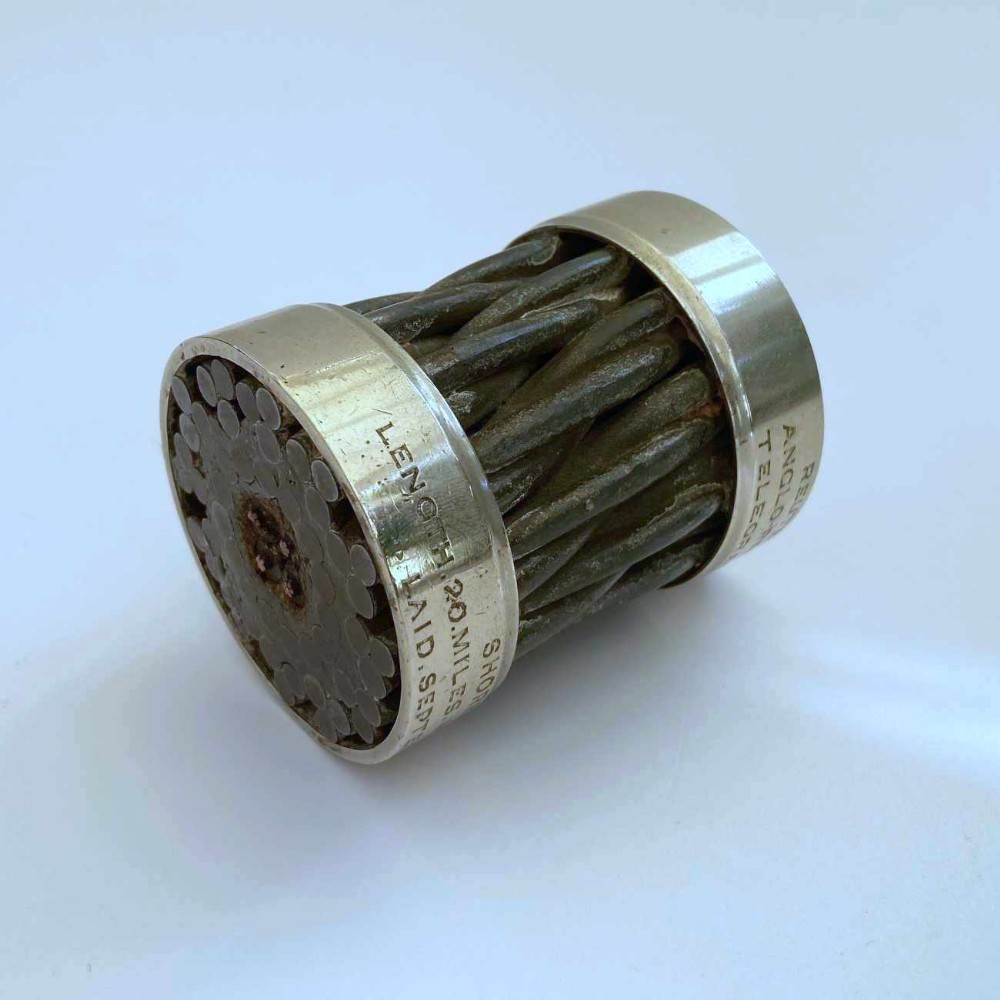
A stamped ferrule or collar surrounds the tip and the base.

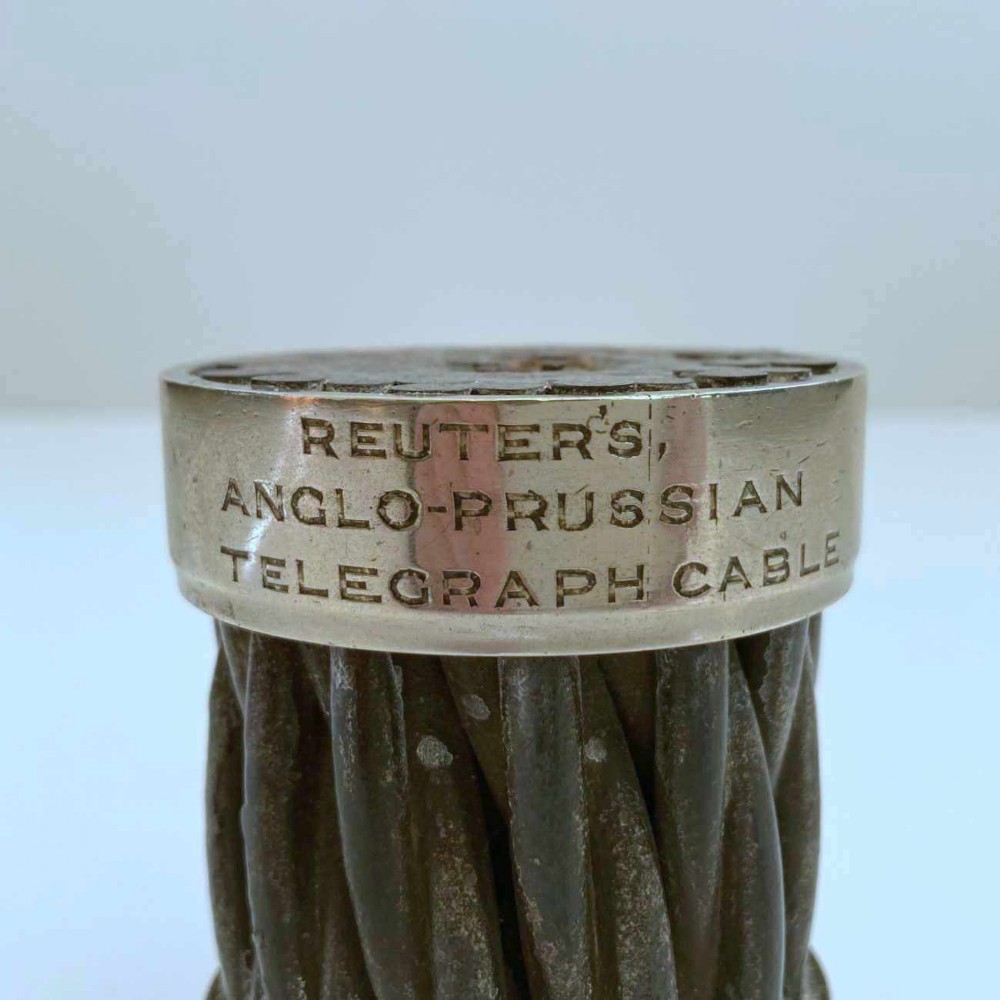
The tip states: “Reuters, Anglo-Prussian Telegraph Cable”

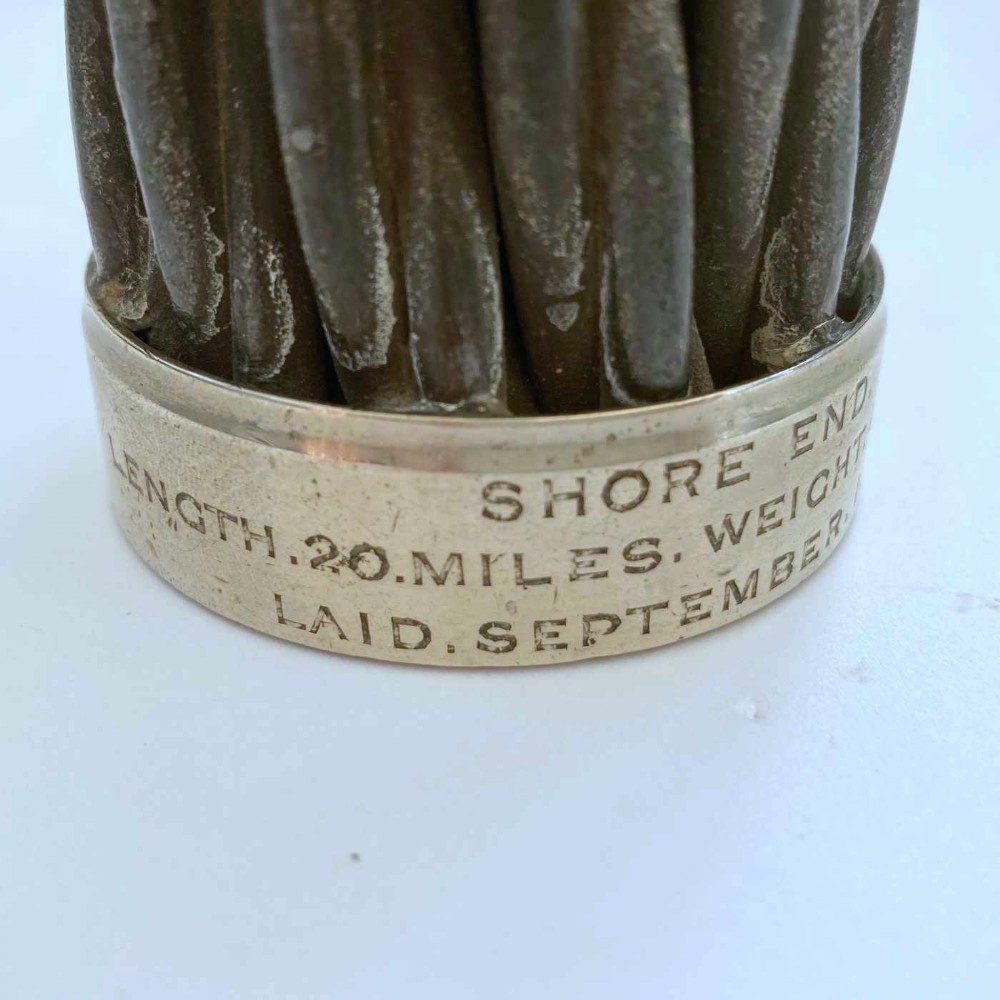
The base states: “Shore End. Length 20 miles, weight 400 tons. Laid September 1866”

The Reuters Telegraph Company Limited was formally established in 1865 by Paul Julius Reuter. Born in Germany in 1816, Reuter’s initial career was in banking but in 1847 he began a short-lived partnership with Joseph A Stargardt after the pair took over the Berlin publishing business of Johann Carl Klage. The company was involved in the publishing of radial pamphlets around the time of 1848 revolution which swept through Europe, and it is likely that this activity saw the departure of Reuter, who moved to Paris in the same year to take up a position in the news agency of Charles-Louis Havas.
Shortly after, Reuter set up his own news agency in Aachen on Germany’s western border with Belgium and the Netherlands and began utilising pigeons to carry news and financial stock exchange updates from all surrounding countries. With such a central location between four different European nations, he was able to carry and transmit news to all capitals much faster than all other means of transport.
With the rise of telegraphy and the building of a telegraphic link between the UK and the continent (Dover to Calais), Reuter saw an opportunity and moved to London, setting up the Reuter Telegraphen Bureau at the Royal Exchange, London in 1851. This shrewd move allowed Reuter to carry financial news from London to the Continent and using already established relationships, the same in reverse at the quickest rates then possible. This ability soon saw numerous London newspapers subscribing to Reuter’s services and his business empire grew exponentially thereafter.
In the early 1860’s Reuter also established a telegraph station in Crookhaven, Ireland which linked directly to London. This successfully operated for a few short years by having ships returning from the US, jettisoning canisters containing the latest US news into the sea which were duly collected by Reuter and the information contained immediately passed back to London quicker than any other means available at the time. The success of the 1866 Transatlantic cable eventually surpassed this service but it provides good insight into Reuter’s extraordinary business acumen.
In the year prior to the eventual success of the Transatlantic cable (1866), Reuter finally established the Reuters Telegraph Company Ltd to raise funds for the commissioning of a new telegraph cable connecting England to Germany. This Anglo-Prussian telegraph, (the subject of this interesting object) would have allowed the company to communicate with Germany without having to channel communications through the established link from Dover to Calais. This move would presumably have allowed Reuter greater control of the flow of information and not to mention the speed with which it could be conveyed. In October of 1866, The Times reported the success of this new endeavour which ran from Lowestoft to Nordeney and was laid by the CS William Cory which had also been involved in laying the Transatlantic cable.
It is likely that the establishment of this new connection led in 1870 to the formation of the news cartel between Reuter, Havas (Reuter’s old French agency) and the German agency, Wolff. This “Ring” as it was dubbed, hived off territories for each agency but Reuter was clearly the dominant partner throughout, due to t

Physical Dimensions
Height
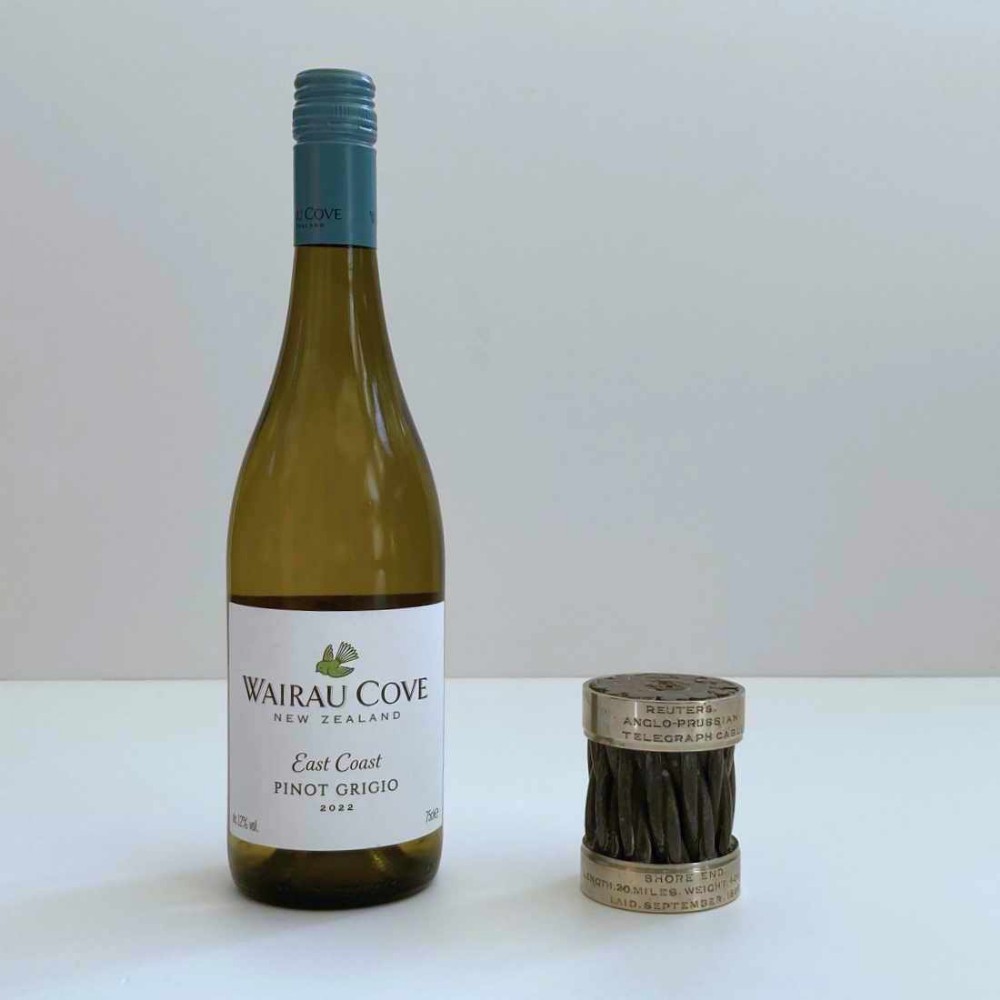
7.5cm (2.95")
Width
6cm (2.36")
Depth
6cm (2.36")
Declaration

Jason Clarke Antiques has dated this Antique Telegraph Cable to the 1860s.

Reference Numbers
Sellingantiques Reference
SA983349
Description
For sale, a very rare and large commemorative shore end section of 1866 Anglo-Prussian telegraph cable by The Reuters Telegraph Company Limited.
“
This museum quality piece is comprised of four copper conductor core surrounded by gutta percha and tarred hemp.
Jason Clarke Antiques

The shore end cable was also surrounded with numerous galvanised iron wires which would have been further wrapped in hemp.

fig 1. A short cylindrical section of an 1866 Reuters Anglo-Prussian telegraph cable, featuring inscribed silver-toned metal collars at each end enclosing twisted dark iron wires.
fig 1. 1866 Reuters Commemorative Anglo Prussian Telegraph Cable Sample

A stamped ferrule or collar surrounds the tip and the base.

The tip states: “Reuters, Anglo-Prussian Telegraph Cable”

The base states: “Shore End. Length 20 miles, weight 400 tons. Laid September 1866”

The Reuters Telegraph Company Limited was formally established in 1865 by Paul Julius Reuter. Born in Germany in 1816, Reuter’s initial career was in banking but in 1847 he began a short-lived partnership with Joseph A Stargardt after the pair took over the Berlin publishing business of Johann Carl Klage. The company was involved in the publishing of radial pamphlets around the time of 1848 revolution which swept through Europe, and it is likely that this activity saw the departure of Reuter, who moved to Paris in the same year to take up a position in the news agency of Charles-Louis Havas.

fig 2. A short cylindrical section of an 1866 Reuters Anglo-Prussian telegraph cable, featuring inscribed silver-toned metal collars at each end enclosing twisted dark iron wires.
fig 2. 1866 Reuters Commemorative Anglo Prussian Telegraph Cable Sample

Shortly after, Reuter set up his own news agency in Aachen on Germany’s western border with Belgium and the Netherlands and began utilising pigeons to carry news and financial stock exchange updates from all surrounding countries. With such a central location between four different European nations, he was able to carry and transmit news to all capitals much faster than all other means of transport.

fig 3. A short cylindrical section of an 1866 Reuters Anglo-Prussian telegraph cable, featuring inscribed silver-toned metal collars at each end enclosing twisted dark iron wires.
fig 3. 1866 Reuters Commemorative Anglo Prussian Telegraph Cable Sample

With the rise of telegraphy and the building of a telegraphic link between the UK and the continent (Dover to Calais), Reuter saw an opportunity and moved to London, setting up the Reuter Telegraphen Bureau at the Royal Exchange, London in 1851. This shrewd move allowed Reuter to carry financial news from London to the Continent and using already established relationships, the same in reverse at the quickest rates then possible. This ability soon saw numerous London newspapers subscribing to Reuter’s services and his business empire grew exponentially thereafter.

fig 4. A short cylindrical section of an 1866 Reuters Anglo-Prussian telegraph cable, featuring inscribed silver-toned metal collars at each end enclosing twisted dark iron wires.
fig 4. 1866 Reuters Commemorative Anglo Prussian Telegraph Cable Sample

In the early 1860’s Reuter also established a telegraph station in Crookhaven, Ireland which linked directly to London. This successfully operated for a few short years by having ships returning from the US, jettisoning canisters containing the latest US news into the sea which were duly collected by Reuter and the information contained immediately passed back to London quicker than any other means available at the time. The success of the 1866 Transatlantic cable eventually surpassed this service but it provides good insight into Reuter’s extraordinary business acumen.

fig 5. A short cylindrical section of an 1866 Reuters Anglo-Prussian telegraph cable, featuring inscribed silver-toned metal collars at each end enclosing twisted dark iron wires.
fig 5. 1866 Reuters Commemorative Anglo Prussian Telegraph Cable Sample

In the year prior to the eventual success of the Transatlantic cable (1866), Reuter finally established the Reuters Telegraph Company Ltd to raise funds for the commissioning of a new telegraph cable connecting England to Germany. This Anglo-Prussian telegraph, (the subject of this interesting object) would have allowed the company to communicate with Germany without having to channel communications through the established link from Dover to Calais. This move would presumably have allowed Reuter greater control of the flow of information and not to mention the speed with which it could be conveyed. In October of 1866, The Times reported the success of this new endeavour which ran from Lowestoft to Nordeney and was laid by the CS William Cory which had also been involved in laying the Transatlantic cable.

fig 6. A short cylindrical section of an 1866 Reuters Anglo-Prussian telegraph cable, featuring inscribed silver-toned metal collars at each end enclosing twisted dark iron wires.
fig 6. 1866 Reuters Commemorative Anglo Prussian Telegraph Cable Sample

It is likely that the establishment of this new connection led in 1870 to the formation of the news cartel between Reuter, Havas (Reuter’s old French agency) and the German agency, Wolff. This “Ring” as it was dubbed, hived off territories for each agency but Reuter was clearly the dominant partner throughout, due to t

Height
7.5cm (2.95")
Width
6cm (2.36")
Depth
6cm (2.36")
Date of Manufacture

Jason Clarke Antiques has dated this Antique Telegraph Cable to the 1860s.

Reference Numbers
Sellingantiques Ref
SA983349
Jason Clarke Antiques
Sellingantiques verified Since Jul 2015
Dealer Profile

You can view the stock and full dealer information on the Jason Clarke Antiques Profile Page
PDF SHARE
SAVE
A short cylindrical section of an 1866 Reuters Anglo-Prussian telegraph cable, featuring inscribed silver-toned metal collars at each end enclosing twisted dark iron wires. SOLD6+ MONTHS AGO
1 / 10
Archive I A short cylindrical section of an 1866 Reuters Anglo-Prussian telegraph cable, featuring inscribed silver-toned metal collars at each end enclosing twisted dark iron wires. SOLD6+ MONTHS AGO

1866 Reuters Commemorative Anglo Prussian Telegraph Cable Sample
Archive II A short cylindrical section of an 1866 Reuters Anglo-Prussian telegraph cable, featuring inscribed silver-toned metal collars at each end enclosing twisted dark iron wires. View II
Archive III A short cylindrical section of an 1866 Reuters Anglo-Prussian telegraph cable, featuring inscribed silver-toned metal collars at each end enclosing twisted dark iron wires. View III
Archive IV A short cylindrical section of an 1866 Reuters Anglo-Prussian telegraph cable, featuring inscribed silver-toned metal collars at each end enclosing twisted dark iron wires. View IV
Archive V A short cylindrical section of an 1866 Reuters Anglo-Prussian telegraph cable, featuring inscribed silver-toned metal collars at each end enclosing twisted dark iron wires. View V
Archive VI A short cylindrical section of an 1866 Reuters Anglo-Prussian telegraph cable, featuring inscribed silver-toned metal collars at each end enclosing twisted dark iron wires. View VI
Archive VII A short cylindrical section of an 1866 Reuters Anglo-Prussian telegraph cable, featuring inscribed silver-toned metal collars at each end enclosing twisted dark iron wires. View VII
Archive VIII A short cylindrical section of an 1866 Reuters Anglo-Prussian telegraph cable, featuring inscribed silver-toned metal collars at each end enclosing twisted dark iron wires. View VIII
Archive IX A short cylindrical section of an 1866 Reuters Anglo-Prussian telegraph cable, featuring inscribed silver-toned metal collars at each end enclosing twisted dark iron wires. View IX
Archive X A short cylindrical section of an 1866 Reuters Anglo-Prussian telegraph cable, featuring inscribed silver-toned metal collars at each end enclosing twisted dark iron wires. View X
Enlarged Archival View
Telephone 07815 046645
Location
Newbury
Berkshire
United Kingdom
Verified Since Jul 2015
Items For Sale 78
Items Sold 609
Jason Clarke Antiques
Verified Since Jul 2015
View Dealer Info
Location: Newbury, Berkshire, United Kingdom
Verified
Jul 2015
For Sale
78
Sold
609
A short cylindrical section of an 1866 Reuters Anglo-Prussian telegraph cable, featuring inscribed silver-toned metal collars at each end enclosing twisted dark iron wires.
1866 Reuters Commemorative Anglo Prussian Telegraph Cable Sample
Ref: SA983349
A short cylindrical section of an 1866 Reuters Anglo-Prussian telegraph cable, featuring inscribed silver-toned metal collars at each end enclosing twisted dark iron wires.
Detail View 1
Detail View 2
Detail View 3
Detail View 4
Detail View 5
Detail View 6
Detail View 7
Detail View 8
Detail View 9
Archival Detail
Every single antique dealer on our platform is individually approved by our internal team. We verify their professional trade history, ethical standards, and photographic quality to ensure a secure, high-standard buying environment. Upon joining, every dealer agrees to a strict 9-point code of conduct. While issues can occasionally arise, our dealers typically resolve them swiftly and directly with the buyer. In fact, since our founding in 2002, Sellingantiques has only had to step in to help resolve an issue on roughly five occasions—a true testament to the quality of our dealers and their dedication to your happiness.
Our dealers are highly experienced in packing and shipping fragile, high-value antiques. Because you are in direct contact with the dealer, you will be able to easily go through all available shipping and insurance options together to ensure your item arrives safely.
Antiques are the ultimate green purchase. By choosing historical pieces over newly manufactured goods, you completely eliminate the carbon footprint of modern mass production while preserving exceptional, timeless craftsmanship.
Written by Sellingantiques from the dealer’s photographs and listing
  • ObjectDecorative Objects
  • Period19th century
  • StyleVictorian Industrial
  • MaterialBrass, Iron, Copper, Gutta-Percha
  • ColourSilver and Bronze
  • MotifsInscribed metal collars, Twisted wire strands, Cylindrical cross-section
  • SizeH 7.5 cm (3 in) x W 6 cm (2 in) x D 6 cm (2 in)

The Anglo-Prussian telegraph cable laid in 1866 was part of the rapid expansion of submarine telecommunications connecting Britain and continental Europe during the Victorian era.

These cables typically combined copper wire cores, gutta-percha insulation, tarred hemp bedding, and an outer armour of galvanized iron wire.

Authentic pieces usually feature engraved brass presentation collars detailing the project specifications, date of laying, and manufacturing company alongside genuine patinated wire sections.

Place it on a study desk, bookshelf, or mantelpiece where its textural contrast and historical narrative can be appreciated as a conversational focal point.

Keep the object in a stable, dry environment away from direct sunlight and humidity, dusting gently with a soft dry cloth without applying harsh chemical polishes to the patinated surfaces.
items
Add keywords to the filter
Price
£100
£250000
Era
Period
Style
Material
Origin
Stock Location
Recently Added
Online Payments
Categories