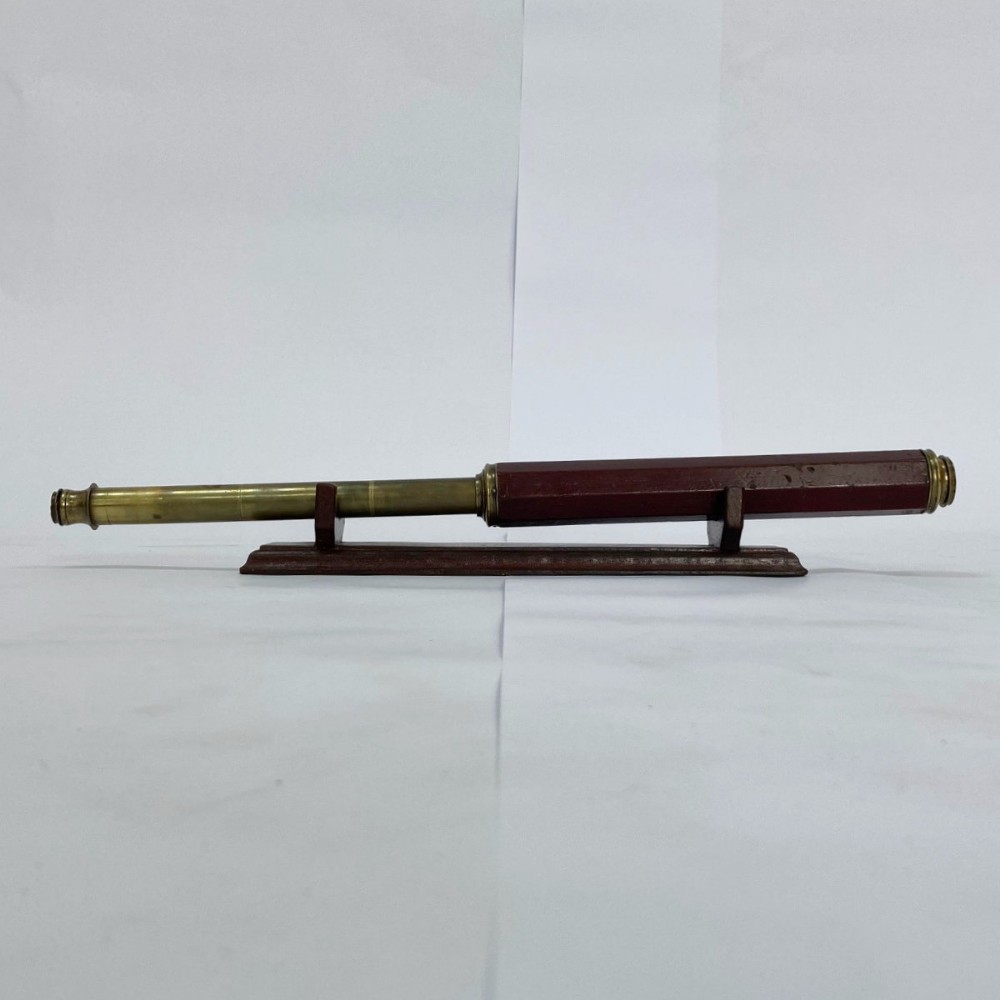
Jason Clarke Antiques has dated this piece to the 1750s.
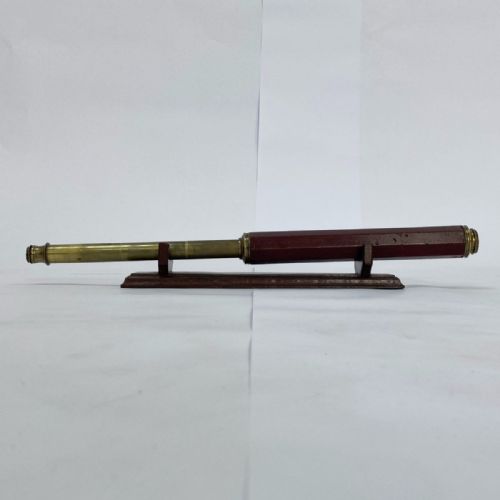
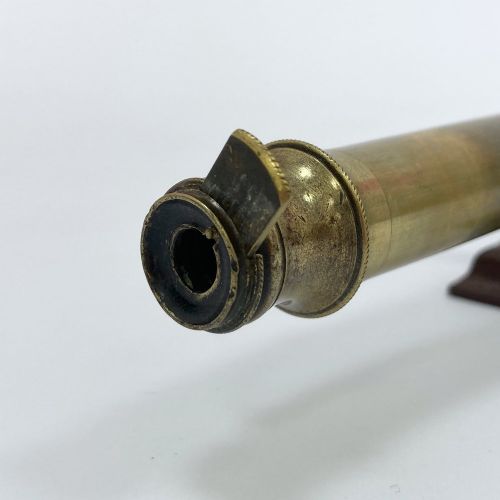
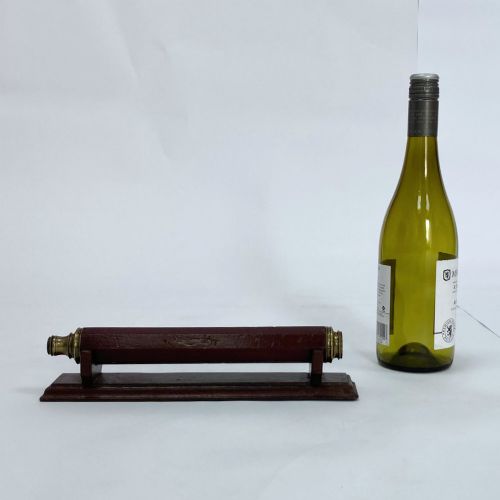
Comprised of eight individual tapered pieces of Cuban mahogany forming the eight and a half inch main barrel with brass graduated cap supporting a single draw with eighteenth century bulbous type eyepiece and original dust slide. This fascinating early eyepiece consists of a three lens combination which unlike later examples formed by brass ring capsules screwed into the barrel, are instead formed by placing a loose lens into a ferrule and with a brass ring secured over the top in order to secure its position. This simple detail is testament to early telescope design. The telescope measures eighteen inches fully drawn.
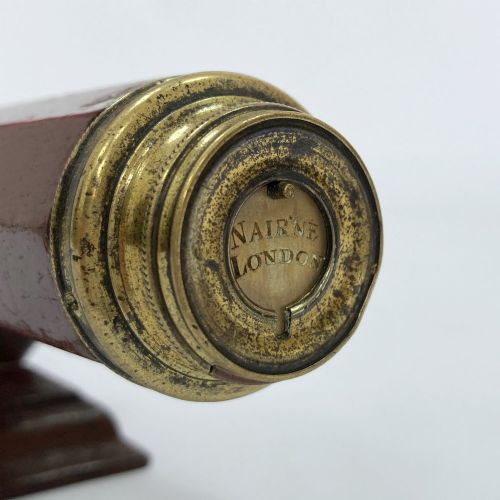
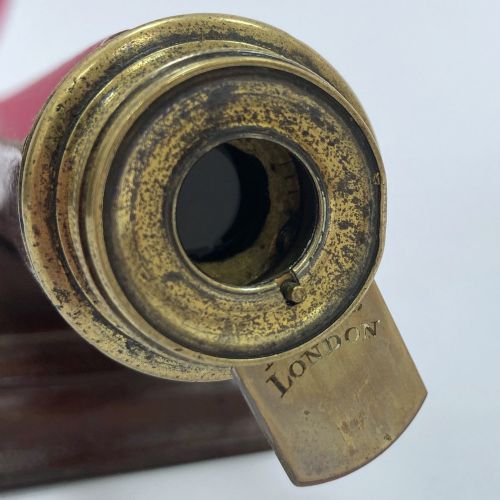
The half-inch main objective is contained within a two part capsule. The outer section includes the main dust slide engraved with the maker’s name, Nairne, London.
The single objective proving also that it is of an early non-achromatic nature. The achromatic lens was newly promoted and long argued by the Dollonds from around this period.
The maker, Edward Nairne needs little introduction, born in Sandwich in 1726 he was apprenticed at the age of fifteen to the equally famous instrument maker Matthew Loft. Having barely finished his seven year apprenticeship, Loft died in 1748 whereupon Nairne took over his Master’s business under his own name.
In 1749, he took on the first of his apprentices and eventually trained fourteen accolytes who included numerous important figures such as Jesse Ramsden, James Ayscough, James Long and of course Thomas Blunt who joined the company in 1760. Nairne was one of the most capable instrument makers of his period and he is known to have maintained correspondence with Benjamin Franklin, supplying him with a set of magnets and an achromatic telescope. He also provided a dip circle for Captain Phipp’s voyage to the Pole in 1774. His inventions also including the famous, “Nairne Patent Electrical Machine”, the first marine barometer which incorporated a thinner bore to the barometer tube between the cistern and the scale (used on James Cook’s second voyage to the South Pacific) and is even regarded as the first to have sold the pencil eraser.
During his lifetime in his own right and during the period of partnership with Blunt, Nairne held a Royal Appointment to George III, was an active contributor and Fellow of The Royal Society, became Master of the Spectacle Makers Guild and held an Appointment to the Royal Greenwich Observatory.
Given Nairne’s workload and engagements, it is unsurprising that he sought a partnership with his apprentice Thomas Blunt. It must be assumed that Blunt continued to work for Nairne for the seven years following his initial training as he is listed at Nairne’s trading address of 22 Cornhill throughout this period. There is little doubt that Blunt was the lesser partner of the relationship given the huge stature that Nairne had commanded by this point but nonetheless his skill and abilities allowed the partnership to serve all of the Appointments that were bestowed on the company and he is known to have worked with Jean Hyacinthe De Magellan on the development of his “new” barometer. In 1792, Blunt achieved the same accolade as his partner and assumed the role of Master of the Spectacle Makers Guild proving beyond doubt his position within the industry and it was a role that he continued throughout the dissolution of the partnership in 1793 and into 1794.
Little is known why such a successful partnership such as this ended. Nairne continued to trade until his retirement in 1801 at the same address of 20 Cornhill whilst Blunt set up shop next door at 22 Cornhill. It is reasonable to consider that B
Jason Clarke Antiques has dated this piece to the 1750s.
You can view the stock and full dealer information on the Jason Clarke Antiques Profile Page
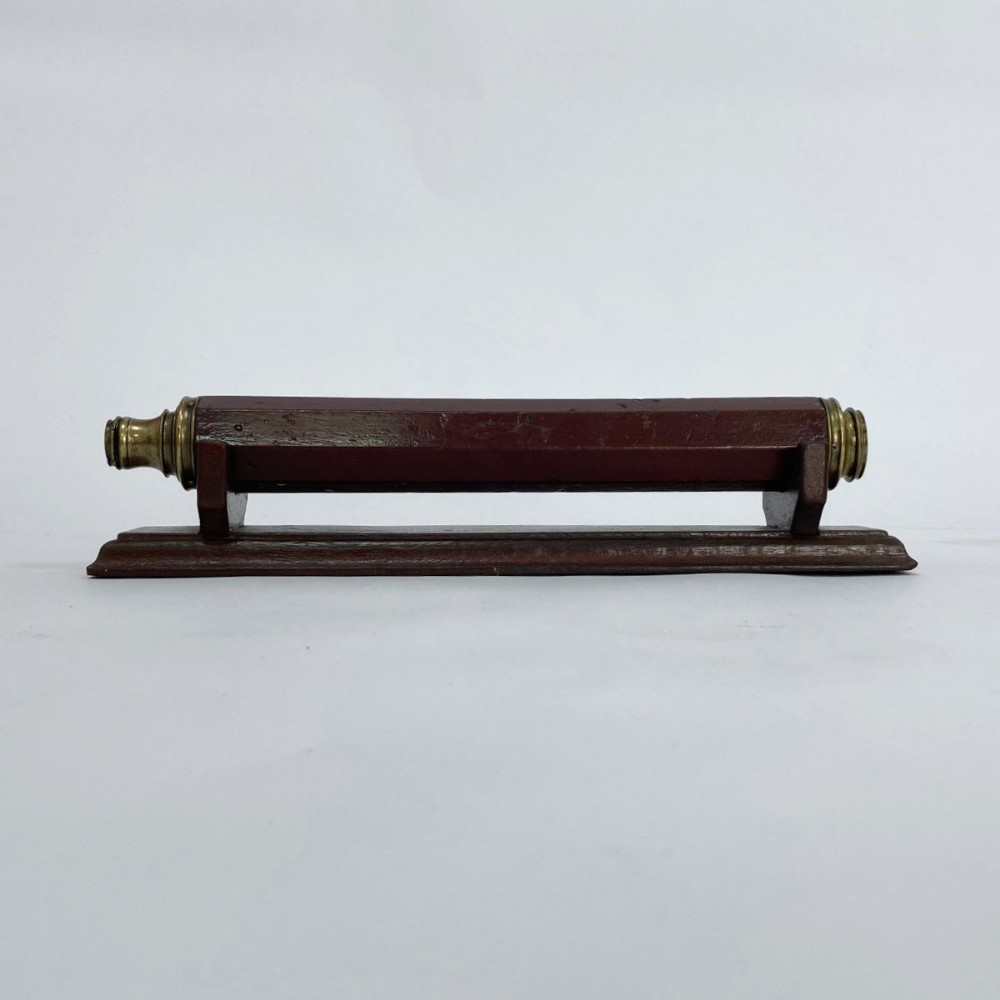
Mid Eighteenth Century Octagonal Telescope by Edward Nairne London