18,702  PAGES BROWSED TODAY PAGES TODAY • 85 ANTIQUES UPLOADED TODAYNEW ARRIVALS
GIFTS
85 ITEMS ADDED TODAY
Sort Order
Items Per Page
Browse Categories
Sort order
Relevant Links
Items per page
ID #SA917466
SOLD
Email Phone
Save
An Early 1800s Bone Prisoner of War Tooth Pick and Ear Sppon.
Sold by Opus Antiques
sold SA917466
Sorry, but this item has been sold.
Opus Antiques

Opus Antiques

Sellingantiques Verified Since Oct 2014
Browse dealers 98 items
  • About Us
    Antique treen, boxes & decorative georgian items
Id #SA917466
PDF SHARE
SAVE

An Early 1800s Bone Prisoner of War Tooth Pick and Ear Sppon.

18th century
Sold 23 October 2026 · Opus Antiques
This “Early 1800s Bone Prisoner of War Tooth Pick and Ear Sppon” found a buyer.

It was listed by Opus Antiques. Sold pieces stay on Sellingantiques as a record of what has passed through, and the next one is rarely far away.

Description

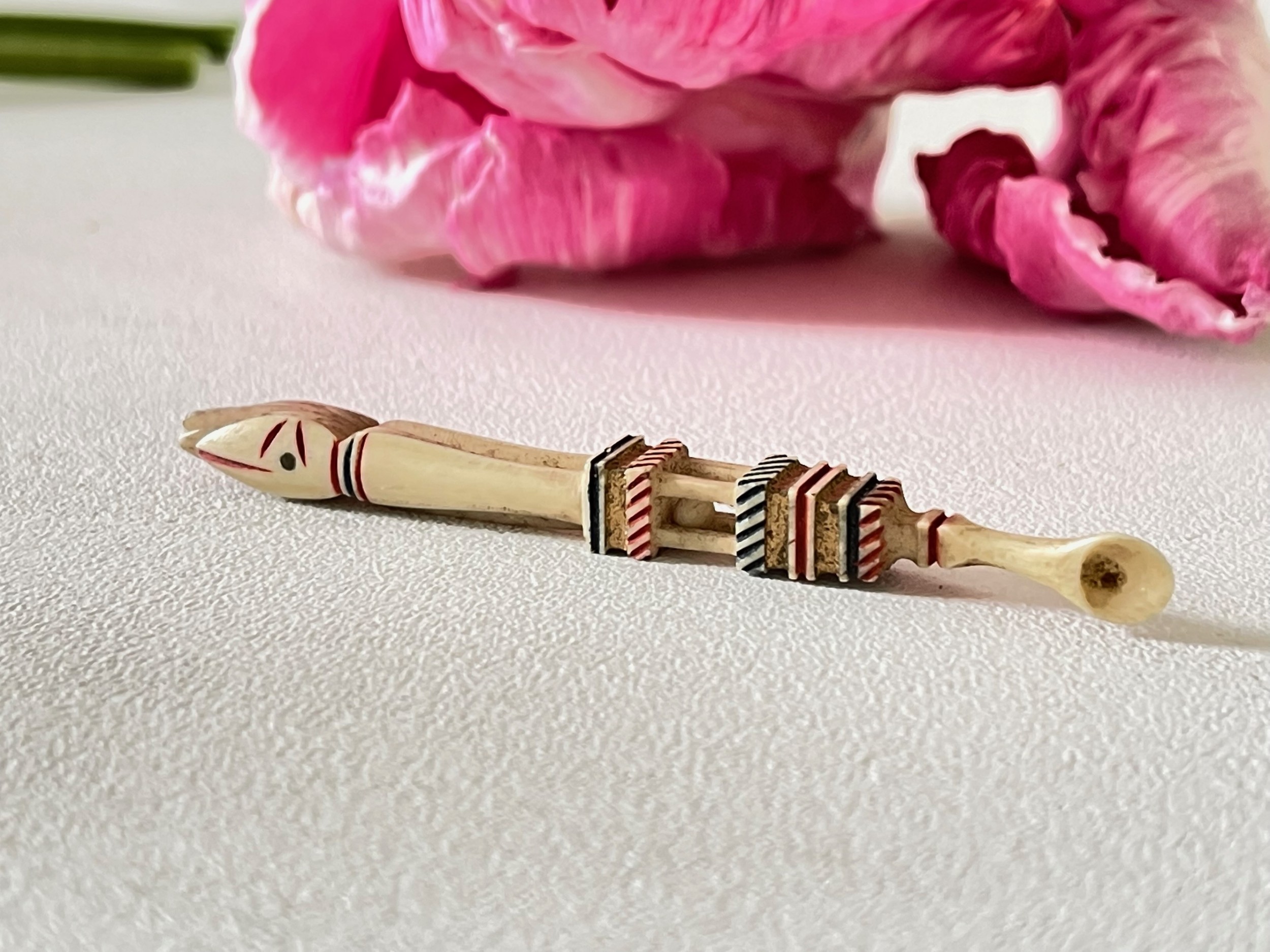
This is an early 1800s bone prisoner of war tooth pick and ear sppon. It is carved in the shape of a fish with colourful decorated red and black line decoration.

The tooth picks slide out from the side to look like fins and the spoon is at the back for a tail.

A great piece of Napoleonic prisoner of war craftmanship.

It measures 8cm l x 0.4cm w.

Date of Manufacture

Opus Antiques has dated this Prisoner of War Bone Toothpick to the Georgian era.

Physical Dimensions
Height
0.4cm (0.16")
Width
8cm (3.15")
Depth
0.4cm (0.16")
Reference Numbers
Sellingantiques Reference
SA917466
Dealers Notes

Own a piece of history

Description
This is an early 1800s bone prisoner of war tooth pick and ear sppon. It is carved in the shape of a fish with colourful decorated red and black line decoration.

The tooth picks slide out from the side to look like fins and the spoon is at the back for a tail.

A great piece of Napoleonic prisoner of war craftmanship.

It measures 8cm l x 0.4cm w.

Date of Manufacture

Opus Antiques has dated this Prisoner of War Bone Toothpick to the Georgian era.

Height
0.4cm (0.16")
Width
8cm (3.15")
Depth
0.4cm (0.16")
Reference Numbers
Sellingantiques Ref
SA917466
Opus Antiques
Opus Antiques
Sellingantiques verified Since Oct 2014

Antique treen, boxes & decorative georgian items

Dealer Profile

You can view the stock and full dealer information on the Opus Antiques Profile Page

PDF SHARE
SAVE
Hand-carved cream animal bone toothpick and ear spoon combination featuring red and black painted details and a carved cage motif. SOLD23 OCT 26
1 / 2
Archive I Hand-carved cream animal bone toothpick and ear spoon combination featuring red and black painted details and a carved cage motif. SOLD23 OCT 26

An Early 1800s Bone Prisoner of War Tooth Pick and Ear Sppon.

Archive II Hand-carved cream animal bone toothpick and ear spoon combination featuring red and black painted details and a carved cage motif. View II
Enlarged Archival View
Telephone 07941 285 532
Location
North Devon
United Kingdom
Verified Since Oct 2014
Items For Sale 98
Items Sold 2,404
Opus Antiques
Opus Antiques
Verified Since Oct 2014
View Dealer Info
Location: North Devon, United Kingdom
Verified
Oct 2014
For Sale
98
Sold
2,404
Hand-carved cream animal bone toothpick and ear spoon combination featuring red and black painted details and a carved cage motif.
An early 1800s bone prisoner of war tooth pick and ear sppon.
Ref: SA917466
Hand-carved cream animal bone toothpick and ear spoon combination featuring red and black painted details and a carved cage motif.
Detail View 1
Archival Detail
Every single antique dealer on our platform is individually approved by our internal team. We verify their professional trade history, ethical standards, and photographic quality to ensure a secure, high-standard buying environment. Upon joining, every dealer agrees to a strict 9-point code of conduct. While issues can occasionally arise, our dealers typically resolve them swiftly and directly with the buyer. In fact, since our founding in 2002, Sellingantiques has only had to step in to help resolve an issue on roughly five occasions—a true testament to the quality of our dealers and their dedication to your happiness.
Our dealers are highly experienced in packing and shipping fragile, high-value antiques. Because you are in direct contact with the dealer, you will be able to easily go through all available shipping and insurance options together to ensure your item arrives safely.
Antiques are the ultimate green purchase. By choosing historical pieces over newly manufactured goods, you completely eliminate the carbon footprint of modern mass production while preserving exceptional, timeless craftsmanship.
Written by Sellingantiques from the dealer’s photographs and listing
  • ObjectPersonal Grooming Accessories
  • Period18th century
  • StyleGeorgian Folk Art
  • MaterialAnimal Bone, Pigment
  • ColourCream
  • MotifsCarved cage motif, Fish head terminal, Scoop terminal, Polychrome banding
  • SizeH 0.4 cm (0 in) x W 8 cm (3 in) x D 0.4 cm (0 in)

This early Georgian personal grooming accessory exemplifies Napoleonic prisoner of war folk art, combining a toothpick and ear spoon in one dual-purpose implement. The piece consists of carved animal bone with a creamy natural tone, detailed with hand-painted red and black polychrome banding on the cylindrical shaft and caged mid-section. Notable details include a fish head terminal with small eyes and lines, sliding side elements functioning as fins, a central cage motif, and a scooped tail terminal at the opposite end. Measuring 0.4 cm high, 8 cm wide, and 0.4 cm deep, the miniature object possesses a delicate scale appropriate for personal display. On a bookshelf or within a gentleman's library collection today, it provides a tactile conversation piece highlighting historical ingenuity on a small scale.

Napoleonic prisoner of war bone work refers to decorative objects and utility tools crafted by French captives held in Britain during the Revolutionary and Napoleonic Wars between 1793 and 1815. Prisoners used residual animal bone from food rations to create intricately carved items to sell or trade for additional food and supplies.

Craftsmen primarily utilized beef and mutton bones salvaged from daily meals. These were bleached, carved using improvised tools, and occasionally decorated with pigments made from tea, ink, or plant dyes, as well as straw marquetry and small metal pins.

Authentic items display natural porous grain structures, visible growth lines, and subtle colour variations across the surface. Genuine early nineteenth-century carvings often feature tiny hand-carved irregularities, period-appropriate pigments, and gentle wear along delicate raised edges.

Small carved bone curiosities are best displayed within glazed curio cabinets, mounted inside shadow boxes, or placed beneath glass cloches on top of art books to protect them while highlighting their intricate craft.

Keep bone objects in a climate-controlled environment away from direct sunlight, excess heat, and moisture, which can cause cracking or warping. Dust gently using a soft, dry camel-hair paintbrush, avoiding water, detergent, or liquid polishes.
items
Add keywords to the filter
Price
£100
£250000
Era
Period
Style
Material
Origin
Stock Location
Recently Added
Online Payments
Categories