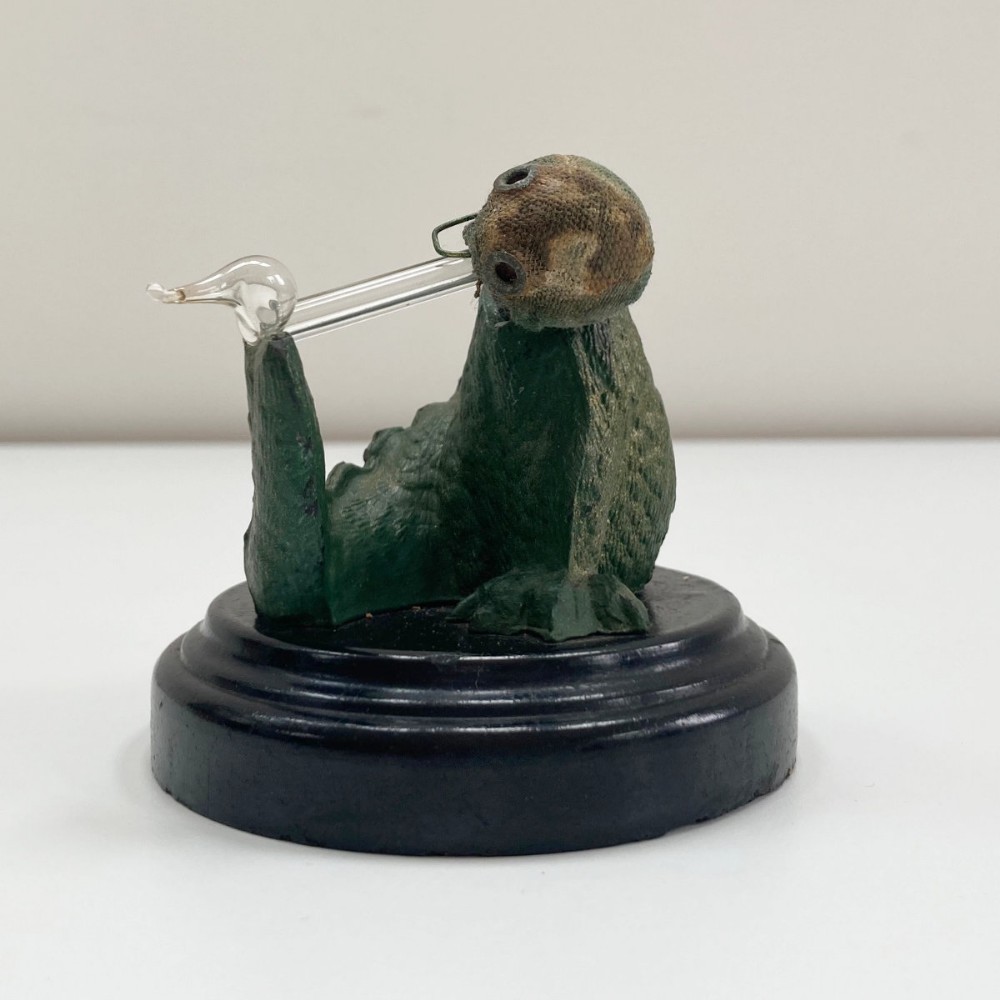
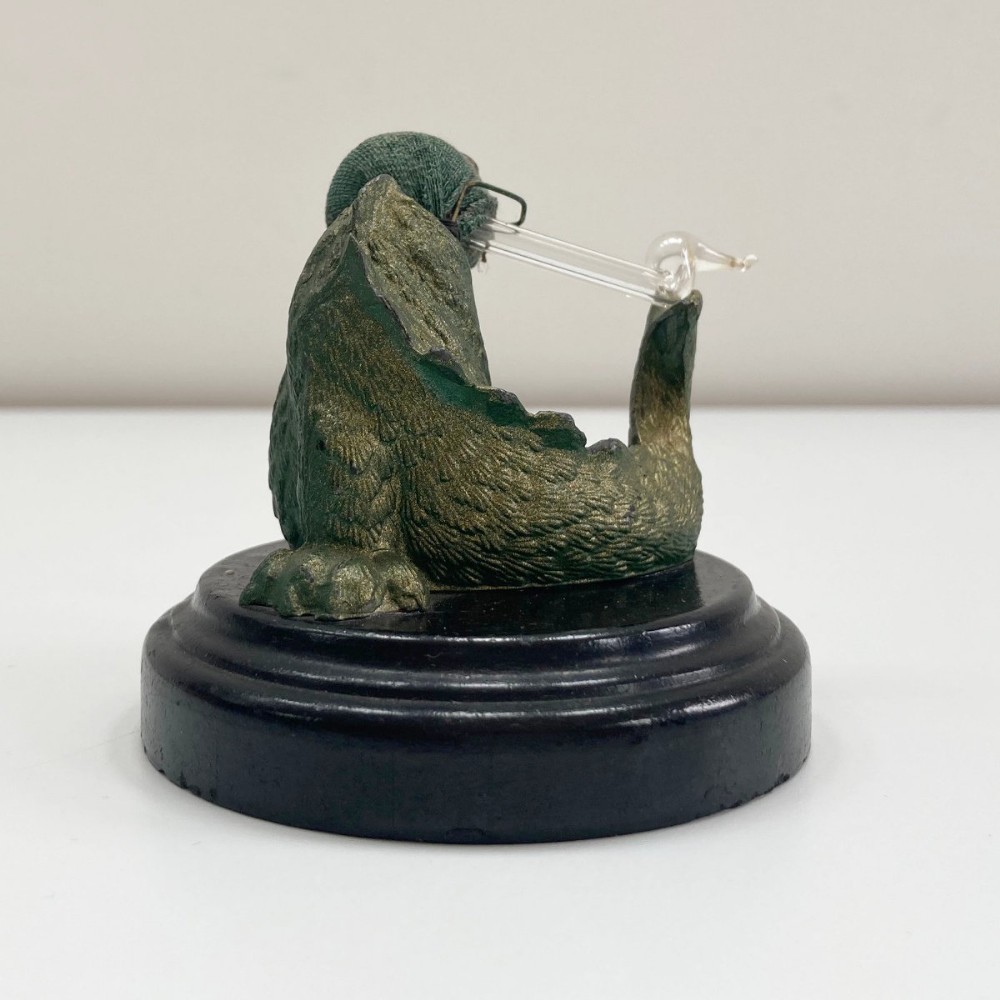
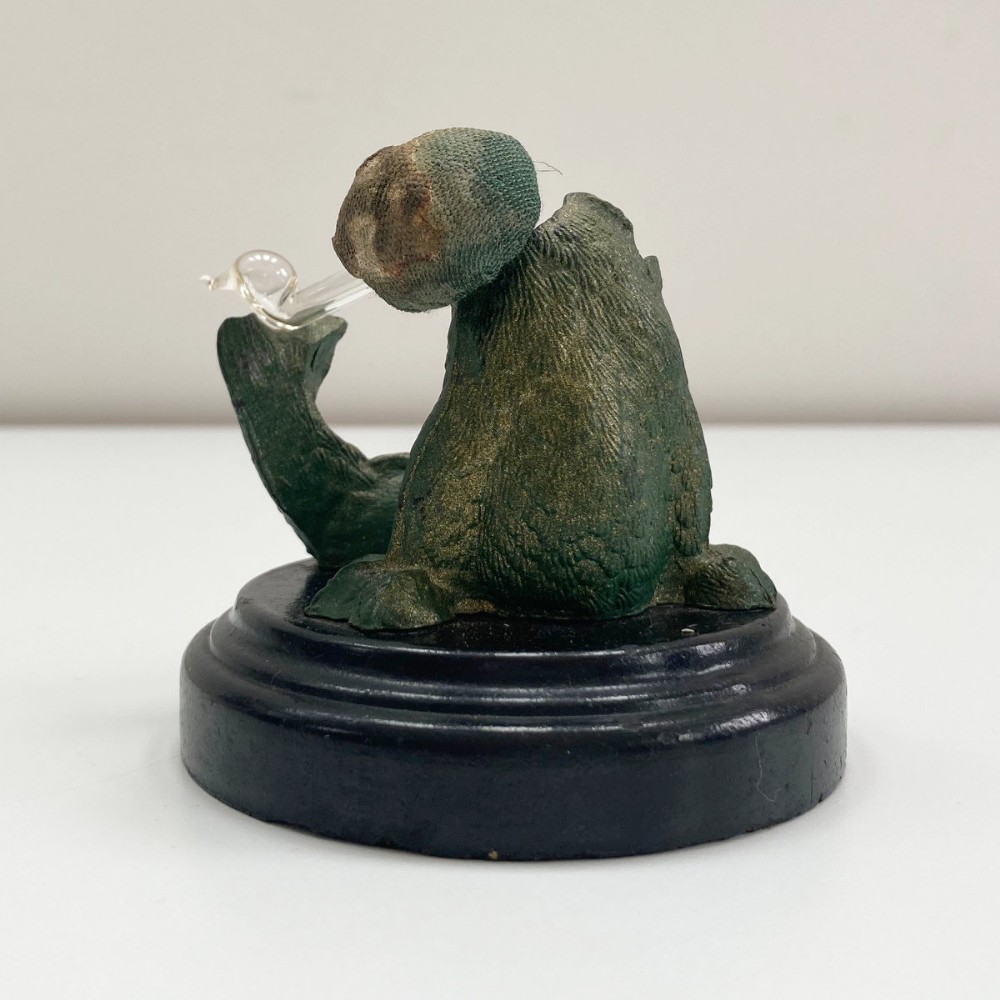
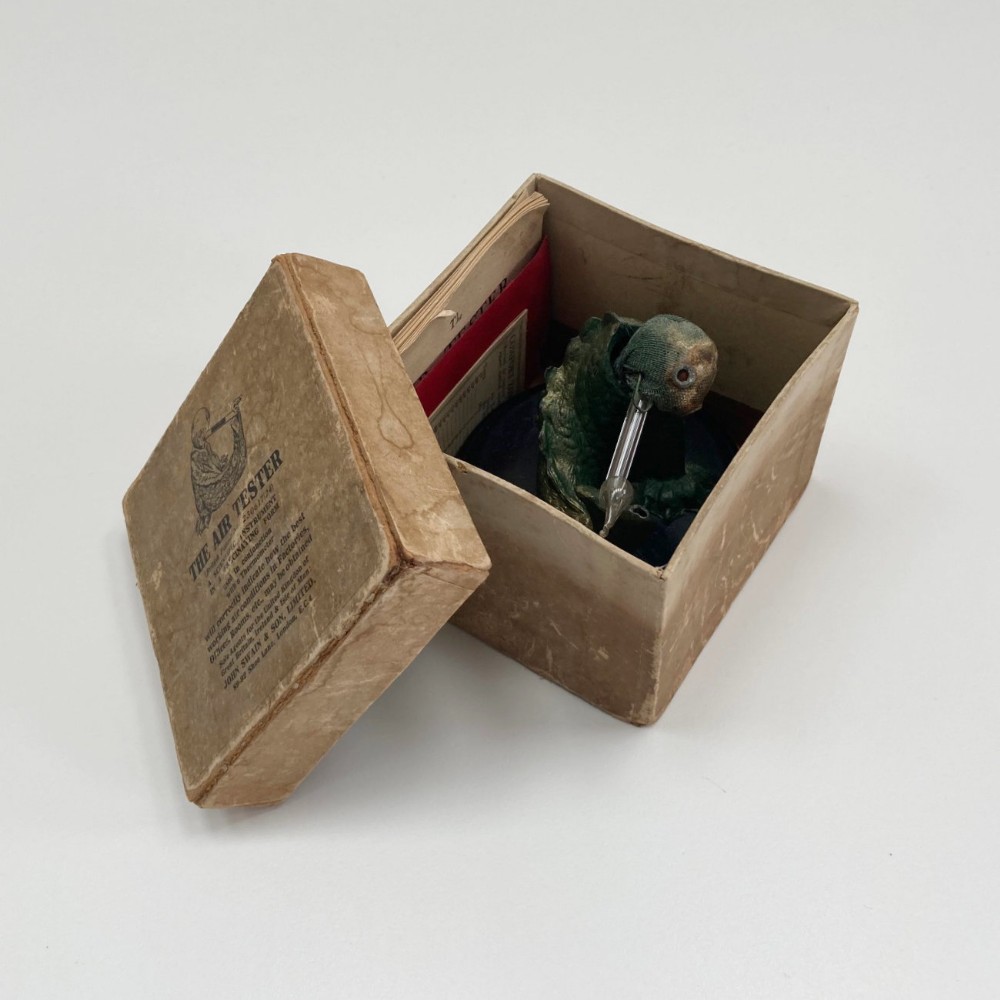
Jason Clarke Antiques has dated this piece to the 1920s.
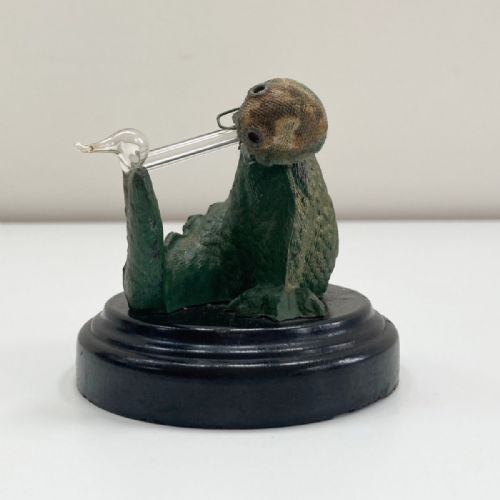
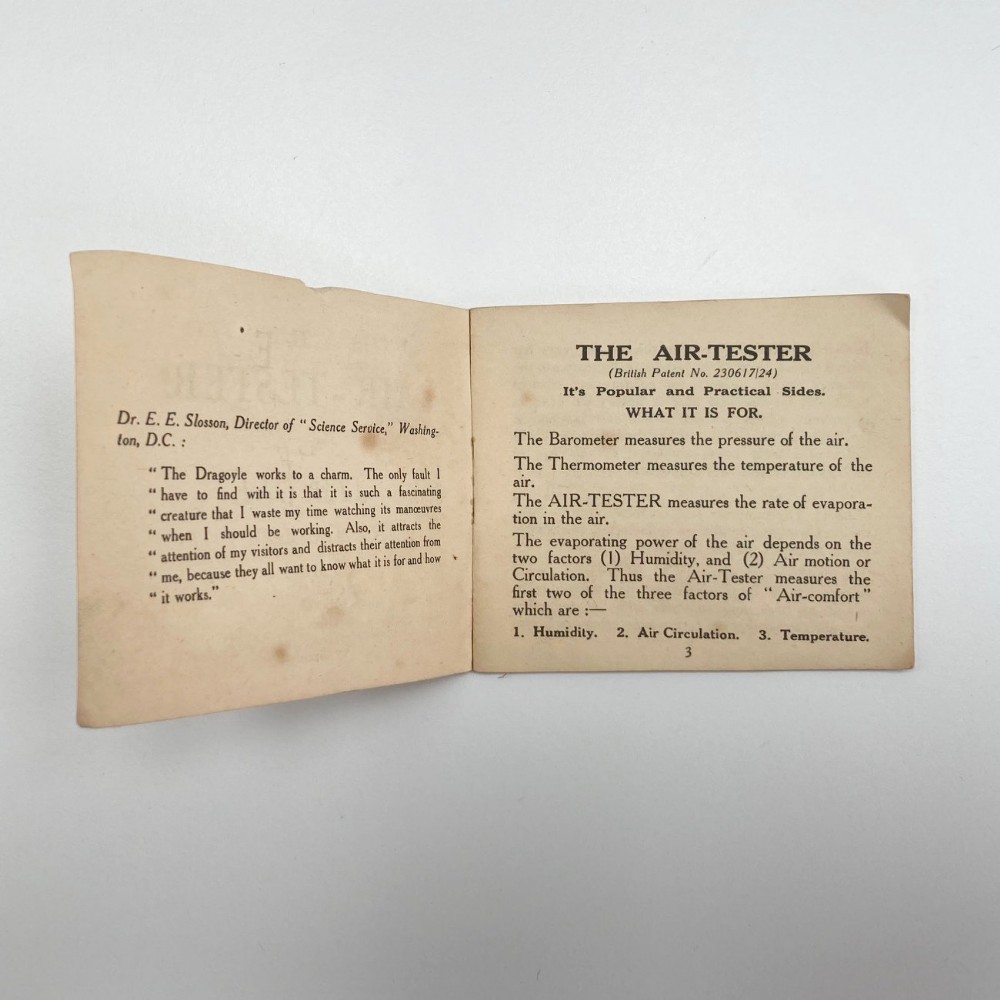
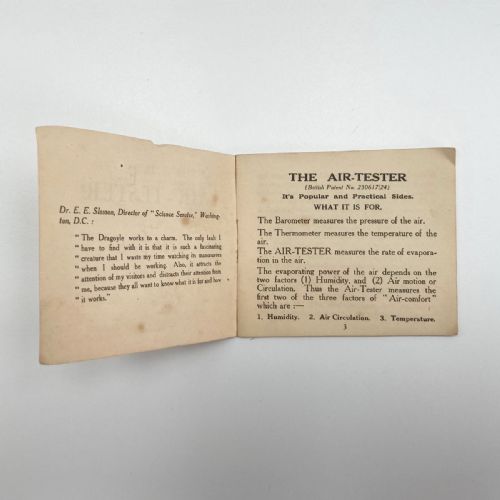
“The Dragoyle works to a charm. The only fault I have to find with it is that it is such a fascinating creature that I waste my time watching its manoeuvres when I should be working. Also, it attracts the attention of my visitors and distracts their attention from me, because they all want to know what it is for and how it works”
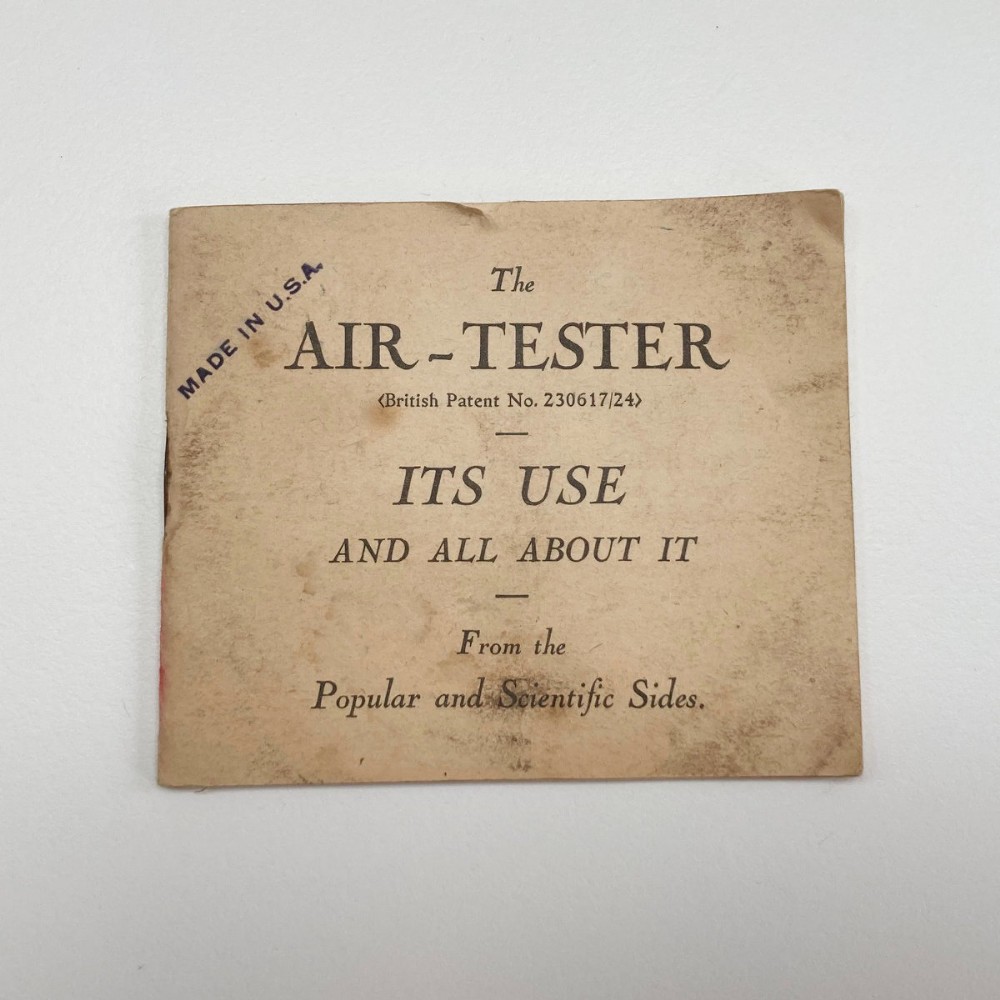
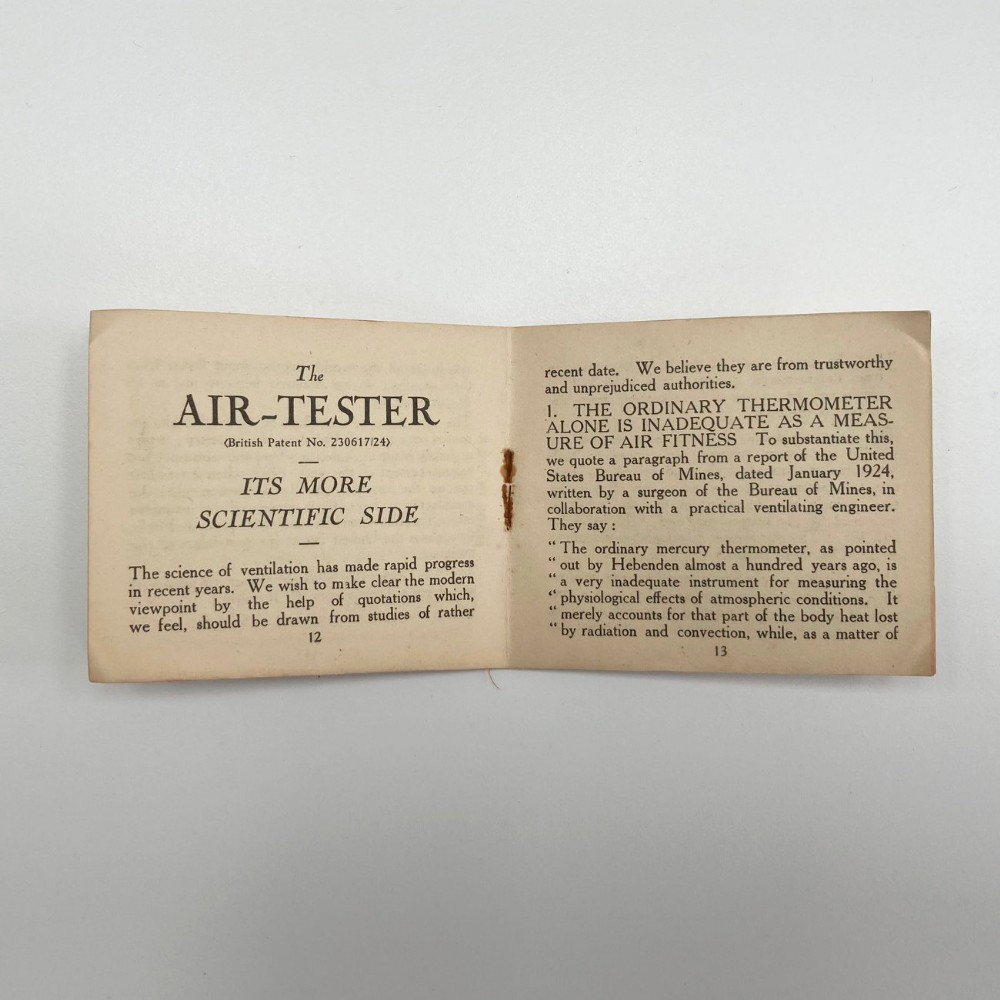
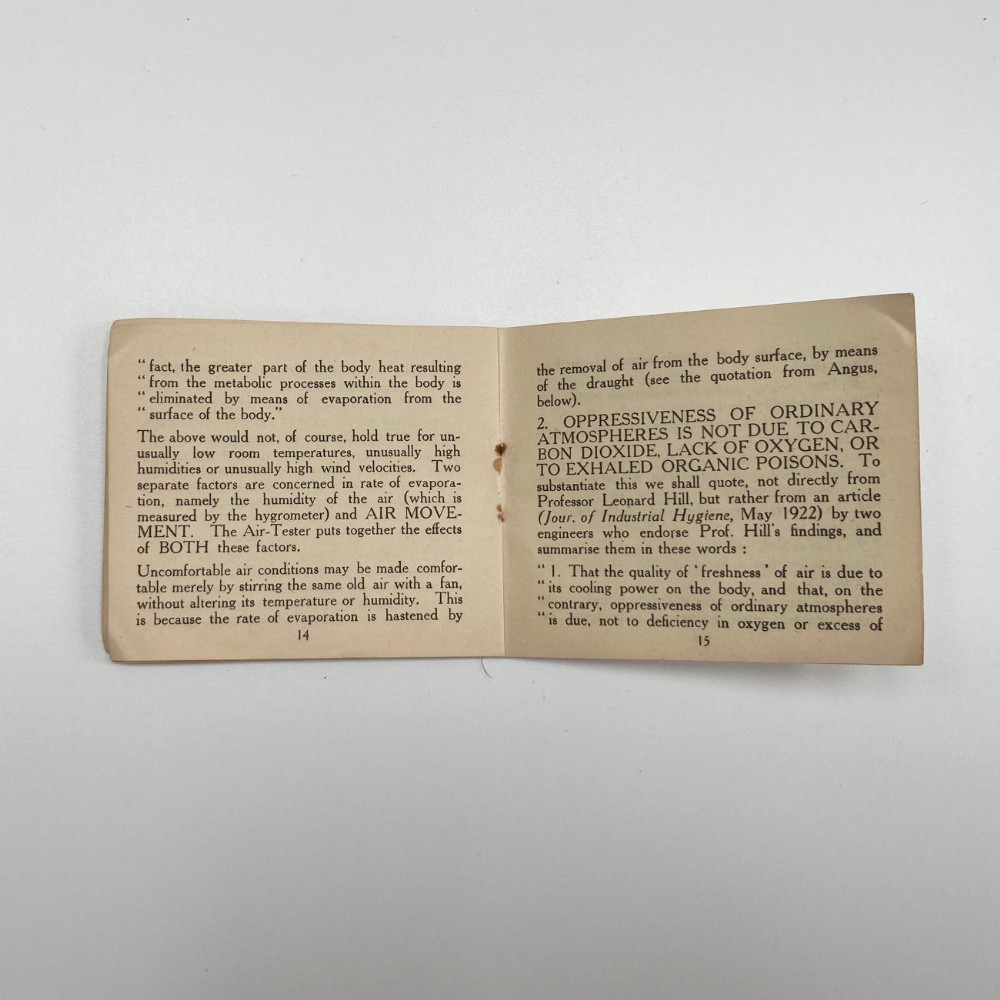
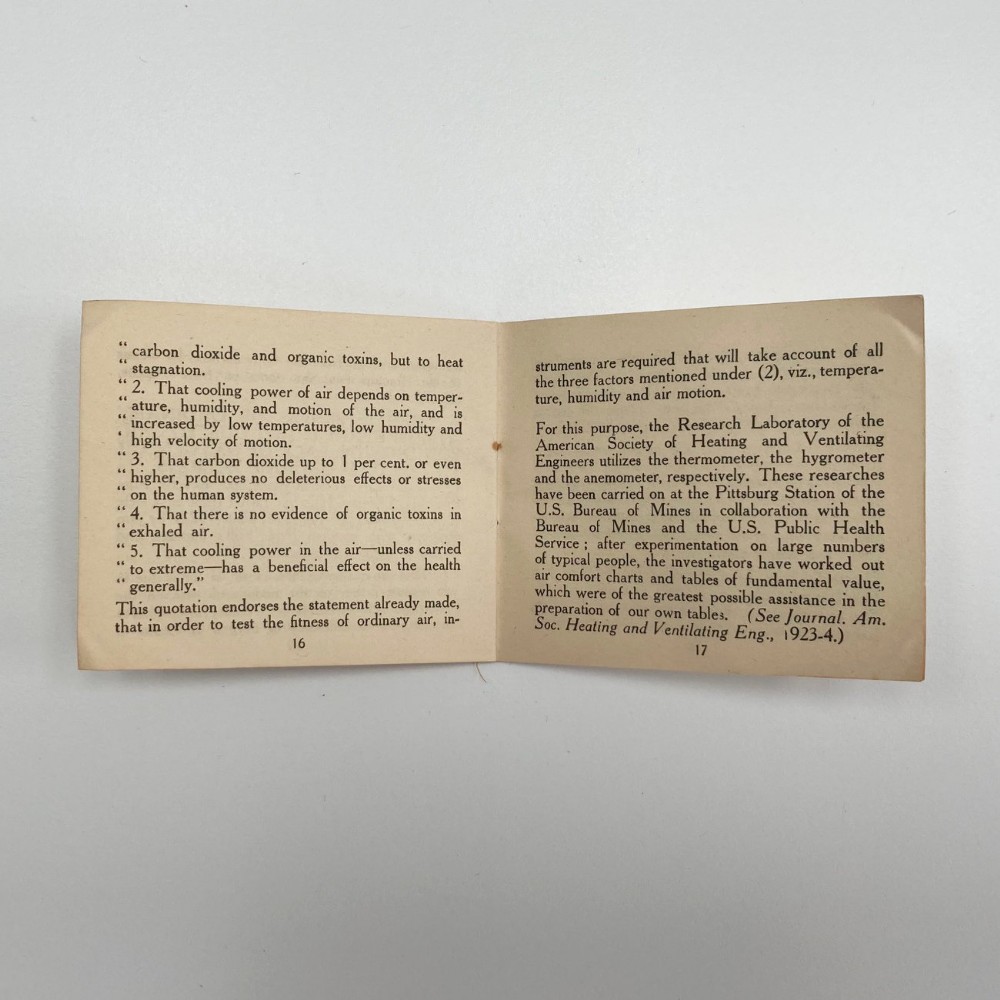
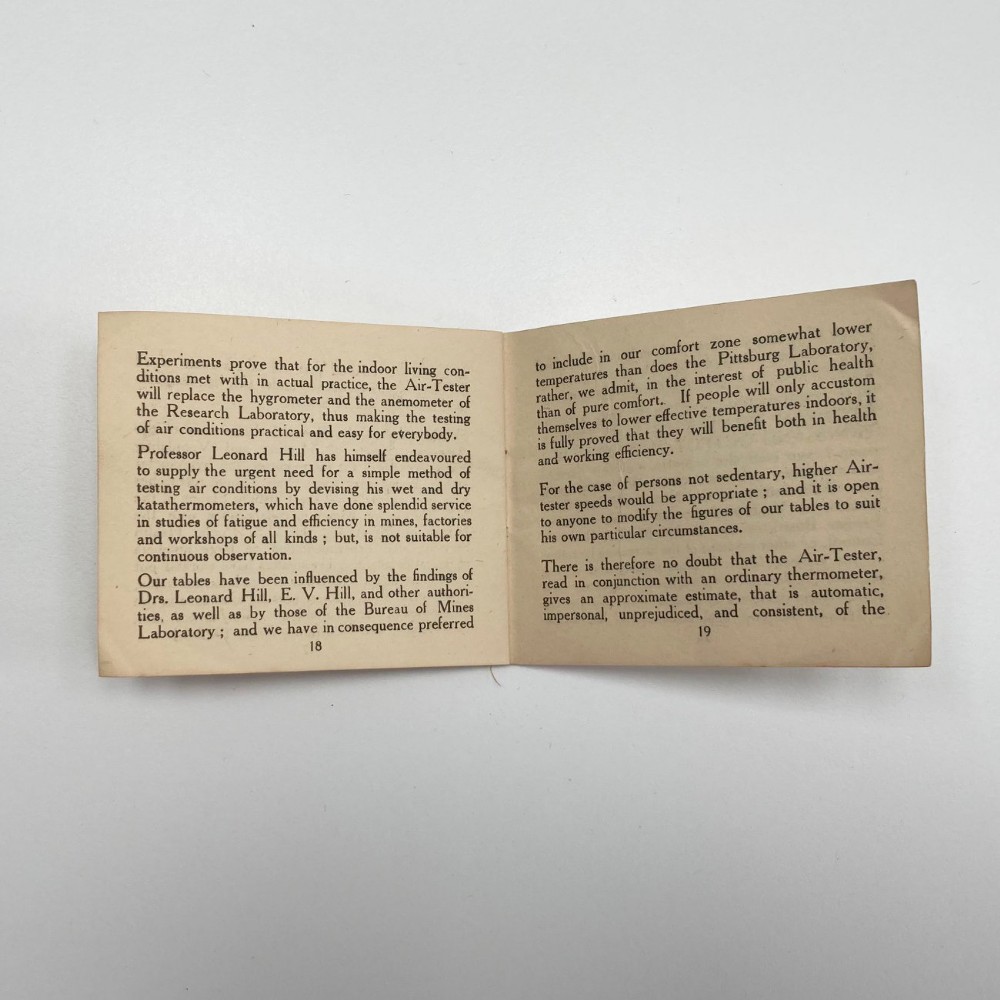
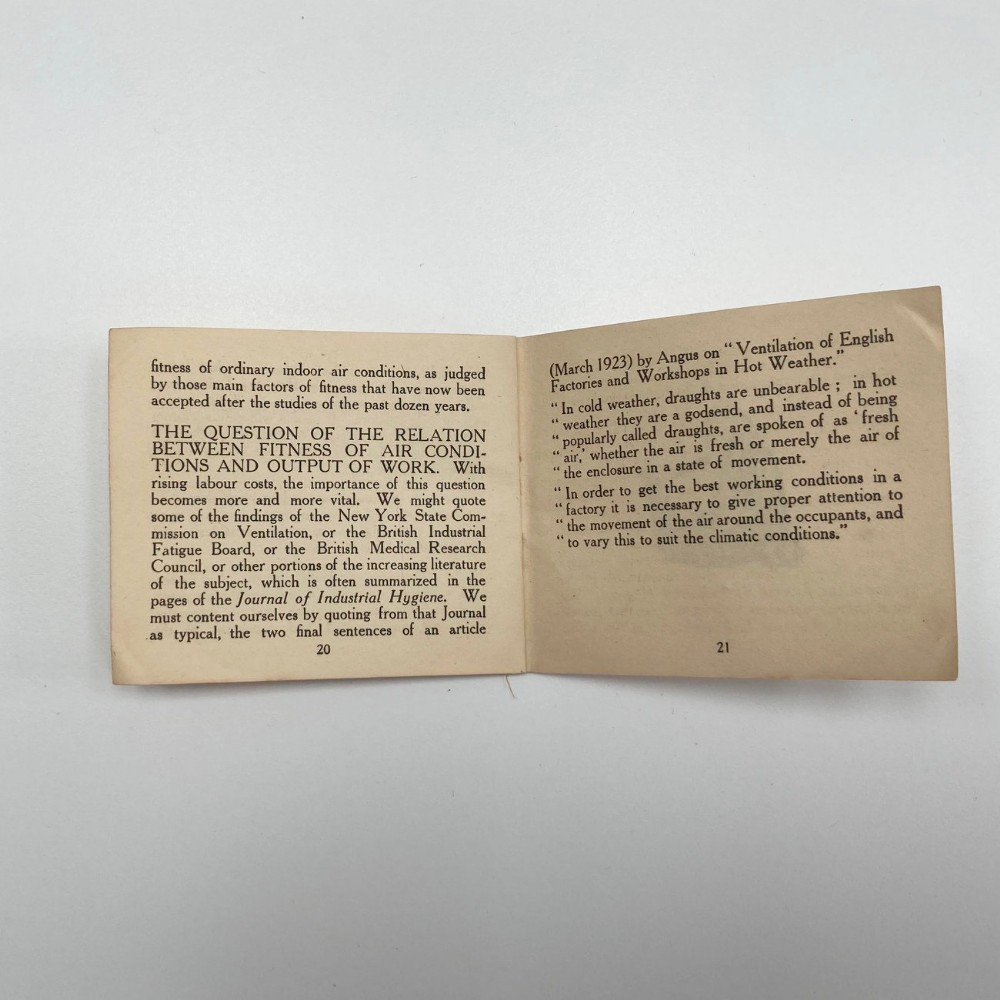
The following transcript forms part of the original marketing documentation for this super Art Deco period novelty. Dr Slosson’s personal insecurities aside, the Dragoyle was given serious consideration in a 1926 article of The Analyst and although it was given merit, it was not considered “an instrument of precision”. Nevertheless, a rare, interesting and somewhat bizarre attempt to productise meterology instruments. I adore it!
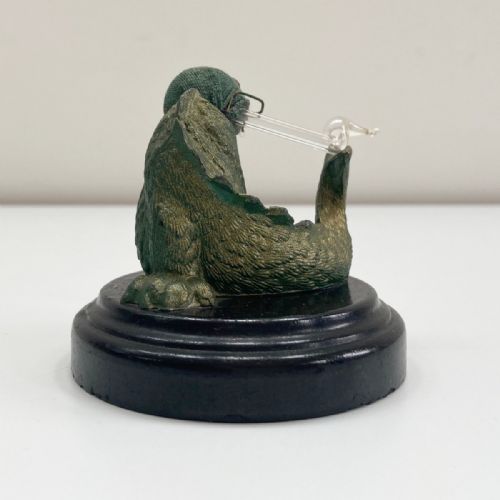
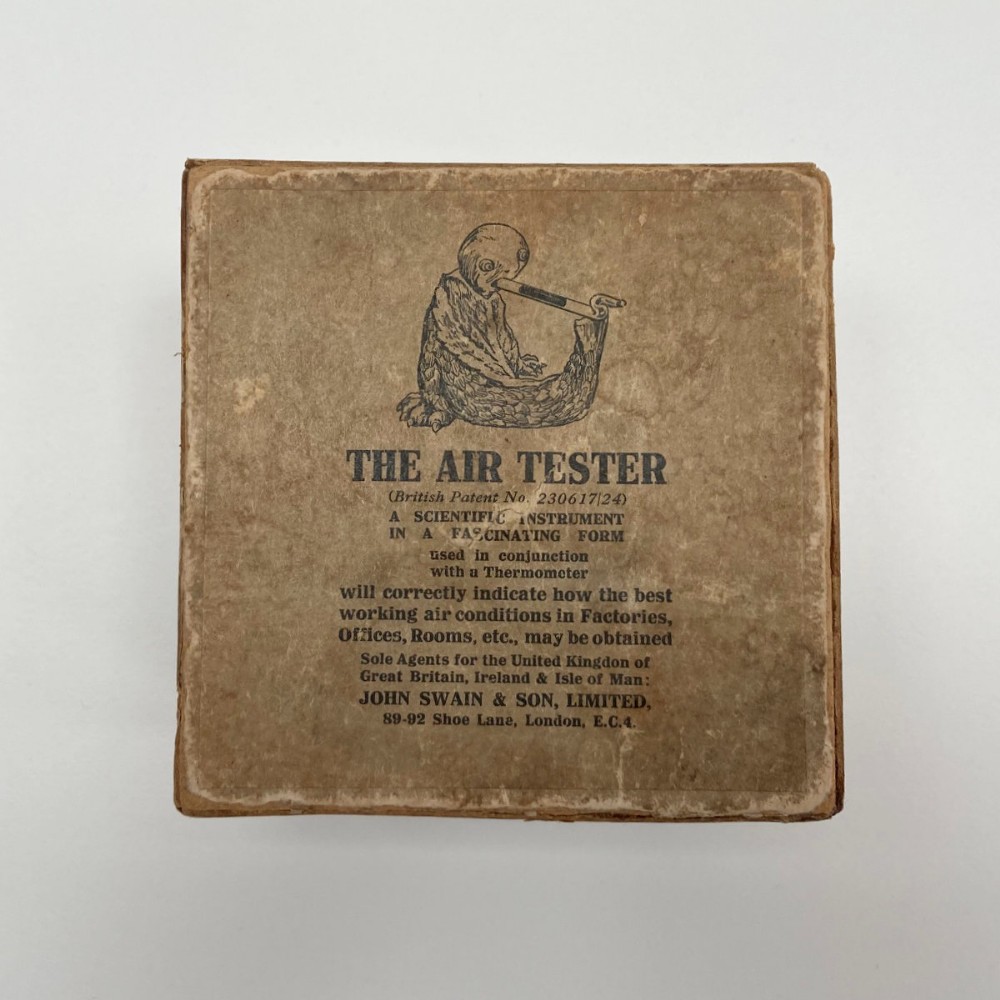
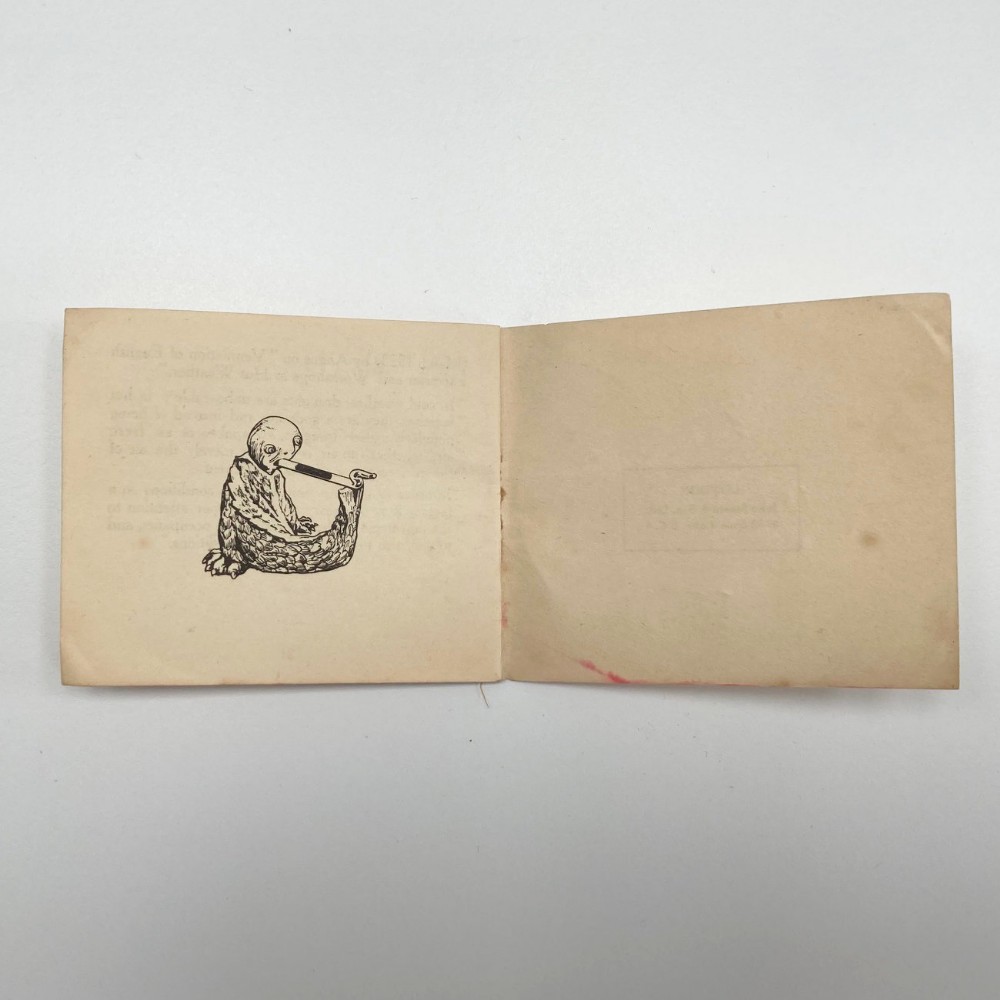
THE AIR-TESTER (British Patent No: 230617/24)
The barometer measures the pressure of air. The thermometer measures the temperature of the air. The AIR-TESTER measures the rate of evaporation of the air.
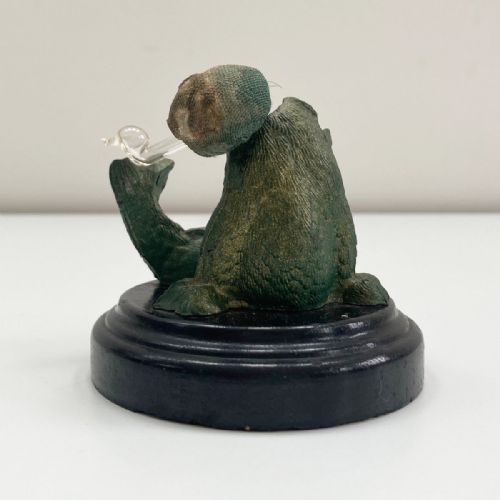
The evaporating power of the air depends on two factors, humidity and air motion or circulation. Thus the air tester measures the first two of the three factors of “air comfort” which are, humidity, air circulation and temperature.
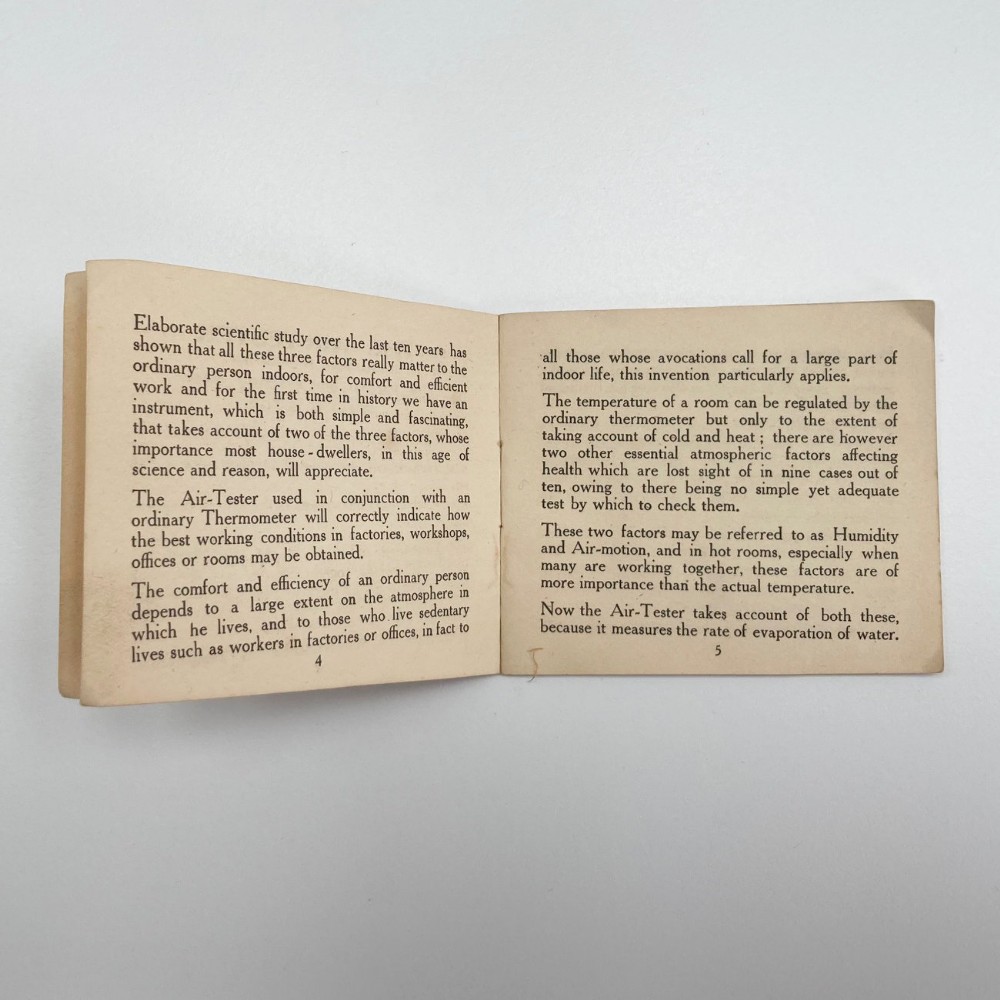
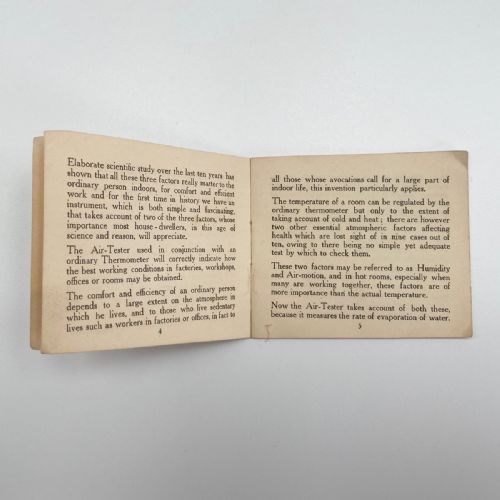
Elaborate scientific study over the last ten years has shown that all these three factors really matter to the ordinary person indoors, for comfort and efficient work and for the first time in history we have an instrument, which is both simple and fascinating, that takes account of two of the three factors, whose importance most house-dwellers, in this age of science and reason, will appreciate.
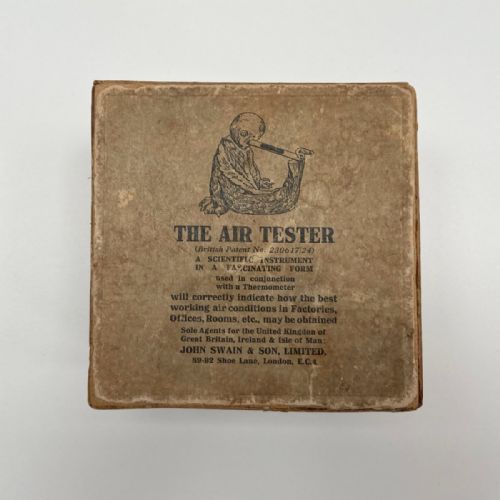
The Air-Tester used in conjunction with an ordinary thermometer will correctly indicate how the best working conditions in factories, workshops, offices or rooms may be obtained.
The comfort and efficiency of an ordinary person depends to a large extent on the atmosphere in which he lives, and to those who live sedentary lives such as workers in factories or offices, in fact to all those whose avocations call for a large part of indoor life, this invention particularly applies.
The temperature of a room can be regulated by the ordinary thermometer but only to the extent of taking account of cold and heat; there are however two other essential atmospheric factors affecting health which are lost sight of in nine cases out of ten, owing to there being no simple yet adequate test by which to check them.
These two factors may be referred to as humidity and air motion, and in hot rooms, especially when many are working together, these factors are of more importance than the actual temperature. Now the Air-Tester takes account of both of these, because it measures the rate of evaporation of water.
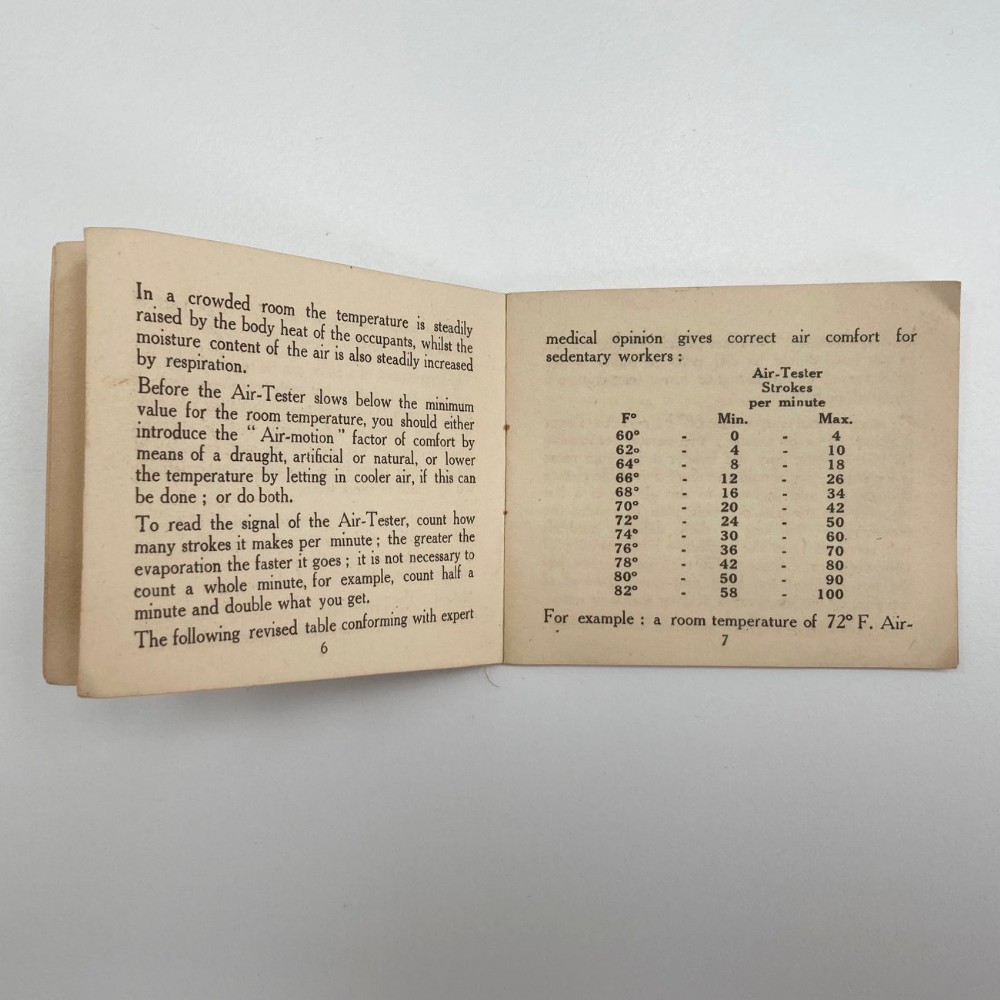
In a crowded room the temperature is steadily raised by the body heat of the occupants, whilst the moisture content of the air is also steadily increased by respiration.
Before the Air-Tester slows below the minimum value for the room temperature, you should either introduce the “Air Motion” factor of comfort by means of a draught, artificial or natural, or lower the temperature by letting in cooler air, if this can be done; or do both.
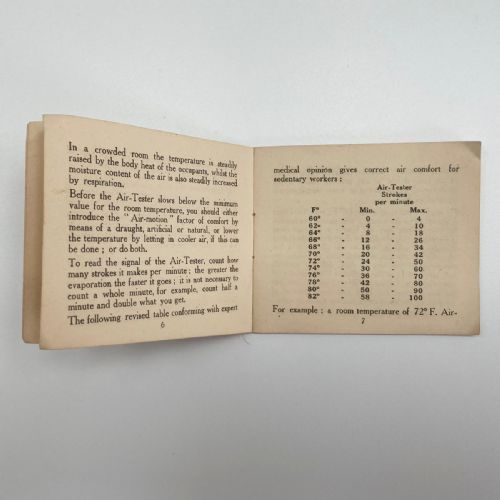
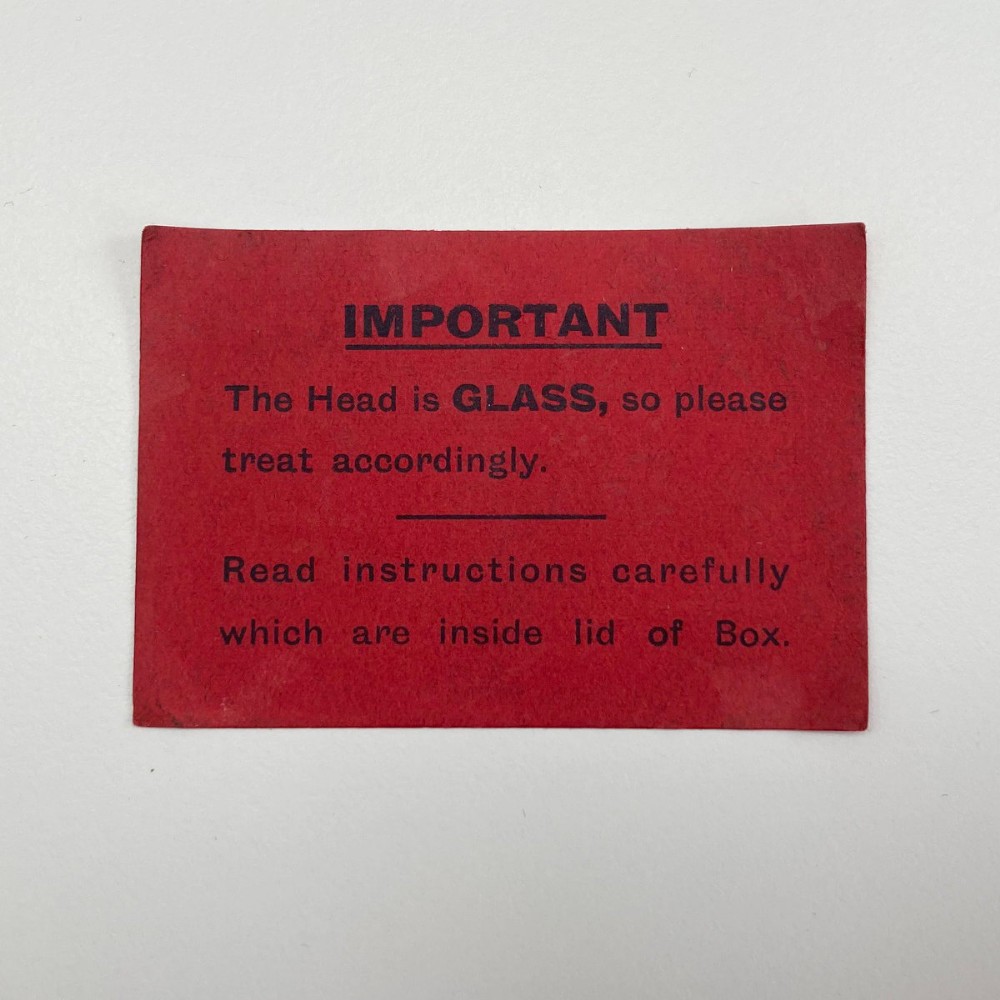
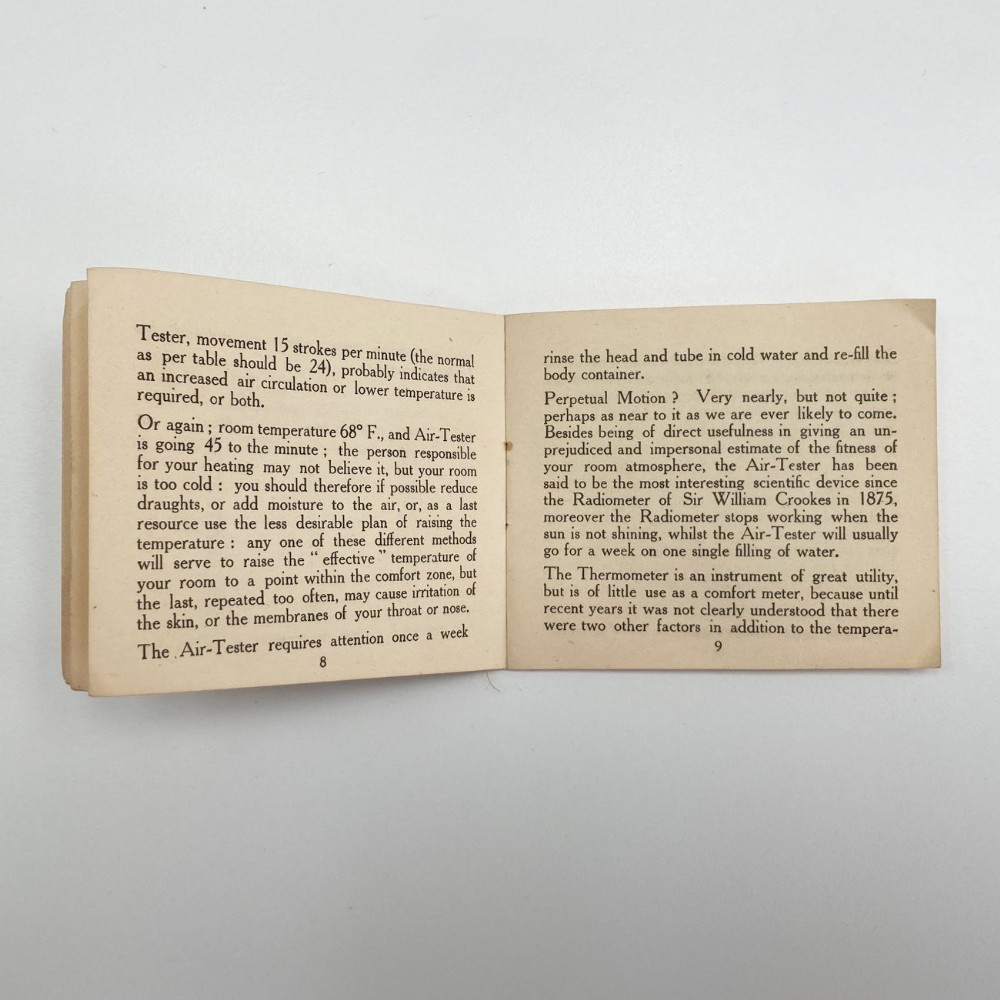
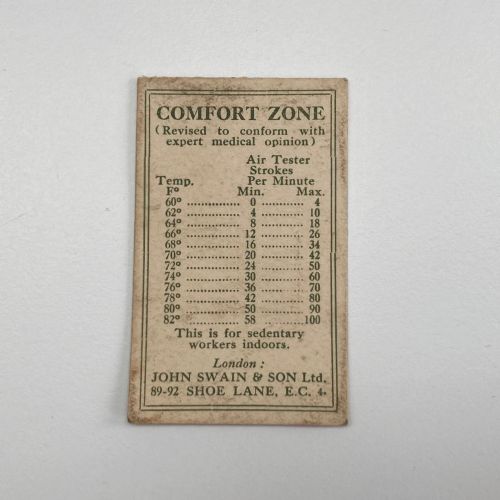
To read the signal of the Air-Tester, count how many strokes it makes per minute; the greater the evaporation the faster it goes; it is not necessary to count a whole minute, for example, count half a minute and double what you get. (See table in images provide).
Tester, movement 15 strokes per minute (the normal as per table should be 24), probably indicates that an increased air circulation or lower temperature is required, o
Jason Clarke Antiques has dated this piece to the 1920s.
You can view the stock and full dealer information on the Jason Clarke Antiques Profile Page
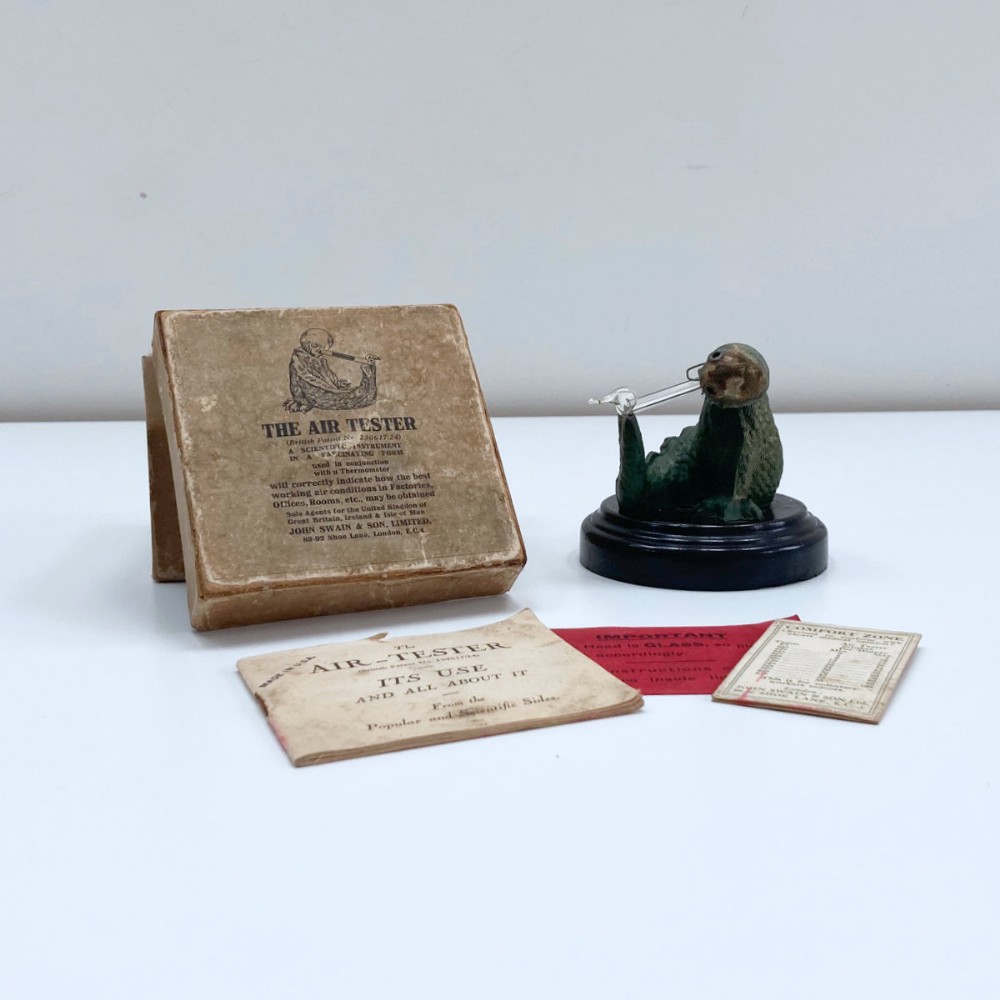
Art Deco Dragoyle Air Tester by John Swain & Son Ltd