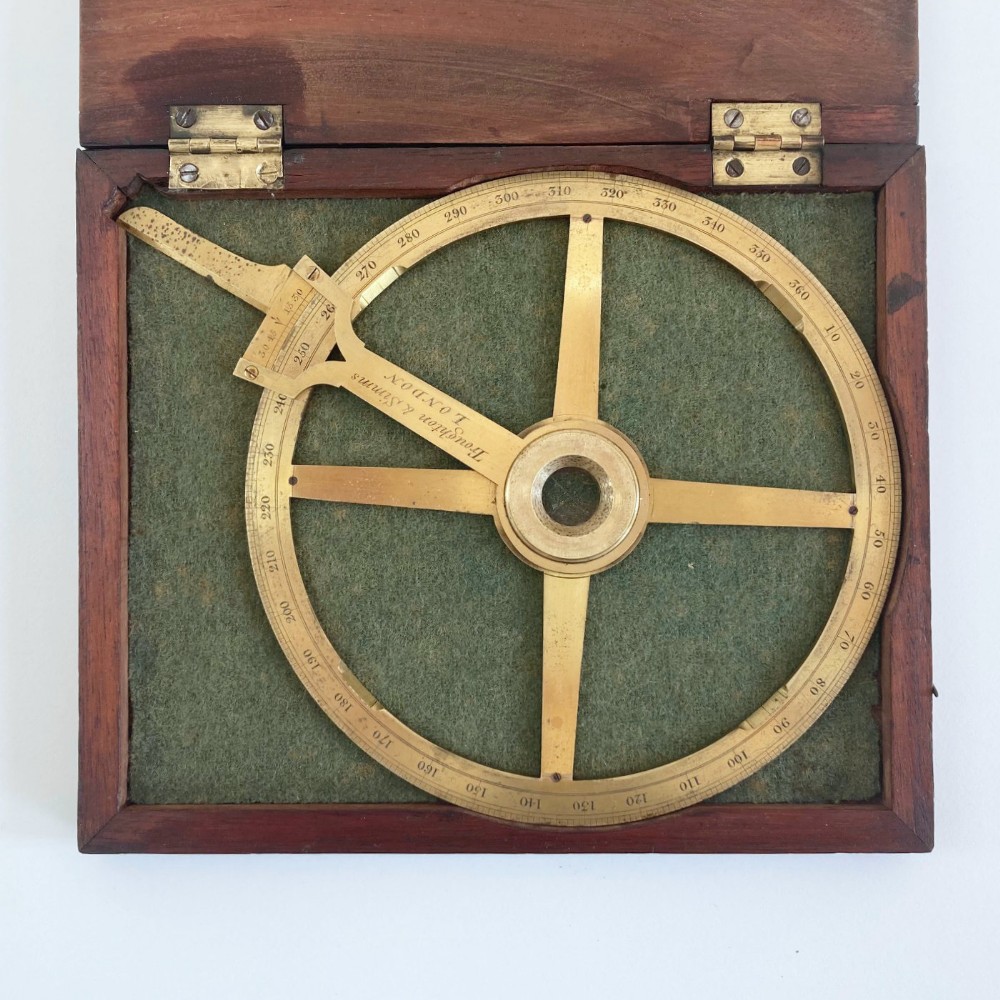
Jason Clarke Antiques has dated this piece to the 1860s.
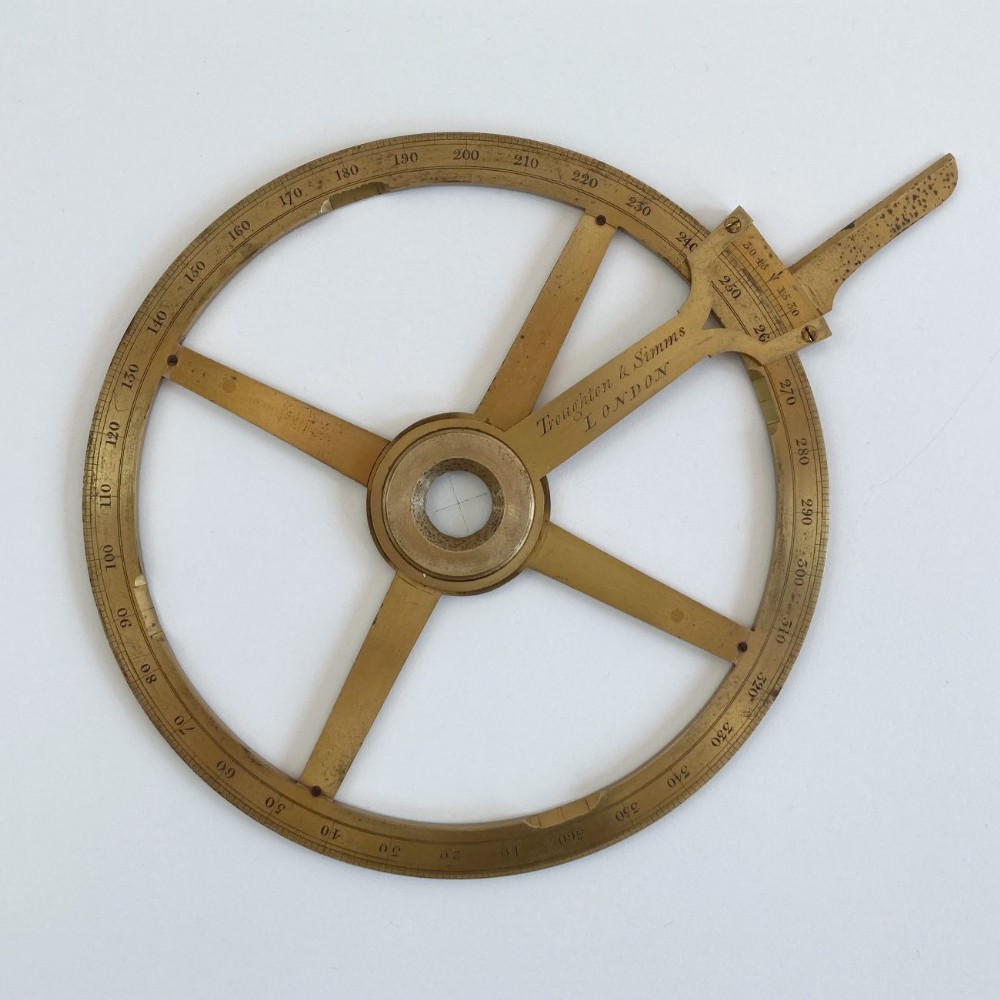
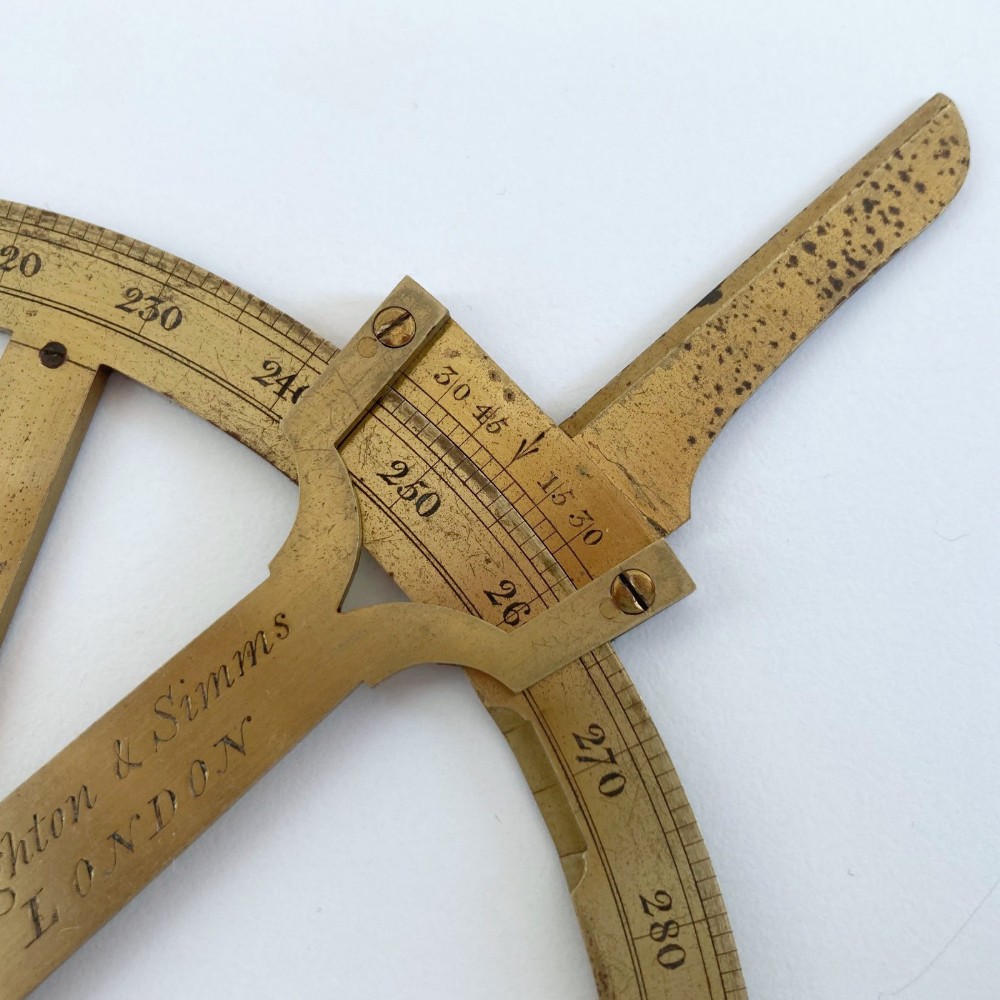
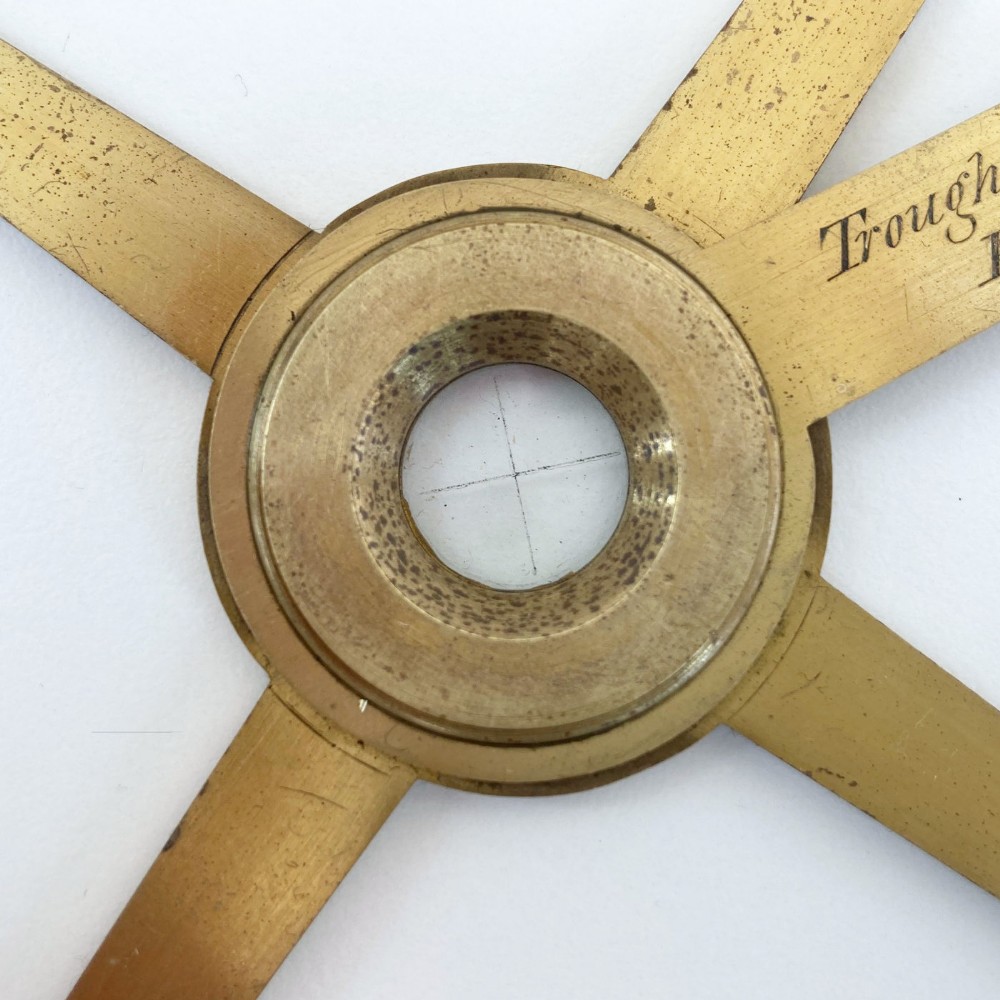
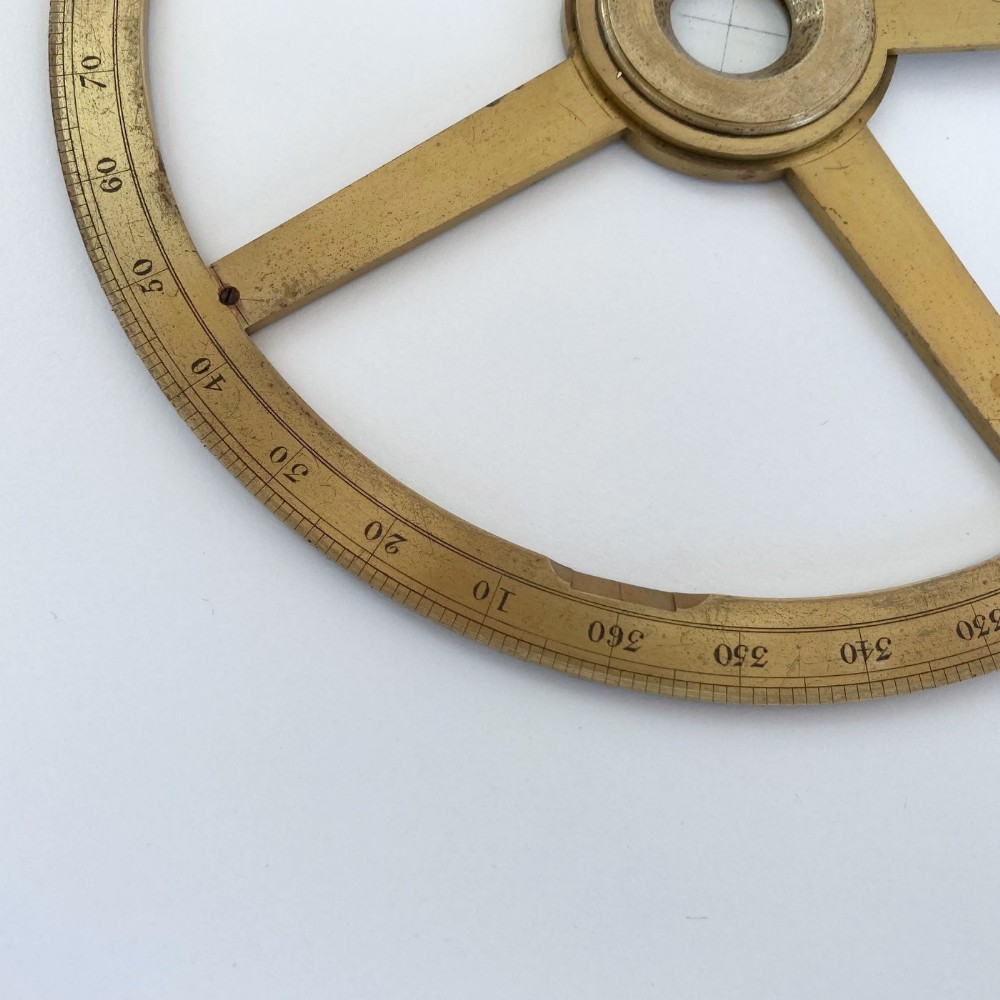
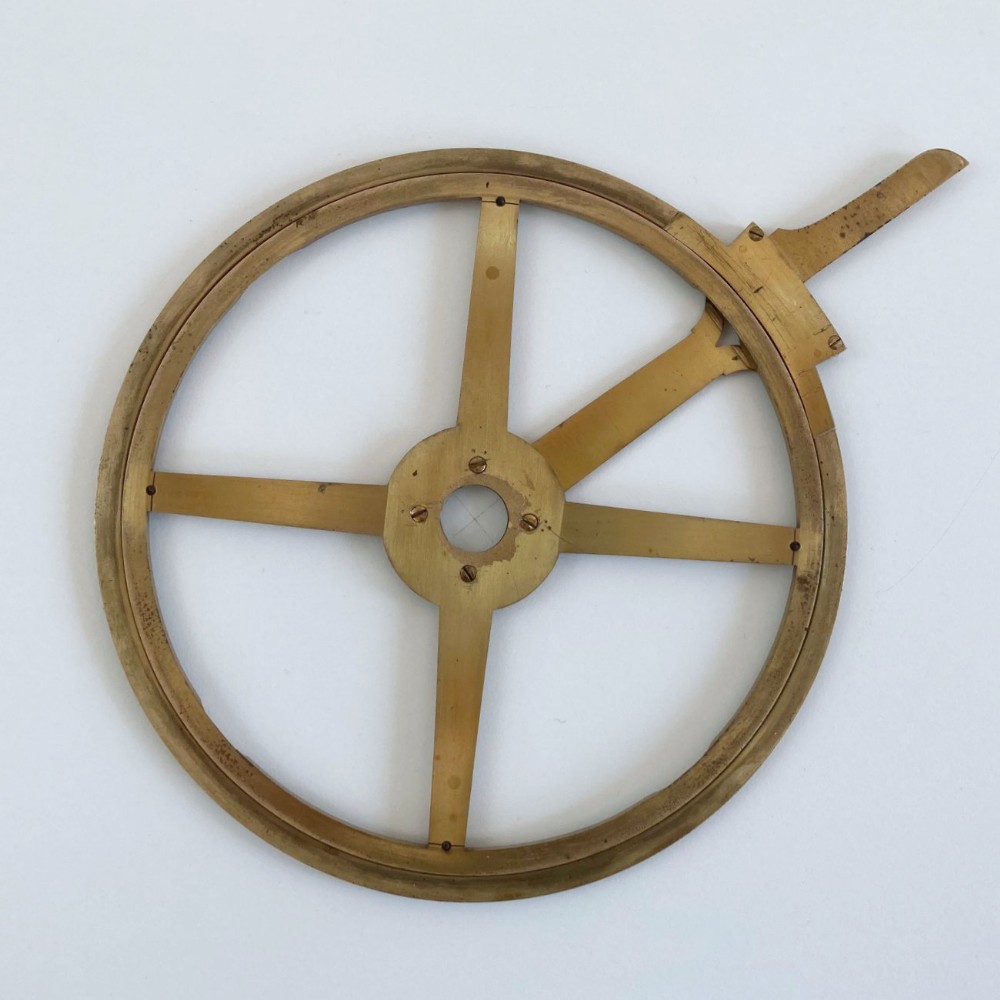
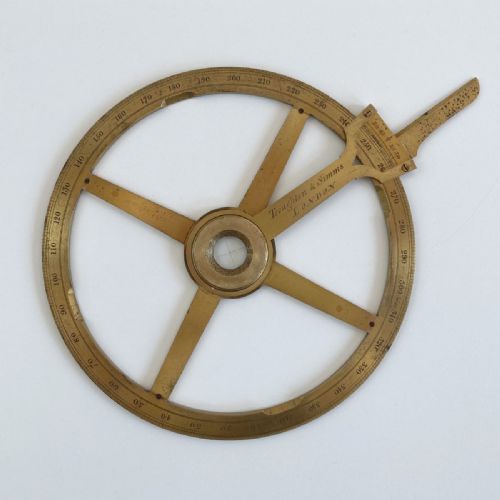
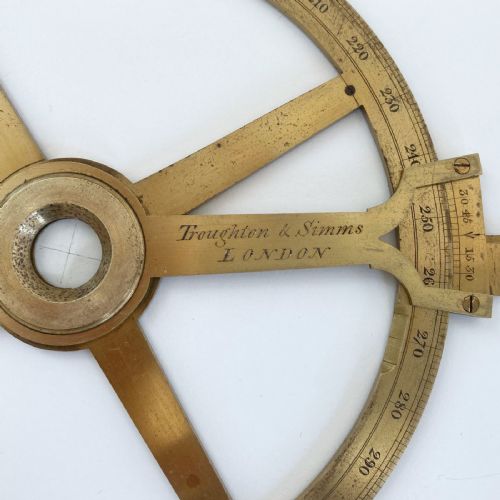
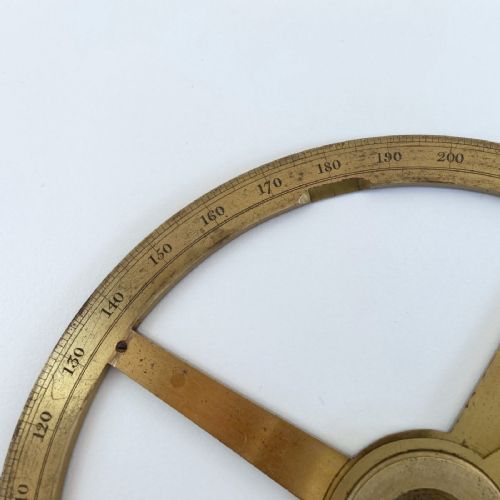
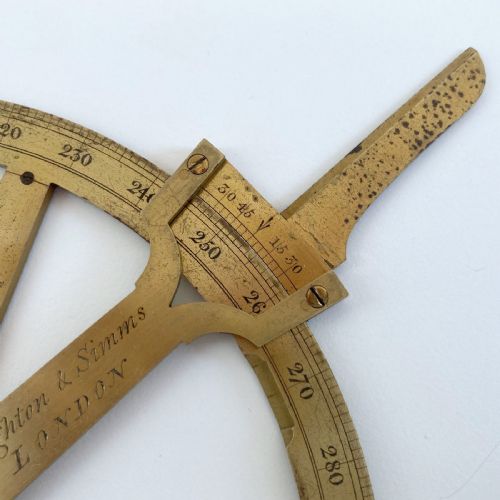
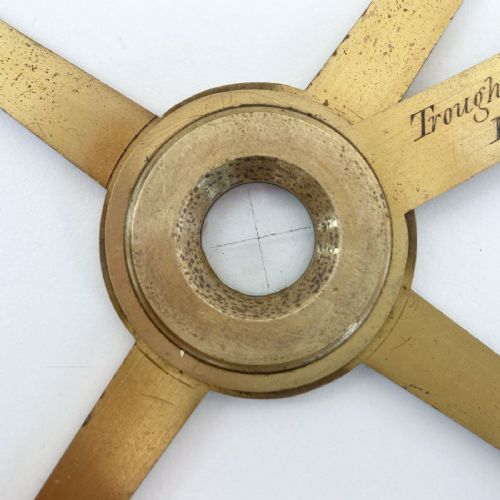
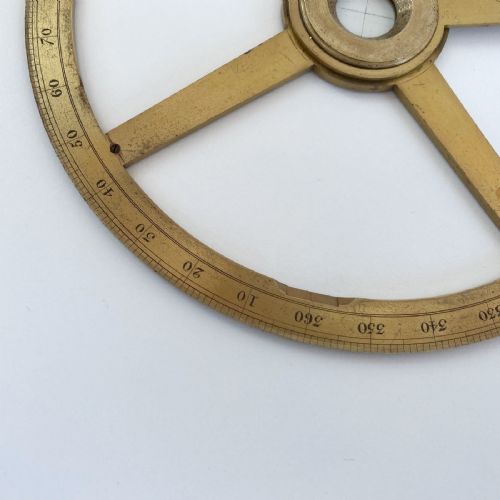
Constructed from brass, the protractor is engraved as you would expect with divisions for 360 degrees with four central struts on the inner circumference which hold a central circle equipped with a piece of glass with a cross hair for accurate placement on a map.
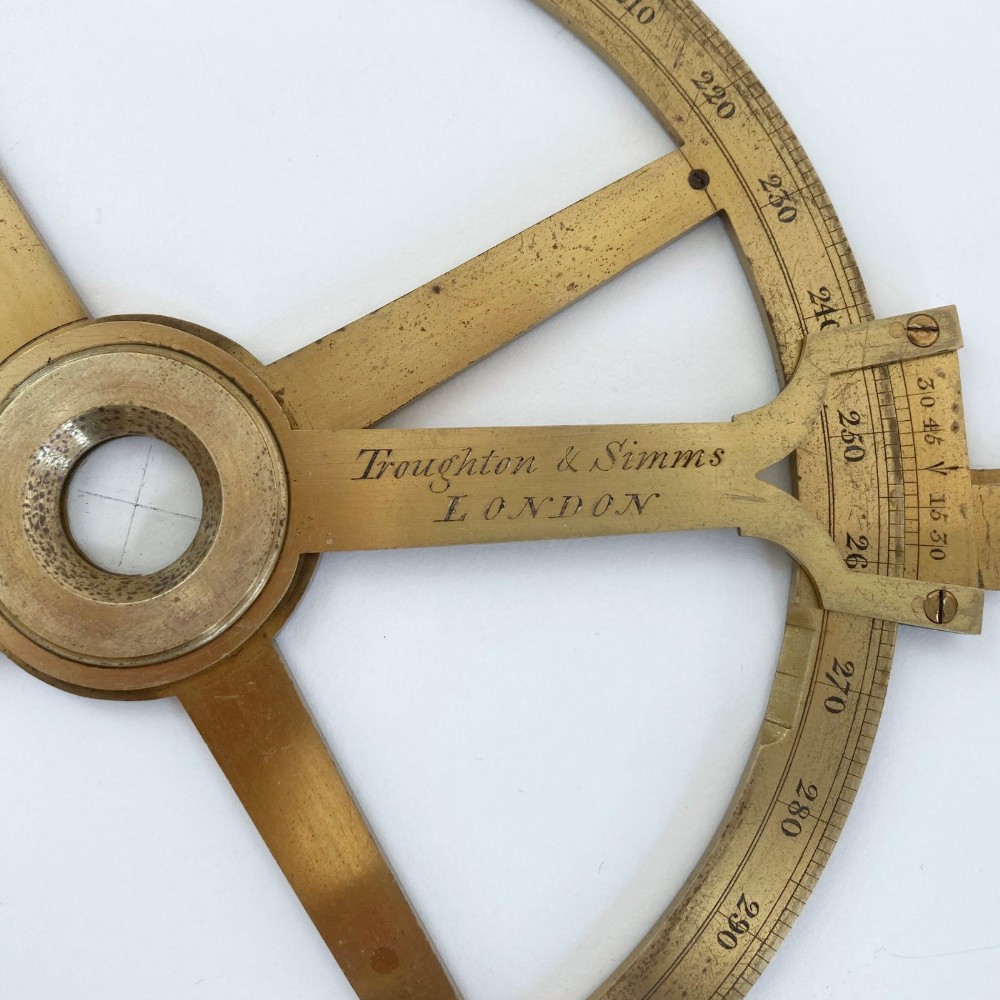
The arm is beautifully engraved to the makers, Troughton & Simms.
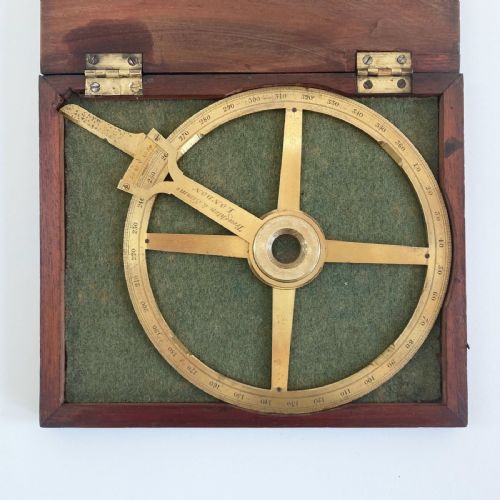
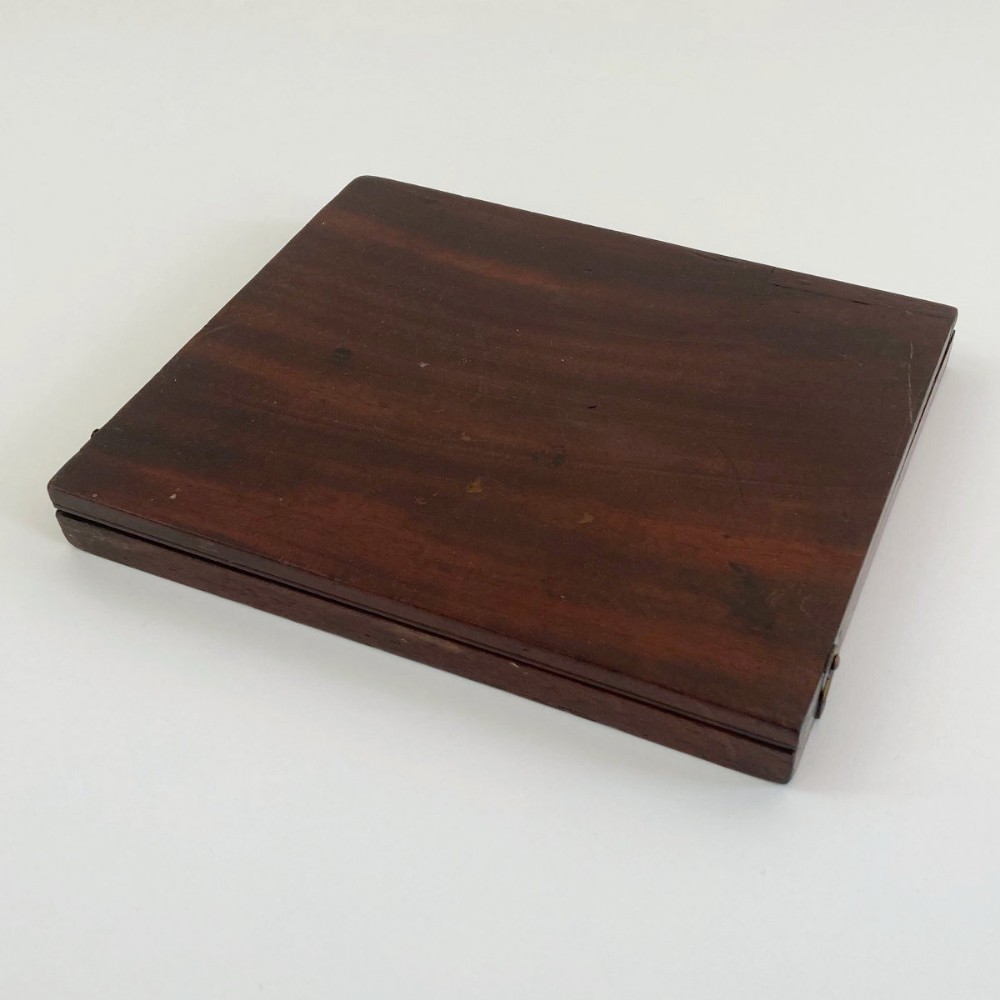
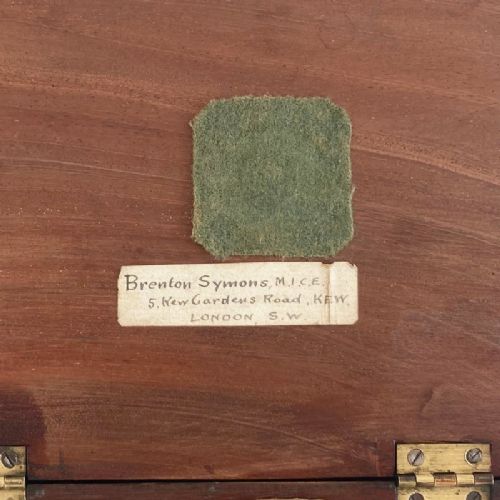
The instrument is complete with it original fitted mahogany case with original green baise interior. It also includes a label with the owners details. Brenton Symons M.I.C.E. (Mechanical Institute of Engineers) and his address of 5 Kew Gardens Road, Kew, London. S.W.
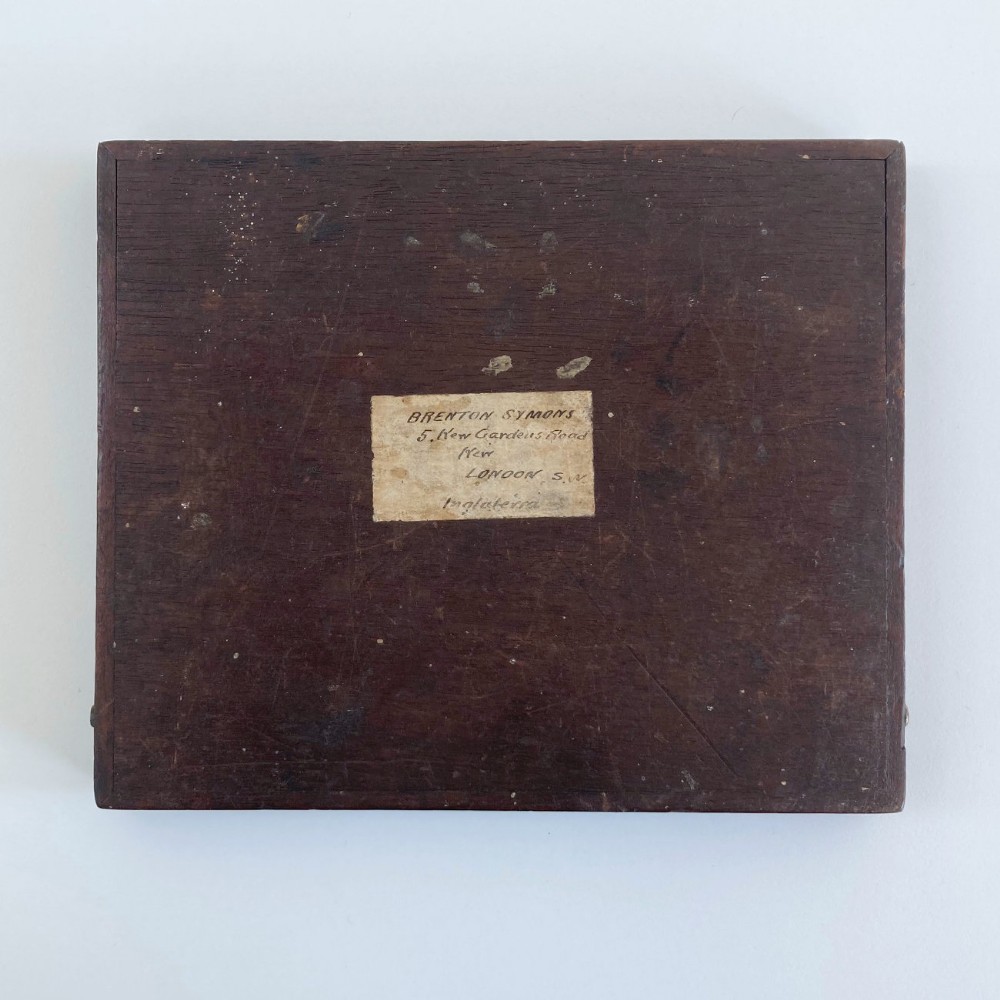
The base has a similar sticker which provides the same information with the inclusion of the word “inglaterra” suggesting that it was labelled for a trip to a Spanish speaking country.
William Brenton Symons was born in Redruth, Cornwall in 1832 and was educated at Truro Grammar School. Following in his Father Robert’s footsteps, William was trained as a surveyor and engineer. Up until the 1860’s, he seems to have been largely based in Cornwall working for the mining industry in producing land and mineral surveys. In 1863, he published a map of the Caradon & Ludcott Mining District and also an accompanying book entitled, “The History & Progress of Mining in the Caradon and Liskeard Districts”.
During the first half of the decade he is also known to have visited both Wales and Wicklow in Ireland where a series of articles on the Wicklow Mining District were published through the Irish Industrial Magazine.
In 1866, Brenton Symons took the position of civil engineer with the Chontales Mining Company in Nicaragua, his departure probably coinciding with the financial crash of the same year. He remained there for two years and then took a position as Managing Director of the Servian Copper Mining & Smelting company.
Brenton Symons continued to publish survey maps throughout his life and in 1884 also published several books relating to mining subjects, including, “A Sketch of the Geology of Cornwall and The Genesis of Rocks & Ores. He died in Surrey in 1917.
The inclusion of the Inglaterra on the case of the instrument strongly suggests that Brenton Symons carried this instrument with him to Nicaragua during his employment there. This allows a good opportunity to date this instrument’s production to 1866 or before.
The Troughton family of scientific instrument makers were prolific and highly respected manufacturers from the mid eighteen century. Edward Troughton was trading on his own by 1804 and was responsible for considerably expanding the Troughton’s reputation for quality during his lifetime. He was apprenticed to his brother John in 1770 and later formed a partnership with him named J&E Troughton. Following John’s retirement in 1804, he maintained the business in his own right and was elected a Fellow of The Royal Society in 1810. He was considered a peer of the great Jesse Ramsden, responsible for numerous developments in surveying and navigational instruments including the invention of the pocket sextant. From 1826 Troughton merged his business with that of William Simms.
Simms was born in Birmingham but moved with his family to London where his father was employed in making marine compasses. He was apprenticed to a goldsmith, William Penstone but turned over to his father (also William) two years before completion. In 1815, he emerged and went into business as a Freeman of the Goldsmiths Company of London. Soon after, he submitted his plans for an ‘improved protractor’ to The Royal Society and was supported by Thomas Jo
Jason Clarke Antiques has dated this piece to the 1860s.
You can view the stock and full dealer information on the Jason Clarke Antiques Profile Page
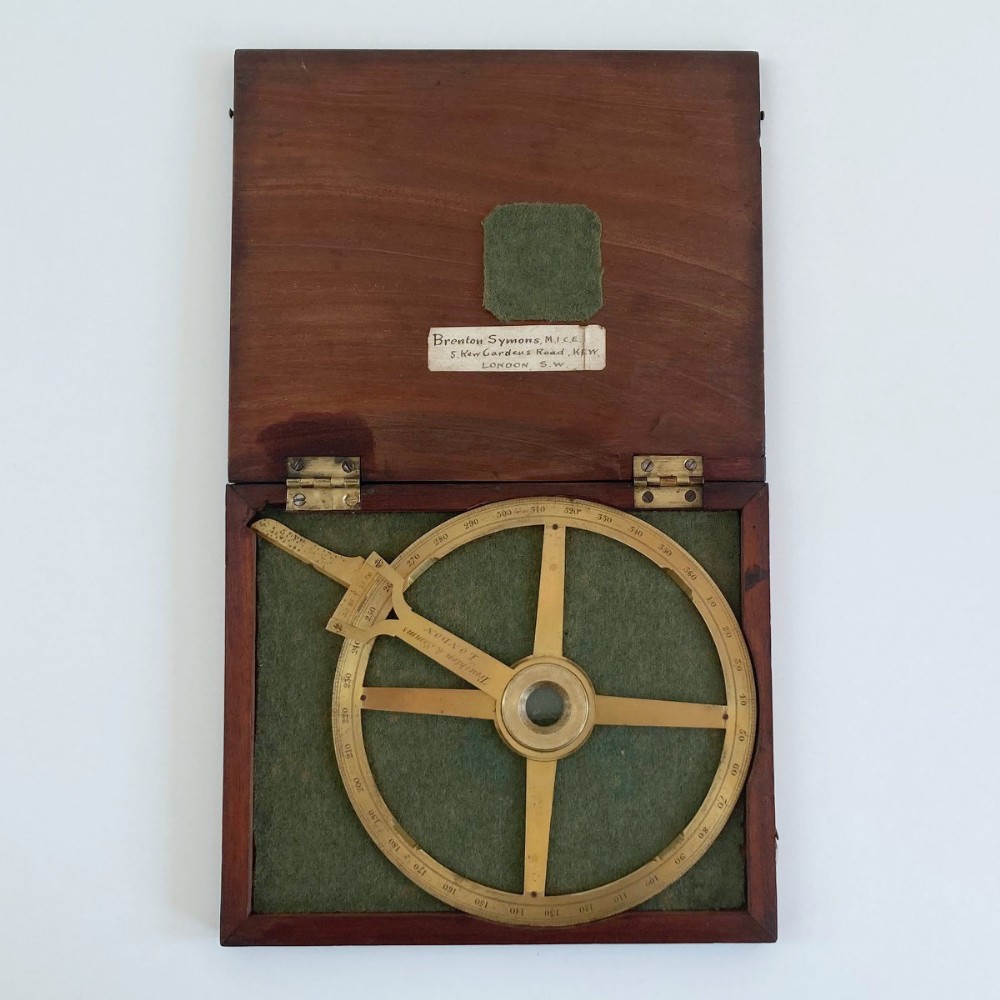
Circular Protractor by Troughton & Simms Owned by Brenton Symons Cornish Mining Engineer