Jason Clarke Antiques has dated this piece to the 1800s.
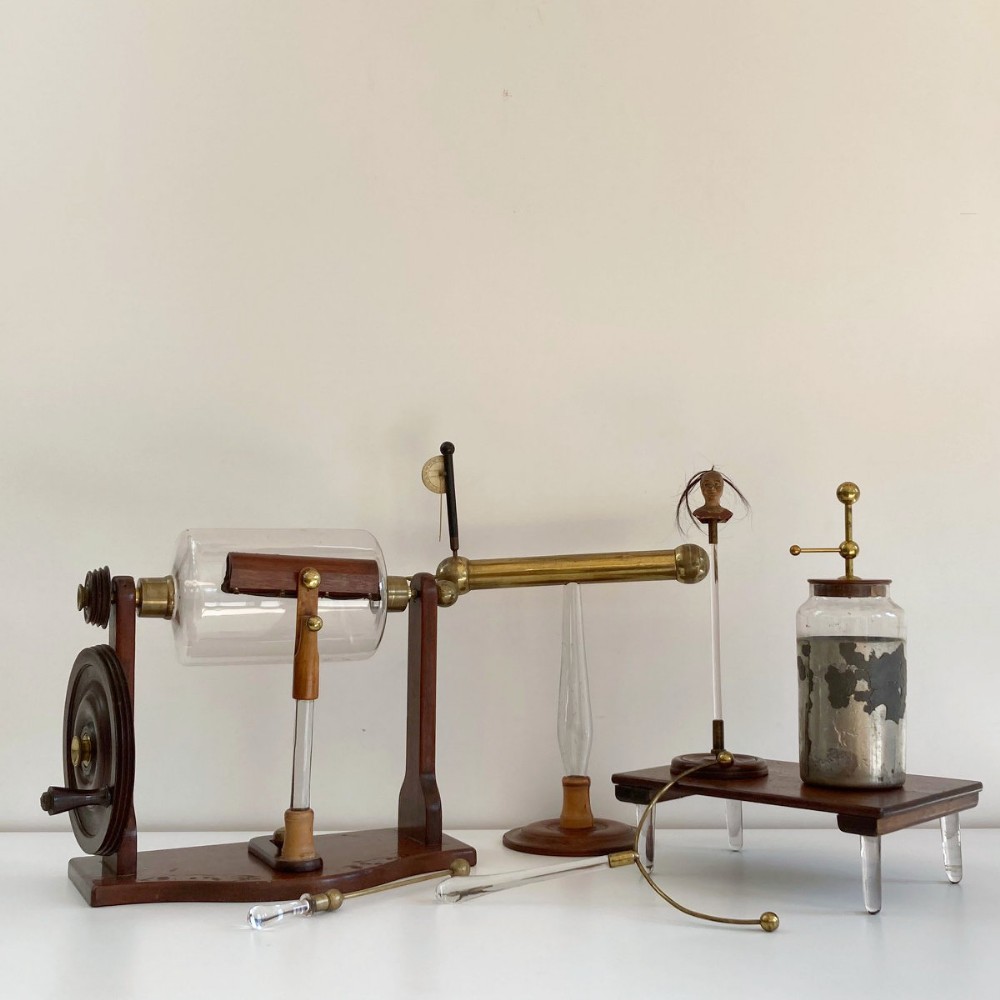
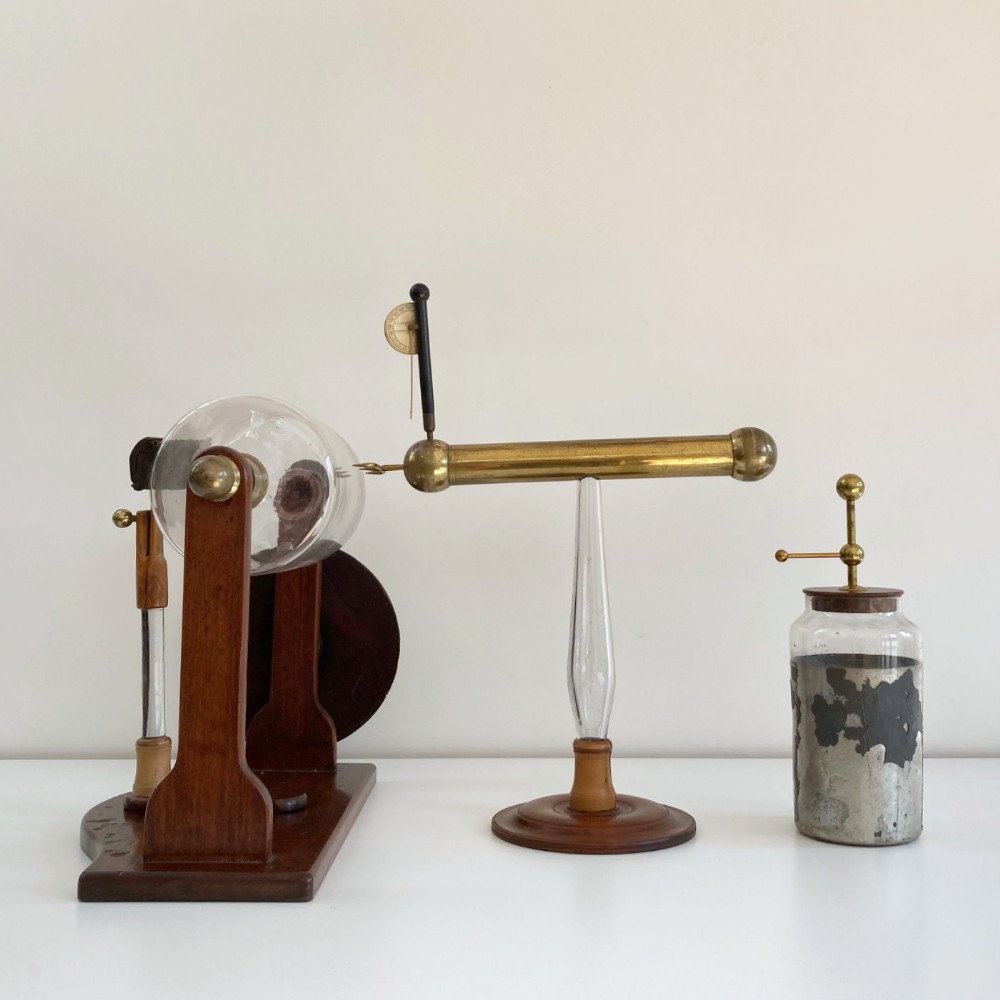
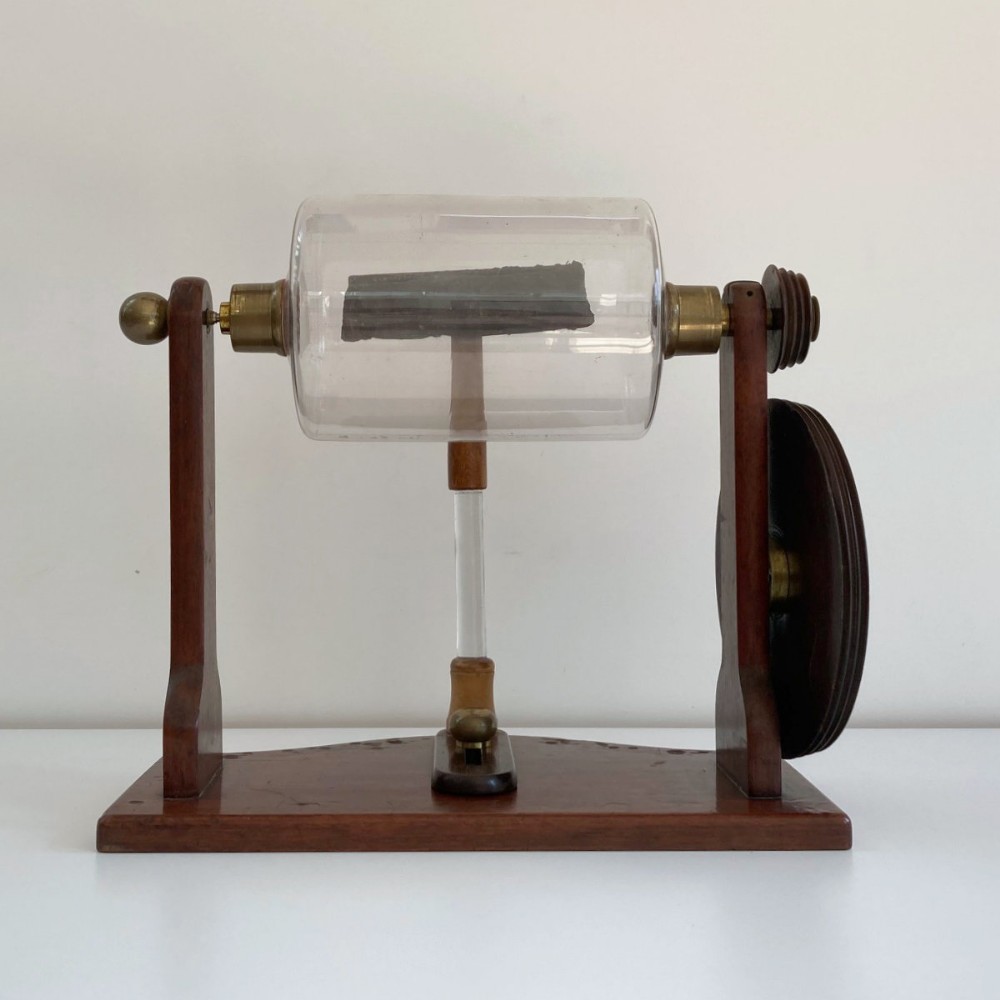
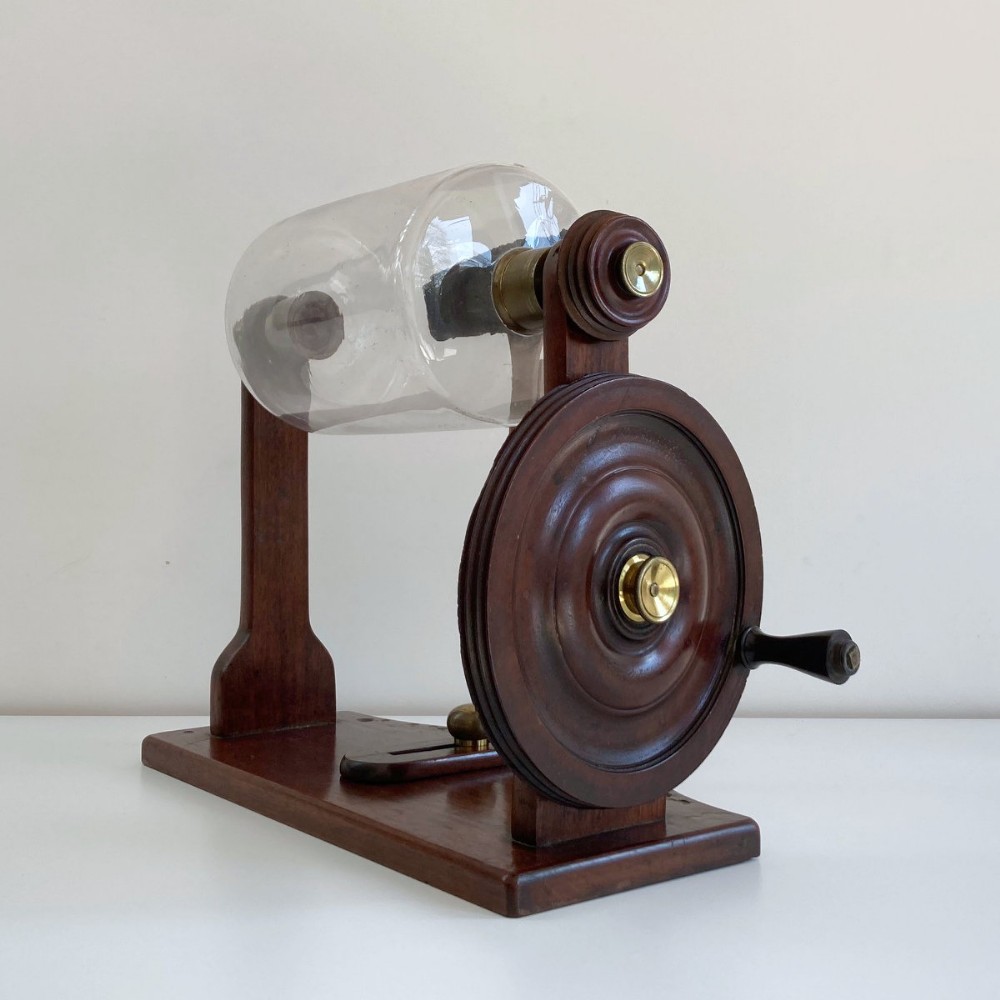
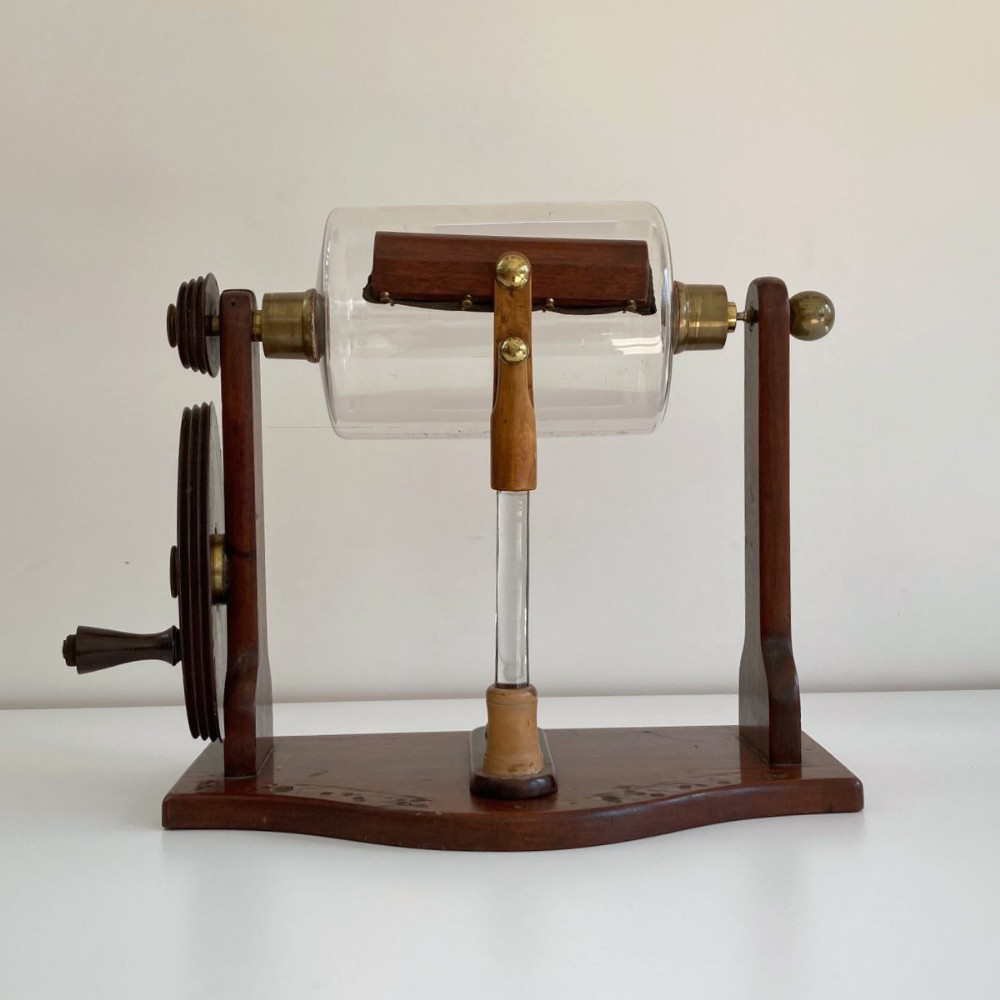
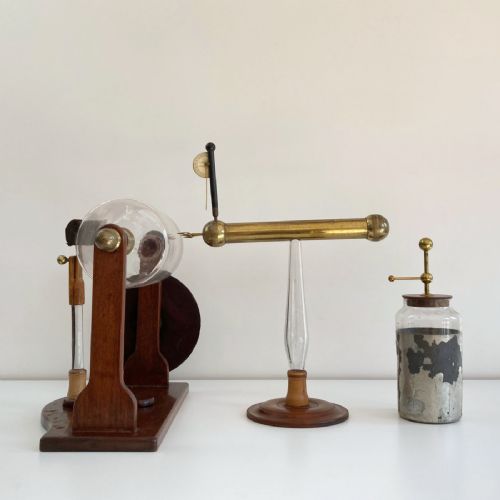
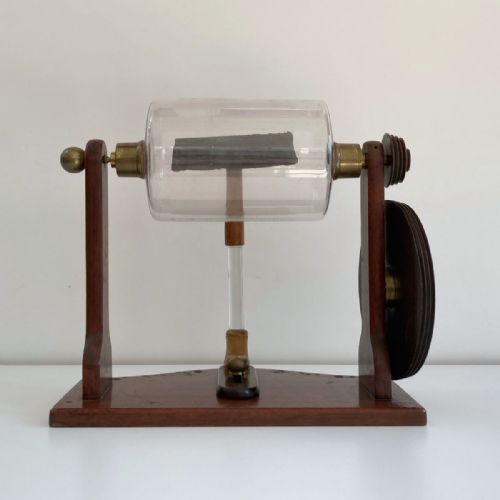
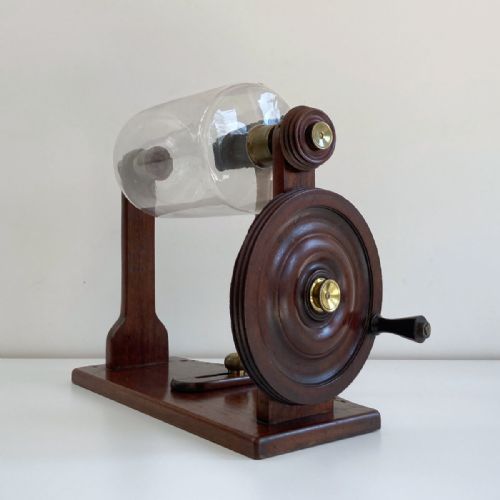
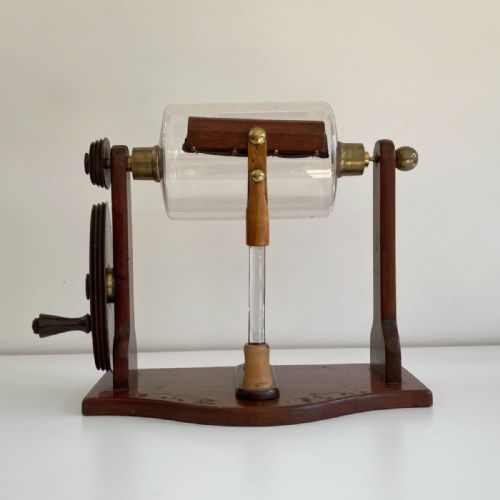
The electrostatic machine consists of a large glass cylinder suspended horizontally by beautifully manufactured brass supports on a mahogany frame with two mahogany gear wheels and a handle to one end in order to revolve it.
The act of turning the cylinder against the leather creates friction and removes a charge from the pad. Consequently, the resulting charge can be transferred to a collector.
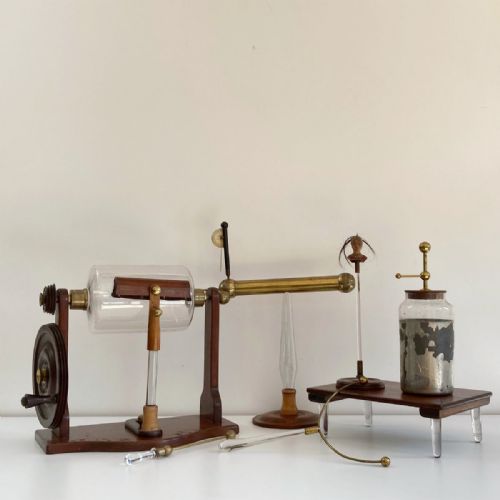
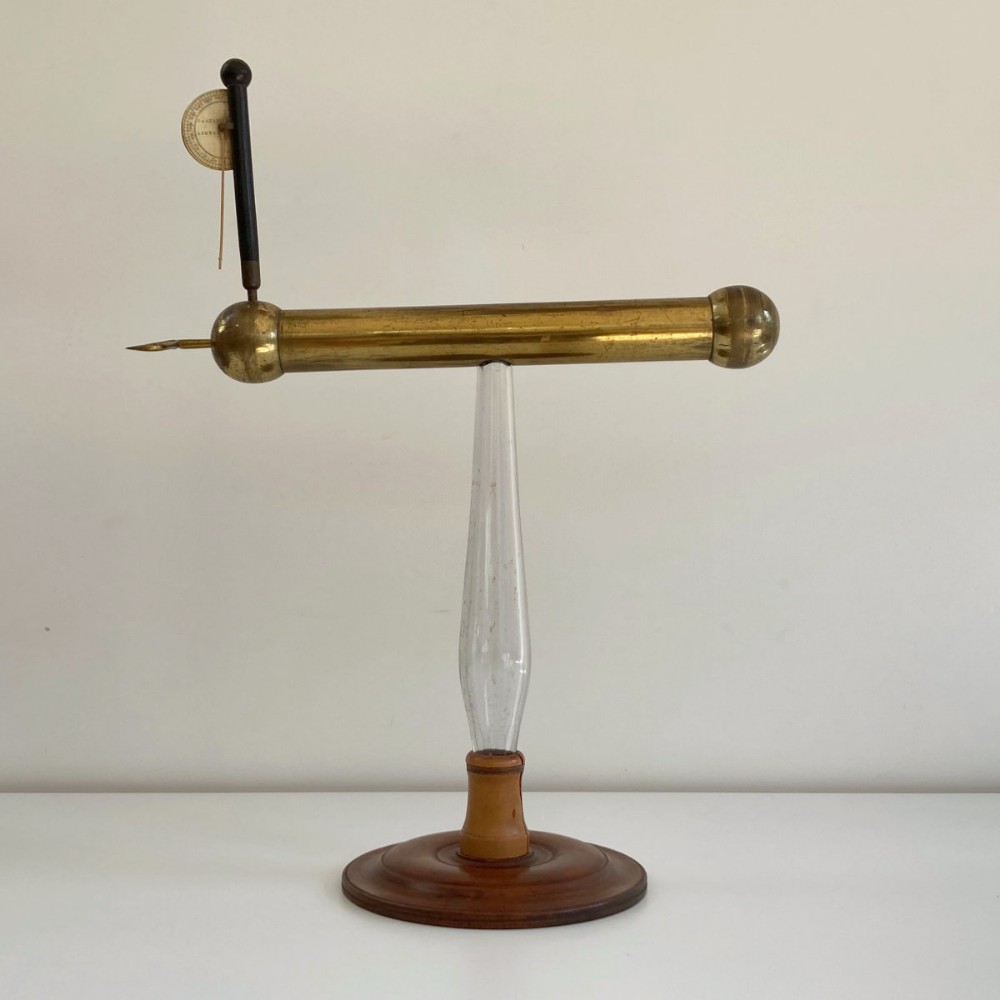
The collector consists of a turned mahogany base into which is screwed a boxwood support with a glass strut attached to the centre. A brass tube with globular ends is affixed to the end of the glass to complete it. There are numerous holes within the brass collector. The end holes would be utilised for applying the collecting comb and the other end for attaching a chain to connect with a Leyden jar or some other experimental attachment such as an electrostatic bell for example.
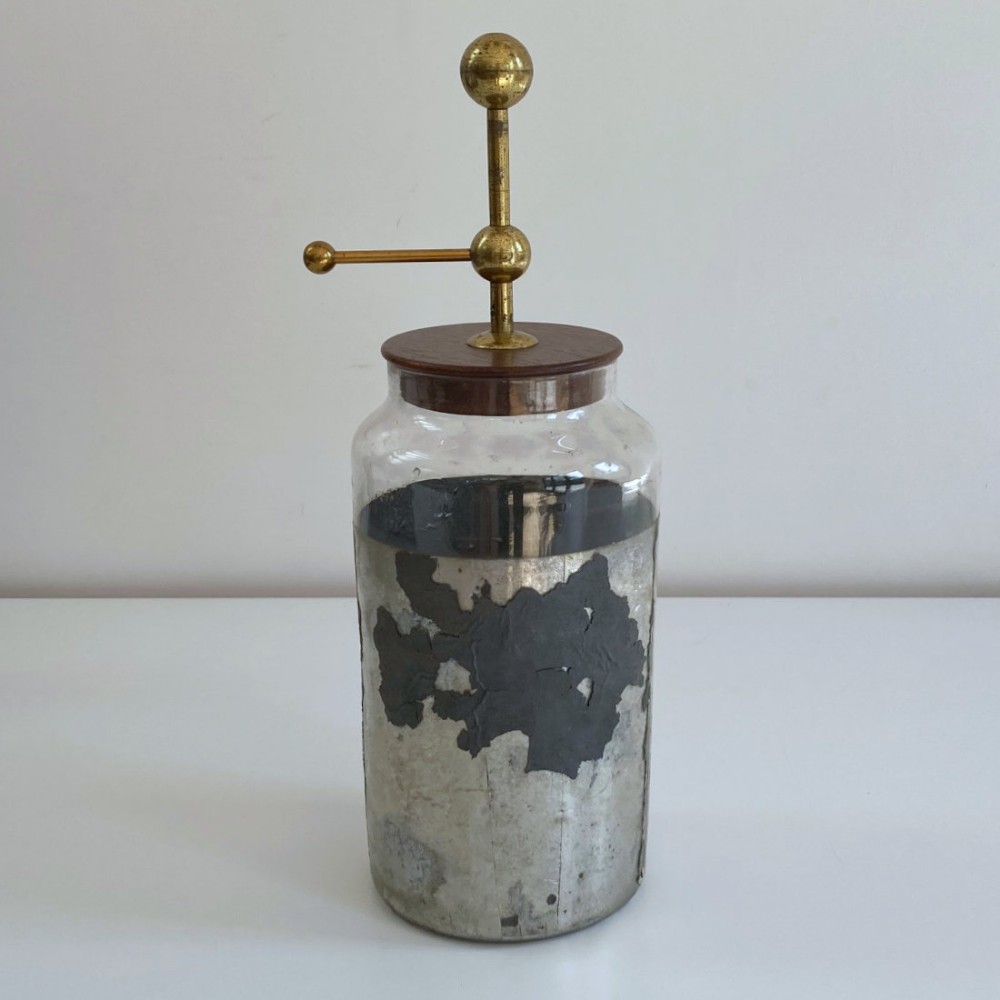
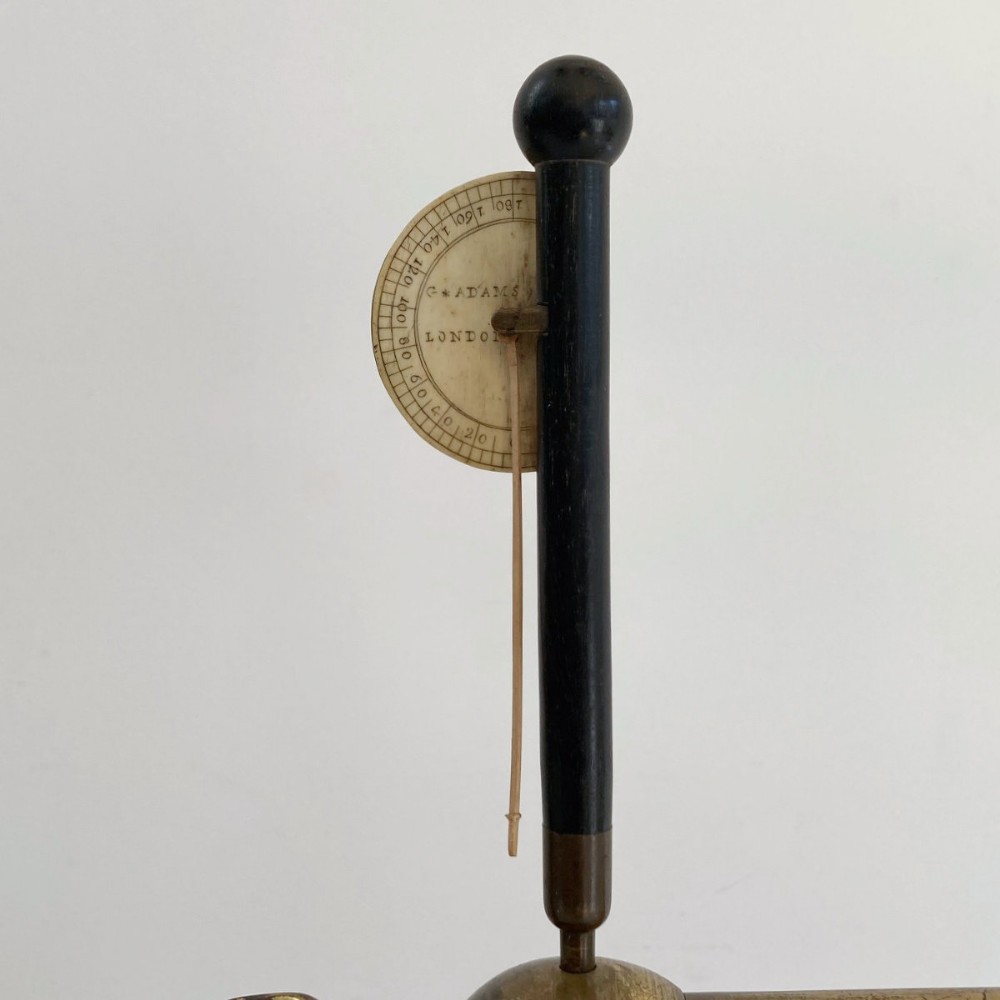
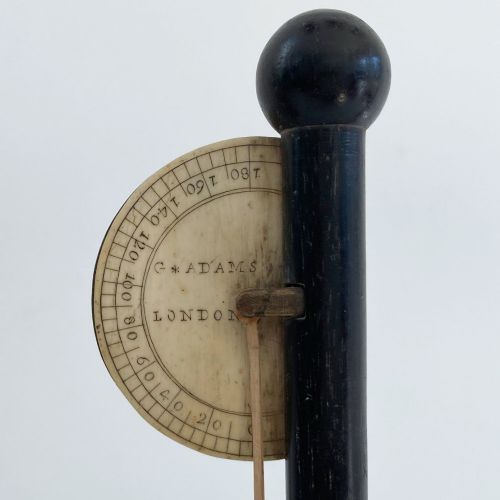
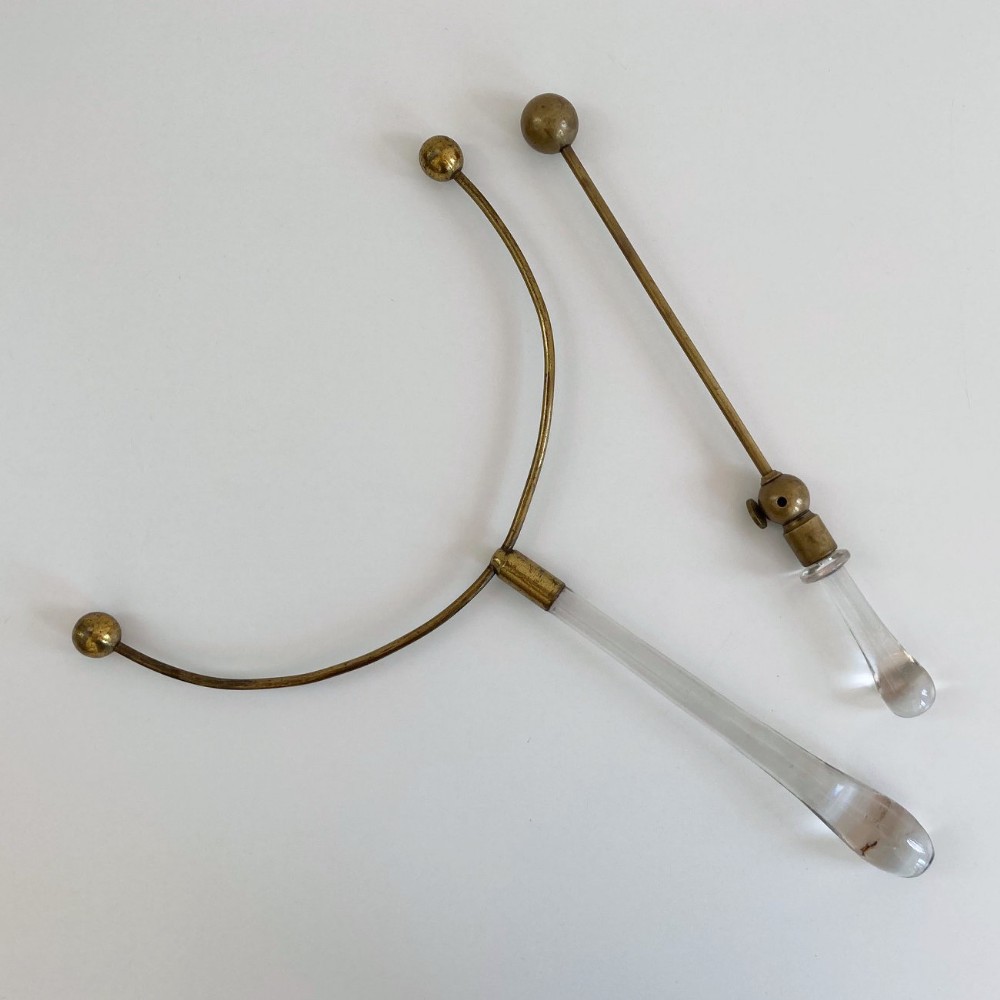
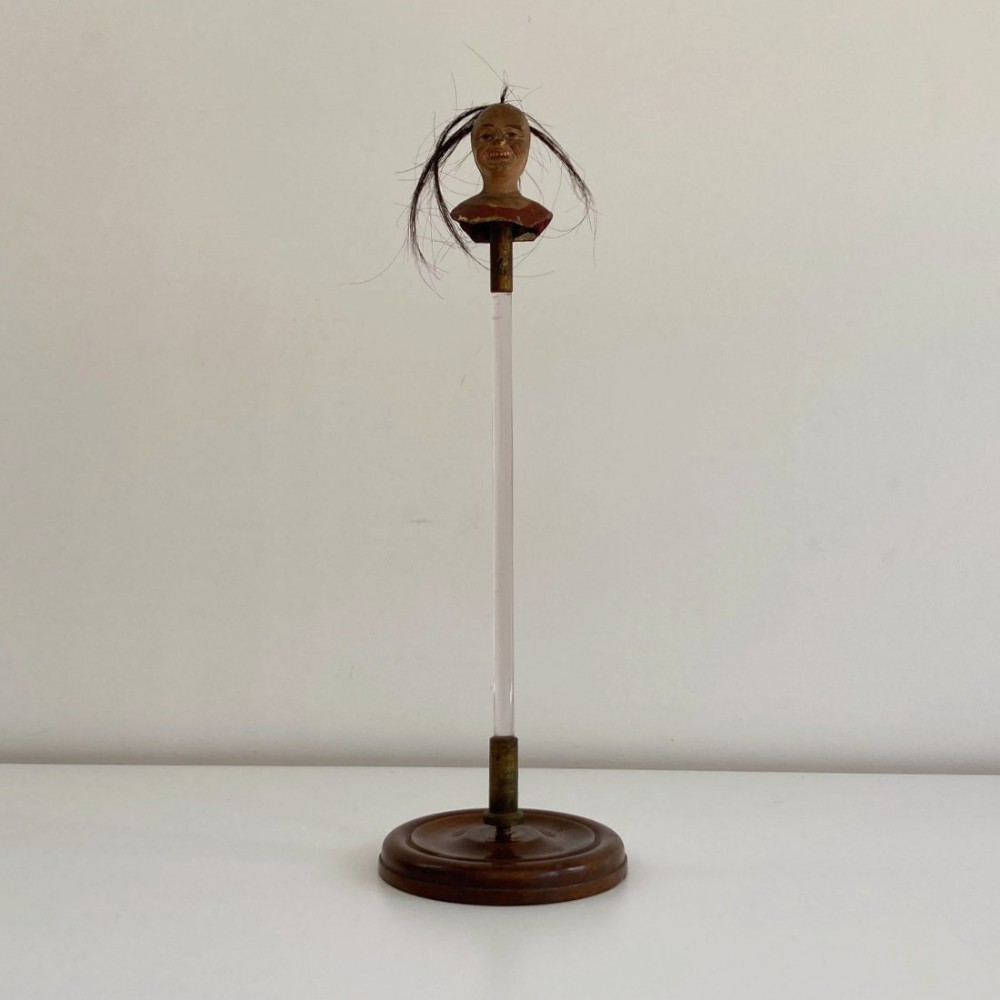
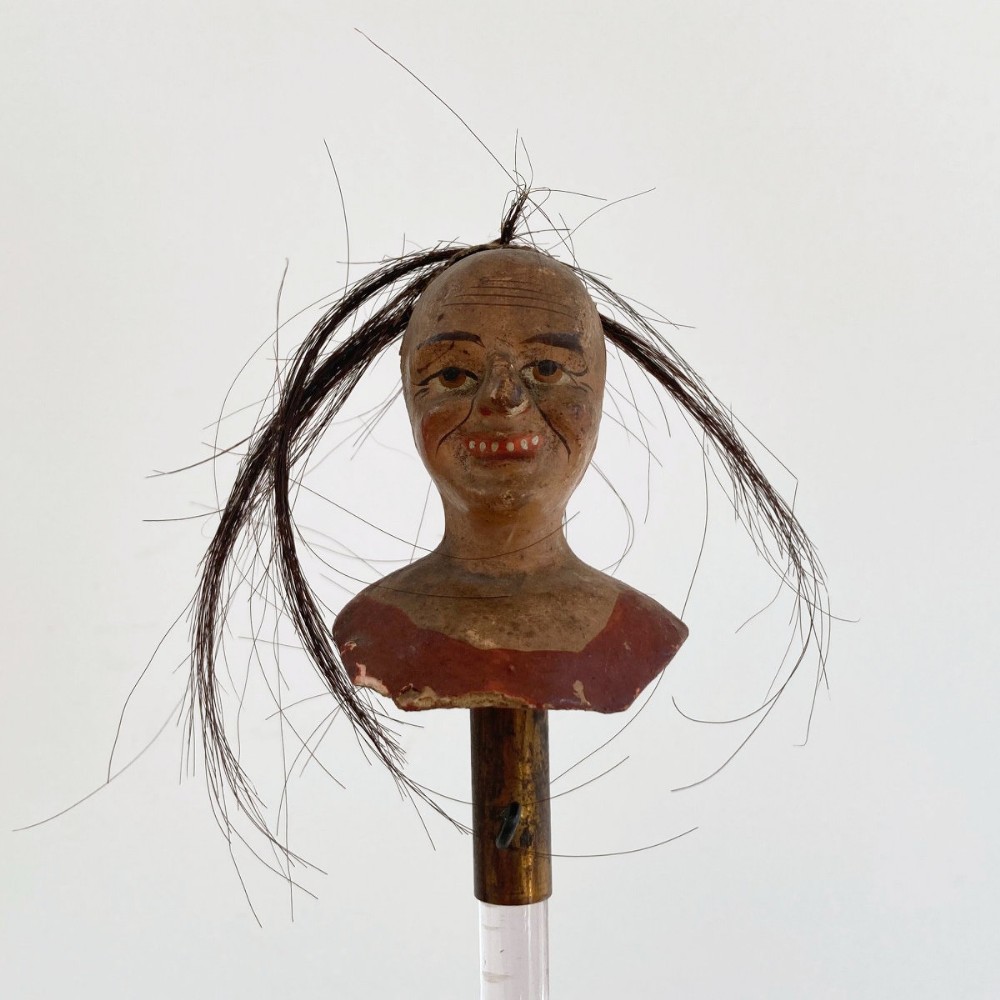
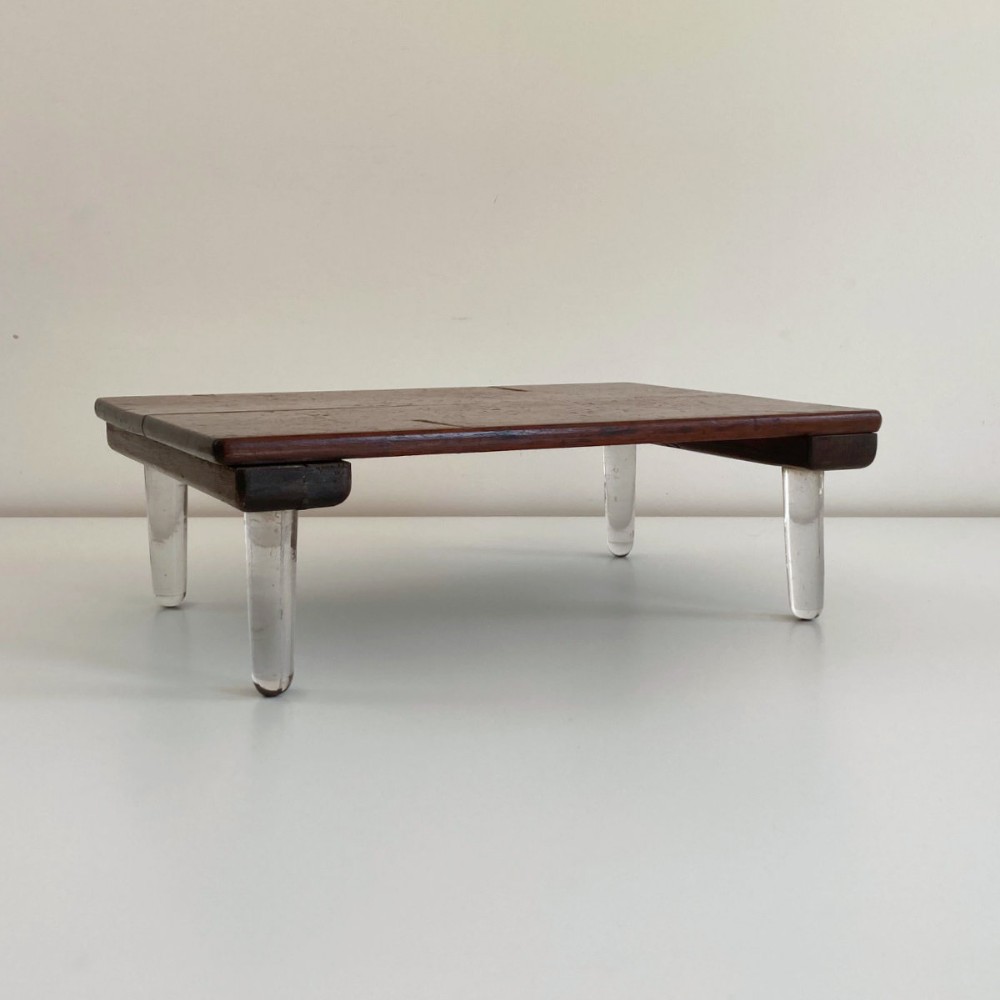
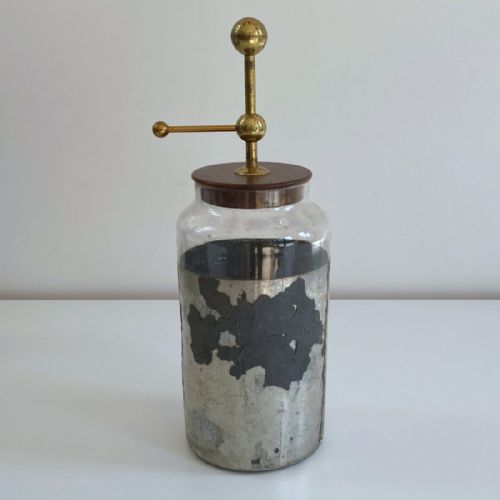
On its own, a set of this period would be a supremely rare but it also comes complete with its original Leyden jar, a Henleys quadrant electrometer engraved to G. Adams London (to be applied to the top of the collector), two sets of glass handled discharge tongs, a plaster head model on stand with hair applied (for demonstrating that hair stood on end when a charge was applied) and a mahogany insulating stool with glass legs which would allow the user to operate the machine without risk of earthing.
This set is contained in its original pine packing case with fitted interior for storing each component, exterior handles and campaign type iron strapwork to the edges and corners.
The original machine was devised and patented on the 5th of February 1782 by Edward Nairne. (Number 1318), entitled an “Electrical Machine, or a method of insulating such machine, and constructing the conductors so that either shocks or sparks may be received from them. Insulated Medical Electrical Machine”.
They were originally sold by the partners Edward Nairne and Thomas Blunt accompanied by a sixty two page pamphlet with five explanatory plates, “the Description and Use of Nairne’s Patent Electrical Machine; with the addition of some Philosophical Experiments & Medical Observations”. The plates provide numerous images of a gentleman attaching a variety of electrodes to different parts of his body to demonstrate the therapeutic treatment offered by this machine.
Less common than Ramsden’s slightly later single plate friction machine, this design remained popular until about the middle of the nineteenth century for therapeutic treatments however unsuccessful they may have been. An interesting painting by the artist David Henry Friston depicting a woman receiving treatment from a similar example currently resides in the Geffrye Museum in London.
The Adams dynasty needs little introduction, a family who began their success in the early Eighteenth Century. George Adams Senior was born in Fleet Street, London in 1709 to Morris and Mary Adams. His Father was a freeman of London, belonging to the Loriner’s Company and although he was a liveryman, was actually a cook by trade. At the age of fifteen (1724), George was apprenticed to a James Parker, a mathematical instrument maker of the Grocer’s Company for a premium of £20. His initial two years were not without difficulty as his father Morris died the following year leaving George, his mother Mary and two further children without support and the following year also saw the death of his master. By good fortune, George was turned over to a new master Thom
Jason Clarke Antiques has dated this piece to the 1800s.
You can view the stock and full dealer information on the Jason Clarke Antiques Profile Page
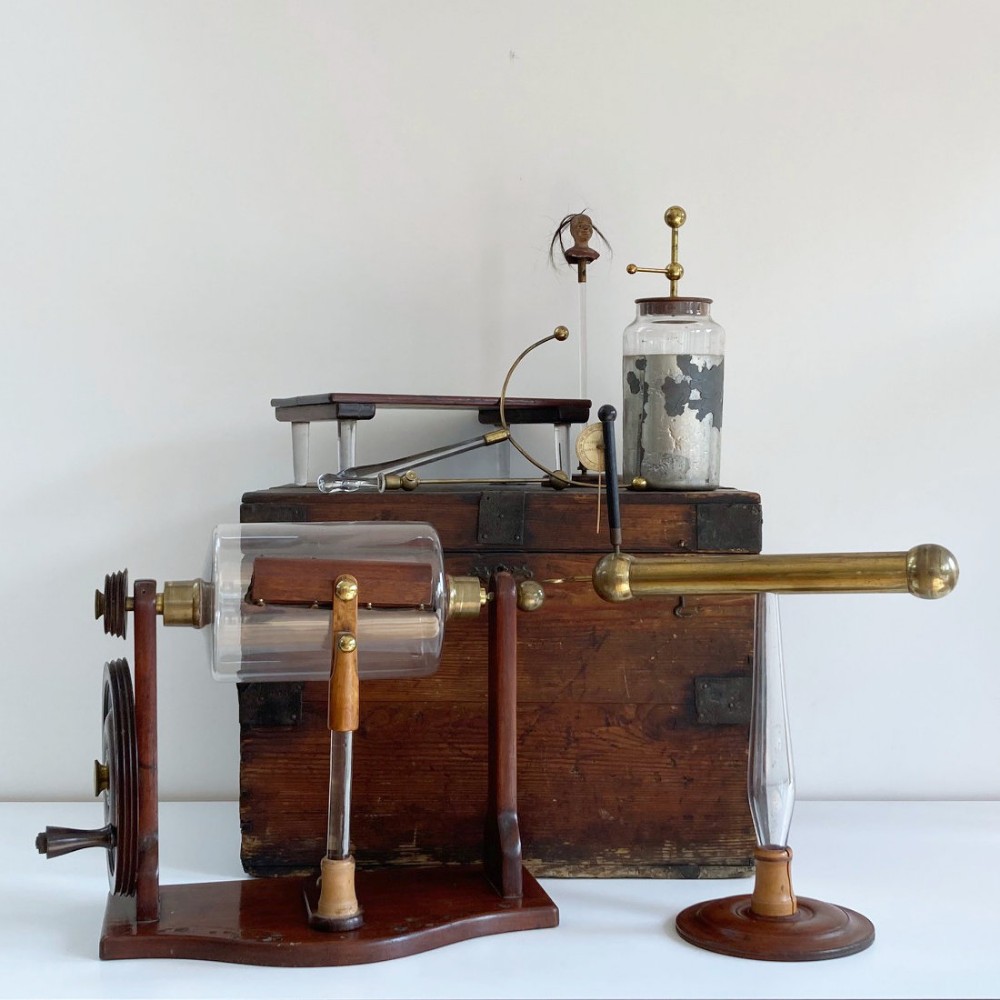
Cased Nairne Pattern Electrostatic Machine with Accessories by George Adams of London