6,120  PAGES BROWSED TODAY PAGES TODAY 0  ANTIQUES UPLOADED TODAY NEW ARRIVALS
ID #SA883168
FOR SALE
£295
Email Buy
Save
Late Victorian Cased Hardings Patent Pocket Revolution Counter
Jason Clarke Antiques
for sale €345     $375
£295
Jason Clarke Antiques

Jason Clarke Antiques

Sellingantiques Verified Since Jul 2015
View Dealers Stock Page
Id #SA883168
PDF SHARE
SAVE

Late Victorian Cased Hardings Patent Pocket Revolution Counter

19th century
Description

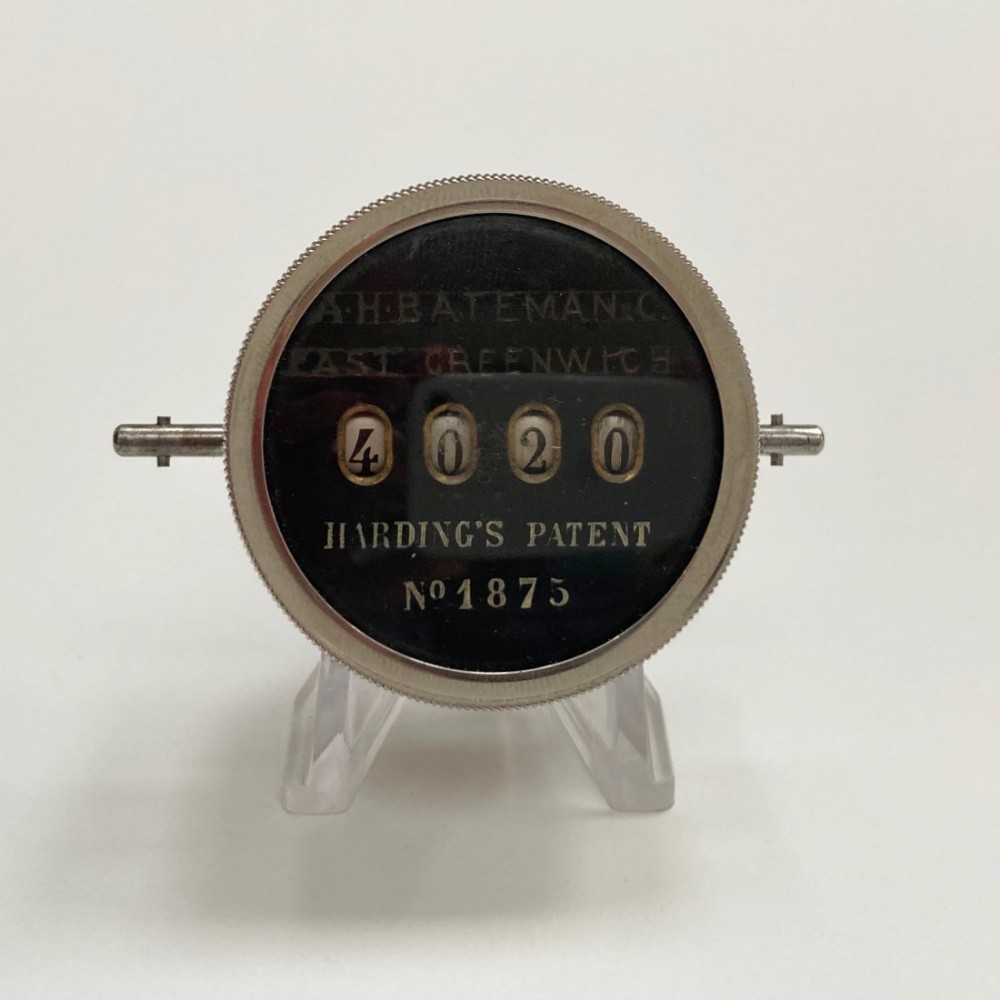
For sale, a late Victorian Harding’s Patent Revolution Counter marked to AH Bateman & Co of East Greenwich, London.

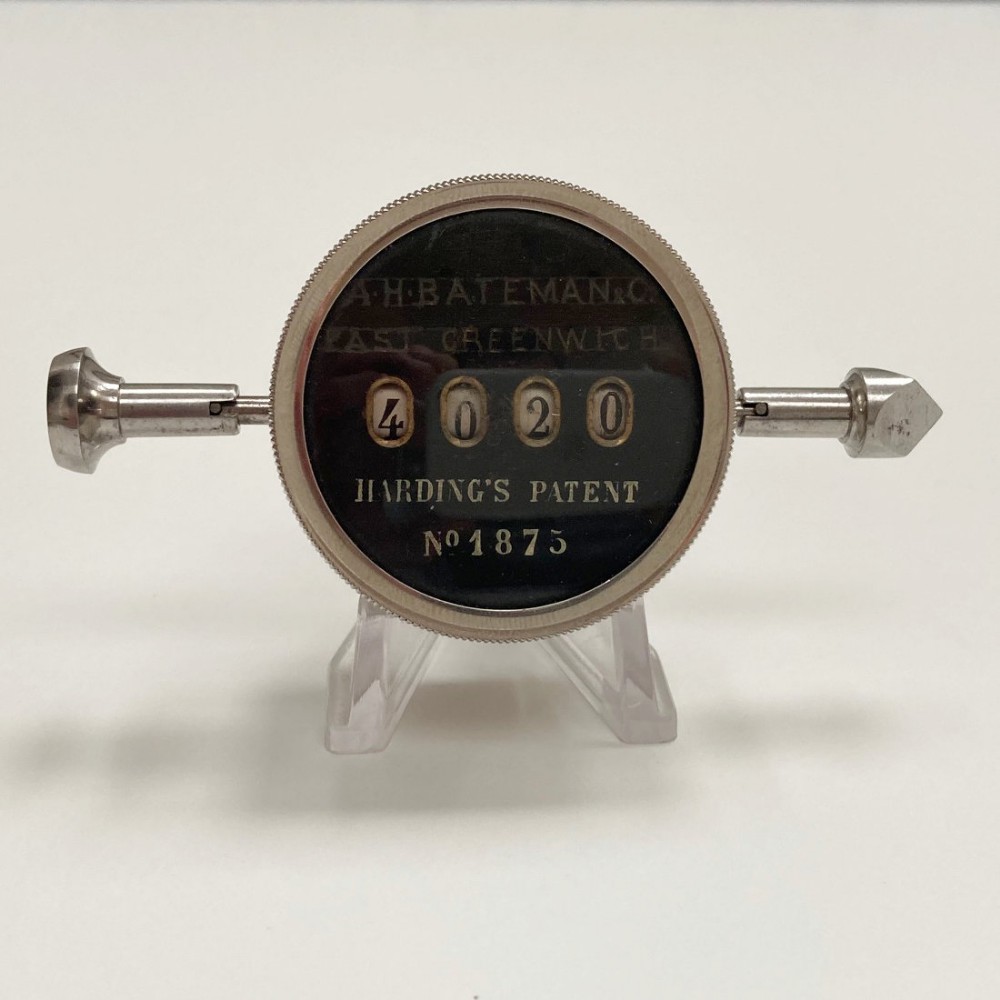
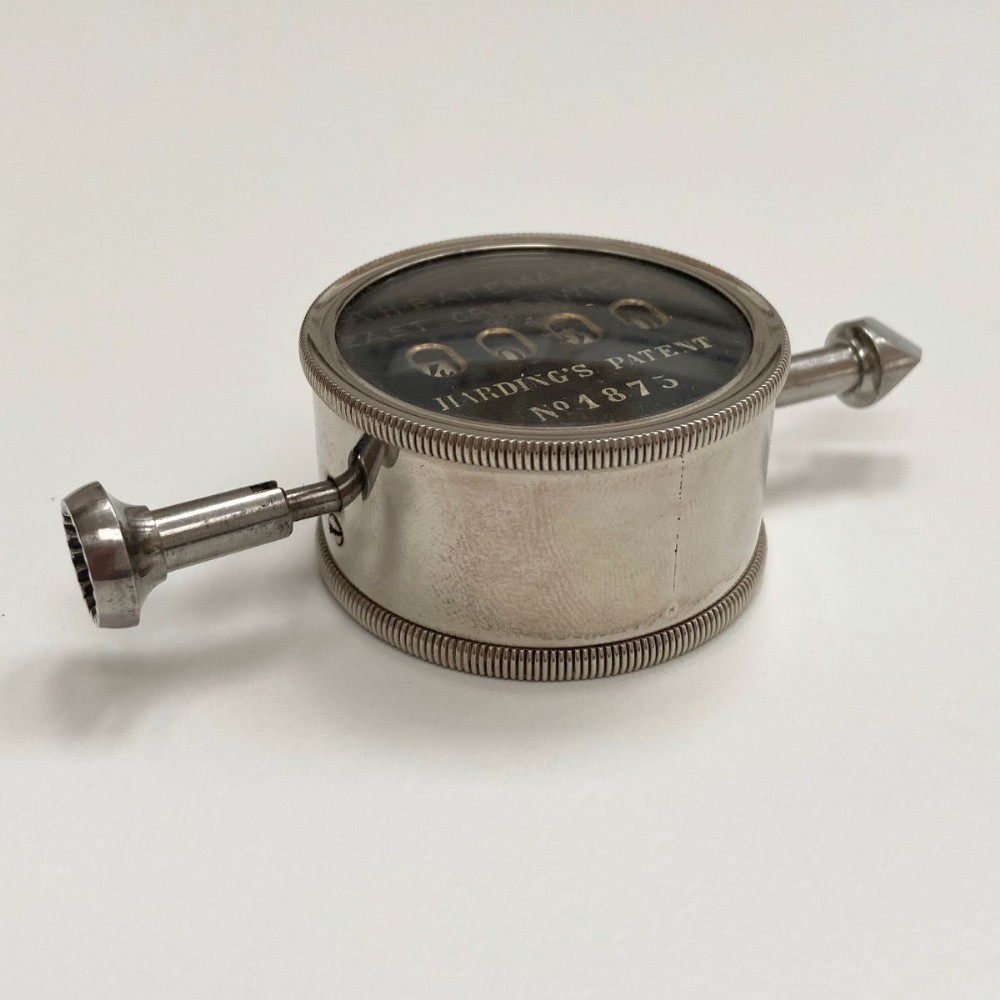
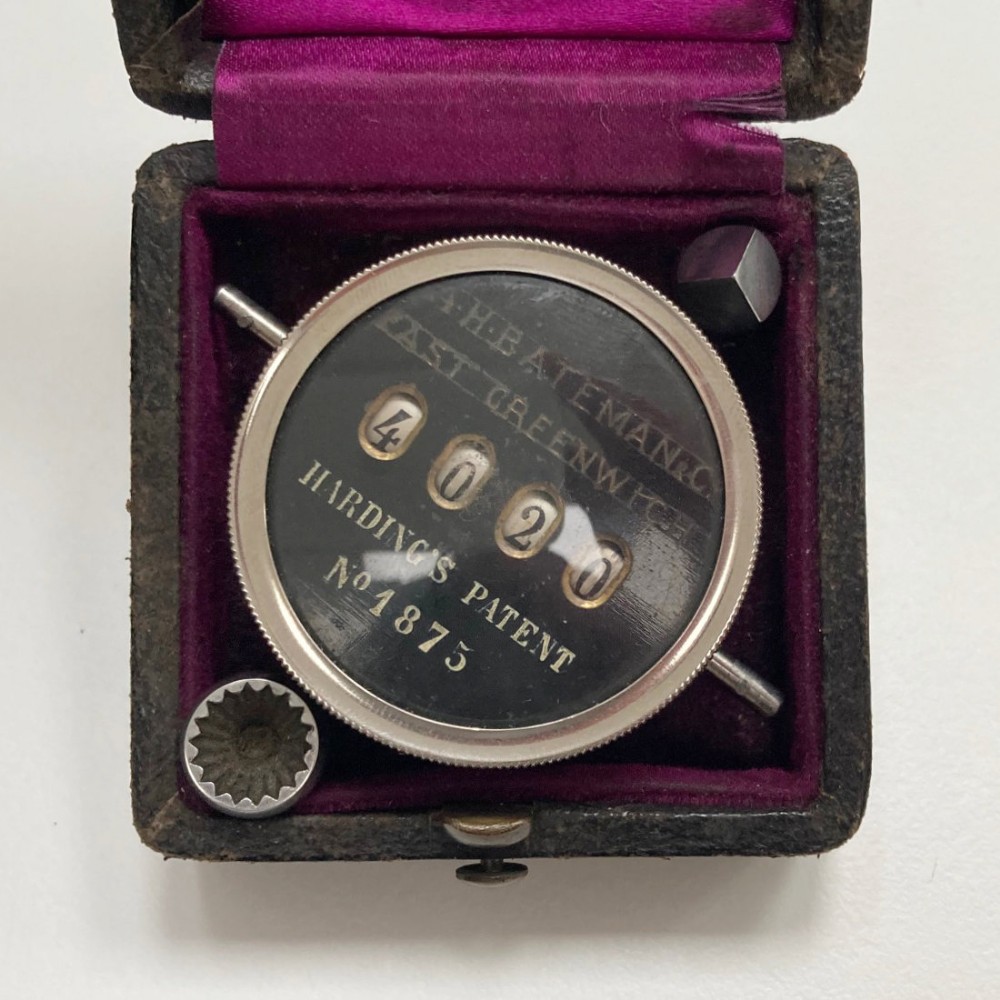
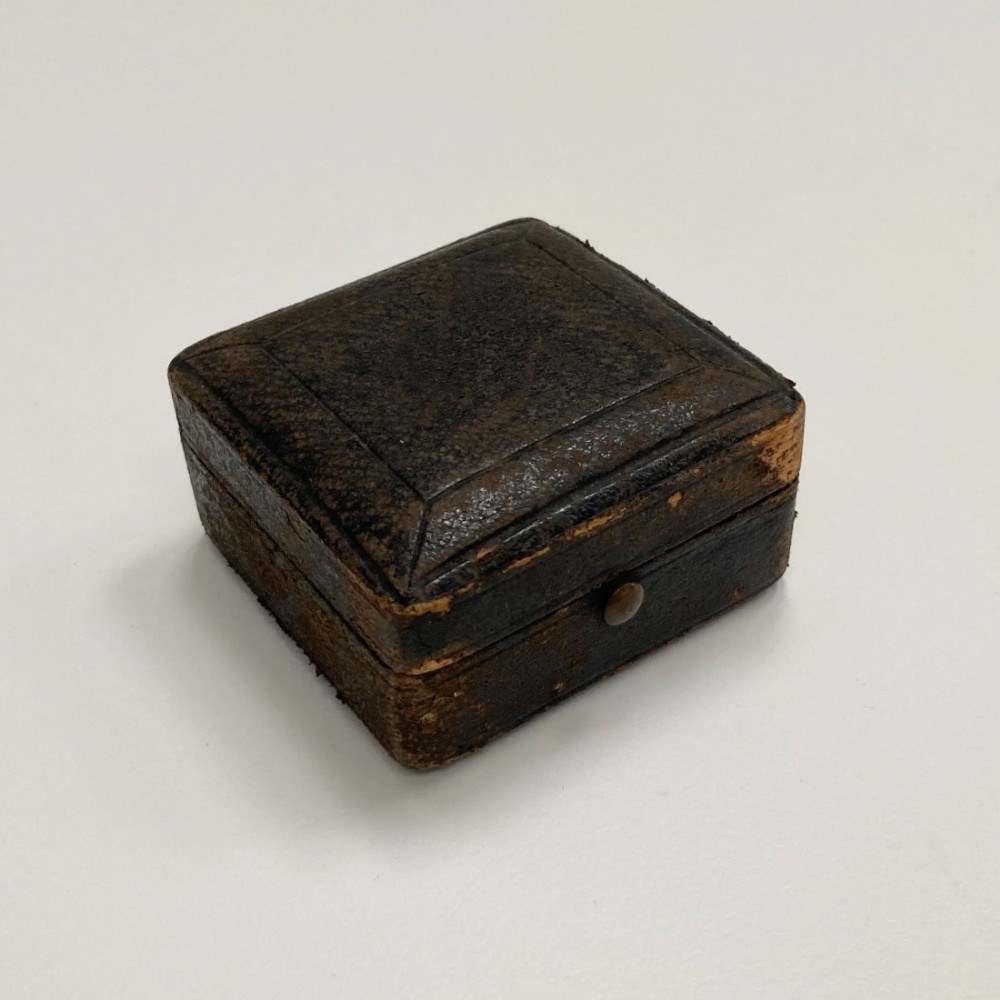
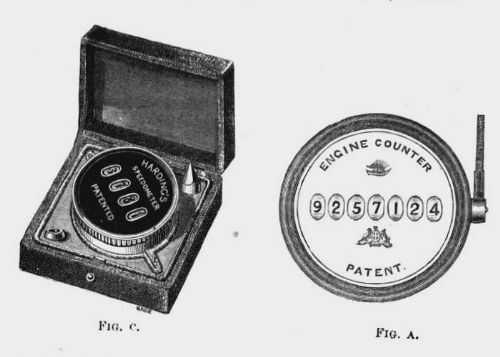
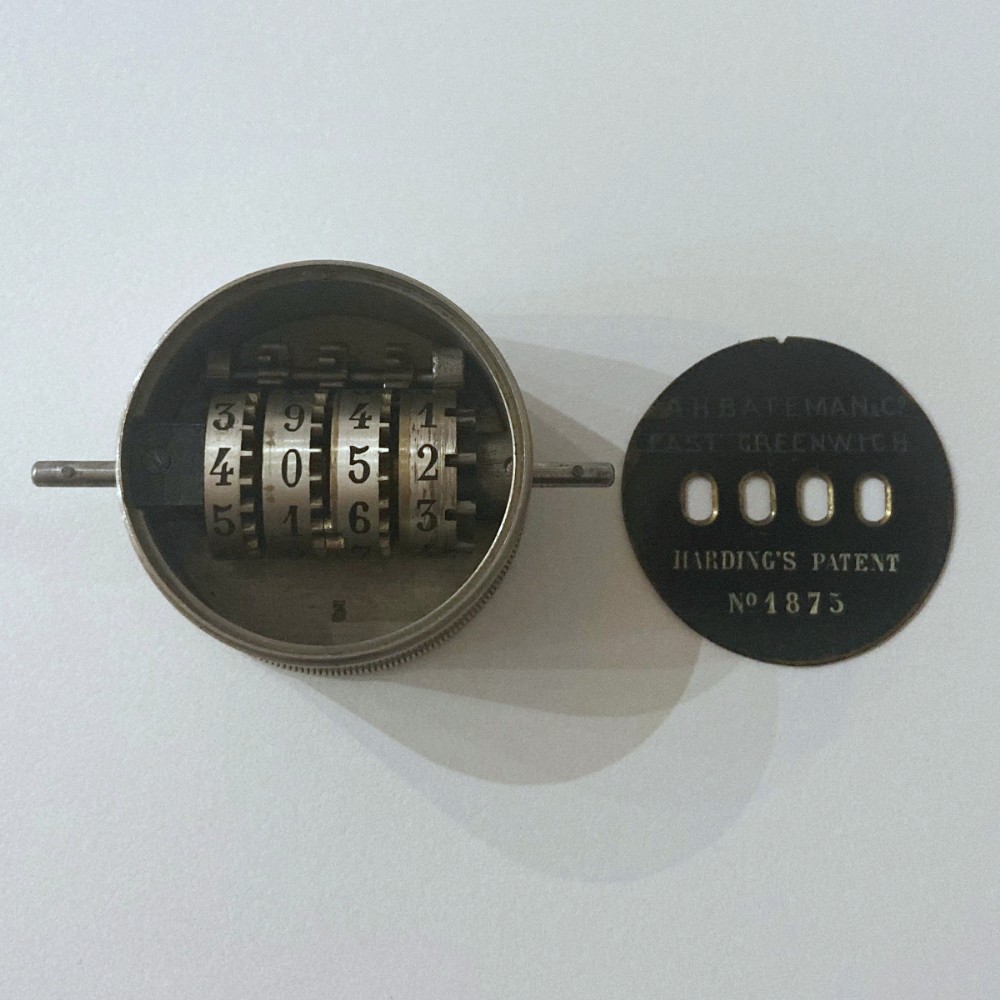
Enclosed in a pocket sized, leather covered case with red silk and velvet interior, this 1 ¾” diameter revolution counter is comprised of a nickel plated case with glazed front protecting a brass, japanned plate with apertures revealing four number dials. This fascinating mechanism is explained in more detail below by virtue of its appearance in the 1878 release of the voluminous catalogues of Negretti & Zambra.

“Hardings Patent Circular Dial Engine Counter

The case with which the record of these counters can at any time be read off is a great advantage which they possess over all dial counters (such as those on water and gas meters), in the difficult reading of which important errors are often made.

Other advantages of these counters are, great simplicity of parts and solidity of construction, in consequence of which it is almost impossible for the apparatus to get out of order.

It consists in an ingenious combination of wheel and pinions. Each number wheel carries on the right edge of its rim twenty teeth, and on the left edge only two. The pinions are provided with eight unequal teeth, four being as broad and four half as broad as the pinion. Thus, as each number wheel completes its revolution, it moves the next one on one-tenth, and all the wheels are safely locked, except at the moment when they are being moved forward by their pinions. Some idea of the perfection of this arrangement may be gathered from the fact that the Pocket Counter or Speedometer, of which the mechanism is a mere reduction of that of the large counters, may be used at speeds over 5000 per minute.”

There were four examples included in the catalogue ranging from large engine counters, small machine counters, pocket counters or speedometers and turnstile counters. This is of course, an example of the pocket version.

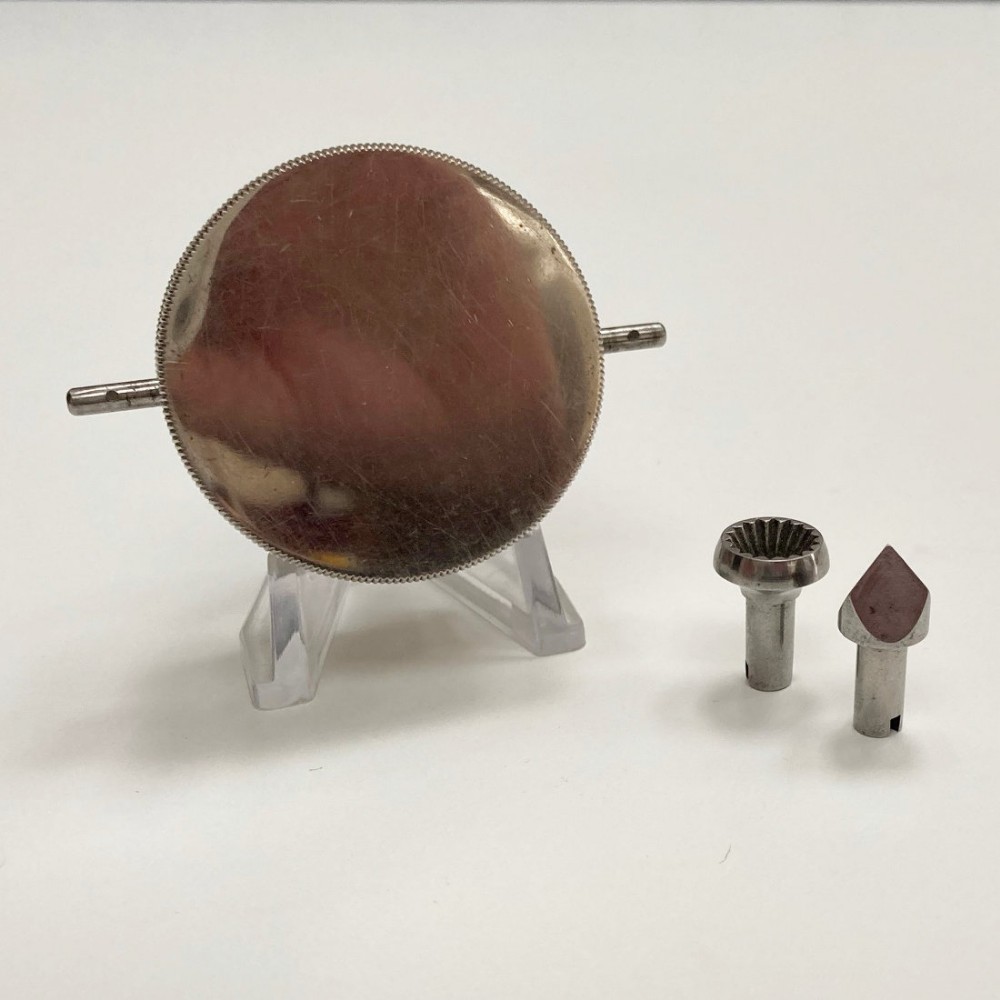
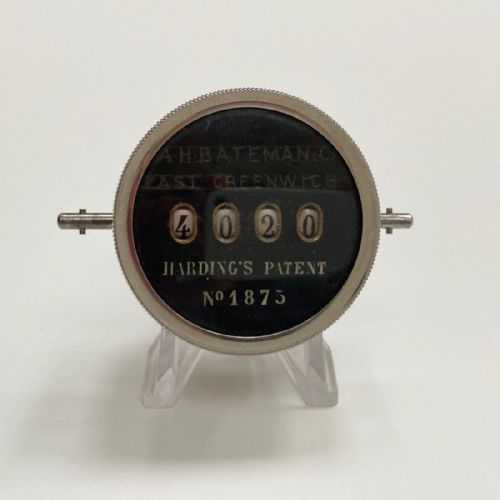
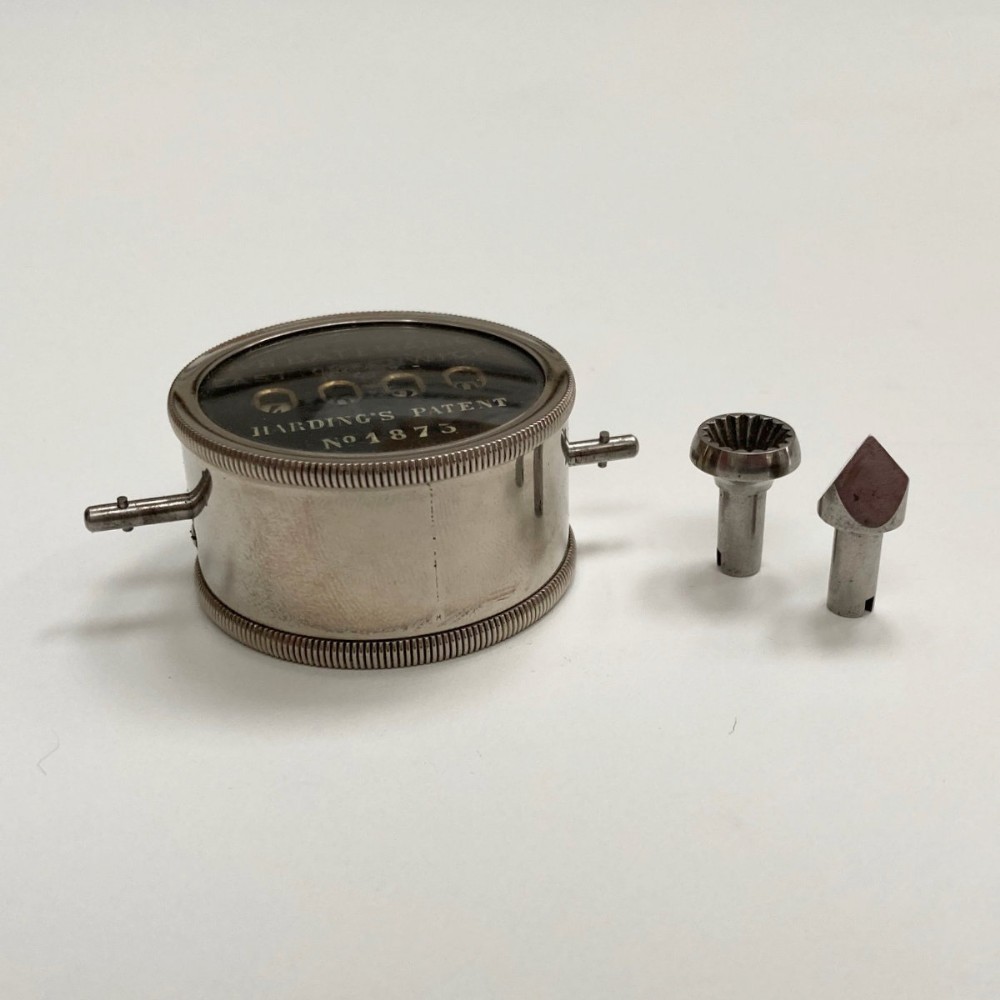
The face of the counter is marked for Harding’s Patent No 1875 and it is etched with the recipient company name of AH Bateman & Co, East Greenwich. The spindles which emanate from either side of the counter are intended to receive the attachments which would allow connection to the engine required. A fascinating and very tactile instrument which became an undoubted success for Harding during its promotion at the start of the 1870’s.

The English maker, Thomas R Harding began his business in 1836 in Lille, manufacturing cast steel pins and combs for textile production. The French location for the business is unsurprising when considering the huge reputation that Lille had for its centuries old textile industry.

That it relocated in 1858 to Leeds could be an indication of the positive economic effects of the Industrial revolution in England or purely a yearning to return home but it certainly did not harm the Harding business. In 1864, the company expanded to new premises, the Tower Works which featured state of the art extraction towers built to reflect the Italianate style and which remain a listed property to this day.

I am unable to find a patent application for the counter but owing to their appearance in the Negretti & Zambra catalogue of 1878 and adverts from 1872, we can be sure that the company were expanding their product range to support the varying needs of industry by this time, and also supplying other instrument making companies.

By 1890, Thomas Harding had retired and his son, Colonel TW Harding took control of the company and sought out a partnership with two related firms, William Rhodes & Co and Richardson, Child, Christy & Co. It was a slow process but by 1895, a new company of Harding, Richardson, Rhodes & Co was created, eventually becoming Harding, Rhodes & Co which continued to trade until 1981. Examples of numerous variations on the original counter can be seen in this compa

Physical Dimensions
Height
3.5cm (1.38")
Width
6.5cm (2.56")
Depth
6.5cm (2.56")
Declaration

Jason Clarke Antiques has dated this Victorian Pocket Revolution Counter to the 1880s.

Reference Numbers
Sellingantiques Reference
SA883168
Description
For sale, a late Victorian Harding’s Patent Revolution Counter marked to AH Bateman & Co of East Greenwich, London.

Enclosed in a pocket sized, leather covered case with red silk and velvet interior, this 1 ¾” diameter revolution counter is comprised of a nickel plated case with glazed front protecting a brass, japanned plate with apertures revealing four number dials.
This fascinating mechanism is explained in more detail below by virtue of its appearance in the 1878 release of the voluminous catalogues of Negretti & Zambra.
Jason Clarke Antiques
fig 1. A late Victorian pocket revolution counter made of nickel metal with a round glass face, resting inside its open original dark brown leather case lined with bright purple velvet.
fig 1. Late Victorian Cased Hardings Patent Pocket Revolution Counter

“Hardings Patent Circular Dial Engine Counter

The case with which the record of these counters can at any time be read off is a great advantage which they possess over all dial counters (such as those on water and gas meters), in the difficult reading of which important errors are often made.
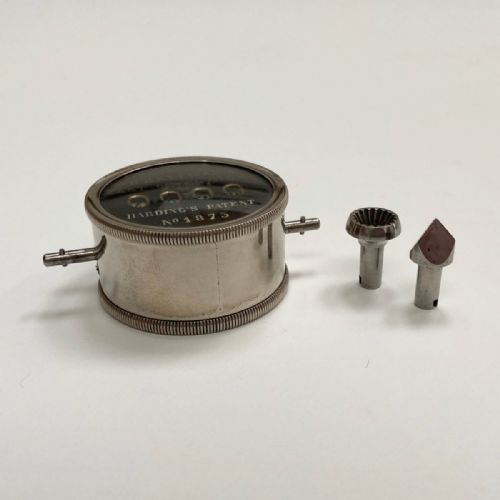
fig 2. A late Victorian pocket revolution counter made of nickel metal with a round glass face, resting inside its open original dark brown leather case lined with bright purple velvet.
fig 2. Late Victorian Cased Hardings Patent Pocket Revolution Counter

Other advantages of these counters are, great simplicity of parts and solidity of construction, in consequence of which it is almost impossible for the apparatus to get out of order.

It consists in an ingenious combination of wheel and pinions. Each number wheel carries on the right edge of its rim twenty teeth, and on the left edge only two. The pinions are provided with eight unequal teeth, four being as broad and four half as broad as the pinion. Thus, as each number wheel completes its revolution, it moves the next one on one-tenth, and all the wheels are safely locked, except at the moment when they are being moved forward by their pinions. Some idea of the perfection of this arrangement may be gathered from the fact that the Pocket Counter or Speedometer, of which the mechanism is a mere reduction of that of the large counters, may be used at speeds over 5000 per minute.”
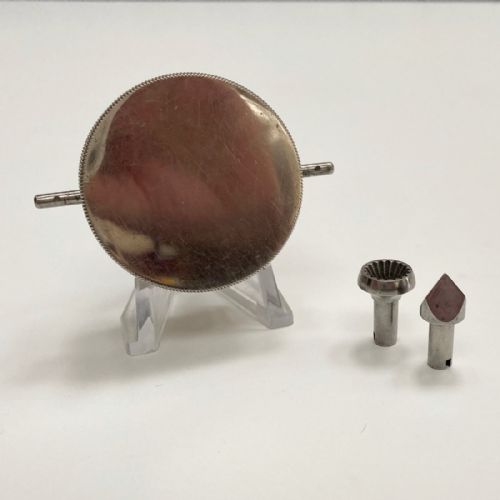
fig 3. A late Victorian pocket revolution counter made of nickel metal with a round glass face, resting inside its open original dark brown leather case lined with bright purple velvet.
fig 3. Late Victorian Cased Hardings Patent Pocket Revolution Counter

There were four examples included in the catalogue ranging from large engine counters, small machine counters, pocket counters or speedometers and turnstile counters. This is of course, an example of the pocket version.
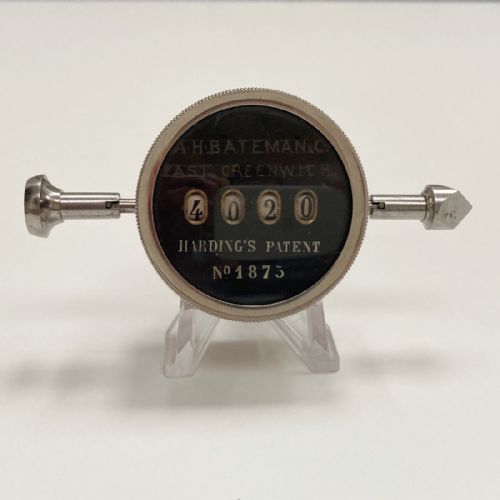
fig 4. A late Victorian pocket revolution counter made of nickel metal with a round glass face, resting inside its open original dark brown leather case lined with bright purple velvet.
fig 4. Late Victorian Cased Hardings Patent Pocket Revolution Counter

The face of the counter is marked for Harding’s Patent No 1875 and it is etched with the recipient company name of AH Bateman & Co, East Greenwich. The spindles which emanate from either side of the counter are intended to receive the attachments which would allow connection to the engine required. A fascinating and very tactile instrument which became an undoubted success for Harding during its promotion at the start of the 1870’s.
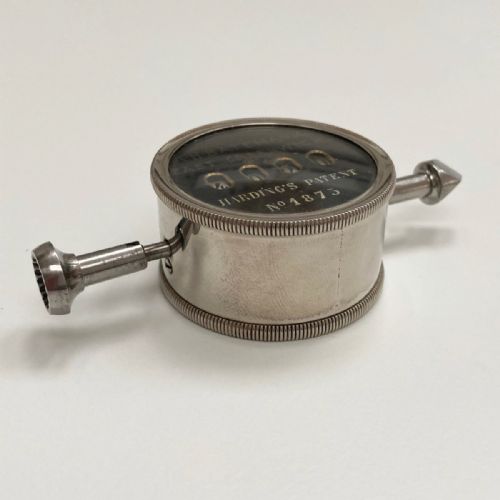
fig 5. A late Victorian pocket revolution counter made of nickel metal with a round glass face, resting inside its open original dark brown leather case lined with bright purple velvet.
fig 5. Late Victorian Cased Hardings Patent Pocket Revolution Counter

The English maker, Thomas R Harding began his business in 1836 in Lille, manufacturing cast steel pins and combs for textile production. The French location for the business is unsurprising when considering the huge reputation that Lille had for its centuries old textile industry.
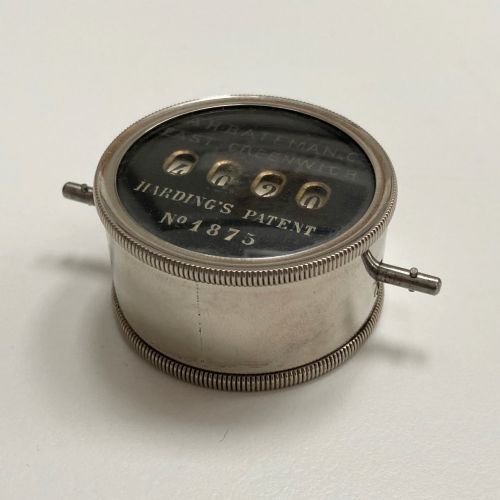
fig 6. A late Victorian pocket revolution counter made of nickel metal with a round glass face, resting inside its open original dark brown leather case lined with bright purple velvet.
fig 6. Late Victorian Cased Hardings Patent Pocket Revolution Counter

That it relocated in 1858 to Leeds could be an indication of the positive economic effects of the Industrial revolution in England or purely a yearning to return home but it certainly did not harm the Harding business. In 1864, the company expanded to new premises, the Tower Works which featured state of the art extraction towers built to reflect the Italianate style and which remain a listed property to this day.
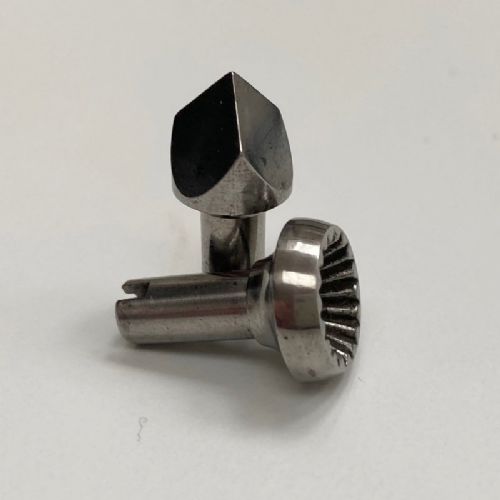
fig 7. A late Victorian pocket revolution counter made of nickel metal with a round glass face, resting inside its open original dark brown leather case lined with bright purple velvet.
fig 7. Late Victorian Cased Hardings Patent Pocket Revolution Counter

I am unable to find a patent application for the counter but owing to their appearance in the Negretti & Zambra catalogue of 1878 and adverts from 1872, we can be sure that the company were expanding their product range to support the varying needs of industry by this time, and also supplying other instrument making companies.
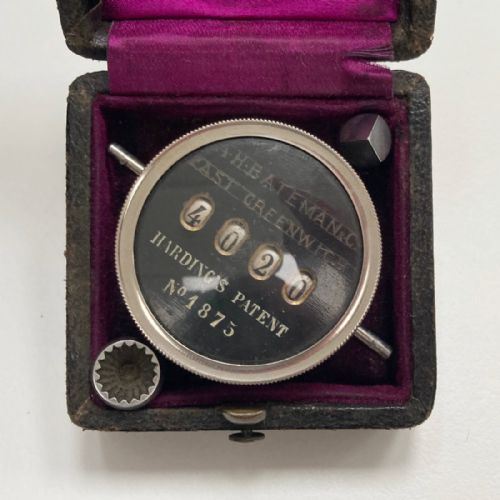
fig 8. A late Victorian pocket revolution counter made of nickel metal with a round glass face, resting inside its open original dark brown leather case lined with bright purple velvet.
fig 8. Late Victorian Cased Hardings Patent Pocket Revolution Counter

By 1890, Thomas Harding had retired and his son, Colonel TW Harding took control of the company and sought out a partnership with two related firms, William Rhodes & Co and Richardson, Child, Christy & Co. It was a slow process but by 1895, a new company of Harding, Richardson, Rhodes & Co was created, eventually becoming Harding, Rhodes & Co which continued to trade until 1981. Examples of numerous variations on the original counter can be seen in this compa

Height
3.5cm (1.38")
Width
6.5cm (2.56")
Depth
6.5cm (2.56")
Date of Manufacture

Jason Clarke Antiques has dated this Victorian Pocket Revolution Counter to the 1880s.

Reference Numbers
Sellingantiques Ref
SA883168
Jason Clarke Antiques
Sellingantiques verified Since Jul 2015
Dealer Profile

You can view the stock and full dealer information on the Jason Clarke Antiques Profile Page
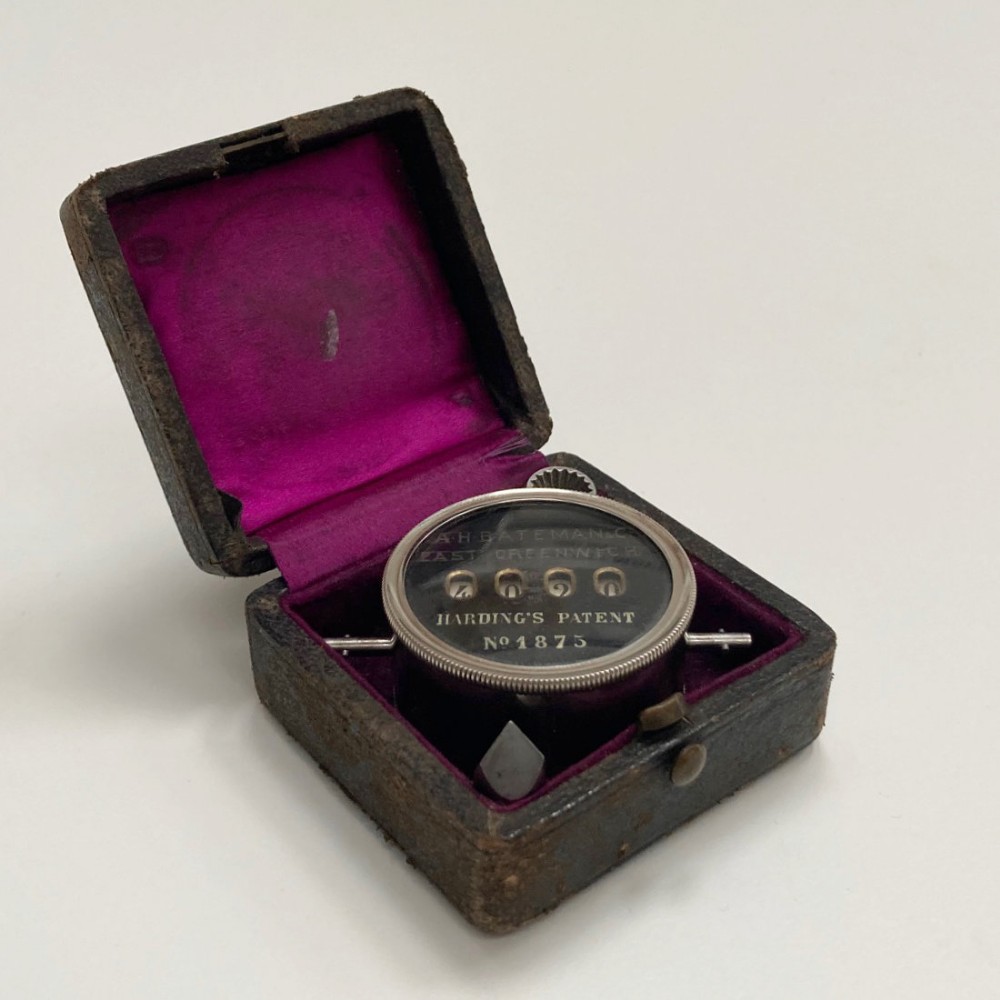
PDF SHARE
SAVE
A late Victorian pocket revolution counter made of nickel metal with a round glass face, resting inside its open original dark brown leather case lined with bright purple velvet.
1 / 12
Archive I A late Victorian pocket revolution counter made of nickel metal with a round glass face, resting inside its open original dark brown leather case lined with bright purple velvet.

Late Victorian Cased Hardings Patent Pocket Revolution Counter
Archive II A late Victorian pocket revolution counter made of nickel metal with a round glass face, resting inside its open original dark brown leather case lined with bright purple velvet. View II
Archive III A late Victorian pocket revolution counter made of nickel metal with a round glass face, resting inside its open original dark brown leather case lined with bright purple velvet. View III
Archive IV A late Victorian pocket revolution counter made of nickel metal with a round glass face, resting inside its open original dark brown leather case lined with bright purple velvet. View IV
Archive V A late Victorian pocket revolution counter made of nickel metal with a round glass face, resting inside its open original dark brown leather case lined with bright purple velvet. View V
Archive VI A late Victorian pocket revolution counter made of nickel metal with a round glass face, resting inside its open original dark brown leather case lined with bright purple velvet. View VI
Archive VII A late Victorian pocket revolution counter made of nickel metal with a round glass face, resting inside its open original dark brown leather case lined with bright purple velvet. View VII
Archive VIII A late Victorian pocket revolution counter made of nickel metal with a round glass face, resting inside its open original dark brown leather case lined with bright purple velvet. View VIII
Archive IX A late Victorian pocket revolution counter made of nickel metal with a round glass face, resting inside its open original dark brown leather case lined with bright purple velvet. View IX
Archive X A late Victorian pocket revolution counter made of nickel metal with a round glass face, resting inside its open original dark brown leather case lined with bright purple velvet. View X
Archive XI A late Victorian pocket revolution counter made of nickel metal with a round glass face, resting inside its open original dark brown leather case lined with bright purple velvet. View XI
Archive XII A late Victorian pocket revolution counter made of nickel metal with a round glass face, resting inside its open original dark brown leather case lined with bright purple velvet. View XII
Enlarged Archival View
Telephone 07815 046645
Location
Newbury
Berkshire
United Kingdom
Verified Since Jul 2015
Items For Sale 82
Items Sold 605
Jason Clarke Antiques
Verified Since Jul 2015
View Dealer Info
Location: Newbury, Berkshire, United Kingdom
Verified
Jul 2015
For Sale
82
Sold
605
A late Victorian pocket revolution counter made of nickel metal with a round glass face, resting inside its open original dark brown leather case lined with bright purple velvet.
Late Victorian Cased Hardings Patent Pocket Revolution Counter
Ref: SA883168
A late Victorian pocket revolution counter made of nickel metal with a round glass face, resting inside its open original dark brown leather case lined with bright purple velvet.
Detail View 1
Detail View 2
Detail View 3
Detail View 4
Detail View 5
Detail View 6
Detail View 7
Detail View 8
Detail View 9
Detail View 10
Detail View 11
Archival Detail
Every single antique dealer on our platform is individually approved by our internal team. We verify their professional trade history, ethical standards, and photographic quality to ensure a secure, high-standard buying environment. Upon joining, every dealer agrees to a strict 9-point code of conduct. While issues can occasionally arise, our dealers typically resolve them swiftly and directly with the buyer. In fact, since our founding in 2002, Sellingantiques has only had to step in to help resolve an issue on roughly five occasions—a true testament to the quality of our dealers and their dedication to your happiness.
Our dealers are highly experienced in packing and shipping fragile, high-value antiques. Because you are in direct contact with the dealer, you will be able to easily go through all available shipping and insurance options together to ensure your item arrives safely.
Antiques are the ultimate green purchase. By choosing historical pieces over newly manufactured goods, you completely eliminate the carbon footprint of modern mass production while preserving exceptional, timeless craftsmanship.

Pocket revolution counters were handheld mechanical devices used by nineteenth-century engineers to calculate the rotational speed of machinery driveshafts and engine flywheels over measured periods.

These precision instruments were typically constructed from nickel-plated brass or steel internal gears, sealed behind glass bezels and housed in velvet-lined leather protective cases.

Authentic items feature stamped patent details, maker addresses engraved on the dial, hand-fitted nickel cases, and mechanical dials with aged numbering mechanisms.

Small cased instruments are best presented open on executive desks, integrated within bookshelf displays, or set inside glass shadow boxes to highlight mechanical craftsmanship.

Keep the item in a dry environment to avoid corrosion on internal gears, gently dust the leather box with a dry soft cloth, and avoid applying harsh chemical cleaners to the original glass or metal finish.
items
Add keywords to the filter
Price
£100
£250000
Era
Movements
Material
Origin
Stock Location
Freshness
Online Payments
Categories