Jason Clarke Antiques has dated this piece to the 1910s.
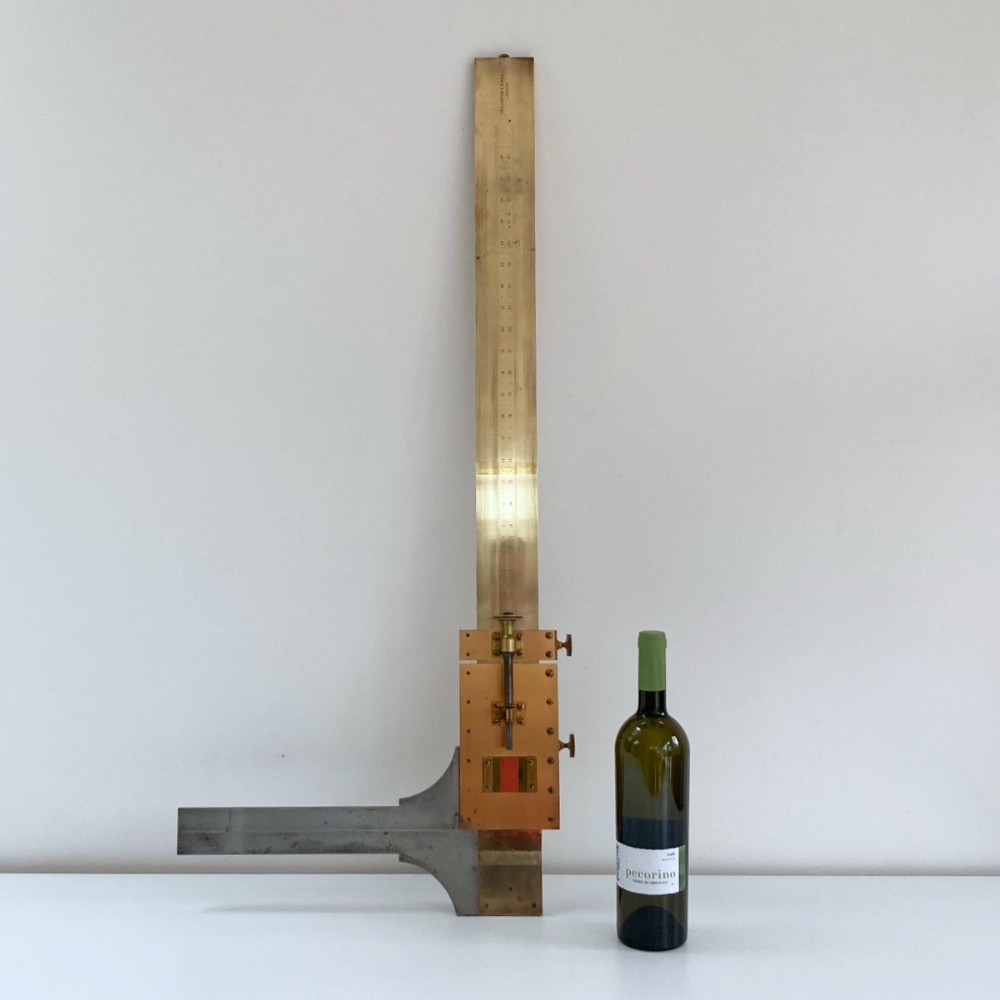
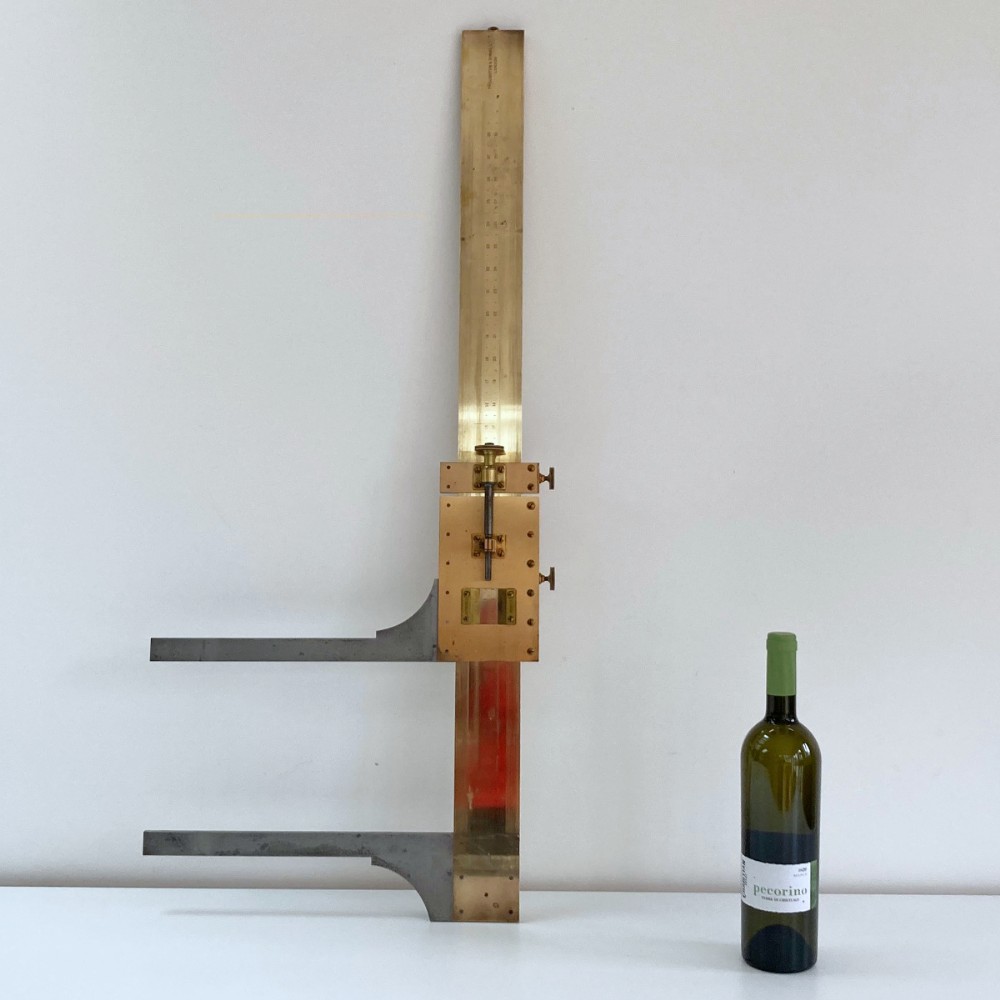
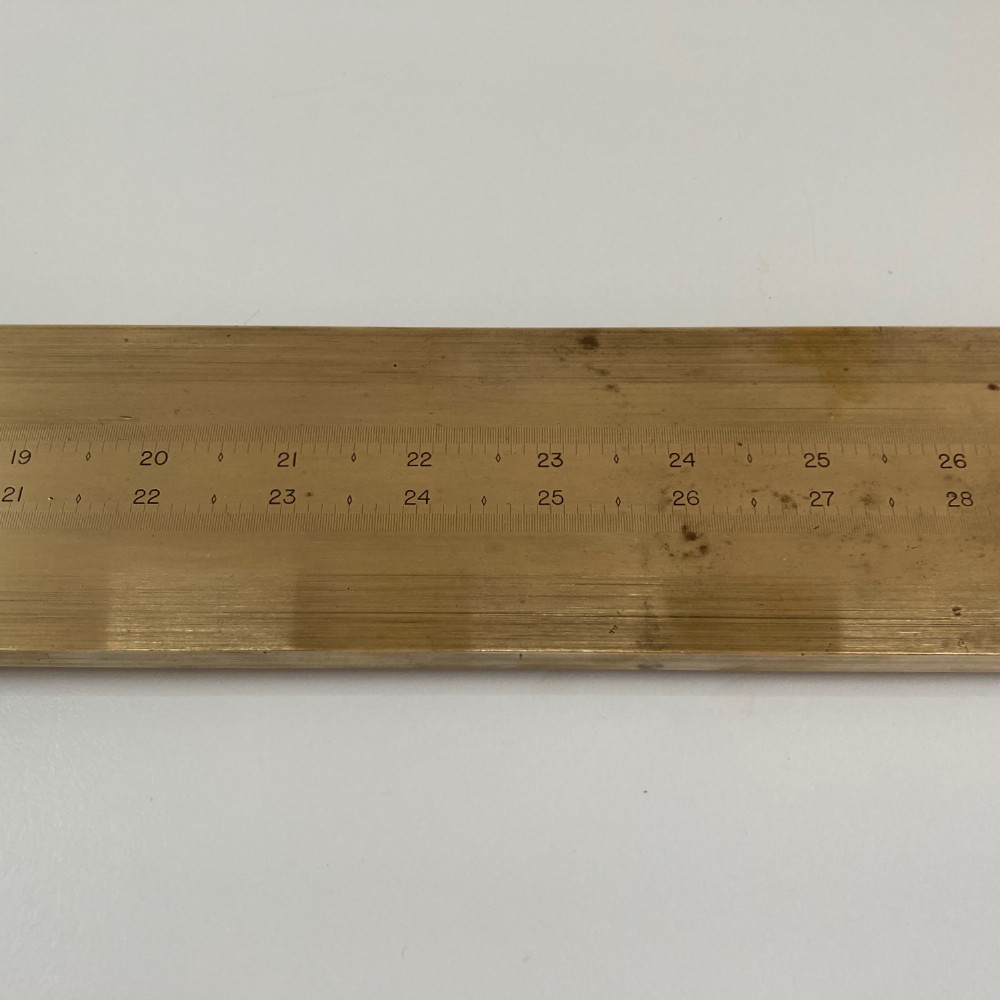
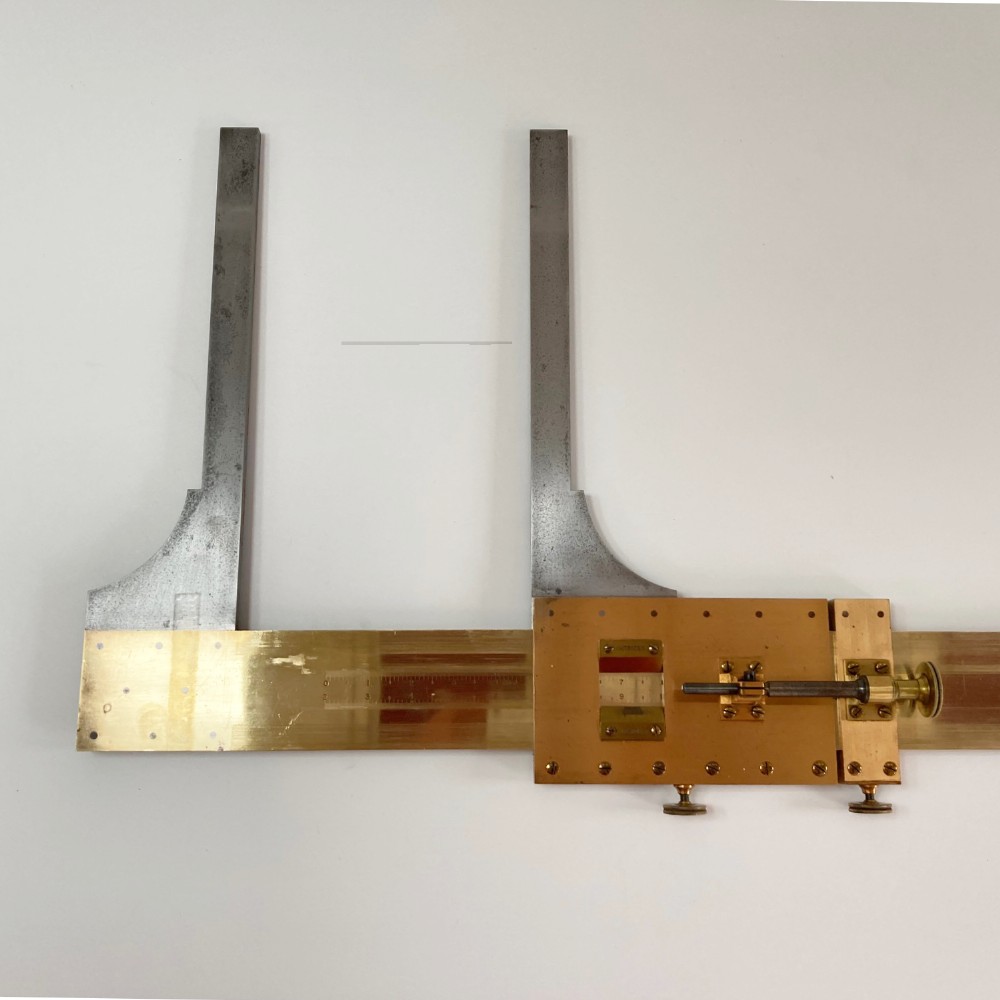
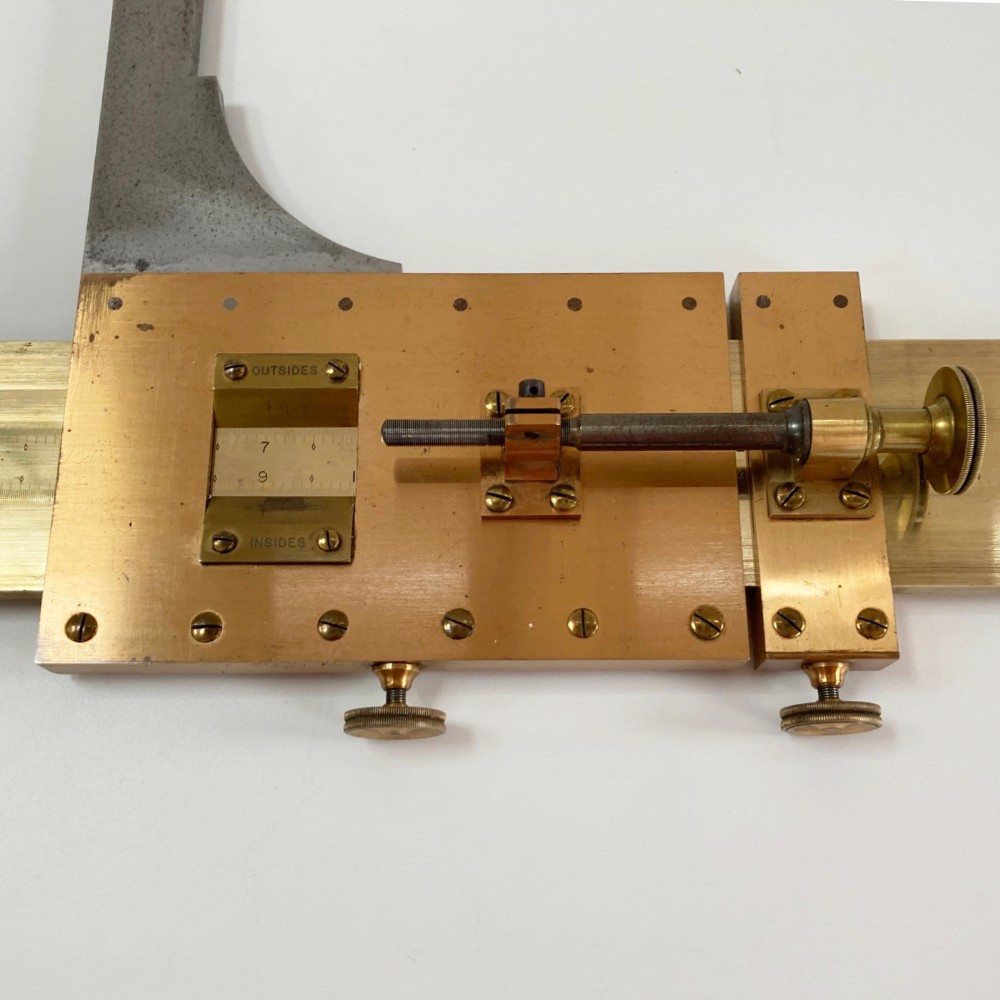
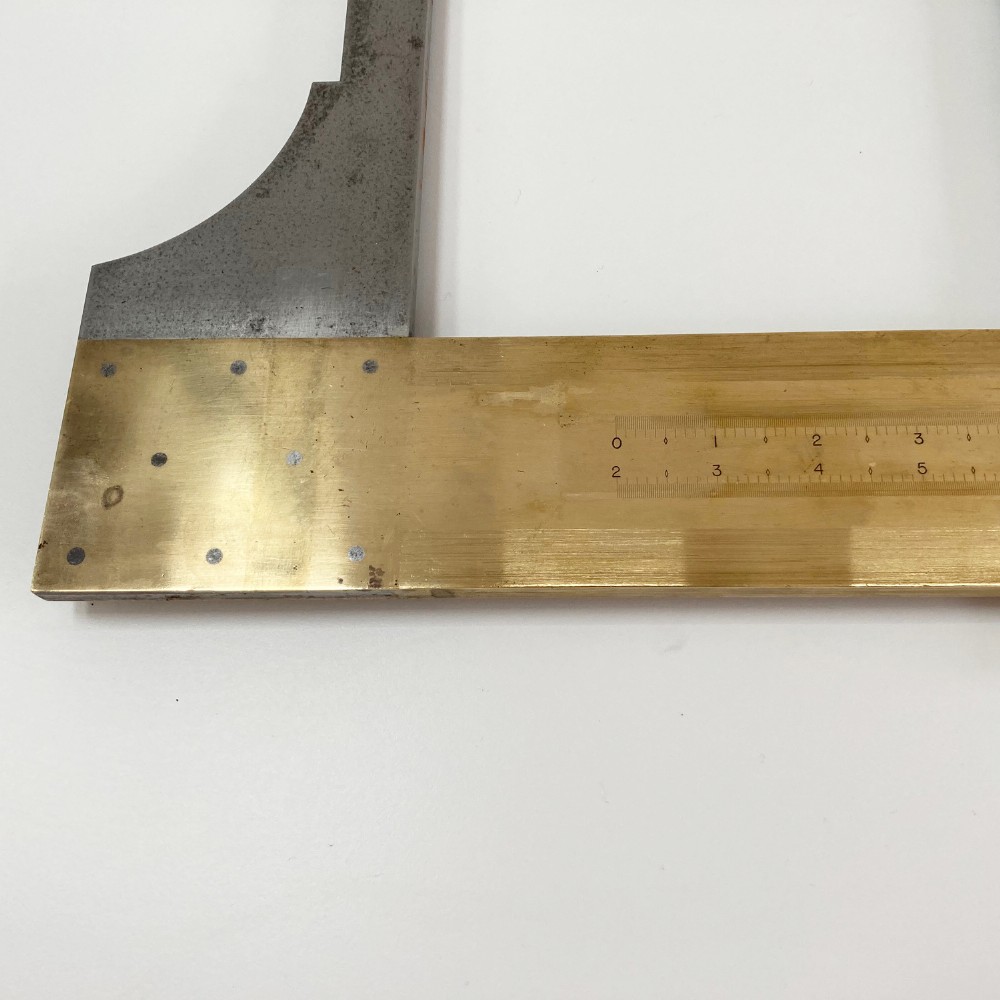
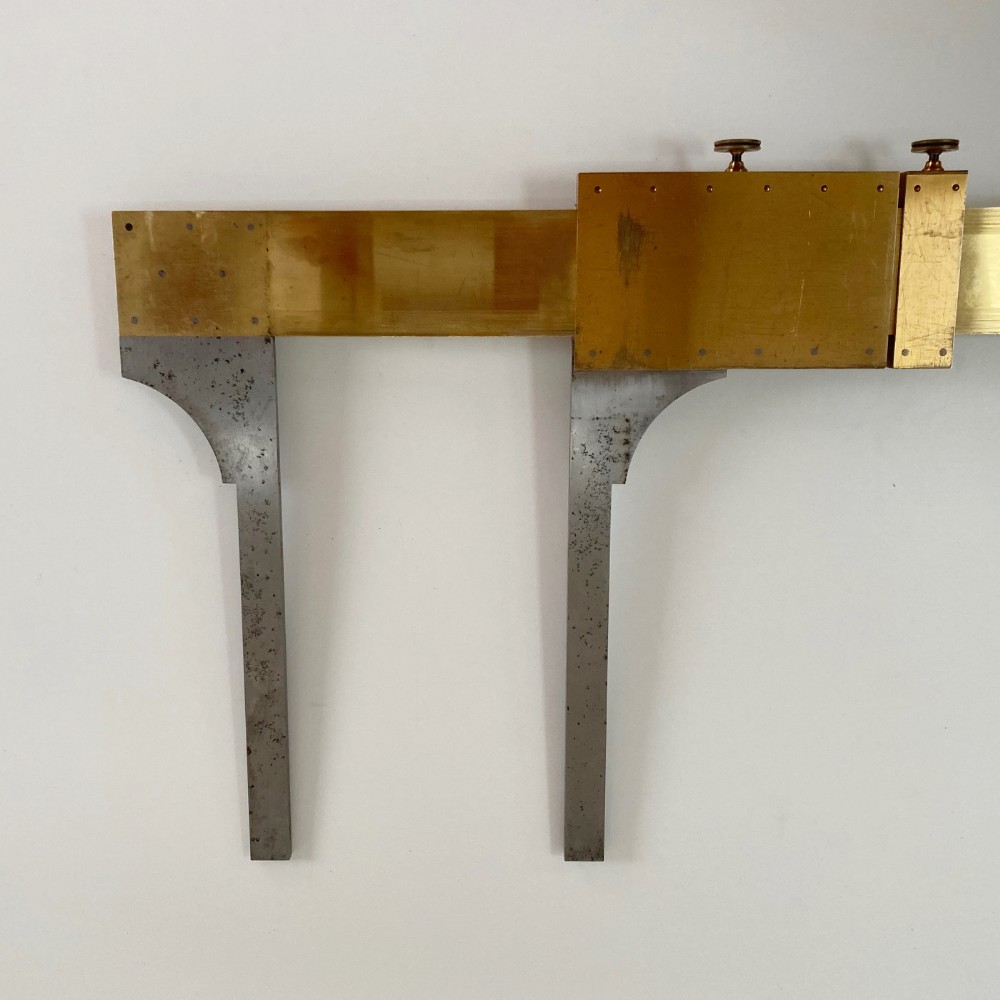
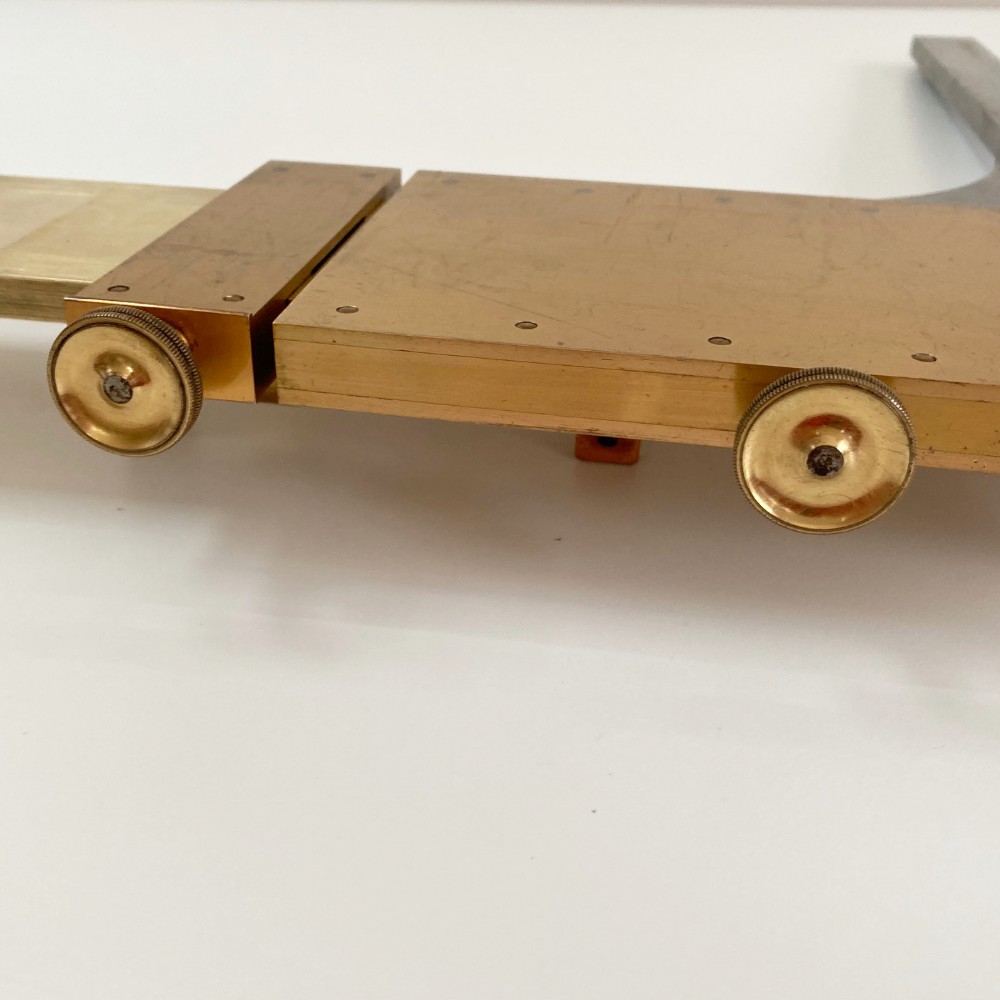
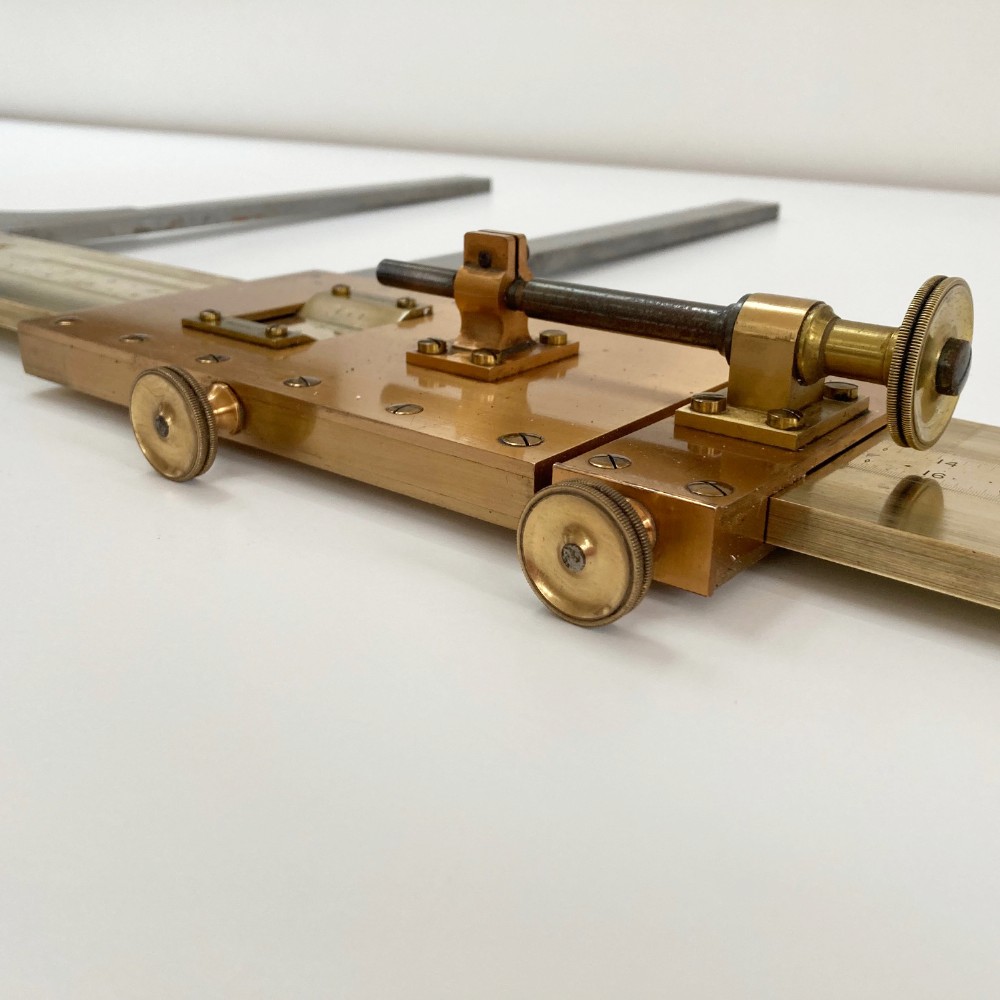
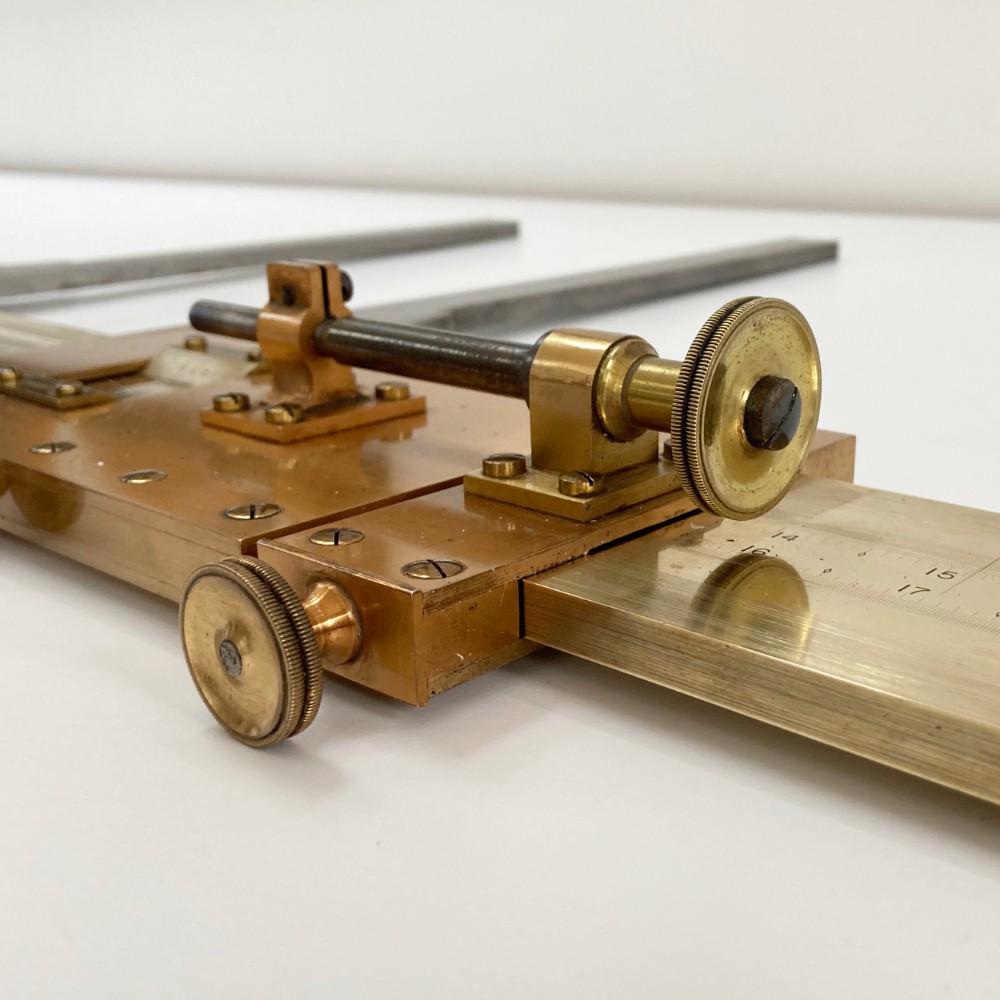
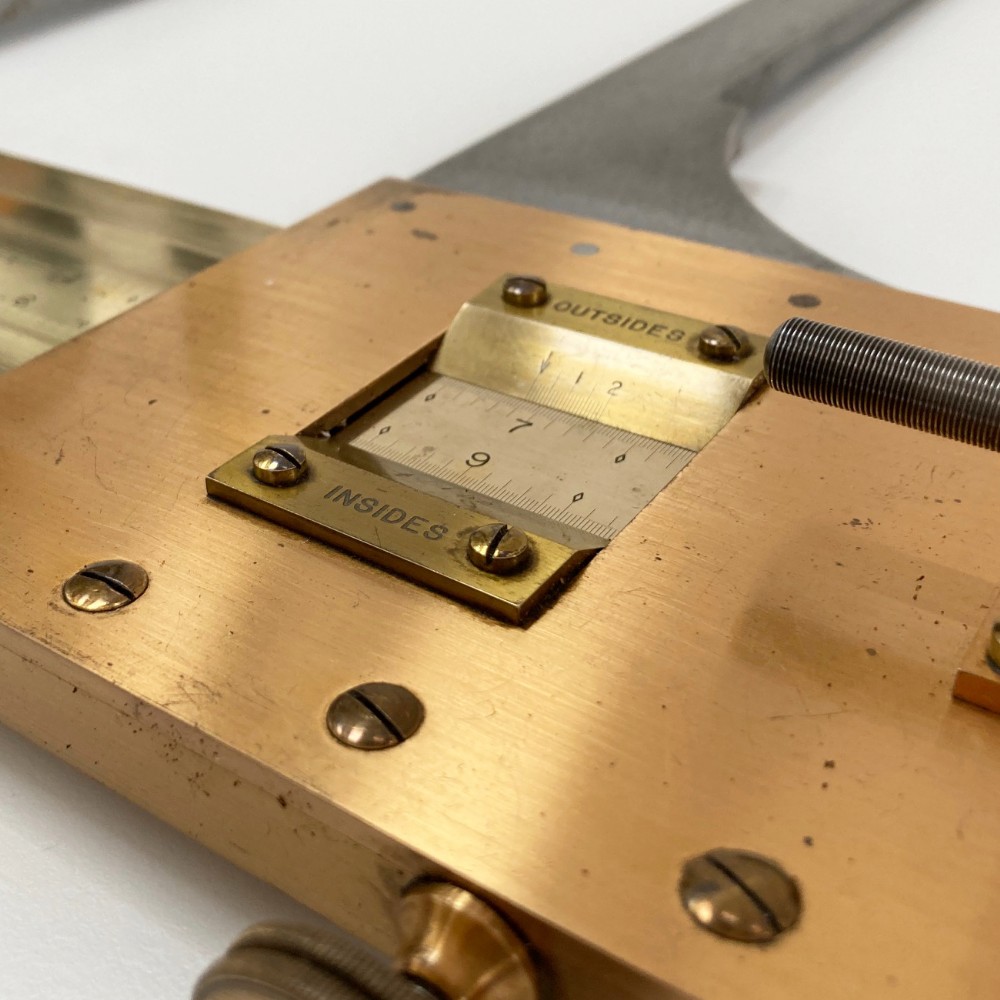
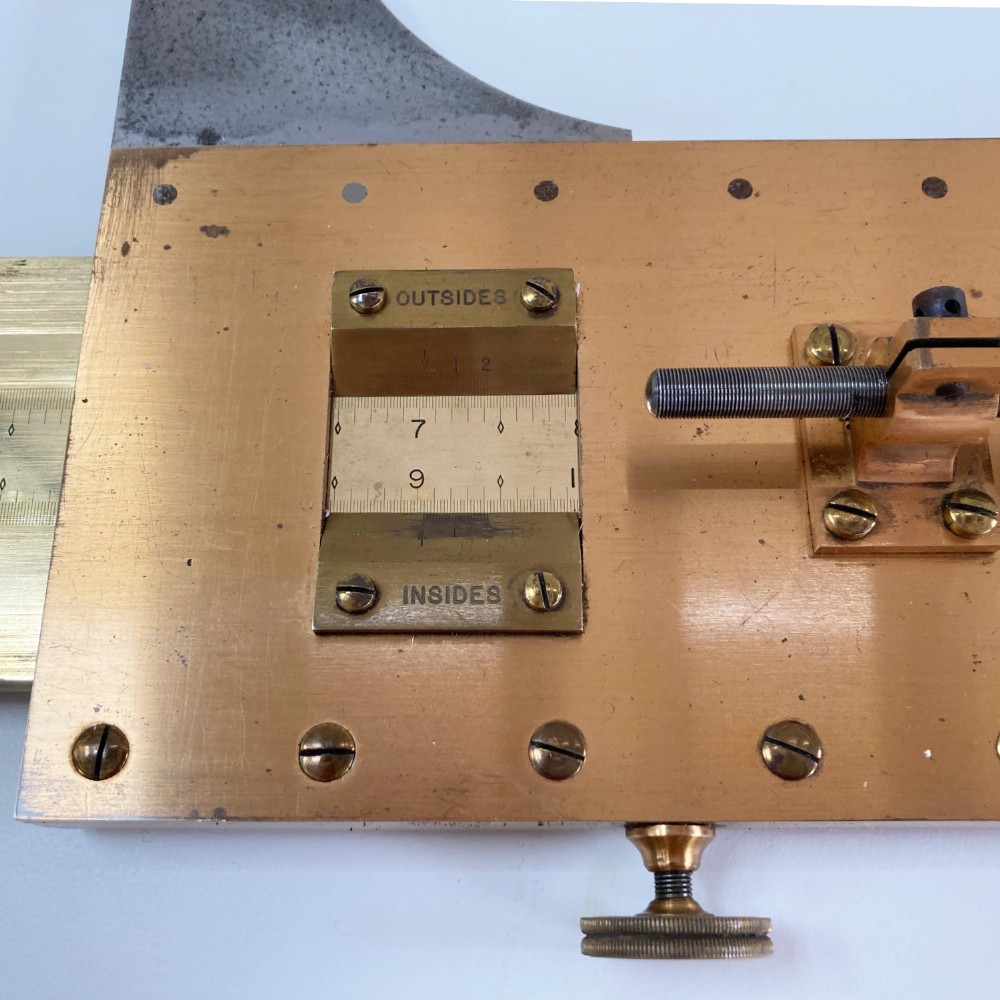
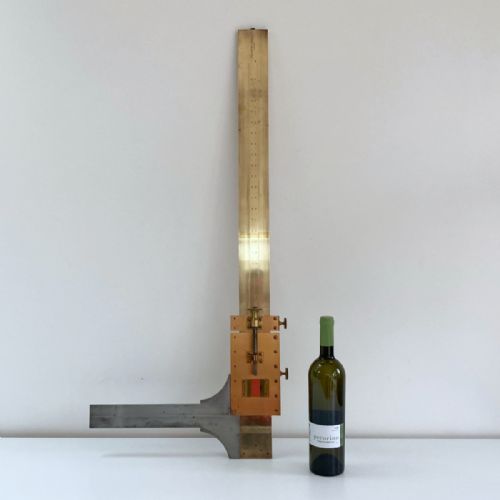
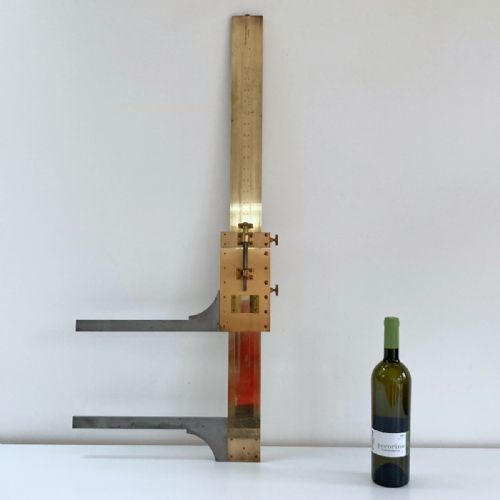
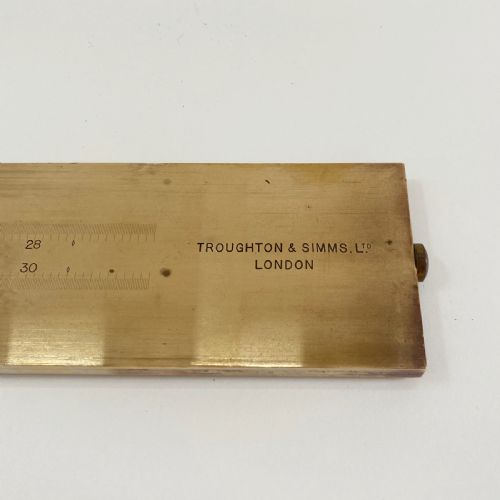
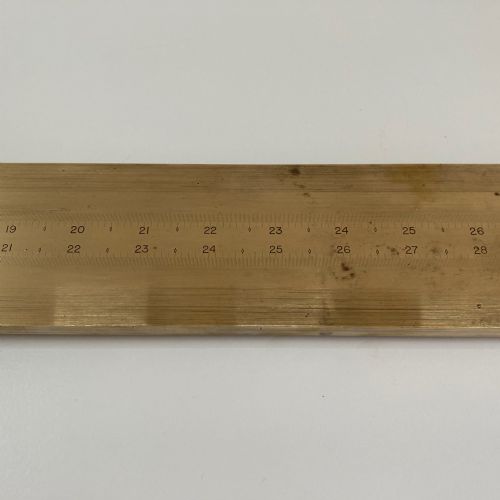
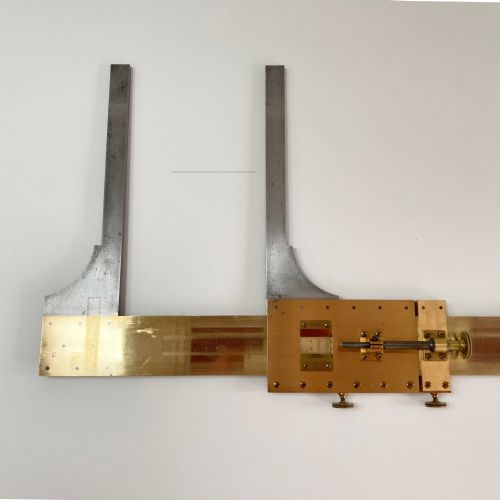
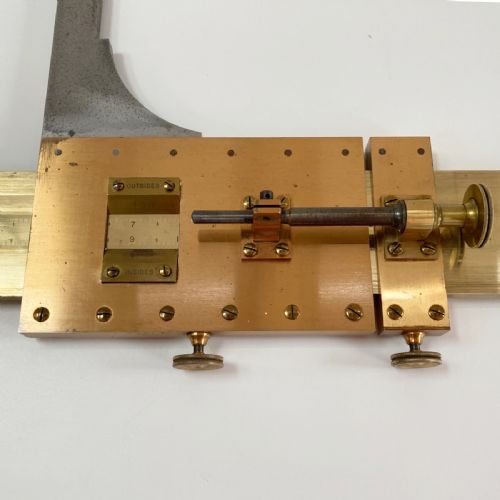
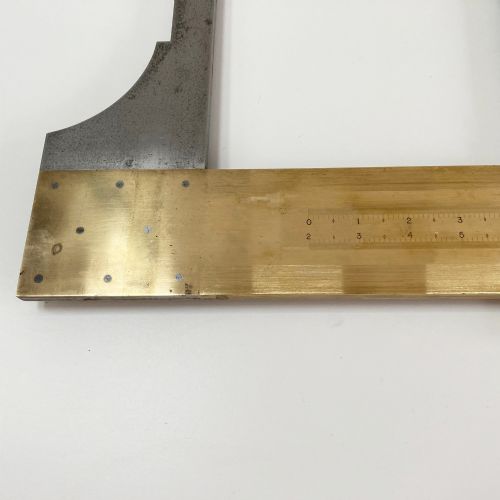
Comprised of thick brass with steel jaws, these enormous calipers measure 38.5 inches by 17.5 inches. The main scale is divided for 28 inches and 30 inches (outside & inside measurements).
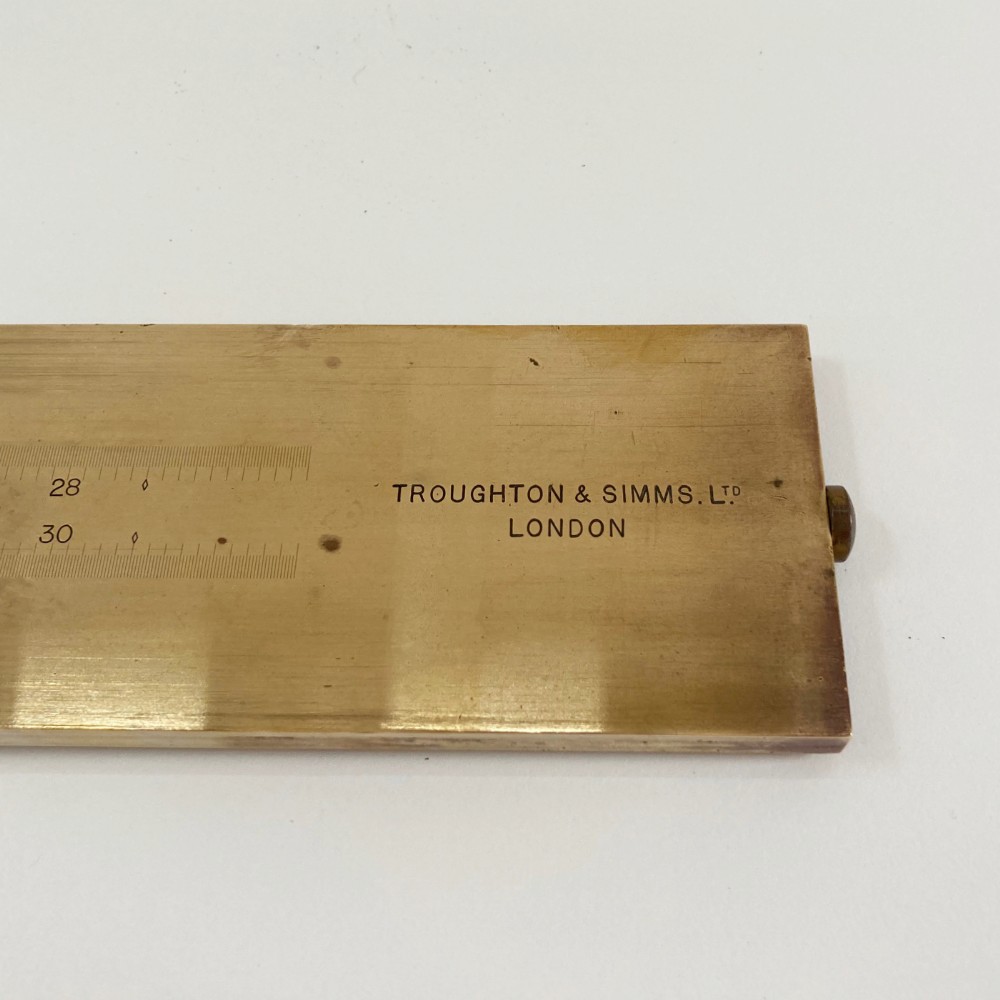
The company name of Troughton & Simms Ltd, London is engraved at the far end of the scale.
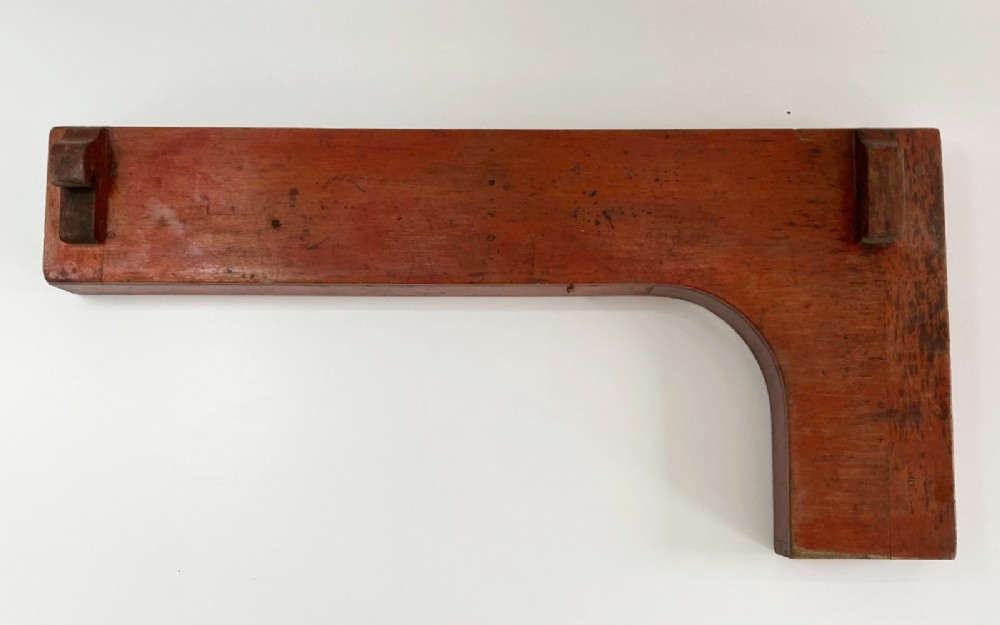
The calipers come complete with their original pine L shaped hinged case with fitted and baised interior. A truly spectacular engineering instrument both for its enormous proportions, it’s state of preservation and its quality of manufacture.
The Troughton family of scientific instrument makers were prolific and highly respected manufacturers from the mid eighteen century. Edward Troughton was trading on his own by 1804 and was responsible for considerably expanding the Troughton’s reputation for quality during his lifetime. He was apprenticed to his brother John in 1770 and later formed a partnership with him named J&E Troughton. Following John’s retirement in 1804, he maintained the business in his own right and was elected a Fellow of The Royal Society in 1810. He was considered a peer of the great Jesse Ramsden, responsible for numerous developments in surveying and navigational instruments including the invention of the pocket sextant. From 1826 Troughton merged his business with that of William Simms.
Simms was born in Birmingham but moved with his family to London where his father was employed in making marine compasses. He was apprenticed to a goldsmith, William Penstone but turned over to his father (also William) two years before completion. In 1815, he emerged and went into business as a Freeman of the Goldsmiths Company of London. Soon after, he submitted his plans for an ‘improved protractor’ to The Royal Society and was supported by Thomas Jones, the famous instrument maker from Charing Cross and originally one of Jesse Ramsden’s workmen. His work and ideas on the development of dividing engines brought him into close contact with Edward Troughton as Simms, re-divided an engine that had been made by Troughton some years earlier and required an overhaul however, the relationship with Troughton is considered to have been formed after working together on a commission for Sir James South for the East India Company.
The partners continued to work at the highest levels, involving themselves in manufacturing instruments for expeditionary surveys and at home for the new and burgeoning railway industry which sprang up in the 1830’s. Troughton would have been in his seventies by this point, and he eventually died in June 1835 leaving Simms to continue as the sole remaining partner.
Although the loss of such a pillar of the industry must have been significant, Simms continued to work with The Royal Observatory and went on to exhibit at the Great Exhibition of 1851 under the original company name.
James Glaisher’s report of the Philosophical Instrument Class of the Exhibition makes it clear that amongst the instruments shown by Simms there were included some earlier pieces that were manufactured by Troughton himself for the Astronomer Royal at Greenwich. For these instruments to remain relevant thirty years later is certainly an accolade.
Probably owing to the hugely difficult competition, its seems that Simms was not successful in achieving a medal for his efforts according to Glaisher’s report, however, he states:
“For the several inventions in these beautiful instruments, the jury voted unanimously the Council medal to Mr Simm, and which award was also passed unanimously by the Group, but was not confirmed by the Council of Chairmen, and therefore Mr Simms will not receive that kind of medal t
Jason Clarke Antiques has dated this piece to the 1910s.
You can view the stock and full dealer information on the Jason Clarke Antiques Profile Page
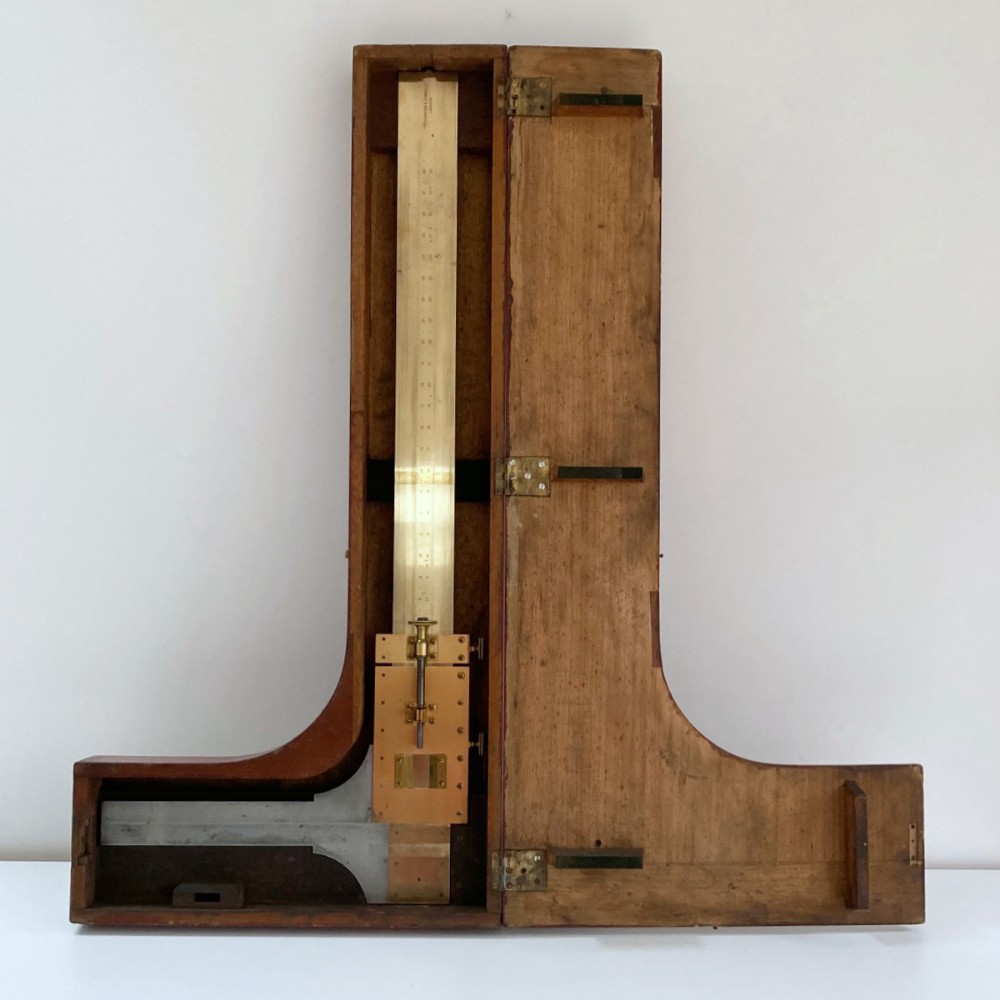
Huge Cased Set of Engineers Vernier Calipers by Troughton & Simms London