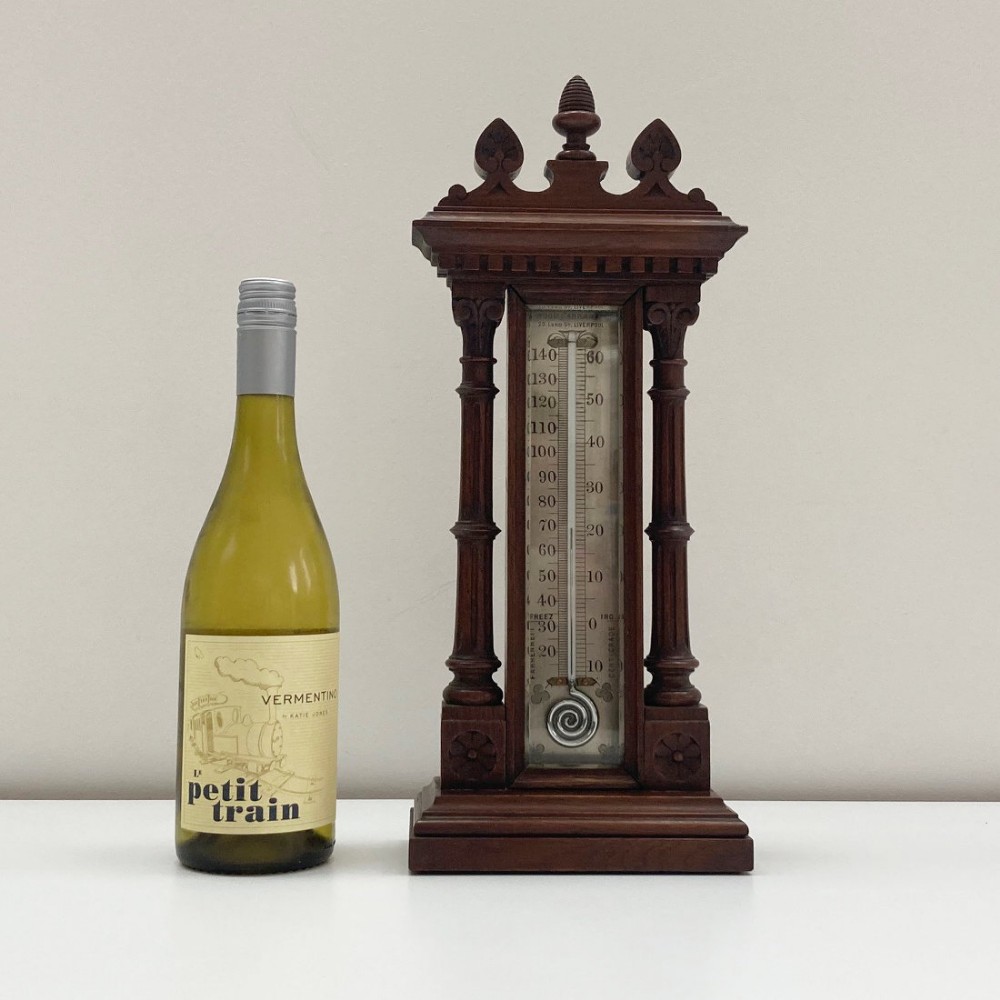
Jason Clarke Antiques has dated this piece to the 1870s.
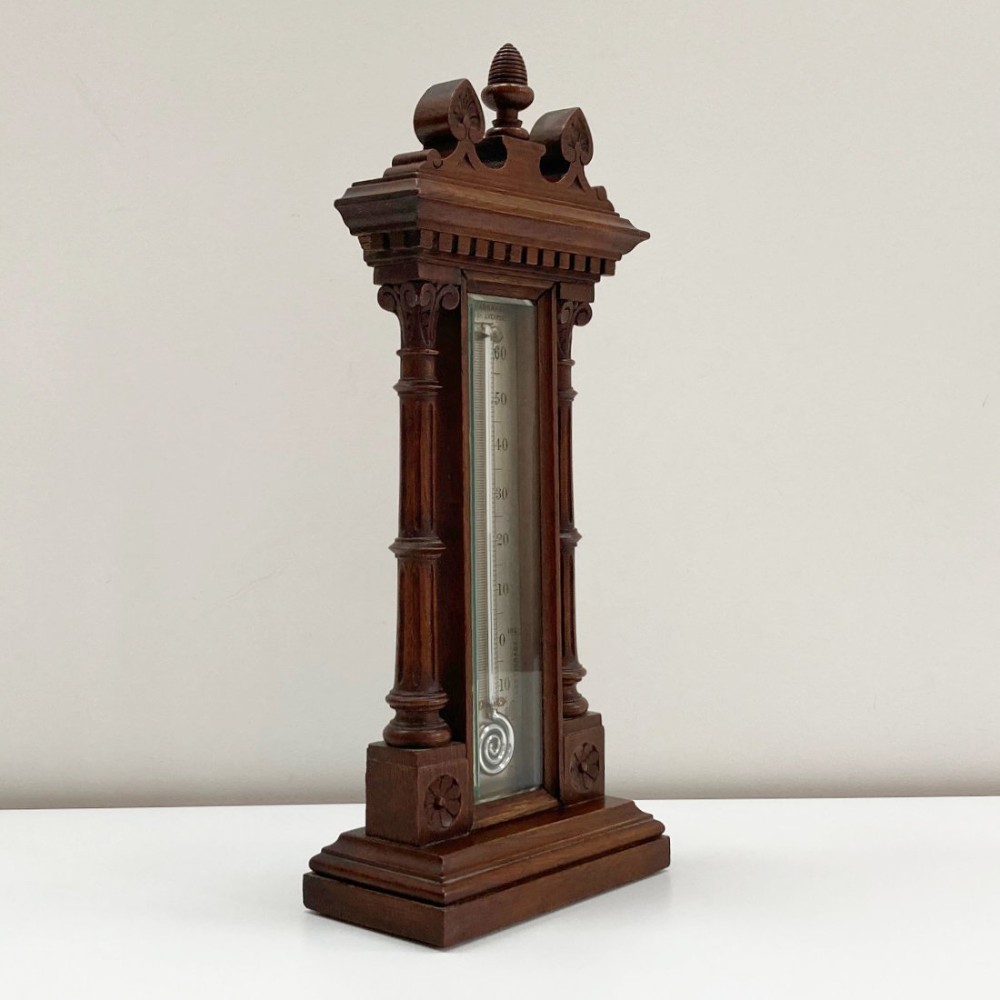
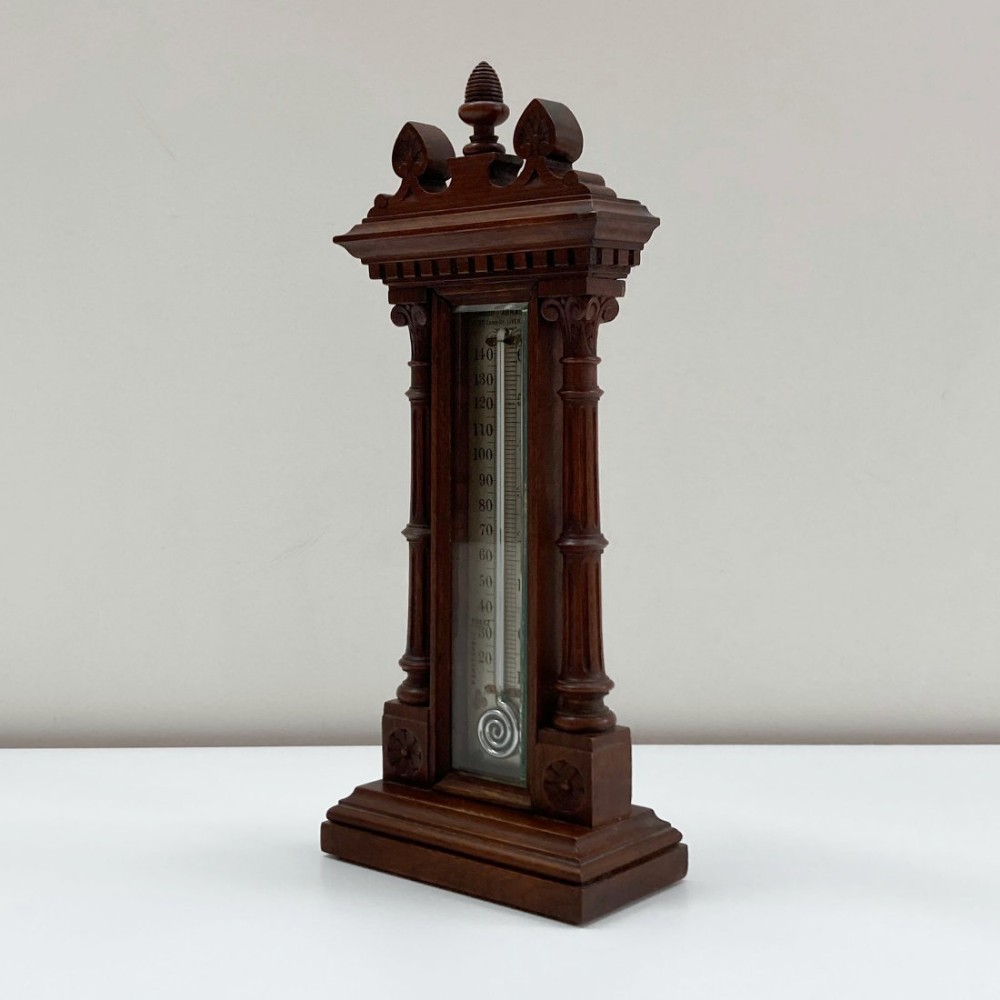
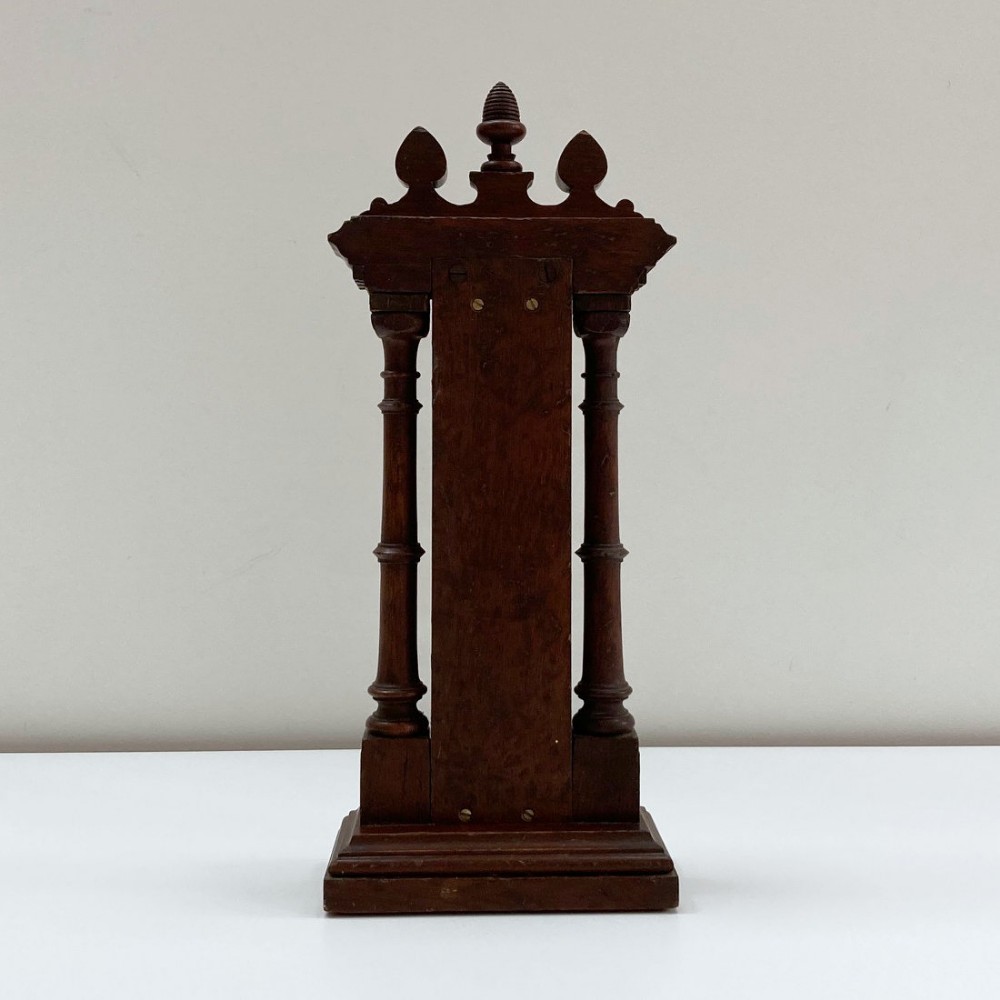
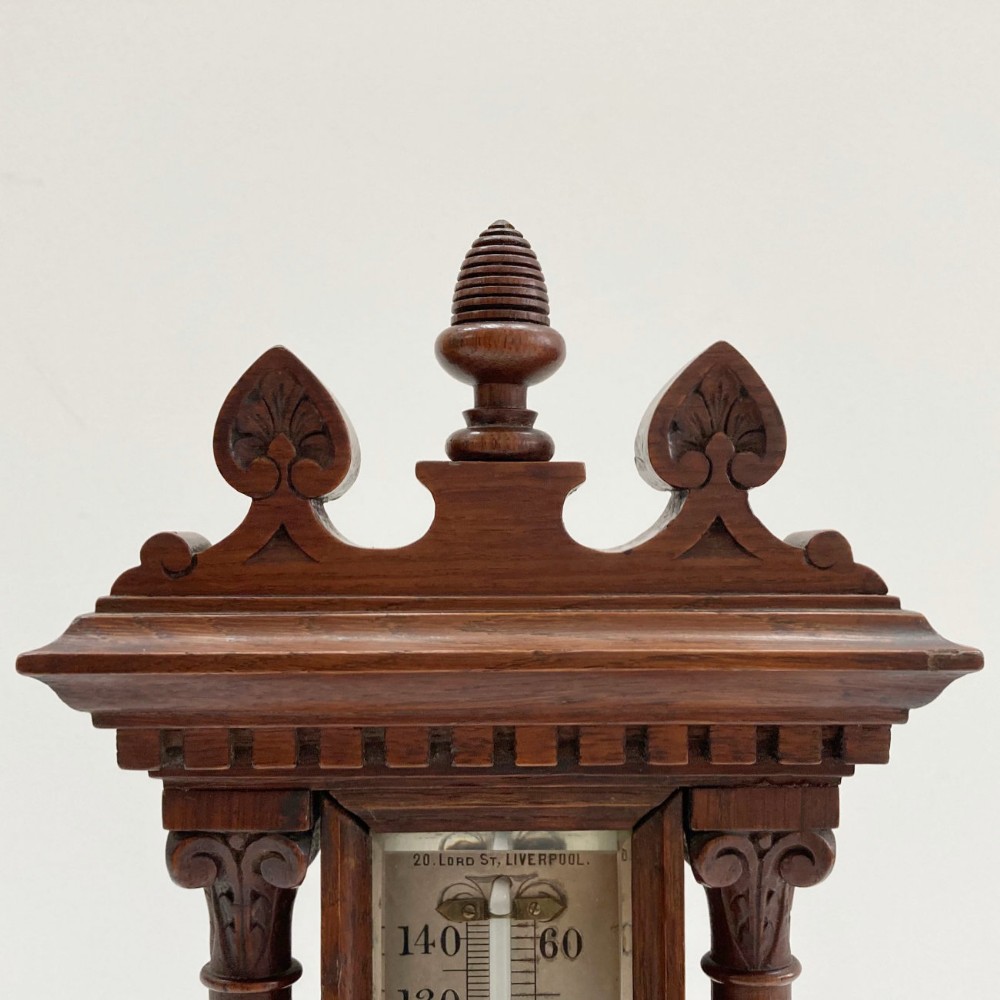
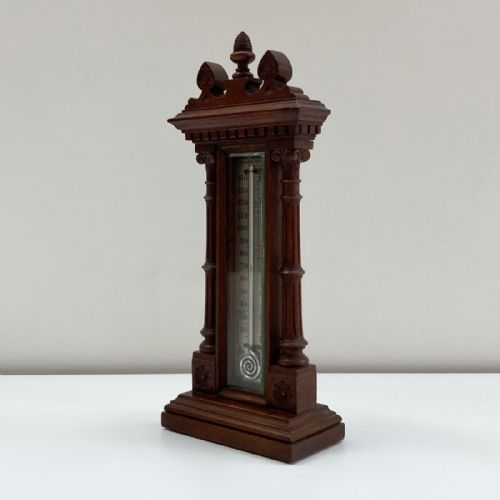
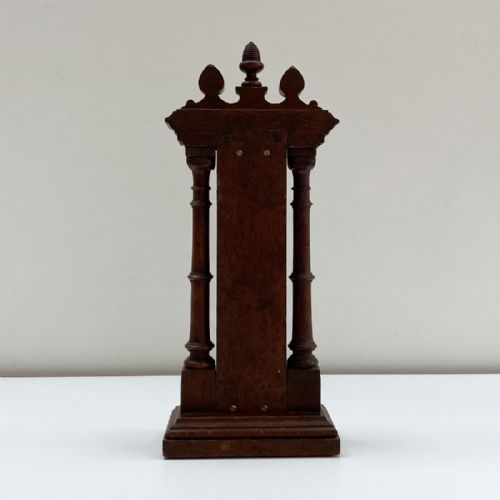
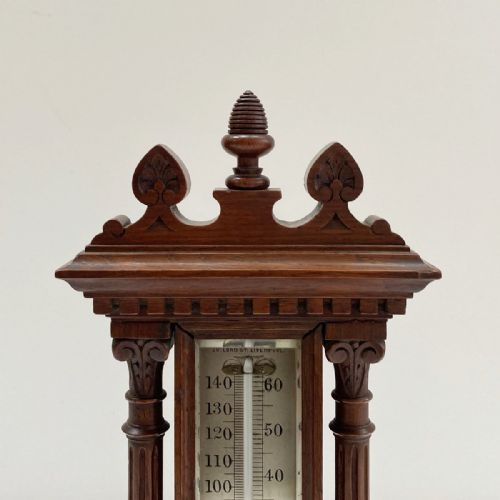
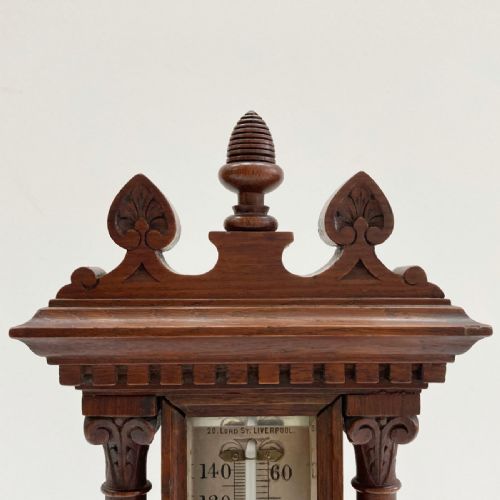
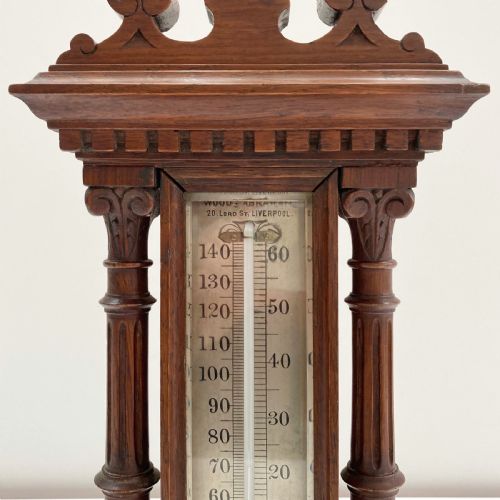
The pediment has dentil detailing to the underside and is topped with a carved leaf motif either side of an acorn finial to the centre.
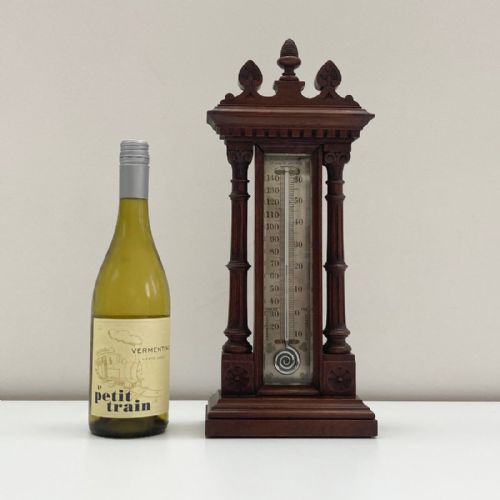
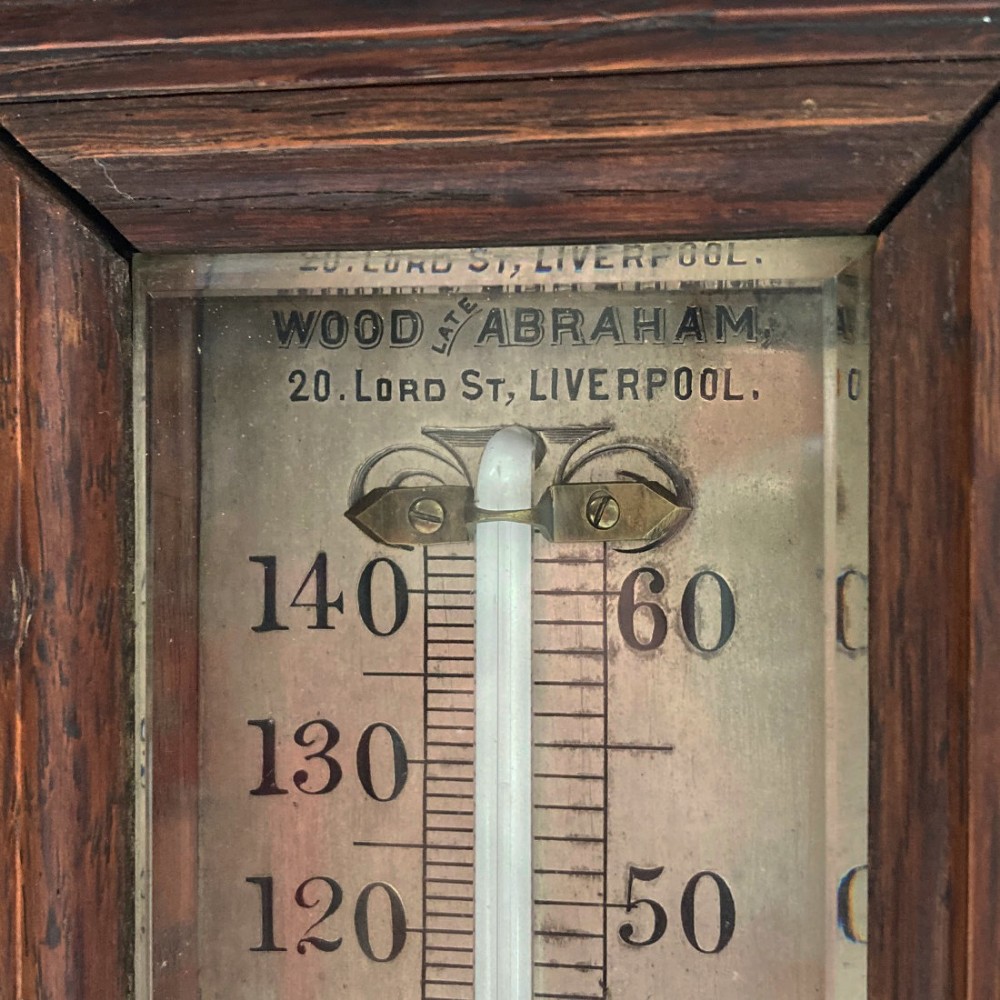
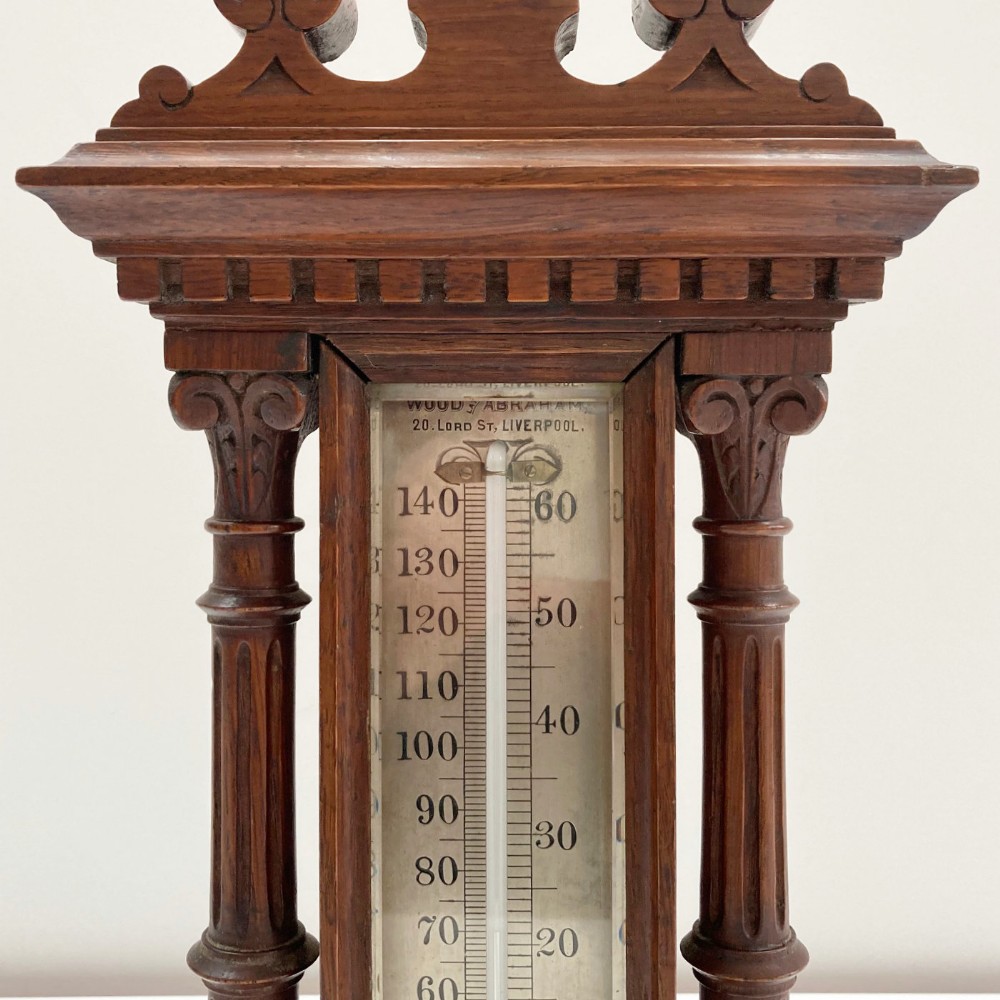
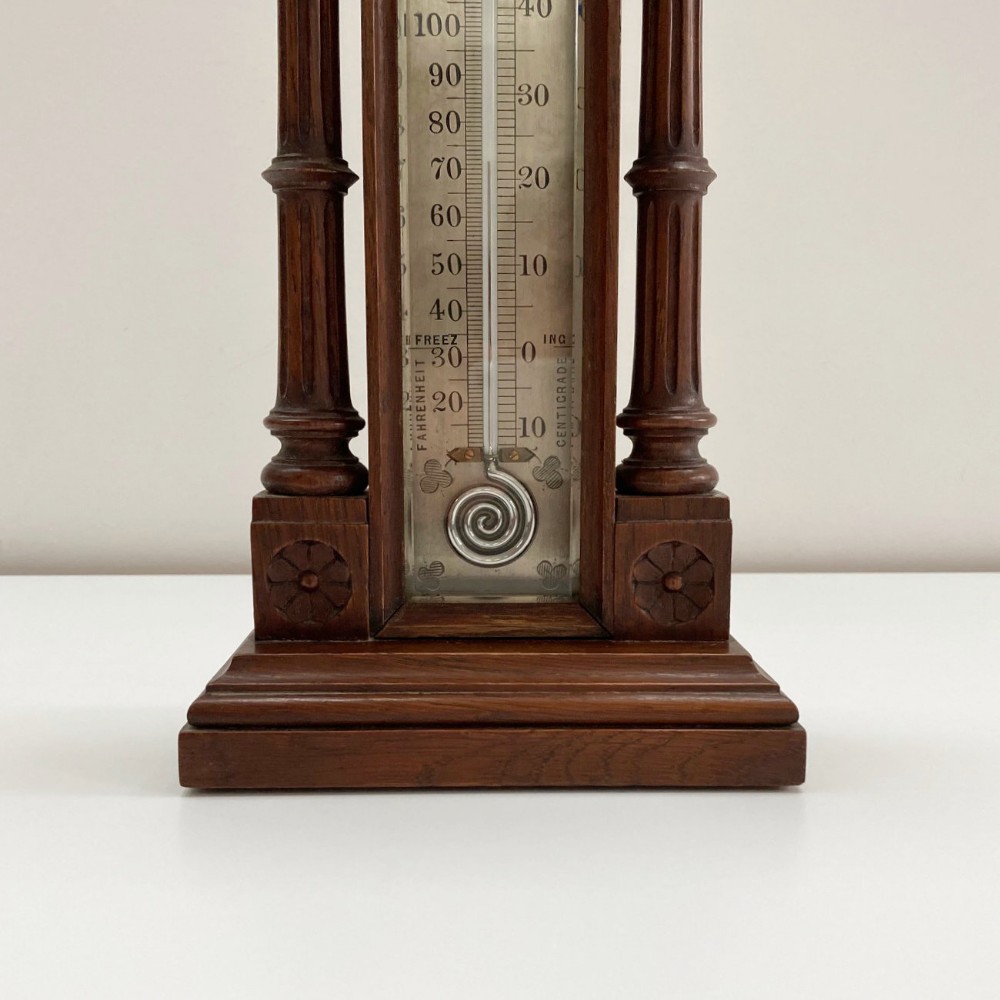
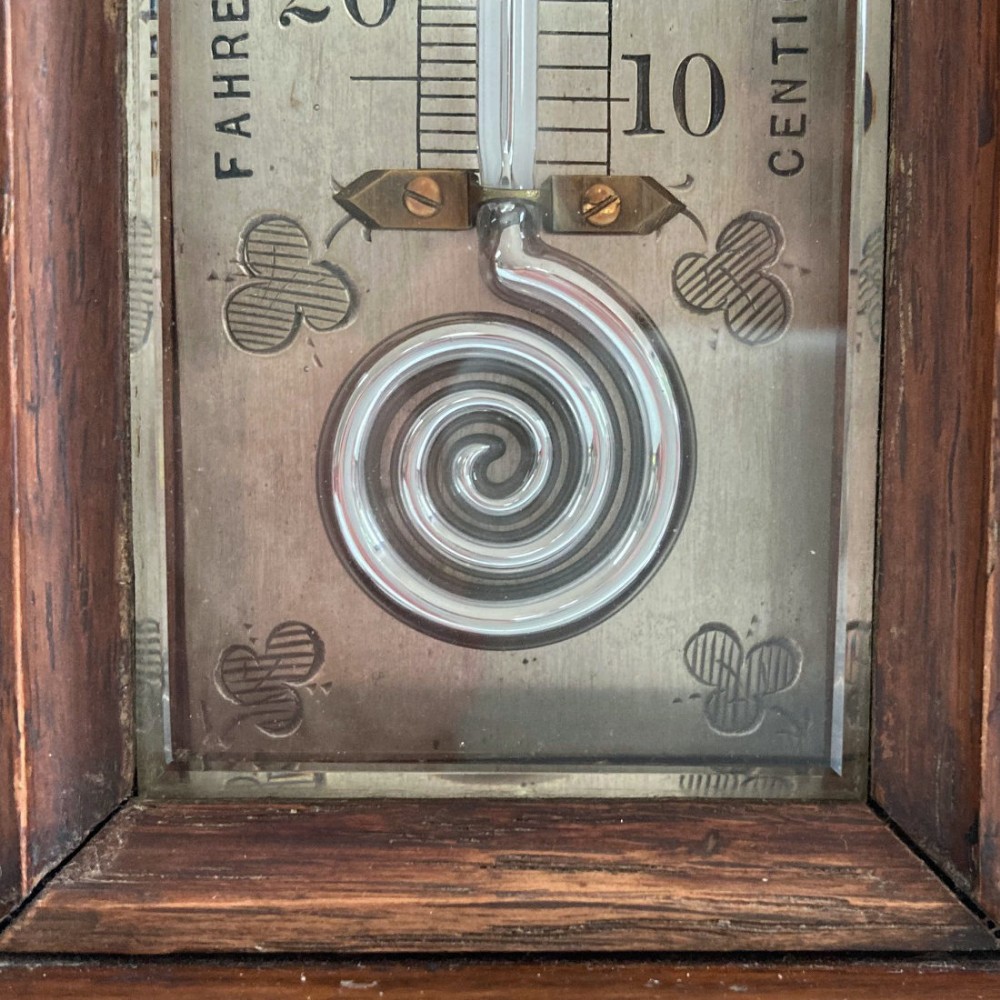
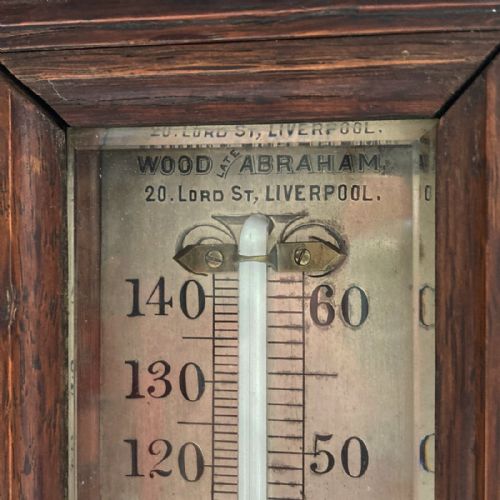
The superb spiral thermometer is presented on a large ten inch scale, beautifully engraved and silvered with Fahrenheit and Centigrade readings either side. The maker’s name and address “Wood Late Abraham – 20 Lord Street Liverpool” is provided at the head of the scale and the spiral bulb is surrounded with shamrock motifs to each corner. All is enclosed behind a thick protective bevelled glass front.
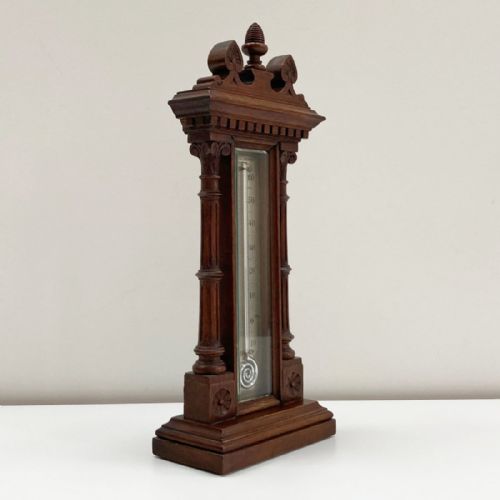
Standing at sixteen inches high and six and a half inches wide, this is an unusually large example and very suitable for display. A rare example.
The retailer of this fine instrument was George Smart Wood an optician and scientific instrument maker. The Wood family element of the company’s history began with the Wood Brothers (Edward, Henry & George) who originated in London and are likely to have worked with one another from premises in King Street and Shepperton Street, London from 1833 to 1843 mainly supplying the trade with finished instrument parts for the trade.
The following year, 1844, George’s eldest brother (EG Wood) left to form a partnership which became Horne, Thornwaite & Wood (latterly Horne & Thronwaite). The move and break up of the family business is likely to have been for the catalyst for George’s move to Liverpool.
The date of George’s transfer is uncertain but it is likely that he initially worked for Abraham Abraham (of Abraham & Co) in Liverpool before he eventually went into partnership with him and Abraham’s shop manager, Charles West in 1849. To give a sense of their success, the company presented their work at The Great Exhibition shortly afterwards in 1851 but just four years later, Abraham retired, whereafter Wood continued to trade under the original name of Abraham & Co at 20 Lord Street Liverpool and West set up under his own name.
In similarity to his brother EG Wood, George seems to have been a shrewd business man, primarily acting as an optician. When he died in 1881, his son John took control of the business opening a secondary branch in Manchester in 1900 under the name of Wood Abraham.
John eventually died in 1918 but the business continued up to the 1940’s.
This instrument dates between 1865 and 1875, the name of Wood engraved to the scale is somewhat unusual given that the company mostly traded under the name Abraham & Co (or much later Wood Abraham) throughout its history. A few instruments exist with GS Wood (Late Abraham) dating to around the 1870’s which coincides with his sons joining the family business. It is likely that Wood considered that a name change would be appropriate but the maintaining of the Abraham name was evidently important from a marketing point of view. I suspect Wood considered it business sense to revert to the Abraham name, given its longstanding popularity.
The founder of the original Abraham Liverpool business was Abraham Abraham, son of the famous Jacob Abraham who was a thriving instrument maker in Bath during the early part of the Ninenteenth Century. Given the fashionable setting, Abraham was patronised by various members of the nobility including The Duke of Wellington.
Similar to many instrument making families, it is likely that the younger Abraham sought to make a satellite business in another prosperous part of the UK and so in 1817 he moved to Liverpool and took up premises in Lord Street. During the latter part of the 1830’s Abraham began a series of partnerships in order to broaden his trade further. He first partner
Jason Clarke Antiques has dated this piece to the 1870s.
You can view the stock and full dealer information on the Jason Clarke Antiques Profile Page

Large Victorian Display Thermometer by Wood Late Abraham Liverpool