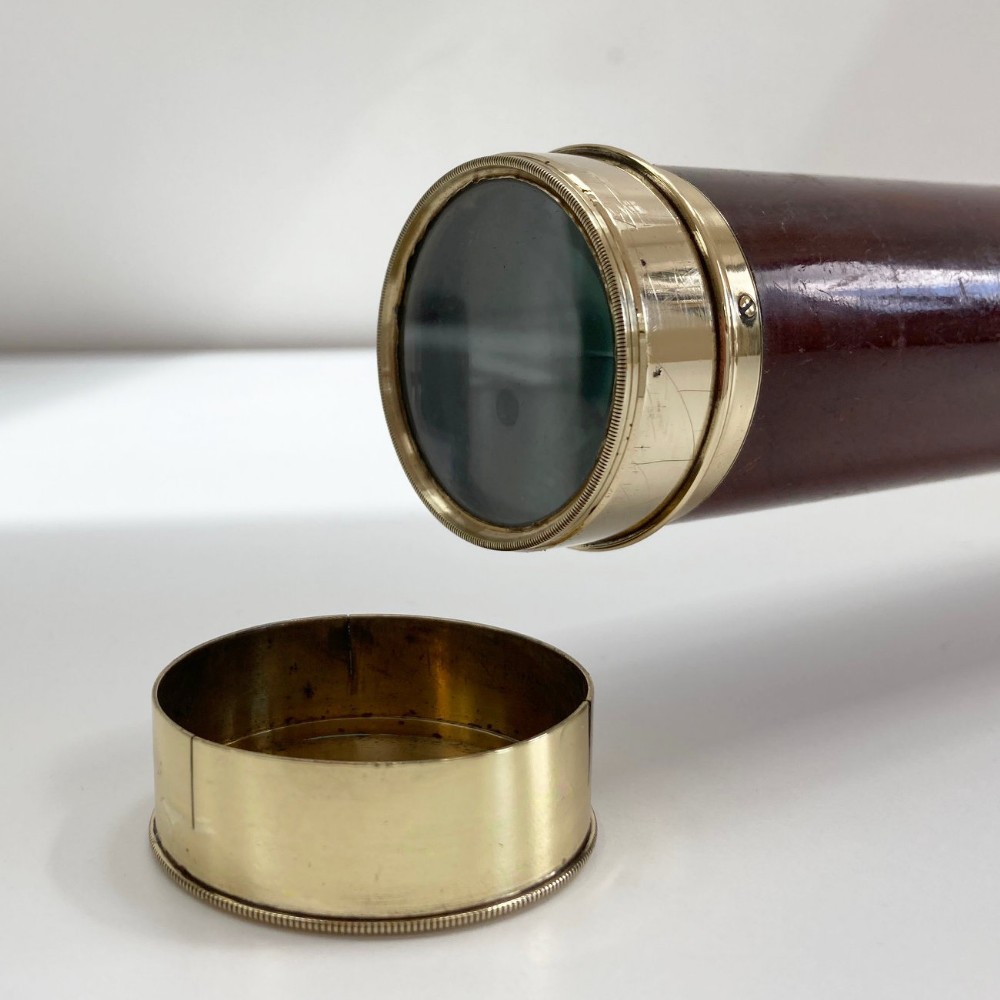
Jason Clarke Antiques has dated this piece to the 1800s.
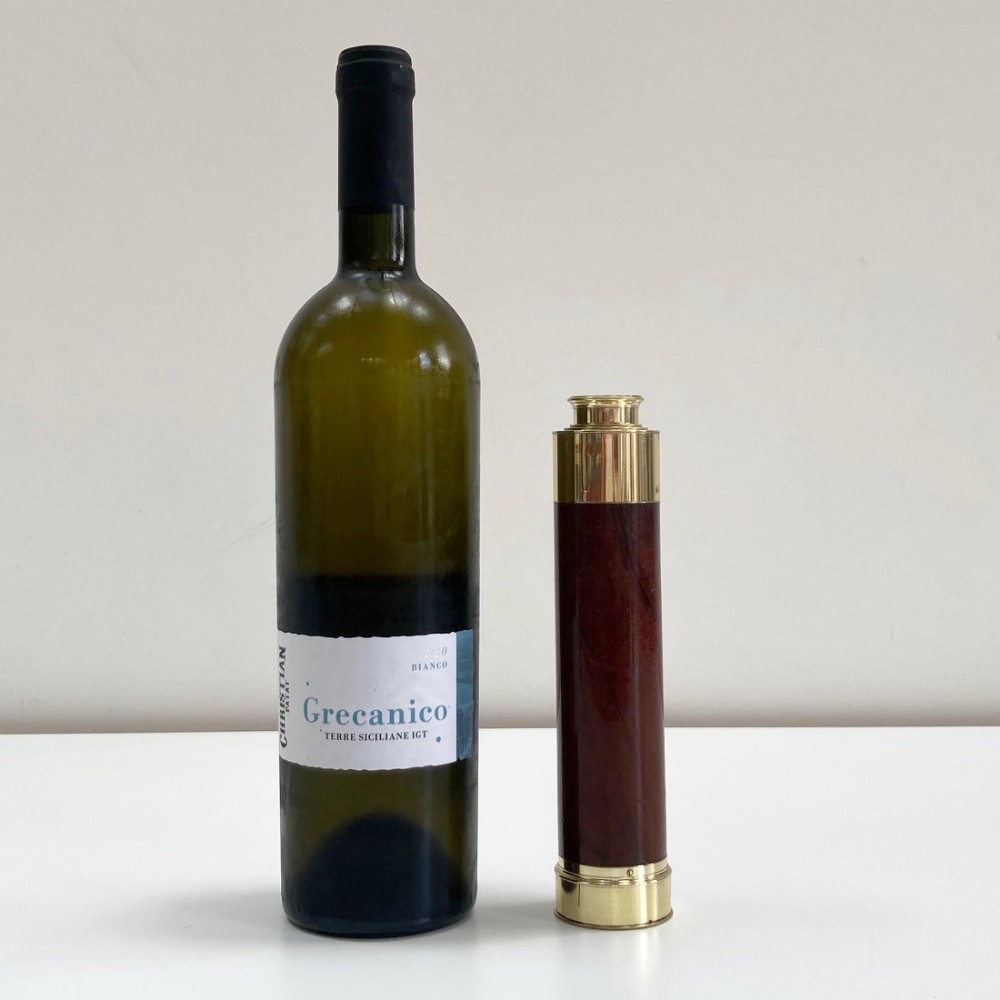
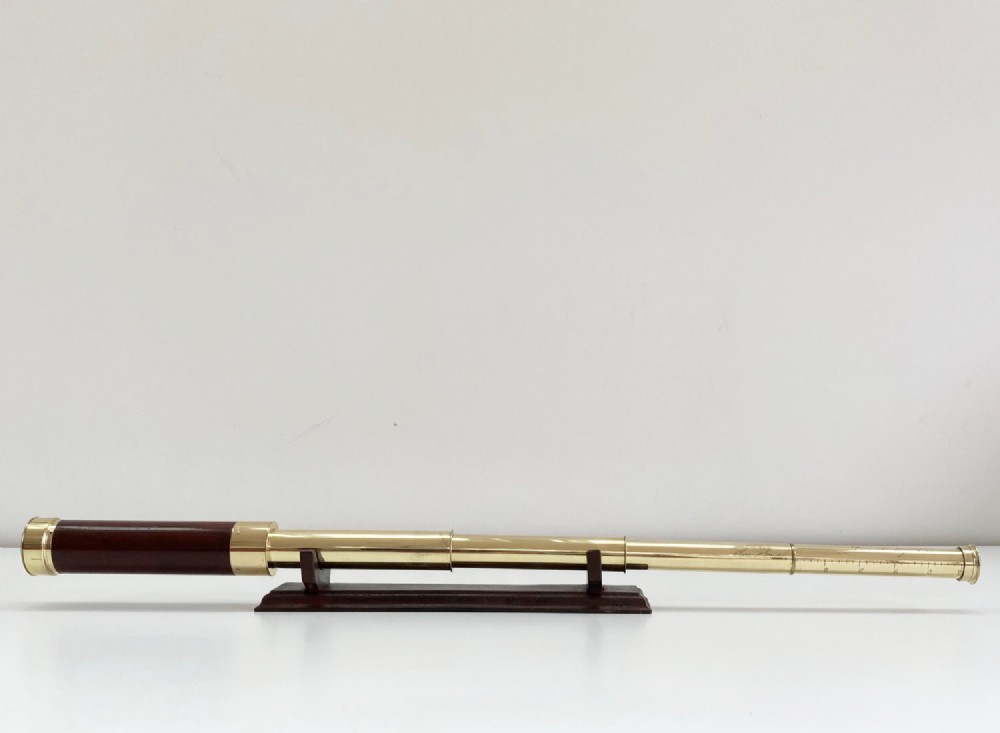
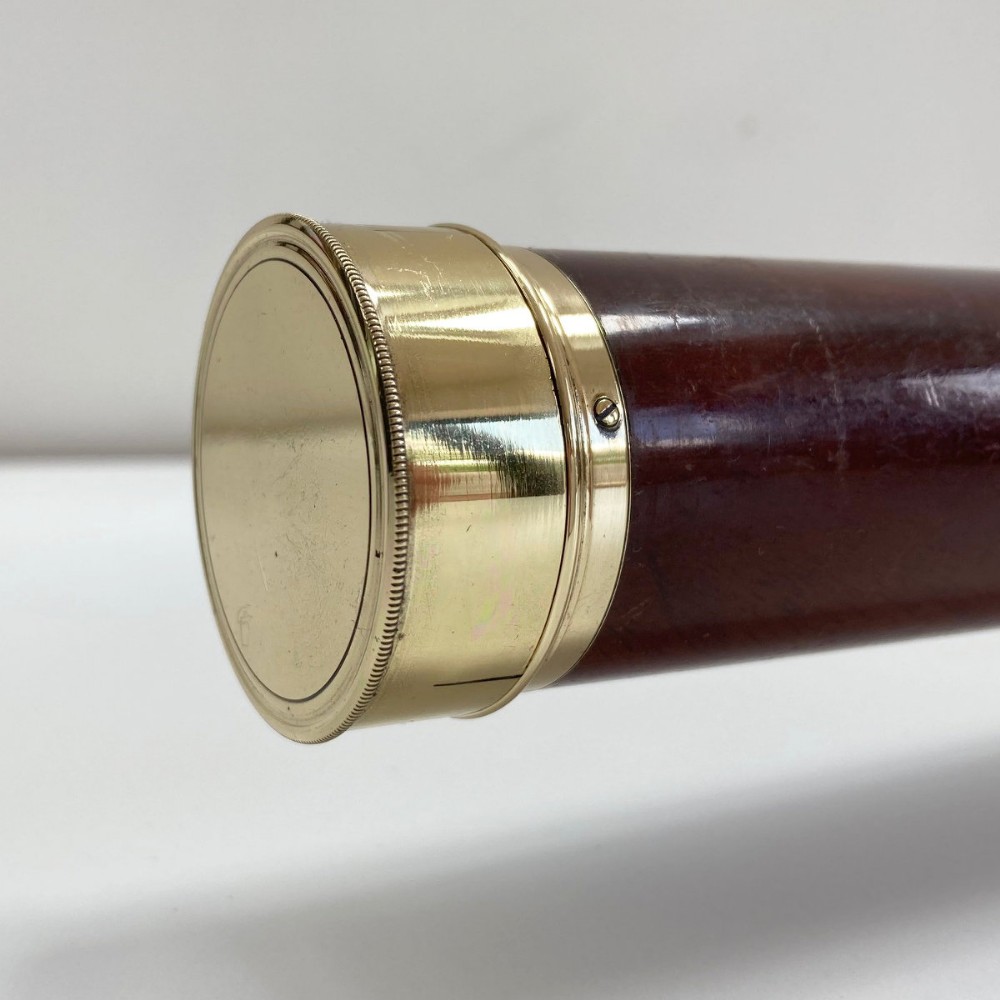
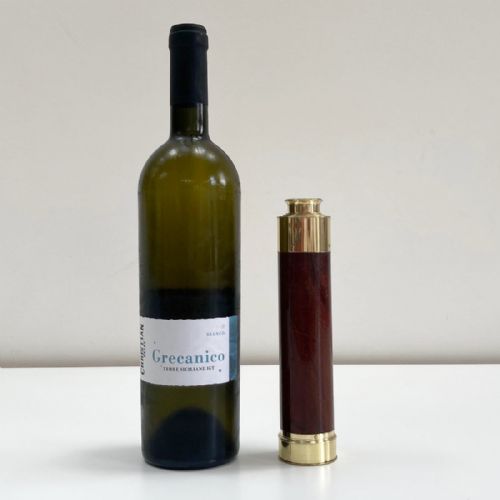
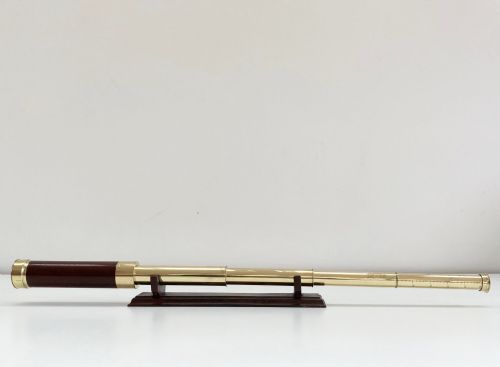
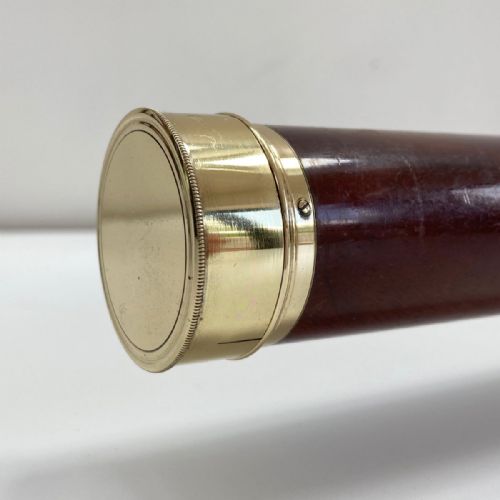
Comprised of a flame mahogany barrel with three draws measuring 56cms extended and 19cms closed.
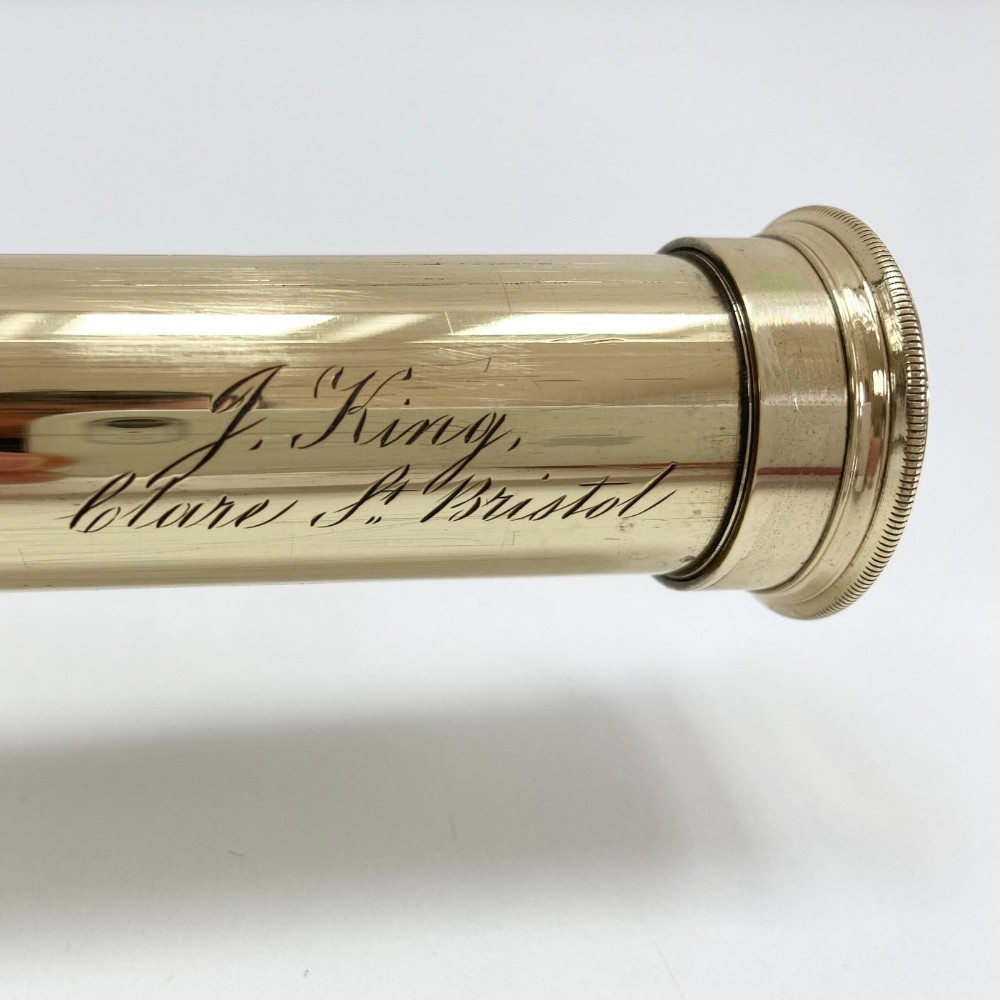
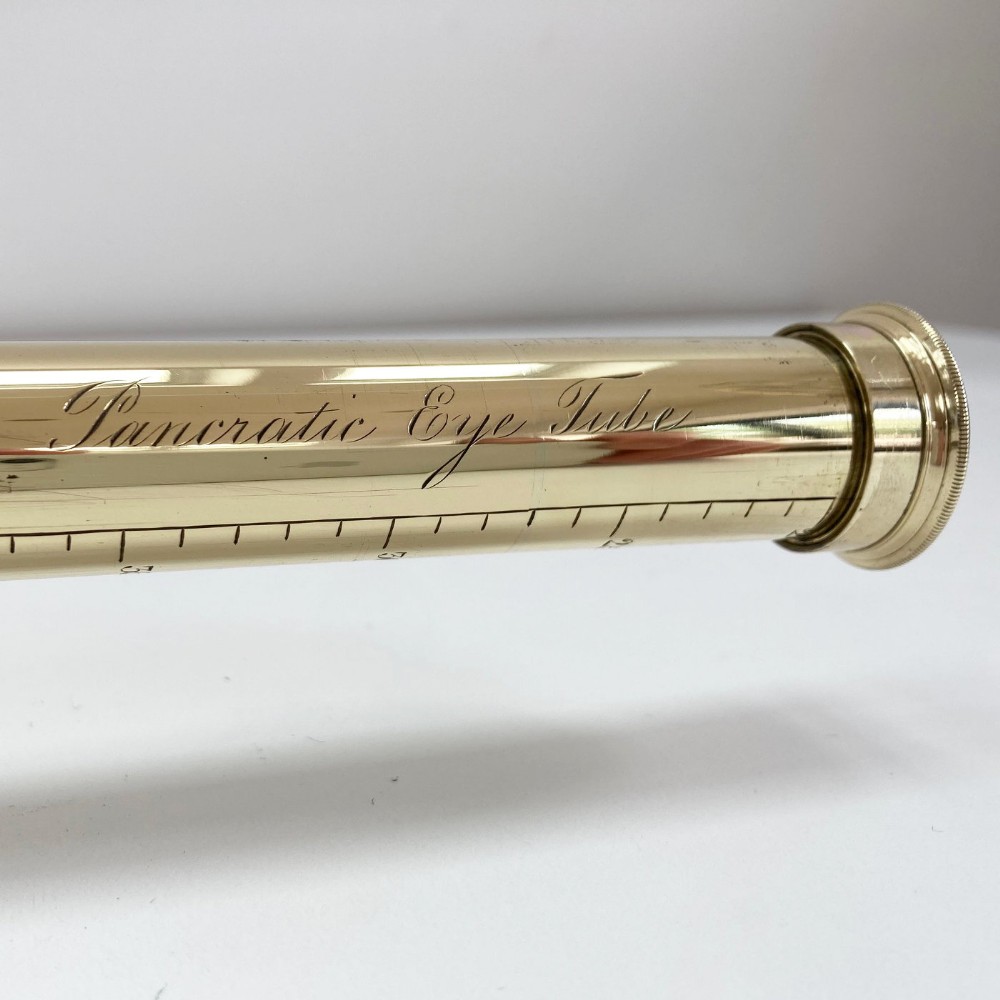
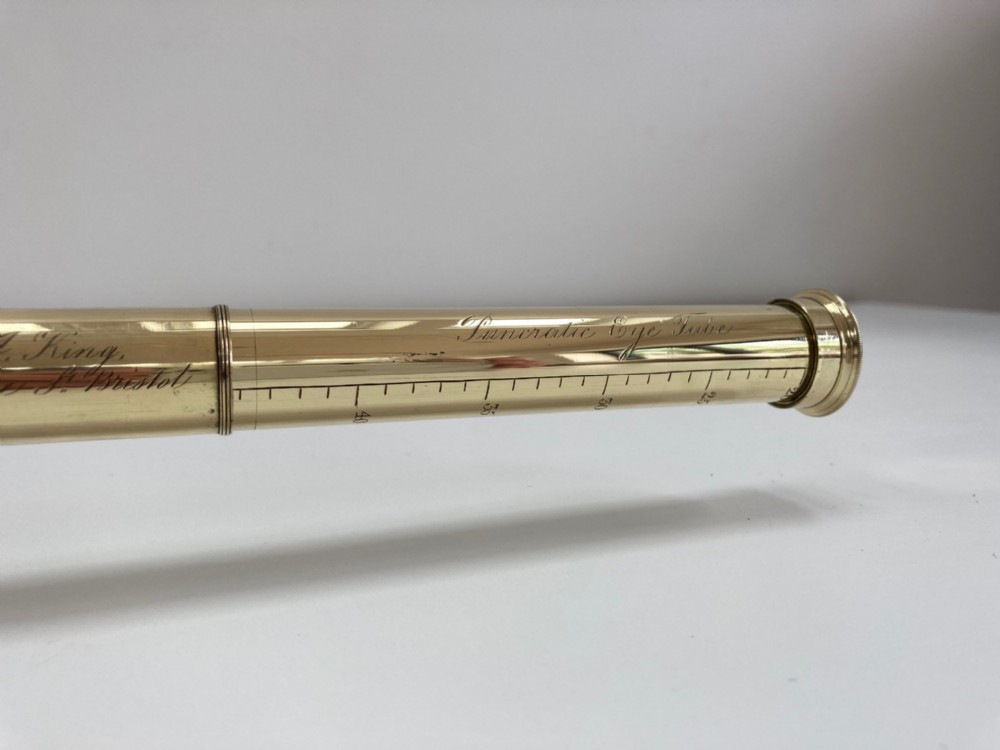
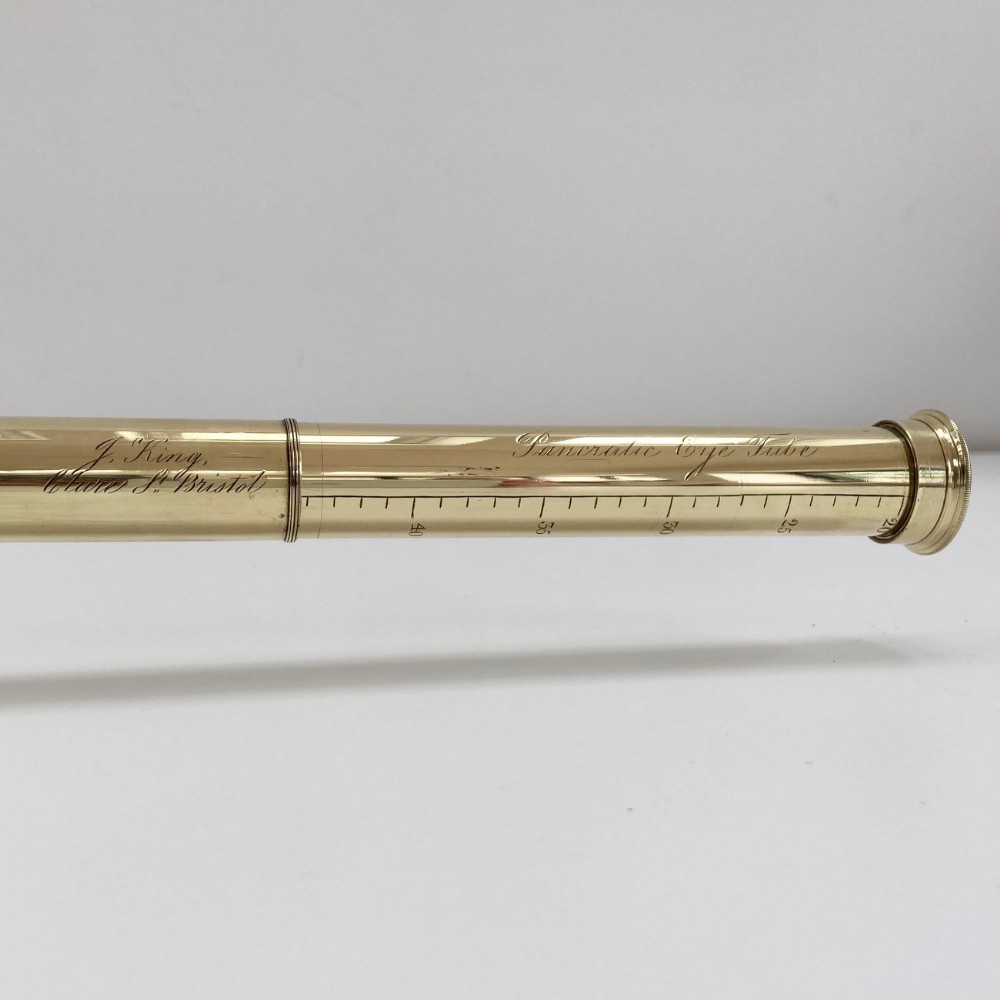
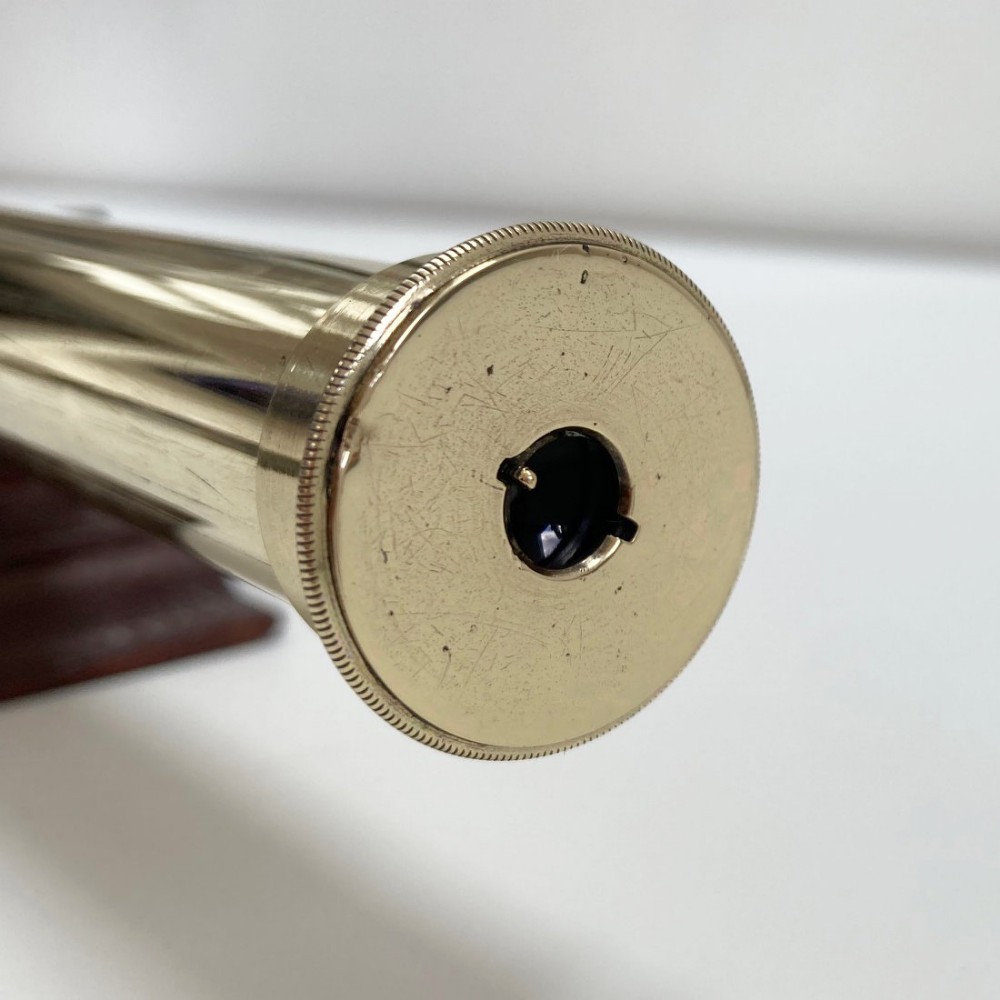
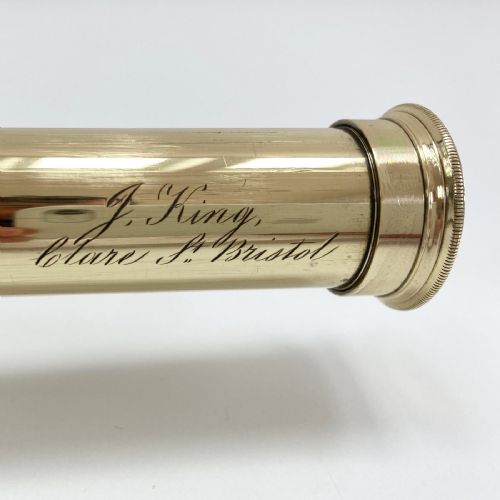
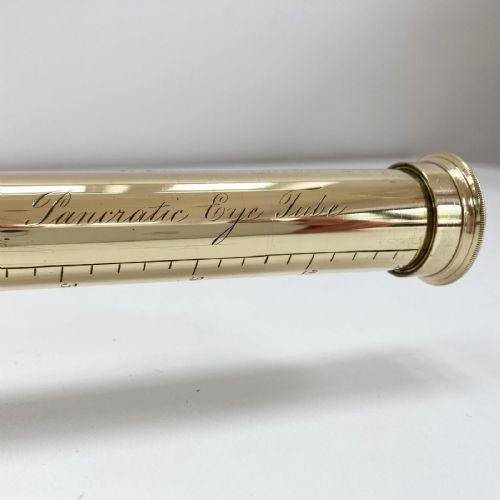
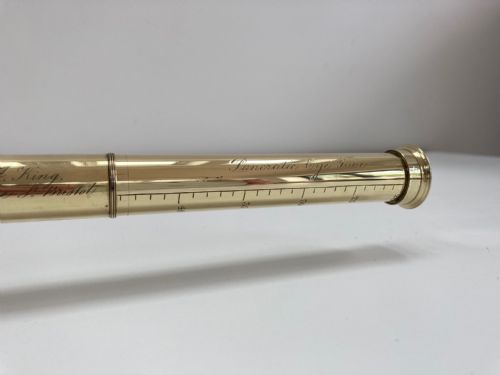
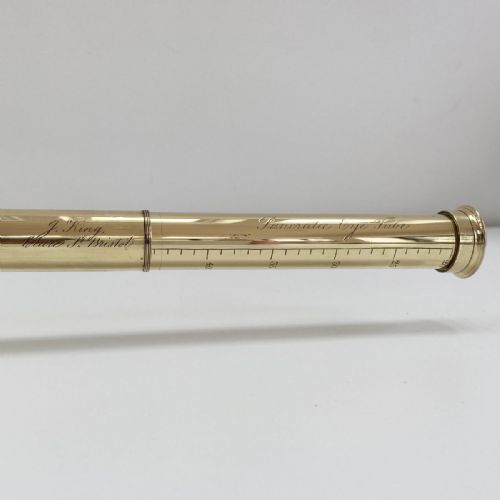
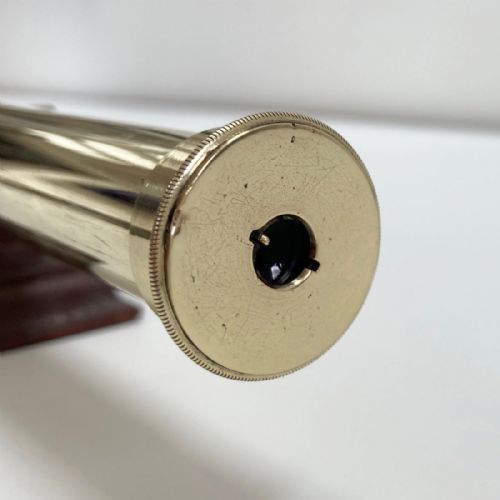
What may be considered as the smallest draw is engraved to, “J King, Bristol” but this telescope has a neat little secret. By unscrewing the eyepiece halfway off and pulling the end, an additional pancratic eyetube can be released and extended from the smallest draw. As per Kitchiner’s design, the brass is engraved with a magnification scale reading from 20 – 45 and is further engraved with “Pancratic Eye Tube” along the side.
Conceived by renowned optician, inventor and cook, William Kitchiner (a fascinating man who is also considered to be the inventor of the potato chip or crisp) to increase magnification of the standard telescope, the manufacture of his invention seems to have been entirely gifted to The Dollond family whose optical work Kitchiner is known to have admired. Why King was manufacturing this invention is somewhat of a mystery but it is likely that it was not legitimately approved by Kitchiner himself although the invention is likely to have been known by many in the scientific community by 1820.
Kitchiner described his invention in detail within his 1824 publication, “The Economy of the Eyes” but the less lengthy and earlier passage taken from The Philosophical Magazine of 1820 is worthy of reproduction to provide a contemporary explanation:
“Particular respecting the Pancratic Eye-Tube invented by William Kitchiner, MD., Author of “Practical Observations on Telescopes, Spectacles etc, made only by Dollond of London.
It has long been known that the magnifying powers of telescopes could be augmented by increasing the distance between the two glasses next to the eye, and the two that are next to the object glass, to almost double the power of the eyetube in its usual form, ie from 30 to 55. This is the utmost that opticians have at any time accomplished; yet this variation is so desirable, that I think it only requires to be generally known, to be generally desired.
“A few months ago, I saw an eyetube, made by Mr Cauchoix, with a scale of magnifying powers from 25 to 73; but upon trial, I found the vision was good only between 35 and 45. My attention was strongly excited by the idea of one eyetube effecting the whole business of magnifying; and after several experiments, I combined lenses of such proportions that they admitted of being separated from each other so as to magnify at one extremity, more than double they did at the other, the vision continuing uniformly distinct to the extreme edges of the field of view.
Having now done more than was previously effected, I brought it to you. The great approbation you expressed of what I had done, so encouraged me, that I applied unceasingly, determined to perfect the object in view, which I have now accomplished.
I beg to present to you the following accurate measurement of the powers, and faithful account of the performance of THE PANCRATIC EYE-TUBE, which gives a neater and better defined image of a fixed star, and shows double stars decidedly more distinct and perfectly separated, than any other eyetube, and will enable the observer to determine the distances of these very delicate objects from each other in a more perfect manner than has been possible heretofore.
This eyetube applied to the achromatic refractor of forty four inches focus, produces, in the most perfect manner, every imtermediate degree of magnifying power between 100 and 400, the vision continuing uniformly distinct to the extreme margin of the field of the telescope.
The tube is graduated; and the change
Jason Clarke Antiques has dated this piece to the 1800s.
You can view the stock and full dealer information on the Jason Clarke Antiques Profile Page
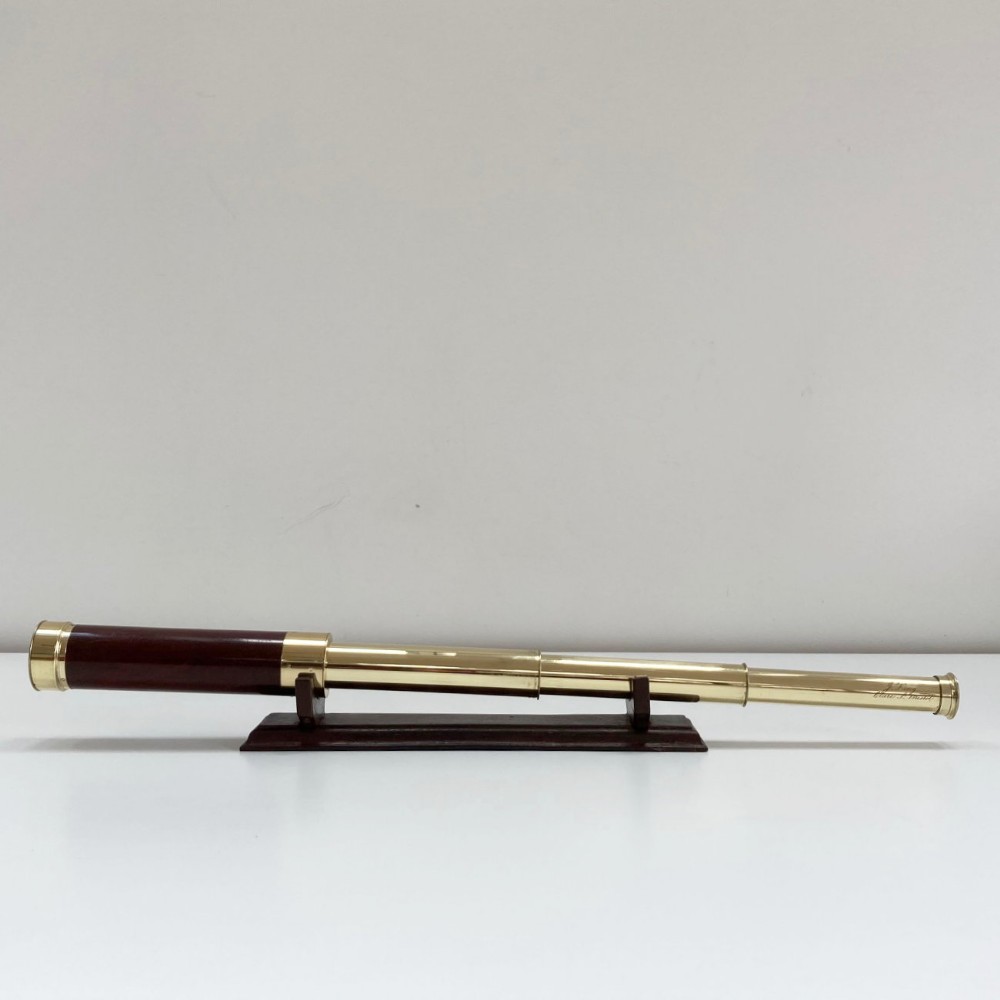
George IV Telescope with Secret Pancratic Eye Tube by John King of Bristol