Jason Clarke Antiques has dated this piece to the 1750s.
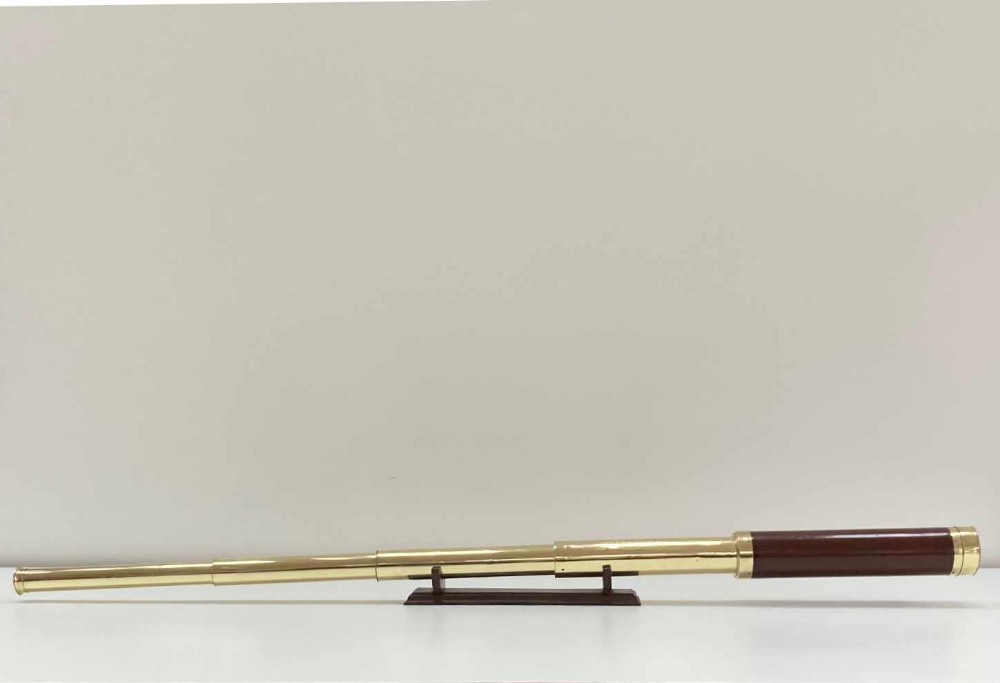
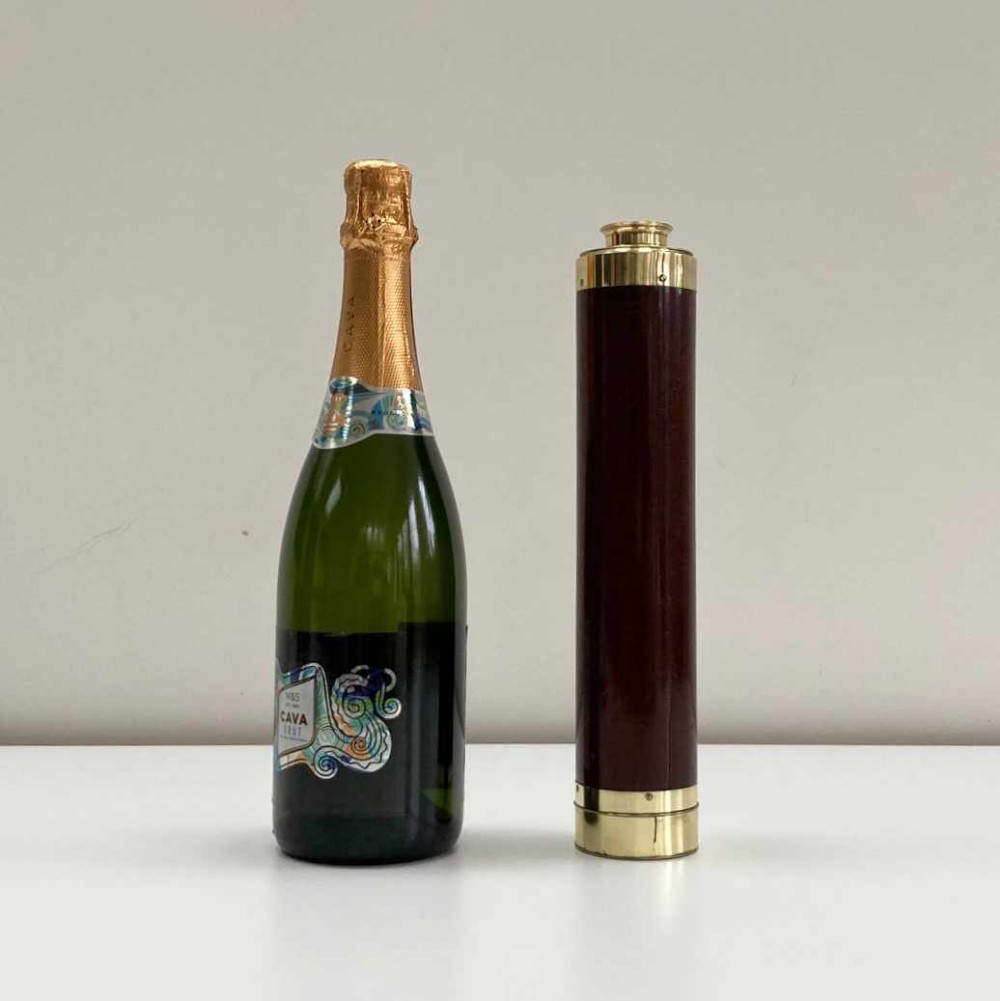
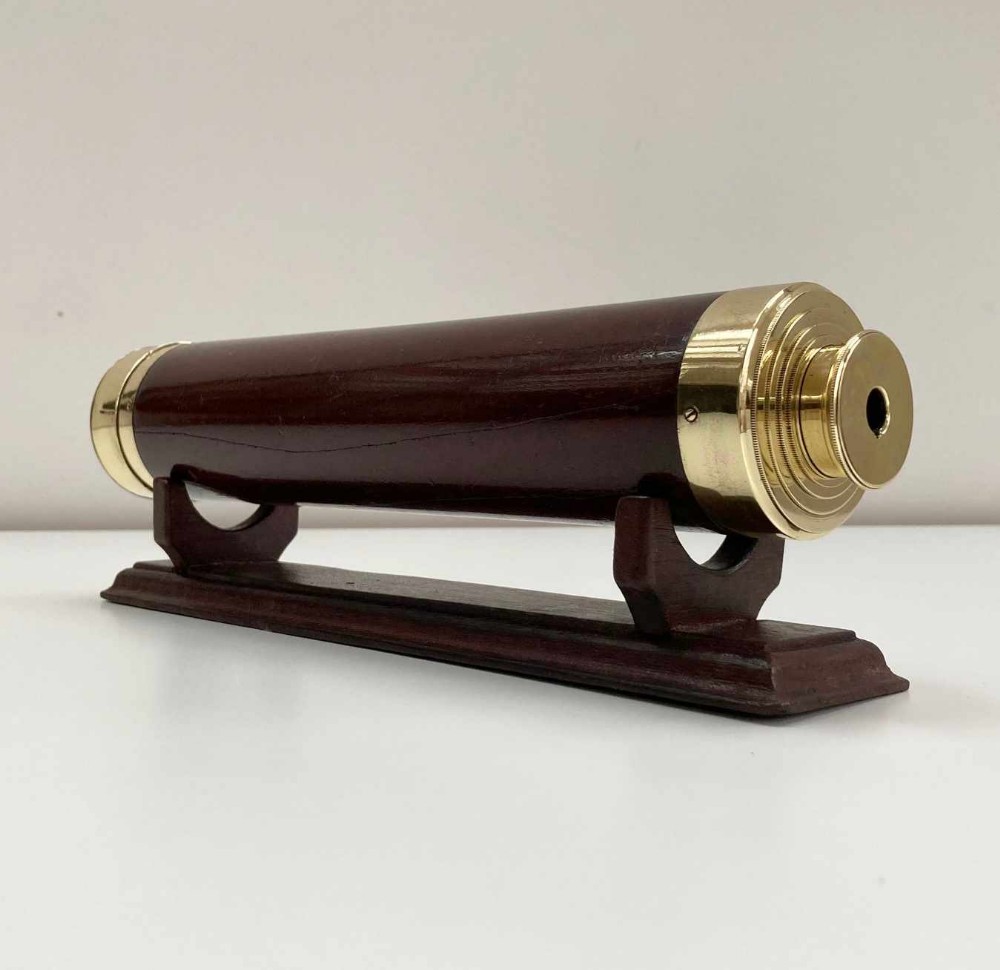
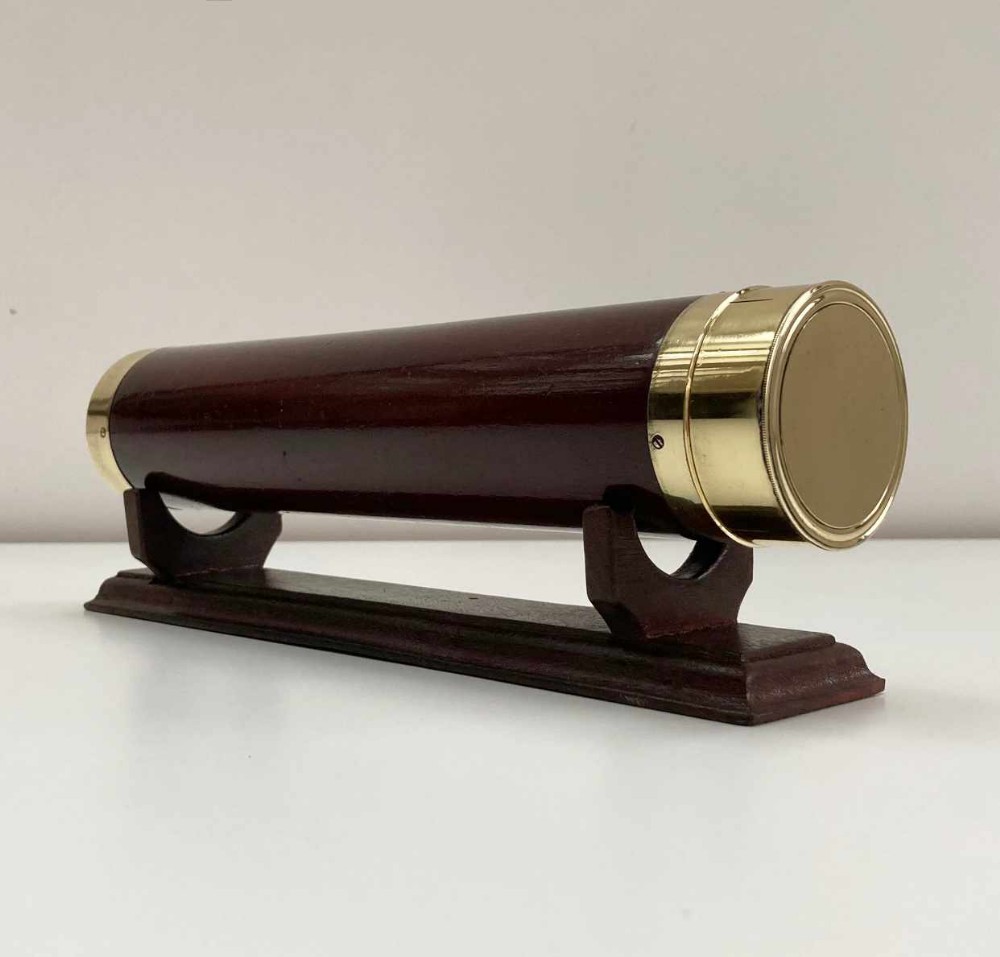
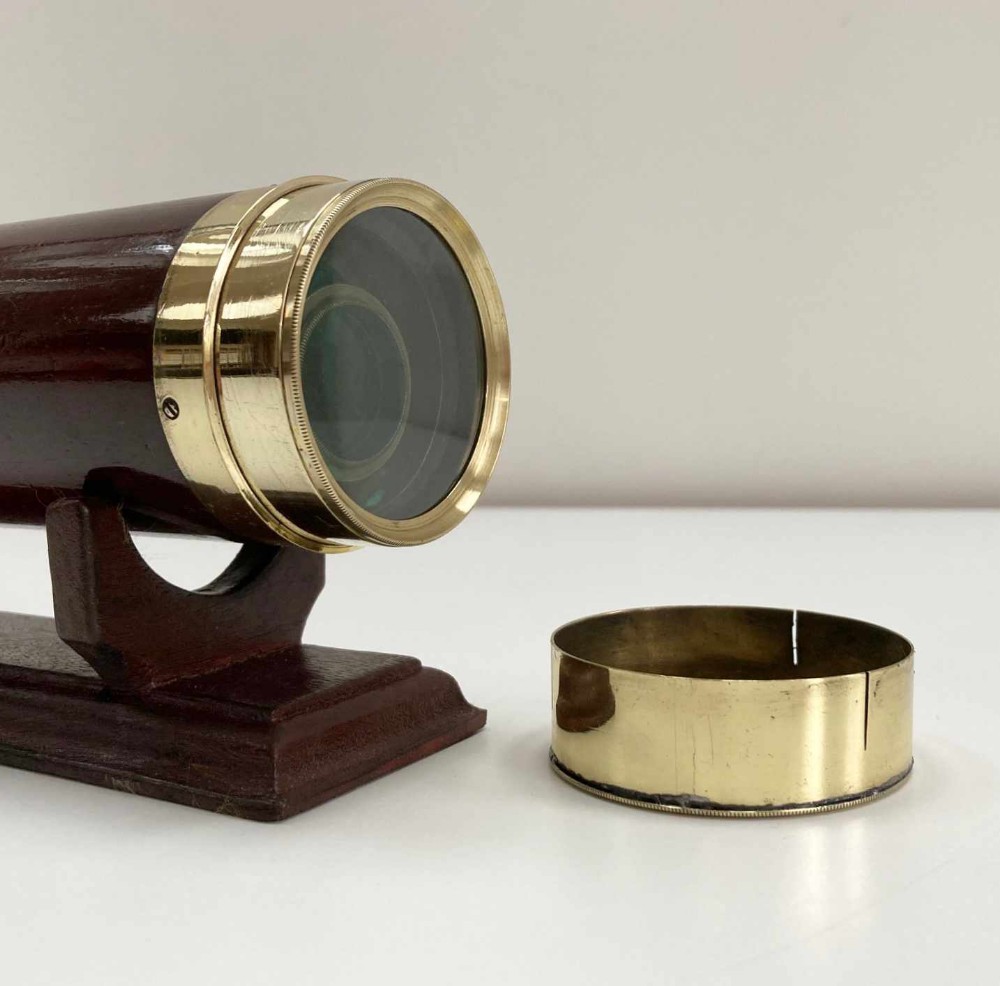
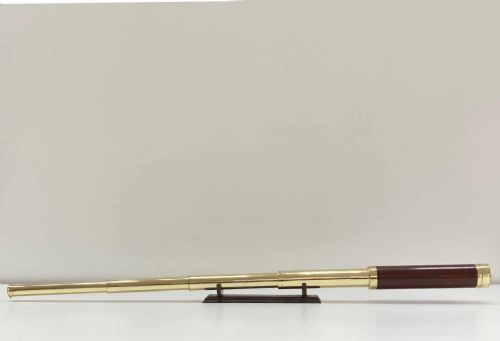
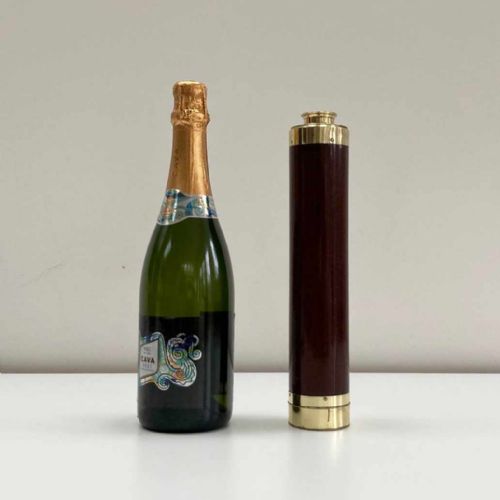
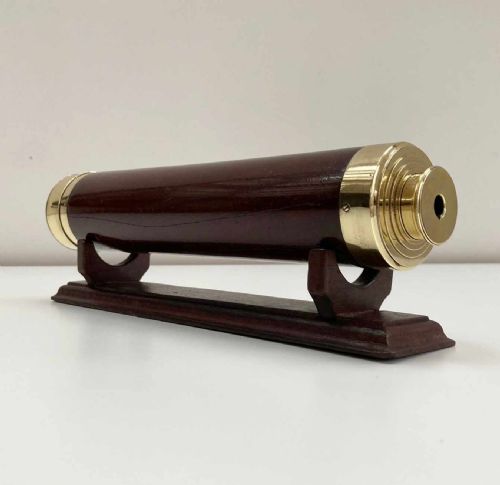
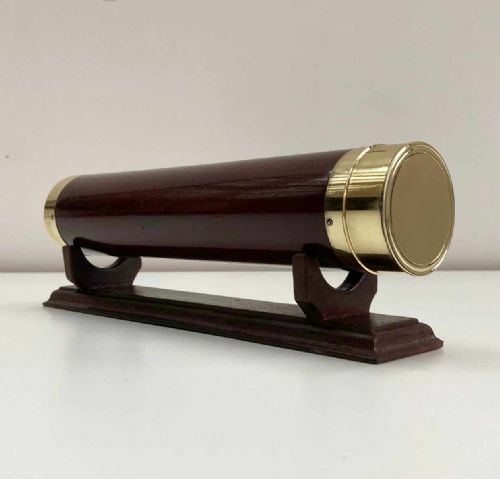
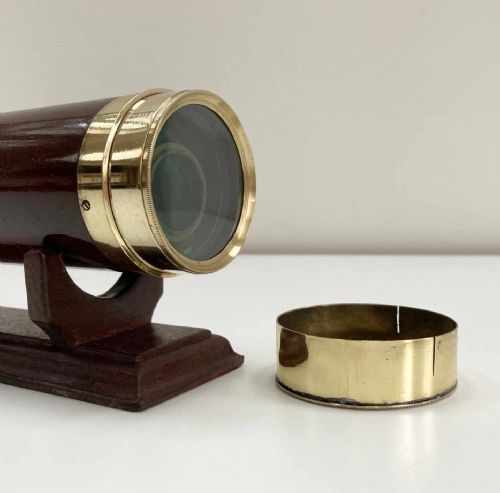
This magnificent telescope is comprised of a quality rosewood barrel and measures 114cms when extended, 29cms when closed and has a one and three quarter inch objective lens which retains its original dust cap.
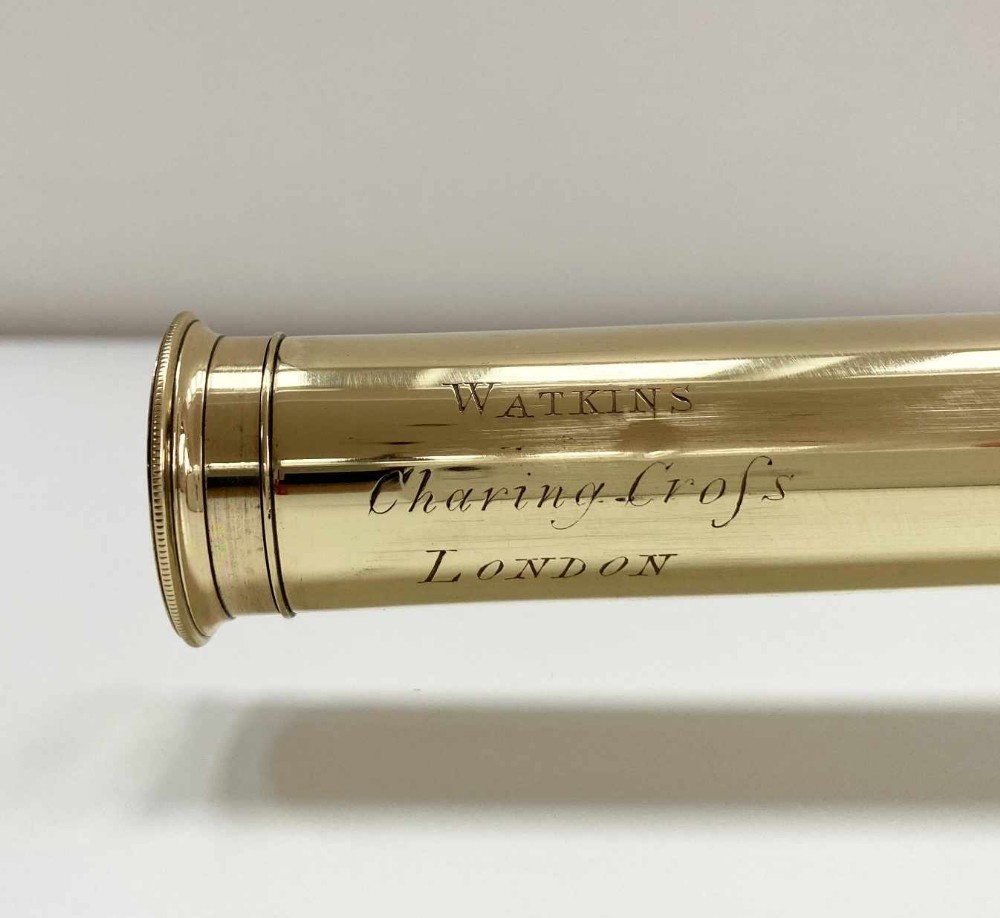
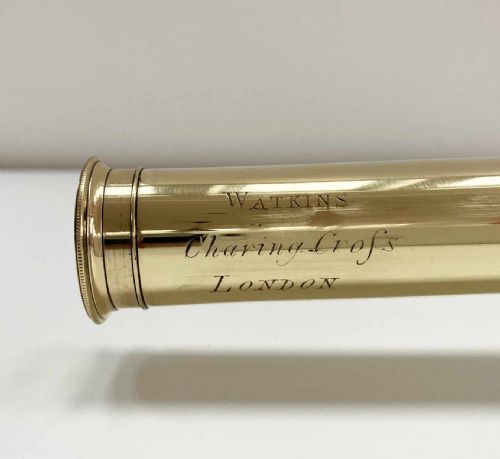
As one would expect from such a prestigious London maker, the fine brasswork is of superior quality.
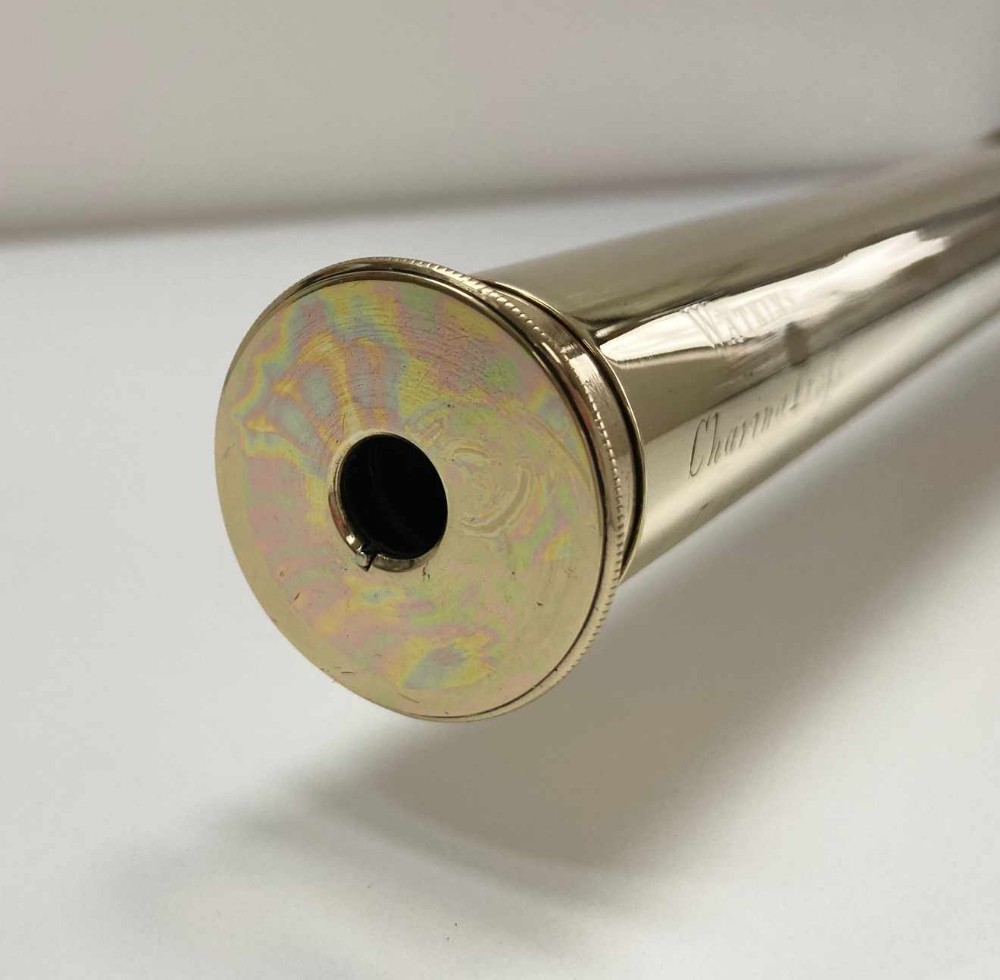
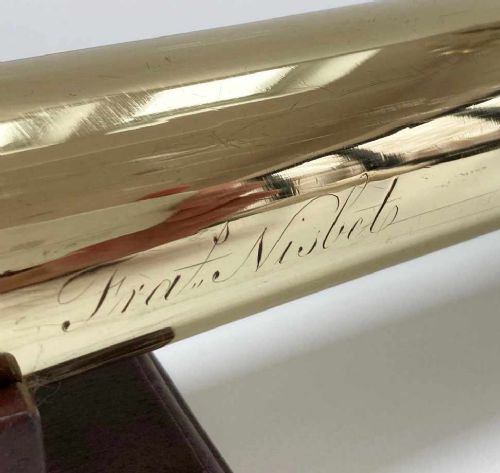
Whereas most dedication on telescopes are also present on the first draw, somewhat unusually, the telescope is engraved to the fourth draw with the name Fra’s Nisbet. The most immediate association for the name would be for Fanny (Frances) Nisbet, the beleaguered wide of Lord Horatio Nelson. The style of the telescope was certainly popular through the latter part of the Eighteenth Century and early Nineteenth Century so would fit with The Nelsons’ time spent in London however it would have had to have been manufactured prior to 1787 when Fanny would have been using her previous surname. Nelson is documented through his letters to Fanny as having frequented Watkin’s shop and there are two Watkins telescopes that are attributed to being once owned by him.
There are therefore some tenuous links but the evidence is simply not strong enough for a firm attribution to Fanny Nisbet. It is therefore being sold as a high quality example by one of the foremost London makers of the period with a potentially interesting history.
The Watkins dynasty traces its roots back to the apprenticeship in 1737 of the renowned scientific instrument maker, Francis Watkins under a Nathaniel Adams. Watkins was granted his freedom of The Spectacle Maker’s Company in 1746 and opened premises using the sign of Sir Isaac Newton’s head in Charing Cross. Shortly after, he took on Addison Smith as an apprentice (later to become his son in law) and with whom he was to form a life-long partnership and or business relationship with shops in both Charing Cross and The Strand.
By 1758 the equally famous Dollond family had entered into a partnership agreement with Francis Watkins for the marketing and selling of the new lenses that solved the issue of both chromatic and spherical aberration encountered in telescope lenses, and Watkins as part of the deal, helped fund and arrange for the patent to be lodged.
The ensuing saga and various court proceedings are well renowned for the ferocity with which Peter Dollond sought to protect his father’s patent following his death but suffice to say that the messy business was to some extent career defining for both Watkins and Smith as their close involvement and the continuing repercussions of the argument about Dollond’s rights to the achromatic lens patent dragged on for the rest of their lives and beyond.
Watkins was a shrewd businessman and whilst being one of the foremost scientific instrument makers of the period, he also took a keen interest in property. It was more likely this latter interest that allowed Watkins to retire in 1785 to Richmond with his wife. Without an heir, the business was taken over by his nephews Jeremiah and Walter and they assumed ownership of the Charing Cross property and various other assets upon Francis’s death in 1791.
Just seven years later in 1798, Walter also died at Charing Cross from apoplexy and Jeremiah continued to run the family business until his own death in February of 1810 whereafter the business continued under family ownership beginning with Jeremiah’s widow Charlotte, then a John Watkins and finally Francis Watkins III. This younger name sake of the company’s founder was of too young an age to immediately take the reigns of this prestigious company and it was supported through this period by William Hill, a long standing employee of th
Jason Clarke Antiques has dated this piece to the 1750s.
You can view the stock and full dealer information on the Jason Clarke Antiques Profile Page
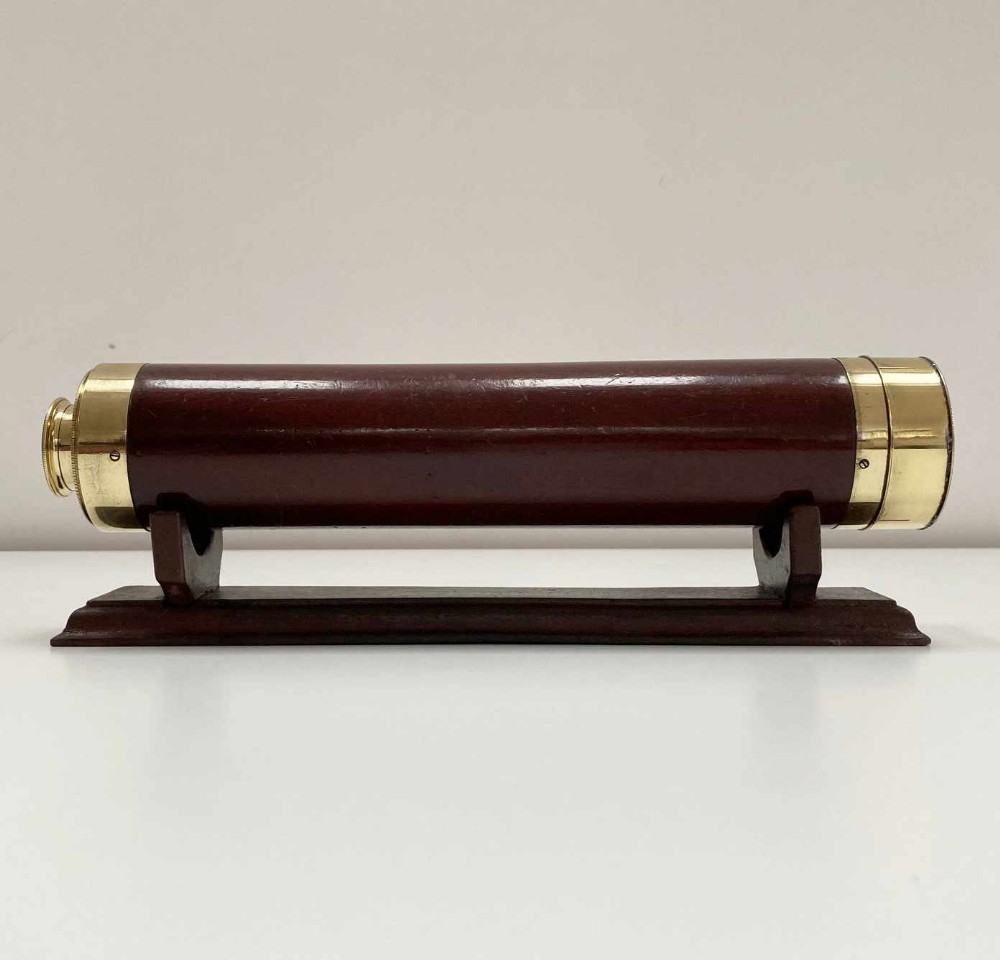
Four Draw Telescope by Watkins of Charing Cross Engraved to Frances Nisbet