14,217  PAGES BROWSED TODAY PAGES TODAY 51 ANTIQUES UPLOADED TODAYNEW ARRIVALS
51 ITEMS ADDED TODAY
Sort Order
Items Per Page
Browse Categories
Sort order
Items per page
ID #SA768650
SOLD
Email
Save
Early Nineteenth Century Gilt Pocket Compass by Robert Brettel Bate London
Jason Clarke Antiques
sold SA768650
Sorry, but this item has been sold.
Jason Clarke Antiques

Jason Clarke Antiques

Sellingantiques Verified Since Jul 2015
View Dealers Stock Page
Id #SA768650
PDF SHARE
SAVE

Early Nineteenth Century Gilt Pocket Compass by Robert Brettel Bate London

19th century
Description

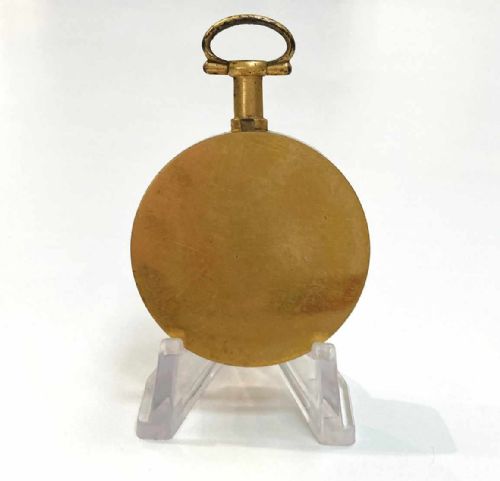
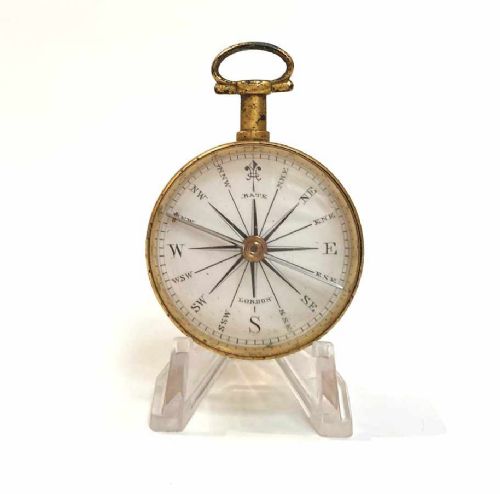
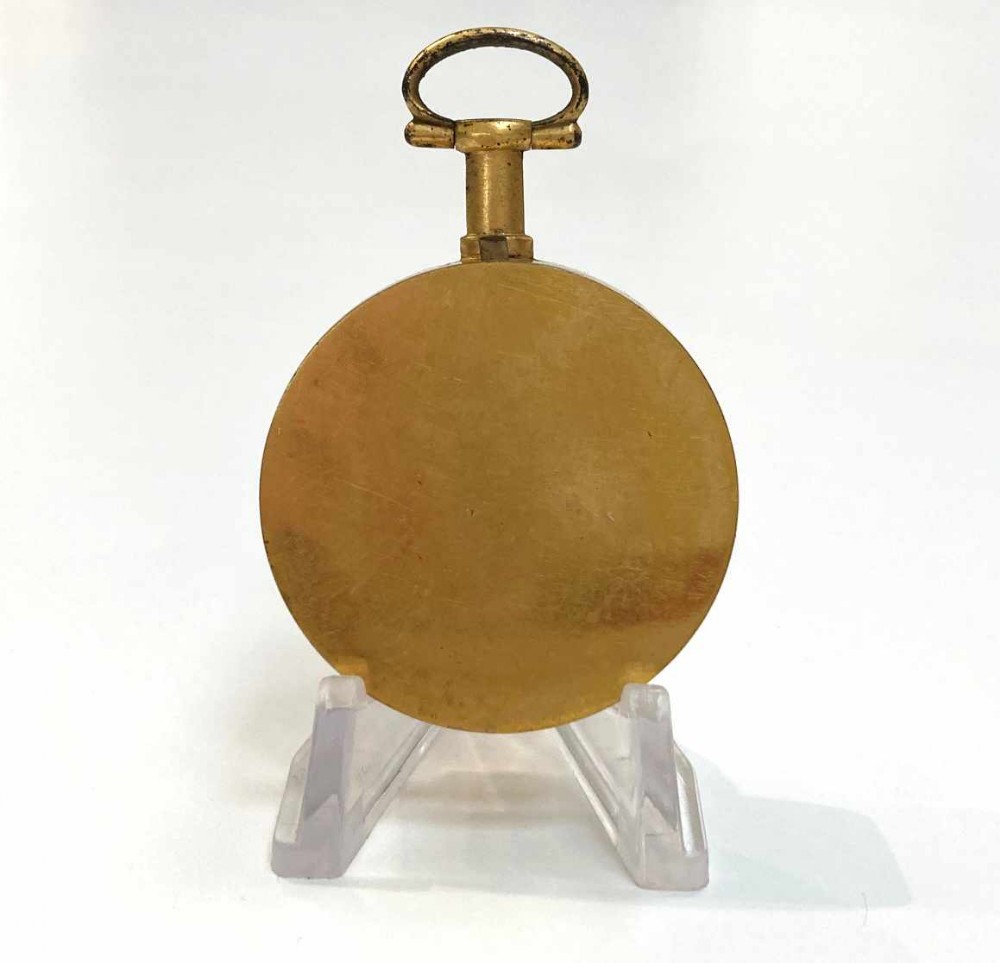
For sale an early Nineteenth Century gilt lacquered pocket compass by Robert Brettel Bate of Poultry, London.

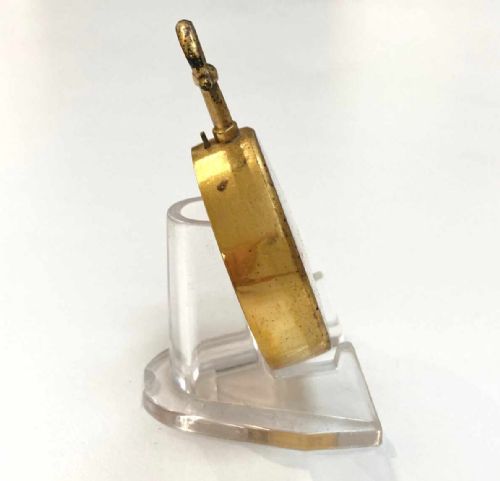
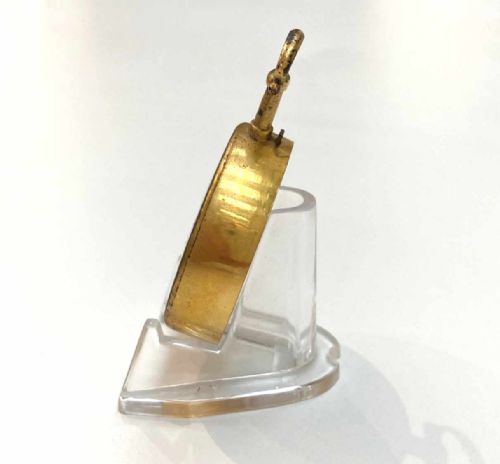
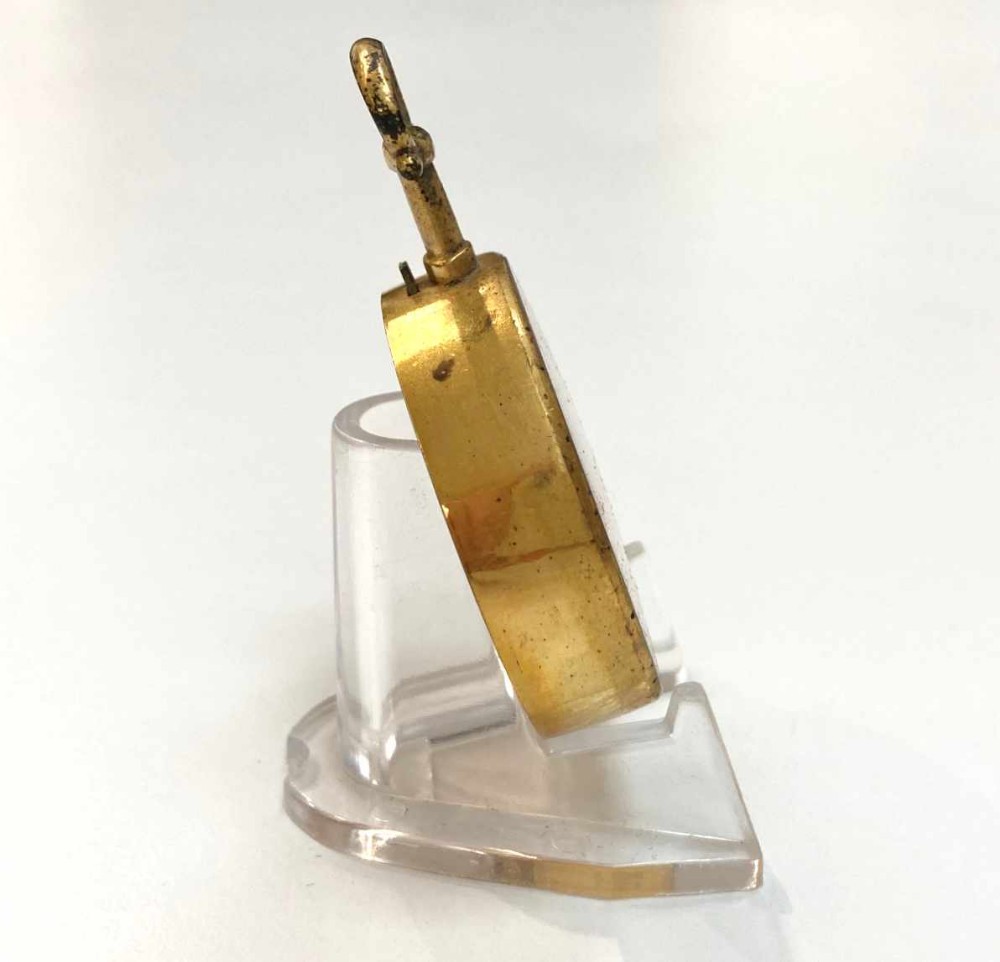
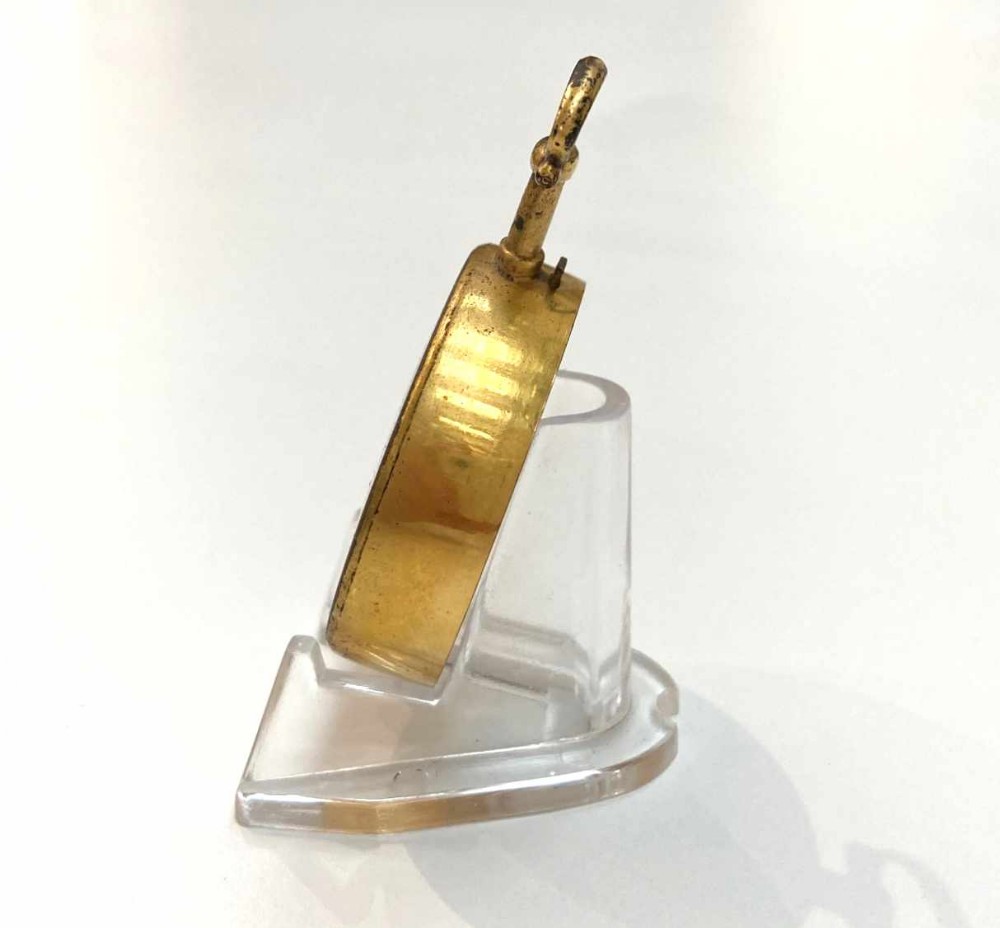
This exquisite example measures one and half inch in diameter with a ceramic dial and star motif to the bearing points. The north is replaced with a fleur de lys motif and is named to Bate, London. It retains almost one hundred percent of its gilt finish with some slight loss at the hanging loop. The instrument remains in complete working order and has a working locking mechanism behinf the stalk.
The maker, Robert Brettell Bate was a very high quality manufacturer of scientific instruments working in the early part of the Nineteenth Century. Born in 1782, to a family of Bankers in Stourbridge, he initially travelled to London to become a Haberdasher under his Uncle Robert Brettell. His Aunt also living in London was married to Bartholomew Sikes, famous for winning favour with The Board of Excise for his hydrometer design in 1802.
In 1804, Robert Bate married his cousin, the daughter of his aunt Mary and Bartholomew Sikes, however it was followed quite shortly with the sudden death of Sikes. Supported by his newly widowed Aunt, Bate took over Sike’s business and its Government commission and successfully persuaded the Board of Excise to adopt the “improved” hydrometer that his Father in Law had been working on before his untimely death.
At this time, the company was being run at 17 Poultry where in 1814 he became a member of the Spectacle Maker’s Company of London, by 1824 his reputation was such that he was further commissioned by the Board of Excise & Ordnance to make the new national standard measures for weight & capacity, this event led Bate to acquire further premises at 20 and 21 Poultry. It was this Governmental relationship that underpinned his entire career, leading to an important commission from the US Mint where his Troy pound standard weight became legal standard for US coinage at the time and his instruments were also known to have been used by The East India Company, The Royal Navy, The Board of Ordnance, The Hydrographic Office and The Bank of England.

His quality of manufacture led him to receive Royal Appointments from George IV, William IV and Queen Victoria where he acted as Optician and he eventually rose to become Master of the Spectacle Maker’s Guild in 1833. He was also known to have acted for the Admiralty as its main chart agent with numerous sub agents acting below him such as his old apprentice and instrument maker to The Royal yacht Club, George Stebbing.

The final two decades of his life (the 1830’s and 40’s) were riddled with ill health probably due to the amount of work that he was undertaking. He travelled widely across the UK and abroad for health reasons but still maintained lively correspondence with his customers. Owing to its output, the business found it sometimes necessary to buy in work from other instrument makers. Later in his career, he is known to have purchased microscopes from both James Smith and Powell & Lealand but conversely it supplied others in both the regions and in London. Bate is listed as a creditor in the bankruptcy proceedings of the famous makers William Harris and also W&T Gilbert.

Bate traded from his Poultry street addresses for the majority of his career although he moved to number 33 Royal Exchange in 1846 until his death shortly after in 1847. Bate’s widow continued to run the business until 1850 whereafter the Excise work was taken over by Dring & Fage and the Admiralty Chart side of the business went to Bate’s former employee, John Dennett Potter.

Circa 1830

Physical Dimensions
Height
6cm (2.36")
Width
4cm (1.57")
Depth
1cm (0.39")
Declaration

Jason Clarke Antiques has dated this piece to the 1800s.

Reference Numbers
Sellingantiques Reference
SA768650
Description
For sale an early Nineteenth Century gilt lacquered pocket compass by Robert Brettel Bate of Poultry, London.
This exquisite example measures one and half inch in diameter with a ceramic dial and star motif to the bearing points.
Jason Clarke Antiques

The north is replaced with a fleur de lys motif and is named to Bate, London. It retains almost one hundred percent of its gilt finish with some slight loss at the hanging loop. The instrument remains in complete working order and has a working locking mechanism behinf the stalk.

fig 1. Early Nineteenth Century Gilt Pocket Compass by Robert Brettel Bate London

The maker, Robert Brettell Bate was a very high quality manufacturer of scientific instruments working in the early part of the Nineteenth Century. Born in 1782, to a family of Bankers in Stourbridge, he initially travelled to London to become a Haberdasher under his Uncle Robert Brettell. His Aunt also living in London was married to Bartholomew Sikes, famous for winning favour with The Board of Excise for his hydrometer design in 1802.

fig 2. Early Nineteenth Century Gilt Pocket Compass by Robert Brettel Bate London

In 1804, Robert Bate married his cousin, the daughter of his aunt Mary and Bartholomew Sikes, however it was followed quite shortly with the sudden death of Sikes. Supported by his newly widowed Aunt, Bate took over Sike’s business and its Government commission and successfully persuaded the Board of Excise to adopt the “improved” hydrometer that his Father in Law had been working on before his untimely death.

fig 3. Early Nineteenth Century Gilt Pocket Compass by Robert Brettel Bate London

At this time, the company was being run at 17 Poultry where in 1814 he became a member of the Spectacle Maker’s Company of London, by 1824 his reputation was such that he was further commissioned by the Board of Excise & Ordnance to make the new national standard measures for weight & capacity, this event led Bate to acquire further premises at 20 and 21 Poultry. It was this Governmental relationship that underpinned his entire career, leading to an important commission from the US Mint where his Troy pound standard weight became legal standard for US coinage at the time and his instruments were also known to have been used by The East India Company, The Royal Navy, The Board of Ordnance, The Hydrographic Office and The Bank of England.

His quality of manufacture led him to receive Royal Appointments from George IV, William IV and Queen Victoria where he acted as Optician and he eventually rose to become Master of the Spectacle Maker’s Guild in 1833. He was also known to have acted for the Admiralty as its main chart agent with numerous sub agents acting below him such as his old apprentice and instrument maker to The Royal yacht Club, George Stebbing.

The final two decades of his life (the 1830’s and 40’s) were riddled with ill health probably due to the amount of work that he was undertaking. He travelled widely across the UK and abroad for health reasons but still maintained lively correspondence with his customers. Owing to its output, the business found it sometimes necessary to buy in work from other instrument makers. Later in his career, he is known to have purchased microscopes from both James Smith and Powell & Lealand but conversely it supplied others in both the regions and in London. Bate is listed as a creditor in the bankruptcy proceedings of the famous makers William Harris and also W&T Gilbert.

Bate traded from his Poultry street addresses for the majority of his career although he moved to number 33 Royal Exchange in 1846 until his death shortly after in 1847. Bate’s widow continued to run the business until 1850 whereafter the Excise work was taken over by Dring & Fage and the Admiralty Chart side of the business went to Bate’s former employee, John Dennett Potter.

Circa 1830

Height
6cm (2.36")
Width
4cm (1.57")
Depth
1cm (0.39")
Date of Manufacture

Jason Clarke Antiques has dated this piece to the 1800s.

Reference Numbers
Sellingantiques Ref
SA768650
Jason Clarke Antiques
Sellingantiques verified Since Jul 2015
Dealer Profile

You can view the stock and full dealer information on the Jason Clarke Antiques Profile Page
PDF SHARE
SAVE
Early Nineteenth Century Gilt Pocket Compass by Robert Brettel Bate London
1 / 4
Archive I Early Nineteenth Century Gilt Pocket Compass by Robert Brettel Bate London
Early Nineteenth Century Gilt Pocket Compass by Robert Brettel Bate London
Archive II Early Nineteenth Century Gilt Pocket Compass by Robert Brettel Bate London View II
Archive III Early Nineteenth Century Gilt Pocket Compass by Robert Brettel Bate London View III
Archive IV Early Nineteenth Century Gilt Pocket Compass by Robert Brettel Bate London View IV
Enlarged Archival View
Telephone 07815 046645
Location
Newbury
Berkshire
United Kingdom
Verified Since Jul 2015
Items For Sale 80
Items Sold 607
Jason Clarke Antiques
Verified Since Jul 2015
View Dealer Info
Location: Newbury, Berkshire, United Kingdom
Verified
Jul 2015
For Sale
80
Sold
607
Early Nineteenth Century Gilt Pocket Compass by Robert Brettel Bate London
Ref: SA768650
Early Nineteenth Century Gilt Pocket Compass by Robert Brettel Bate London
Detail View 1
Detail View 2
Detail View 3
Archival Detail
Every single antique dealer on our platform is individually approved by our internal team. We verify their professional trade history, ethical standards, and photographic quality to ensure a secure, high-standard buying environment. Upon joining, every dealer agrees to a strict 9-point code of conduct. While issues can occasionally arise, our dealers typically resolve them swiftly and directly with the buyer. In fact, since our founding in 2002, Sellingantiques has only had to step in to help resolve an issue on roughly five occasions—a true testament to the quality of our dealers and their dedication to your happiness.
Our dealers are highly experienced in packing and shipping fragile, high-value antiques. Because you are in direct contact with the dealer, you will be able to easily go through all available shipping and insurance options together to ensure your item arrives safely.
Antiques are the ultimate green purchase. By choosing historical pieces over newly manufactured goods, you completely eliminate the carbon footprint of modern mass production while preserving exceptional, timeless craftsmanship.
items
Add keywords to the filter
Price
£100
£250000
Era
Movements
Material
Origin
Stock Location
Freshness
Online Payments
Categories