10,613  PAGES BROWSED TODAY PAGES TODAY 51 ANTIQUES UPLOADED TODAYNEW ARRIVALS
51 ITEMS ADDED TODAY
Sort Order
Items Per Page
Browse Categories
Sort order
Items per page
ID #SA758706
SOLD
Email
Save
George II Steelyard Gold Balance by Bradford Darby & Hulls of Campden Gloucestershire
Jason Clarke Antiques
sold SA758706
Sorry, but this item has been sold.
Jason Clarke Antiques

Jason Clarke Antiques

Sellingantiques Verified Since Jul 2015
View Dealers Stock Page
Id #SA758706
PDF SHARE
SAVE

George II Steelyard Gold Balance by Bradford Darby & Hulls of Campden Gloucestershire

18th century
Description

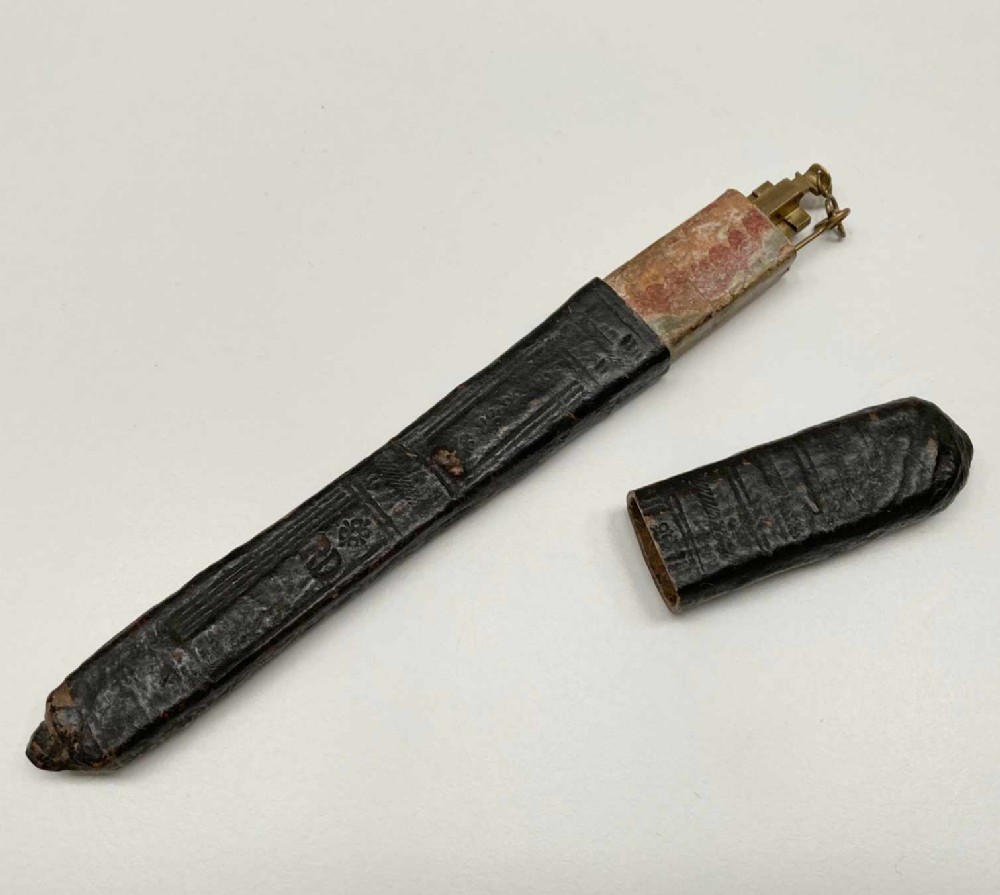
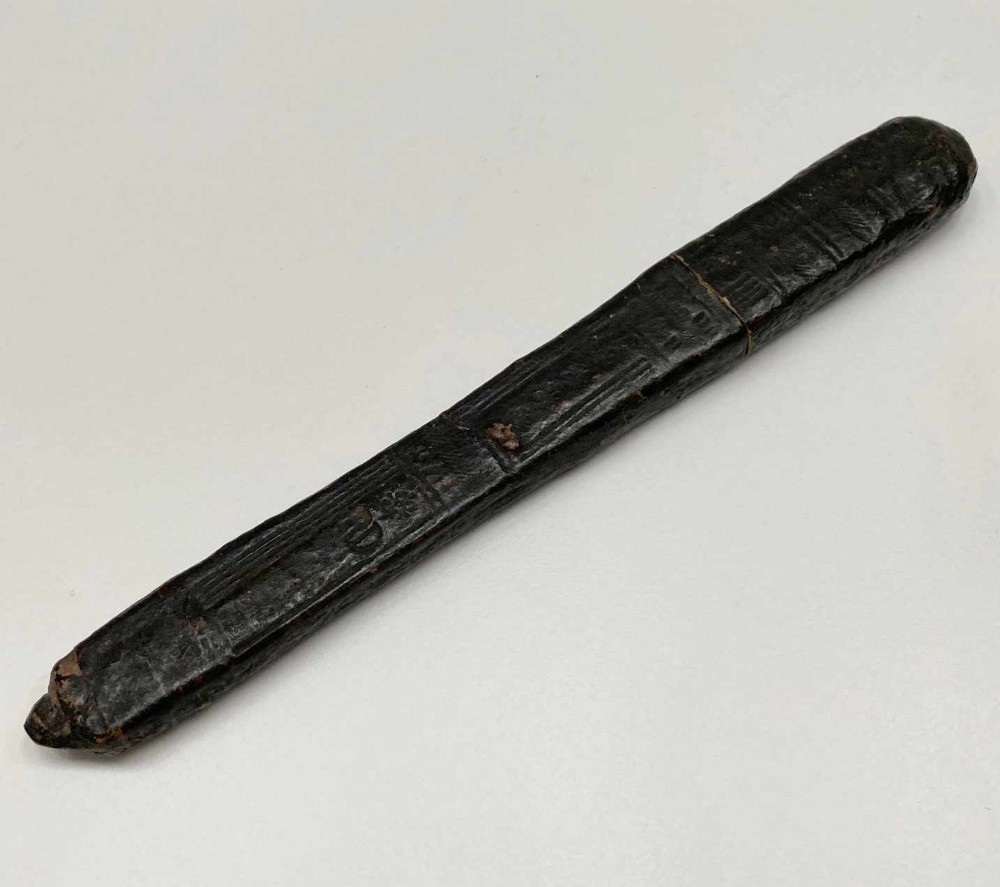
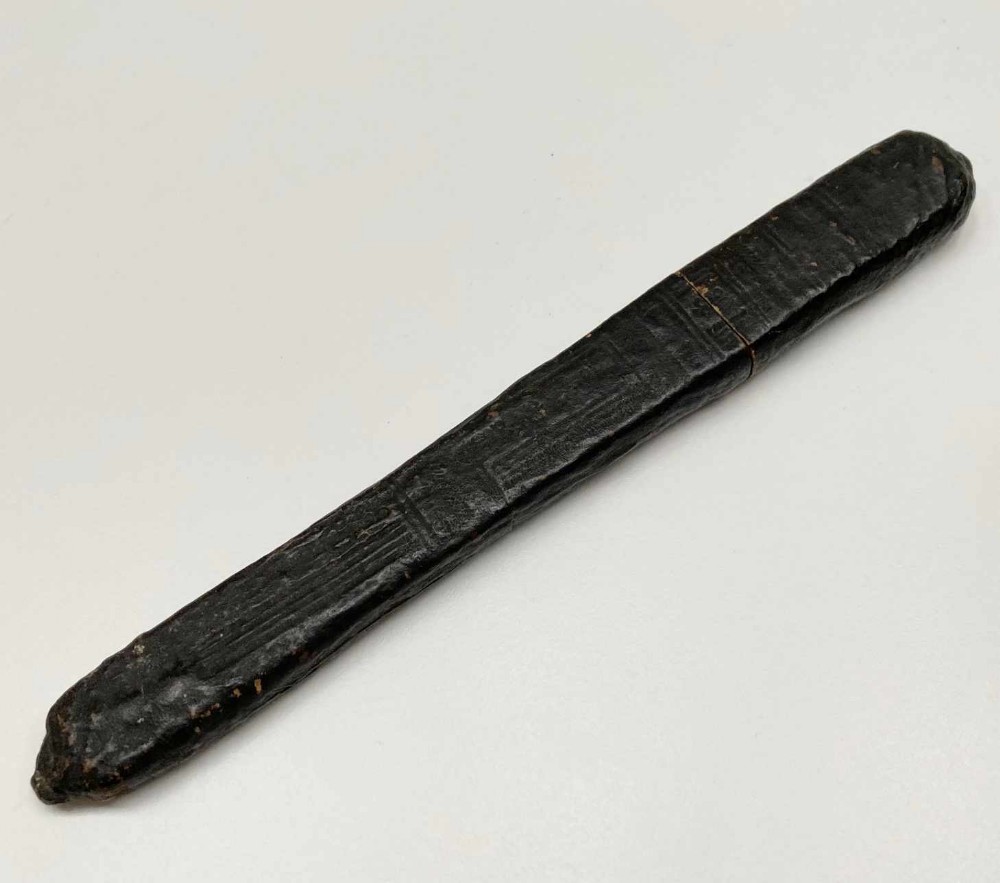
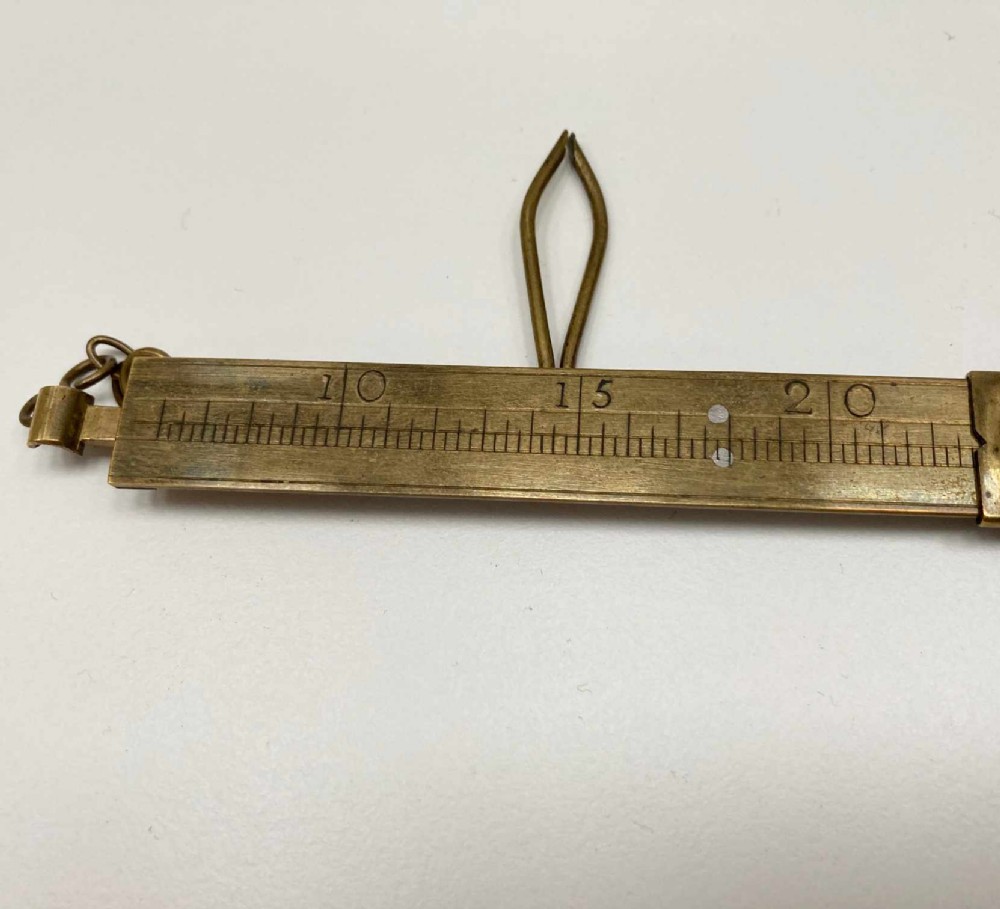
For sale, a leather cased mid-Eighteenth Century steelyard gold balance by Bradford Darby & Hulls of Campden, Gloucestershire.

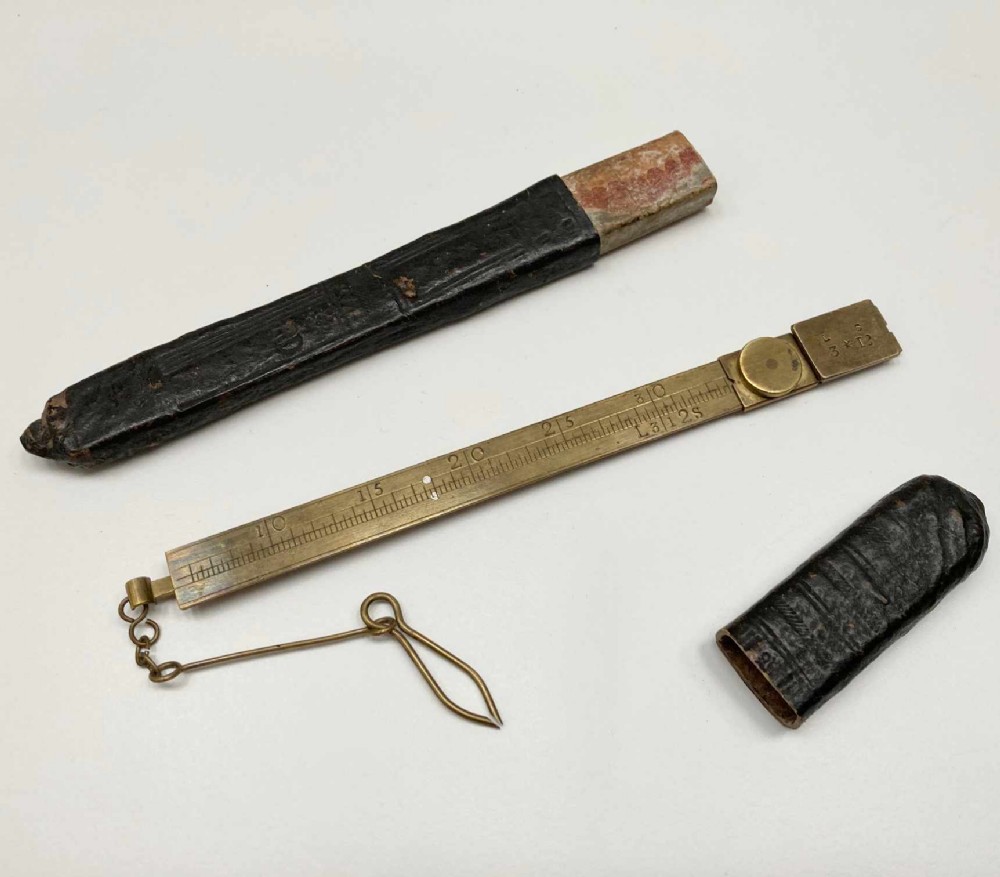
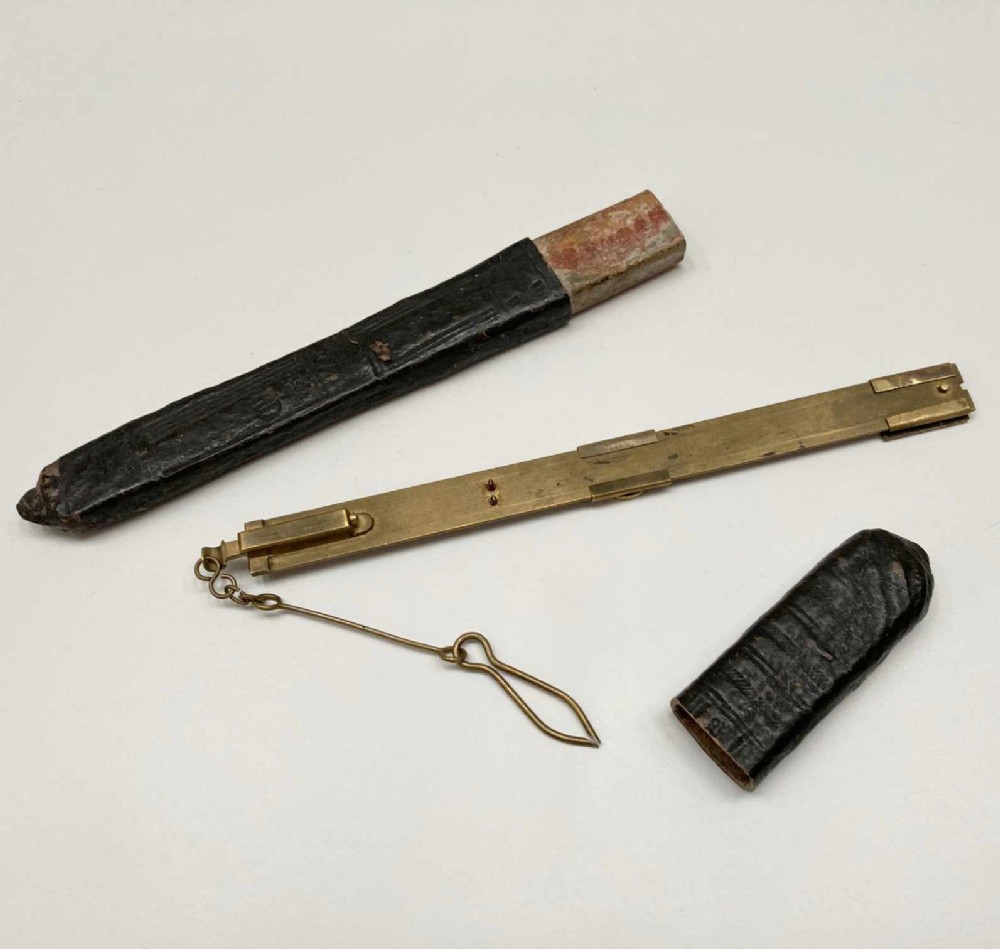
Patented by William Bradford in 1753 as a means to combat the widespread counterfeiting of currency prevalent in the Eighteenth Century, Patent No 686 was described as a “machine for weighing gold coin, rings and all utensils made of gold”. It consists of a long rectangular brass beam with two pins attached to the base to act as pivots. The beam would have been rested at a shelf-edge and the pincers at one end would have held the subject piece of gold suspended over the side. The scale is engraved in recognition of the currency weight and the attached slide weights could be manouvered until equilibrium is achieved with the subject gold held in the pincer.
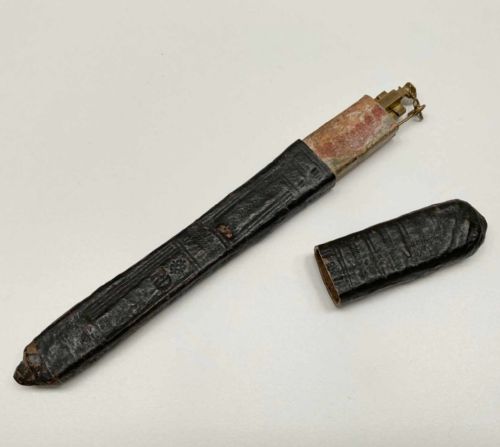
Owing to its rarity most people reasonably assume that this interesting scale was only produced as a hydrostatic scale as described in the original 1753 patent guide below:

“The Gentleman’s & Trader’s Guide containing the description and use of a new invented instrument for preventing frauds by counterfeit gold
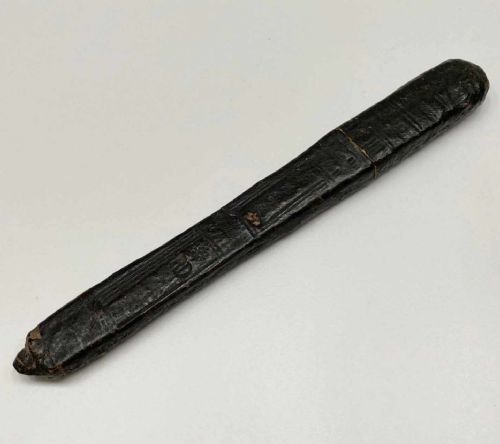
First, you have a small thin plate of brass, which you are to lay flat upon a level table or board, with the small centre pins fixed in it undermost, so as they may bear upon the edge of such table or board, and play as the balance shall require, with a small chain and pincers wherein to fix any piece of money intended to be weighed and proved, hanging over the edge of the table; and, note, there are two pairs of these centre pins, one pair of which (to wit, those marked with the letter A) to be made use of for weighing and proving all pieces of gold not exceeding the value of 36s, and those marked B for all pieces from that sum to 72s or 3l 12s.
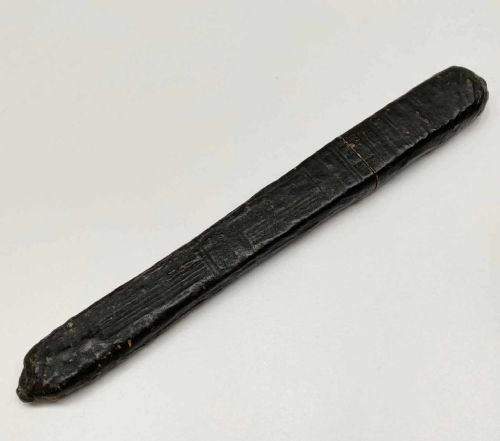
On each side of the plate are two lines, and a whole division of each line is equal to the weight or value of one shilling in gold, and every sub-division to that of threepence. The lines marked A and B gives the weight only, and are properly statical; and those marked W are designed to show the alloy or adulteration, and are hydrostatical, corresponding with the statical lines.”
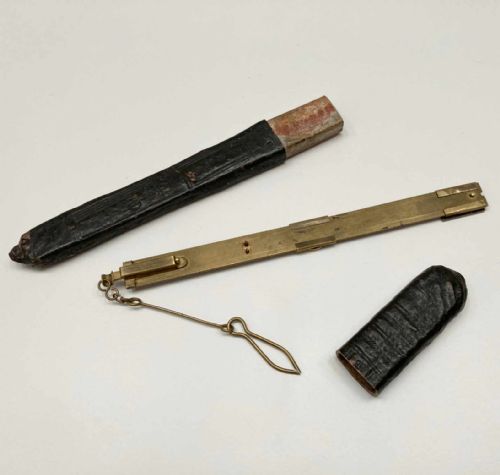
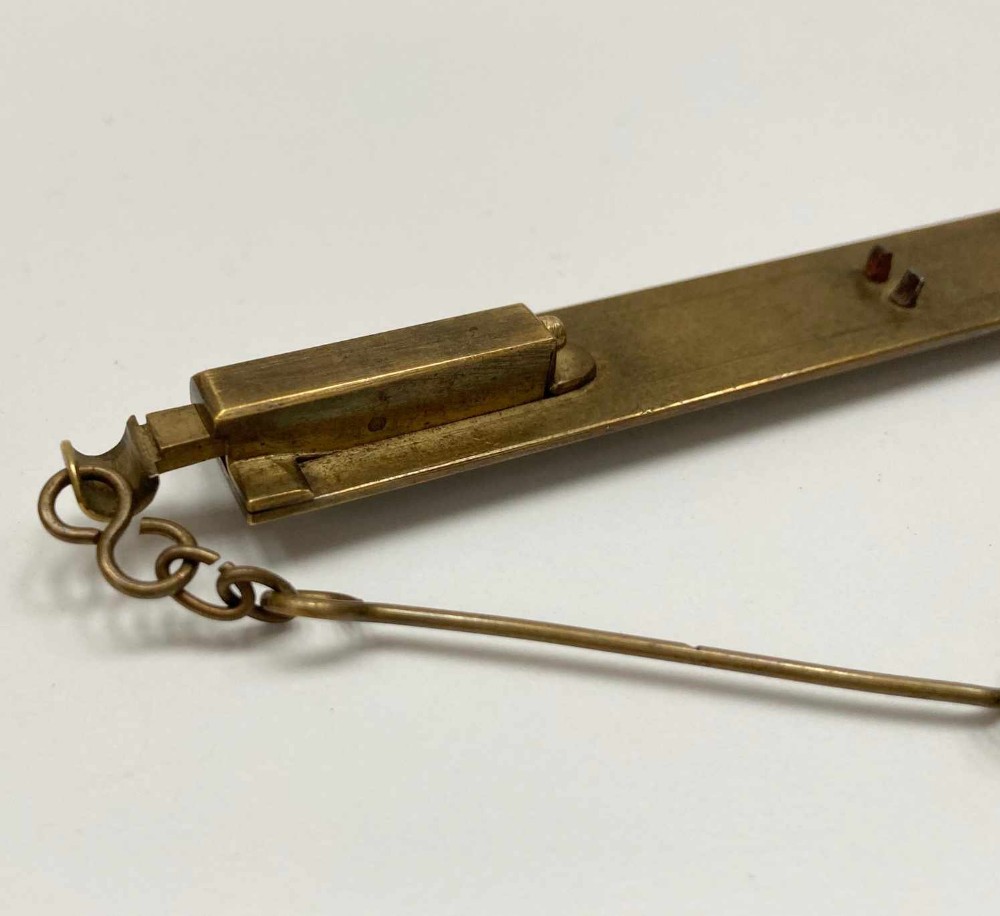
The patent hydrostatic scale with it’s A, B & W scale was certainly an ingenious, if not complex instrument to handle and it has been suggested that the example presented for sale here was an earlier design owing to the lack of these vayring scales. However I suspect that this was probably produced as a less complex model which did not require the use of liquid (or hydrostatic measurement). The main differences in design to the “patented” model are the use of two weights, a spring loaded mechanism for extending or retracting the protruding length of the pincers from the scale end and of course in most extant examples, the lack of the patent badge on the slide weight.
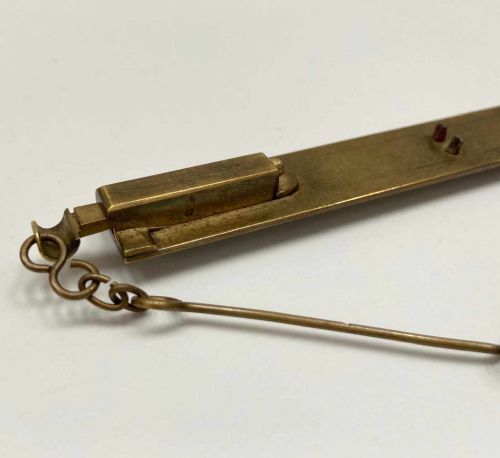
My suspicion is that Bradford probably avoided the need for an A & B scale and differing centre pins by the use of the spring mechanism whereby the length of the balance could be extended by a simple extension of the subject coin further away from the scale and the addition of a second weight for heavier subject pieces. The lack of a W scale would of course not be required if the scale was not meant for hydrostatic comparison. This theory would also explain the lack of the patent stamp on the slide weight as this was not technically a “patented” instrument although Bradford, Darby & Hull would have benefited financially from the accolade. There are no records or “Guides” available relating to an alternative model from the hydrostatic instrument but I suspect that they were sold side by side as simple and complex models. If nothing else I hope that this opens up some kind of debate on the subject as it is evidently clear from examination of this piece that the company produced two differing models.

The partnership of Bradford, Darby & Hulls

Physical Dimensions
Height
20cm (7.87")
Width
2cm (0.79")
Depth
1.5cm (0.59")
Declaration

Jason Clarke Antiques has dated this piece to the 1750s.

Reference Numbers
Sellingantiques Reference
SA758706
Description
For sale, a leather cased mid-Eighteenth Century steelyard gold balance by Bradford Darby & Hulls of Campden, Gloucestershire.

Patented by William Bradford in 1753 as a means to combat the widespread counterfeiting of currency prevalent in the Eighteenth Century, Patent No 686 was described as a “machine for weighing gold coin, rings and all utensils made of gold”. It consists of a long rectangular brass beam with two pins attached to the base to act as pivots.

The beam would have been rested at a shelf-edge and the pincers at one end would have held the subject piece of gold suspended over the side.
Jason Clarke Antiques

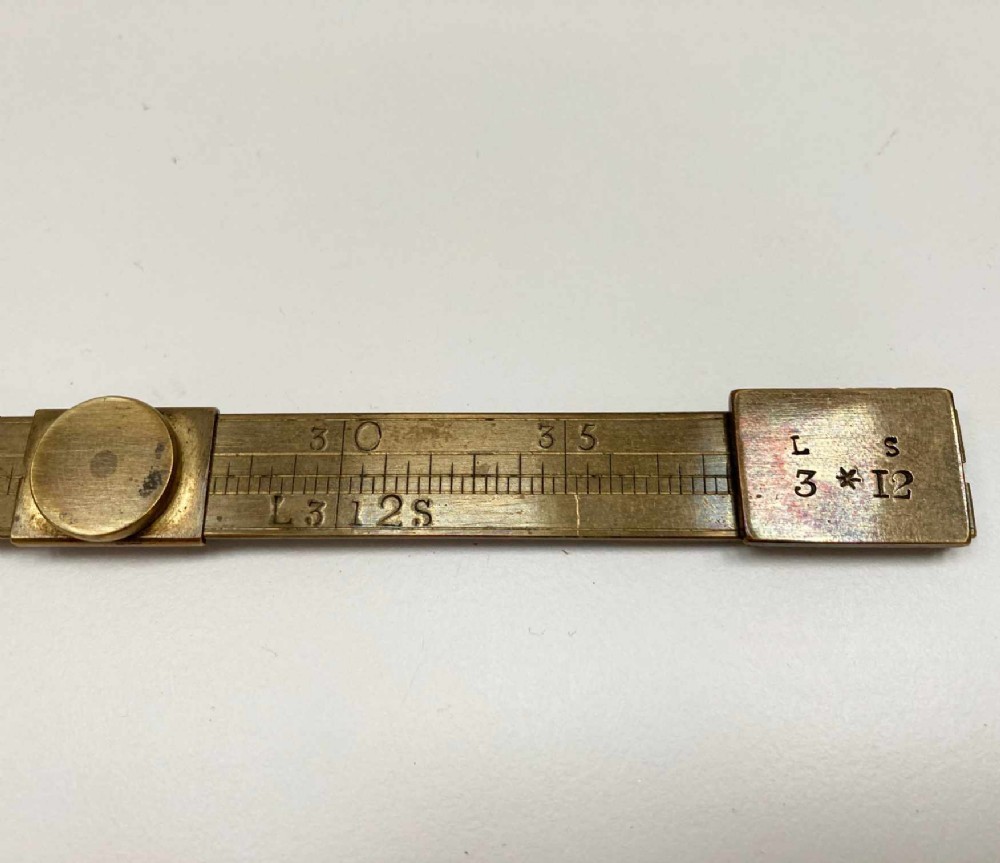
The scale is engraved in recognition of the currency weight and the attached slide weights could be manouvered until equilibrium is achieved with the subject gold held in the pincer.

fig 1. George II Steelyard Gold Balance by Bradford Darby & Hulls of Campden Gloucestershire

Owing to its rarity most people reasonably assume that this interesting scale was only produced as a hydrostatic scale as described in the original 1753 patent guide below:

“The Gentleman’s & Trader’s Guide containing the description and use of a new invented instrument for preventing frauds by counterfeit gold

fig 2. George II Steelyard Gold Balance by Bradford Darby & Hulls of Campden Gloucestershire

First, you have a small thin plate of brass, which you are to lay flat upon a level table or board, with the small centre pins fixed in it undermost, so as they may bear upon the edge of such table or board, and play as the balance shall require, with a small chain and pincers wherein to fix any piece of money intended to be weighed and proved, hanging over the edge of the table; and, note, there are two pairs of these centre pins, one pair of which (to wit, those marked with the letter A) to be made use of for weighing and proving all pieces of gold not exceeding the value of 36s, and those marked B for all pieces from that sum to 72s or 3l 12s.

fig 3. George II Steelyard Gold Balance by Bradford Darby & Hulls of Campden Gloucestershire

On each side of the plate are two lines, and a whole division of each line is equal to the weight or value of one shilling in gold, and every sub-division to that of threepence. The lines marked A and B gives the weight only, and are properly statical; and those marked W are designed to show the alloy or adulteration, and are hydrostatical, corresponding with the statical lines.”

fig 4. George II Steelyard Gold Balance by Bradford Darby & Hulls of Campden Gloucestershire

The patent hydrostatic scale with it’s A, B & W scale was certainly an ingenious, if not complex instrument to handle and it has been suggested that the example presented for sale here was an earlier design owing to the lack of these vayring scales. However I suspect that this was probably produced as a less complex model which did not require the use of liquid (or hydrostatic measurement). The main differences in design to the “patented” model are the use of two weights, a spring loaded mechanism for extending or retracting the protruding length of the pincers from the scale end and of course in most extant examples, the lack of the patent badge on the slide weight.

fig 5. George II Steelyard Gold Balance by Bradford Darby & Hulls of Campden Gloucestershire

My suspicion is that Bradford probably avoided the need for an A & B scale and differing centre pins by the use of the spring mechanism whereby the length of the balance could be extended by a simple extension of the subject coin further away from the scale and the addition of a second weight for heavier subject pieces. The lack of a W scale would of course not be required if the scale was not meant for hydrostatic comparison. This theory would also explain the lack of the patent stamp on the slide weight as this was not technically a “patented” instrument although Bradford, Darby & Hull would have benefited financially from the accolade. There are no records or “Guides” available relating to an alternative model from the hydrostatic instrument but I suspect that they were sold side by side as simple and complex models. If nothing else I hope that this opens up some kind of debate on the subject as it is evidently clear from examination of this piece that the company produced two differing models.

The partnership of Bradford, Darby & Hulls

Height
20cm (7.87")
Width
2cm (0.79")
Depth
1.5cm (0.59")
Date of Manufacture

Jason Clarke Antiques has dated this piece to the 1750s.

Reference Numbers
Sellingantiques Ref
SA758706
Jason Clarke Antiques
Sellingantiques verified Since Jul 2015
Dealer Profile

You can view the stock and full dealer information on the Jason Clarke Antiques Profile Page
PDF SHARE
SAVE
George II Steelyard Gold Balance by Bradford Darby & Hulls of Campden Gloucestershire
1 / 8
Archive I George II Steelyard Gold Balance by Bradford Darby & Hulls of Campden Gloucestershire
George II Steelyard Gold Balance by Bradford Darby & Hulls of Campden Gloucestershire
Archive II George II Steelyard Gold Balance by Bradford Darby & Hulls of Campden Gloucestershire View II
Archive III George II Steelyard Gold Balance by Bradford Darby & Hulls of Campden Gloucestershire View III
Archive IV George II Steelyard Gold Balance by Bradford Darby & Hulls of Campden Gloucestershire View IV
Archive V George II Steelyard Gold Balance by Bradford Darby & Hulls of Campden Gloucestershire View V
Archive VI George II Steelyard Gold Balance by Bradford Darby & Hulls of Campden Gloucestershire View VI
Archive VII George II Steelyard Gold Balance by Bradford Darby & Hulls of Campden Gloucestershire View VII
Archive VIII George II Steelyard Gold Balance by Bradford Darby & Hulls of Campden Gloucestershire View VIII
Enlarged Archival View
Telephone 07815 046645
Location
Newbury
Berkshire
United Kingdom
Verified Since Jul 2015
Items For Sale 80
Items Sold 607
Jason Clarke Antiques
Verified Since Jul 2015
View Dealer Info
Location: Newbury, Berkshire, United Kingdom
Verified
Jul 2015
For Sale
80
Sold
607
George II Steelyard Gold Balance by Bradford Darby & Hulls of Campden Gloucestershire
Ref: SA758706
George II Steelyard Gold Balance by Bradford Darby & Hulls of Campden Gloucestershire
Detail View 1
Detail View 2
Detail View 3
Detail View 4
Detail View 5
Detail View 6
Detail View 7
Archival Detail
Every single antique dealer on our platform is individually approved by our internal team. We verify their professional trade history, ethical standards, and photographic quality to ensure a secure, high-standard buying environment. Upon joining, every dealer agrees to a strict 9-point code of conduct. While issues can occasionally arise, our dealers typically resolve them swiftly and directly with the buyer. In fact, since our founding in 2002, Sellingantiques has only had to step in to help resolve an issue on roughly five occasions—a true testament to the quality of our dealers and their dedication to your happiness.
Our dealers are highly experienced in packing and shipping fragile, high-value antiques. Because you are in direct contact with the dealer, you will be able to easily go through all available shipping and insurance options together to ensure your item arrives safely.
Antiques are the ultimate green purchase. By choosing historical pieces over newly manufactured goods, you completely eliminate the carbon footprint of modern mass production while preserving exceptional, timeless craftsmanship.
items
Add keywords to the filter
Price
£100
£250000
Era
Movements
Material
Origin
Stock Location
Freshness
Online Payments
Categories