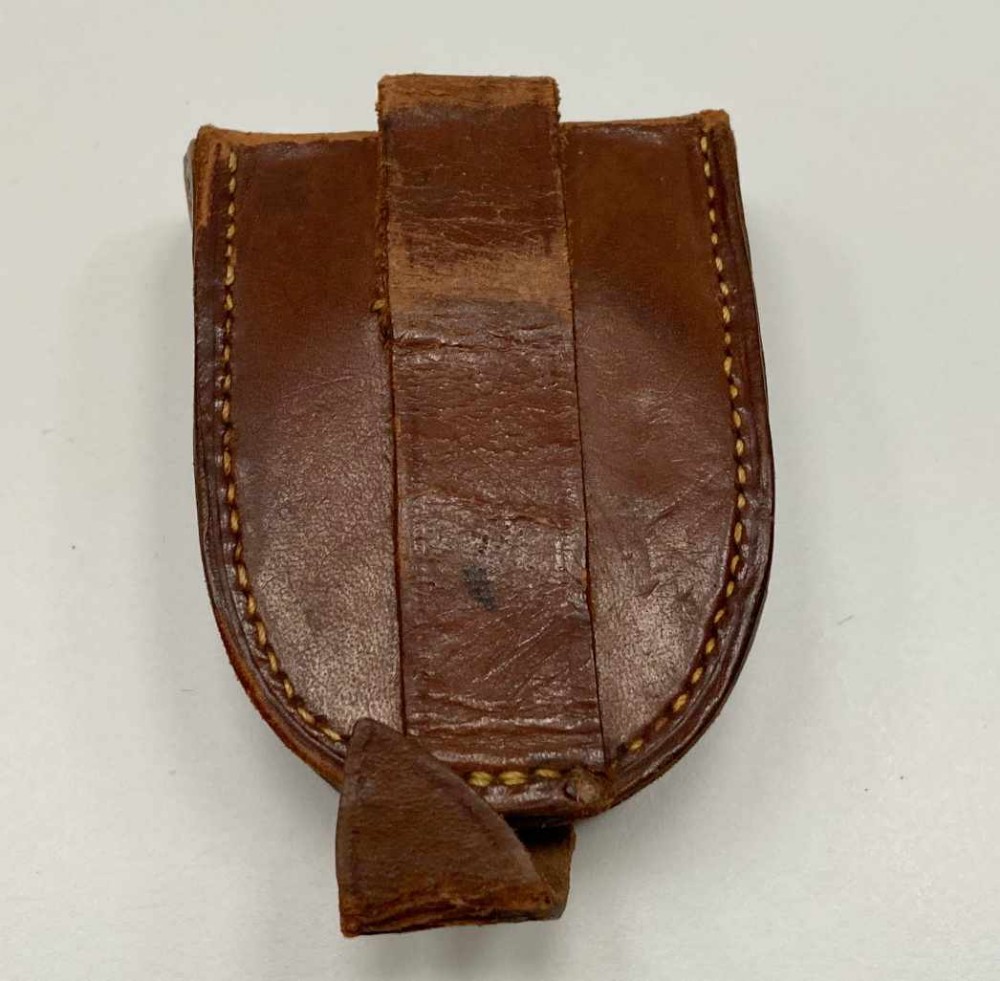
Jason Clarke Antiques has dated this piece to the 1910s.
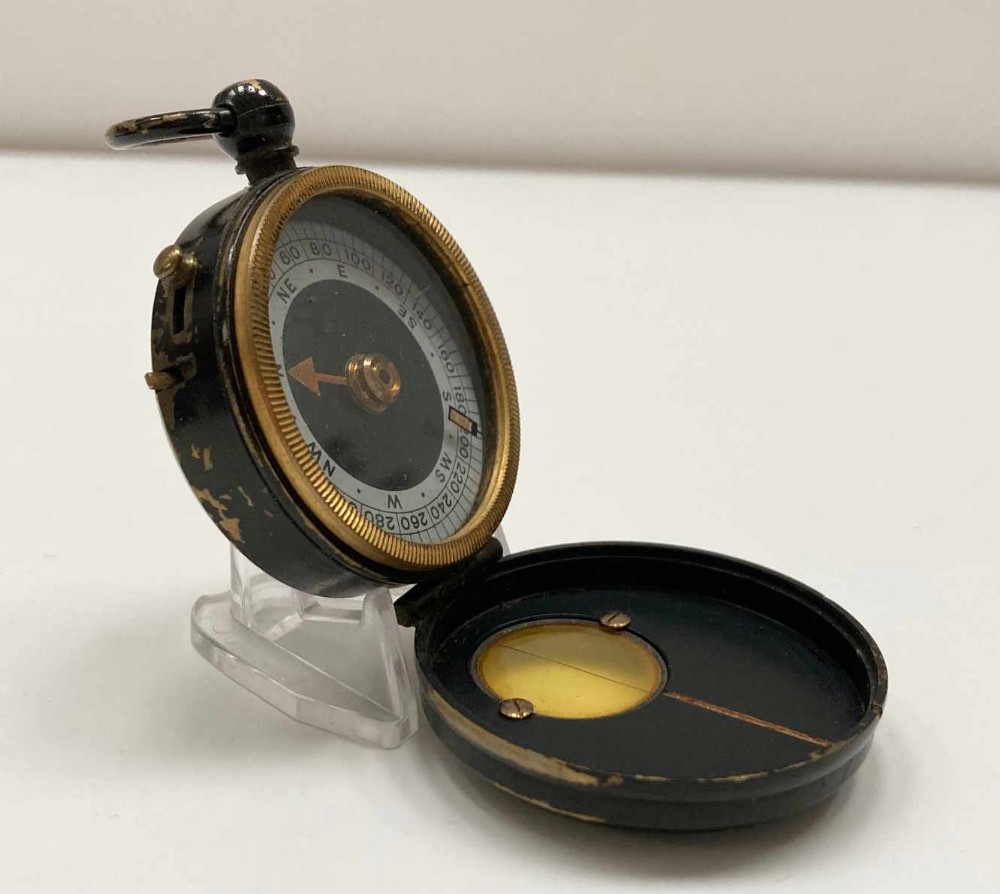
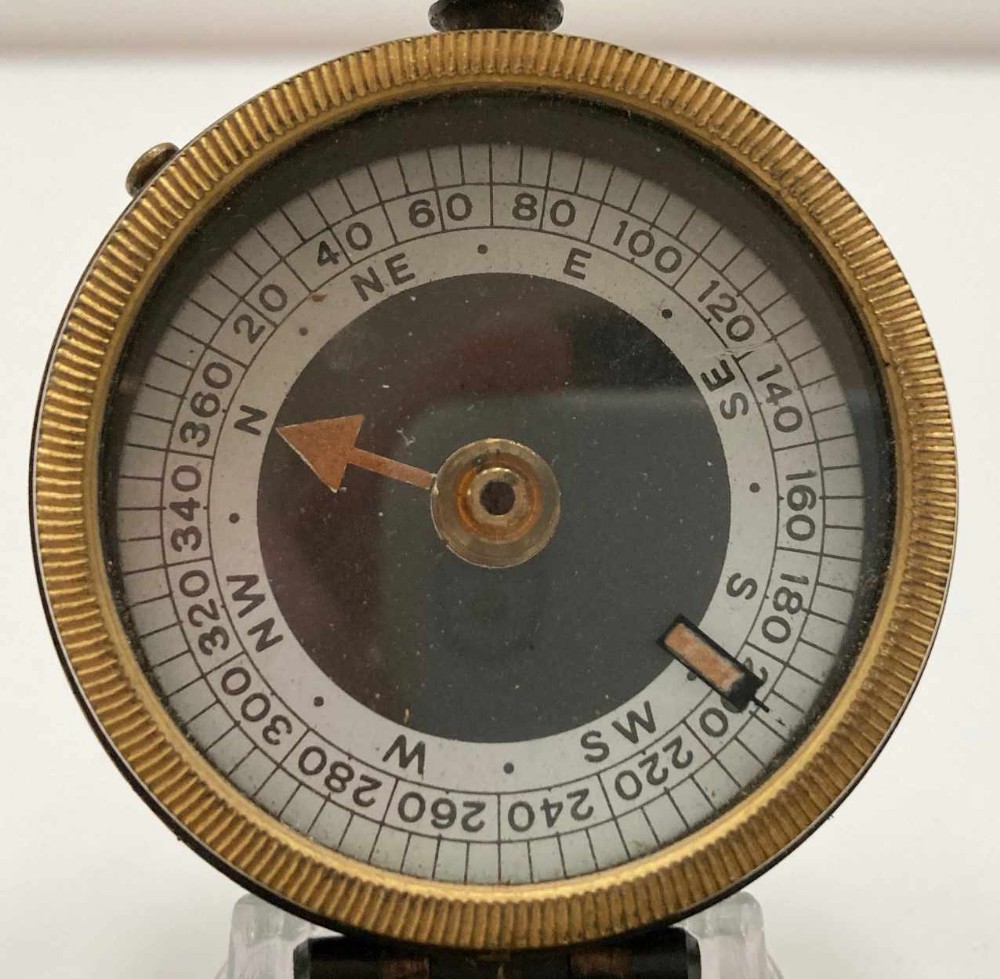
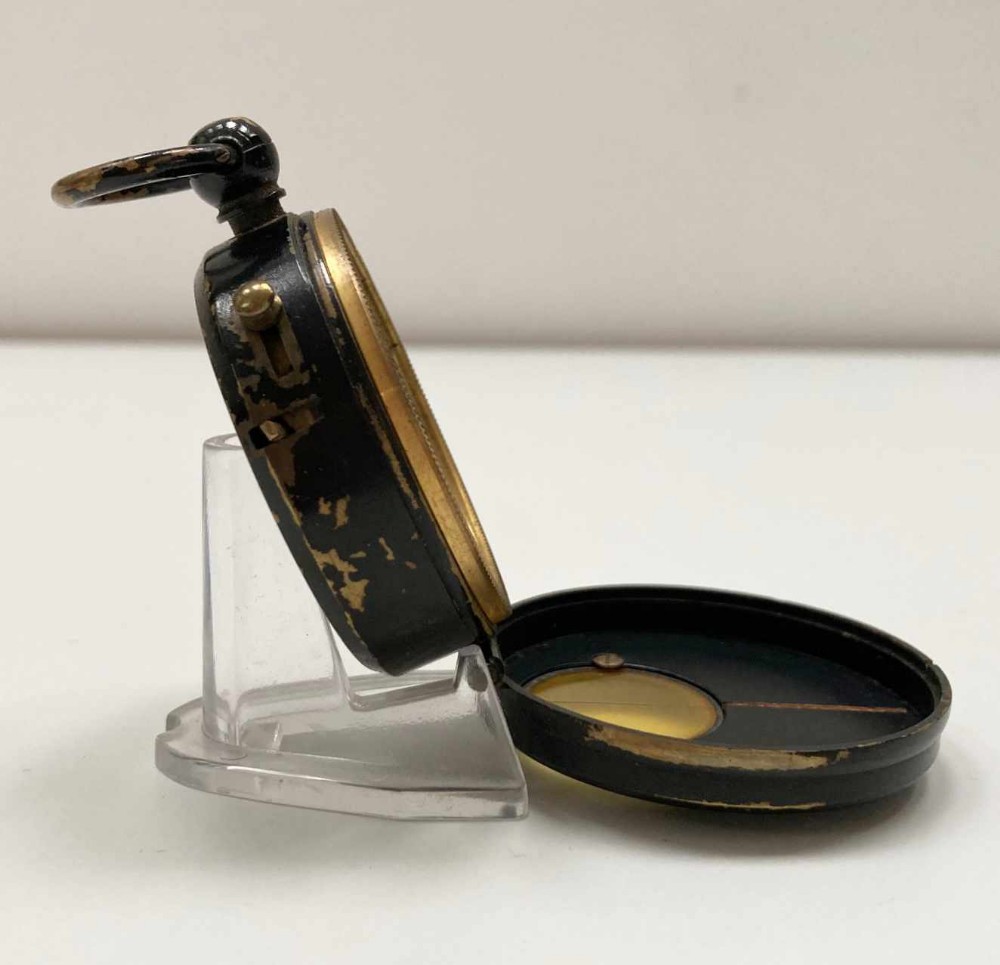
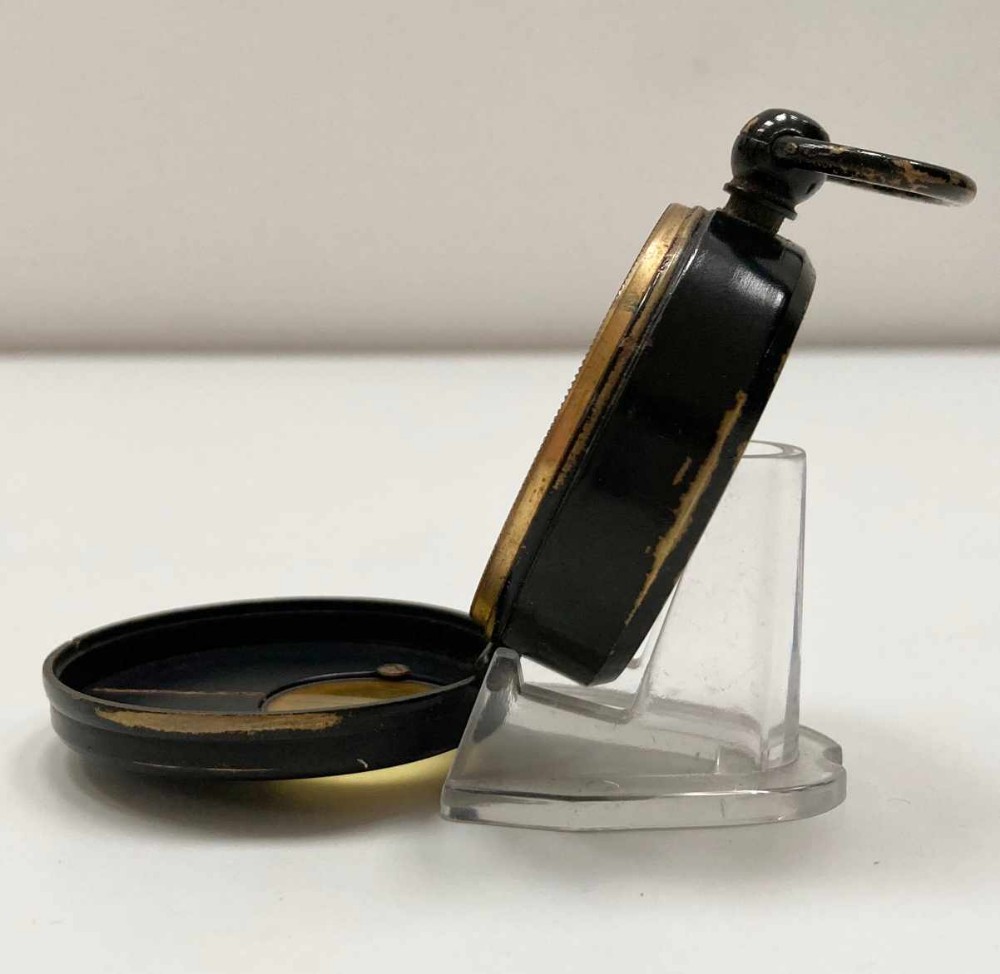
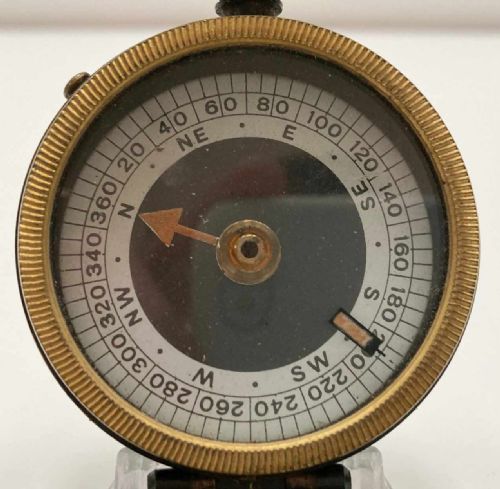
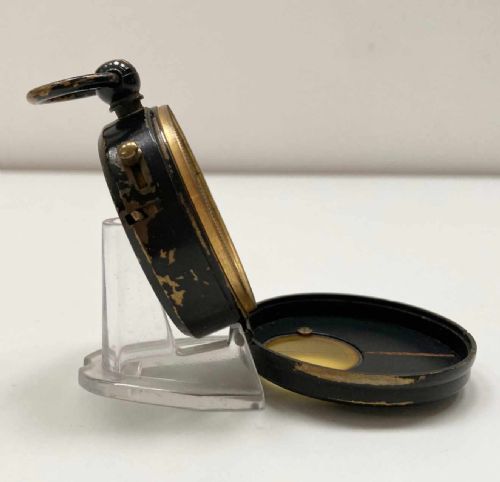
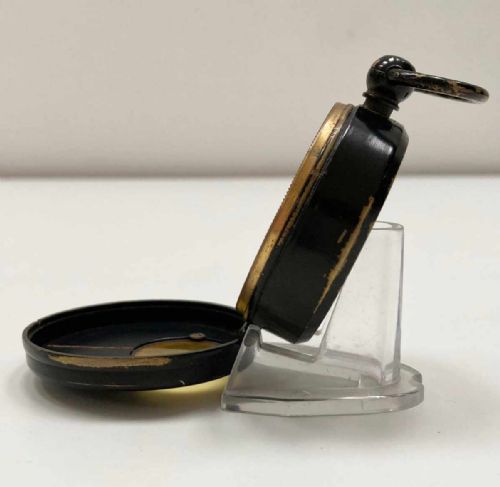
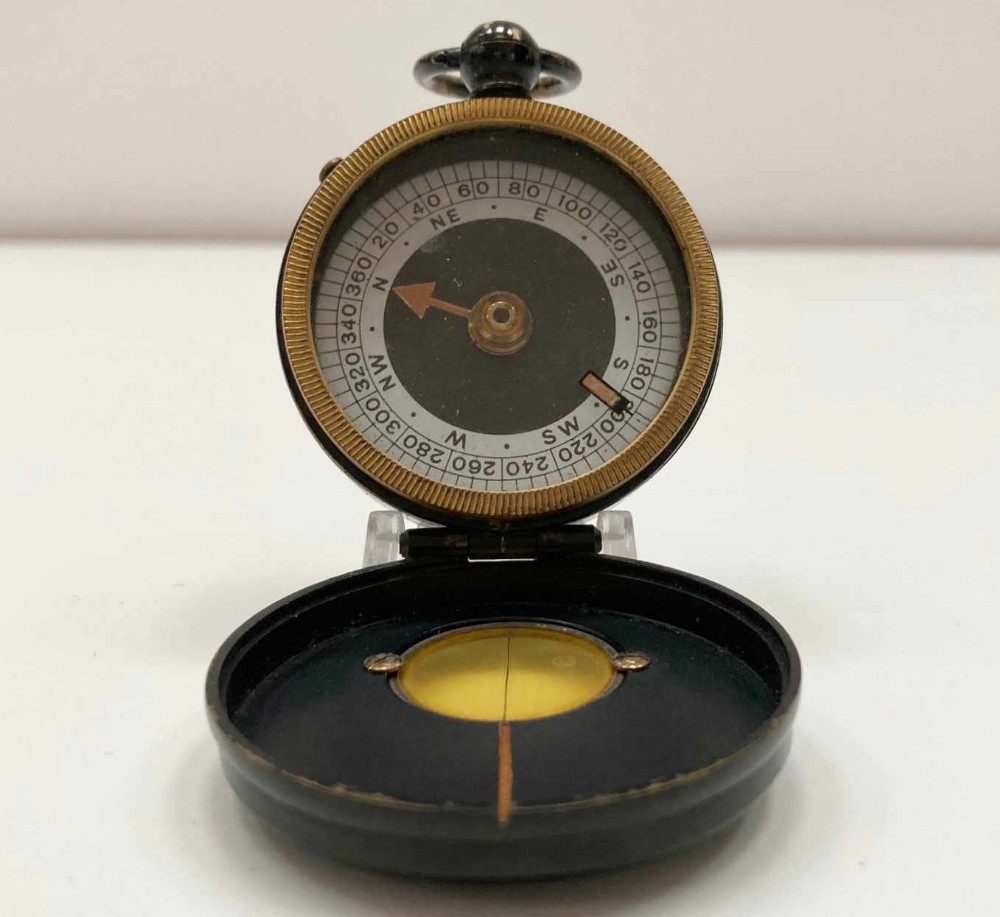
Of typical pattern, the case retains the majority of its black painted finish (most of the wear present on base of the instrument), it has a hinged front opening lid with incorporated sighting window revealing a floating silvered dial with degrees and compass bearings engraved and large arrow pointer.
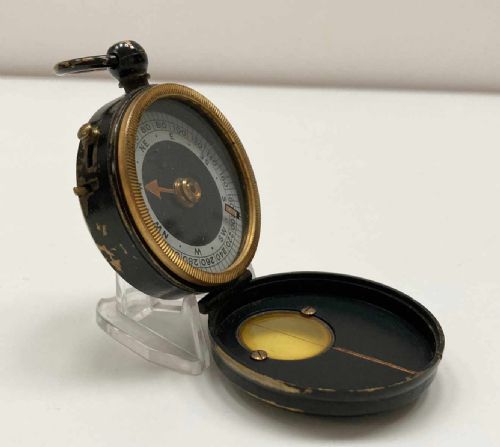
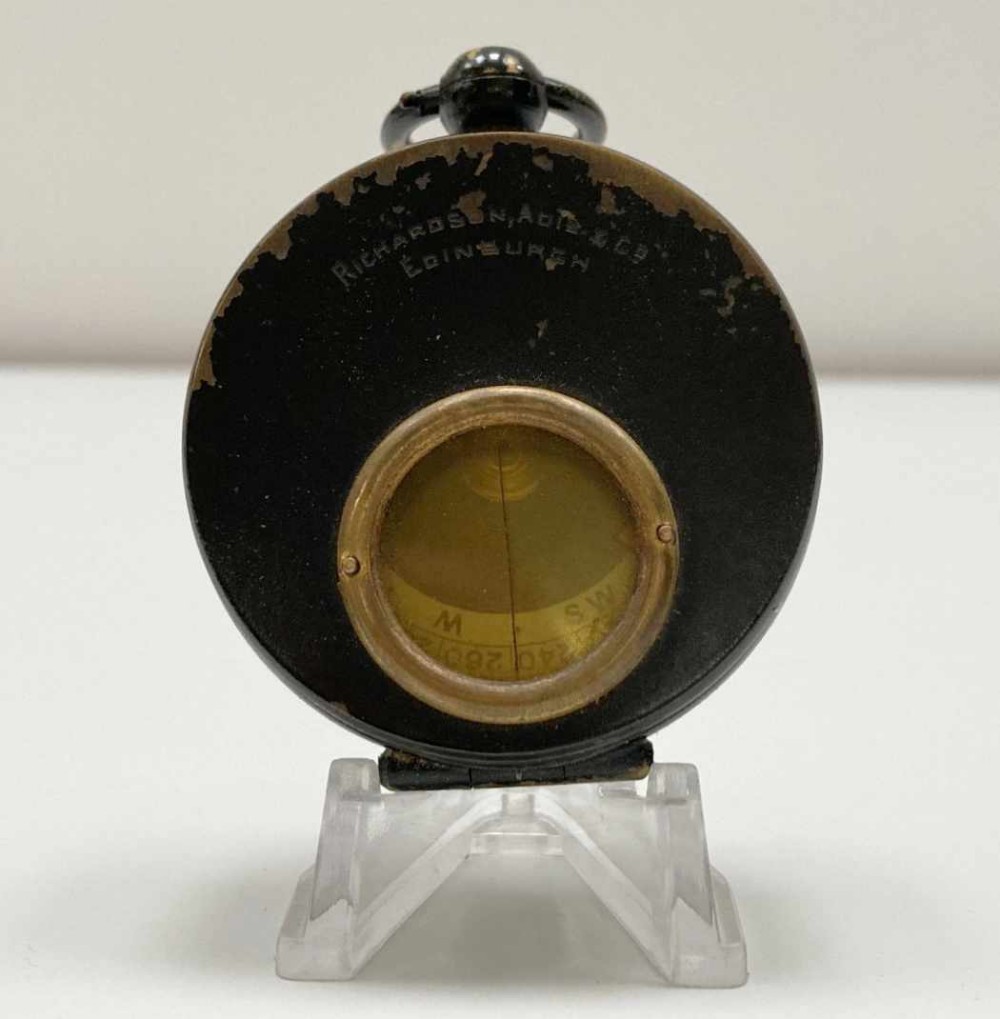
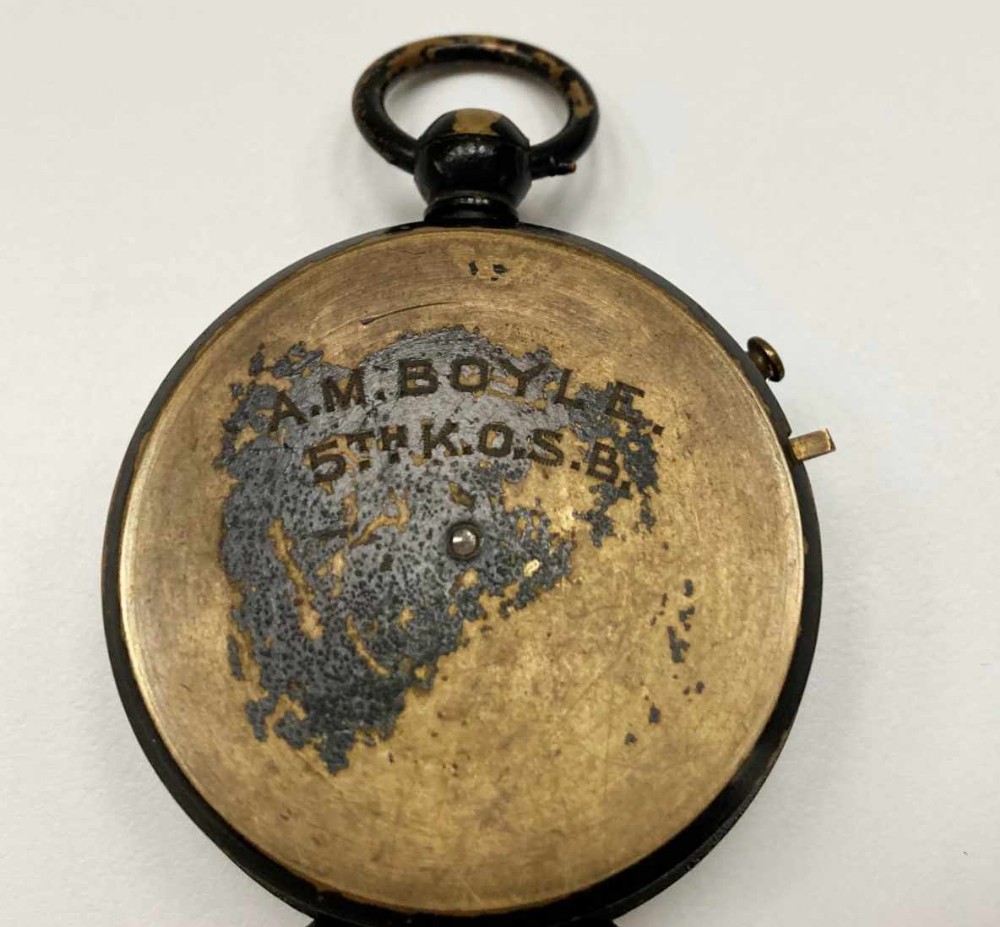
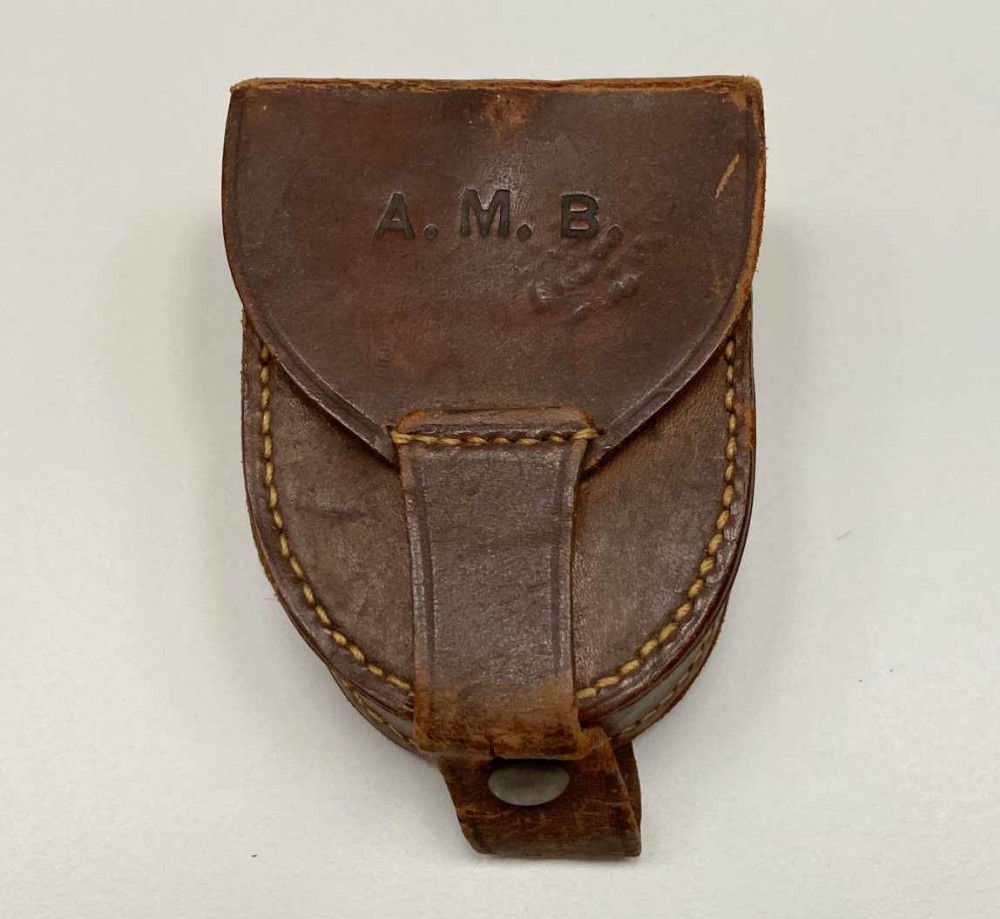
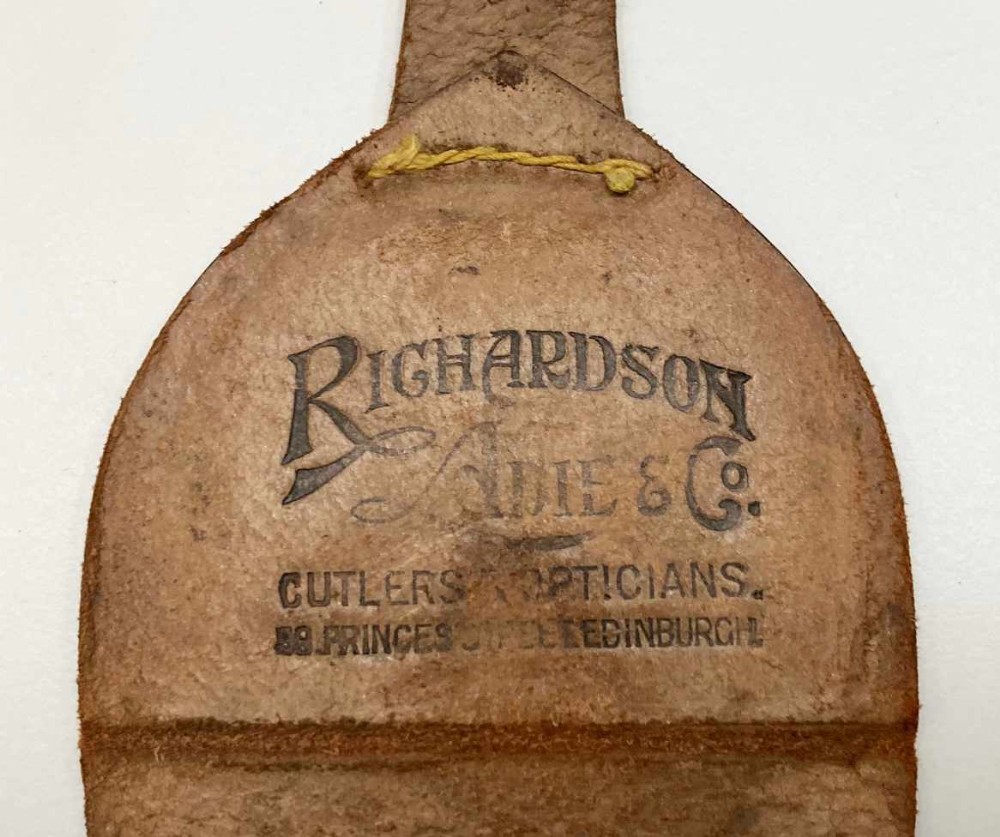
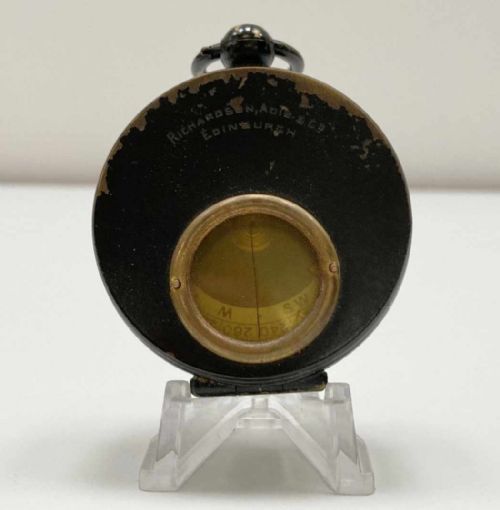
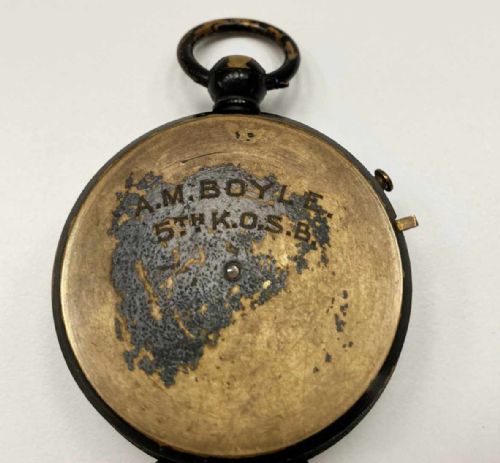
The hinged lid is marked to Richrdson Adie & Co Edinburgh and the reverse is engraved to the owner, AM Boyle, 5th KOSB.
Captain Boyle was a native of Dumfries but was working as a teacher in Edinburgh before joining the regiment. He presumably joined his Battalion in October of 1915 at Gallipoli as a reinforcement. Prior to his arrival, the 4th and the 5th had taken just over 800 casualties between them in attacks made on the Turkish in July. Perhaps lucky to have missed such a bloody event, Boyle would have undergone both a harsh winter and constant fighting in the trenches of Gallipoli until their eventual relief in early January.
Sailing from Mudros on the SS Ionian, the Battalion arrived in Alexandria, Egypt on the 5th of February 1916 to support in the protection of The Suez Canal, where amongst numerous engagements, they took part in the Battle of Gaza in November 1917. In early 1918 they were without leave sent straight to France, landing at Marseille in April.
Almost as soon as they landed, the regiment had to deal with gas attacks and Boyle is known to have been appointed gas officer, Divisional Headquarters. The role was an important one, making him responsible for the ordering of troops to don or remove gas protection masks and clothing during such attacks. The Battalion continued in France until the end of the war, taking part in The Battle of Vimy Ridge and numerous other skirmishes. They eventually moved on to Germany after the signing of the armistice and remained there until October 1919.
Within the insightful “War History of the 5th Battalion King’s Own Scottish Borderers” by Capt GF Scott, Boyle sadly does not appear by name in the text other than in The List of Officer who served overseas. He is not mentioned as killed or wounded so he must have survived the ordeal. Nevertheless, the history tells a very detailed story of the hardships that the men would have had to endure in a WW1 theatre that is less often told.
A fascinating world War One relic.
The maker or retailer of the compass Richardson Adie & Co was the final instalment of the hugely regarded company of Adie & Son, Edinburgh
The history of the firm, Adie & Son began in 1776 with the celebrated Edinburgh scientific instrument maker John Miller, the uncle of Alexander Adie. Miller himself had been apprenticed under the world renowned maker George Adams so Alexander was privileged to have had an uncle from such a prestigious background.
From 1789, Adie (1774 – 1858) undertook his apprenticeship with Miller and by 1804, a partnership was agreed which traded at various addresses on Nicholson Street. Miller & Adie continued to trade until 1822 (although Miller had died by 1815) whereafter the business was renamed solely to Alexander Adie. By this point, Adie was himself an accomplished maker with a focus on meteorological instruments and had by 1818 taken out a patent (No: 4323) for a sympiesometer, a type of barometer designed initially for marine use which contained hydrogen and almond oil instead of mercury. Perhaps the most well-known instrument that the Adie family are now recognised for, this invention was patented as, “An improvement on the air barometer” an instrument that had been conceived as early as 1668 by Robert Hooke but never brought int
Jason Clarke Antiques has dated this piece to the 1910s.
You can view the stock and full dealer information on the Jason Clarke Antiques Profile Page
Ww1 Verners Prismatic Compass to Captain Am Boyle Kings Own Scottish Borderers