14,223  PAGES BROWSED TODAY PAGES TODAY 51 ANTIQUES UPLOADED TODAYNEW ARRIVALS
51 ITEMS ADDED TODAY
Sort Order
Items Per Page
Browse Categories
Sort order
Items per page
ID #SA739083
SOLD
Email
Save
Georgian Black Glass Artificial Horizon by Thomas Jones of London
Jason Clarke Antiques
sold SA739083
Sorry, but this item has been sold.
Jason Clarke Antiques

Jason Clarke Antiques

Sellingantiques Verified Since Jul 2015
View Dealers Stock Page
Id #SA739083
PDF SHARE
SAVE

Georgian Black Glass Artificial Horizon by Thomas Jones of London

19th century
Description

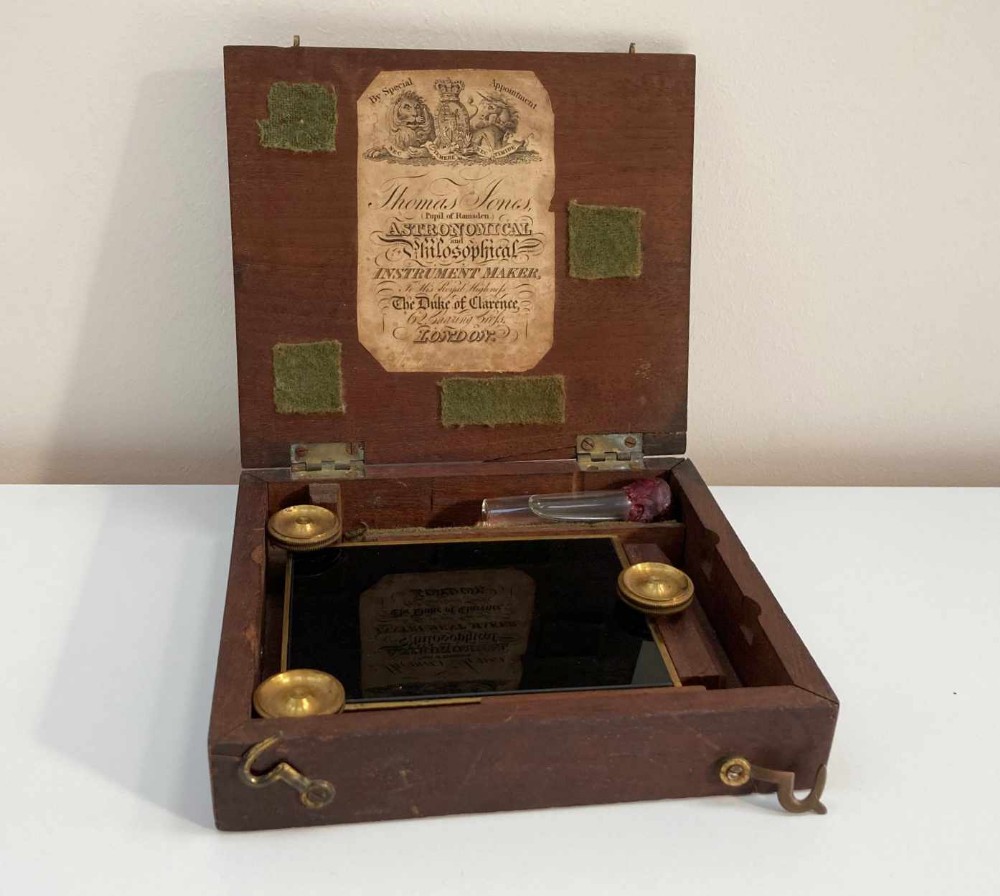
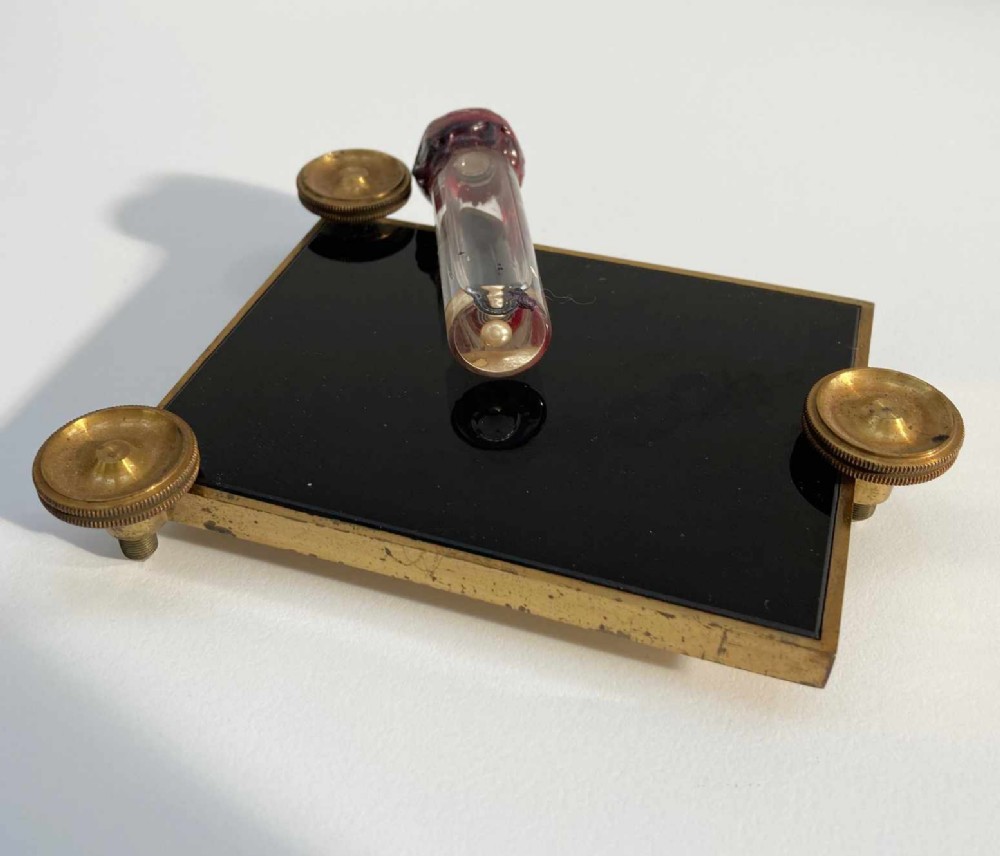
For sale, a George III black glass artificial horizon by Thomas Jones of Charing Cross London.

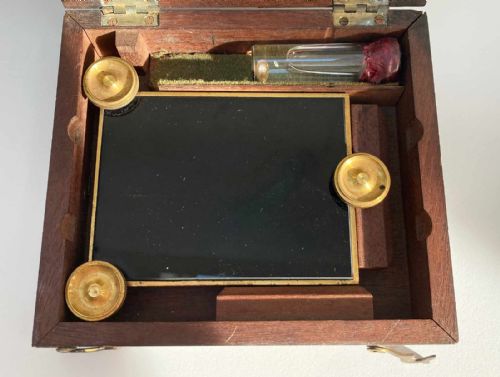
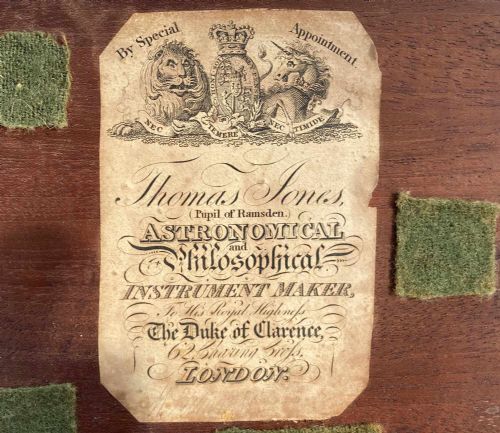
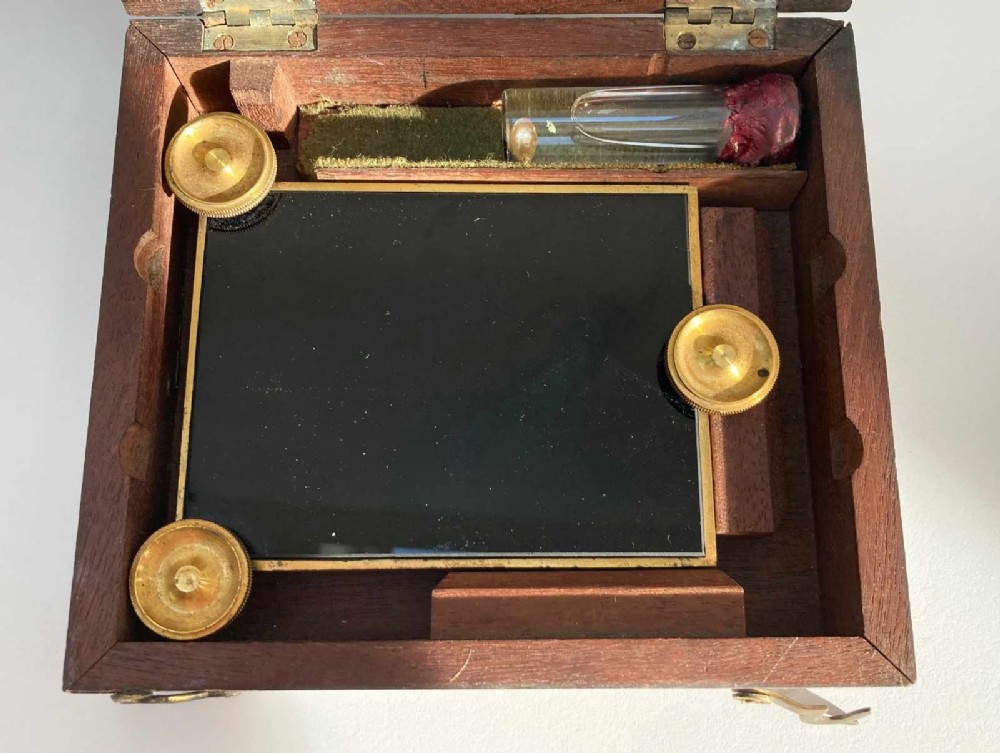
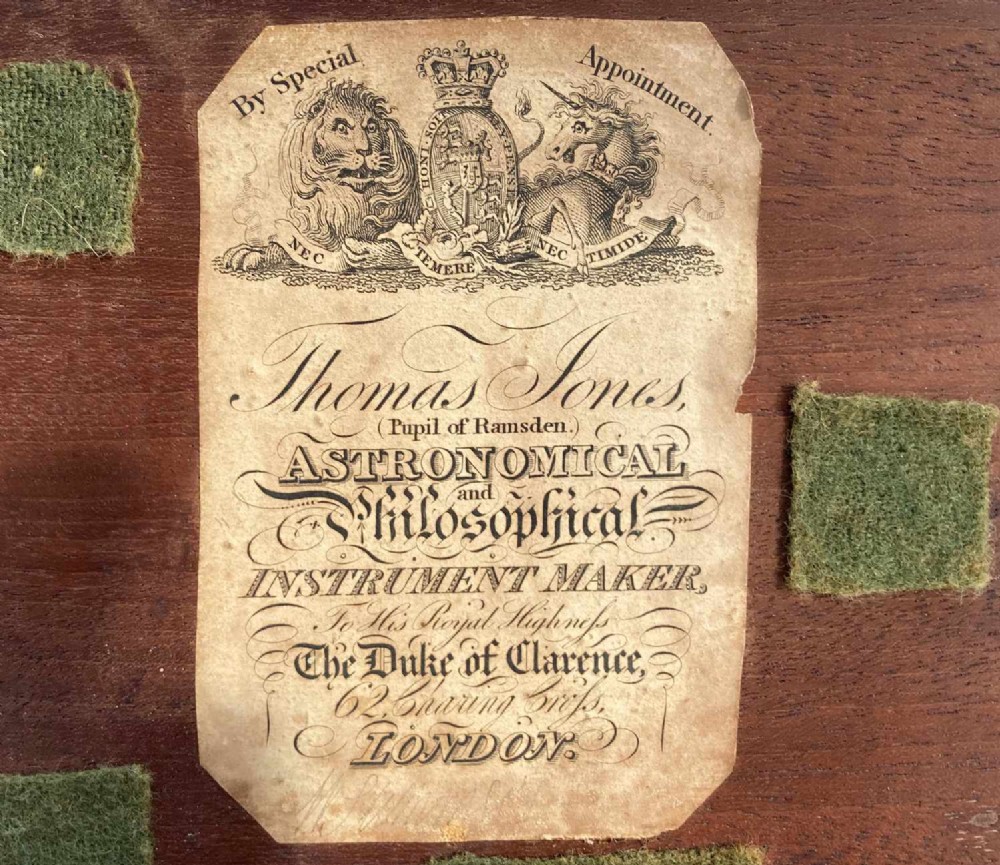
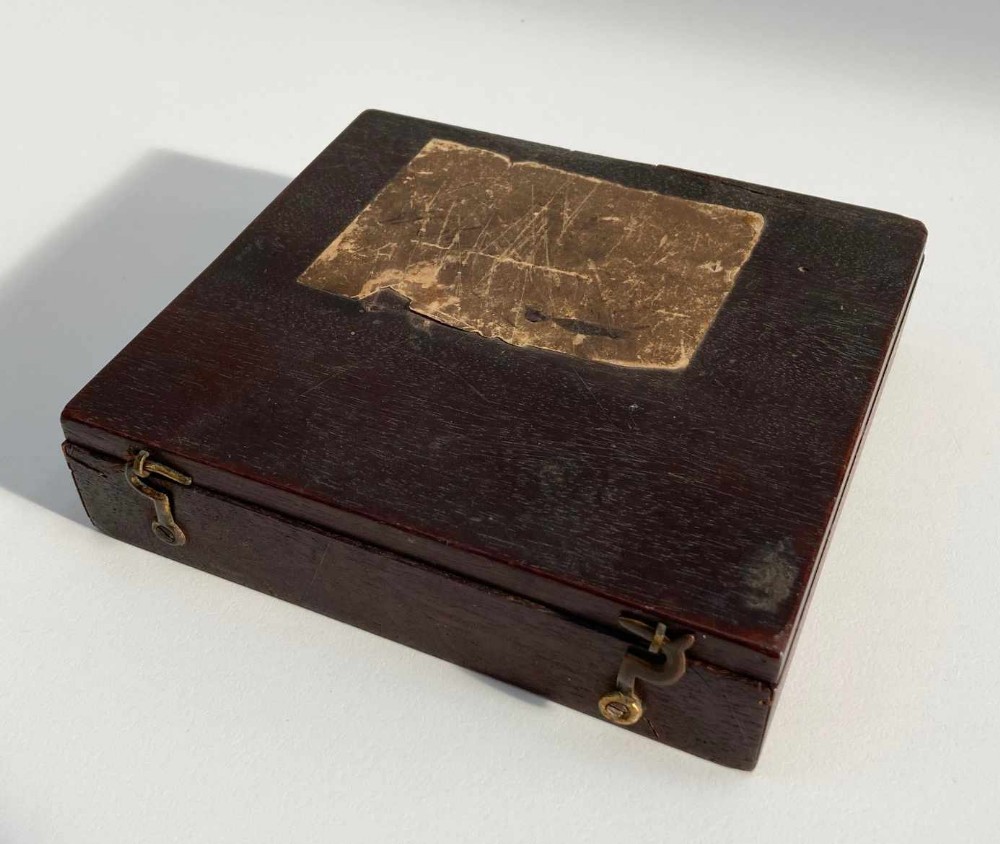
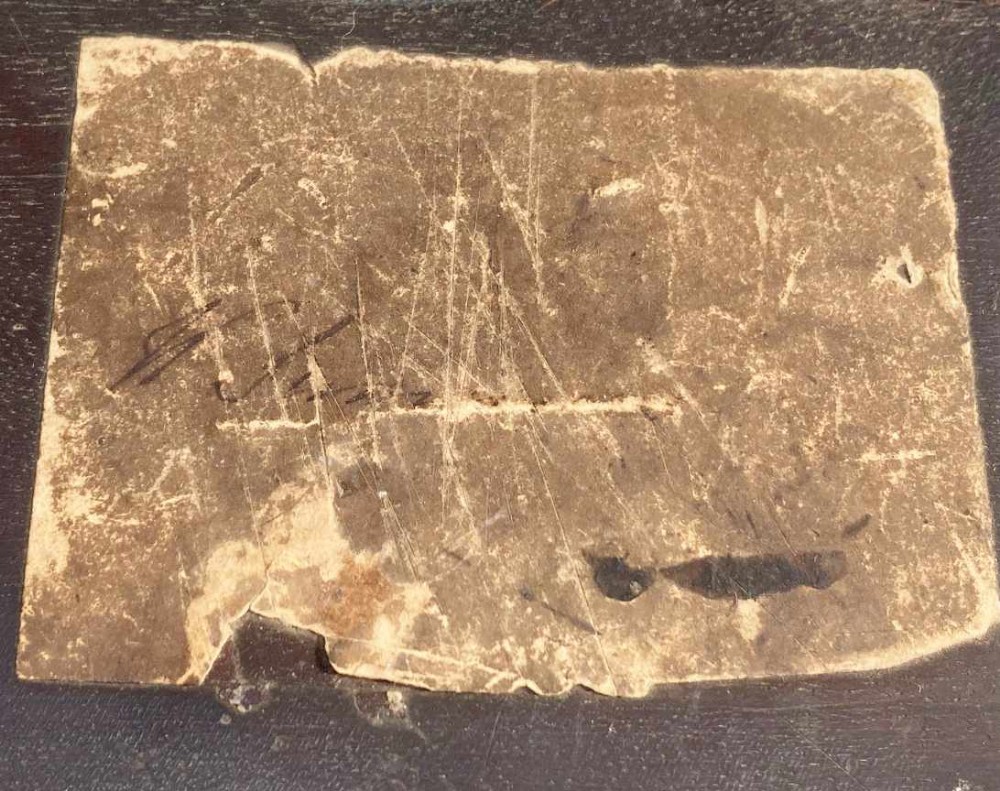
This early example, is contained within a fitted mahogany case with hinged lid and hook and eye catches to the front. The inside of the lid retains its superb and original trade label for, “Thomas Jones (pupil of Ramsden), Astronomical and philosophical instrument maker to His Royal Highness The Duke of Clarence, 62 Charing Cross, London”. The exterior of the lid has a further paper label which contains writing which is now unfortunately obscured but seems to suggest an original owner.
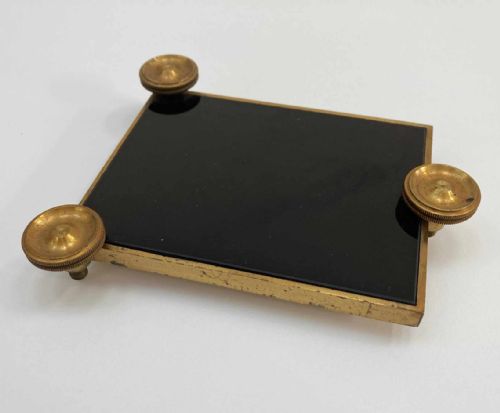
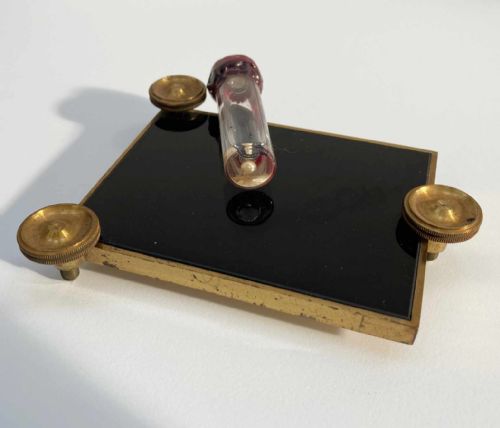
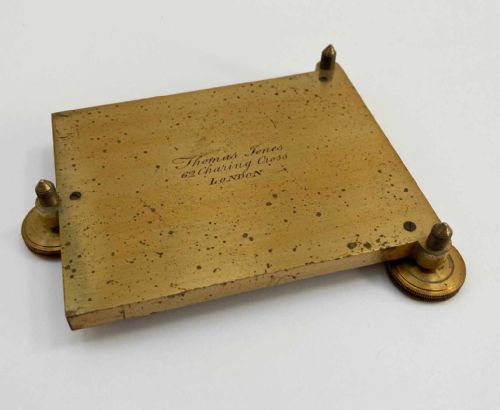
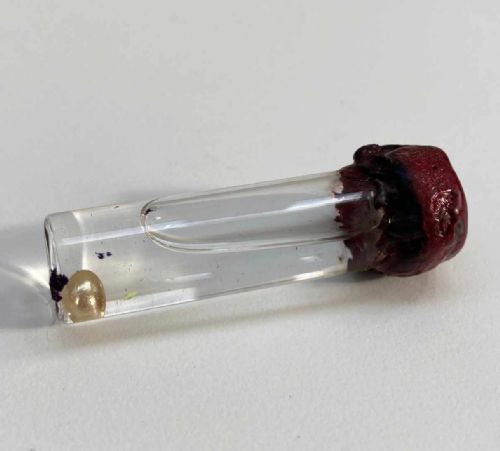
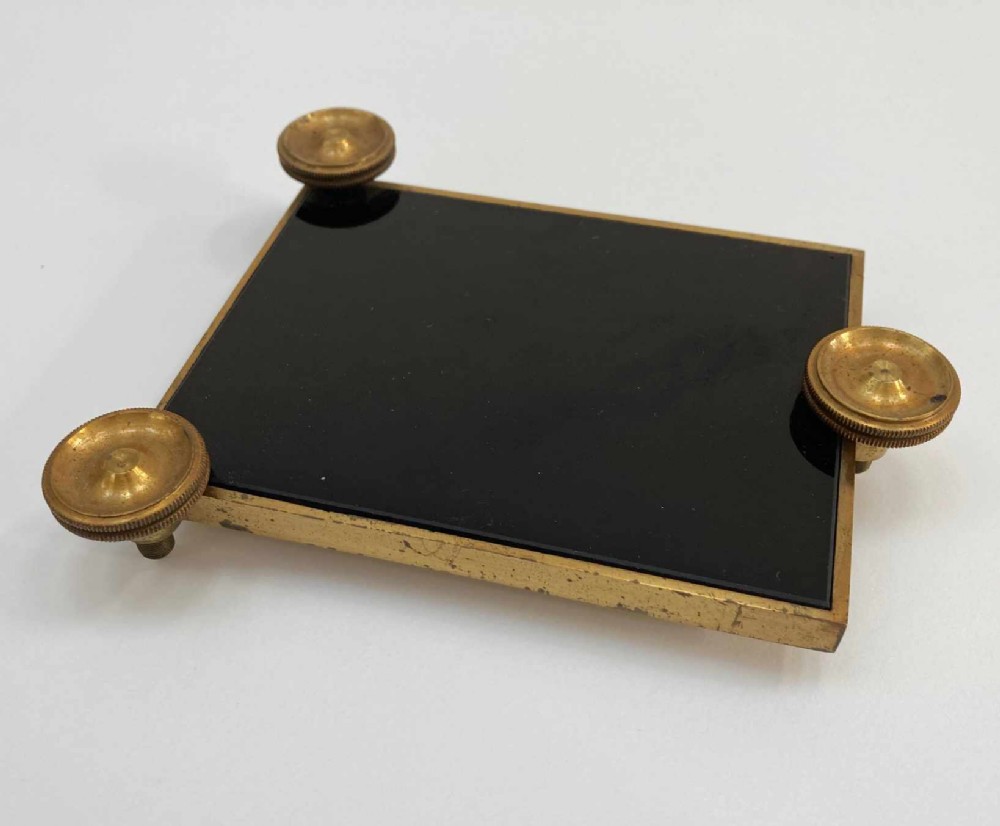
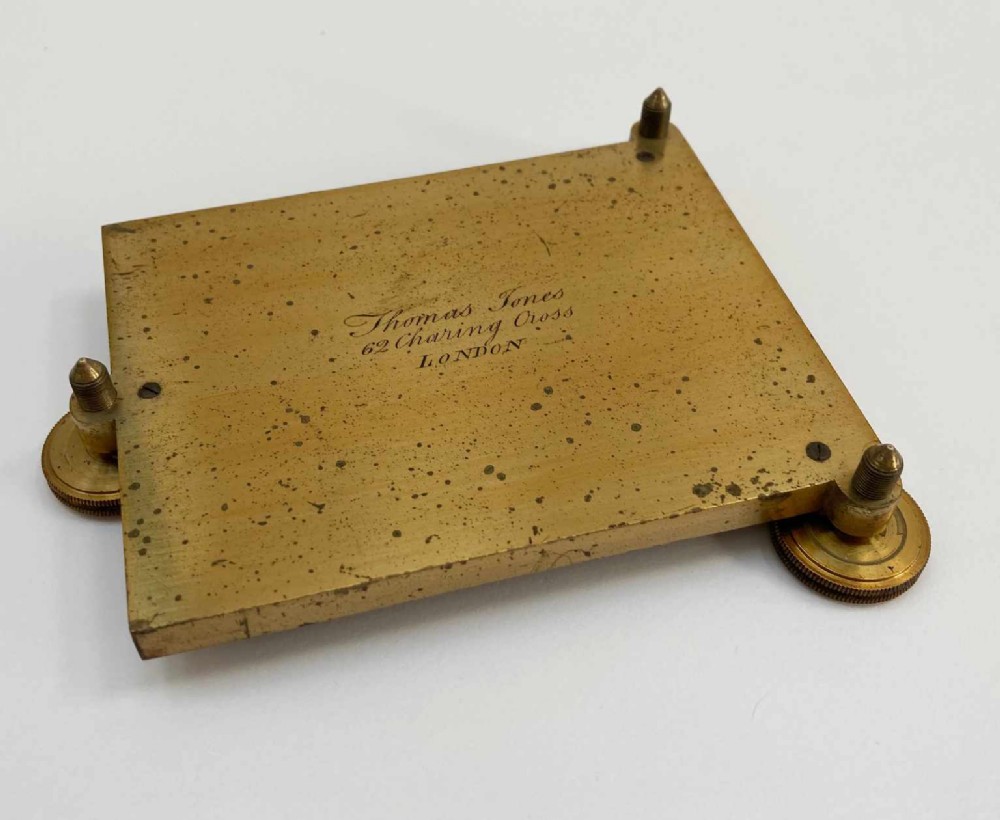
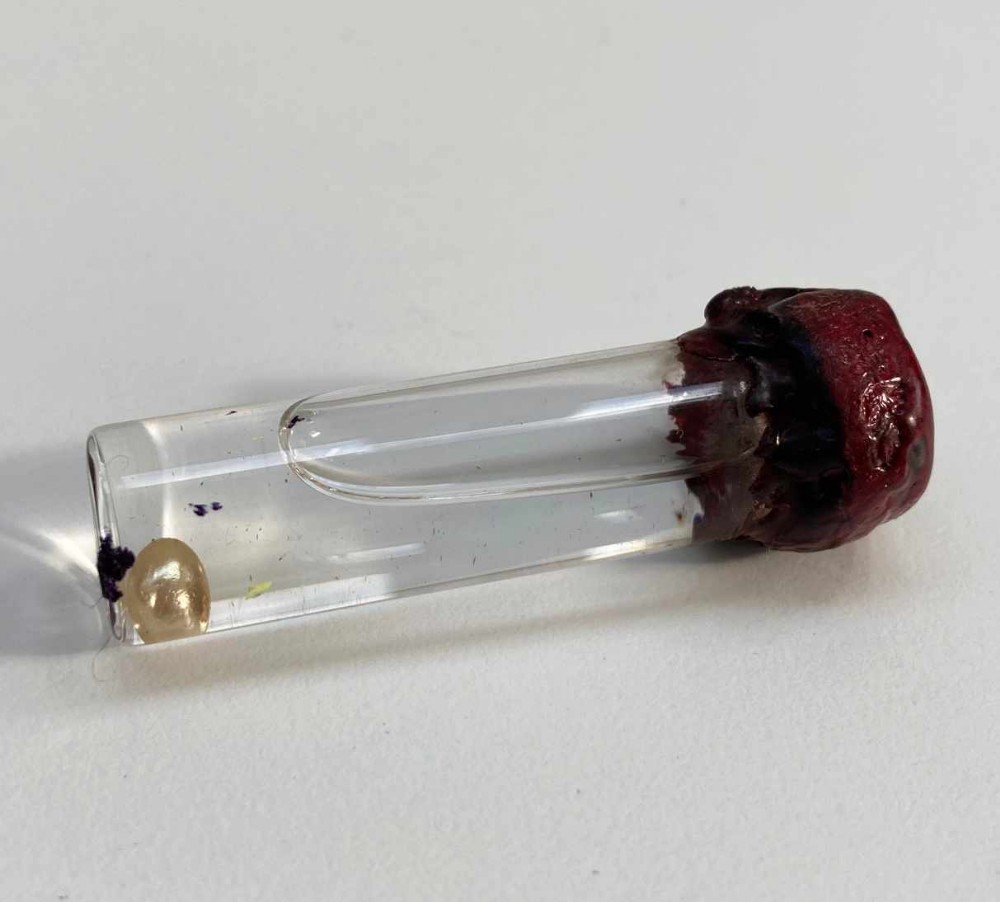
The horizon is comprised of a solid brass tray with three adjustable screw feet for the purpose of levelling the instrument. The central section is routed out and fitted with a rectangular black glass plate which provides the reflective surface required for its operation. The underside is further engraved to, “Thomas Jones, 62 Charing Cross, London”. The bubble level provided with the instrument does not look original but is certainly a contemporary replacement consisiting of a glass cylinder enclosed at the top with sealing wax and a pearl like ball which moves freely within.
The history of the artificial horizon can be traced back to the sixteenth century but developments were largely popularised in the eighteenth century by John Hadley, John Elton and by the famous instrument maker, George Adams, the latter of whom is merited in 1738 with inventing the mercury trough of which this is a development intended to avoid the shake of the mercury encountered during the motion of a ship. It was devised as a means of navigation when the horizon was obscured by darkness or through the effect of inclement weather.
Its principle was based upon the first law of optics, that the angle of reflection from a mirror is equal to the angle of incidence, therefore a sextant would be employed to measure the angle between the sun or the stars and their reflection on mercury or a glass plate.
The maker Thomas Jones (1775 – 1852) was a superior maker of scientific instruments. Apprenticed to eminent maker of the period, Jesse Ramsden from 1789-1796 at a cost of 50 guineas, Jones continued to work for Ramsden until his death in 1800. Most sources have the firm’s working dates as starting in 1806 and references to work undertaken for Edward Troughton during this period would suggest that he worked as a jobbing instrument maker for the six years prior to opening his first premises in Mount Street. The history of the firm of Troughton & Simms also relates that Jones whilst working for Ramsden, provided the young William Simms with a supporting letter to The Royal Society for Simm’s “improved protractor” so we can be sure that a good working relationship existed. His first year of trading brought Jones’s first success in a commission from Mr HC Englefield to manufacture his new portable or “mountain barometer”. Englefield wrote that he had,
“Employed Mr Thomas Jones, of number 120 Mount St, Berkeley Square, pupil of the late Mr Ramsden, and who will furnish them at the price of two guineas and a half with the attached and detached thermometer”.
The barometer (although very rarely found on the market today) proved extremely popular, so much so that Jones wrote a pamphlet eleven years later in 1817 entitled, “A companion to the Mountain Barometer” wherein he states that “since its introduction in 1806 he had sold between 300 and 400 of these instruments”. It is also interesting to note that Jones signs himself off as, “Astronomical and philosophical instrument maker to his Royal Highness the Duke of Clarence” in this publication so he must have held the Royal Appointment for at least twenty years until William IV eventually died.

(Note: I have an Edward Troughton (pre-Troughton & Simms) Mountain Barometer of this type currently for sale if the reader is inte

Physical Dimensions
Height
4cm (1.57")
Width
15.5cm (6.10")
Depth
13.5cm (5.31")
Declaration

Jason Clarke Antiques has dated this piece to the 1800s.

Reference Numbers
Sellingantiques Reference
SA739083
Description
For sale, a George III black glass artificial horizon by Thomas Jones of Charing Cross London.
This early example, is contained within a fitted mahogany case with hinged lid and hook and eye catches to the front.
Jason Clarke Antiques

The inside of the lid retains its superb and original trade label for, “Thomas Jones (pupil of Ramsden), Astronomical and philosophical instrument maker to His Royal Highness The Duke of Clarence, 62 Charing Cross, London”. The exterior of the lid has a further paper label which contains writing which is now unfortunately obscured but seems to suggest an original owner.

fig 1. Georgian Black Glass Artificial Horizon by Thomas Jones of London

The horizon is comprised of a solid brass tray with three adjustable screw feet for the purpose of levelling the instrument. The central section is routed out and fitted with a rectangular black glass plate which provides the reflective surface required for its operation. The underside is further engraved to, “Thomas Jones, 62 Charing Cross, London”. The bubble level provided with the instrument does not look original but is certainly a contemporary replacement consisiting of a glass cylinder enclosed at the top with sealing wax and a pearl like ball which moves freely within.

fig 2. Georgian Black Glass Artificial Horizon by Thomas Jones of London

The history of the artificial horizon can be traced back to the sixteenth century but developments were largely popularised in the eighteenth century by John Hadley, John Elton and by the famous instrument maker, George Adams, the latter of whom is merited in 1738 with inventing the mercury trough of which this is a development intended to avoid the shake of the mercury encountered during the motion of a ship. It was devised as a means of navigation when the horizon was obscured by darkness or through the effect of inclement weather.

fig 3. Georgian Black Glass Artificial Horizon by Thomas Jones of London

Its principle was based upon the first law of optics, that the angle of reflection from a mirror is equal to the angle of incidence, therefore a sextant would be employed to measure the angle between the sun or the stars and their reflection on mercury or a glass plate.

fig 4. Georgian Black Glass Artificial Horizon by Thomas Jones of London

The maker Thomas Jones (1775 – 1852) was a superior maker of scientific instruments. Apprenticed to eminent maker of the period, Jesse Ramsden from 1789-1796 at a cost of 50 guineas, Jones continued to work for Ramsden until his death in 1800. Most sources have the firm’s working dates as starting in 1806 and references to work undertaken for Edward Troughton during this period would suggest that he worked as a jobbing instrument maker for the six years prior to opening his first premises in Mount Street. The history of the firm of Troughton & Simms also relates that Jones whilst working for Ramsden, provided the young William Simms with a supporting letter to The Royal Society for Simm’s “improved protractor” so we can be sure that a good working relationship existed. His first year of trading brought Jones’s first success in a commission from Mr HC Englefield to manufacture his new portable or “mountain barometer”. Englefield wrote that he had,

fig 5. Georgian Black Glass Artificial Horizon by Thomas Jones of London

“Employed Mr Thomas Jones, of number 120 Mount St, Berkeley Square, pupil of the late Mr Ramsden, and who will furnish them at the price of two guineas and a half with the attached and detached thermometer”.

fig 6. Georgian Black Glass Artificial Horizon by Thomas Jones of London

The barometer (although very rarely found on the market today) proved extremely popular, so much so that Jones wrote a pamphlet eleven years later in 1817 entitled, “A companion to the Mountain Barometer” wherein he states that “since its introduction in 1806 he had sold between 300 and 400 of these instruments”. It is also interesting to note that Jones signs himself off as, “Astronomical and philosophical instrument maker to his Royal Highness the Duke of Clarence” in this publication so he must have held the Royal Appointment for at least twenty years until William IV eventually died.

(Note: I have an Edward Troughton (pre-Troughton & Simms) Mountain Barometer of this type currently for sale if the reader is inte

Height
4cm (1.57")
Width
15.5cm (6.10")
Depth
13.5cm (5.31")
Date of Manufacture

Jason Clarke Antiques has dated this piece to the 1800s.

Reference Numbers
Sellingantiques Ref
SA739083
Jason Clarke Antiques
Sellingantiques verified Since Jul 2015
Dealer Profile

You can view the stock and full dealer information on the Jason Clarke Antiques Profile Page
PDF SHARE
SAVE
Georgian Black Glass Artificial Horizon by Thomas Jones of London
1 / 9
Archive I Georgian Black Glass Artificial Horizon by Thomas Jones of London
Georgian Black Glass Artificial Horizon by Thomas Jones of London
Archive II Georgian Black Glass Artificial Horizon by Thomas Jones of London View II
Archive III Georgian Black Glass Artificial Horizon by Thomas Jones of London View III
Archive IV Georgian Black Glass Artificial Horizon by Thomas Jones of London View IV
Archive V Georgian Black Glass Artificial Horizon by Thomas Jones of London View V
Archive VI Georgian Black Glass Artificial Horizon by Thomas Jones of London View VI
Archive VII Georgian Black Glass Artificial Horizon by Thomas Jones of London View VII
Archive VIII Georgian Black Glass Artificial Horizon by Thomas Jones of London View VIII
Archive IX Georgian Black Glass Artificial Horizon by Thomas Jones of London View IX
Enlarged Archival View
Telephone 07815 046645
Location
Newbury
Berkshire
United Kingdom
Verified Since Jul 2015
Items For Sale 80
Items Sold 607
Jason Clarke Antiques
Verified Since Jul 2015
View Dealer Info
Location: Newbury, Berkshire, United Kingdom
Verified
Jul 2015
For Sale
80
Sold
607
Georgian Black Glass Artificial Horizon by Thomas Jones of London
Ref: SA739083
Georgian Black Glass Artificial Horizon by Thomas Jones of London
Detail View 1
Detail View 2
Detail View 3
Detail View 4
Detail View 5
Detail View 6
Detail View 7
Detail View 8
Archival Detail
Every single antique dealer on our platform is individually approved by our internal team. We verify their professional trade history, ethical standards, and photographic quality to ensure a secure, high-standard buying environment. Upon joining, every dealer agrees to a strict 9-point code of conduct. While issues can occasionally arise, our dealers typically resolve them swiftly and directly with the buyer. In fact, since our founding in 2002, Sellingantiques has only had to step in to help resolve an issue on roughly five occasions—a true testament to the quality of our dealers and their dedication to your happiness.
Our dealers are highly experienced in packing and shipping fragile, high-value antiques. Because you are in direct contact with the dealer, you will be able to easily go through all available shipping and insurance options together to ensure your item arrives safely.
Antiques are the ultimate green purchase. By choosing historical pieces over newly manufactured goods, you completely eliminate the carbon footprint of modern mass production while preserving exceptional, timeless craftsmanship.
items
Add keywords to the filter
Price
£100
£250000
Era
Movements
Material
Origin
Stock Location
Freshness
Online Payments
Categories