Jason Clarke Antiques has dated this piece to the 1750s.
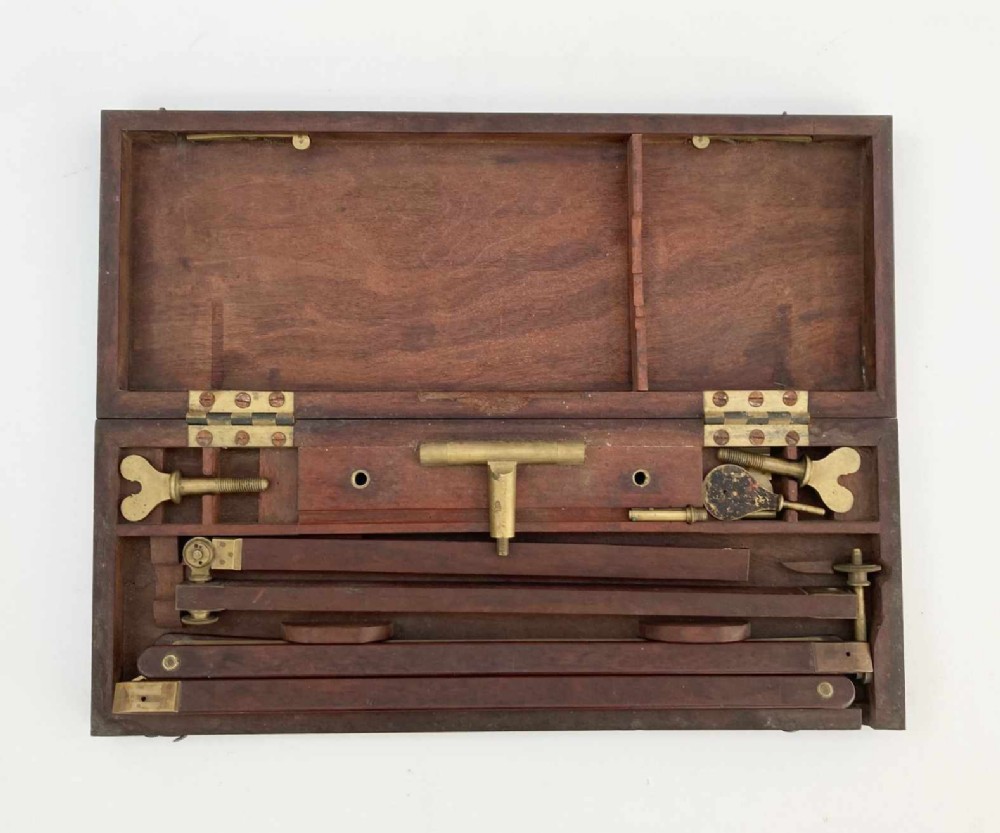
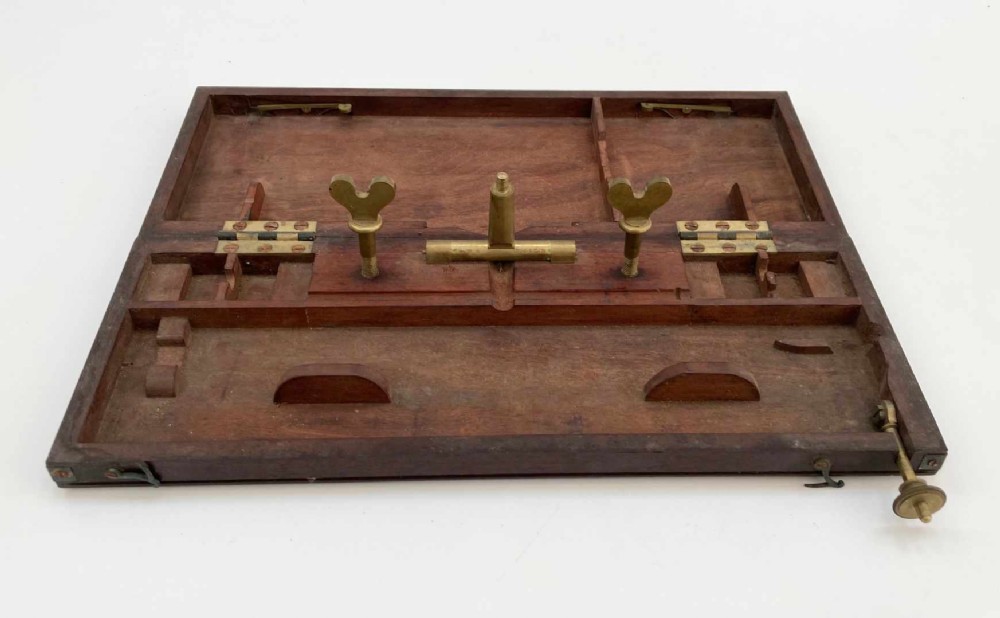
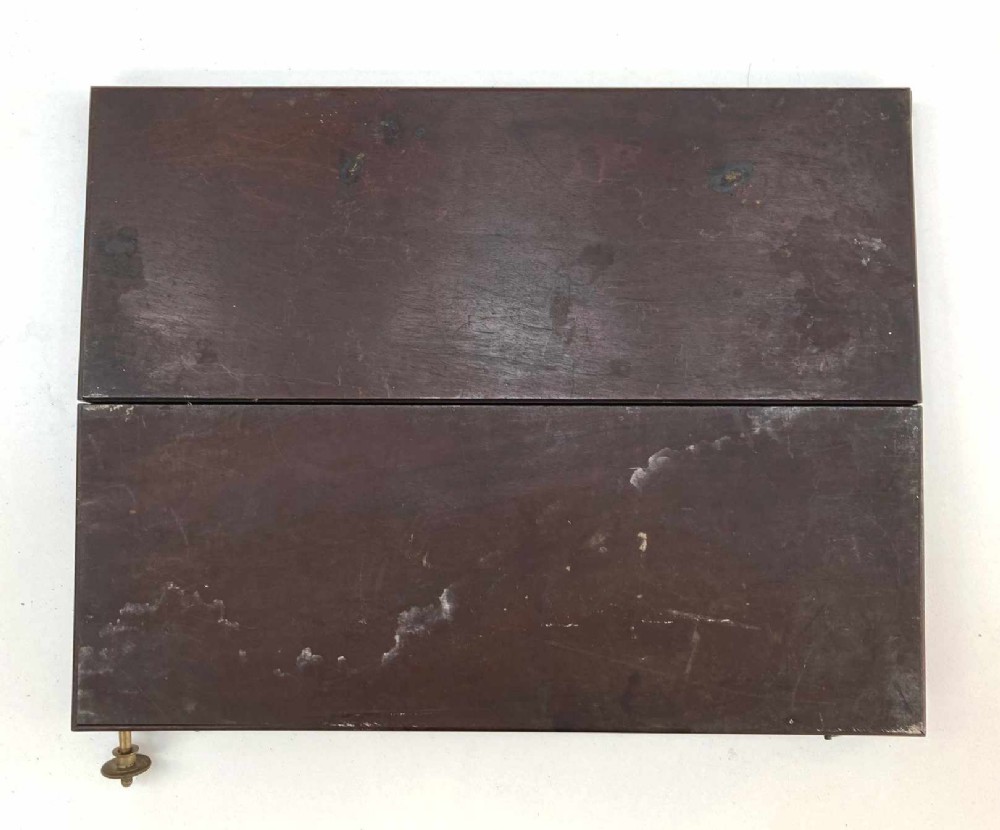
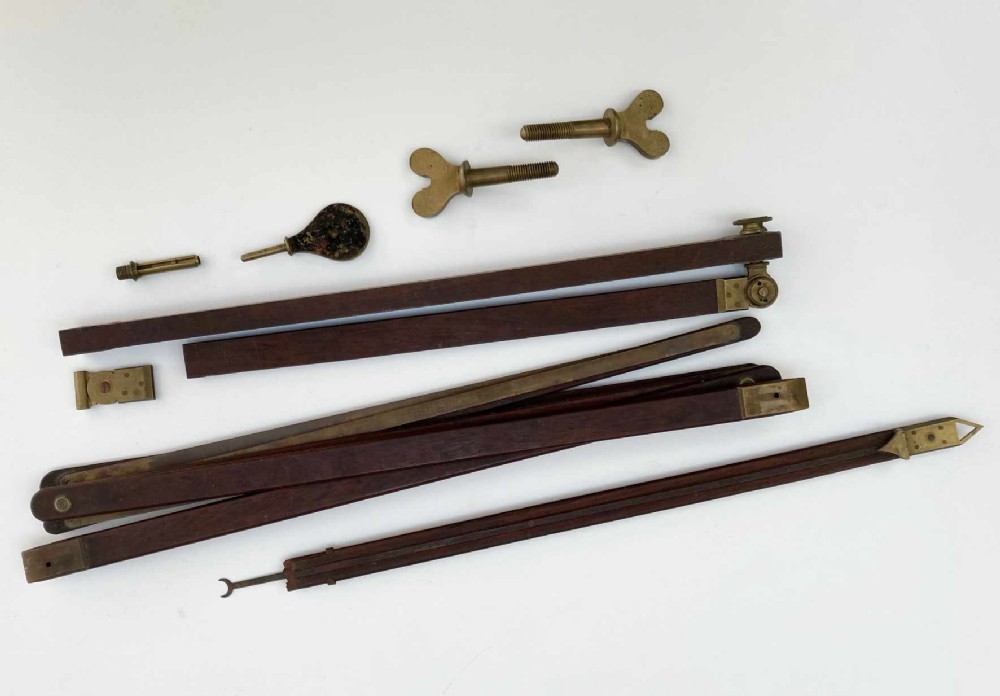
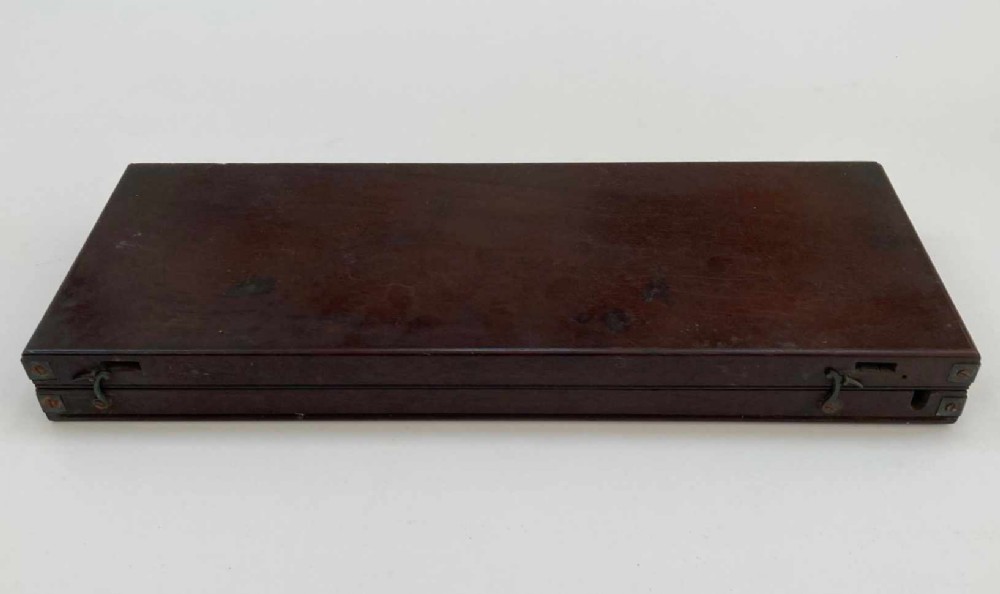
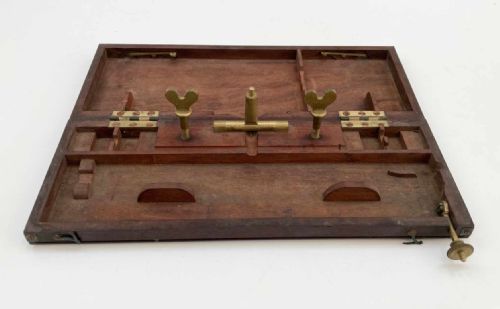
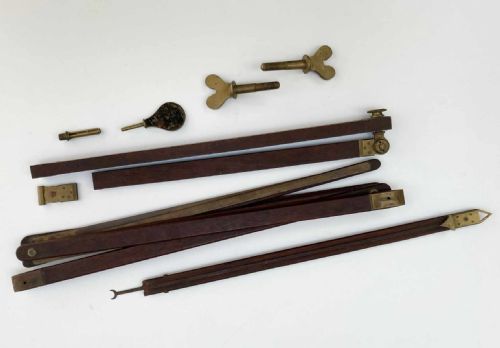
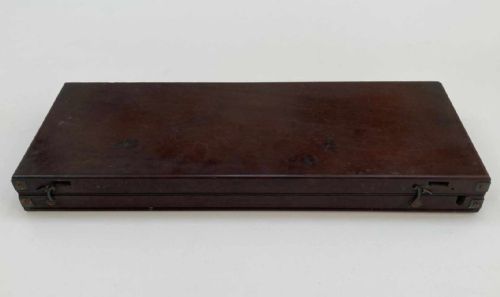
The open face would have been attached to a tripod and through to the body by means of the two brass wingnut screw. The central bolt would have been placed over the central strut and secured, it is hinged in order to allow for movement of the tripod. A screw and nut are affixed to the top side of interior and a slit is cut in the case to allow for it to be folded out to the extrerior and on which is placed a two part mahogany and brass arm on to which a sight is placed. This acts as an adjustable eyepiece for sighting the subject of the intended drawing. (note that all of the pieces are present for this section but the sight holder has come away from the arm)
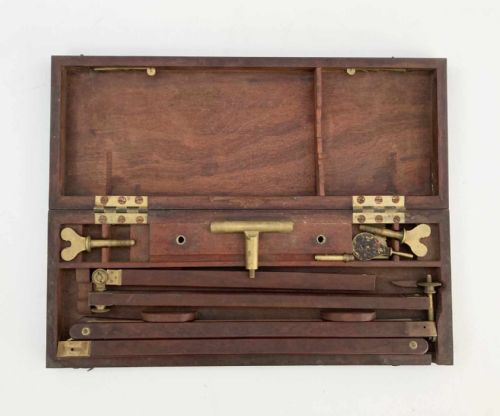
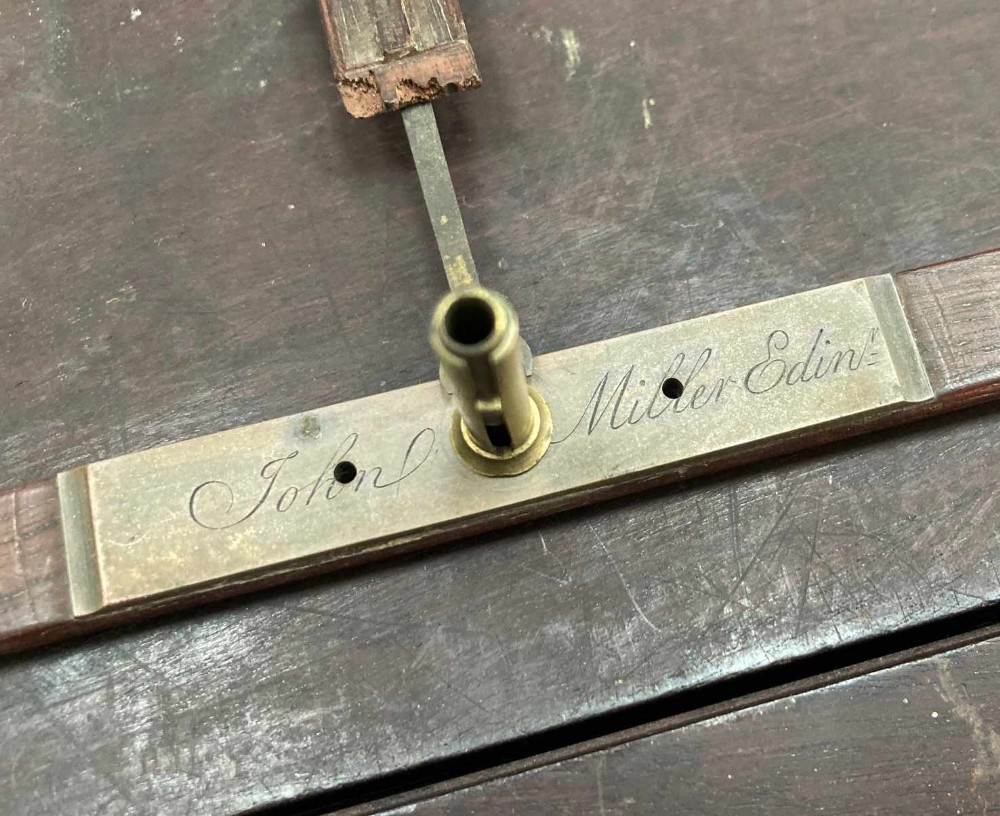
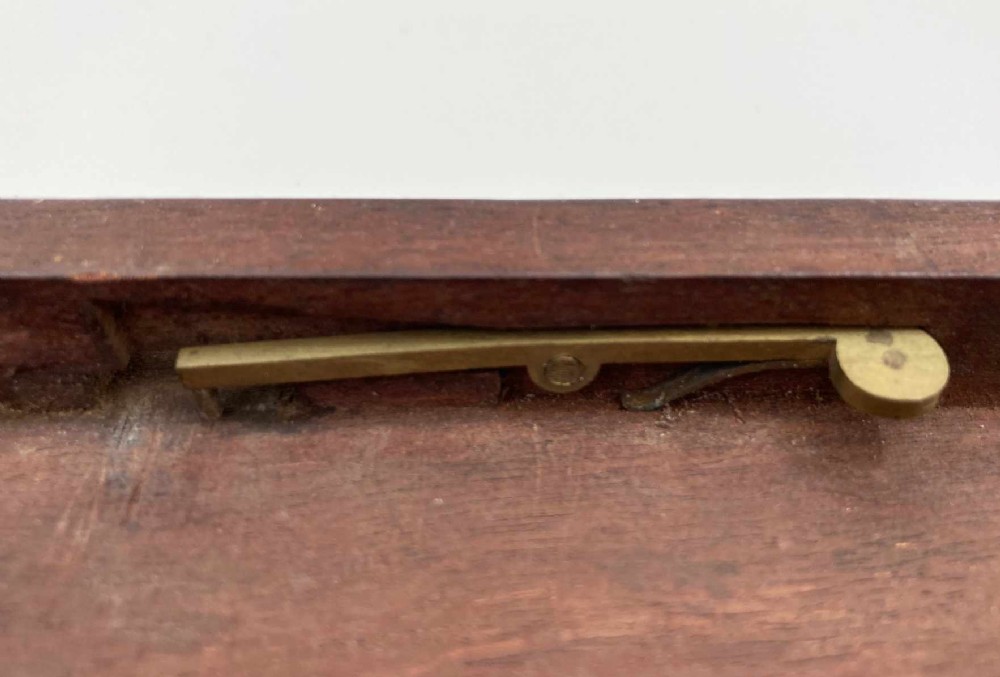
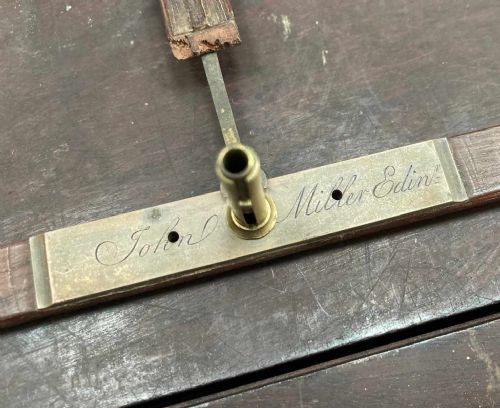
On the underside of the lower lid are cut two further slits into which the arms of a double parallel rule are inserted and locked in with sprung pin clips on the interior, This allows for stability of the parallel rule when in use. The brass section of this piece is engraved to “John Miller Edinburgh”, the central hole would have been used to secure an upright strut (t-bar connector is missing also) which contains further arm attachments for sighting various angles. It would also have been fitted with a pencil, the holder for which is present in the case.
Watt is known to have made a few of these himself and I can find only a single example of one of these rare instruments (by any maker) which is contained within The Science Museum’s collection. Watt relates that George Adams also started to manufacture these in London very shortly afterwards without his permission although Watt never sought a patent for it. He relates that,
“George Adams copied and made them for sale, putting his own name on them; as I have been told, in a book which he published, describing various instruments, he took the credit of the invention to himself, or expressed himself so as to leave that supposable: but I have not seen the book as far as I can remember, but have seen the instruments with his name on them”.
As we will see in the biographical section later in the description, Miller worked for George Adams from 1766 to 1769 so it is certain that Miller himself took Watt’s idea back to Scotland with him in 1769 and also began to make them on his own account.
A more detailed description of the instrument written by Watt himself is provided below.
Description of a New Perspective Machine
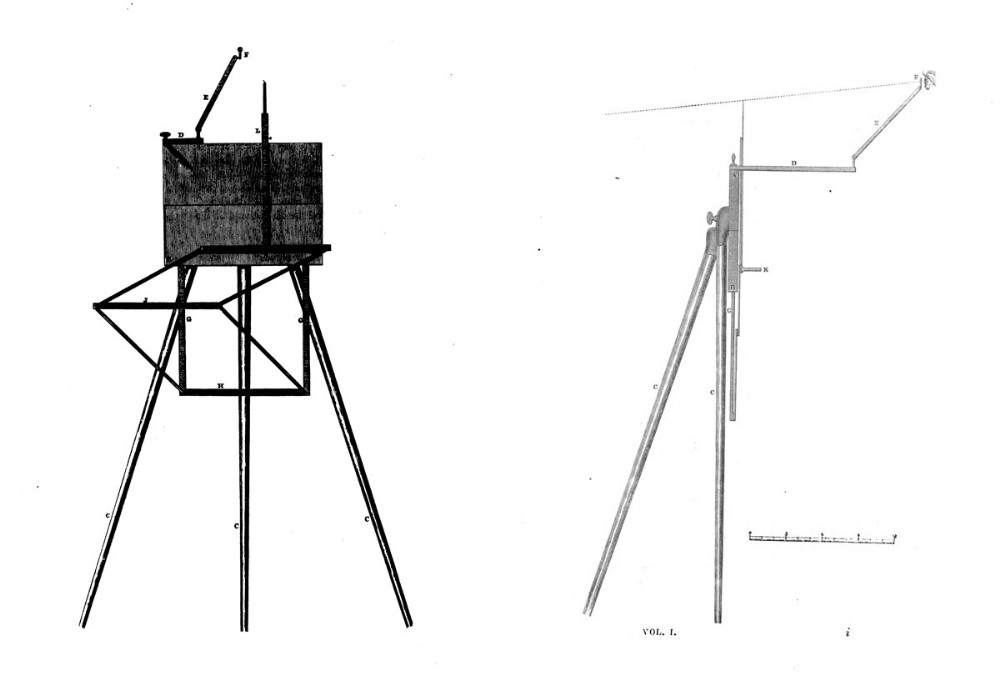
“The perspective machine was invented about 1765, in consequence of my friend Dr James Lind having brought from India a machine invented by an English gentleman there, I believe a Mr Hurst. It consisted of a board fixed on three legs perpendicularly, upon which, close to the bottom and near the ends, were placed two small friction wheels, upon which a horizontal ruler rested, and could be moved endwise horizontally. This ruler was about twice the length of the board. On the middle of this ruler was fixed perpendicularly another ruler, reaching a little above the upper edge of the board; and in this last ruler there was a groove, similar to that of the slip of a sliding rule, which was also, like that, furnished with a slider, made to move freely up and down in it; and the upper end being pointed, served for an index.
In the bottom of the groove in the perpendicular ruler, there was a slit cut quite through the ruler, nearly from one end to the other. In the lower end of the slider was fixed a pencil, the point of which reached quite through the ruler to the paper to be drawn upon, which was stretched upon the board. An arm projecting forwards was fixed to one of the upper corners of the board (I do not remember how), and upon its end neare
Jason Clarke Antiques has dated this piece to the 1750s.
You can view the stock and full dealer information on the Jason Clarke Antiques Profile Page
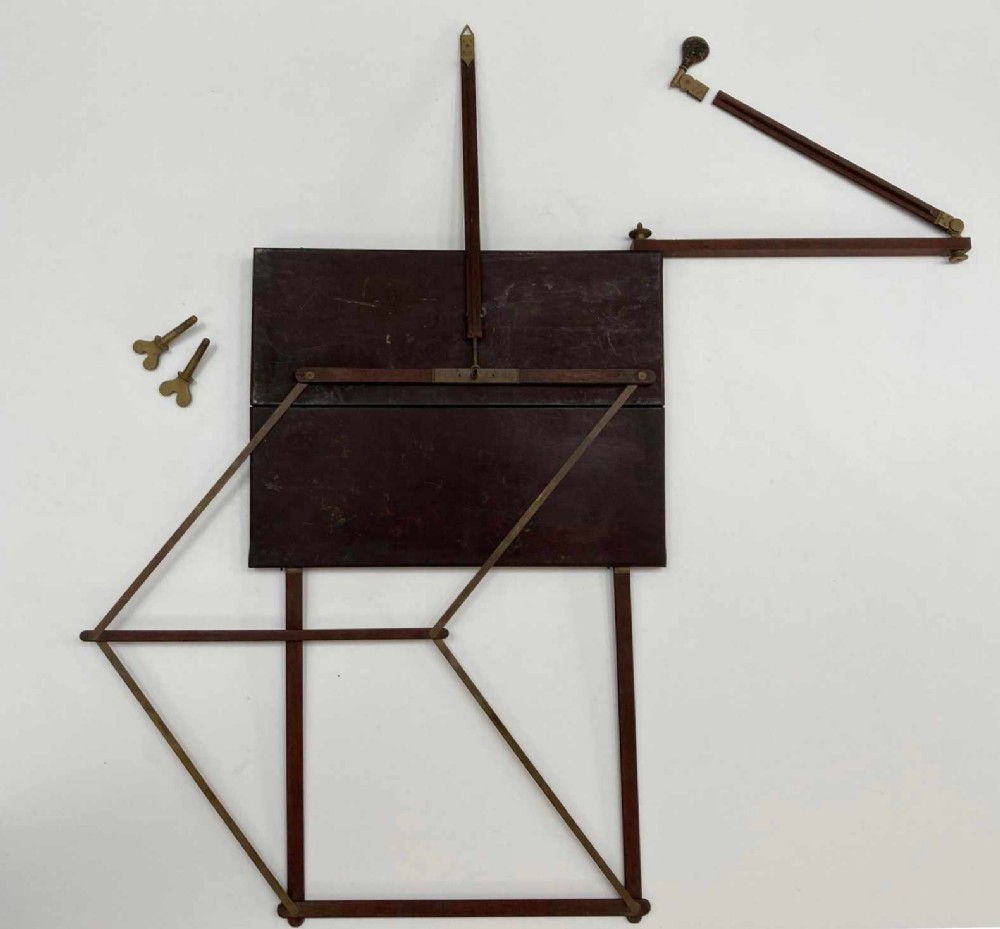
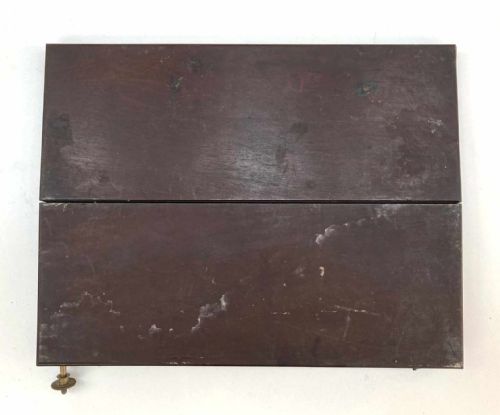
Eighteenth Century James Watt Perspective Machine by John Miller of Edinburgh