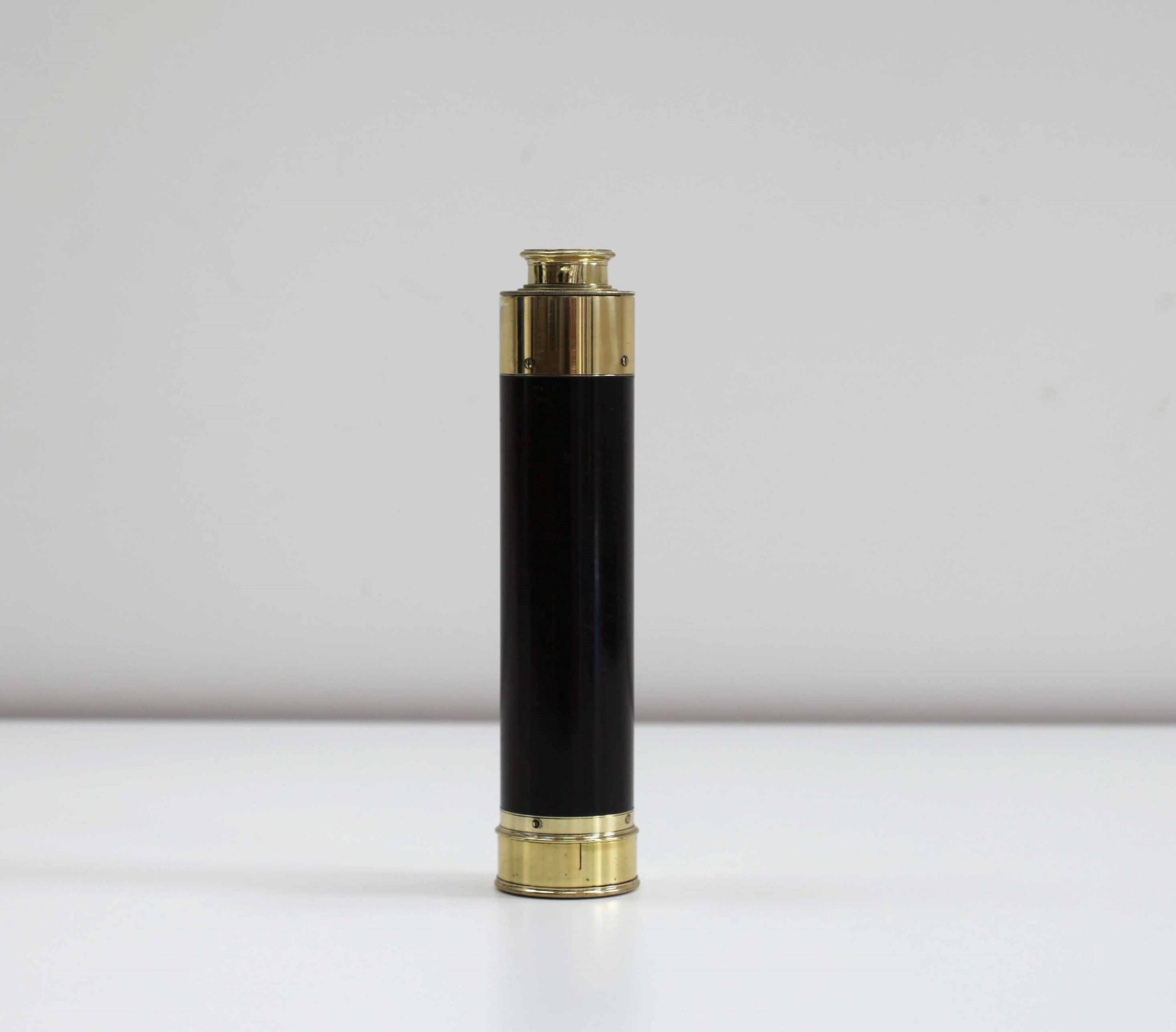
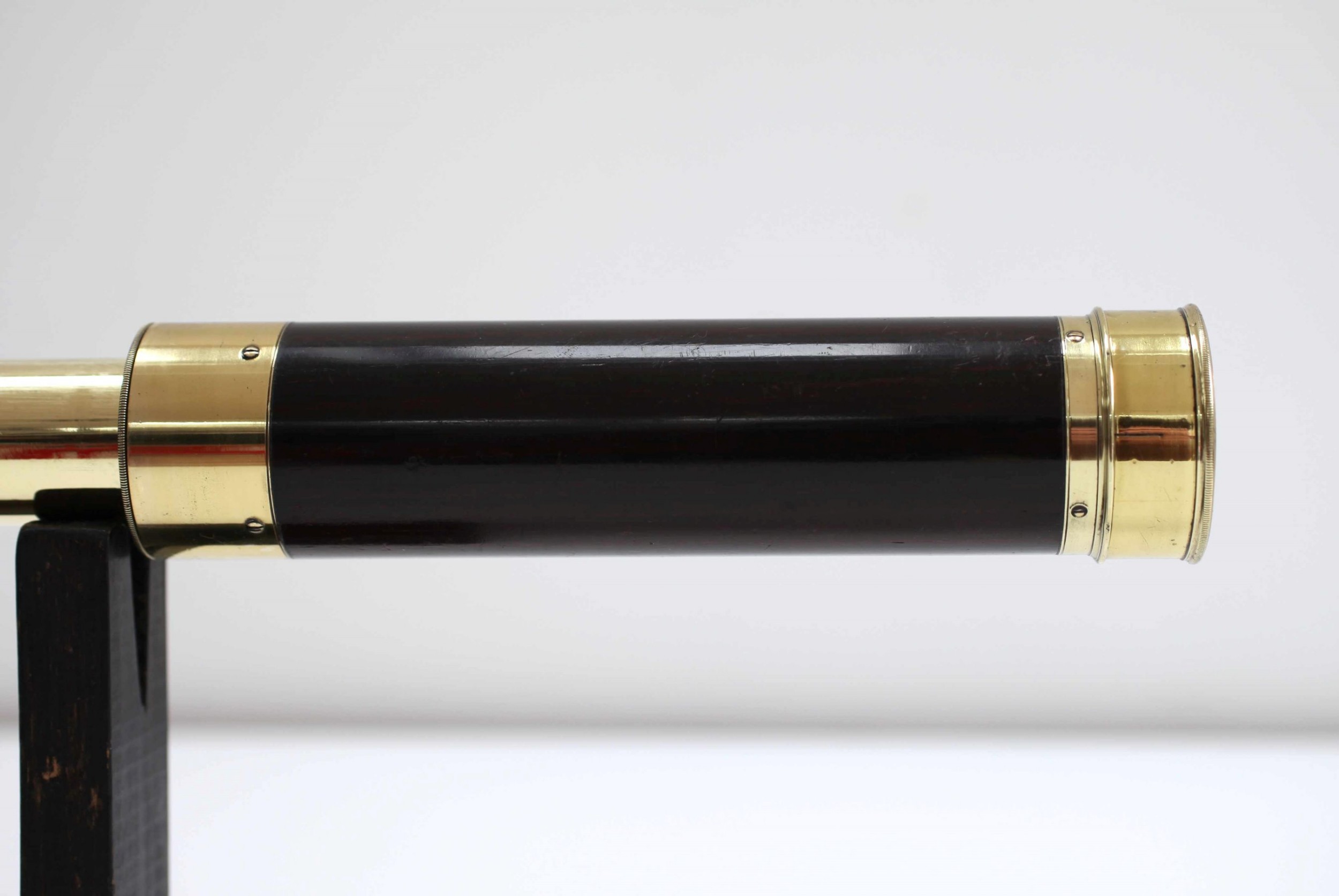
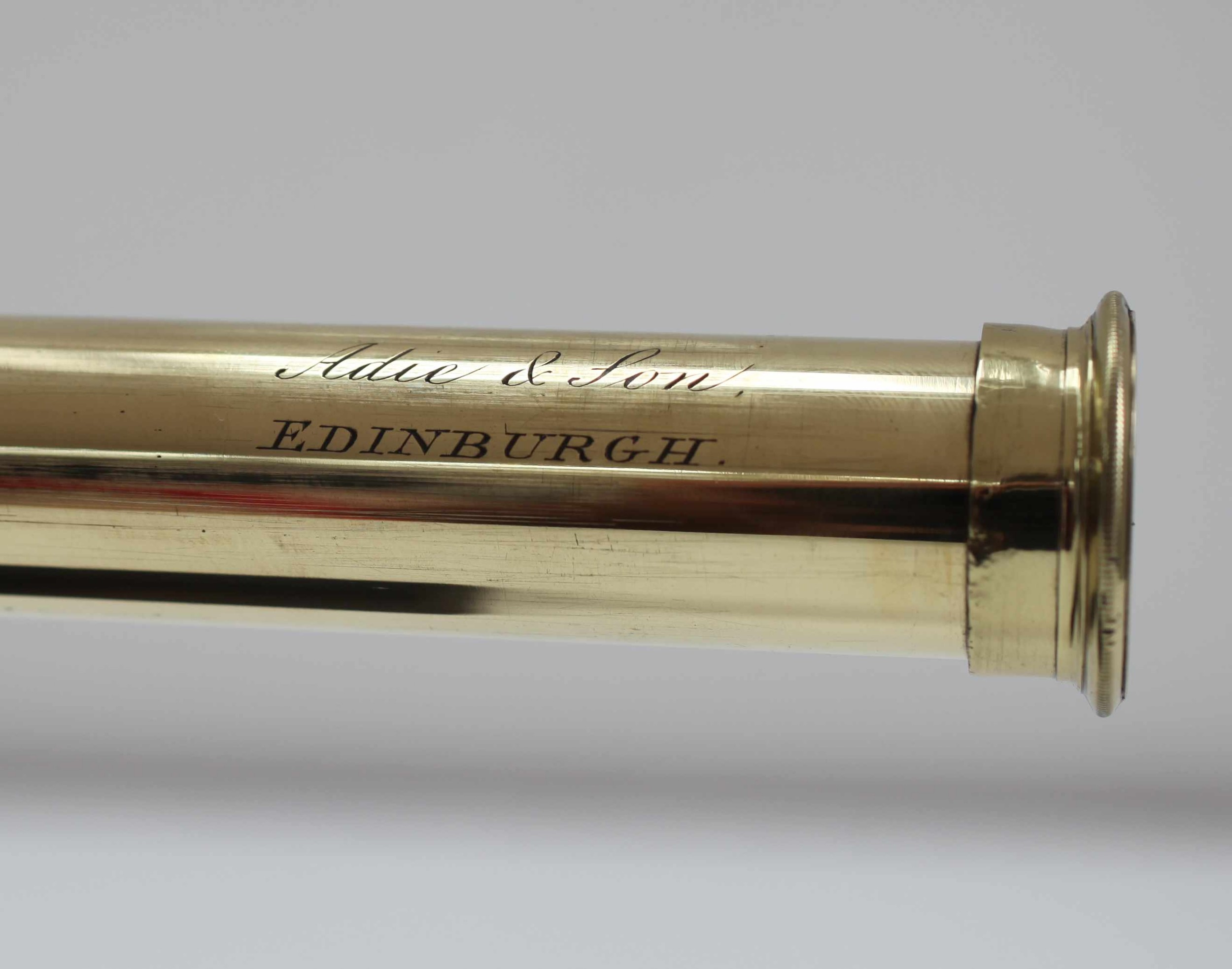
Jason Clarke Antiques has dated this piece to the 1850s.
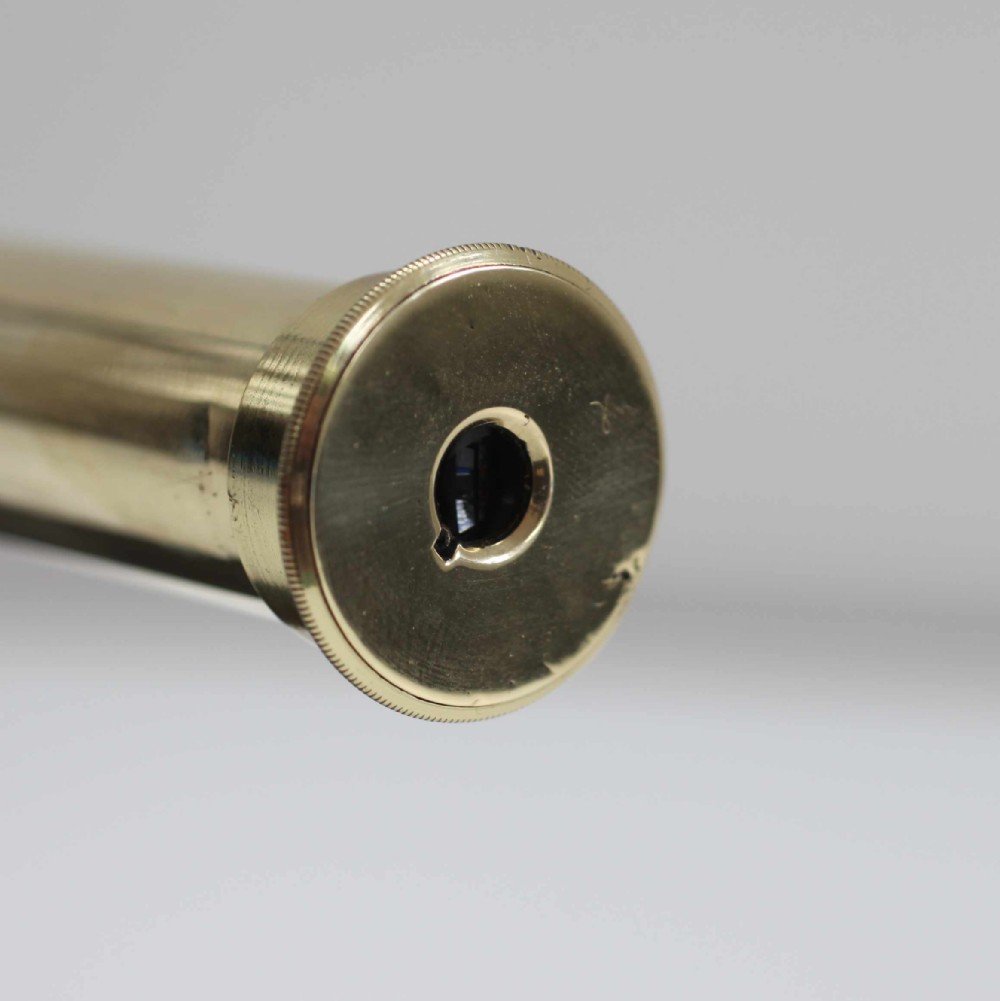
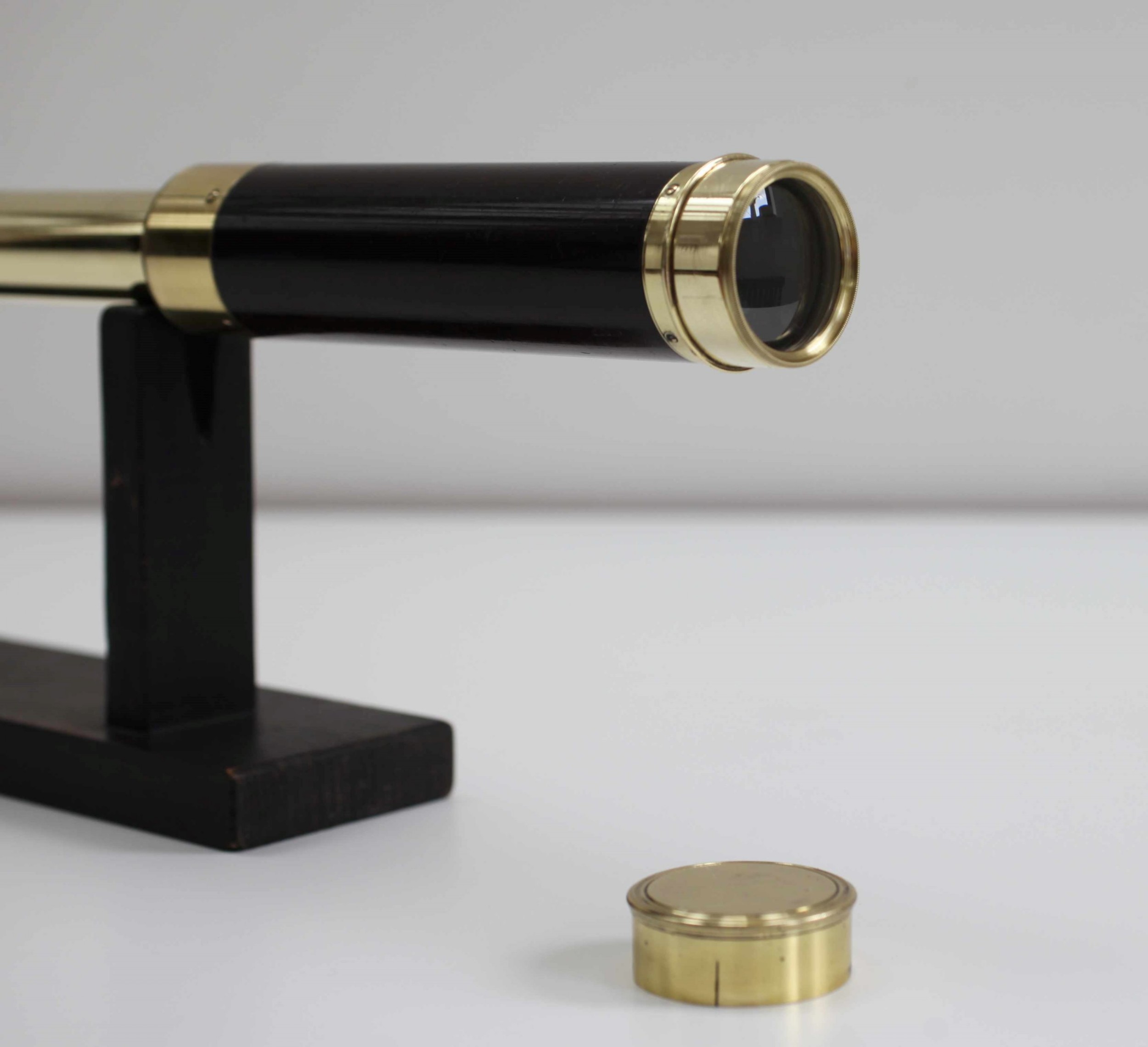
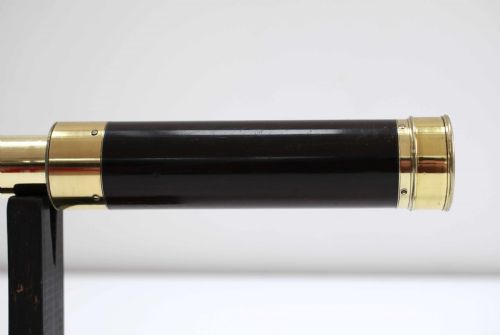
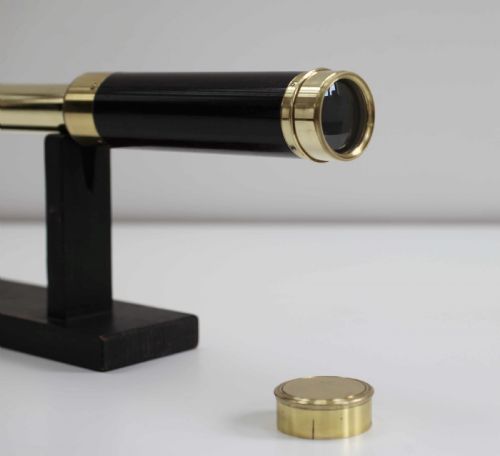
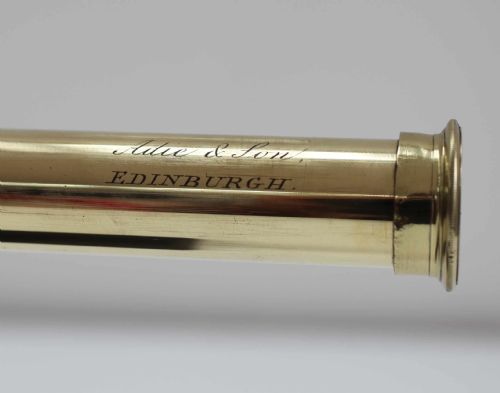
Complete with its original objective cap and beautifully grained rosewood barrel, it is engraved Adie & Son, Edinburgh to the first draw.
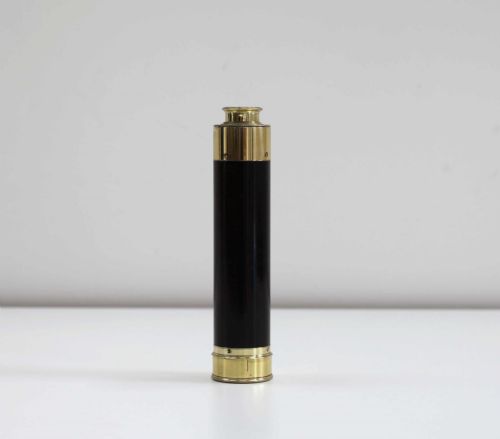
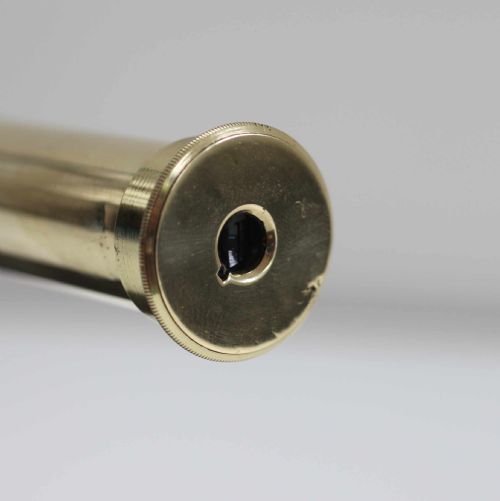
Beautifully manufactured, the telescope continues to give a clear and sharp focus. A super example by a most esteemed maker.
The history of the firm, Adie & Son began in 1776 with the celebrated Edinburgh scientific instrument maker John Miller, the uncle of Alexander Adie. Miller himself had been apprenticed under the world renowned maker George Adams so Alexander was privileged to have had an uncle from such a prestigious background.
From 1789, Adie (1774 – 1858) undertook his apprenticeship with Miller and by 1804, a partnership was agreed which traded at various addresses on Nicholson Street. Miller & Adie continued to trade until 1822 (although Miller had died by 1815) whereafter the business was renamed solely to Alexander Adie. By this point, Adie was himself an accomplished maker with a focus on meteorological instruments and had by 1818 taken out a patent (No: 4323) for a sympiesometer, a type of barometer designed initially for marine use which contained hydrogen and almond oil instead of mercury. Perhaps the most well-known instrument that the Adie family are now recognised for, this invention was patented as, “An improvement on the air barometer” an instrument that had been conceived as early as 1668 by Robert Hooke but never brought into practical use until Adie’s later developments.
By 1822, Adie had a family of three sons, John (1805-1857), Richard (1810-1881) and Patrick (1821-1886) and it is sensible to presume that all undertook some kind of apprenticeship under him. The eldest, John went into business with his Father to form Adie & Son in 1835 and Richard is also known to have worked for the firm. Like many scientific instrument making firms of the period, both Richard and Patrick were to go on to set up their own successful satellite firms under their own names both in Liverpool and London respectively.
In Edinburgh, the partnership between Alexander and John continued to grow, they received Royal Appointments from both William IV and Queen Victoria and were the only two instrument makers elected as Fellows of The Royal Society of Edinburgh. The links with the Society are considered to be the reason for their commission to build William Wallace’s patent Eidograph, an improvement to the less accurate pantograph. They had trading links with Spencer, Browning & Rust (they retailed Adie’s Sympiesometer) and John completed the installation of a Troughton & Simms altazimuth circle for The Edinburgh Astronomical Institution at Calton Hill Observatory after Simms proclaimed himself too busy to undertake the exercise! They were also known to have had links with Charles Darwin.
Sadly, John shot himself in 1857 after suffering from, “fits of despondency” and therefore predeceased his father who died the following year. The Royal Society wrote of John:
“Mr Adie’s enrolment among us is a sufficient proof that he successfully followed his calling. He was greatly esteemed as a man conversant with the highest branches of his profession, and who has left behind him in that respect scarcely and equal, certainly no superior, in Edinburgh, or perhaps in even in London itself”.
They went on the following year to say of his father Alexander:
His attention to business, with his skill as a mechanic, his quick inventive powers, and his sound judgement, led him to his being much employed by all kinds of inventors to give their schemes a practical form.”
Following the sad demise of both partners of the firm, Richard Adie continued to run both the E
Jason Clarke Antiques has dated this piece to the 1850s.
You can view the stock and full dealer information on the Jason Clarke Antiques Profile Page
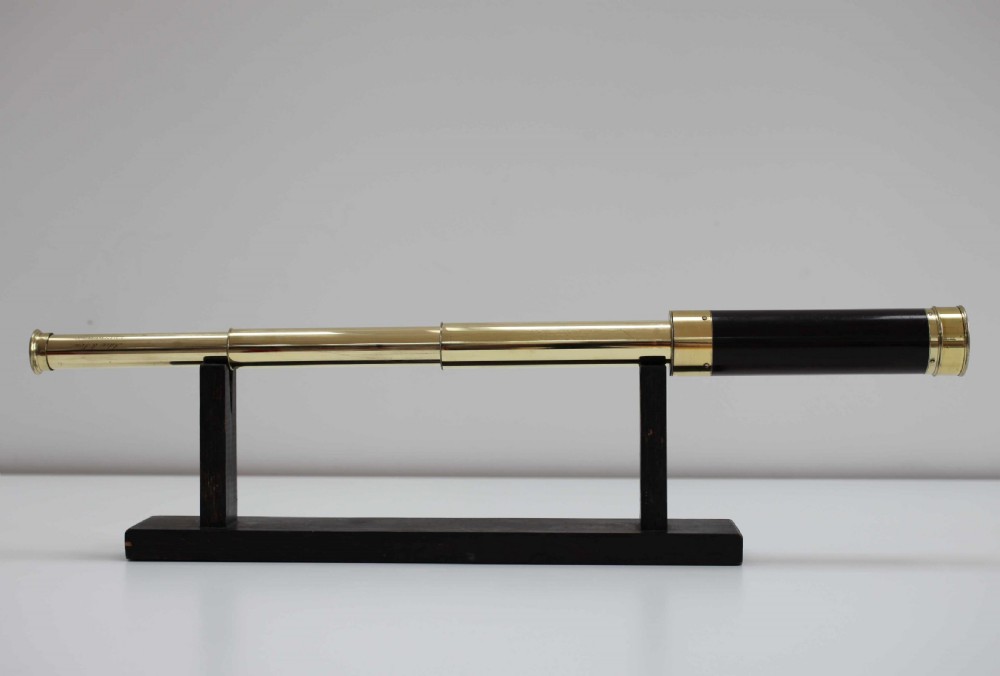
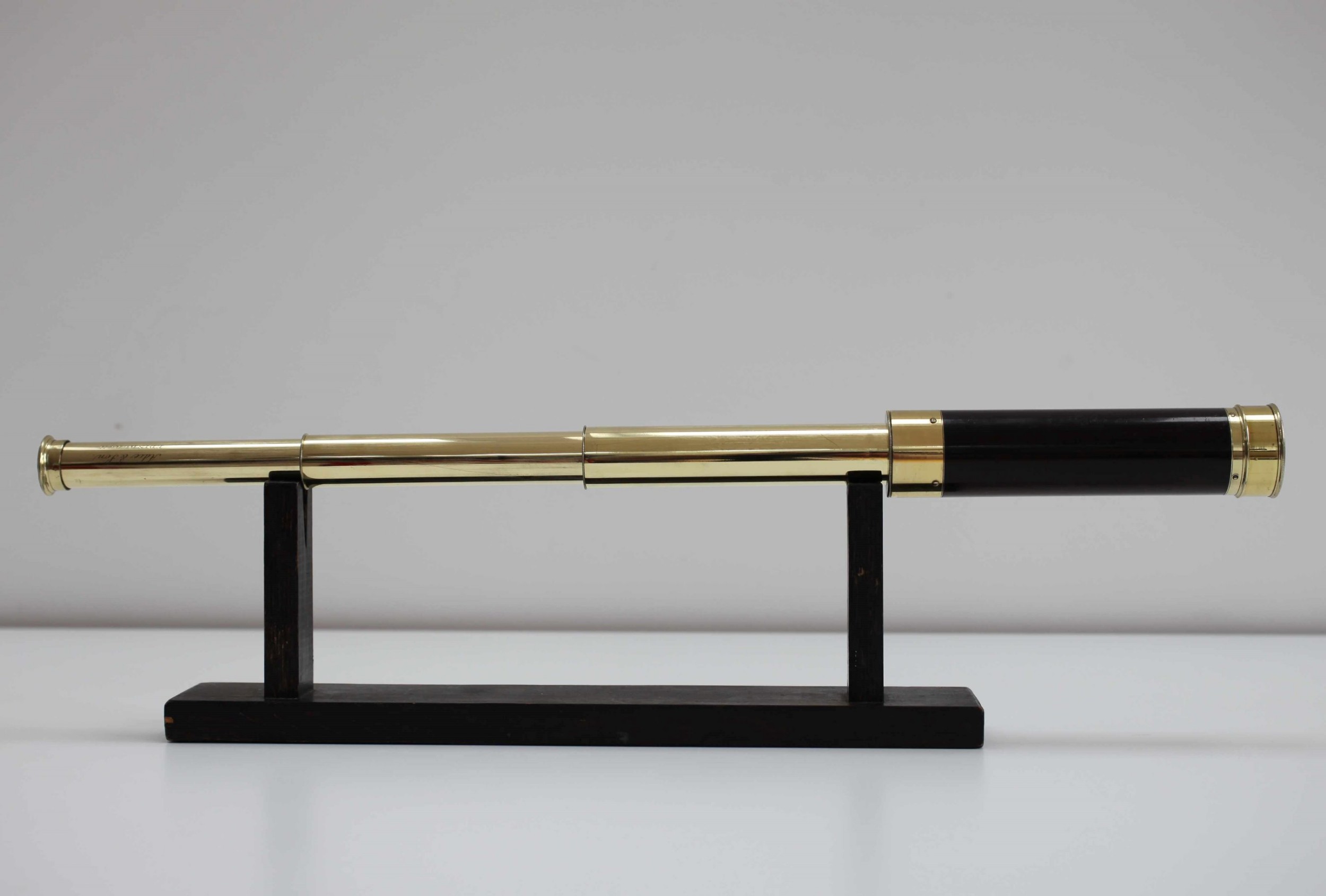
Early Victorian Three Draw Hand Held Rosewood Telescope by Adie & Son Edinburgh