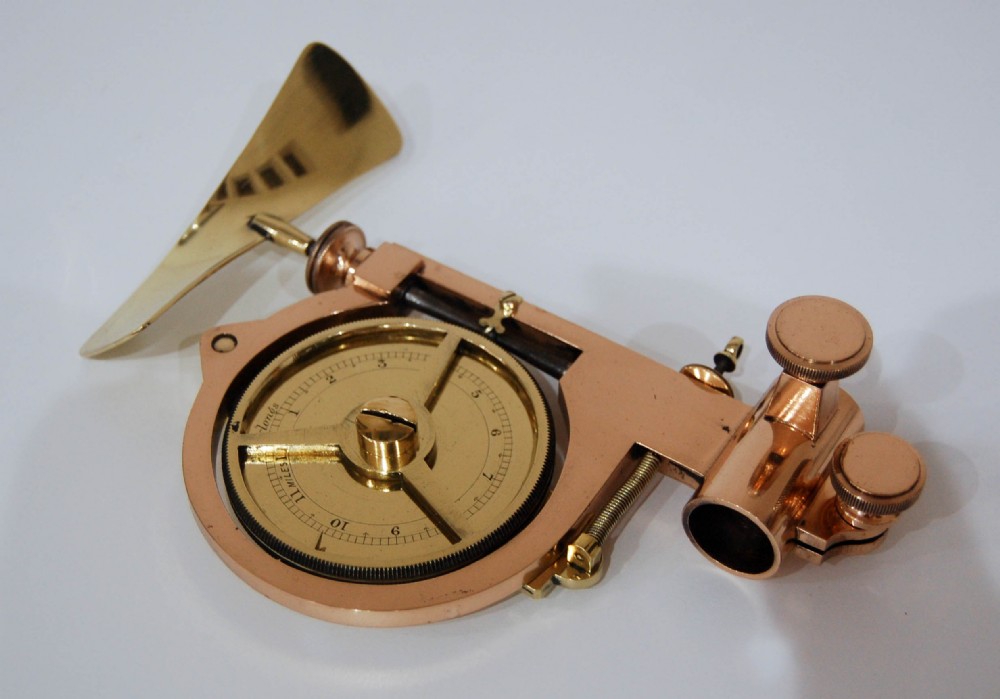
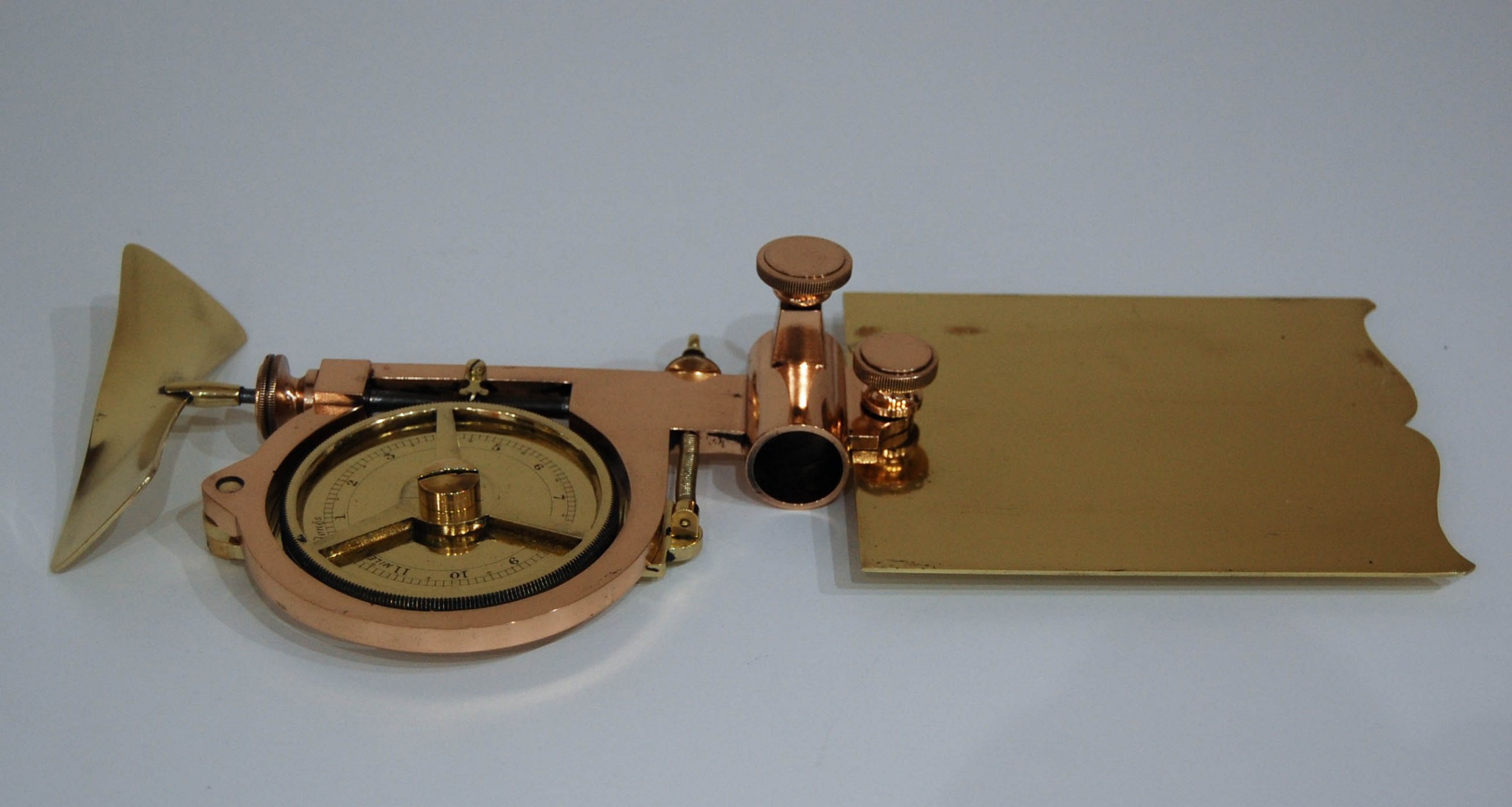
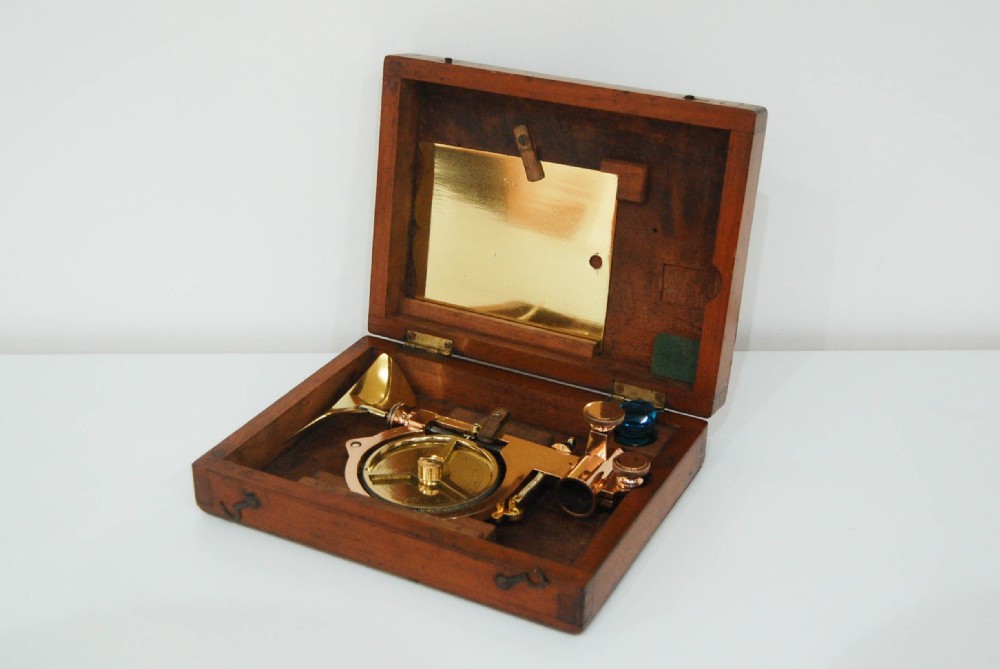
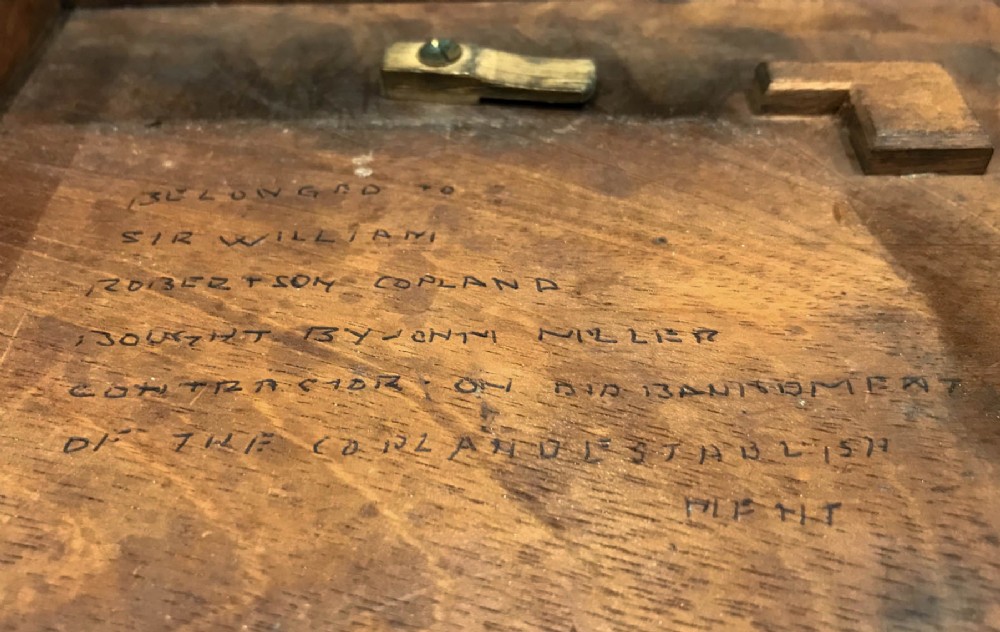
Jason Clarke Antiques has dated this piece to the 1870s.
Designed originally in 1836, this rare instrument designed by the famous American scientist Joseph Saxton made one of its first appearances featuring in The Magazine of Popular Science & Journal of the Useful Arts with the following description:
“The necessity of accurately ascertaining the velocity of rivers etc, in the numerous cases where the rate of the current, the total volume of the passing water etc are required to be known, has made it extremely desirable to have a convenient means of measuring and comparing these velocities, that may be applied in every case likely to occur.
Instruments for this purpose have been designed and described by Eytelwein, Wattman, Fontaine and others; but it is believed that no one of them has so well satisfied the conditions which have been latterly supposed to be necessary in this kind of instrument, as that which is the subject of this communication. This meter has been in the hands of several eminent hydraulic engineer, both English and Foreign, for the last two years, and has been employed successfully by some of them in investigations of great importance; in that for example of estimating the sources from which it has been lately proposed to supply the metropolis with wholesome water, its use was extremely serviceable.
Among the conditions which it seems desirable that an instrument intended for such purposes should possess, the following appear important: Facility of use under all possible circumstances; portability; fewness of parts; strength and simplicity of construction, so as not to be easily deranged or broken, and in the case of accident very soon put to rights or repaired. It is indispensable that it have also means of registering the rate of current at any point, during the whole of any given period; and this, when from immersion, or other reasons, the actual observation of the instrument is inconvenient or impossible.
These conditions at least, are satisfied in Mr Saxton’s meter; and by it, the velocity of a current at any part of the surface or bottom of a river, and in all lines between them, can be easily and accurately ascertained; and of course when observations have been made in a sufficient number of lines, the mean velocity of the whole river etc, at the place of observation, may be obtained.
In cases where great accuracy is required, or the rate of flowing is variable, any number of instruments may be simultaneously deployed.”
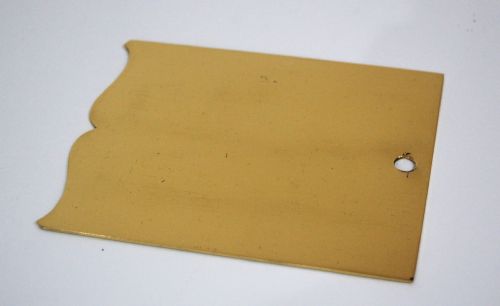
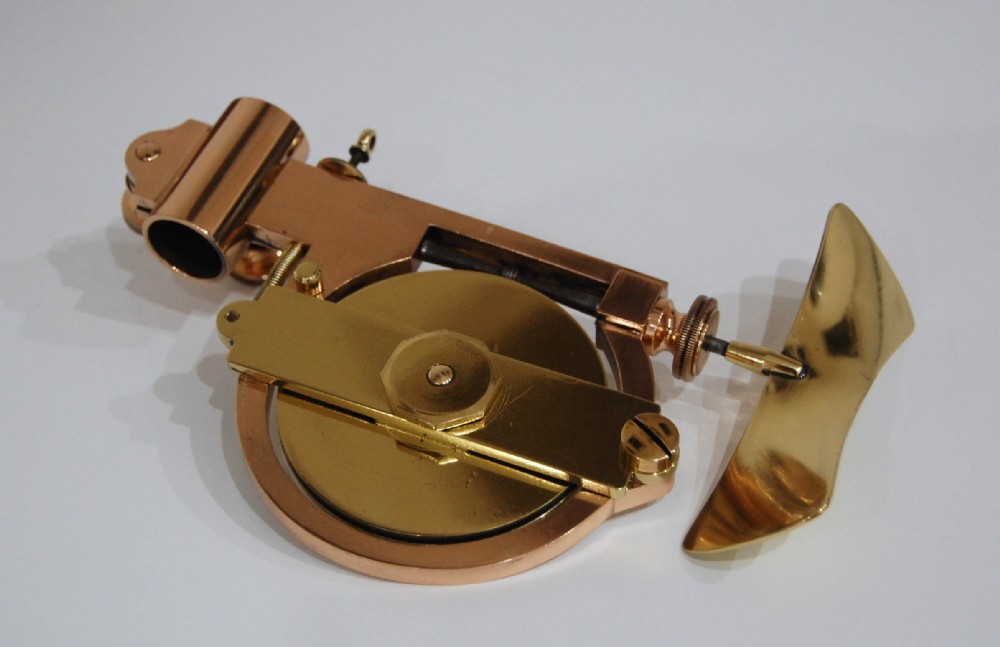
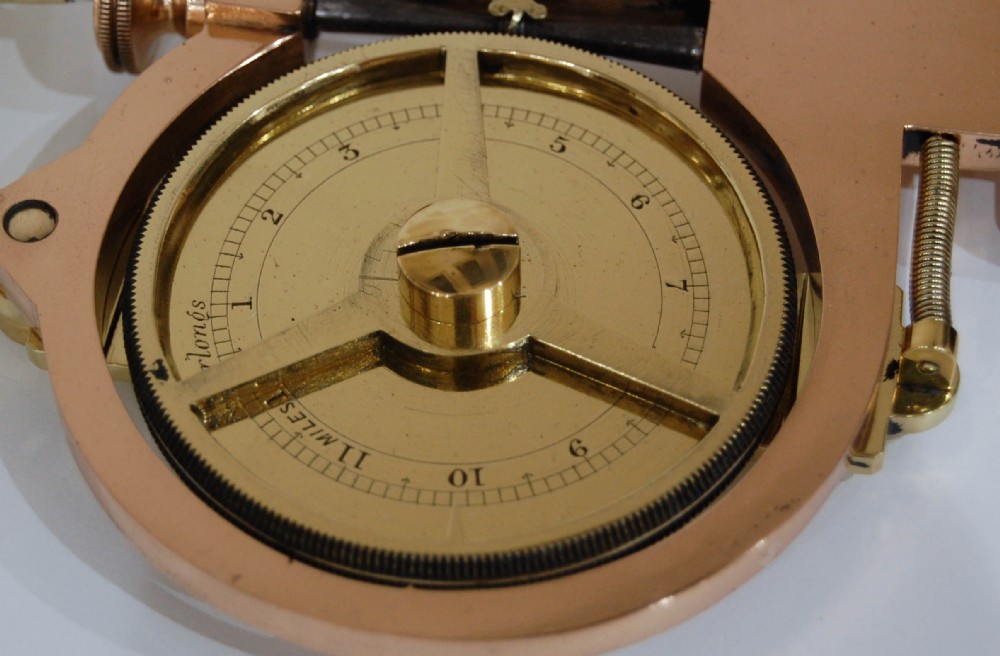
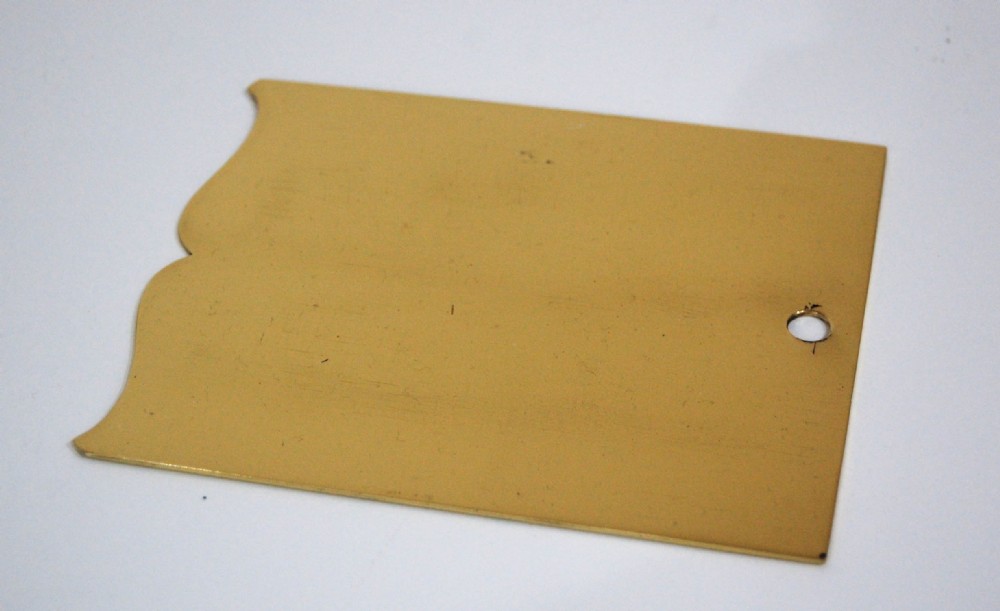
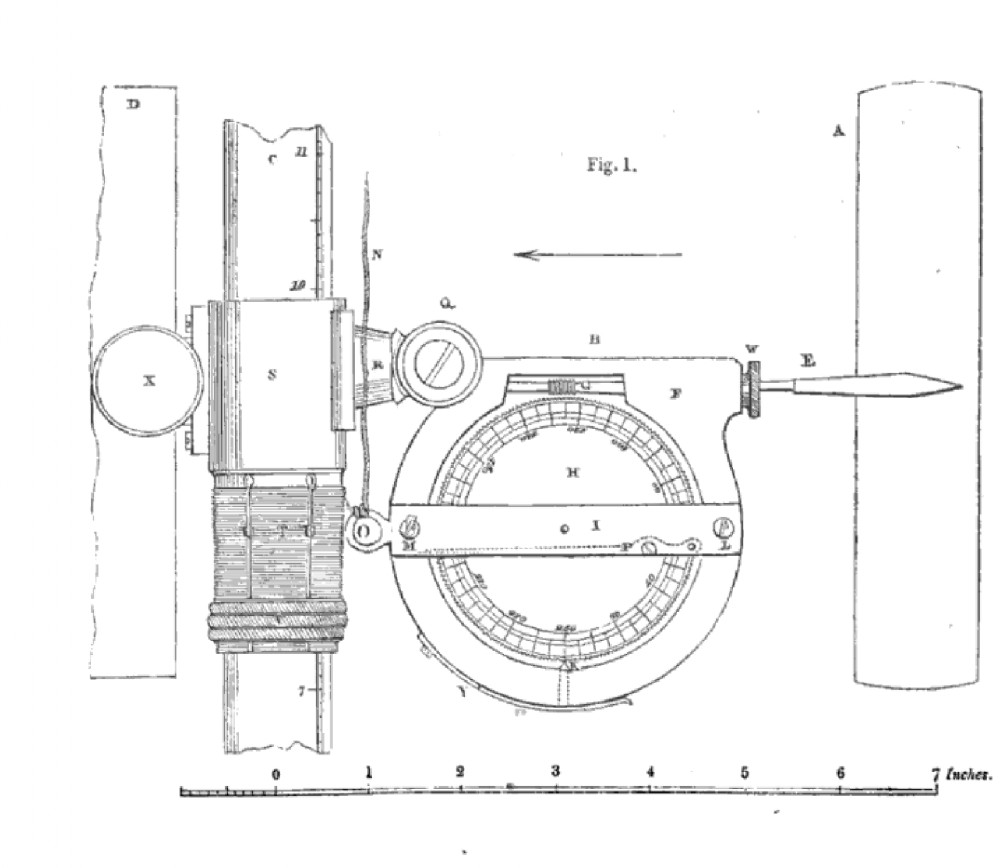
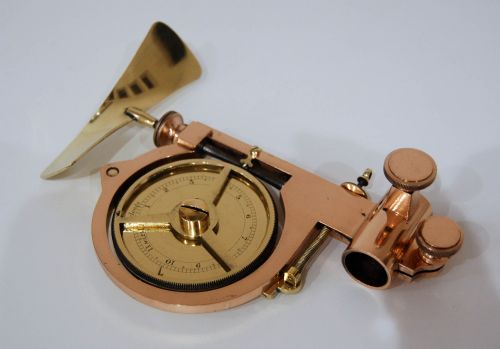
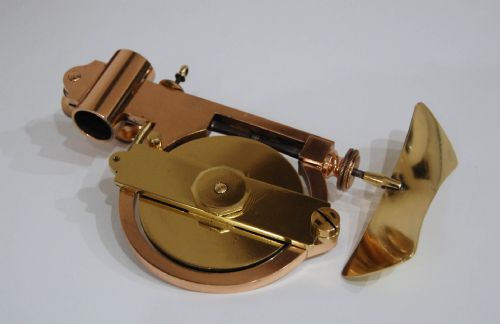
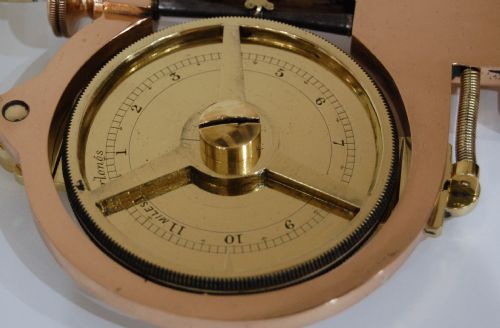
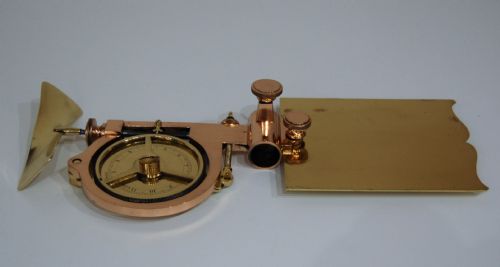
As further described, the Saxton’s water current meter consists of a revolving vane, a register, a tail and a staff for holding the instrument underwater at the required depth. The instrument could of course be adjusted along the staff for this purpose. At the dial, there is an adjustable spring and screw mechanism that allows the operator at the surface to engage the dial against the vane screw by means of a piece of string. The string is pulled taught at the start of the measurement period and released at a given time. The release of the string disengages the dial from the vane screw and therefore ceases the measurement period. By means of this system, the operator can measure a precise and accurate flow which can be replicated at various points in the water course or at various points in time at the same position.
The inventor of this useful device, Joseph Saxton was an American inventor, watchmaker and early photographer from Pennsylvania. He was first employed as a watchmaker in 1817 and quickly proved his intellect by inventing a machine for cutting the teeth on chronometer wheels and was responsible for the clock at the rebuilt steeple of the Independence Hall.
He spent nine years from 1
Jason Clarke Antiques has dated this piece to the 1870s.
You can view the stock and full dealer information on the Jason Clarke Antiques Profile Page
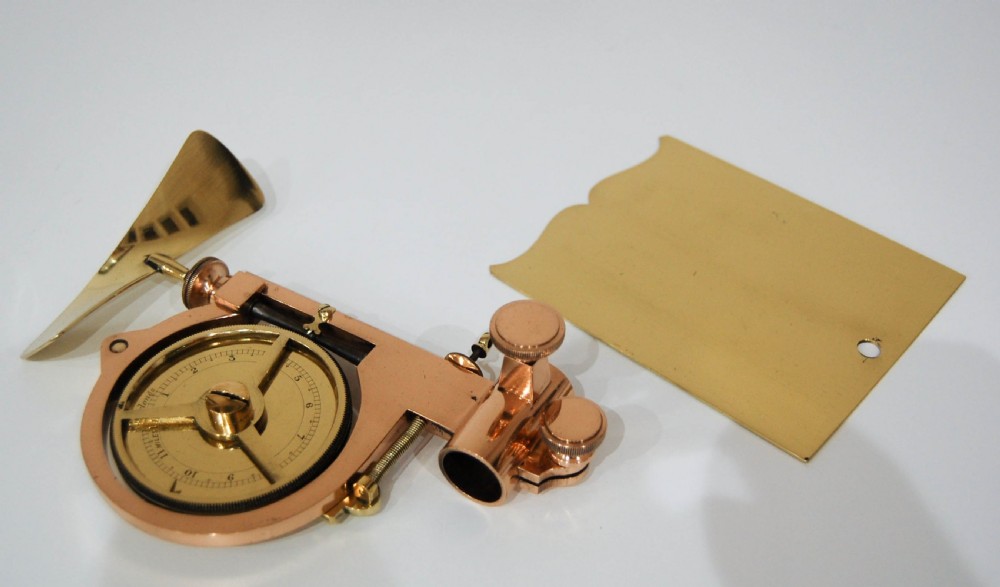
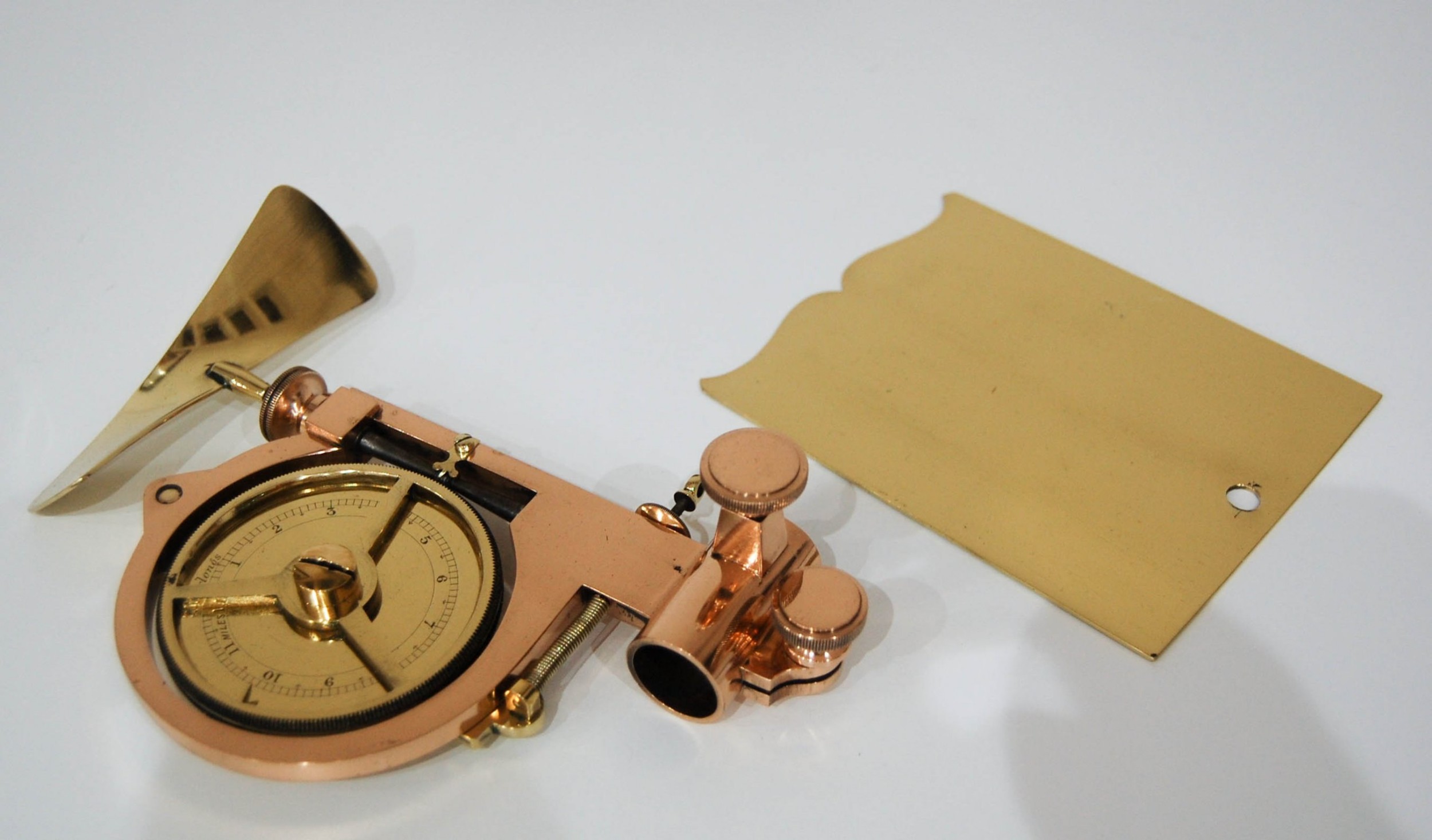
Saxton Water Current Meter Owned by Sir William Robertson Copland