10,621  PAGES BROWSED TODAY PAGES TODAY 51 ANTIQUES UPLOADED TODAYNEW ARRIVALS
51 ITEMS ADDED TODAY
Sort Order
Items Per Page
Browse Categories
Sort order
Items per page
ID #SA653504
SOLD
Email
Save
William IV Marine Night Glass by George Stebbing Optician to the Royal Yacht Squadron
Jason Clarke Antiques
sold SA653504
Sorry, but this item has been sold.
Jason Clarke Antiques

Jason Clarke Antiques

Sellingantiques Verified Since Jul 2015
View Dealers Stock Page
Id #SA653504
PDF SHARE
SAVE

William IV Marine Night Glass by George Stebbing Optician to the Royal Yacht Squadron

19th century
Description

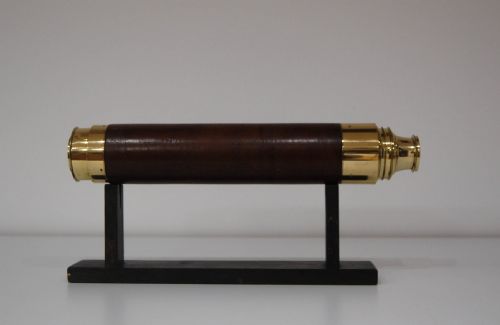
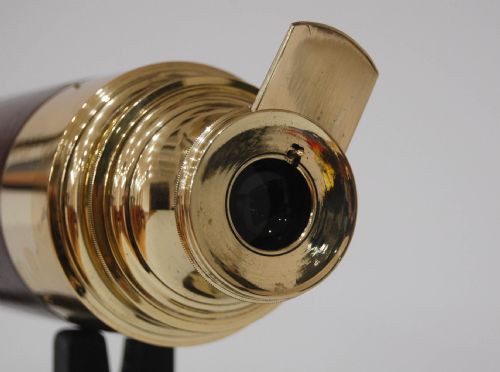
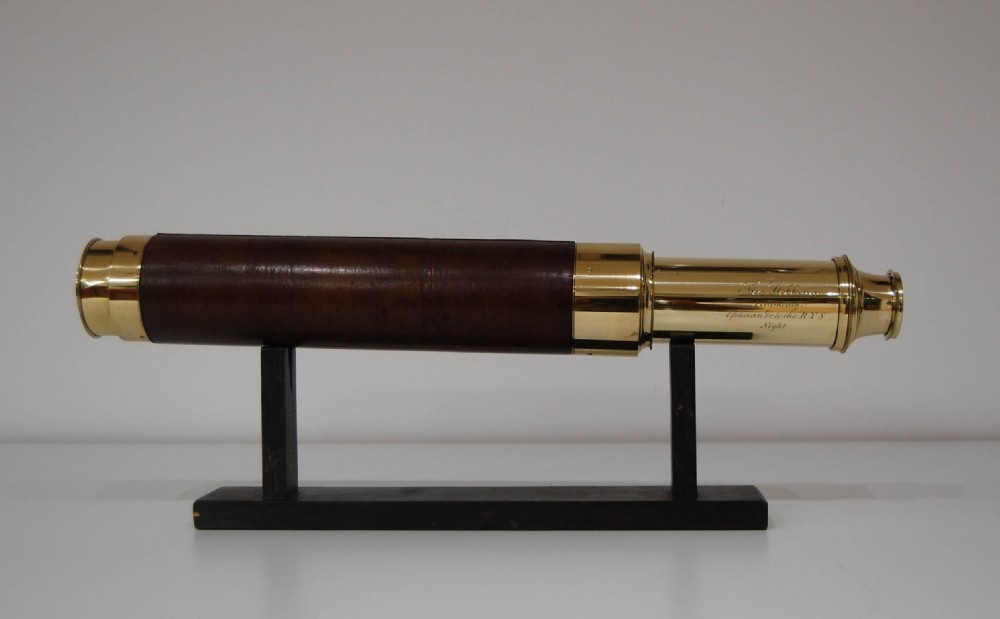
For sale, a William IV period marine night telescope or night glass by George Stebbing of Portsmouth. Optician to the Royal Yacht Squadron.

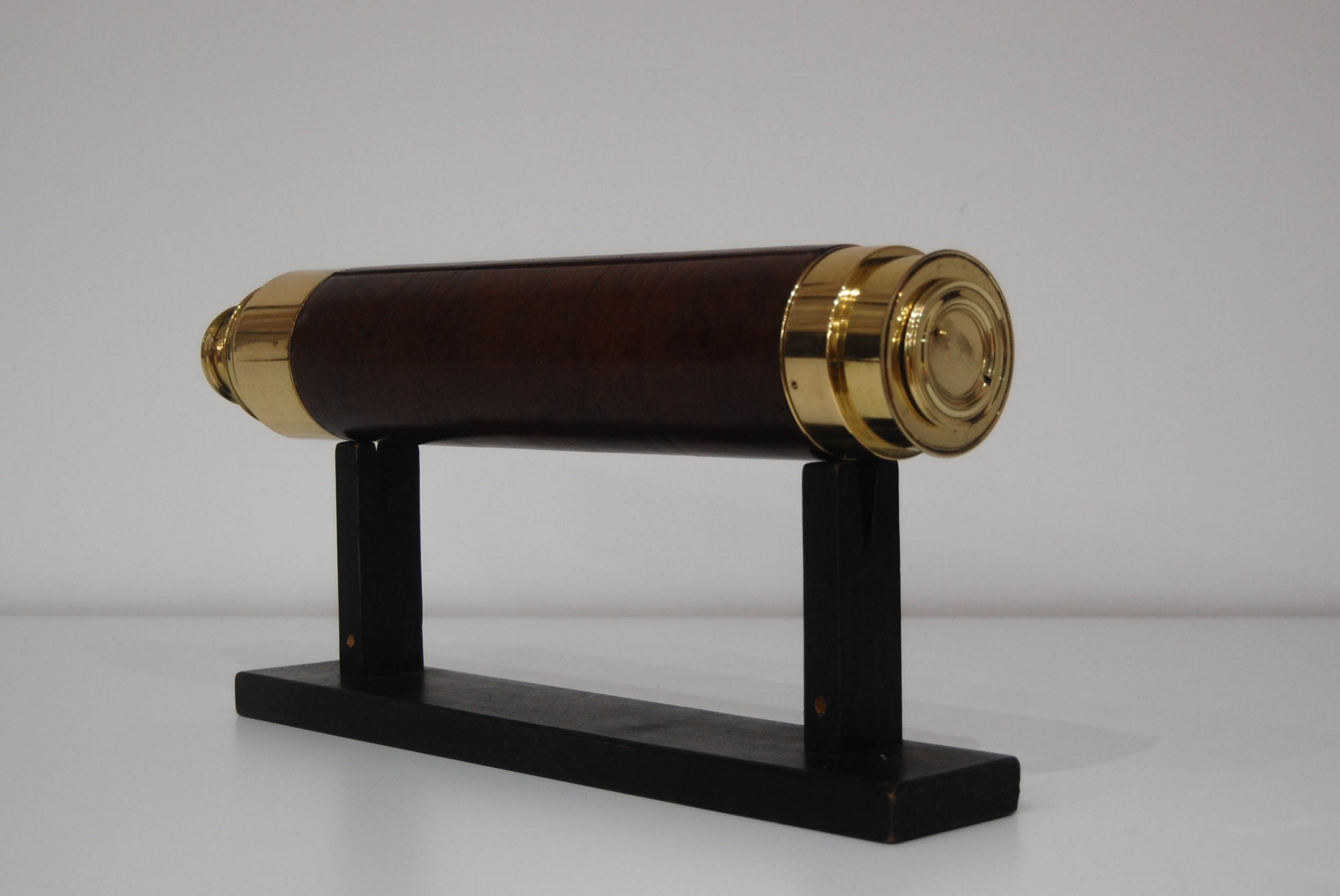
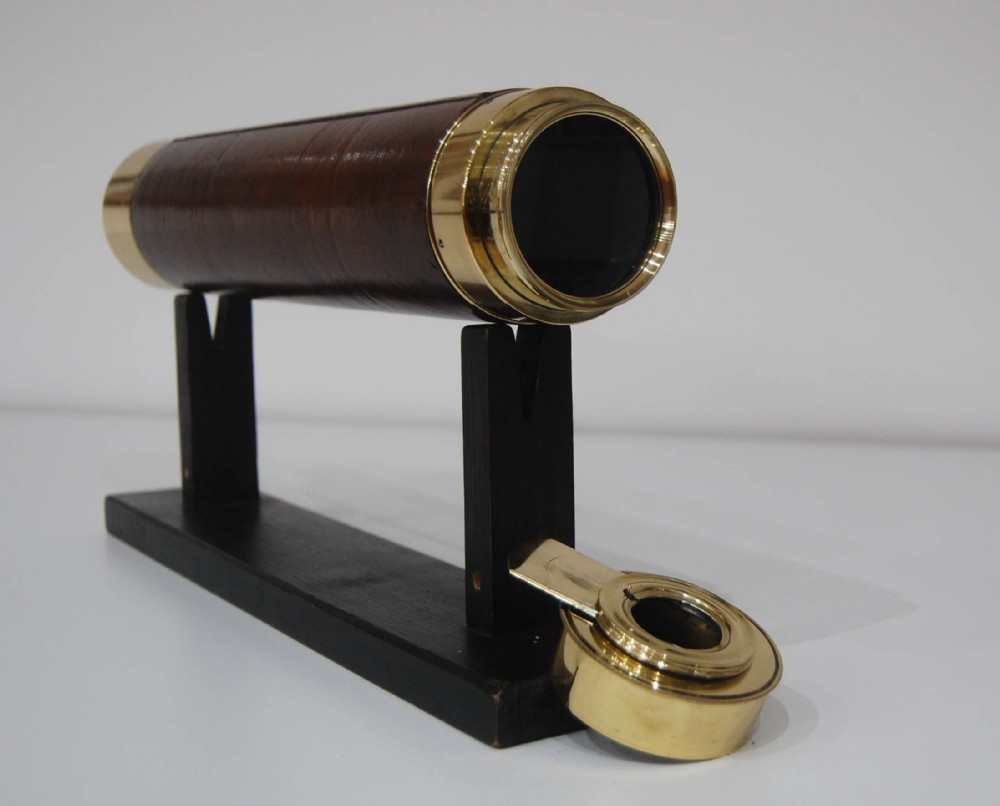
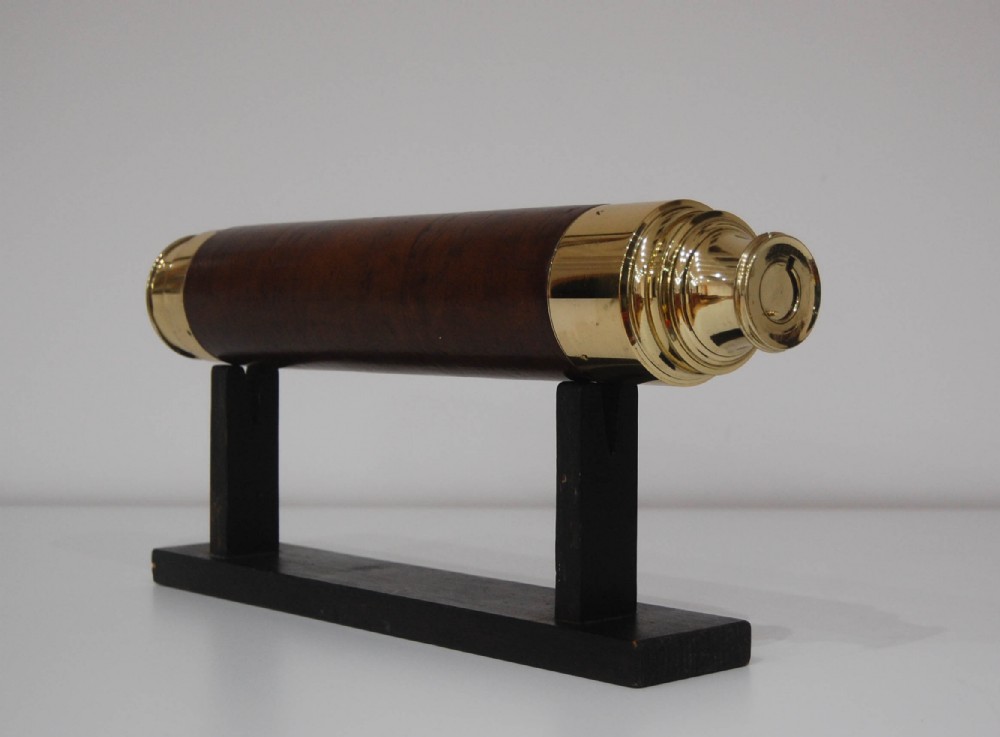
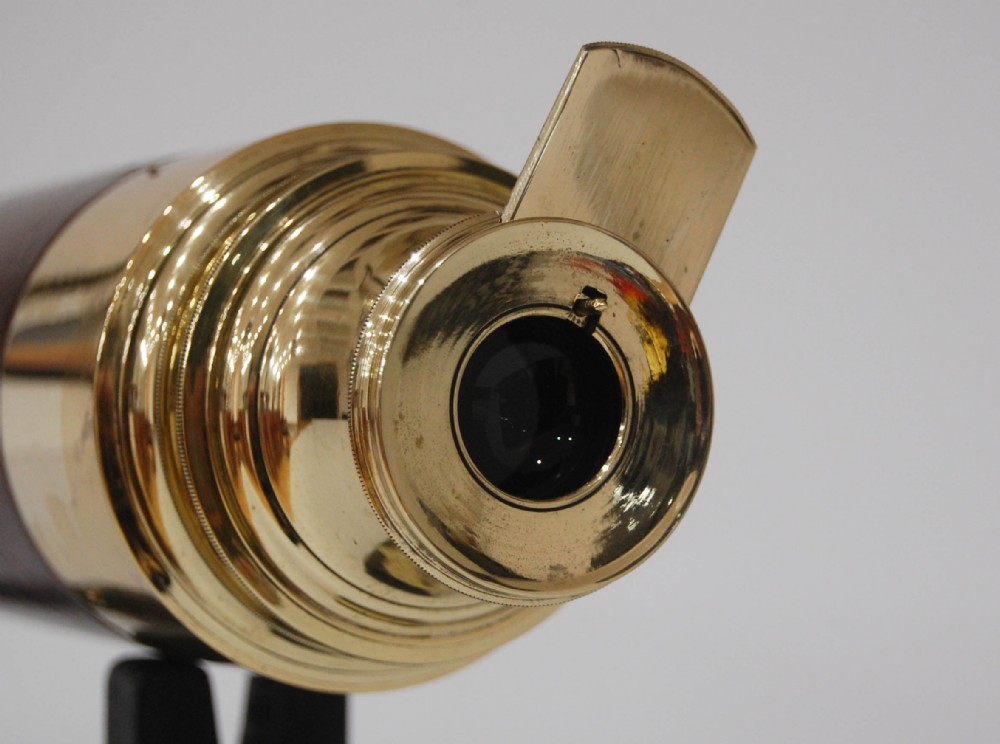
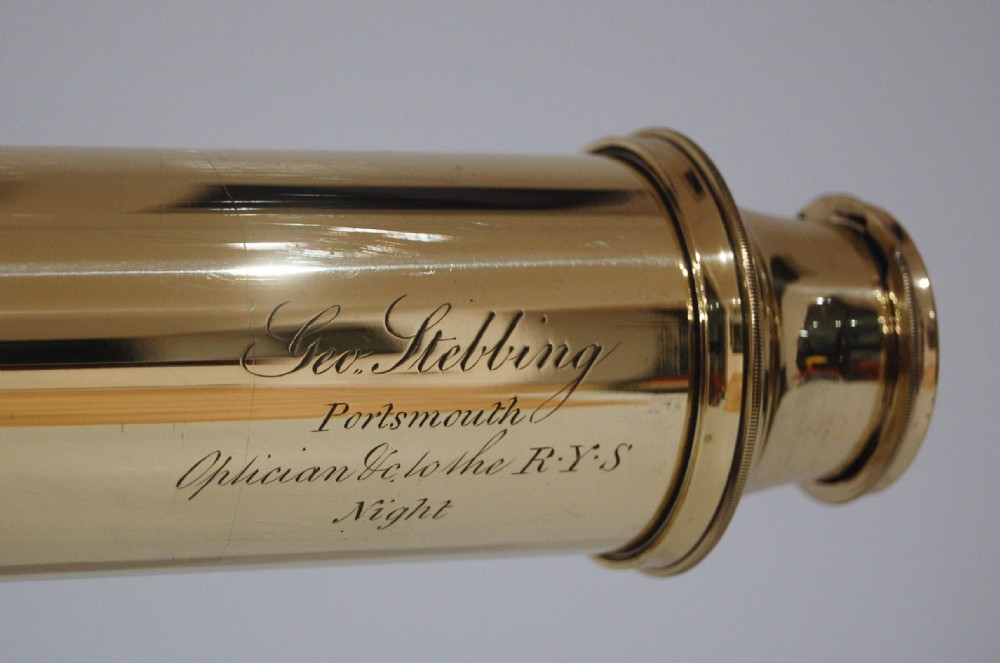
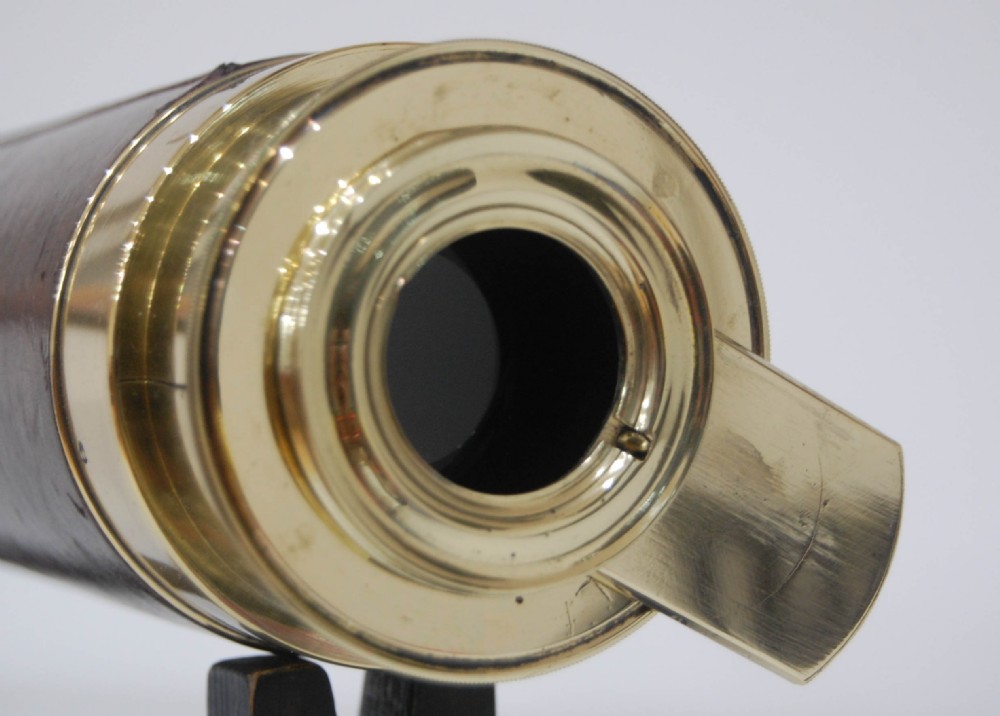
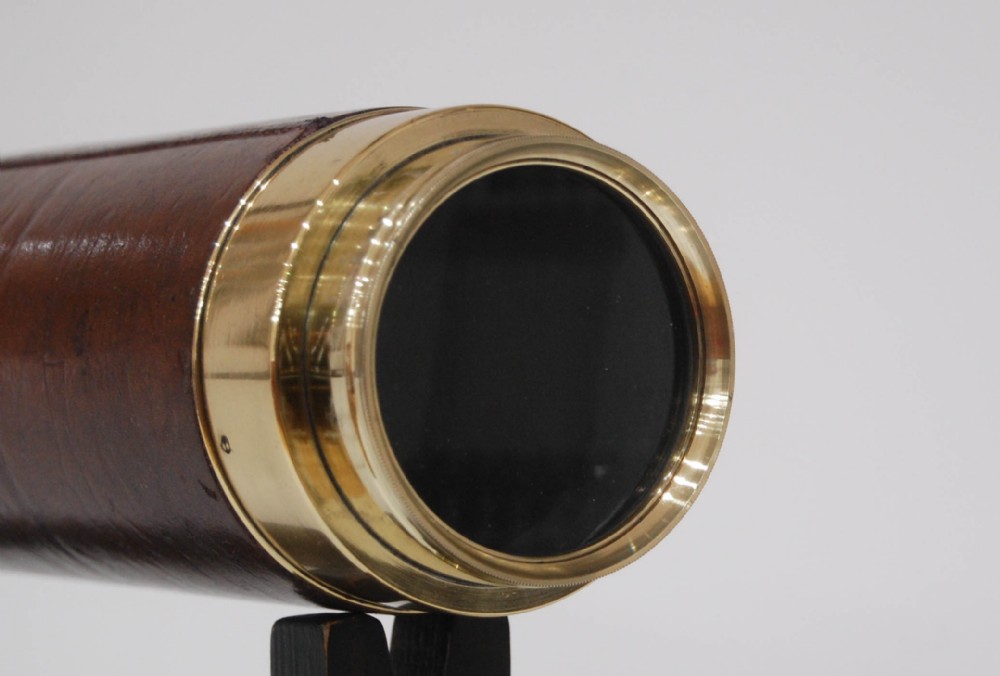
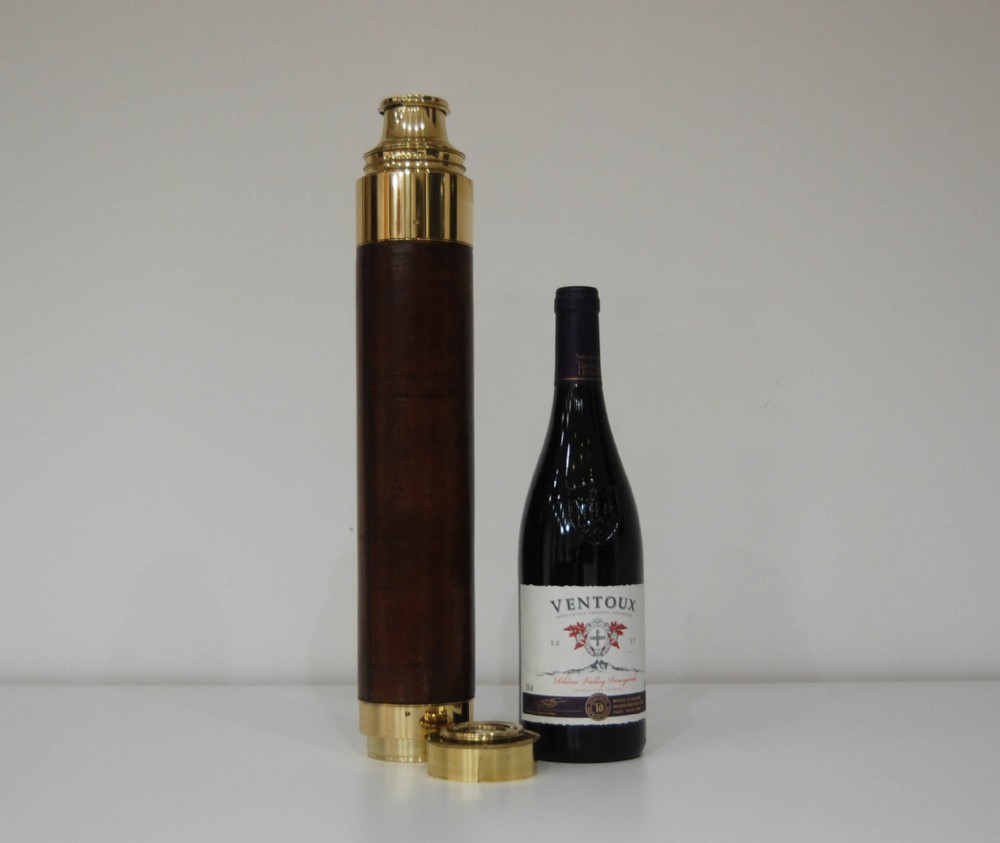
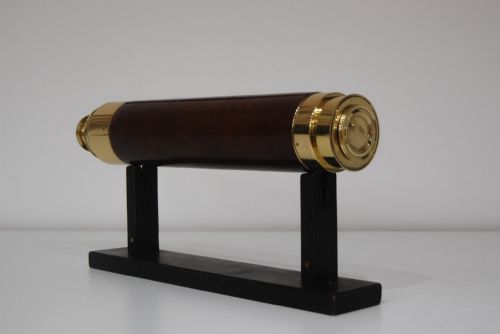
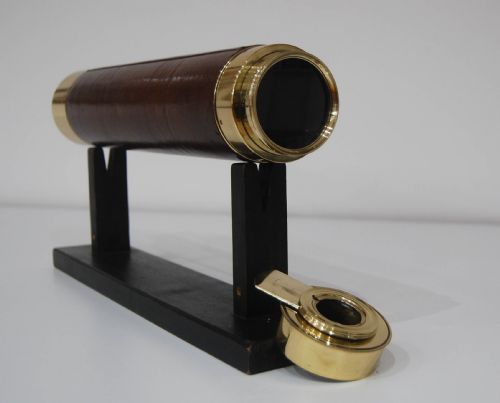
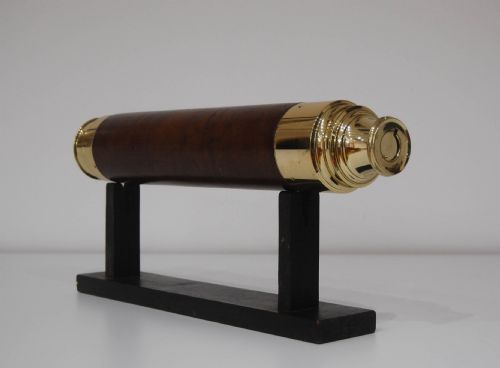
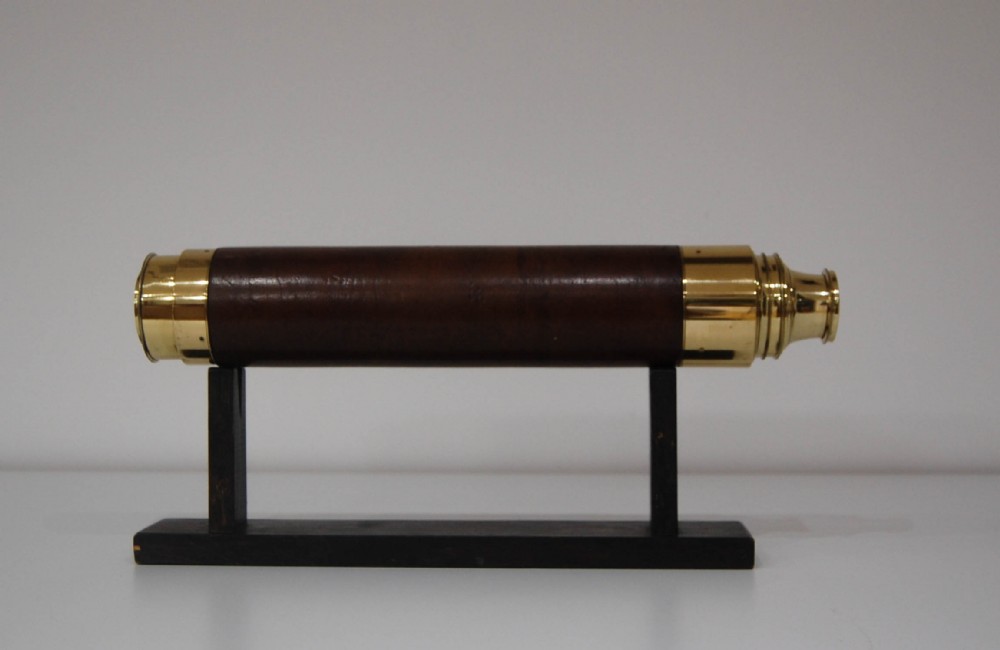
This rare type of maritime or navigational telescope was designed specifically for night observations or for poor light conditions and its size and lens structure was produced accordingly. The two and a quarter inch objective lens would have been conceived to allow for as much natural light to enter the large 3 inch diameter barrel of the telescope and the eyepiece and single draw tube contains a further two lenses. The combination of lenses presents an intentionally inverted image as an additional erector lens (making it a refracting telescope) would also reduce the overall power of the instrument and thus defeat the purpose. The leather covered barrel measures 43cms when closed and 55cms when drawn to its full extent. The draw is engraved to “George Stebbing, Portsmouth, Optician etc to the RYS” and the word, “Night” to denote its use. It also retains its original dust slide to the eyepiece and objective lens cap with further dust slide which when open creates a 1 inch aperture for the main objective.
A near contemporary publication of 1828, “The Panorama of Science & Art” by James Smith describes the night glass in the following way:

“The telescope called a night glass is nothing more than the common astronomical telescope with tubes, and made of a short length, with a small magnifying power. Its length is usually about two feet, and it is generally made to magnify from six to ten times. It is much used by navigators at night, for the purposes of discovering objects that are not very distant, but which cannot otherwise be seen for want of sufficient light, such as vessels, coast, rocks etc. From the smallness of its magnifying power, and the obscurity of the objects upon which it is employed, it admits of large glasses being used, and consequently has an extensive and well enlightened field of view”.
George Stebbing was born in Holborn in 1775 and moved to Portsmouth at around the turn of the century where records show him becoming active as an instrument maker from around 1805. Apprenticed in London to the famous Robert Brettell Bate, he was presumably enticed to Portsmouth by the volume of naval and army officers that would have been frequenting the city during the height of the Napoleonic wars.
Stebbing had a wife Mary and by 1815, she had given birth to eight children, most notably the first five sons, George James, Richard, Frederick, Joseph and Horatio, all of whom followed in their Father’s footsteps. He kept strong ties with London and joined the Vintners Livery Company in 1807, became a Freeman of the City of London in 1816 and maintained links with his former Master by acting as a sub-agent for Admiralty charts under Bate.
Trading from various addresses in the city such as Broad Street, Common Hard, and latterly the High Street, Stebbing grew his reputation for quality manufacture and is known to have entered patents in July 1810 for “actions of land & sea compasses” and in December 1826 for “apparatus for ascertaining the trim and stability of ships or other vessels”. In 1812 he undertook numerous experiments with Matthew Flinders and the Rev, James Inman (Professor of Mathematics at the Royal Naval College) and in 1818 he produced a prototype ship’s binnacle which was tested by the Navy and later adopted as a standard.
Clearly an outstanding maker, Stebbing received a Royal Appointment from the Duchess of Kent and became Optician to the Royal Yacht Squadron as well as serving the Admiralty.

His son’s also had similarly successful careers with his eldest son George James being employed on the famous HMS Beagle expedition as instrument maker and librarian alongside Charles Darwin. On his return, he became a supplier in his own right to the newly founded M

Physical Dimensions
Height
43cm (16.93")
Width
8cm (3.15")
Depth
8cm (3.15")
Declaration

Jason Clarke Antiques has dated this piece to the 1800s.

Reference Numbers
Sellingantiques Reference
SA653504
Description
For sale, a William IV period marine night telescope or night glass by George Stebbing of Portsmouth. Optician to the Royal Yacht Squadron.
This rare type of maritime or navigational telescope was designed specifically for night observations or for poor light conditions and its size and lens structure was produced accordingly.
Jason Clarke Antiques

The two and a quarter inch objective lens would have been conceived to allow for as much natural light to enter the large 3 inch diameter barrel of the telescope and the eyepiece and single draw tube contains a further two lenses. The combination of lenses presents an intentionally inverted image as an additional erector lens (making it a refracting telescope) would also reduce the overall power of the instrument and thus defeat the purpose. The leather covered barrel measures 43cms when closed and 55cms when drawn to its full extent. The draw is engraved to “George Stebbing, Portsmouth, Optician etc to the RYS” and the word, “Night” to denote its use. It also retains its original dust slide to the eyepiece and objective lens cap with further dust slide which when open creates a 1 inch aperture for the main objective.

fig 1. William IV Marine Night Glass by George Stebbing Optician to The Royal Yacht Squadron
fig 1. William IV Marine Night Glass by George Stebbing Optician to the Royal Yacht Squadron

A near contemporary publication of 1828, “The Panorama of Science & Art” by James Smith describes the night glass in the following way:

“The telescope called a night glass is nothing more than the common astronomical telescope with tubes, and made of a short length, with a small magnifying power. Its length is usually about two feet, and it is generally made to magnify from six to ten times. It is much used by navigators at night, for the purposes of discovering objects that are not very distant, but which cannot otherwise be seen for want of sufficient light, such as vessels, coast, rocks etc. From the smallness of its magnifying power, and the obscurity of the objects upon which it is employed, it admits of large glasses being used, and consequently has an extensive and well enlightened field of view”.

fig 2. William IV Marine Night Glass by George Stebbing Optician to The Royal Yacht Squadron
fig 2. William IV Marine Night Glass by George Stebbing Optician to the Royal Yacht Squadron

George Stebbing was born in Holborn in 1775 and moved to Portsmouth at around the turn of the century where records show him becoming active as an instrument maker from around 1805. Apprenticed in London to the famous Robert Brettell Bate, he was presumably enticed to Portsmouth by the volume of naval and army officers that would have been frequenting the city during the height of the Napoleonic wars.

fig 3. William IV Marine Night Glass by George Stebbing Optician to The Royal Yacht Squadron
fig 3. William IV Marine Night Glass by George Stebbing Optician to the Royal Yacht Squadron

Stebbing had a wife Mary and by 1815, she had given birth to eight children, most notably the first five sons, George James, Richard, Frederick, Joseph and Horatio, all of whom followed in their Father’s footsteps. He kept strong ties with London and joined the Vintners Livery Company in 1807, became a Freeman of the City of London in 1816 and maintained links with his former Master by acting as a sub-agent for Admiralty charts under Bate.

fig 4. William IV Marine Night Glass by George Stebbing Optician to The Royal Yacht Squadron
fig 4. William IV Marine Night Glass by George Stebbing Optician to the Royal Yacht Squadron

Trading from various addresses in the city such as Broad Street, Common Hard, and latterly the High Street, Stebbing grew his reputation for quality manufacture and is known to have entered patents in July 1810 for “actions of land & sea compasses” and in December 1826 for “apparatus for ascertaining the trim and stability of ships or other vessels”. In 1812 he undertook numerous experiments with Matthew Flinders and the Rev, James Inman (Professor of Mathematics at the Royal Naval College) and in 1818 he produced a prototype ship’s binnacle which was tested by the Navy and later adopted as a standard.

fig 5. William IV Marine Night Glass by George Stebbing Optician to The Royal Yacht Squadron
fig 5. William IV Marine Night Glass by George Stebbing Optician to the Royal Yacht Squadron

Clearly an outstanding maker, Stebbing received a Royal Appointment from the Duchess of Kent and became Optician to the Royal Yacht Squadron as well as serving the Admiralty.

His son’s also had similarly successful careers with his eldest son George James being employed on the famous HMS Beagle expedition as instrument maker and librarian alongside Charles Darwin. On his return, he became a supplier in his own right to the newly founded M

Height
43cm (16.93")
Width
8cm (3.15")
Depth
8cm (3.15")
Date of Manufacture

Jason Clarke Antiques has dated this piece to the 1800s.

Reference Numbers
Sellingantiques Ref
SA653504
Jason Clarke Antiques
Sellingantiques verified Since Jul 2015
Dealer Profile

You can view the stock and full dealer information on the Jason Clarke Antiques Profile Page
PDF SHARE
SAVE
William IV Marine Night Glass by George Stebbing Optician to The Royal Yacht Squadron
1 / 10
Archive I William IV Marine Night Glass by George Stebbing Optician to The Royal Yacht Squadron

William IV Marine Night Glass by George Stebbing Optician to the Royal Yacht Squadron
Archive II William IV Marine Night Glass by George Stebbing Optician to The Royal Yacht Squadron View II
Archive III William IV Marine Night Glass by George Stebbing Optician to The Royal Yacht Squadron View III
Archive IV William IV Marine Night Glass by George Stebbing Optician to The Royal Yacht Squadron View IV
Archive V William IV Marine Night Glass by George Stebbing Optician to The Royal Yacht Squadron View V
Archive VI William IV Marine Night Glass by George Stebbing Optician to The Royal Yacht Squadron View VI
Archive VII William IV Marine Night Glass by George Stebbing Optician to The Royal Yacht Squadron View VII
Archive VIII William IV Marine Night Glass by George Stebbing Optician to The Royal Yacht Squadron View VIII
Archive IX William IV Marine Night Glass by George Stebbing Optician to The Royal Yacht Squadron View IX
Archive X William IV Marine Night Glass by George Stebbing Optician to The Royal Yacht Squadron View X
Enlarged Archival View
Telephone 07815 046645
Location
Newbury
Berkshire
United Kingdom
Verified Since Jul 2015
Items For Sale 80
Items Sold 607
Jason Clarke Antiques
Verified Since Jul 2015
View Dealer Info
Location: Newbury, Berkshire, United Kingdom
Verified
Jul 2015
For Sale
80
Sold
607
William IV Marine Night Glass by George Stebbing Optician to The Royal Yacht Squadron
Ref: SA653504
William IV Marine Night Glass by George Stebbing Optician to The Royal Yacht Squadron
Detail View 1
Detail View 2
Detail View 3
Detail View 4
Detail View 5
Detail View 6
Detail View 7
Detail View 8
Detail View 9
Archival Detail
Every single antique dealer on our platform is individually approved by our internal team. We verify their professional trade history, ethical standards, and photographic quality to ensure a secure, high-standard buying environment. Upon joining, every dealer agrees to a strict 9-point code of conduct. While issues can occasionally arise, our dealers typically resolve them swiftly and directly with the buyer. In fact, since our founding in 2002, Sellingantiques has only had to step in to help resolve an issue on roughly five occasions—a true testament to the quality of our dealers and their dedication to your happiness.
Our dealers are highly experienced in packing and shipping fragile, high-value antiques. Because you are in direct contact with the dealer, you will be able to easily go through all available shipping and insurance options together to ensure your item arrives safely.
Antiques are the ultimate green purchase. By choosing historical pieces over newly manufactured goods, you completely eliminate the carbon footprint of modern mass production while preserving exceptional, timeless craftsmanship.
items
Add keywords to the filter
Price
£100
£250000
Era
Movements
Material
Origin
Stock Location
Freshness
Online Payments
Categories