47,701  PAGES BROWSED TODAY PAGES TODAY 117 ANTIQUES UPLOADED TODAYNEW ARRIVALS
117 ITEMS ADDED TODAY
Sort Order
Items Per Page
Browse Categories
Sort order
Items per page
ID #SA647029
SOLD
Email
Save
French Wet Cell Electrotherapy Machine by Charles Chardin of Paris
Jason Clarke Antiques
sold SA647029
Sorry, but this item has been sold.
Jason Clarke Antiques

Jason Clarke Antiques

Sellingantiques Verified Since Jul 2015
View Dealers Stock Page
Id #SA647029
PDF SHARE
SAVE

French Wet Cell Electrotherapy Machine by Charles Chardin of Paris

19th century
Description

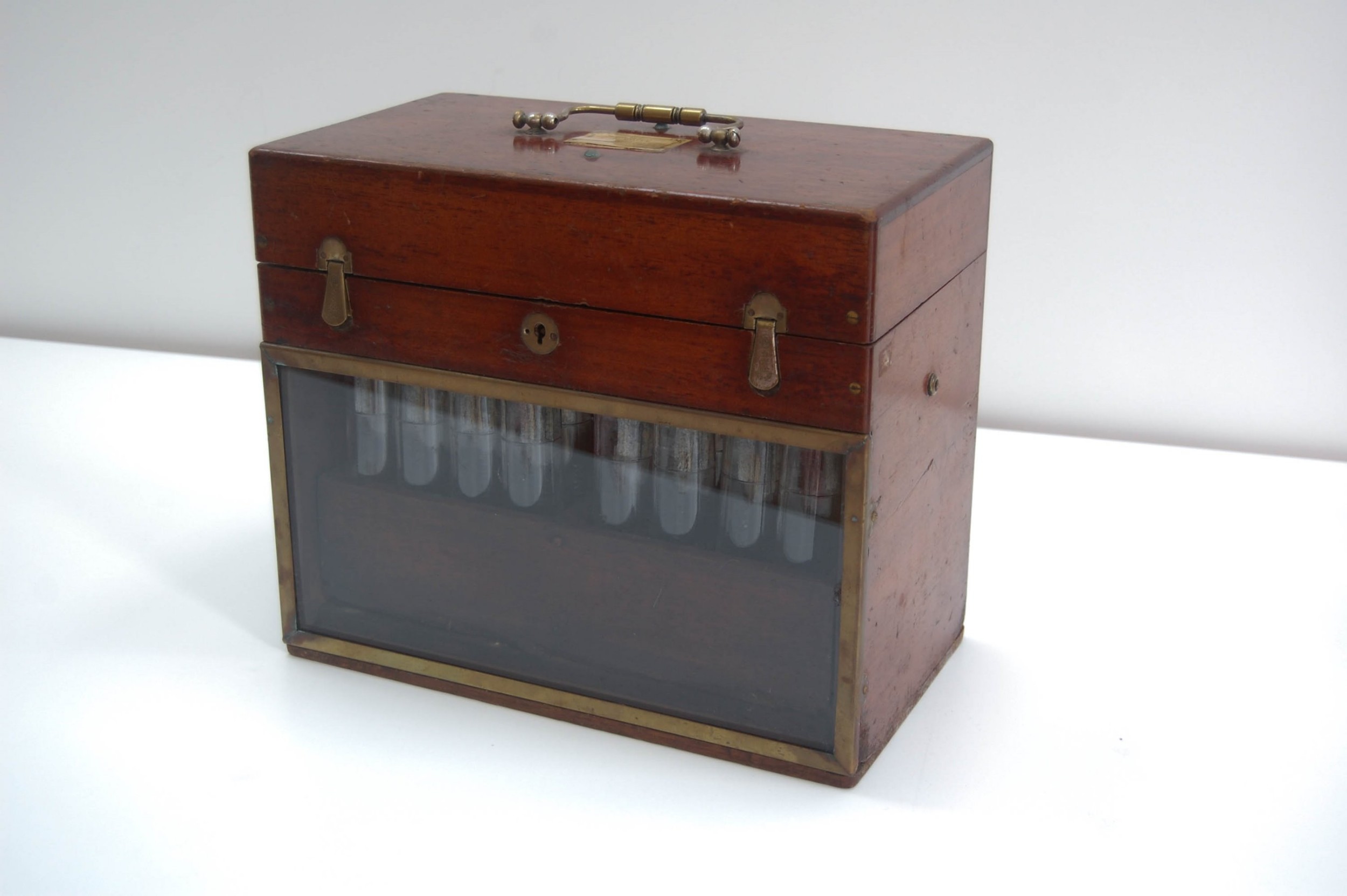
For sale, a late nineteenth century wet cell electrotherapy machine by Charles Chardin of Paris.

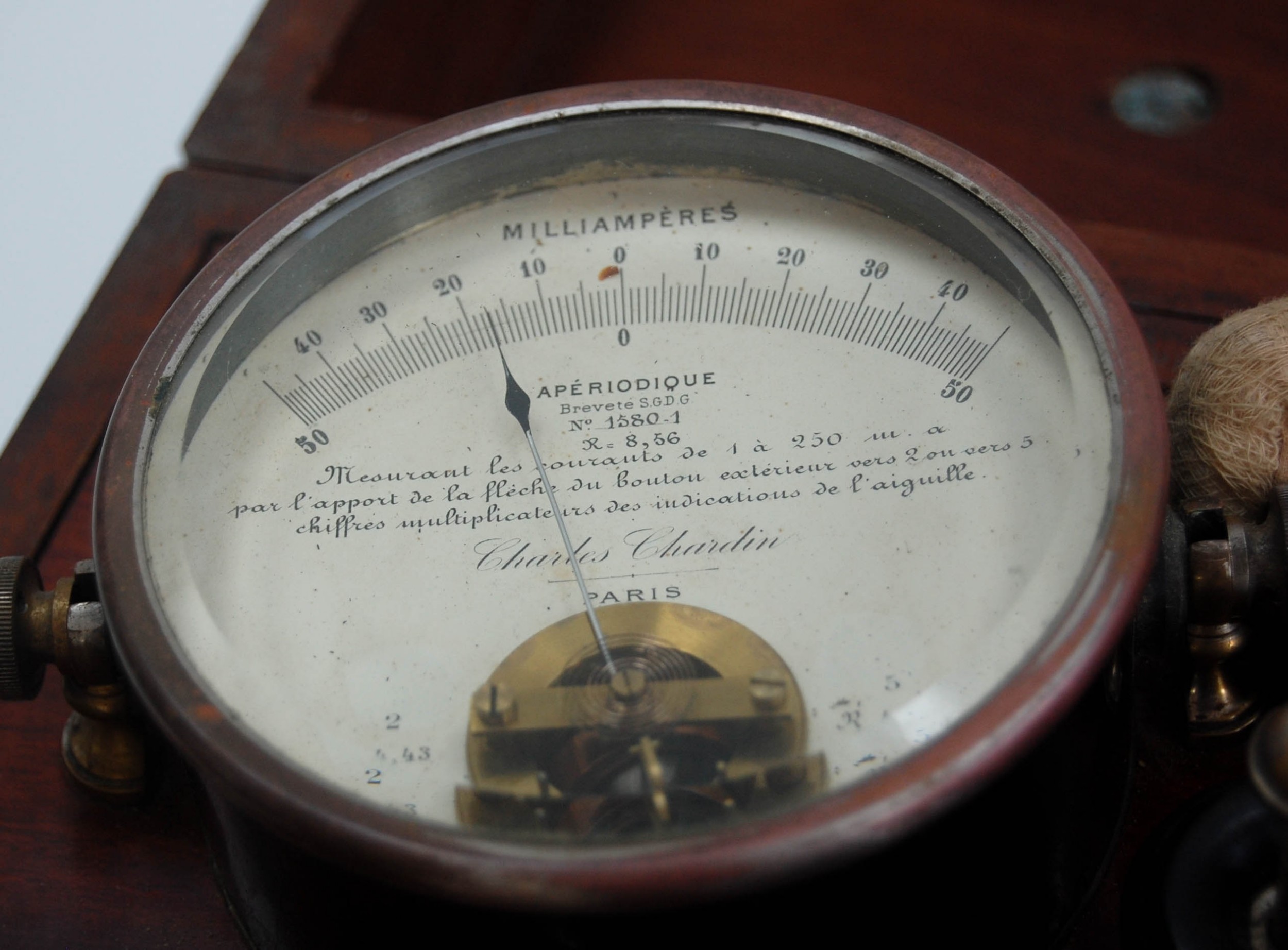
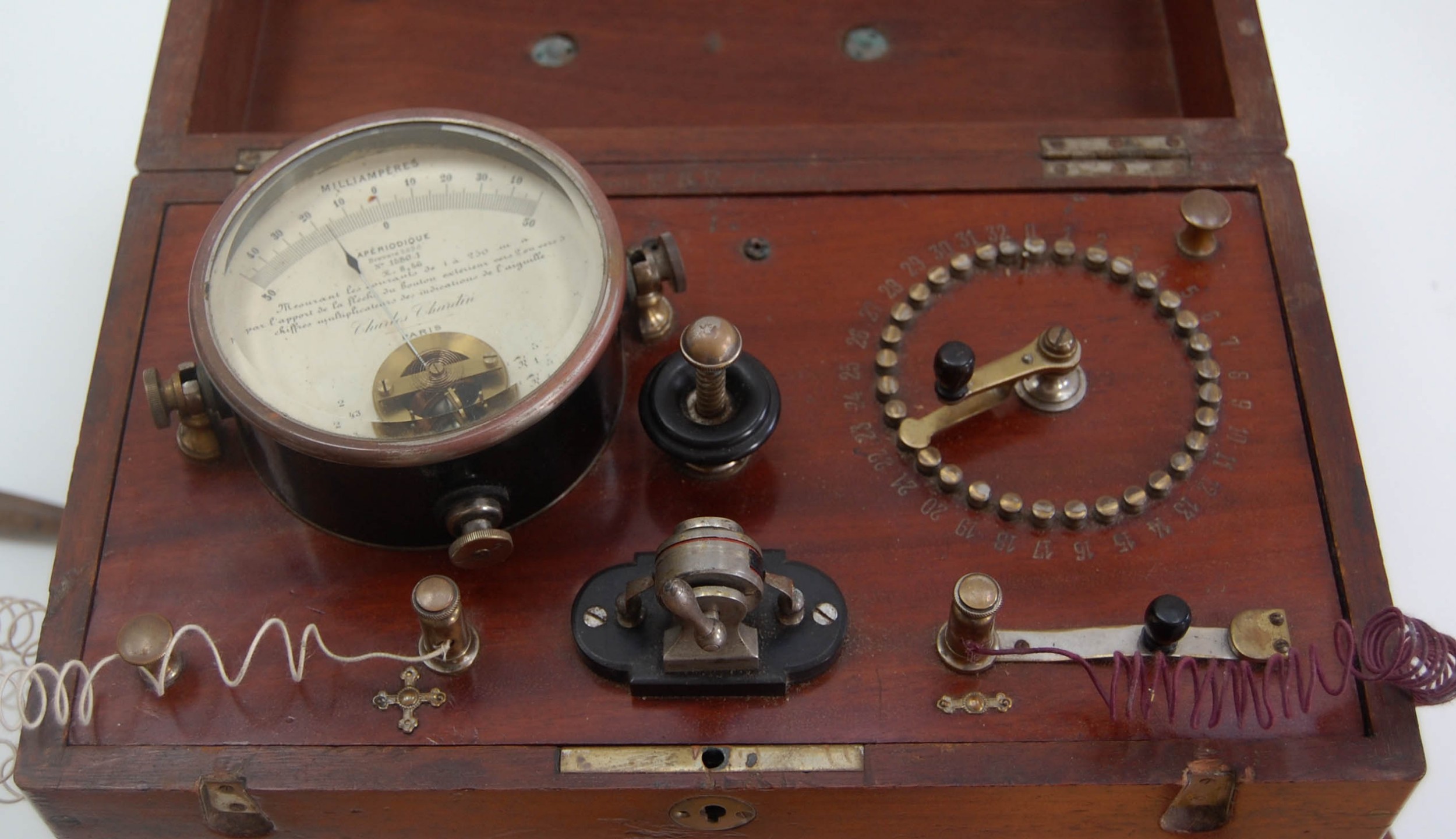
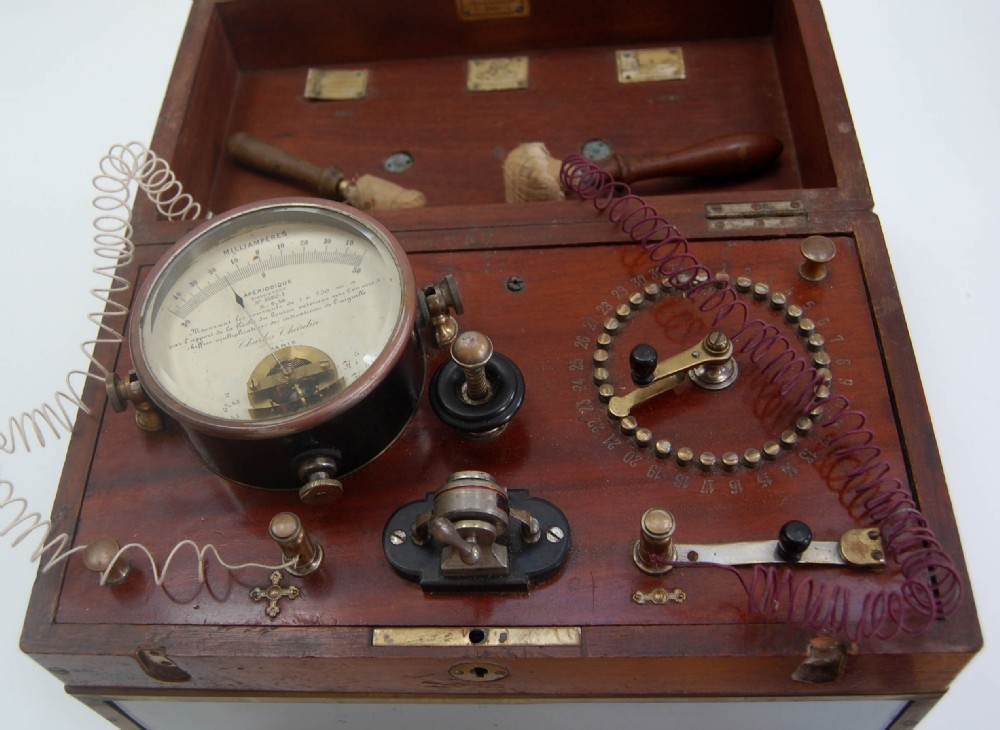
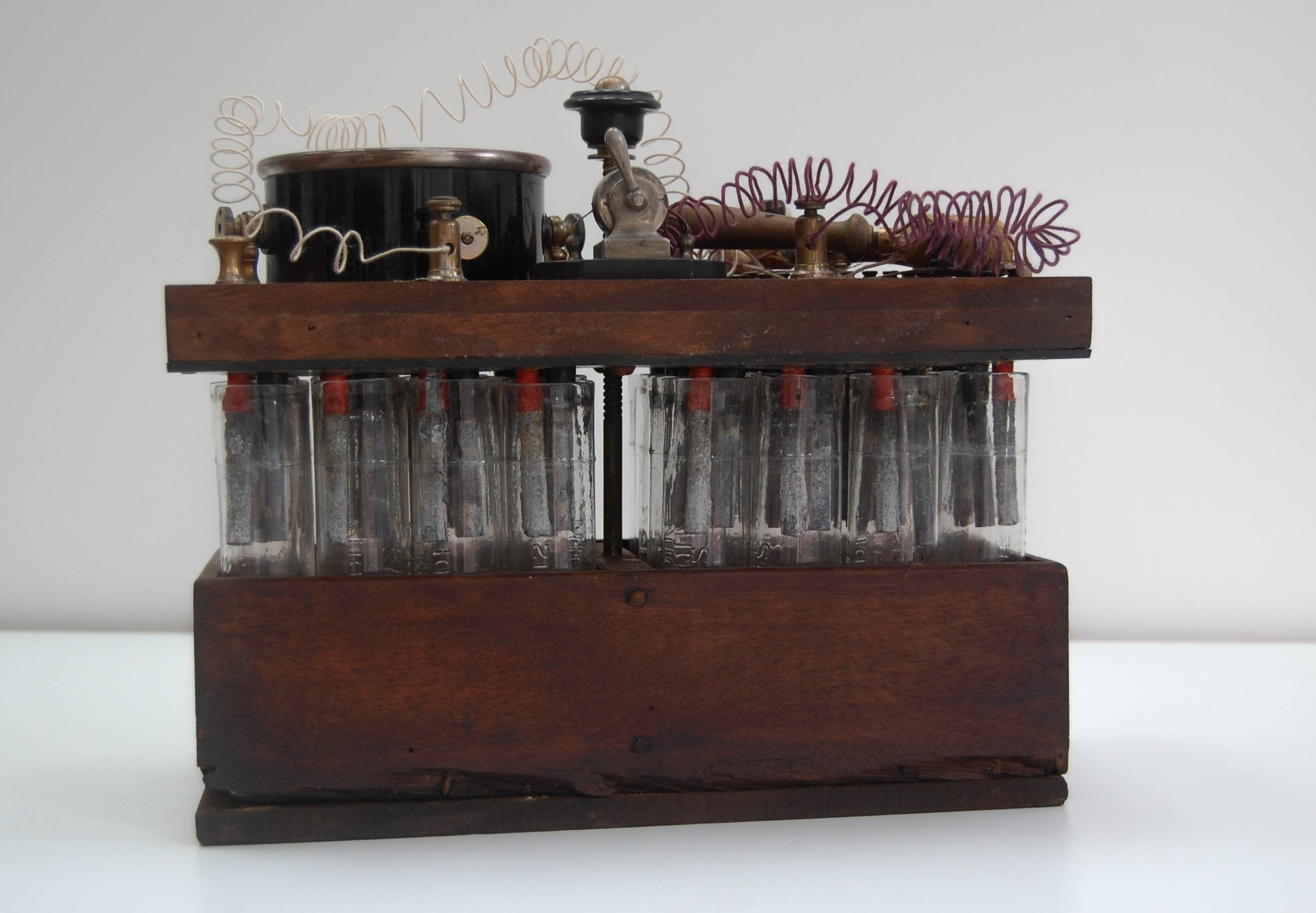
Contained with a mahogany box, this interesting machine consists of a dial measuring milliamperes, signed to Charles Chardin, Paris, an on/off lever and a further dial which controls the resistance of the current through the two electrodes when applied to the patient. A screw threaded rod is placed at the centre of the console which when turned, raises and lowers a set of thirty two individual glass cylinders (still intact and marked to Chardin) which are attached via the threaded shaft and are housed within a separate wooden base in the box below.

The lifting of the glass cylinder box brings a chemical solution which would have been present in the cylinders and raises them to form contact with a set of thirty two zinc anodes which are attached to the underside of the console itself. The action of bringing the two together would create a chemical reaction which would culminate with the creation of an electrical current, the strength of which could be adjusted by the resistor.

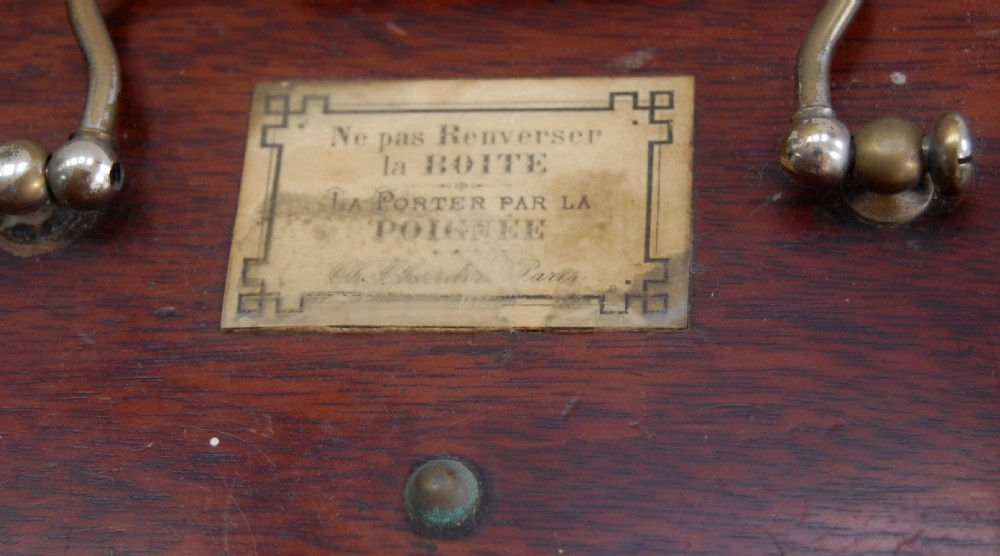
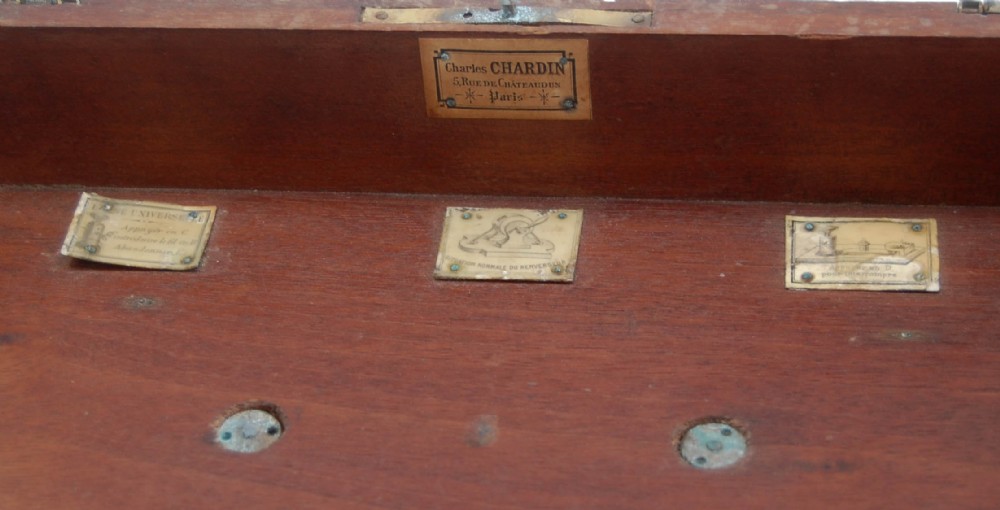
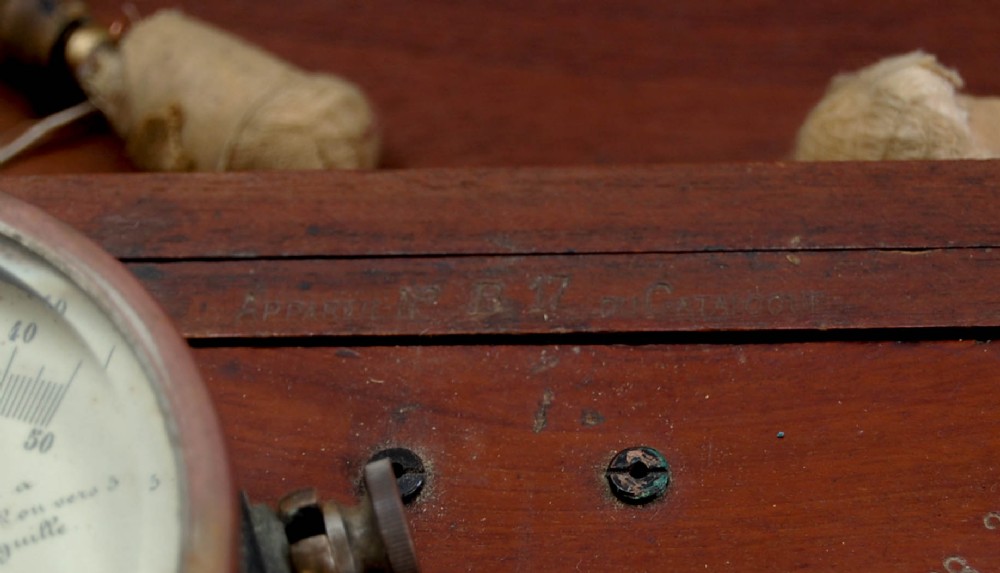
The box has four engraved plaques to the inner part of the lid which advertise Chardin’s wares and the rim of the case is also stamped, “Appereil (apparatus) No B17 du catalogue” which denotes the early model number. His first model was the A17 and this popular model went through a number of iterations. The B17 is a variant of his original design.

Charles Chardin was an inventor of a form of electrotherapy called ‘elector kinetic vascular’ therapy which was considered to act upon the circulation of blood by virtue of the application of pressure on the various parts of the body. This was presumably achieved by the response of the body by the application of electricity to muscular tissue.

The difference in Chardin’s approach to electrotherapy during the period was his preference for applying weak currents to the body rather than the shock treatment that had become prevalent since the 1850’s. He is quoted as saying:

“The electric current which commands our organism is so weak that it escapes our investigations, so it is folly to come to its aid with powerful currents.”

Convinced of his methods, Chardin warned against the use of surgery and used Galvini’s eighteenth century experiments on frog muscles to bolster his argument.

As far-fetched as it may seem, Chardin’s machines gained huge popularity and were still in use during The First World War. His direction for use was the application of one electrode to the head with the other applied to the part of the body which was considered to be the affected area for treatment. Once applied, these electrodes should remain in place on the patient for up to 6 to 10 hours per night and would provide cures for an endless list of ailments: paralysis, epilepsy, muscle exertion, flu, asthma, fevers period pains tumours, cancers, gangrene, anaemia and even flatulence! With previous experience of shock treatment, it is likely that the idea of painless electrotherapy was part of its allure to the experienced victim!

Chardin’s instruments were originally developed with wet cell batteries and later moved on to dry cell, making this an early example of his very successful quackery.

Circa 1880.

Physical Dimensions
Height
28cm (11.02")
Width
33cm (12.99")
Depth
19cm (7.48")
Declaration

Jason Clarke Antiques has dated this piece to the 1880s.

Reference Numbers
Sellingantiques Reference
SA647029
Description
For sale, a late nineteenth century wet cell electrotherapy machine by Charles Chardin of Paris.

Contained with a mahogany box, this interesting machine consists of a dial measuring milliamperes, signed to Charles Chardin, Paris, an on/off lever and a further dial which controls the resistance of the current through the two electrodes when applied to the patient. A screw threaded rod is placed at the centre of the console which when turned, raises and lowers a set of thirty two individual glass cylinders (still intact and marked to Chardin) which are attached via the threaded shaft and are housed within a separate wooden base in the box below.

The lifting of the glass cylinder box brings a chemical solution which would have been present in the cylinders and raises them to form contact with a set of thirty two zinc anodes which are attached to the underside of the console itself.
The action of bringing the two together would create a chemical reaction which would culminate with the creation of an electrical current, the strength of which could be adjusted by the resistor.
Jason Clarke Antiques
fig 1. French Wet Cell Electrotherapy Machine by Charles Chardin of Paris

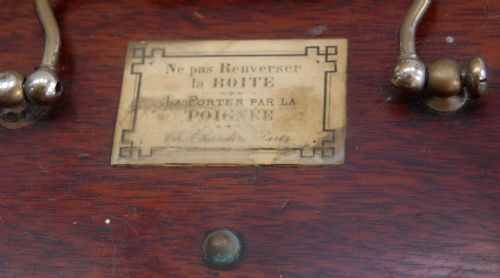
The box has four engraved plaques to the inner part of the lid which advertise Chardin’s wares and the rim of the case is also stamped, “Appereil (apparatus) No B17 du catalogue” which denotes the early model number. His first model was the A17 and this popular model went through a number of iterations. The B17 is a variant of his original design.
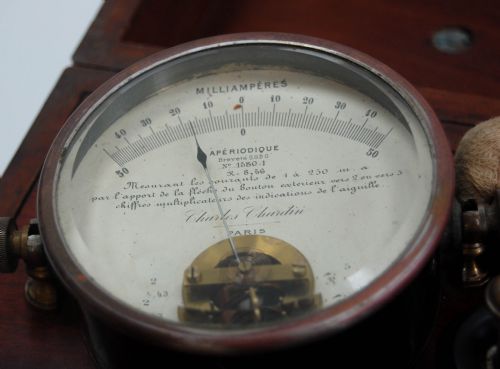
fig 2. French Wet Cell Electrotherapy Machine by Charles Chardin of Paris

Charles Chardin was an inventor of a form of electrotherapy called ‘elector kinetic vascular’ therapy which was considered to act upon the circulation of blood by virtue of the application of pressure on the various parts of the body. This was presumably achieved by the response of the body by the application of electricity to muscular tissue.
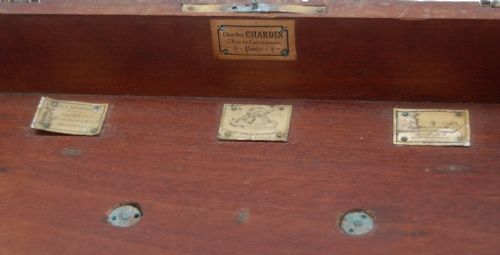
fig 3. French Wet Cell Electrotherapy Machine by Charles Chardin of Paris

The difference in Chardin’s approach to electrotherapy during the period was his preference for applying weak currents to the body rather than the shock treatment that had become prevalent since the 1850’s. He is quoted as saying:
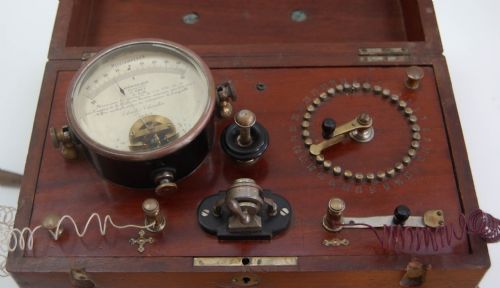
fig 4. French Wet Cell Electrotherapy Machine by Charles Chardin of Paris

“The electric current which commands our organism is so weak that it escapes our investigations, so it is folly to come to its aid with powerful currents.”

Convinced of his methods, Chardin warned against the use of surgery and used Galvini’s eighteenth century experiments on frog muscles to bolster his argument.
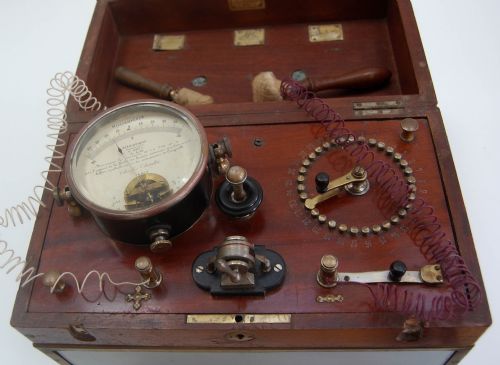
fig 5. French Wet Cell Electrotherapy Machine by Charles Chardin of Paris

As far-fetched as it may seem, Chardin’s machines gained huge popularity and were still in use during The First World War. His direction for use was the application of one electrode to the head with the other applied to the part of the body which was considered to be the affected area for treatment. Once applied, these electrodes should remain in place on the patient for up to 6 to 10 hours per night and would provide cures for an endless list of ailments: paralysis, epilepsy, muscle exertion, flu, asthma, fevers period pains tumours, cancers, gangrene, anaemia and even flatulence! With previous experience of shock treatment, it is likely that the idea of painless electrotherapy was part of its allure to the experienced victim!

Chardin’s instruments were originally developed with wet cell batteries and later moved on to dry cell, making this an early example of his very successful quackery.

Circa 1880.

Height
28cm (11.02")
Width
33cm (12.99")
Depth
19cm (7.48")
Date of Manufacture

Jason Clarke Antiques has dated this piece to the 1880s.

Reference Numbers
Sellingantiques Ref
SA647029
Jason Clarke Antiques
Sellingantiques verified Since Jul 2015
Dealer Profile

You can view the stock and full dealer information on the Jason Clarke Antiques Profile Page
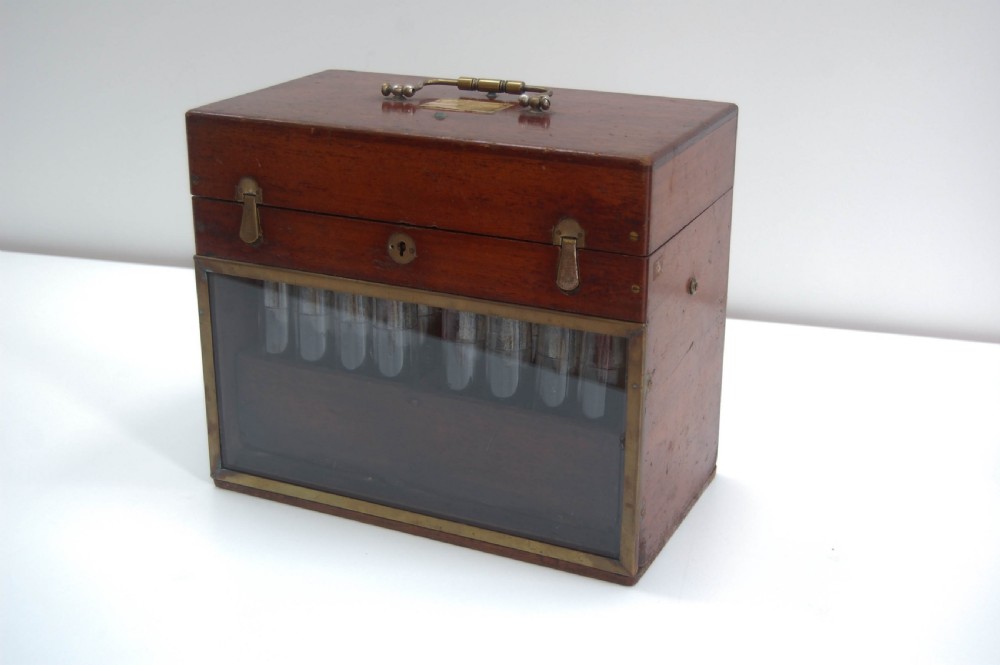
PDF SHARE
SAVE
French Wet Cell Electrotherapy Machine by Charles Chardin of Paris
1 / 8
Archive I French Wet Cell Electrotherapy Machine by Charles Chardin of Paris
French Wet Cell Electrotherapy Machine by Charles Chardin of Paris
Archive II French Wet Cell Electrotherapy Machine by Charles Chardin of Paris View II
Archive III French Wet Cell Electrotherapy Machine by Charles Chardin of Paris View III
Archive IV French Wet Cell Electrotherapy Machine by Charles Chardin of Paris View IV
Archive V French Wet Cell Electrotherapy Machine by Charles Chardin of Paris View V
Archive VI French Wet Cell Electrotherapy Machine by Charles Chardin of Paris View VI
Archive VII French Wet Cell Electrotherapy Machine by Charles Chardin of Paris View VII
Archive VIII French Wet Cell Electrotherapy Machine by Charles Chardin of Paris View VIII
Enlarged Archival View
Telephone 07815 046645
Location
Newbury
Berkshire
United Kingdom
Verified Since Jul 2015
Items For Sale 80
Items Sold 607
Jason Clarke Antiques
Verified Since Jul 2015
View Dealer Info
Location: Newbury, Berkshire, United Kingdom
Verified
Jul 2015
For Sale
80
Sold
607
French Wet Cell Electrotherapy Machine by Charles Chardin of Paris
Ref: SA647029
French Wet Cell Electrotherapy Machine by Charles Chardin of Paris
Detail View 1
Detail View 2
Detail View 3
Detail View 4
Detail View 5
Detail View 6
Detail View 7
Archival Detail
Every single antique dealer on our platform is individually approved by our internal team. We verify their professional trade history, ethical standards, and photographic quality to ensure a secure, high-standard buying environment. Upon joining, every dealer agrees to a strict 9-point code of conduct. While issues can occasionally arise, our dealers typically resolve them swiftly and directly with the buyer. In fact, since our founding in 2002, Sellingantiques has only had to step in to help resolve an issue on roughly five occasions—a true testament to the quality of our dealers and their dedication to your happiness.
Our dealers are highly experienced in packing and shipping fragile, high-value antiques. Because you are in direct contact with the dealer, you will be able to easily go through all available shipping and insurance options together to ensure your item arrives safely.
Antiques are the ultimate green purchase. By choosing historical pieces over newly manufactured goods, you completely eliminate the carbon footprint of modern mass production while preserving exceptional, timeless craftsmanship.
items
Add keywords to the filter
Price
£100
£250000
Era
Movements
Material
Origin
Stock Location
Freshness
Online Payments
Categories