Jason Clarke Antiques has dated this piece to the 1800s.
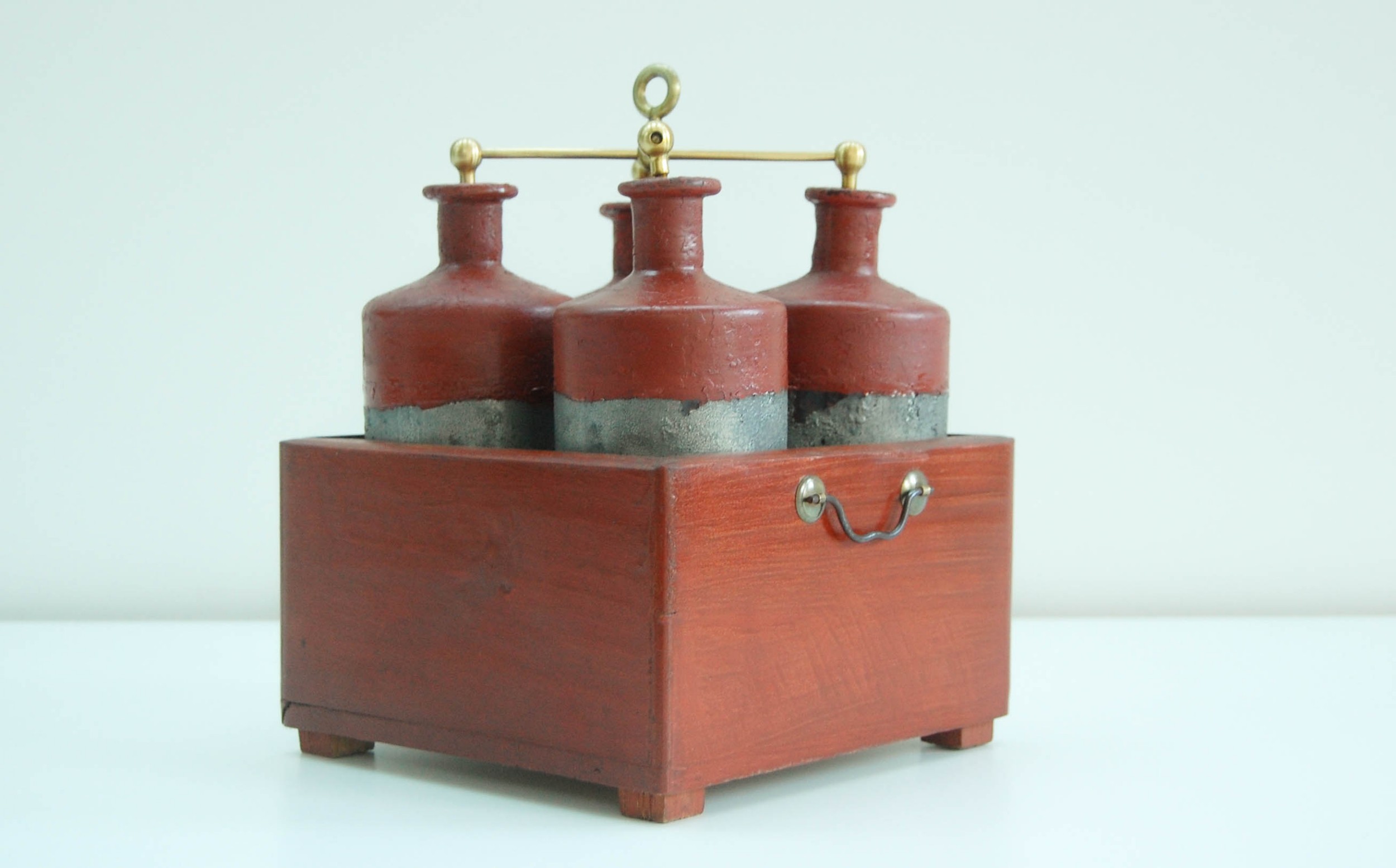
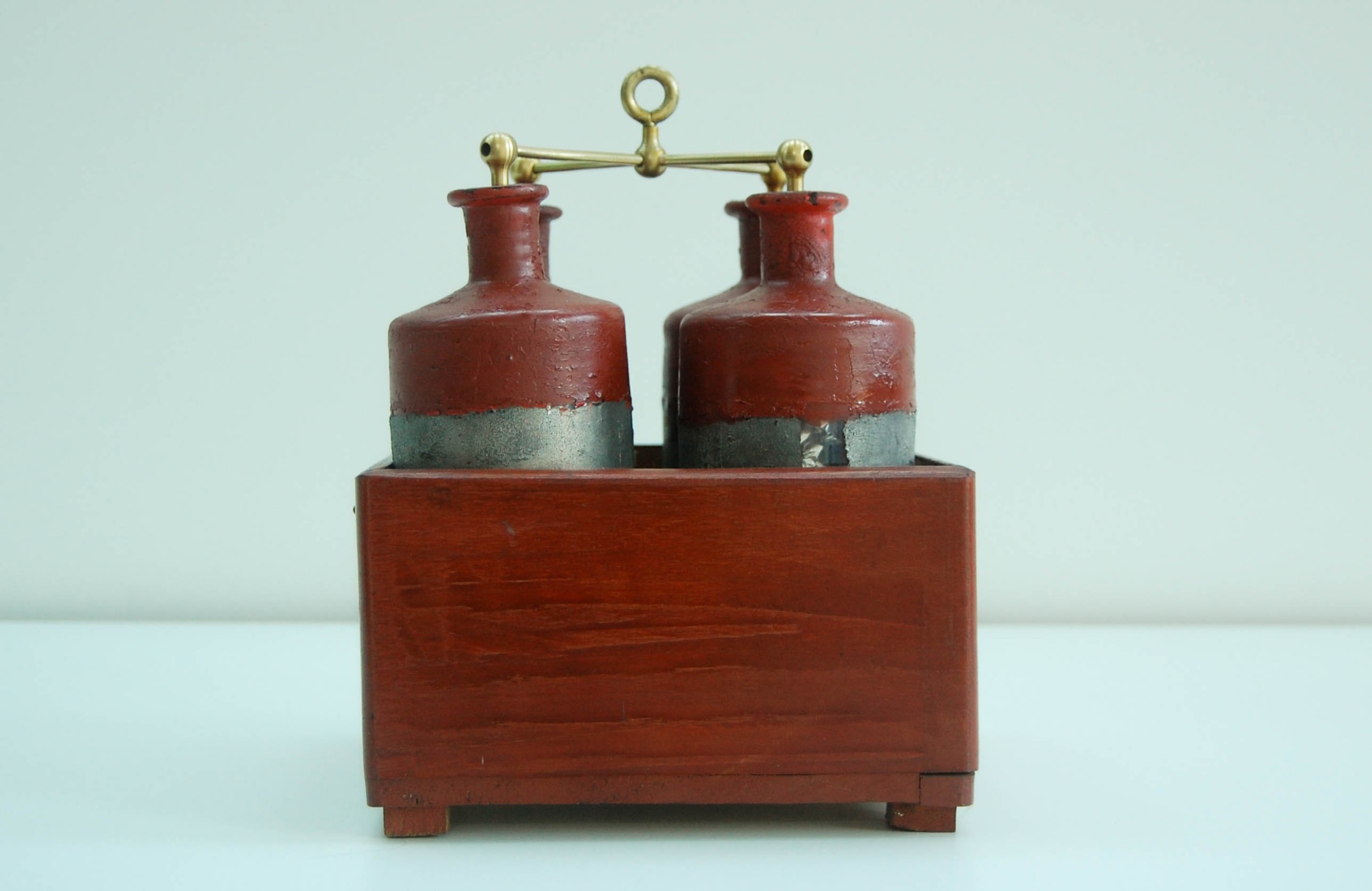
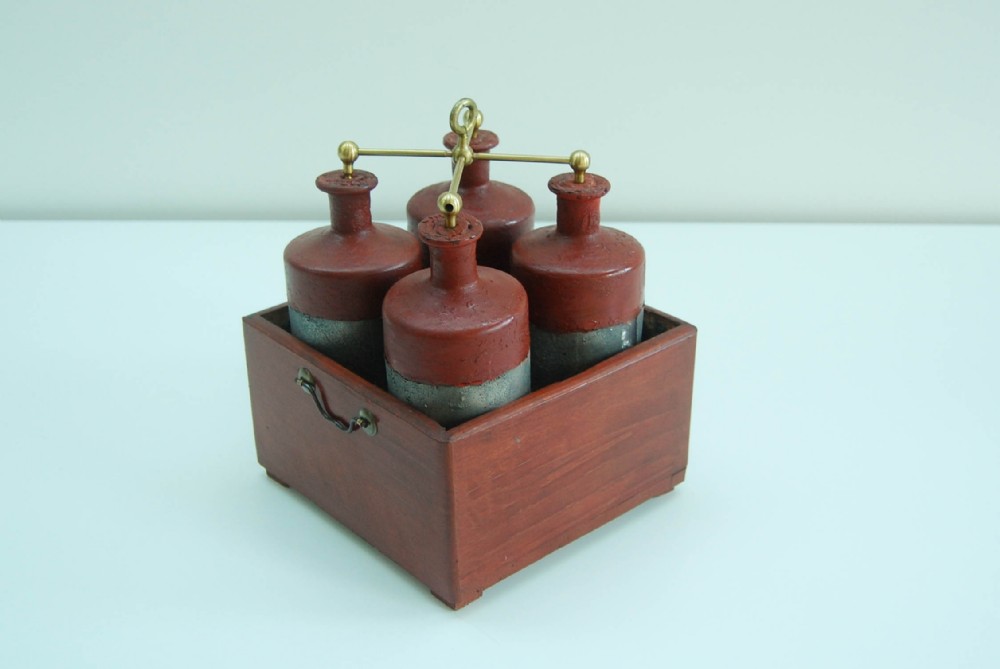
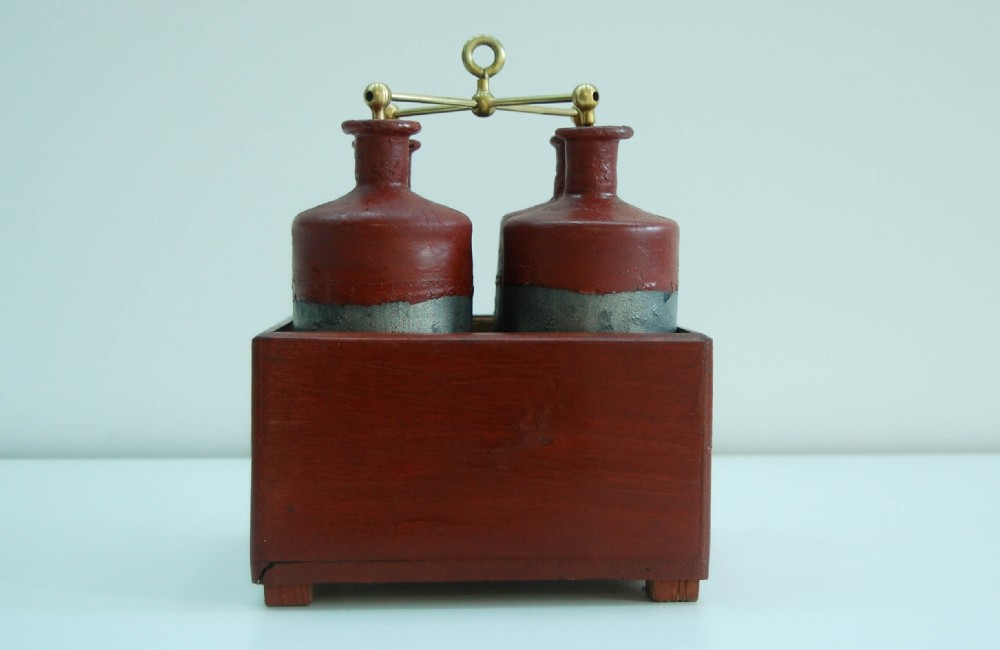
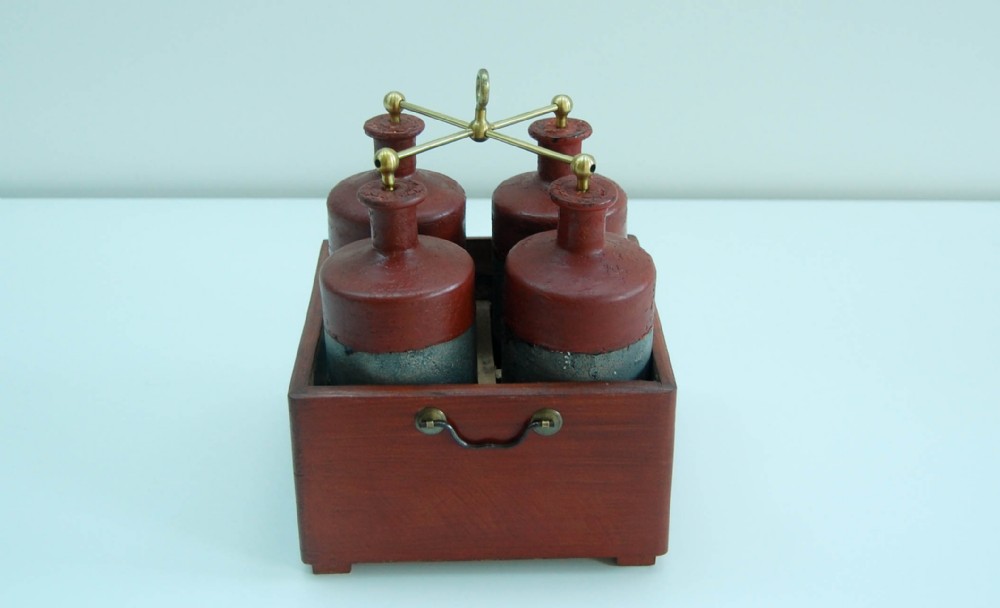
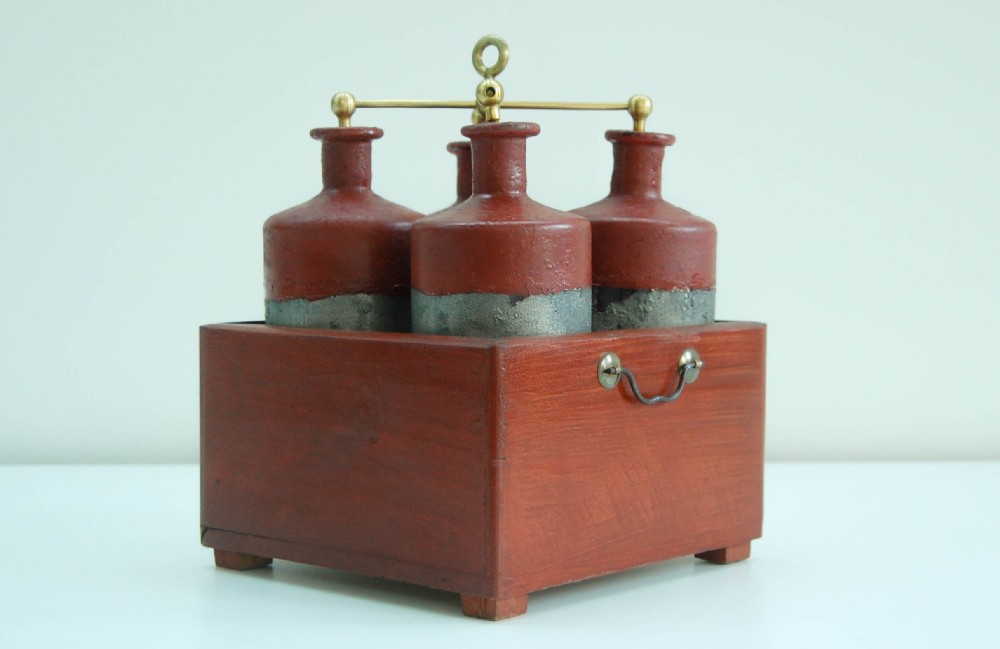
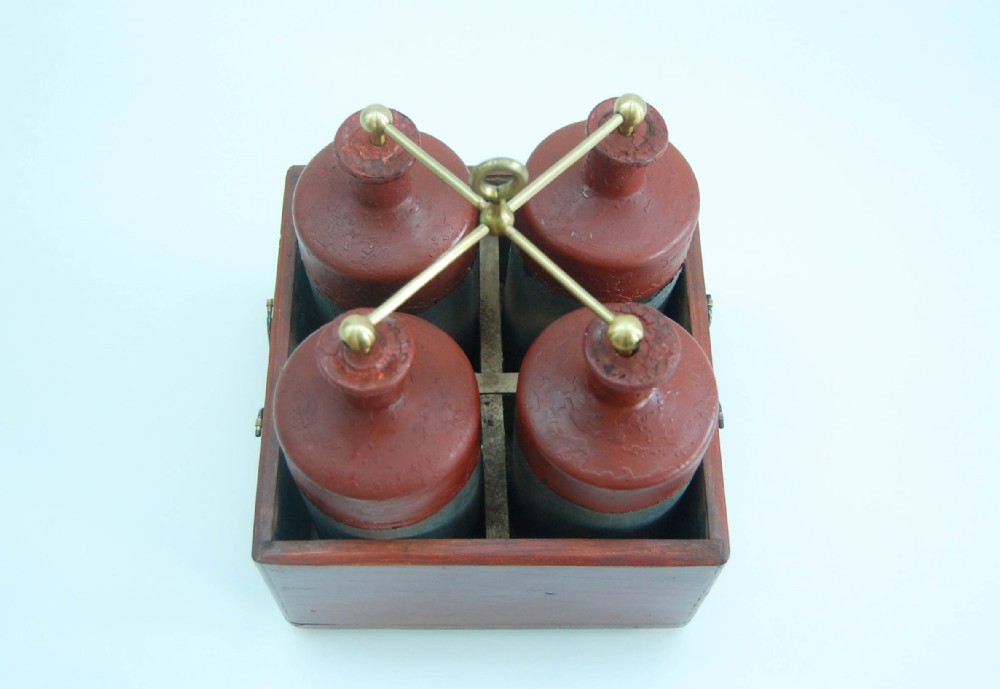
The four glass jars each have a foil covered outer base and red painted shoulder and neck. Small degradations in the foil coverings also reveal that the inside of the jars are filled with loose foil sheets and brass rods placed into each bottle are joined by connecting rods which culminate in a central brass ring.
A handle is sited on two sides of the pine case whose fixings provide further connection to the inner foil lining and the outer edge of the box.
Leyden jars are essentially the first example of a capacitor, used in coincidence with an electrostatic machine, the electricity produced by such machines was transmitted to the jars to create a storing and subsequent build-up of static electricity. When the Leyden jar reached its capacity, a spark would be released and it was found that by connecting numerous Leyden jars, larger sparks could be achieved.
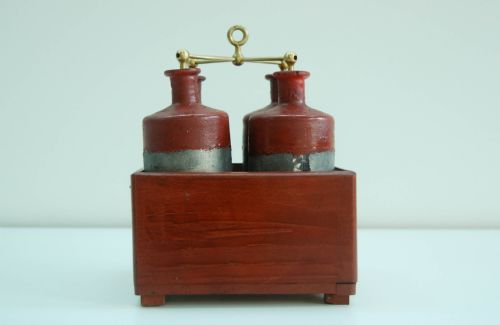
This piece is an example of this type of early electrical experimentation and is a rare survivors given their fragility. The term Leyden jar is a reference to the town in Holland where early experiments were conducted by the scientist, Pieter van Musschenbroek, however, it is now considered that the invention may be attributed to the German scientist Ewald Georg von Kleist in 1745 but the name has since become synonymous with the Dutch town
Circa 1830
Jason Clarke Antiques has dated this piece to the 1800s.
You can view the stock and full dealer information on the Jason Clarke Antiques Profile Page
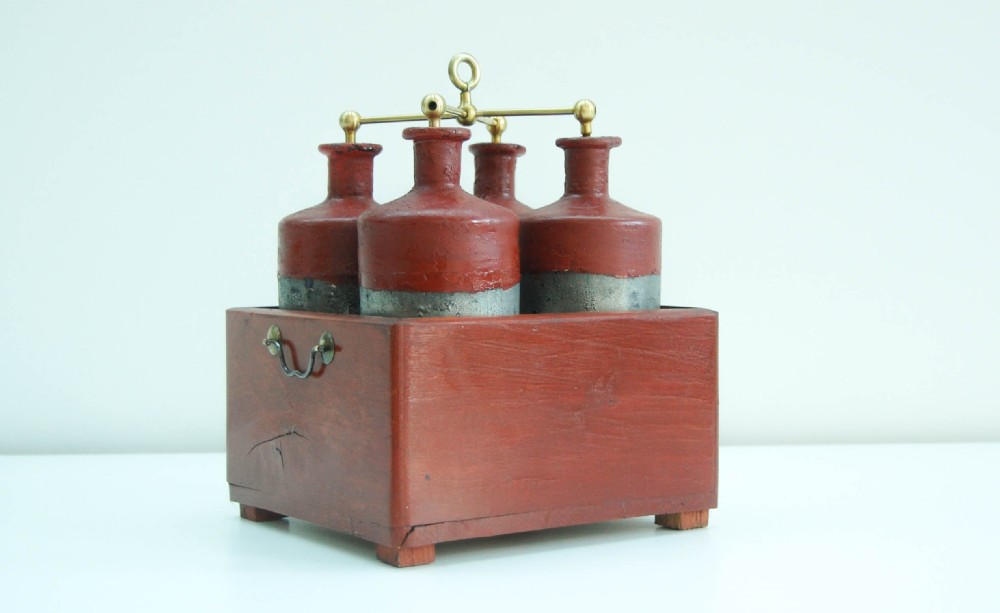

Early Nineteenth Century Battery of Four Leyden Jars in Original Pine Case