6,996  PAGES BROWSED TODAY PAGES TODAY 0 ANTIQUES UPLOADED TODAYNEW ARRIVALS
LATEST STOCK
Sort Order
Items Per Page
Browse Categories
Sort order
Items per page
ID #SA624140
SOLD
Email
Save
Early Victorian Large Cased Meteorological Thermometer by Patrick Adie of London
Jason Clarke Antiques
sold SA624140
Sorry, but this item has been sold.
Jason Clarke Antiques

Jason Clarke Antiques

Sellingantiques Verified Since Jul 2015
View Dealers Stock Page
Id #SA624140
PDF SHARE
SAVE

Early Victorian Large Cased Meteorological Thermometer by Patrick Adie of London

19th century
Description

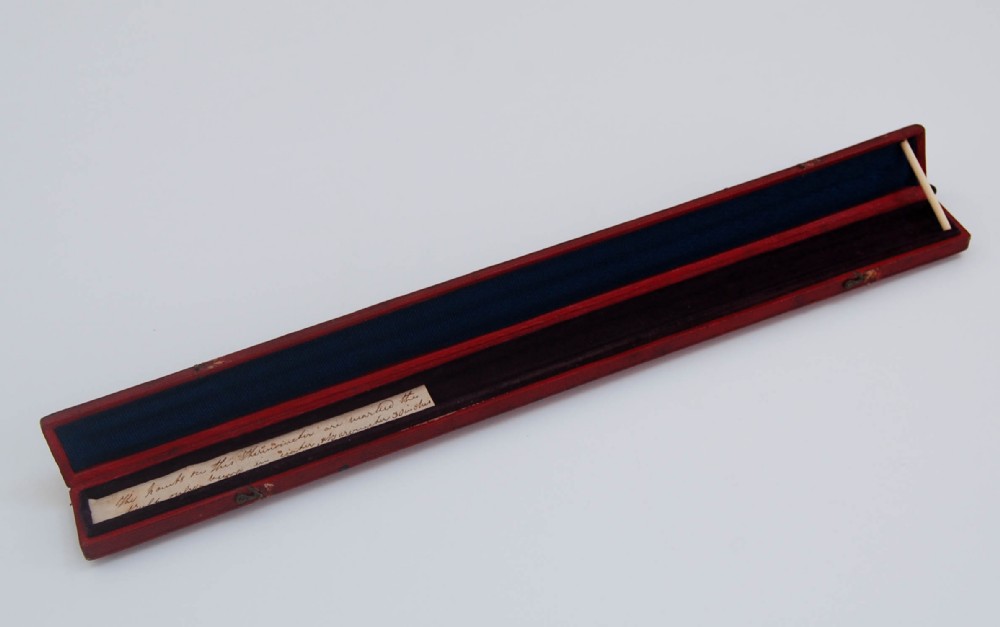
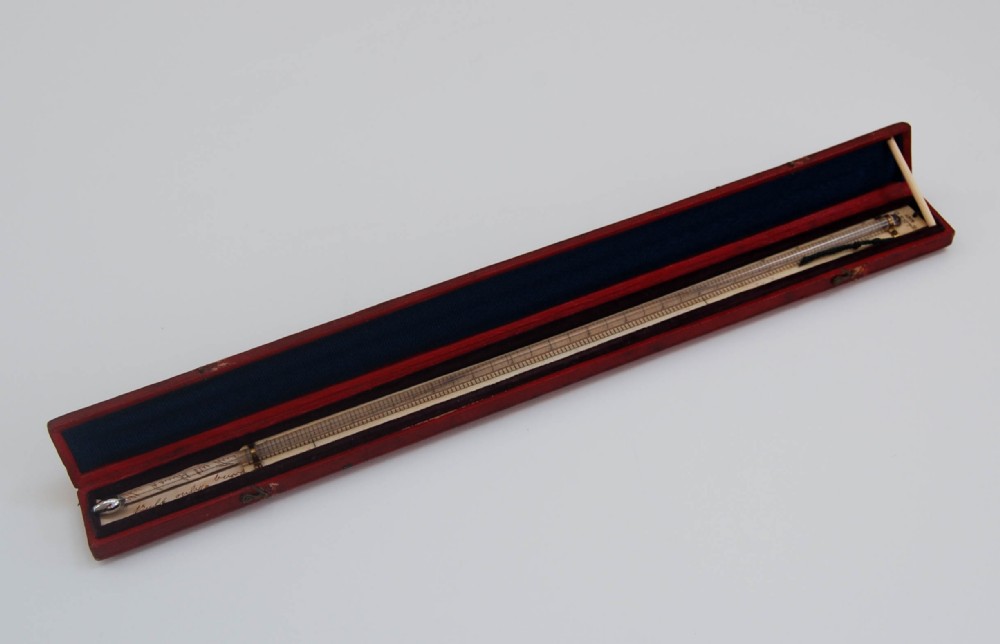
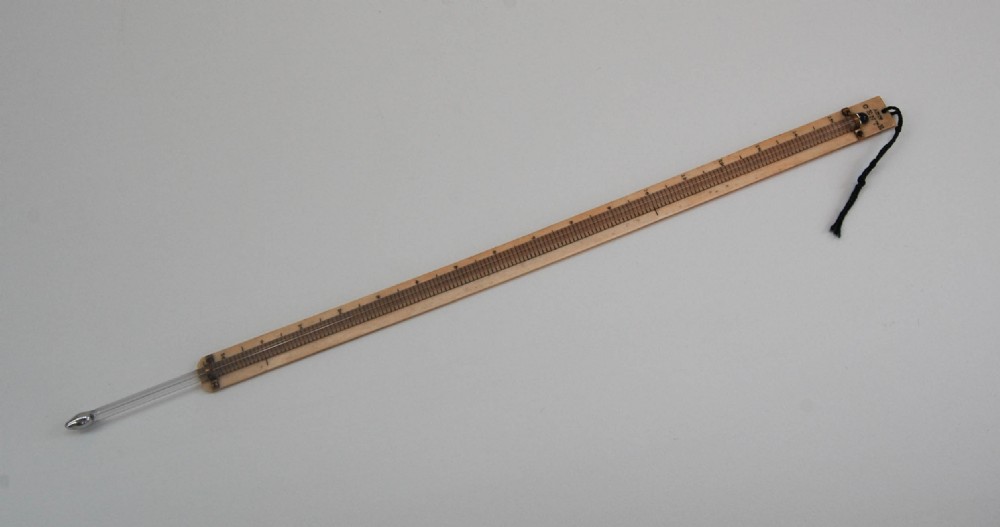
For sale, a large leather cased meteorological thermometer by Patrick Adie of London.

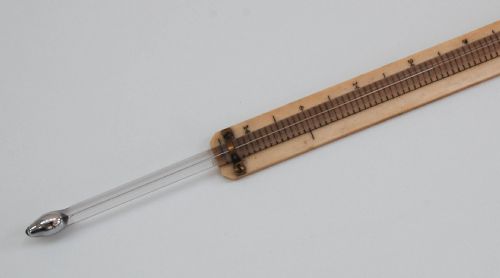
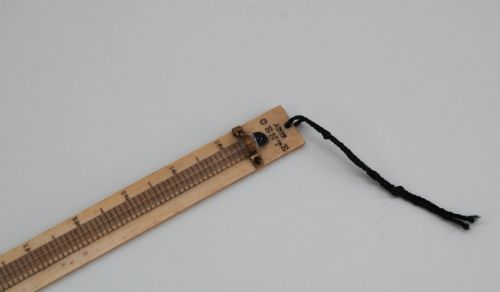
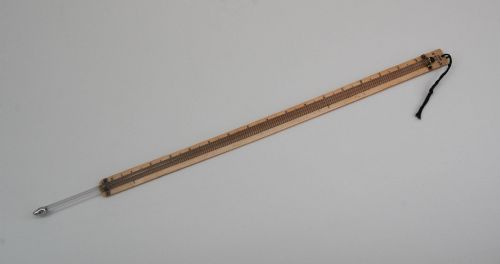
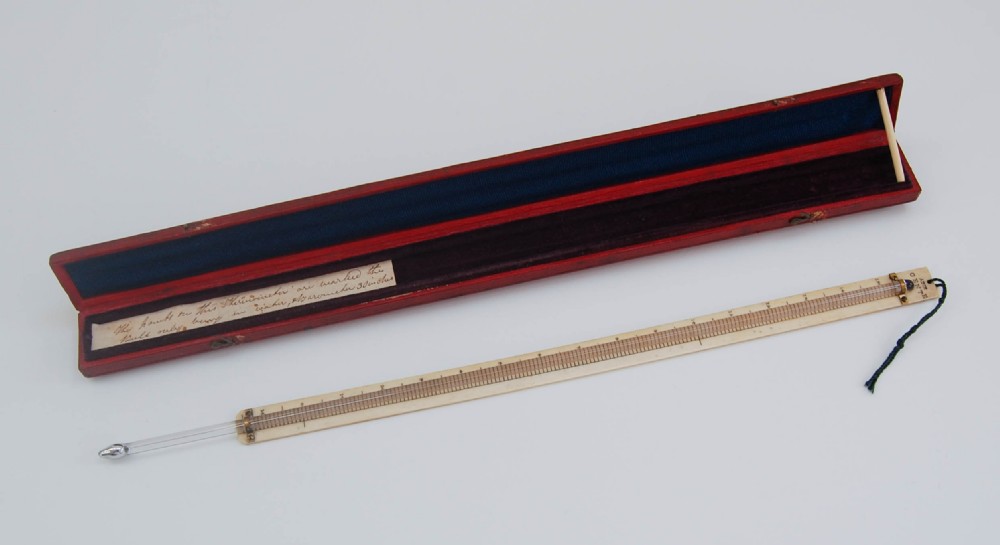
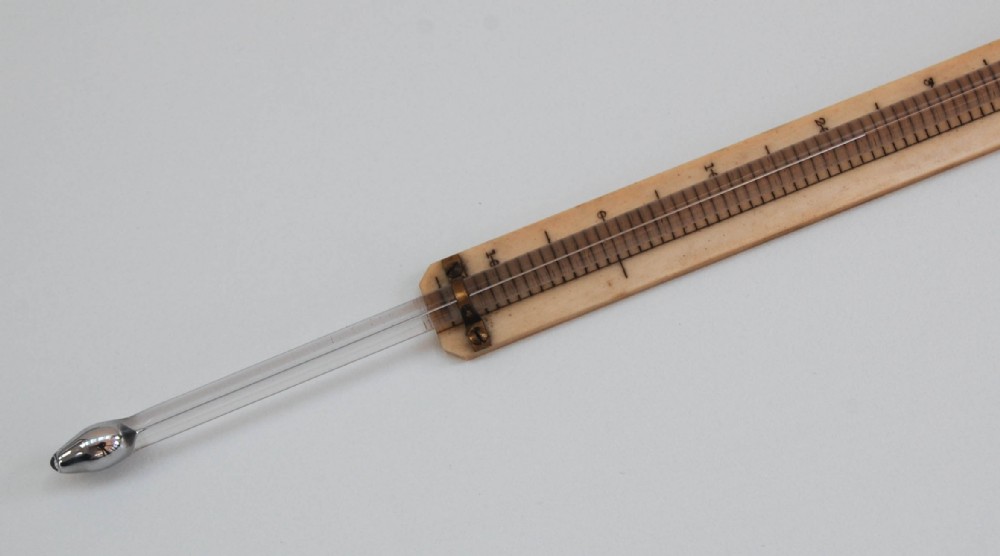
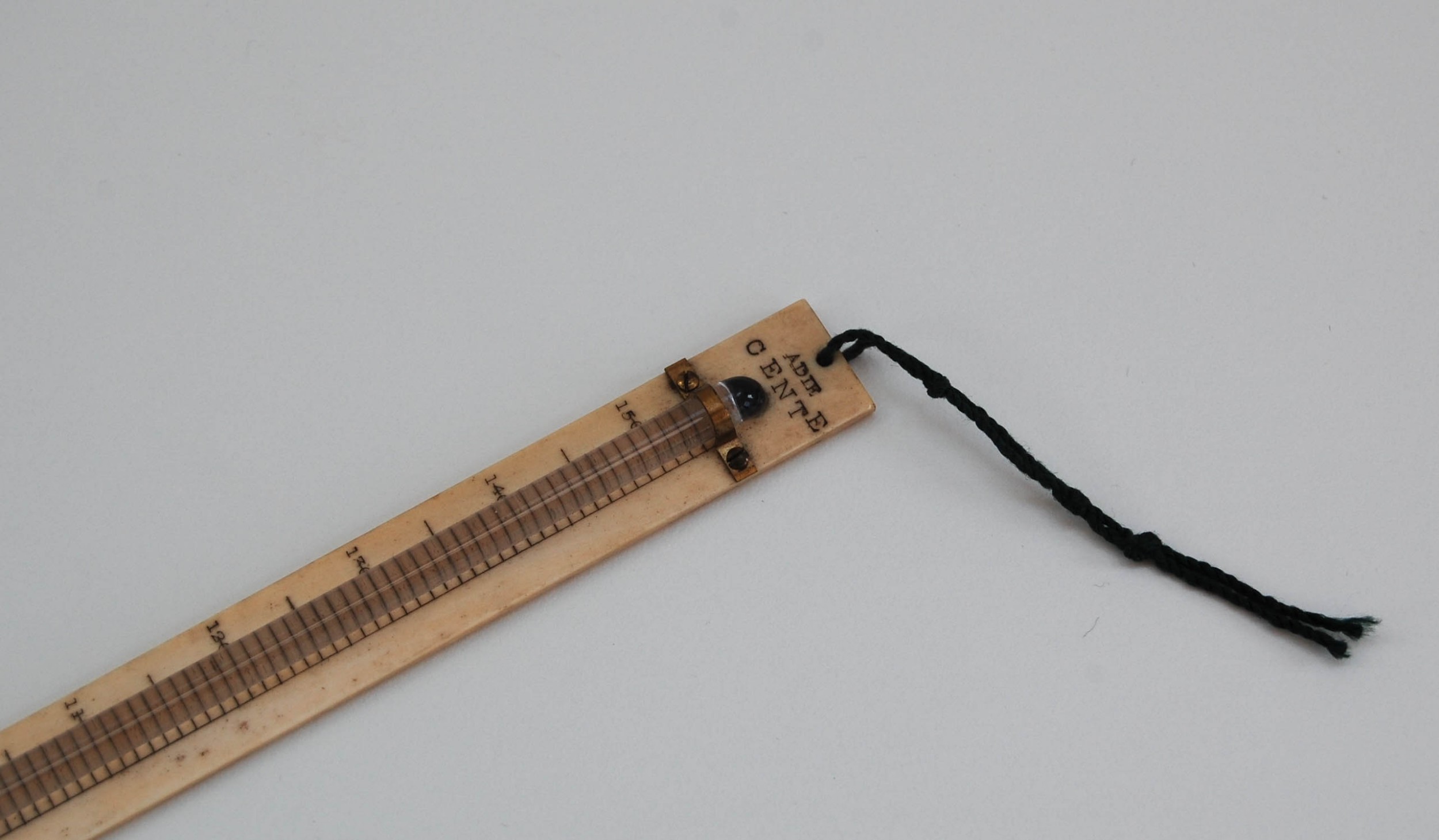
This unusually large example is comprised of a 29cm bone scale divided for -10 to 150 degrees of centigrade and with a 34cm thermometer that extends 5cms beyond the base of the scale. It is stamped with the maker’s name, “Adie” to the top with the abbreviation of centigrade (CENTE) below. A small hole at the top allows the thermometer to be hung in its chosen place for the purposes of measuring.
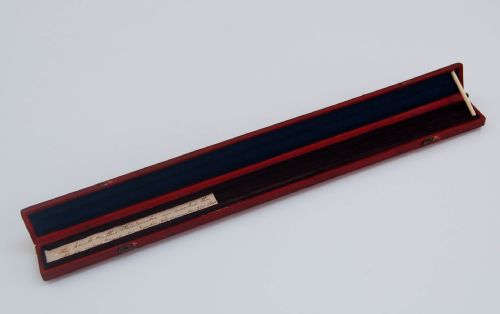
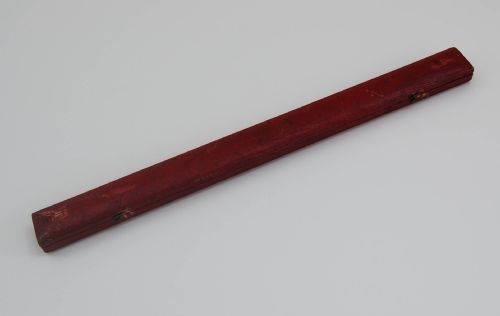
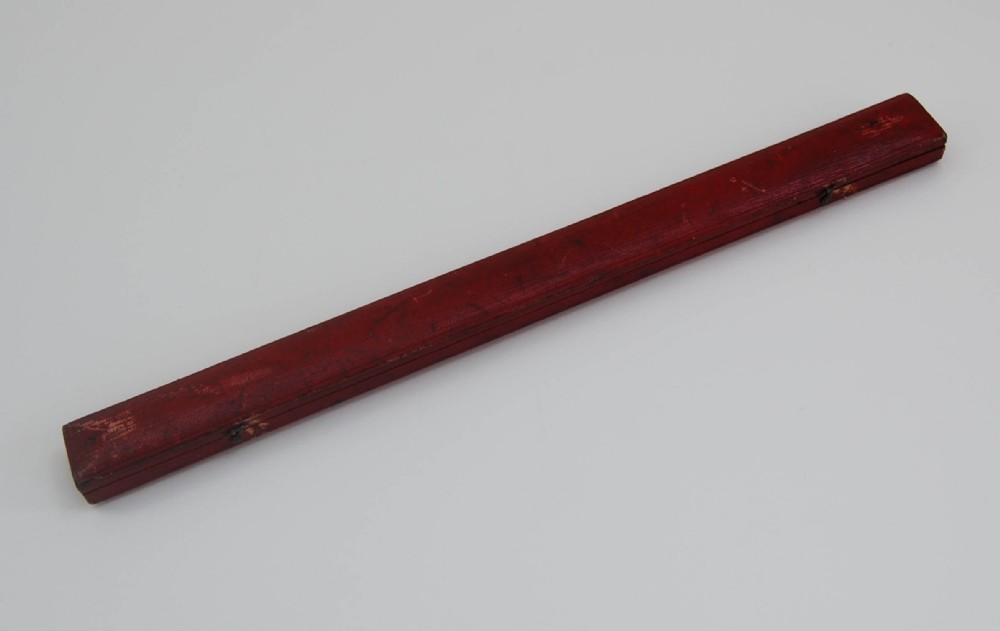
The beautifully constructed wooden hinged case is covered in red morocco leather with hook and eye fasteners to the side. It has a purple velvet sectioned interior to safely house the instrument and original green cushioned and patterned fabric to the lid.
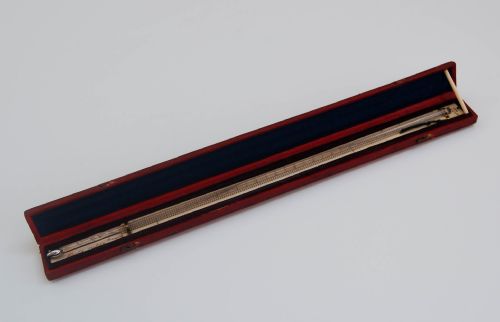
Both the case and the thermometer are in superb condition.

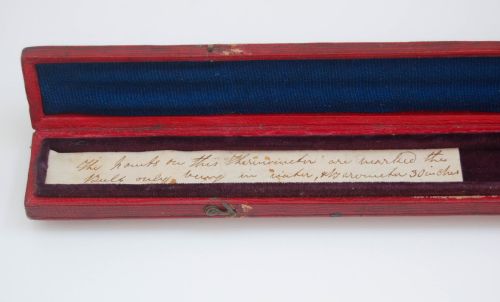
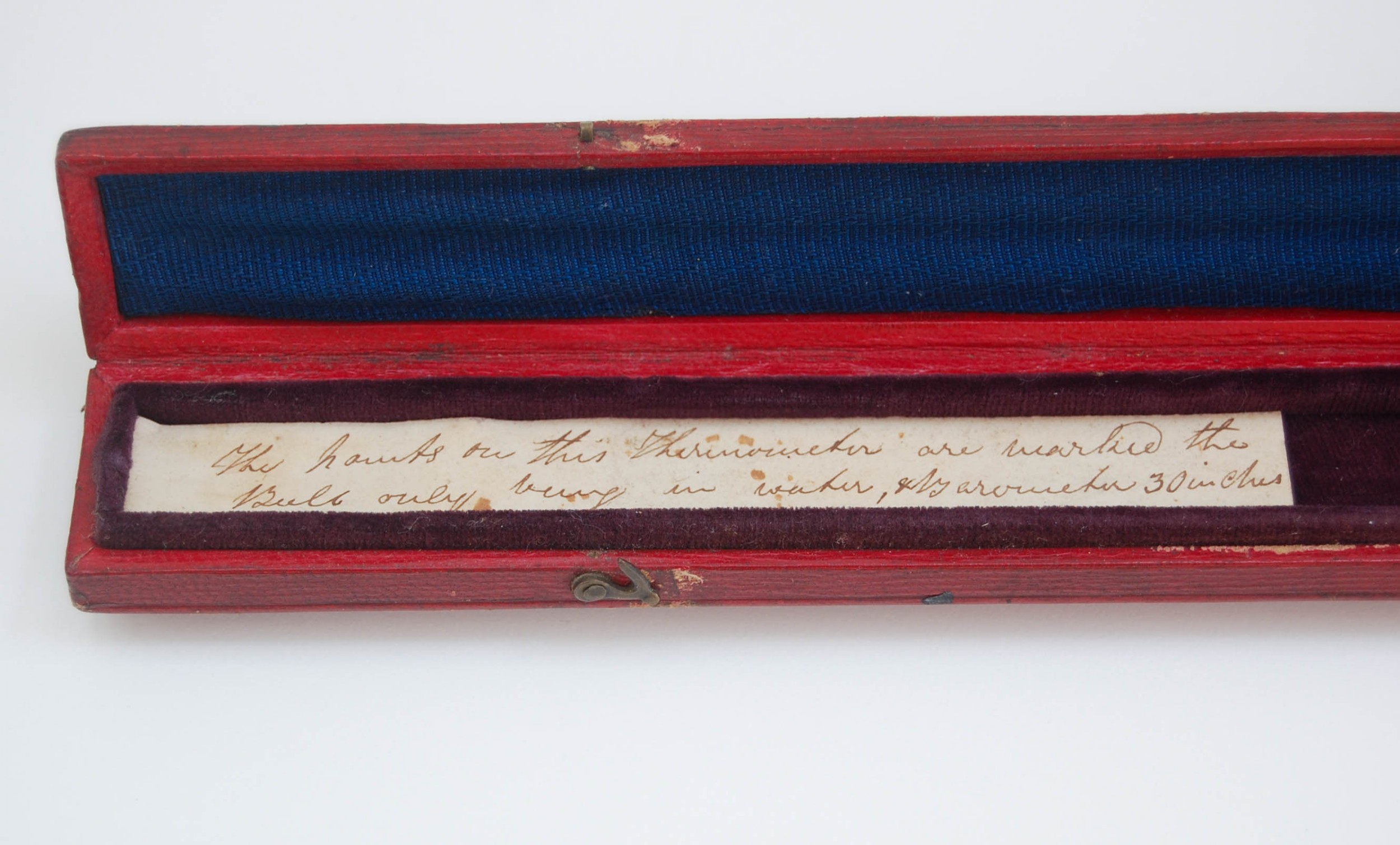
The interior of the case has a small hand written note within it, stating, “the points on this thermometer are marked the bulb only being in water. My barometer 30 inches”. It is likely that this is note from the manufacturer to give guidance on how the thermometer was manufactured given that the boiling point and freezing points of water (zero and 100) are the reference points on which the Centigrade relies. The barometer reading is of importance as the density of the atmosphere at any given time will affect the point in which water boils. It is not a huge stretch of the imagination to consider that the note may have been written by Adie himself, or if not certainly a trusted member of his workshop but at this early stage in his career he is unlikely to have had a large roster of staff.
Thermometers of this type are known to have been manufactured as early as 1854 by which time (according to Meteorological Office records) Adie’s competitor, Louis Casella was supplying them to the Board of Trade. They were seen as superior for use in this field of science due to the understanding that a thermometer attached to a back plate would be more inclined to measure the temperature of the base it was attached to, rather than the pure temperature of the air. Patrick Adie by this time was himself hugely influential in meteorological circles for his close associations with The Kew Observatory.
It is also likely that this thermometer was intended for use in the measurement of liquid temperature, given the length of the scale is beyond the general bounds of atmospheric parameters and the point reflected in the note informing that the thermometer is devised with the use of water as the principle guidance for the scale.
The history of the Adie dynasty began in 1776 with the celebrated Edinburgh scientific instrument maker John Miller, the uncle of Alexander Adie. Miller himself had been apprenticed under the world renowned maker George Adams so Alexander was privileged to have had an uncle from such a prestigious background.
From 1789, Adie (1774 – 1858) undertook his apprenticeship with Miller and by 1804, a partnership was agreed which traded at various addresses on Nicholson Street. Miller & Adie continued to trade until 1822 (although Miller had died by 1815) whereafter the business was renamed solely to Alexander Adie. By this point, Adie was himself an accomplished maker with a focus on meteorological instruments and had by 1818 taken out a patent (No: 4323) for a sympiesometer, a type of barometer designed initially for marine use which contained hydrogen and almond oil instead of mercury. Perhaps the most well-known instrument that the Adie family are now recognised for, this invention was patented as, “An improvement on the air barometer” an instrument that had been conceived as early as 1668 by Robert Hooke but never brought into practical use until Adie’s later developments.
By 1822, Adie had a family of three sons, John (1805-1857), Richard (1810-1881) and Patrick (1821-1886) and it is sensible to presume that all undertook some kind of apprenticeship under him. The eldest, John went into business with his Father to fo

Physical Dimensions
Height
2cm (0.79")
Width
3cm (1.18")
Depth
36cm (14.17")
Declaration

Jason Clarke Antiques has dated this piece to the 1850s.

Reference Numbers
Sellingantiques Reference
SA624140
Description
For sale, a large leather cased meteorological thermometer by Patrick Adie of London.
This unusually large example is comprised of a 29cm bone scale divided for -10 to 150 degrees of centigrade and with a 34cm thermometer that extends 5cms beyond the base of the scale.
Jason Clarke Antiques

It is stamped with the maker’s name, “Adie” to the top with the abbreviation of centigrade (CENTE) below. A small hole at the top allows the thermometer to be hung in its chosen place for the purposes of measuring.

fig 1. Early Victorian Large Cased Meteorological Thermometer by Patrick Adie of London

The beautifully constructed wooden hinged case is covered in red morocco leather with hook and eye fasteners to the side. It has a purple velvet sectioned interior to safely house the instrument and original green cushioned and patterned fabric to the lid.

fig 2. Early Victorian Large Cased Meteorological Thermometer by Patrick Adie of London

Both the case and the thermometer are in superb condition.

The interior of the case has a small hand written note within it, stating, “the points on this thermometer are marked the bulb only being in water. My barometer 30 inches”. It is likely that this is note from the manufacturer to give guidance on how the thermometer was manufactured given that the boiling point and freezing points of water (zero and 100) are the reference points on which the Centigrade relies. The barometer reading is of importance as the density of the atmosphere at any given time will affect the point in which water boils. It is not a huge stretch of the imagination to consider that the note may have been written by Adie himself, or if not certainly a trusted member of his workshop but at this early stage in his career he is unlikely to have had a large roster of staff.

fig 3. Early Victorian Large Cased Meteorological Thermometer by Patrick Adie of London

Thermometers of this type are known to have been manufactured as early as 1854 by which time (according to Meteorological Office records) Adie’s competitor, Louis Casella was supplying them to the Board of Trade. They were seen as superior for use in this field of science due to the understanding that a thermometer attached to a back plate would be more inclined to measure the temperature of the base it was attached to, rather than the pure temperature of the air. Patrick Adie by this time was himself hugely influential in meteorological circles for his close associations with The Kew Observatory.

fig 4. Early Victorian Large Cased Meteorological Thermometer by Patrick Adie of London

It is also likely that this thermometer was intended for use in the measurement of liquid temperature, given the length of the scale is beyond the general bounds of atmospheric parameters and the point reflected in the note informing that the thermometer is devised with the use of water as the principle guidance for the scale.

fig 5. Early Victorian Large Cased Meteorological Thermometer by Patrick Adie of London

The history of the Adie dynasty began in 1776 with the celebrated Edinburgh scientific instrument maker John Miller, the uncle of Alexander Adie. Miller himself had been apprenticed under the world renowned maker George Adams so Alexander was privileged to have had an uncle from such a prestigious background.

fig 6. Early Victorian Large Cased Meteorological Thermometer by Patrick Adie of London

From 1789, Adie (1774 – 1858) undertook his apprenticeship with Miller and by 1804, a partnership was agreed which traded at various addresses on Nicholson Street. Miller & Adie continued to trade until 1822 (although Miller had died by 1815) whereafter the business was renamed solely to Alexander Adie. By this point, Adie was himself an accomplished maker with a focus on meteorological instruments and had by 1818 taken out a patent (No: 4323) for a sympiesometer, a type of barometer designed initially for marine use which contained hydrogen and almond oil instead of mercury. Perhaps the most well-known instrument that the Adie family are now recognised for, this invention was patented as, “An improvement on the air barometer” an instrument that had been conceived as early as 1668 by Robert Hooke but never brought into practical use until Adie’s later developments.

fig 7. Early Victorian Large Cased Meteorological Thermometer by Patrick Adie of London

By 1822, Adie had a family of three sons, John (1805-1857), Richard (1810-1881) and Patrick (1821-1886) and it is sensible to presume that all undertook some kind of apprenticeship under him. The eldest, John went into business with his Father to fo

Height
2cm (0.79")
Width
3cm (1.18")
Depth
36cm (14.17")
Date of Manufacture

Jason Clarke Antiques has dated this piece to the 1850s.

Reference Numbers
Sellingantiques Ref
SA624140
Jason Clarke Antiques
Sellingantiques verified Since Jul 2015
Dealer Profile

You can view the stock and full dealer information on the Jason Clarke Antiques Profile Page
PDF SHARE
SAVE
Early Victorian Large Cased Meteorological Thermometer by Patrick Adie of London
1 / 8
Archive I Early Victorian Large Cased Meteorological Thermometer by Patrick Adie of London
Early Victorian Large Cased Meteorological Thermometer by Patrick Adie of London
Archive II Early Victorian Large Cased Meteorological Thermometer by Patrick Adie of London View II
Archive III Early Victorian Large Cased Meteorological Thermometer by Patrick Adie of London View III
Archive IV Early Victorian Large Cased Meteorological Thermometer by Patrick Adie of London View IV
Archive V Early Victorian Large Cased Meteorological Thermometer by Patrick Adie of London View V
Archive VI Early Victorian Large Cased Meteorological Thermometer by Patrick Adie of London View VI
Archive VII Early Victorian Large Cased Meteorological Thermometer by Patrick Adie of London View VII
Archive VIII Early Victorian Large Cased Meteorological Thermometer by Patrick Adie of London View VIII
Enlarged Archival View
Telephone 07815 046645
Location
Newbury
Berkshire
United Kingdom
Verified Since Jul 2015
Items For Sale 80
Items Sold 607
Jason Clarke Antiques
Verified Since Jul 2015
View Dealer Info
Location: Newbury, Berkshire, United Kingdom
Verified
Jul 2015
For Sale
80
Sold
607
Early Victorian Large Cased Meteorological Thermometer by Patrick Adie of London
Ref: SA624140
Early Victorian Large Cased Meteorological Thermometer by Patrick Adie of London
Detail View 1
Detail View 2
Detail View 3
Detail View 4
Detail View 5
Detail View 6
Detail View 7
Archival Detail
Every single antique dealer on our platform is individually approved by our internal team. We verify their professional trade history, ethical standards, and photographic quality to ensure a secure, high-standard buying environment. Upon joining, every dealer agrees to a strict 9-point code of conduct. While issues can occasionally arise, our dealers typically resolve them swiftly and directly with the buyer. In fact, since our founding in 2002, Sellingantiques has only had to step in to help resolve an issue on roughly five occasions—a true testament to the quality of our dealers and their dedication to your happiness.
Our dealers are highly experienced in packing and shipping fragile, high-value antiques. Because you are in direct contact with the dealer, you will be able to easily go through all available shipping and insurance options together to ensure your item arrives safely.
Antiques are the ultimate green purchase. By choosing historical pieces over newly manufactured goods, you completely eliminate the carbon footprint of modern mass production while preserving exceptional, timeless craftsmanship.
items
Add keywords to the filter
Price
£100
£250000
Era
Movements
Material
Origin
Stock Location
Freshness
Online Payments
Categories