6,069  PAGES BROWSED TODAY PAGES TODAY 0 ANTIQUES UPLOADED TODAYNEW ARRIVALS
LATEST STOCK
Sort Order
Items Per Page
Browse Categories
Sort order
Items per page
ID #SA609086
SOLD
Email
Save
Late Victorian Cased Daniells Hygrometer by Negretti & Zambra London
Jason Clarke Antiques
sold SA609086
Sorry, but this item has been sold.
Jason Clarke Antiques

Jason Clarke Antiques

Sellingantiques Verified Since Jul 2015
View Dealers Stock Page
Id #SA609086
PDF SHARE
SAVE

Late Victorian Cased Daniells Hygrometer by Negretti & Zambra London

19th century
Description

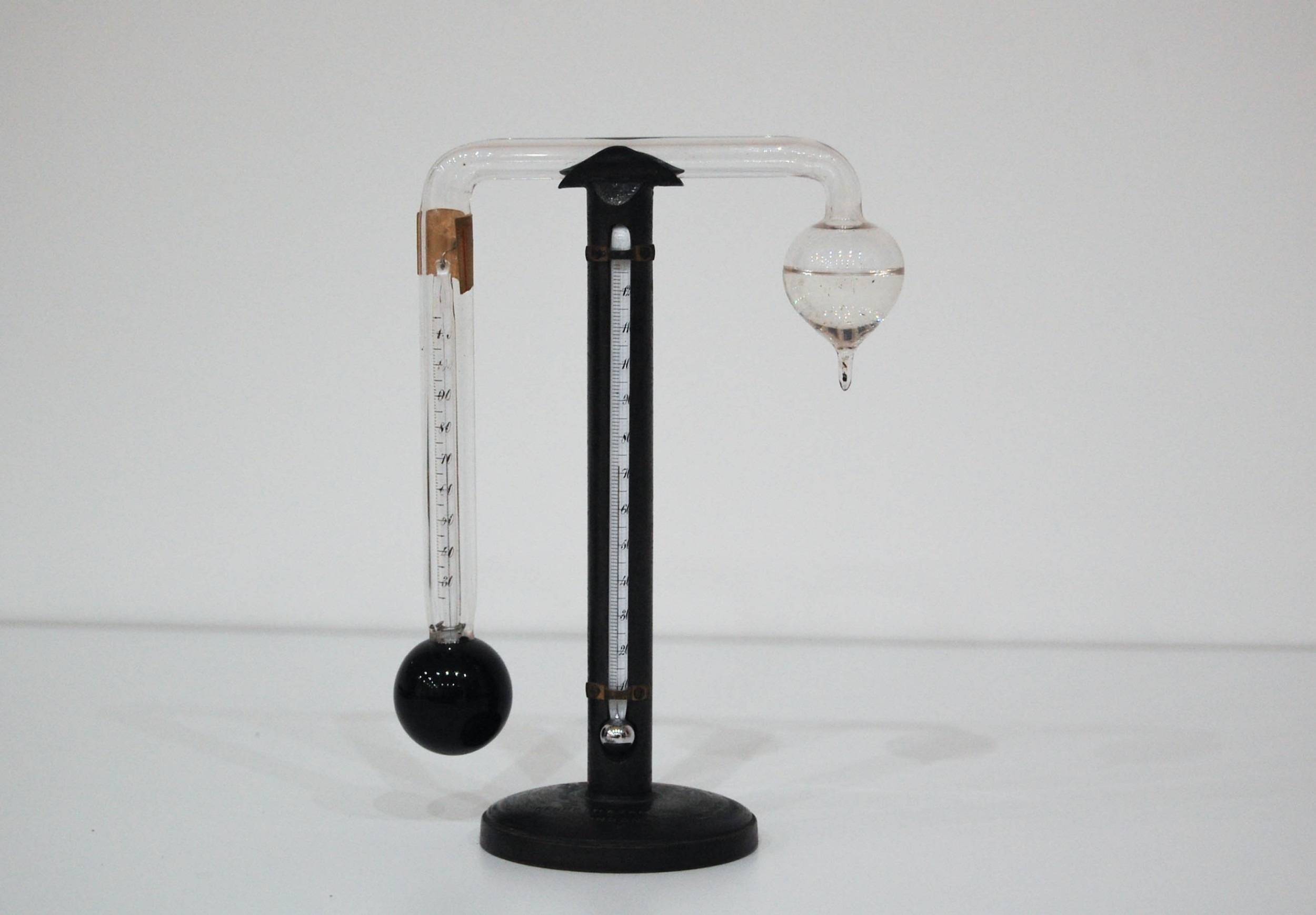
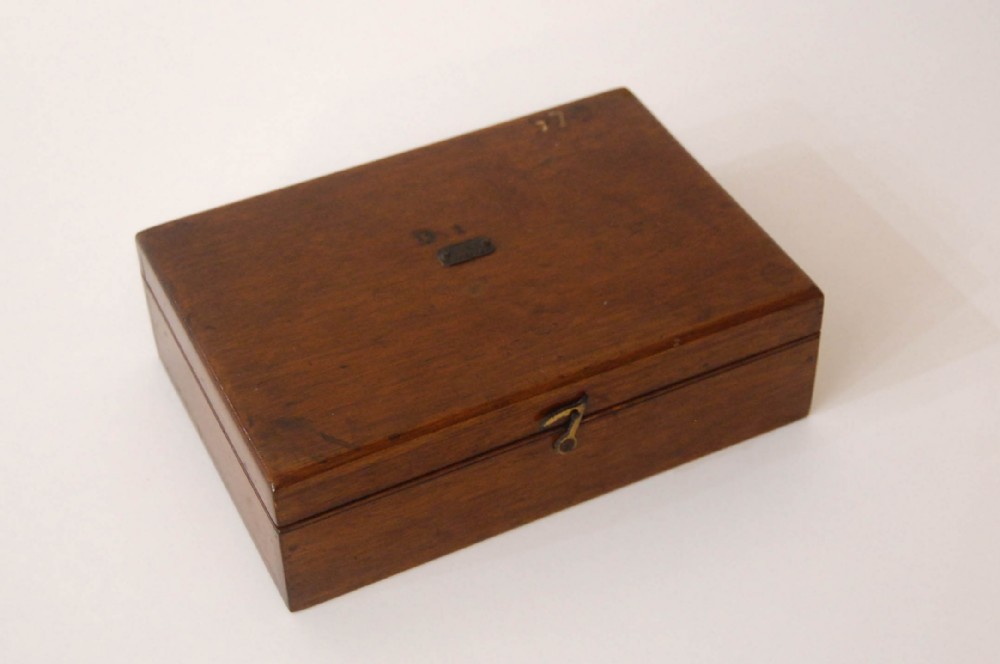
For sale, an extremely rare late nineteenth century cased Daniell’s hygrometer by Negretti & Zambra, London.

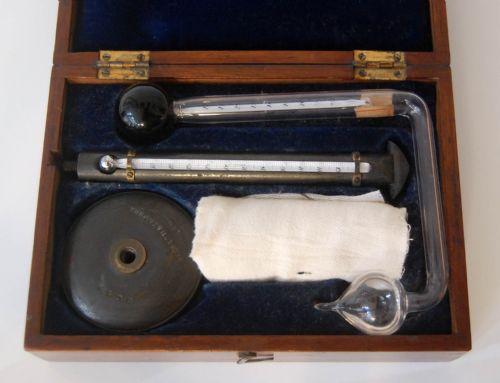
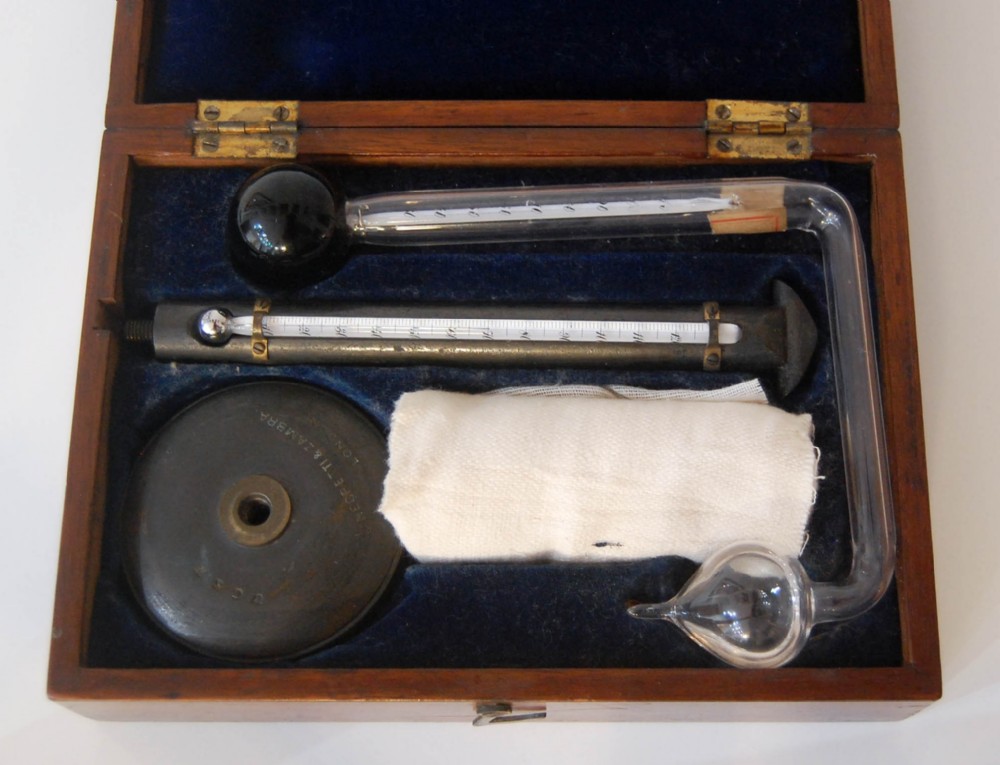
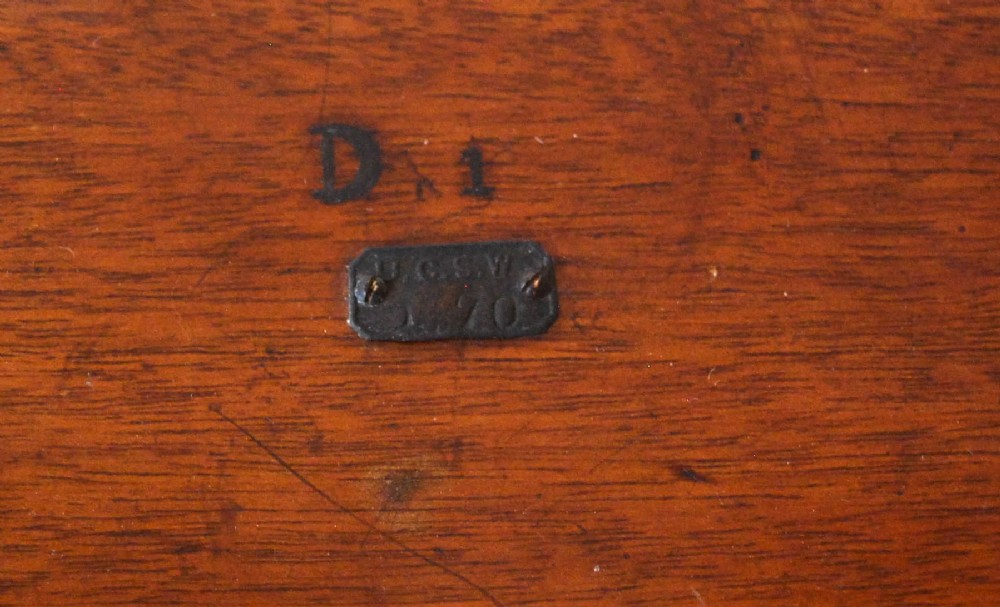
This museum worthy instrument is complete with its original mahogany case with a small plaque to the lid with the initials UCSW denoting its previous use at the University College of South Wales, now Cardiff University.

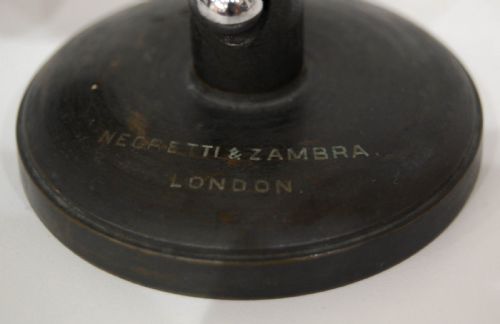
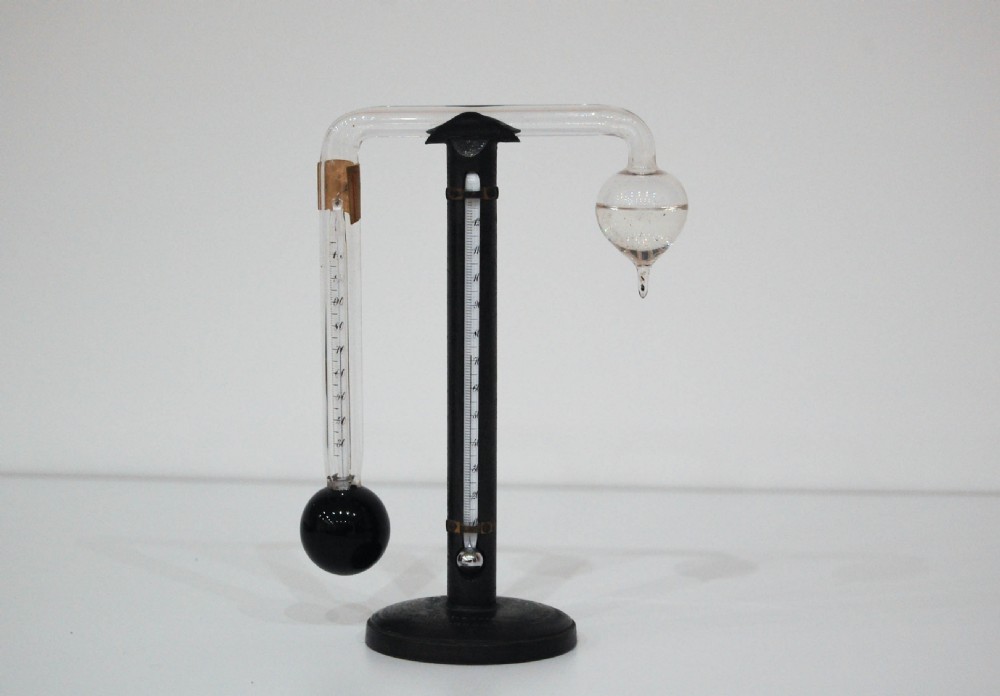
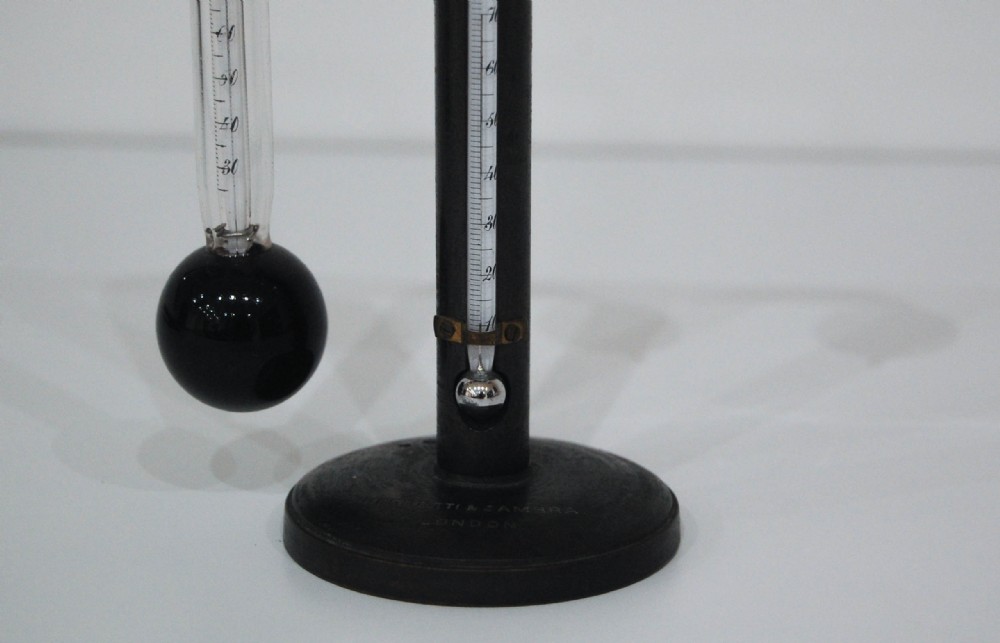
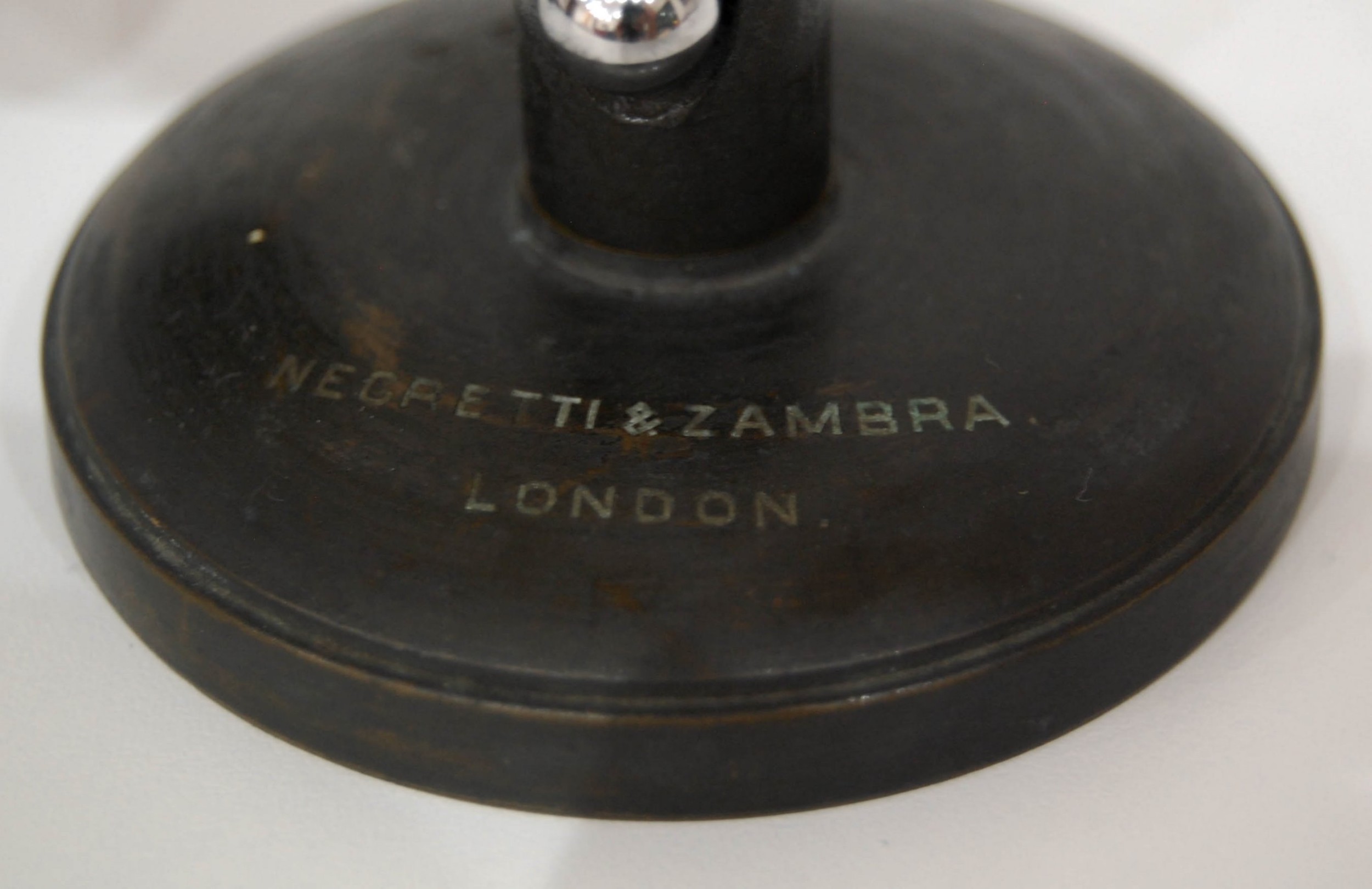
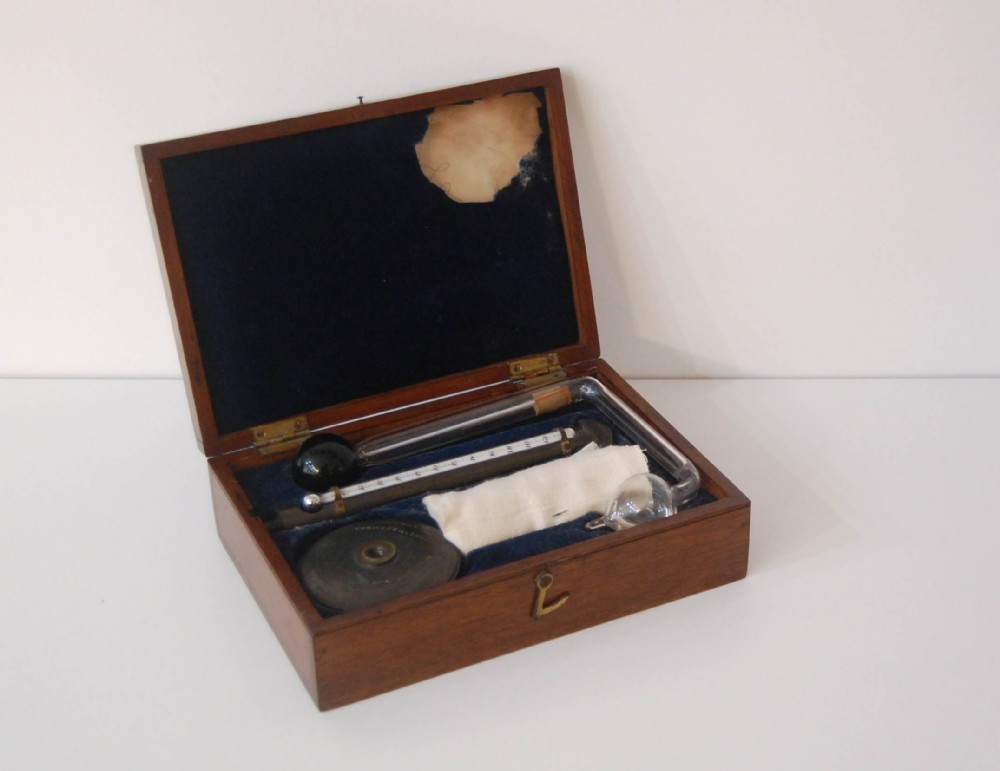
It is comprised of a turned brass base engraved with the maker’s name, Negretti & Zambra, London and further stamped with the same initials, ‘UCSW’. The stand has a screw at the base which threads into the base, with attached thermometer to the shaft and a U shaped receptacle to the top to hold the glass tube.
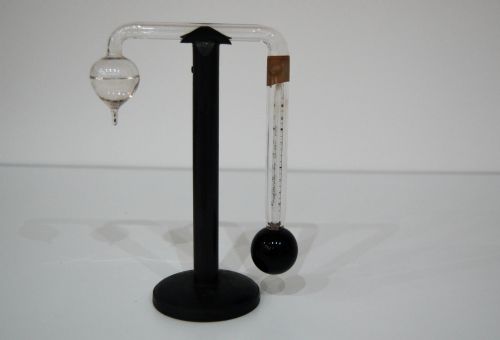
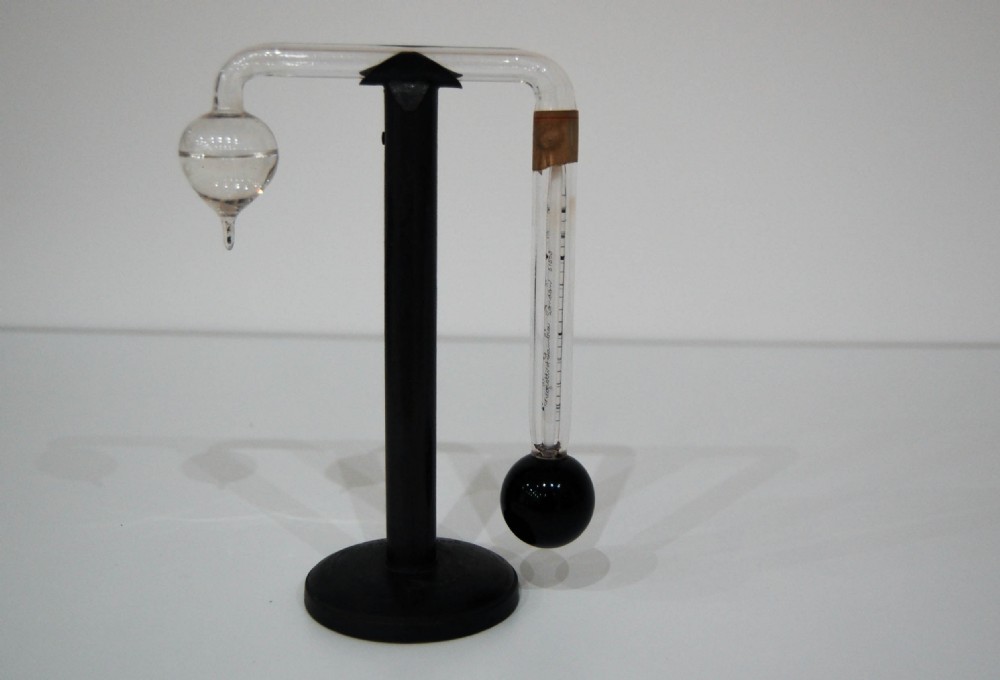
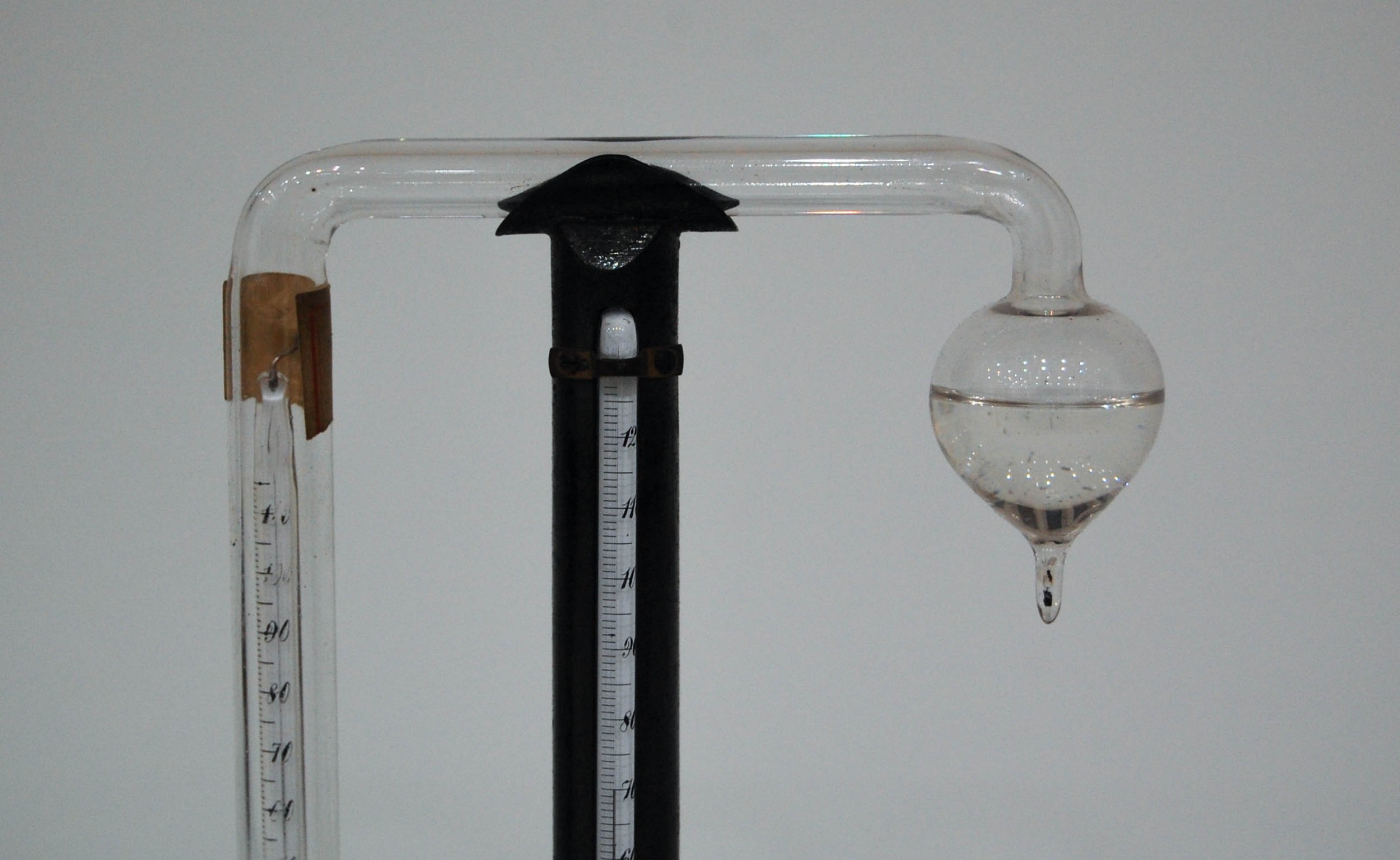
The double right angled glass ether filled tube with a bulb at each end, as explained below contains a second thermometer.

The Daniel’s hygrometer was invented in order to record the relative humidity of the air and was notably used by Admiral Fitzroy during his famous explorations with Charles Darwin on HMS Beagle. Fitzroy himself had strong links with Negretti & Zambra.
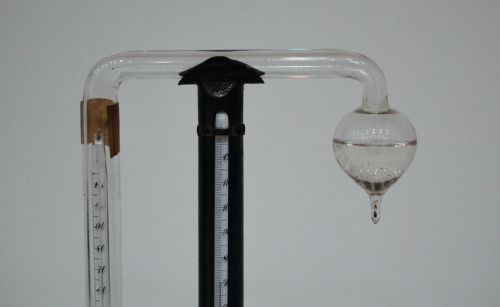
Examples of the Daniell’s hygrometer can be seen in the company’s, ‘Treatise on Meteorological Instruments’ in 1864 and also their later catalogues of the 1880s so although it was considered somewhat troublesome, it’s enduring production confirms that it remained useful to scientists throughout the nineteenth century.
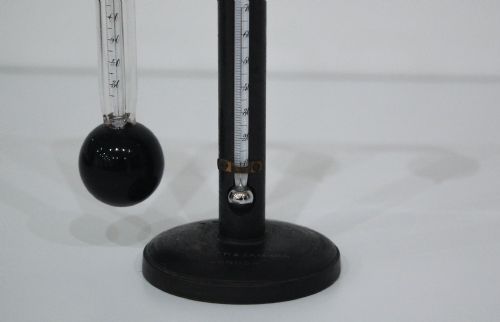
Negretti & Zambra’s later catalogue provides a description of its use:

“Daniell’s hygrometer for ascertaining the dew-point by direct observation invented about the year 1820 by the late professor Daniell, of Kings College London.
It consists of a glass tube, bent twice at right angles, and terminating, at each end, in a bulb. In the long limb of the tube is enclosed a delicate thermometer, which descends to the centre of the bulb, which is about three parts filled with sulphuric aether. All the other parts of the tube are carefully freed from air, so that they are occupied by the vapour of the aether. This bulb is made of black glass; the other bulb on the shorter limb is transparent and covered with a piece of fine muslin. The support for the tube has a delicate thermometer attached, to show the temperature of the external air.
This instrument gives the dew-point by direct observation, and is to be used at an open window facing the north in the following manner: Having fixed the tube on the stand, with the bulbs vertically downward, the aether is all caused to flow into the lower ball by inclining the tube. The temperature of the air is noted by the exposed thermometer. Then some aether is poured upon the muslin covered bulb. The rapid evaporation of the aether cools the bulb and causes condensation of the aethereal vapour in its interior. This gives rise to rapid evaporation of the aether in the lower bulb, whereby its temperature is greatly reduced. The air in the vicinity is deprived of its warmth by the cold bulb, and is soon cooled to the temperature at which it is perfectly saturated with the vapour which it contains. Cooled ever so little below this temperature, some aqueous vapour will be condensed, and will form a dew upon the black glass bulb. At the first indication of the deposit of dew the reading of the internal thermometer is taken; which is the dew point. In very damp or windy weather the aether should be slowly dropped on the bulb, otherwise the descent of the mercury in the thermometer is so rapid as to render it difficult to be certain of the temperature. Should this occur, the observation may be repeated by watching the temperature at which the ring of dew disappears, the mean of the two readings will be the correct point of precipitation. The greatest difference observed by Mr Daniell in the course of four months’ daily experiments between the external thermometer and the internal one at the moment of precipitation in the natural state of the atmosphere was twenty degre

Physical Dimensions
Height
20cm (7.87")
Width
13cm (5.12")
Depth
7cm (2.76")
Declaration

Jason Clarke Antiques has dated this piece to the 1890s.

Reference Numbers
Sellingantiques Reference
SA609086
Description
For sale, an extremely rare late nineteenth century cased Daniell’s hygrometer by Negretti & Zambra, London.

This museum worthy instrument is complete with its original mahogany case with a small plaque to the lid with the initials UCSW denoting its previous use at the University College of South Wales, now Cardiff University.

It is comprised of a turned brass base engraved with the maker’s name, Negretti & Zambra, London and further stamped with the same initials, ‘UCSW’.
Jason Clarke Antiques

The stand has a screw at the base which threads into the base, with attached thermometer to the shaft and a U shaped receptacle to the top to hold the glass tube.

fig 1. Late Victorian Cased Daniells Hygrometer by Negretti & Zambra London

The double right angled glass ether filled tube with a bulb at each end, as explained below contains a second thermometer.

The Daniel’s hygrometer was invented in order to record the relative humidity of the air and was notably used by Admiral Fitzroy during his famous explorations with Charles Darwin on HMS Beagle. Fitzroy himself had strong links with Negretti & Zambra.

fig 2. Late Victorian Cased Daniells Hygrometer by Negretti & Zambra London

Examples of the Daniell’s hygrometer can be seen in the company’s, ‘Treatise on Meteorological Instruments’ in 1864 and also their later catalogues of the 1880s so although it was considered somewhat troublesome, it’s enduring production confirms that it remained useful to scientists throughout the nineteenth century.

fig 3. Late Victorian Cased Daniells Hygrometer by Negretti & Zambra London

Negretti & Zambra’s later catalogue provides a description of its use:

“Daniell’s hygrometer for ascertaining the dew-point by direct observation invented about the year 1820 by the late professor Daniell, of Kings College London.

fig 4. Late Victorian Cased Daniells Hygrometer by Negretti & Zambra London

It consists of a glass tube, bent twice at right angles, and terminating, at each end, in a bulb. In the long limb of the tube is enclosed a delicate thermometer, which descends to the centre of the bulb, which is about three parts filled with sulphuric aether. All the other parts of the tube are carefully freed from air, so that they are occupied by the vapour of the aether. This bulb is made of black glass; the other bulb on the shorter limb is transparent and covered with a piece of fine muslin. The support for the tube has a delicate thermometer attached, to show the temperature of the external air.

fig 5. Late Victorian Cased Daniells Hygrometer by Negretti & Zambra London

This instrument gives the dew-point by direct observation, and is to be used at an open window facing the north in the following manner: Having fixed the tube on the stand, with the bulbs vertically downward, the aether is all caused to flow into the lower ball by inclining the tube. The temperature of the air is noted by the exposed thermometer. Then some aether is poured upon the muslin covered bulb. The rapid evaporation of the aether cools the bulb and causes condensation of the aethereal vapour in its interior. This gives rise to rapid evaporation of the aether in the lower bulb, whereby its temperature is greatly reduced. The air in the vicinity is deprived of its warmth by the cold bulb, and is soon cooled to the temperature at which it is perfectly saturated with the vapour which it contains. Cooled ever so little below this temperature, some aqueous vapour will be condensed, and will form a dew upon the black glass bulb. At the first indication of the deposit of dew the reading of the internal thermometer is taken; which is the dew point. In very damp or windy weather the aether should be slowly dropped on the bulb, otherwise the descent of the mercury in the thermometer is so rapid as to render it difficult to be certain of the temperature. Should this occur, the observation may be repeated by watching the temperature at which the ring of dew disappears, the mean of the two readings will be the correct point of precipitation. The greatest difference observed by Mr Daniell in the course of four months’ daily experiments between the external thermometer and the internal one at the moment of precipitation in the natural state of the atmosphere was twenty degre

Height
20cm (7.87")
Width
13cm (5.12")
Depth
7cm (2.76")
Date of Manufacture

Jason Clarke Antiques has dated this piece to the 1890s.

Reference Numbers
Sellingantiques Ref
SA609086
Jason Clarke Antiques
Sellingantiques verified Since Jul 2015
Dealer Profile

You can view the stock and full dealer information on the Jason Clarke Antiques Profile Page
PDF SHARE
SAVE
Late Victorian Cased Daniells Hygrometer by Negretti & Zambra London
1 / 9
Archive I Late Victorian Cased Daniells Hygrometer by Negretti & Zambra London
Late Victorian Cased Daniells Hygrometer by Negretti & Zambra London
Archive II Late Victorian Cased Daniells Hygrometer by Negretti & Zambra London View II
Archive III Late Victorian Cased Daniells Hygrometer by Negretti & Zambra London View III
Archive IV Late Victorian Cased Daniells Hygrometer by Negretti & Zambra London View IV
Archive V Late Victorian Cased Daniells Hygrometer by Negretti & Zambra London View V
Archive VI Late Victorian Cased Daniells Hygrometer by Negretti & Zambra London View VI
Archive VII Late Victorian Cased Daniells Hygrometer by Negretti & Zambra London View VII
Archive VIII Late Victorian Cased Daniells Hygrometer by Negretti & Zambra London View VIII
Archive IX Late Victorian Cased Daniells Hygrometer by Negretti & Zambra London View IX
Enlarged Archival View
Telephone 07815 046645
Location
Newbury
Berkshire
United Kingdom
Verified Since Jul 2015
Items For Sale 80
Items Sold 607
Jason Clarke Antiques
Verified Since Jul 2015
View Dealer Info
Location: Newbury, Berkshire, United Kingdom
Verified
Jul 2015
For Sale
80
Sold
607
Late Victorian Cased Daniells Hygrometer by Negretti & Zambra London
Ref: SA609086
Late Victorian Cased Daniells Hygrometer by Negretti & Zambra London
Detail View 1
Detail View 2
Detail View 3
Detail View 4
Detail View 5
Detail View 6
Detail View 7
Detail View 8
Archival Detail
Every single antique dealer on our platform is individually approved by our internal team. We verify their professional trade history, ethical standards, and photographic quality to ensure a secure, high-standard buying environment. Upon joining, every dealer agrees to a strict 9-point code of conduct. While issues can occasionally arise, our dealers typically resolve them swiftly and directly with the buyer. In fact, since our founding in 2002, Sellingantiques has only had to step in to help resolve an issue on roughly five occasions—a true testament to the quality of our dealers and their dedication to your happiness.
Our dealers are highly experienced in packing and shipping fragile, high-value antiques. Because you are in direct contact with the dealer, you will be able to easily go through all available shipping and insurance options together to ensure your item arrives safely.
Antiques are the ultimate green purchase. By choosing historical pieces over newly manufactured goods, you completely eliminate the carbon footprint of modern mass production while preserving exceptional, timeless craftsmanship.
items
Add keywords to the filter
Price
£100
£250000
Era
Movements
Material
Origin
Stock Location
Freshness
Online Payments
Categories