6,069  PAGES BROWSED TODAY PAGES TODAY 0 ANTIQUES UPLOADED TODAYNEW ARRIVALS
LATEST STOCK
Sort Order
Items Per Page
Browse Categories
Sort order
Items per page
ID #SA604776
SOLD
Email
Save
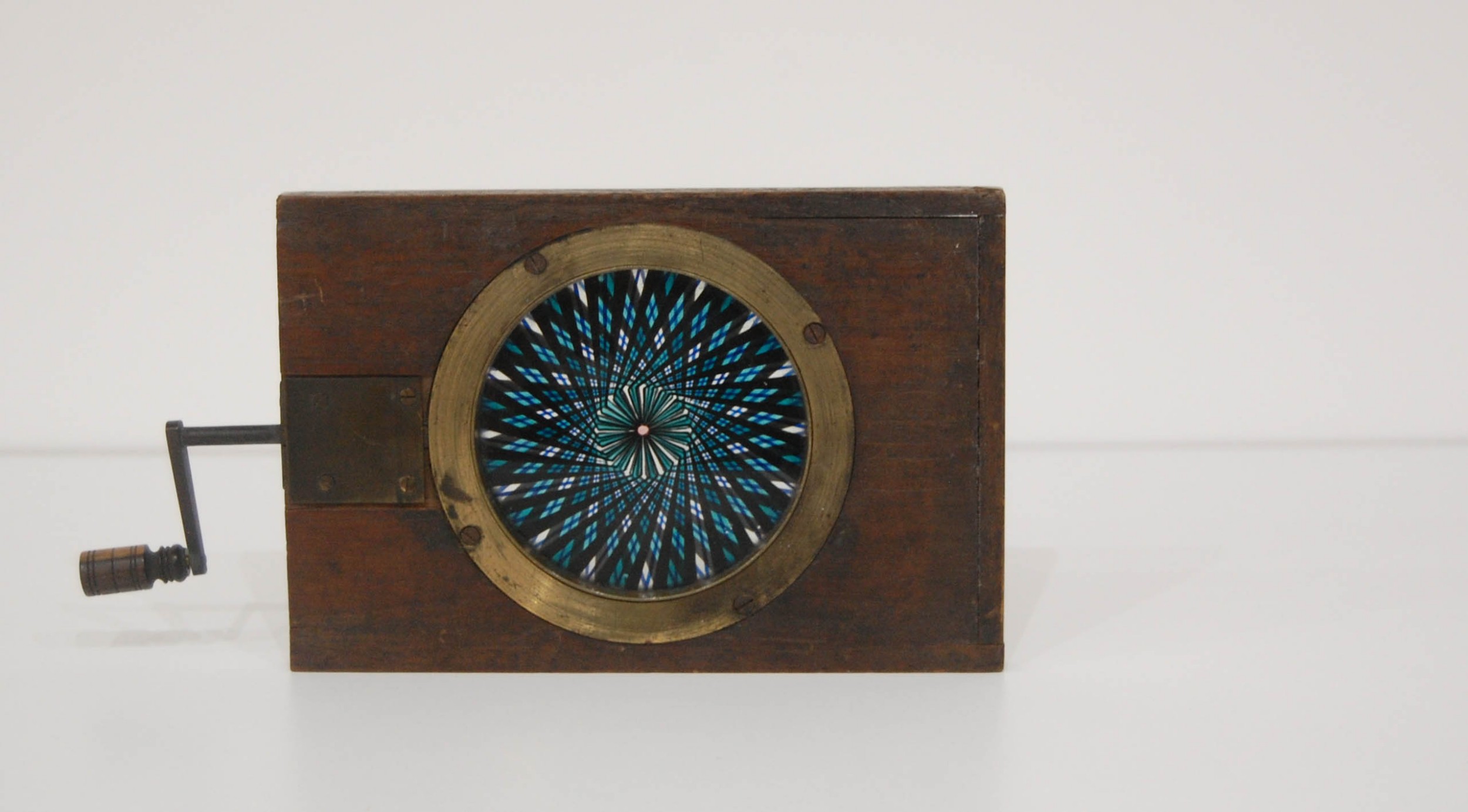
Early Victorian Magic Lantern Chromatrope Slide by We & F Newton of Fleet Street.
Jason Clarke Antiques
sold SA604776
Sorry, but this item has been sold.
Jason Clarke Antiques

Jason Clarke Antiques

Sellingantiques Verified Since Jul 2015
View Dealers Stock Page
Id #SA604776
PDF SHARE
SAVE

Early Victorian Magic Lantern Chromatrope Slide by We & F Newton of Fleet Street.

19th century
Description

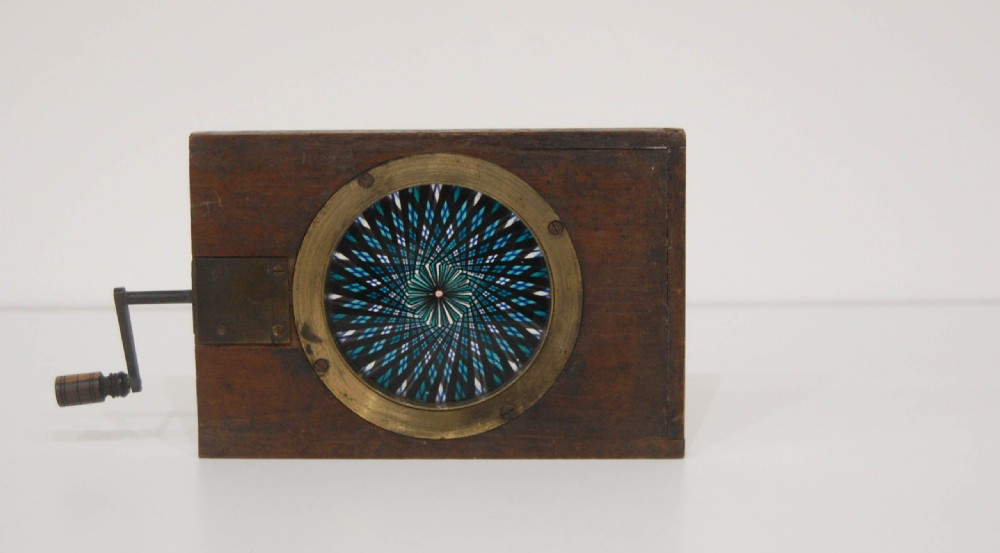
For sale, an early Victorian hand painted magic lantern kaleidoscope chromatrope slide by WE & F Newton.

This early example of a rackwork chromatrope was seen as a development on the earliest versions which were operated by means of a pulley system. This earlier system was somewhat fragile and prone to sagging of the string that drove the mechanism so the development of two hand painted contra-rotating glass discs enclosed in a toothed brass ring was quickly conceived to drive out these inconsistencies. The rings were in turn driven by a shaft that protruded from the end of the slide and which had a toothed cog driving wheel at one end and wooden handle for operation.
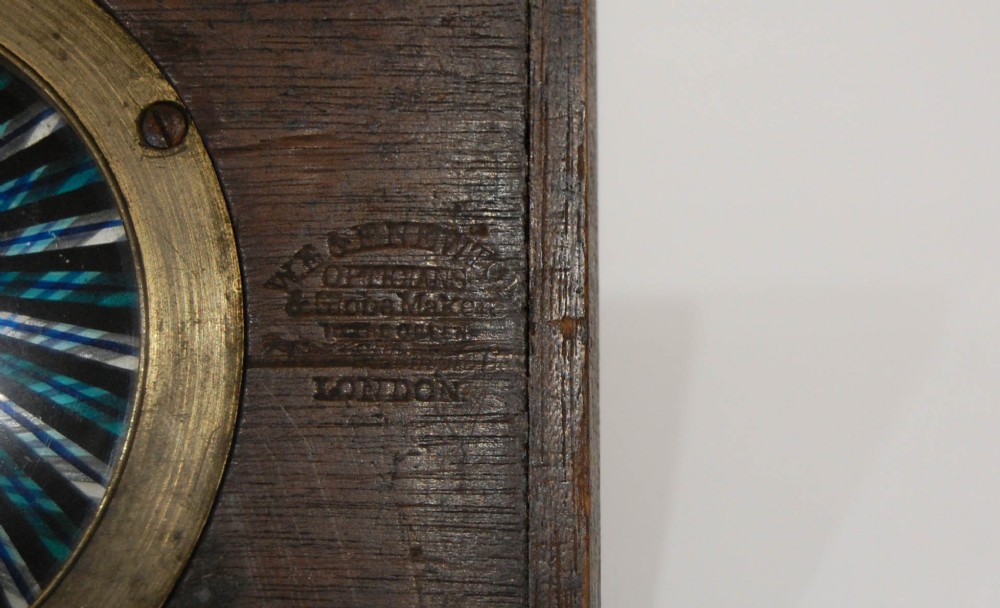
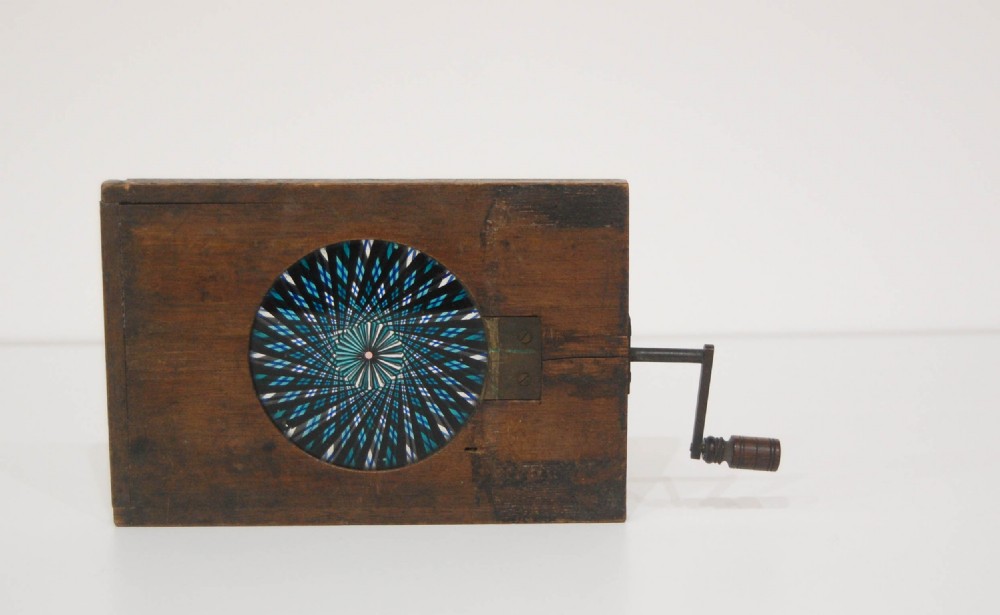
This example is stamped on both sides of the wooden body to the short lived partnership of WE & F Newton and further states, “opticians and globe makers to the Queen, Fleet Steet, Temple Bar, London”. It also confirms its early date of manufacture owing to the partnership only being in existence from 1851 – 1856. The paintwork remains clear and shows a range of colours including blues, greens and black.
The chromatrope is considered to have been the invention of the English glass painter and showman Henry Langdon Childe in 1844 where he developed the slide to support his lectures at The Royal Polytechnic Institution, an influential venue in the early use of the magic lantern as a means for mass entertainment and patrons included Queen Victoria and her children.

The Newton’s according to their late nineteenth century catalogues considered themselves to have had a long and distinguished history dating back to the start of the eighteenth century suggesting that the company founder was a cousin of Sir Isaac Newton. However, through the very long and arduous investigations by both John Millburn & Brian Gee, it is clear that although the family relationship is certainly a close one, the scientific instrument making business began somewhat later.

The origins of the Newton business can sensibly begin with Nathaniel Hill, a self-described “globe maker and engraver” who worked at The Sun & Globe on Chancery Lane from 1746 to 1764 and amongst a number of apprentices took on a Thomas Bateman. Bateman’s early working dates are unclear but he eventually succeeded his former master maintaining the same address and in turn took on a John Newton from Hitchin as his apprentice in 1774. By 1781 it seems that Bateman’s business had been taken over by Newton (who must have just finished his seven year apprenticeship term) and another more established engraver, William Palmer. Palmer himself had in 1770, apprenticed another future leading globe maker in John Cary but must have considered the partnership with the newly established Newton (and the goodwill of Bateman’s business) as a sensible business opportunity. The partnership however, was short lived and from 1783 John Newton according to trade cards was trading alone, presenting himself as successor to Mr T. Bateman.

From this point forward, the business became solely a Newton affair, John had a number of sons but his eldest William succeeded to the globe making business, and in circa 1818 it was renamed as J&W Newton.

It is interesting (and historically confusing) that the Newtons’ at this stage had also taken a keen interest in the new and growing business of patents. The family was intrinsically linked to this industry throughout the nineteenth century and William is recorded as being patent agent on numerous early applications. This side of the business is less relevant (although intrinsically linked as they traded from the same Chancery Lane address) to the scientific instrument making firm but is notable for the fact that William Newton is still considered one of the founding fathers of the Chartered Institute of Patent Agents.

To return to the scientific strand of the Newton family dynasty, William had

Physical Dimensions
Height
11cm (4.33")
Width
22cm (8.66")
Depth
1cm (0.39")
Declaration

Jason Clarke Antiques has dated this piece to the 1850s.

Reference Numbers
Sellingantiques Reference
SA604776
Description
For sale, an early Victorian hand painted magic lantern kaleidoscope chromatrope slide by WE & F Newton.
This early example of a rackwork chromatrope was seen as a development on the earliest versions which were operated by means of a pulley system.
Jason Clarke Antiques

This earlier system was somewhat fragile and prone to sagging of the string that drove the mechanism so the development of two hand painted contra-rotating glass discs enclosed in a toothed brass ring was quickly conceived to drive out these inconsistencies. The rings were in turn driven by a shaft that protruded from the end of the slide and which had a toothed cog driving wheel at one end and wooden handle for operation.

fig 1. Early Victorian Magic Lantern Chromatrope Slide by WE & F Newton of Fleet Street.
fig 1. Early Victorian Magic Lantern Chromatrope Slide by We & F Newton of Fleet Street.

This example is stamped on both sides of the wooden body to the short lived partnership of WE & F Newton and further states, “opticians and globe makers to the Queen, Fleet Steet, Temple Bar, London”. It also confirms its early date of manufacture owing to the partnership only being in existence from 1851 – 1856. The paintwork remains clear and shows a range of colours including blues, greens and black.

fig 2. Early Victorian Magic Lantern Chromatrope Slide by WE & F Newton of Fleet Street.
fig 2. Early Victorian Magic Lantern Chromatrope Slide by We & F Newton of Fleet Street.

The chromatrope is considered to have been the invention of the English glass painter and showman Henry Langdon Childe in 1844 where he developed the slide to support his lectures at The Royal Polytechnic Institution, an influential venue in the early use of the magic lantern as a means for mass entertainment and patrons included Queen Victoria and her children.

The Newton’s according to their late nineteenth century catalogues considered themselves to have had a long and distinguished history dating back to the start of the eighteenth century suggesting that the company founder was a cousin of Sir Isaac Newton. However, through the very long and arduous investigations by both John Millburn & Brian Gee, it is clear that although the family relationship is certainly a close one, the scientific instrument making business began somewhat later.

The origins of the Newton business can sensibly begin with Nathaniel Hill, a self-described “globe maker and engraver” who worked at The Sun & Globe on Chancery Lane from 1746 to 1764 and amongst a number of apprentices took on a Thomas Bateman. Bateman’s early working dates are unclear but he eventually succeeded his former master maintaining the same address and in turn took on a John Newton from Hitchin as his apprentice in 1774. By 1781 it seems that Bateman’s business had been taken over by Newton (who must have just finished his seven year apprenticeship term) and another more established engraver, William Palmer. Palmer himself had in 1770, apprenticed another future leading globe maker in John Cary but must have considered the partnership with the newly established Newton (and the goodwill of Bateman’s business) as a sensible business opportunity. The partnership however, was short lived and from 1783 John Newton according to trade cards was trading alone, presenting himself as successor to Mr T. Bateman.

From this point forward, the business became solely a Newton affair, John had a number of sons but his eldest William succeeded to the globe making business, and in circa 1818 it was renamed as J&W Newton.

It is interesting (and historically confusing) that the Newtons’ at this stage had also taken a keen interest in the new and growing business of patents. The family was intrinsically linked to this industry throughout the nineteenth century and William is recorded as being patent agent on numerous early applications. This side of the business is less relevant (although intrinsically linked as they traded from the same Chancery Lane address) to the scientific instrument making firm but is notable for the fact that William Newton is still considered one of the founding fathers of the Chartered Institute of Patent Agents.

To return to the scientific strand of the Newton family dynasty, William had

Height
11cm (4.33")
Width
22cm (8.66")
Depth
1cm (0.39")
Date of Manufacture

Jason Clarke Antiques has dated this piece to the 1850s.

Reference Numbers
Sellingantiques Ref
SA604776
Jason Clarke Antiques
Sellingantiques verified Since Jul 2015
Dealer Profile

You can view the stock and full dealer information on the Jason Clarke Antiques Profile Page
PDF SHARE
SAVE
Early Victorian Magic Lantern Chromatrope Slide by WE & F Newton of Fleet Street.
1 / 3
Archive I Early Victorian Magic Lantern Chromatrope Slide by WE & F Newton of Fleet Street.

Early Victorian Magic Lantern Chromatrope Slide by We & F Newton of Fleet Street.
Archive II Early Victorian Magic Lantern Chromatrope Slide by WE & F Newton of Fleet Street. View II
Archive III Early Victorian Magic Lantern Chromatrope Slide by WE & F Newton of Fleet Street. View III
Enlarged Archival View
Telephone 07815 046645
Location
Newbury
Berkshire
United Kingdom
Verified Since Jul 2015
Items For Sale 80
Items Sold 607
Jason Clarke Antiques
Verified Since Jul 2015
View Dealer Info
Location: Newbury, Berkshire, United Kingdom
Verified
Jul 2015
For Sale
80
Sold
607
Early Victorian Magic Lantern Chromatrope Slide by WE & F Newton of Fleet Street.
Ref: SA604776
Early Victorian Magic Lantern Chromatrope Slide by WE & F Newton of Fleet Street.
Detail View 1
Detail View 2
Archival Detail
Every single antique dealer on our platform is individually approved by our internal team. We verify their professional trade history, ethical standards, and photographic quality to ensure a secure, high-standard buying environment. Upon joining, every dealer agrees to a strict 9-point code of conduct. While issues can occasionally arise, our dealers typically resolve them swiftly and directly with the buyer. In fact, since our founding in 2002, Sellingantiques has only had to step in to help resolve an issue on roughly five occasions—a true testament to the quality of our dealers and their dedication to your happiness.
Our dealers are highly experienced in packing and shipping fragile, high-value antiques. Because you are in direct contact with the dealer, you will be able to easily go through all available shipping and insurance options together to ensure your item arrives safely.
Antiques are the ultimate green purchase. By choosing historical pieces over newly manufactured goods, you completely eliminate the carbon footprint of modern mass production while preserving exceptional, timeless craftsmanship.
items
Add keywords to the filter
Price
£100
£250000
Era
Movements
Material
Origin
Stock Location
Freshness
Online Payments
Categories