Jason Clarke Antiques has dated this piece to the 1880s.
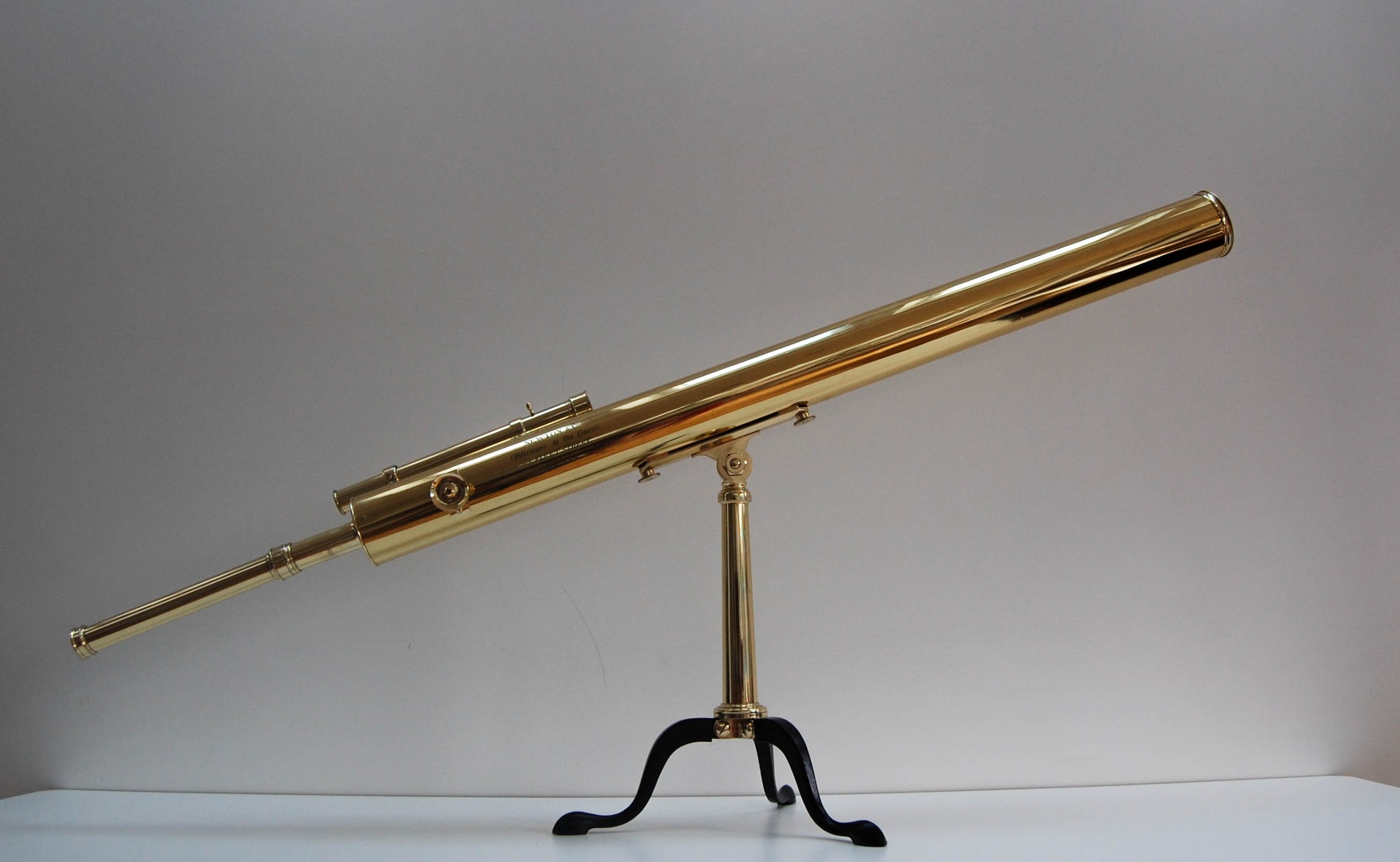
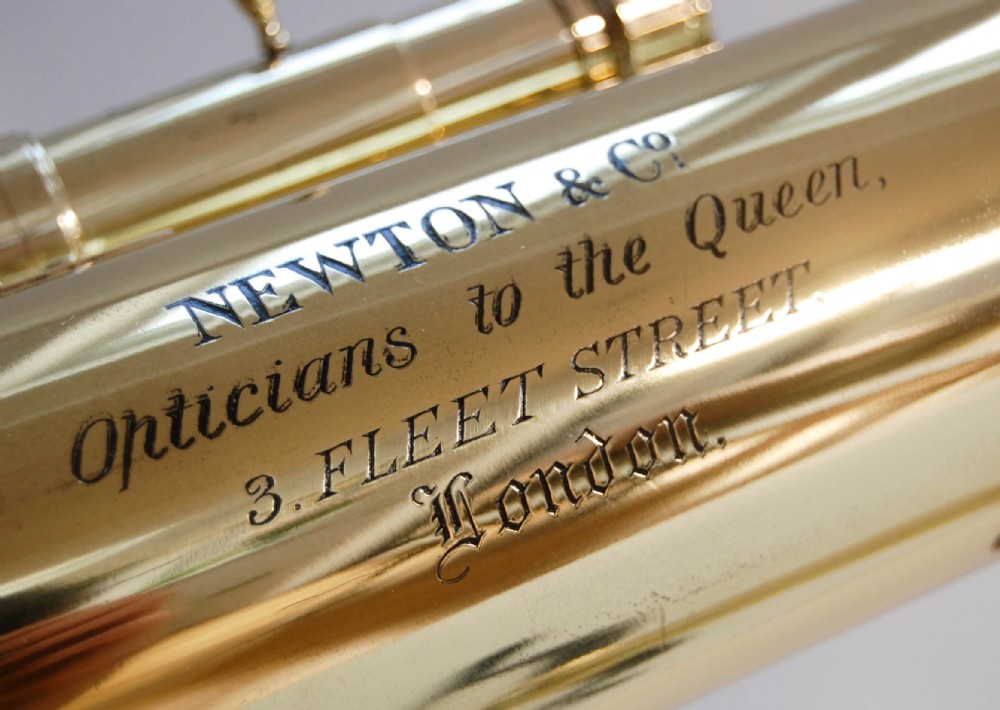
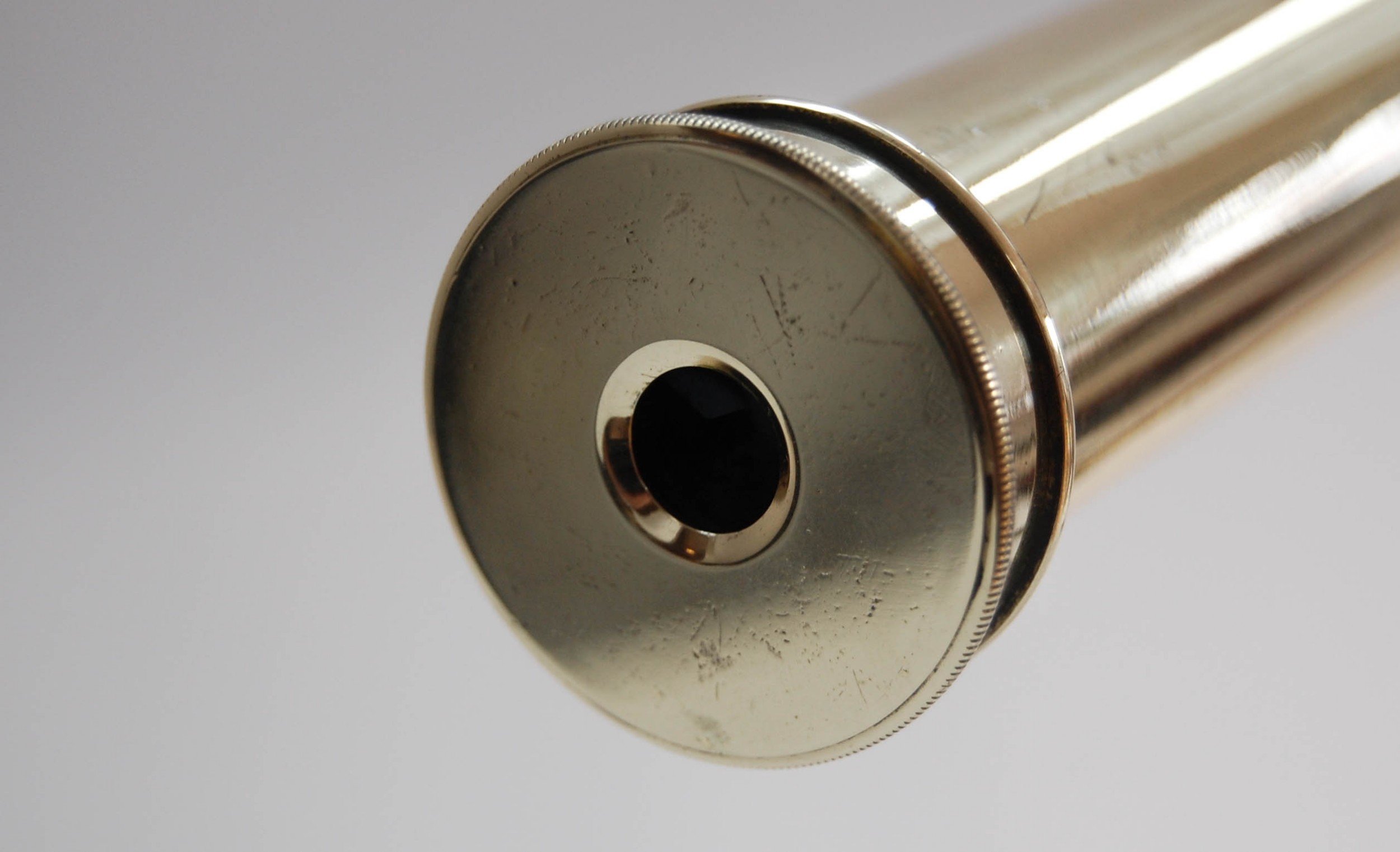
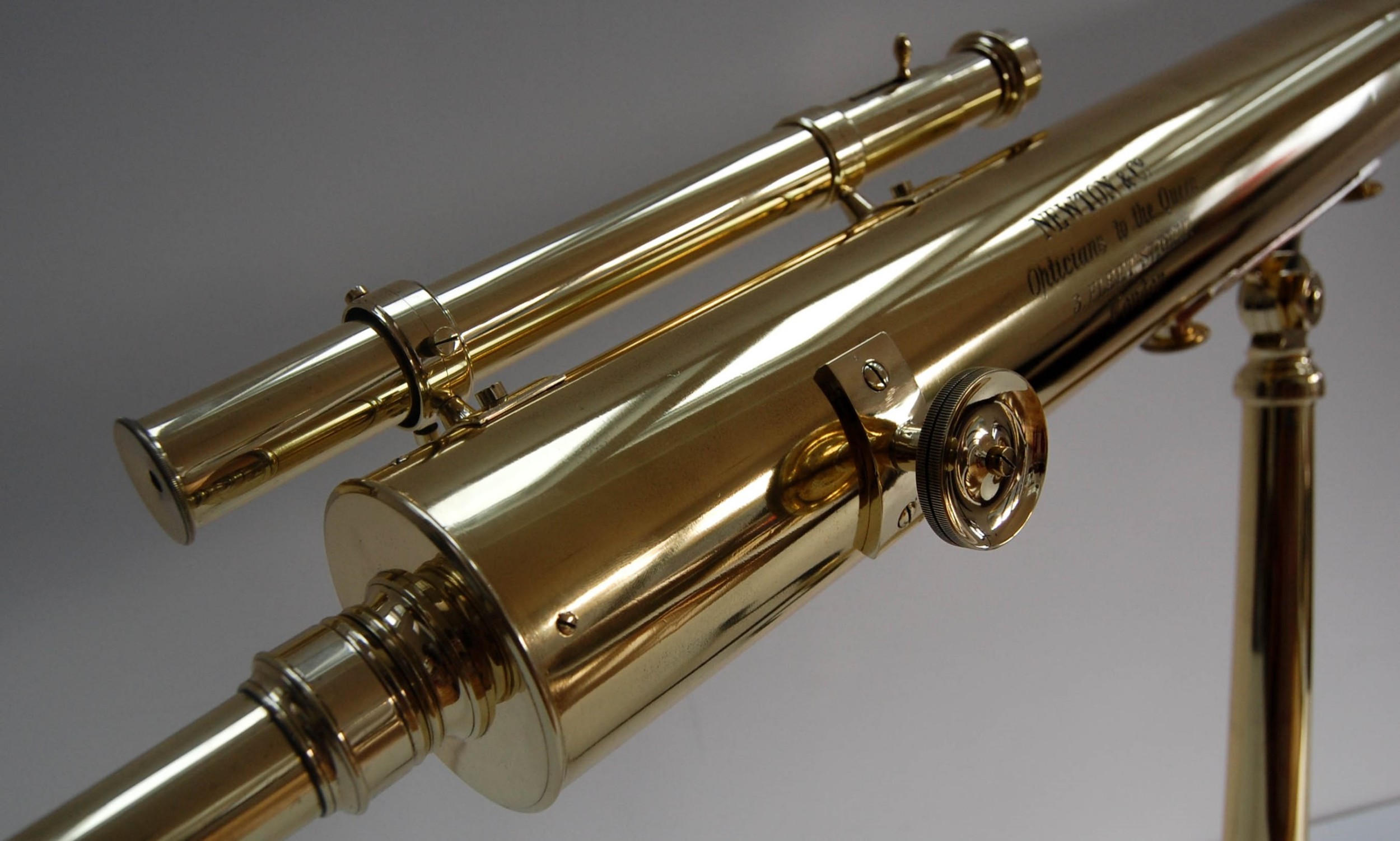
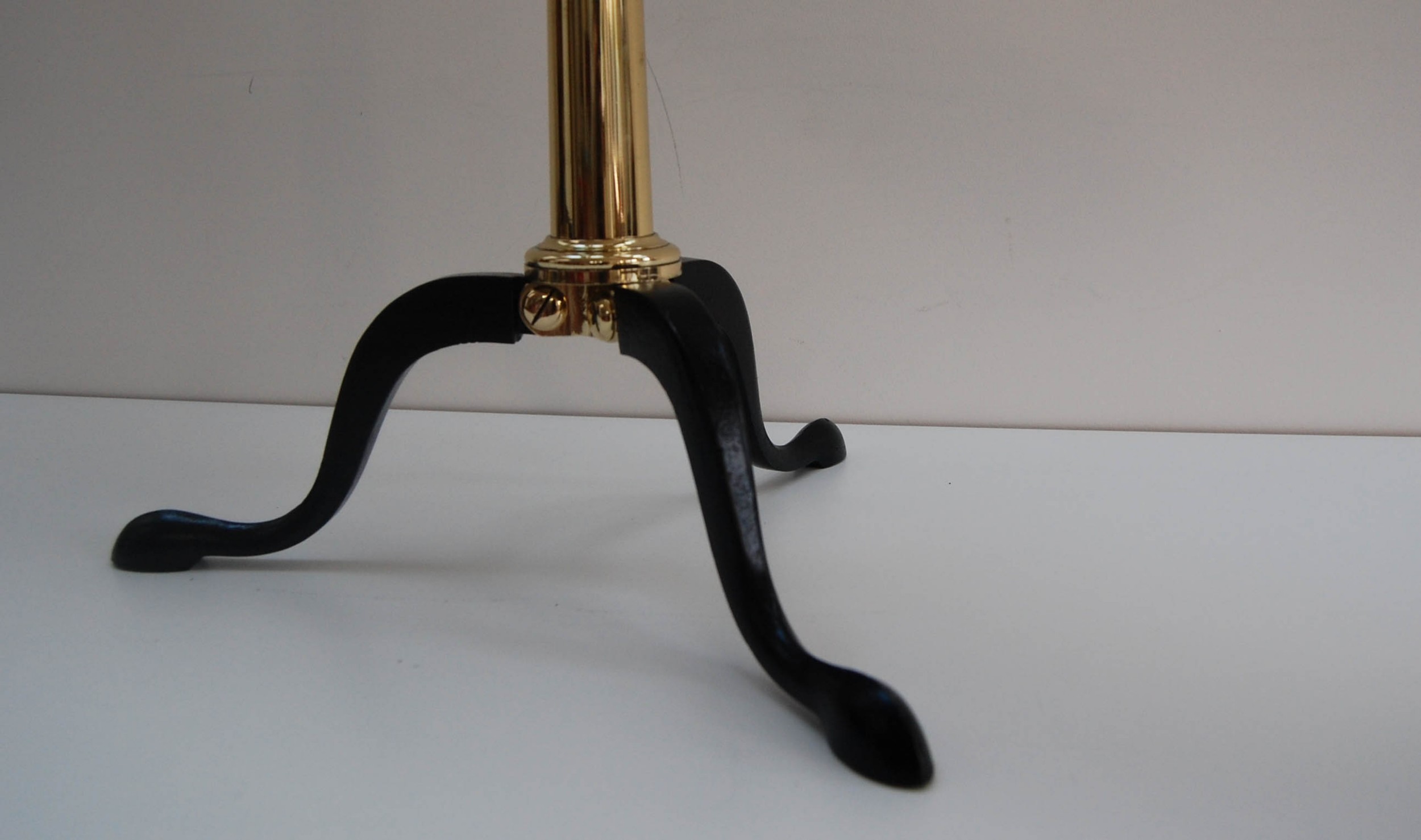
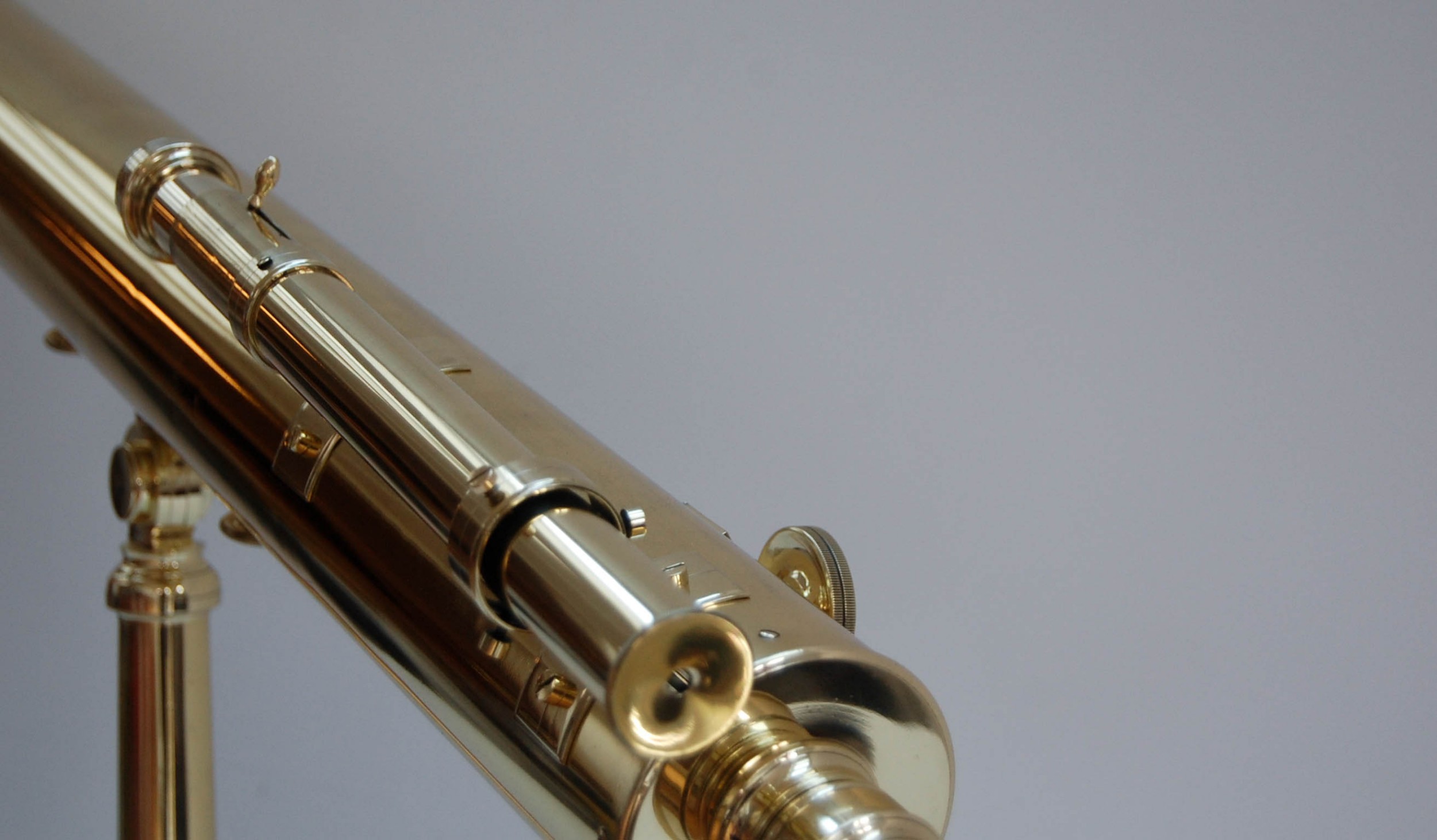
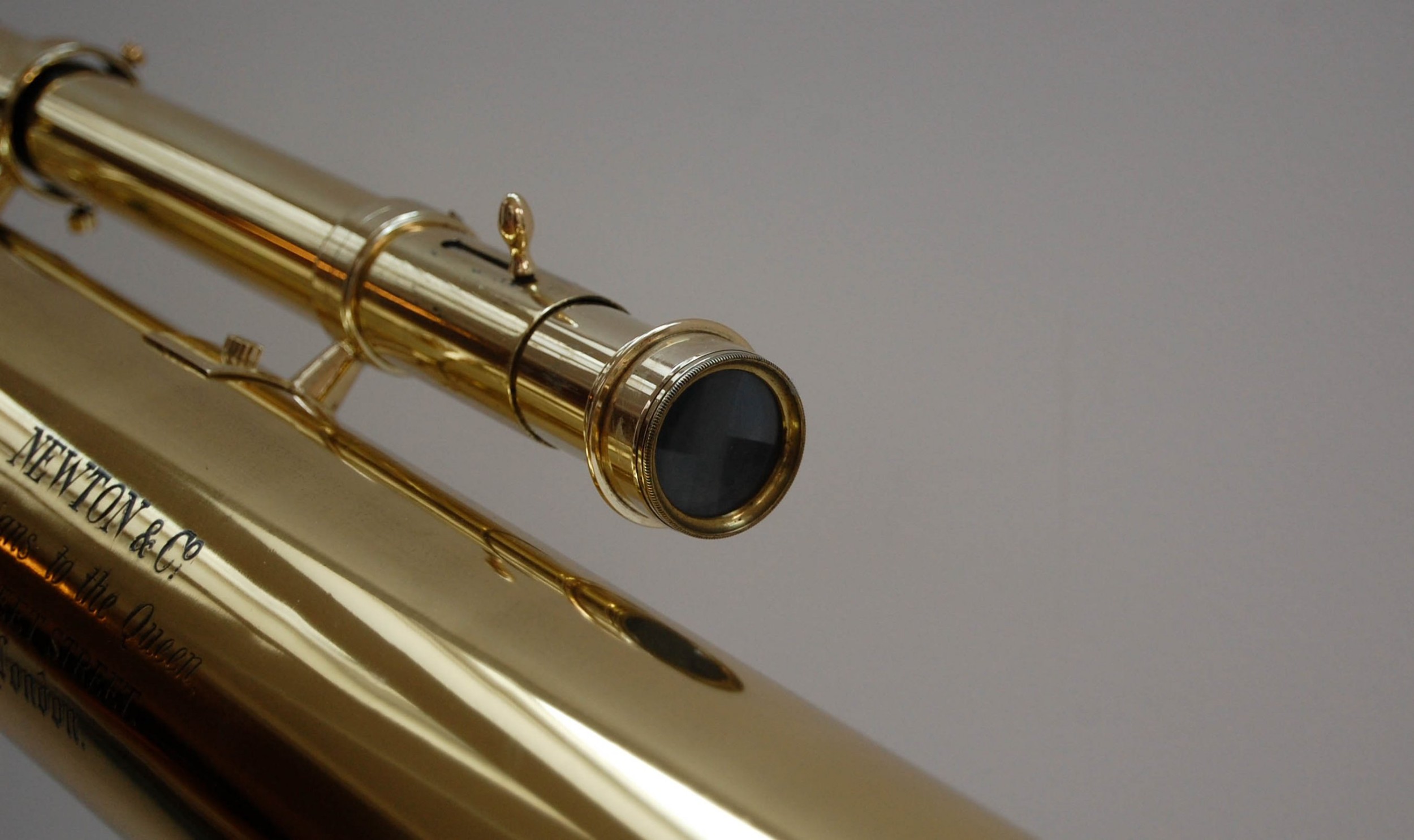
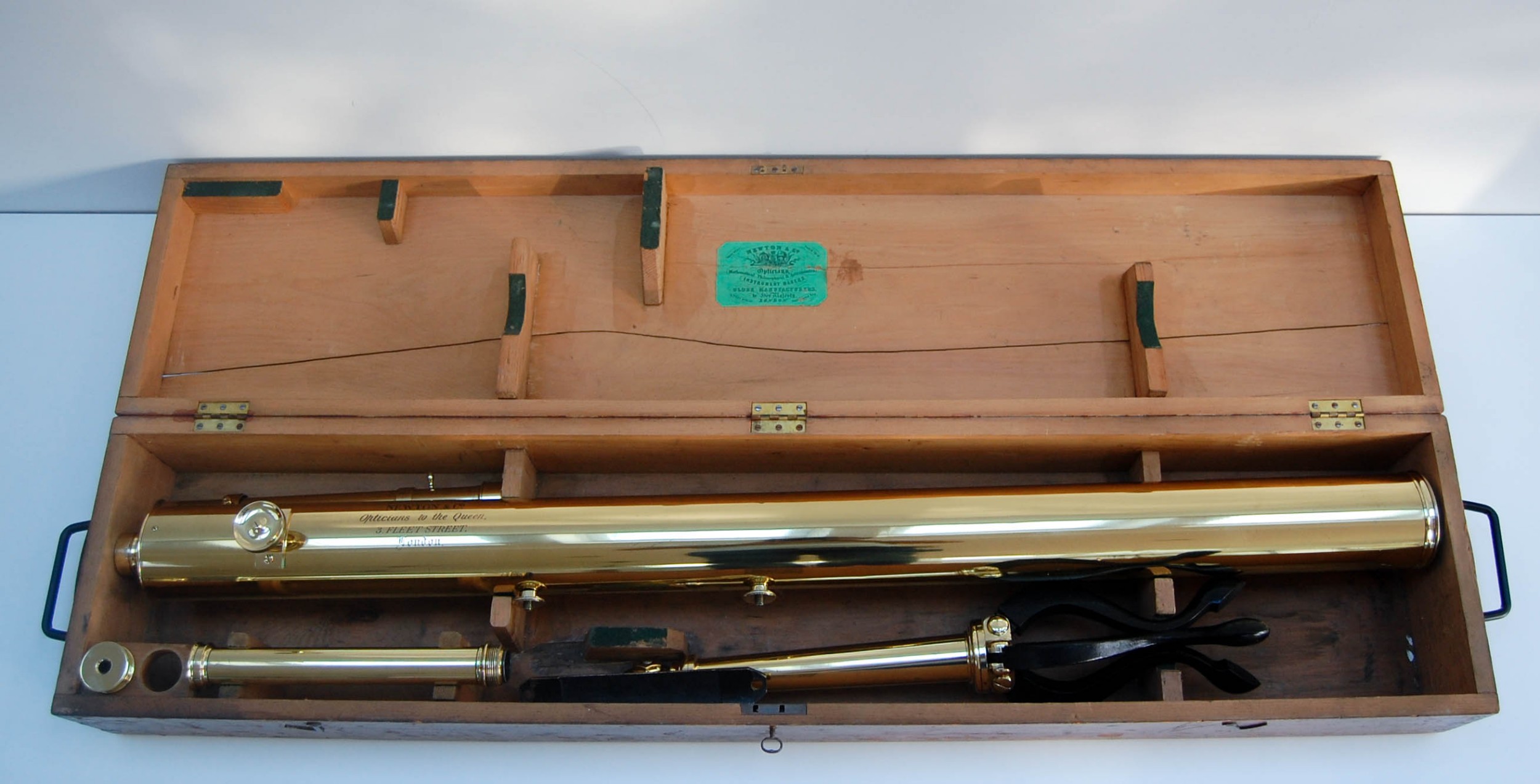
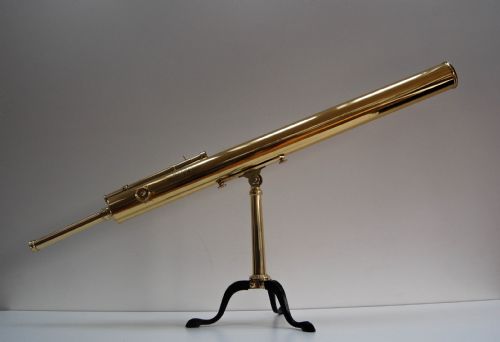
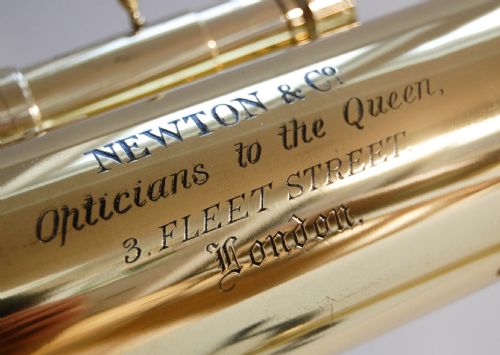
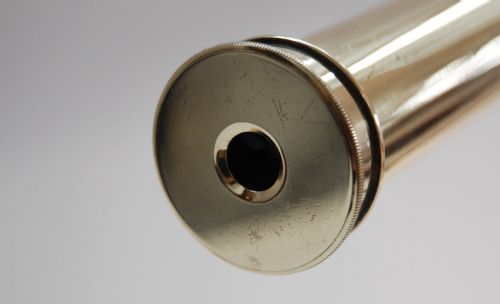
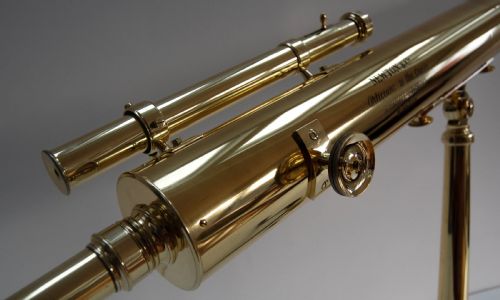
This superior example has a main barrel measuring 41.5 inches with a 3 inch objective lens diameter. With the single draw and eyepiece fully extended the length increases to 59 inches. The main barrel has an accompanying 12 inch starfinder with original lens cap to the left side and the maker’s name beautifully engraved to, “Newton & Co, Opticians to the Queen, 3 Fleet Street, London” on the right. It also retains its sun shade eyepiece for protecting the eyes for observation.
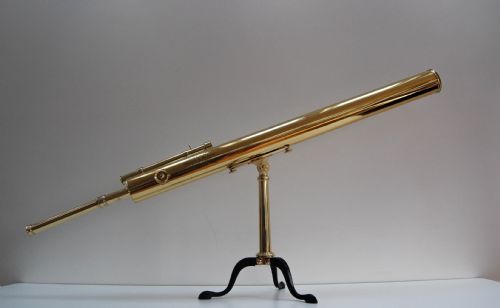
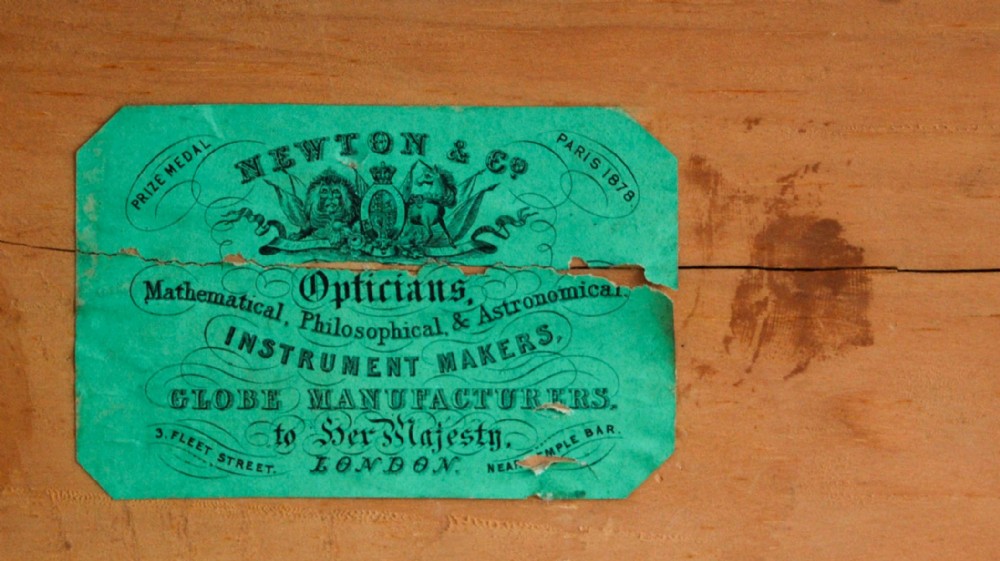
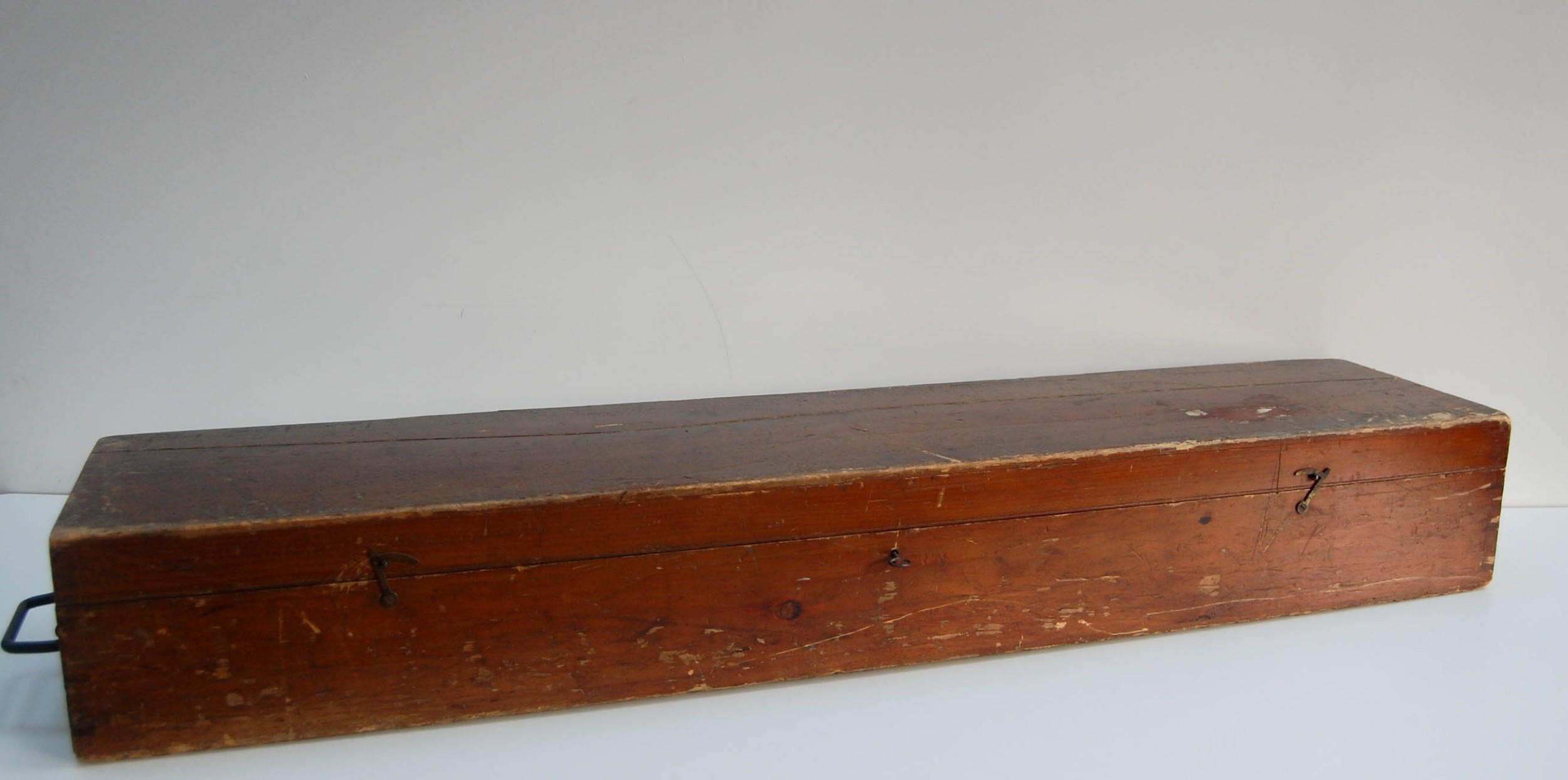
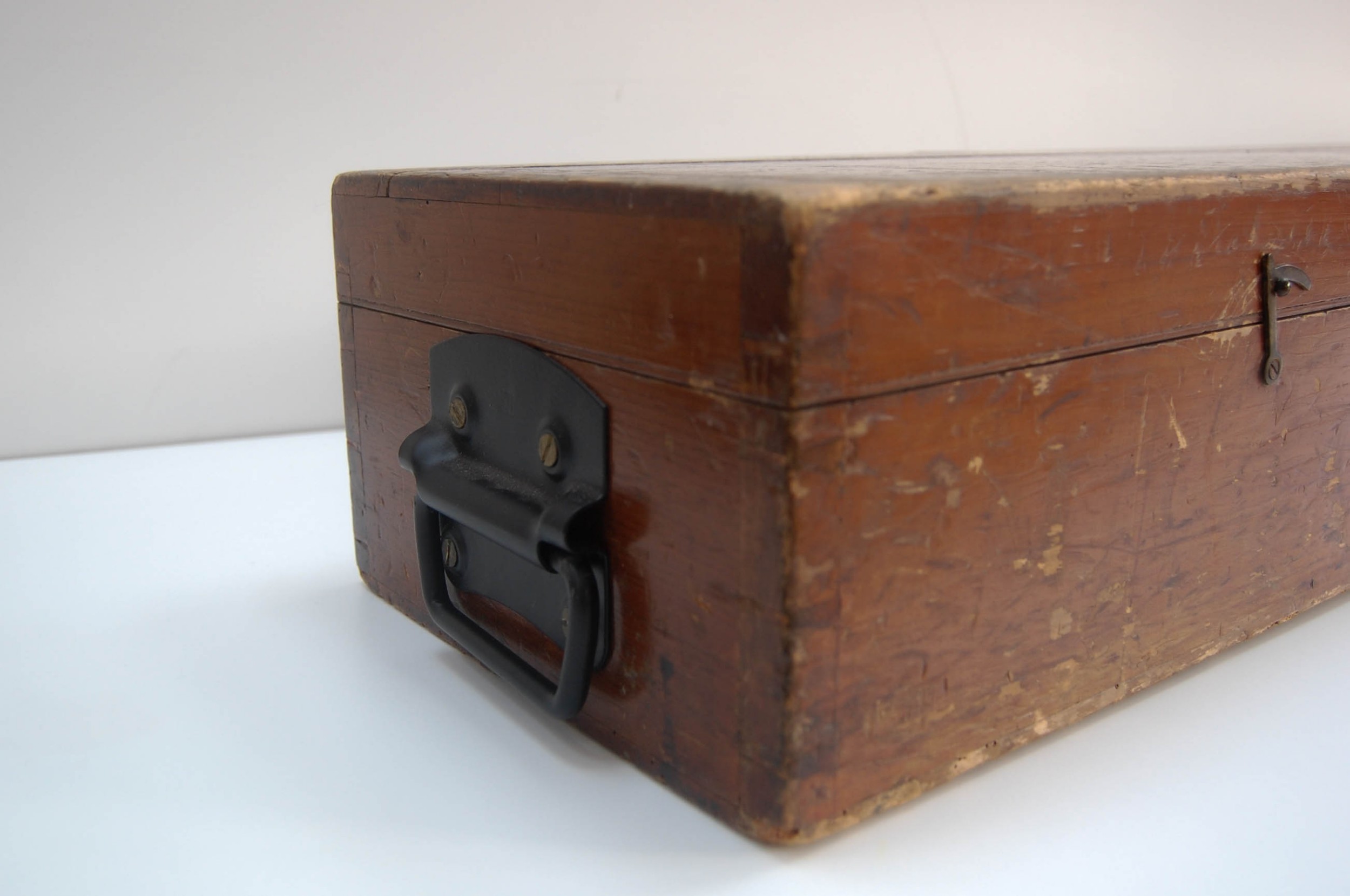
The telescope is mounted on top of a solid brass tripod with black painted iron legs and it comes complete in its original pine packing case with baized sectioned interior and trade label to the interior of the lid. It states:
“Newton & Co, Opticians, Mathematical, Philosophical & Astronomical Instrument Makers. Globe Manufacturers too Her Majesty. 3 Fleet Street, London, Near Temple Bar. Prize Medal 1878.”
The Newton’s according to their late nineteenth century catalogues considered themselves to have had a long and distinguished history dating back to the start of the eighteenth century suggesting that the company founder was a cousin of Sir Isaac Newton. However, through the very long and arduous investigations by both John Millburn & Brian Gee, it is clear that although the family relationship is certainly a close one, the scientific instrument making business began somewhat later.
The origins of the Newton business can sensibly begin with Nathaniel Hill, a self-described “globe maker and engraver” who worked at The Sun & Globe on Chancery Lane from 1746 to 1764 and amongst a number of apprentices took on a Thomas Bateman.
By 1781 it seems that Bateman’s business had been taken over by Newton (who must have just finished his seven year apprenticeship term) and another more established engraver, William Palmer. Palmer himself had in 1770, apprenticed another future leading globe maker in John Cary but must have considered the partnership with the newly established Newton (and the goodwill of Bateman’s business) as a sensible business opportunity. The partnership however, was short lived and from 1783 John Newton according to trade cards was trading alone, presenting himself as successor to Mr T. Bateman.
From this point forward, the business became solely a Newton affair, John had a number of sons but his eldest William succeeded to the globe making business, and in circa 1818 it was renamed as J&W Newton.
It is interesting (and historically confusing) that the Newtons’ at this stage had also taken a keen interest in the new and growing business of patents. The family was intrinsically linked to this industry throughout the nineteenth century and William is recorded as being patent agent on numerous early applications. This side of the business is less relevant (although intrinsically linked as they traded from the same Chancery Lane address) to the scientific instrument making firm but is notable for the fact that William Newton is still considered one of the founding fathers of the Chartered Institute of Patent Agents.
To return to the scientific strand of the Newton family dynasty, William had two sons, William Edward and Alfred Vincent, the latter also becoming a patent agent whilst the former maintaining ties with both industries called for the name change to the more familiar Newton & Co. It seems that both of the family concerns were increasingly prosperous as by the time of The Great Exhibition, the decision seems to have been taken to maintain the patent agency at Chancery Lane with a
Jason Clarke Antiques has dated this piece to the 1880s.
You can view the stock and full dealer information on the Jason Clarke Antiques Profile Page
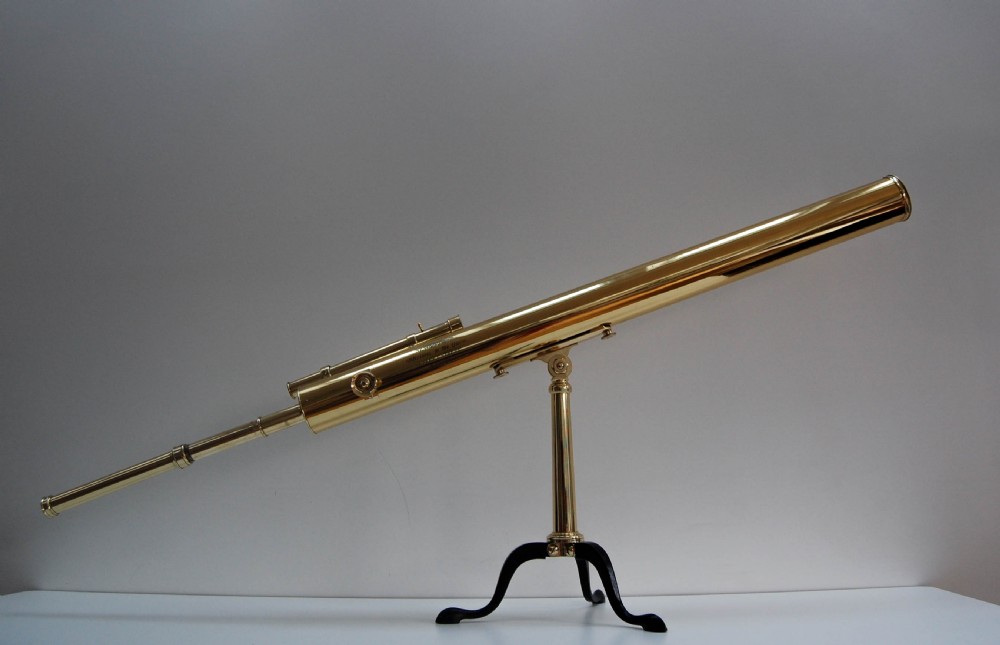

Large Cased Victorian Desk Top Astronomical Telescope by Newton & Co, Fleet Street