5,051  PAGES BROWSED TODAY PAGES TODAY 0 ANTIQUES UPLOADED TODAYNEW ARRIVALS
LATEST STOCK
Sort Order
Items Per Page
Browse Categories
Sort order
Items per page
ID #SA551131
SOLD
Email
Save
Early Victorian Mason's Hygrometer or Wet & Dry Thermometer by Bennett of 65 Cheapside London
Jason Clarke Antiques
sold SA551131
Sorry, but this item has been sold.
Jason Clarke Antiques

Jason Clarke Antiques

Sellingantiques Verified Since Jul 2015
View Dealers Stock Page
Id #SA551131
PDF SHARE
SAVE

Early Victorian Mason's Hygrometer or Wet & Dry Thermometer by Bennett of 65 Cheapside London

19th century
Description

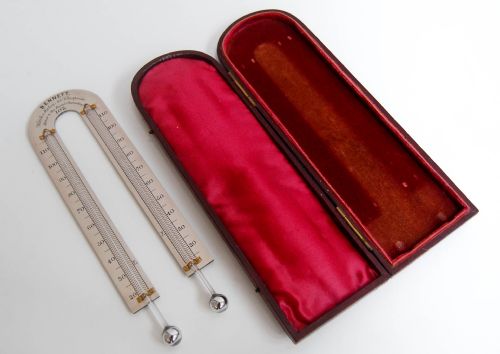
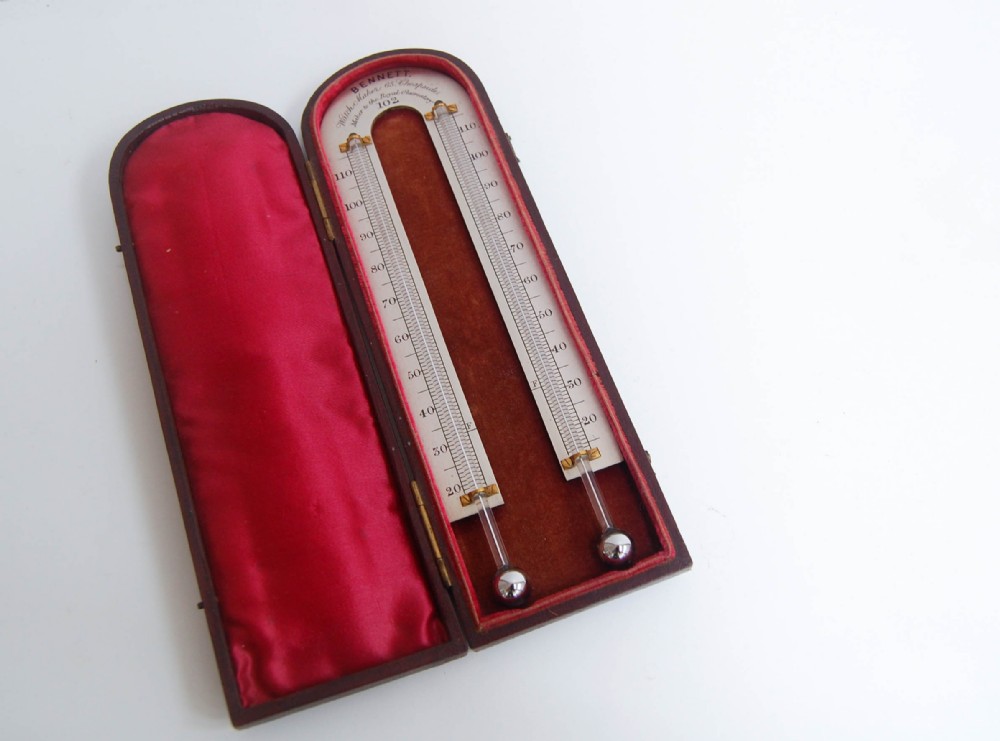
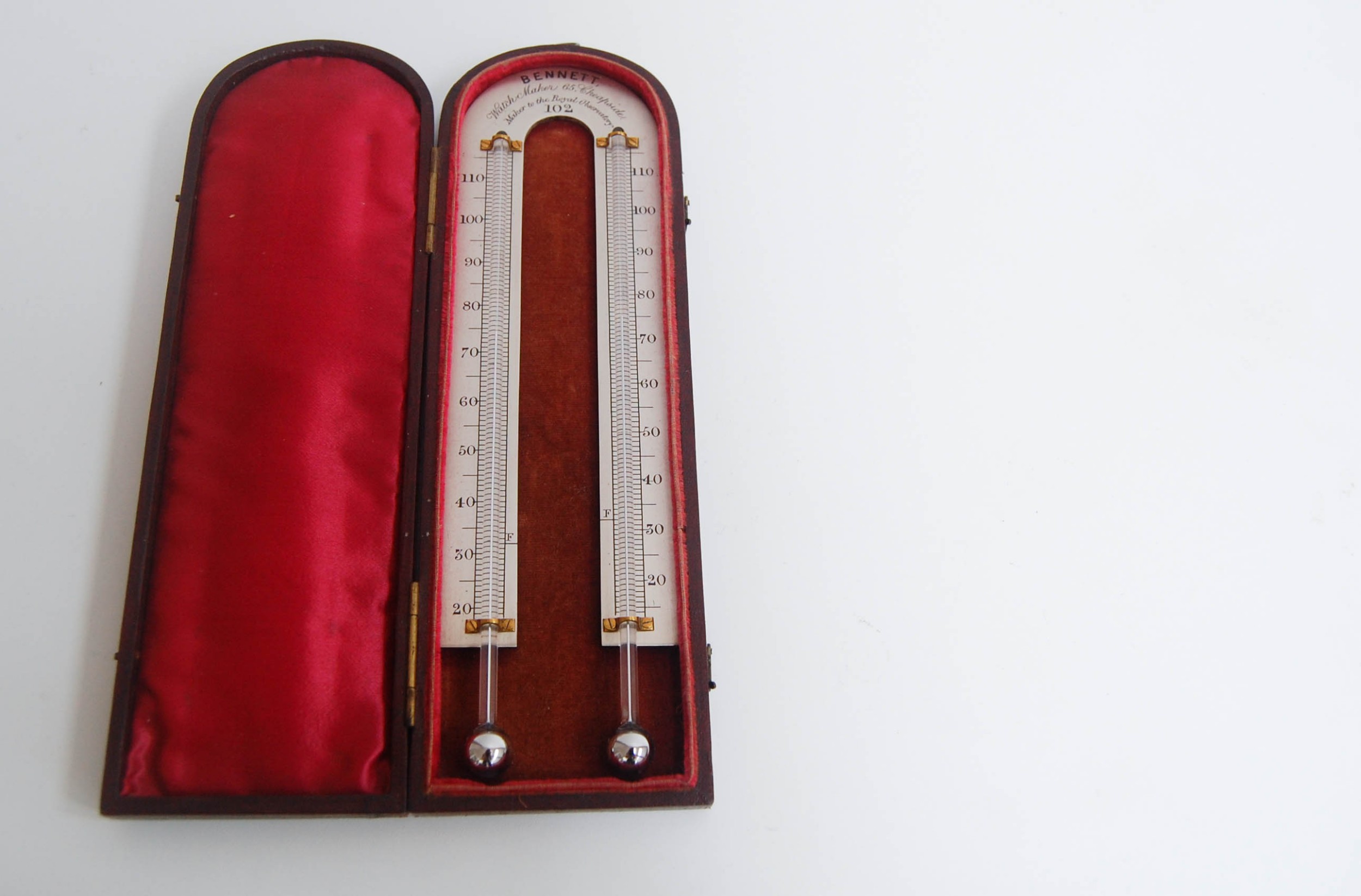
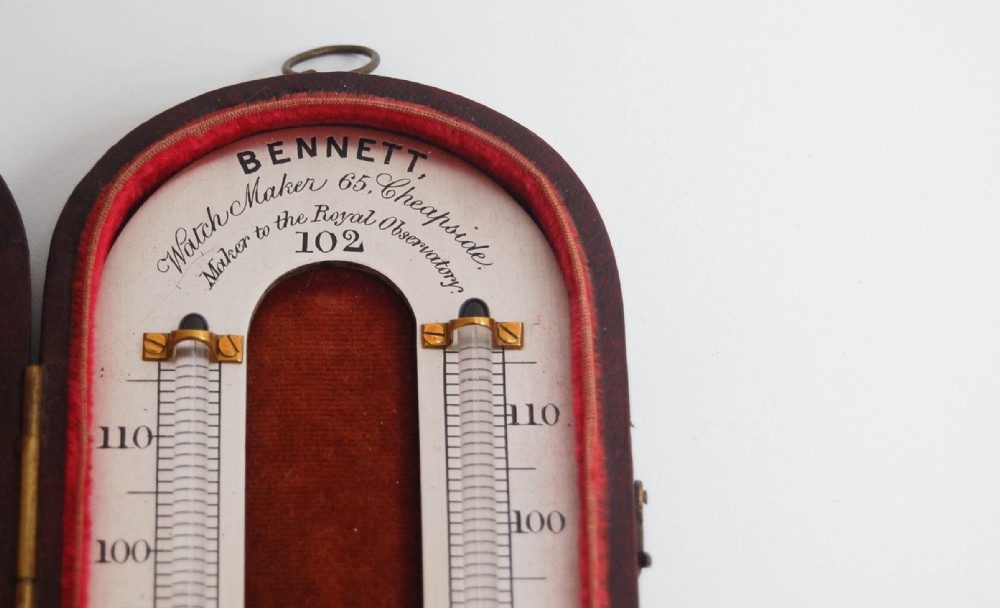
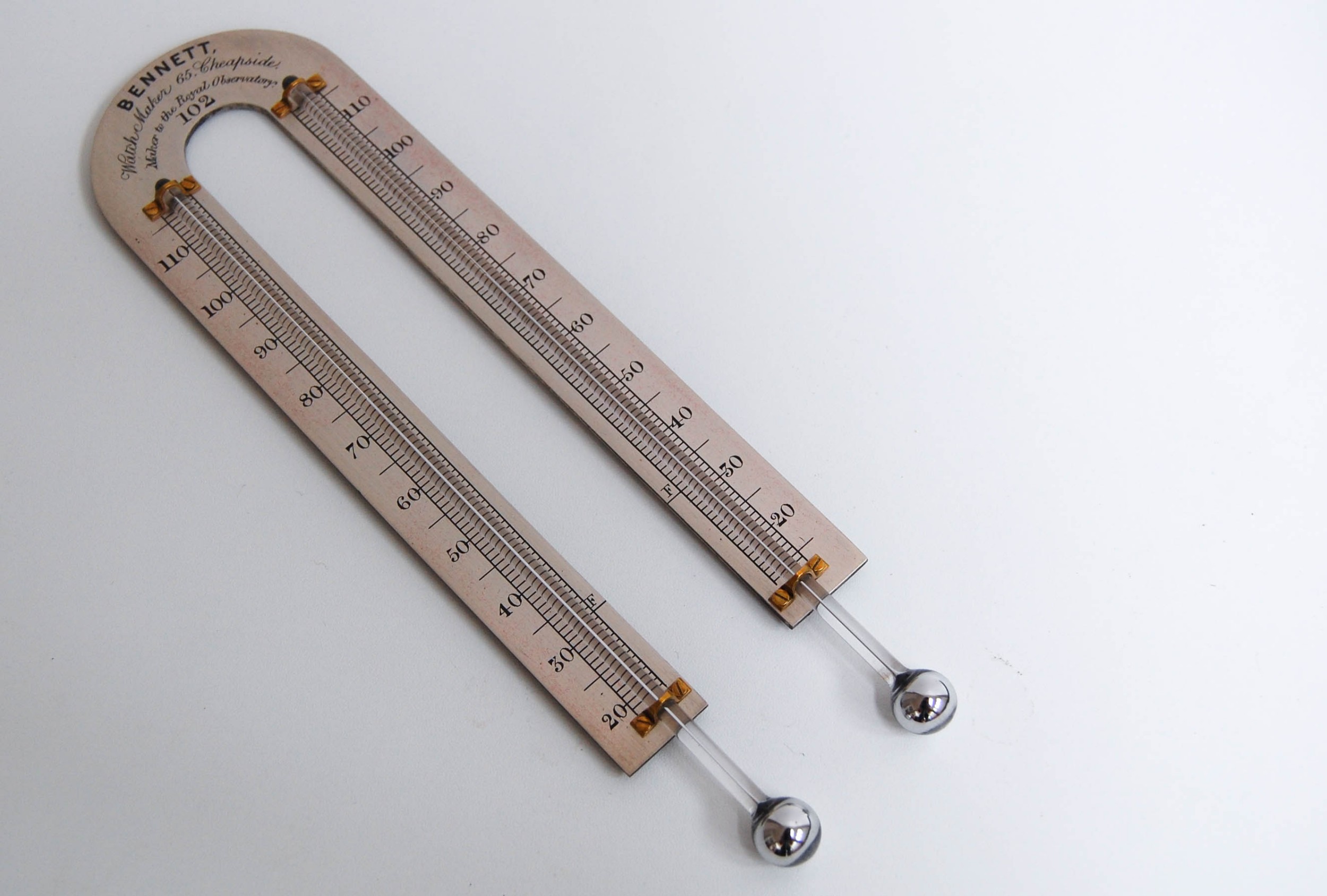
An Early Victorian Mason’s Hygrometer or Wet & Dry Thermometer engraved to Bennett Watchmaker, 65 Cheapside, Maker to The Royal Observatory.

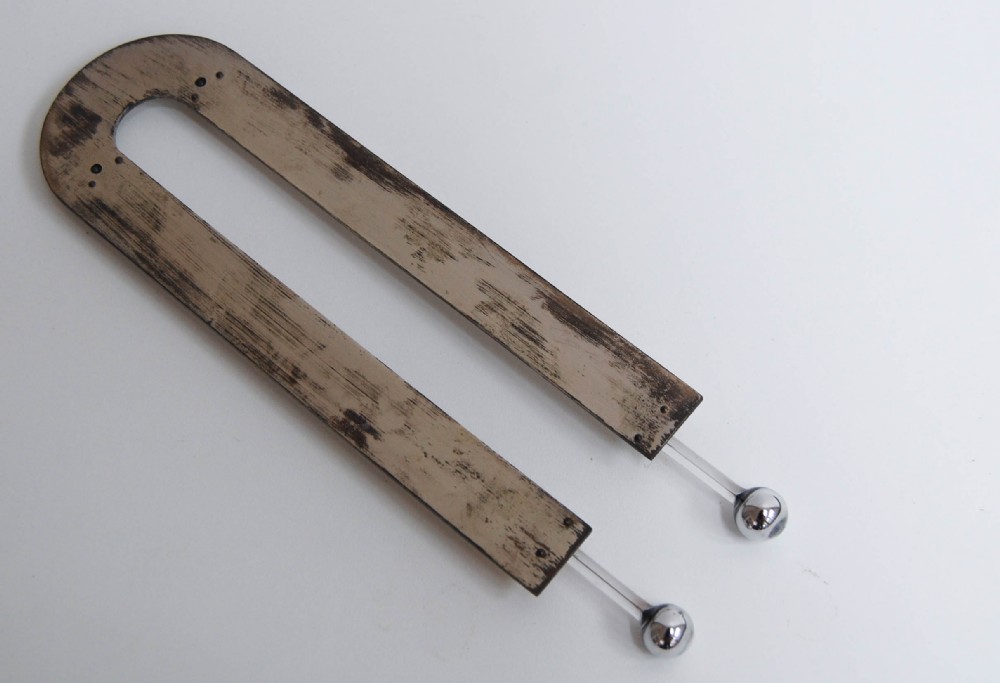
The instrument is comprised of two thermometers affixed by four brass clasps to a silvered U shaped scale plate. Both using a Fahrenheit scale, the left (dry bulb) registers 20 to 115 degrees whilst the right (wet bulb) measures from 15 – 115 degrees. The maker’s name is engraved to the top as follows, “Bennett, Watchmaker 65 Cheapside, Maker to The Royal Observatory”.
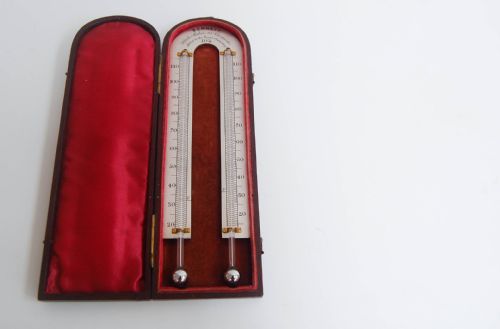
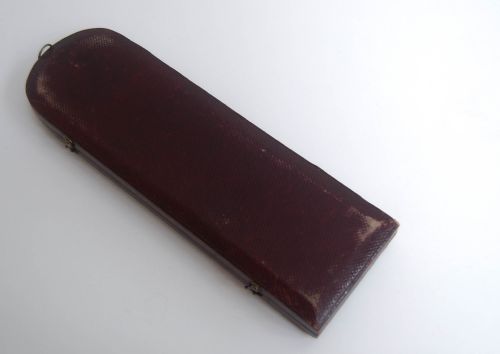
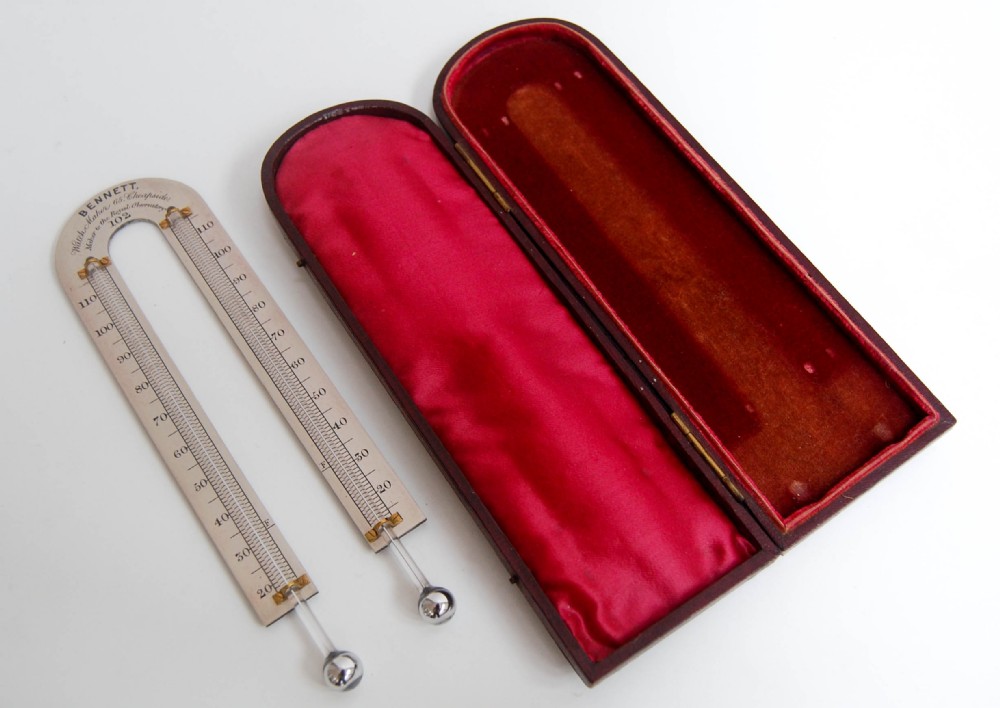
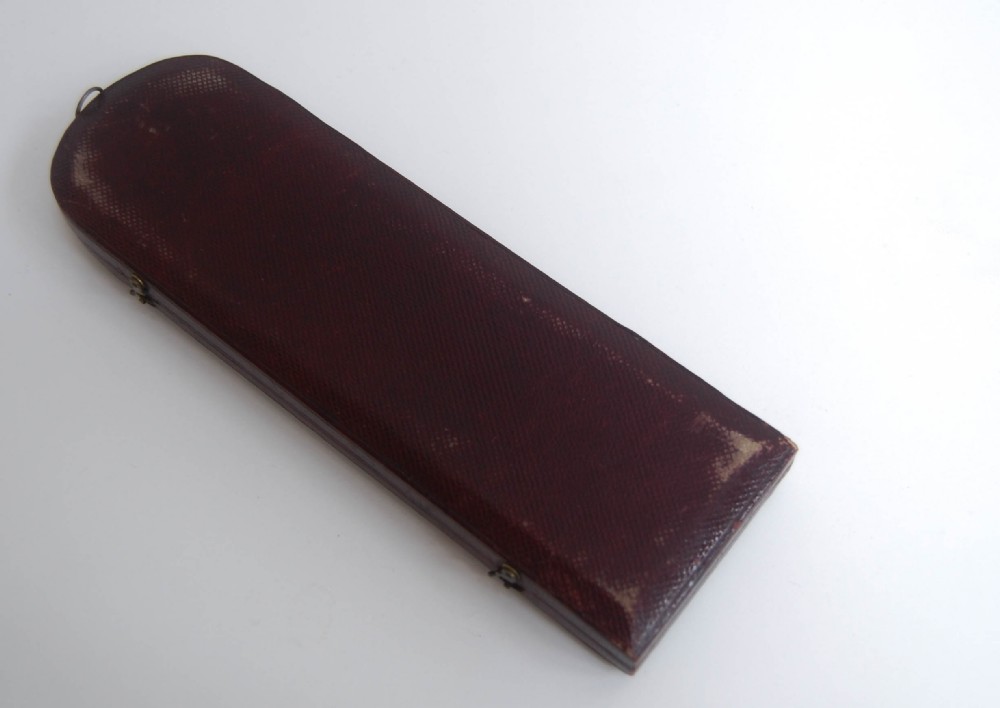
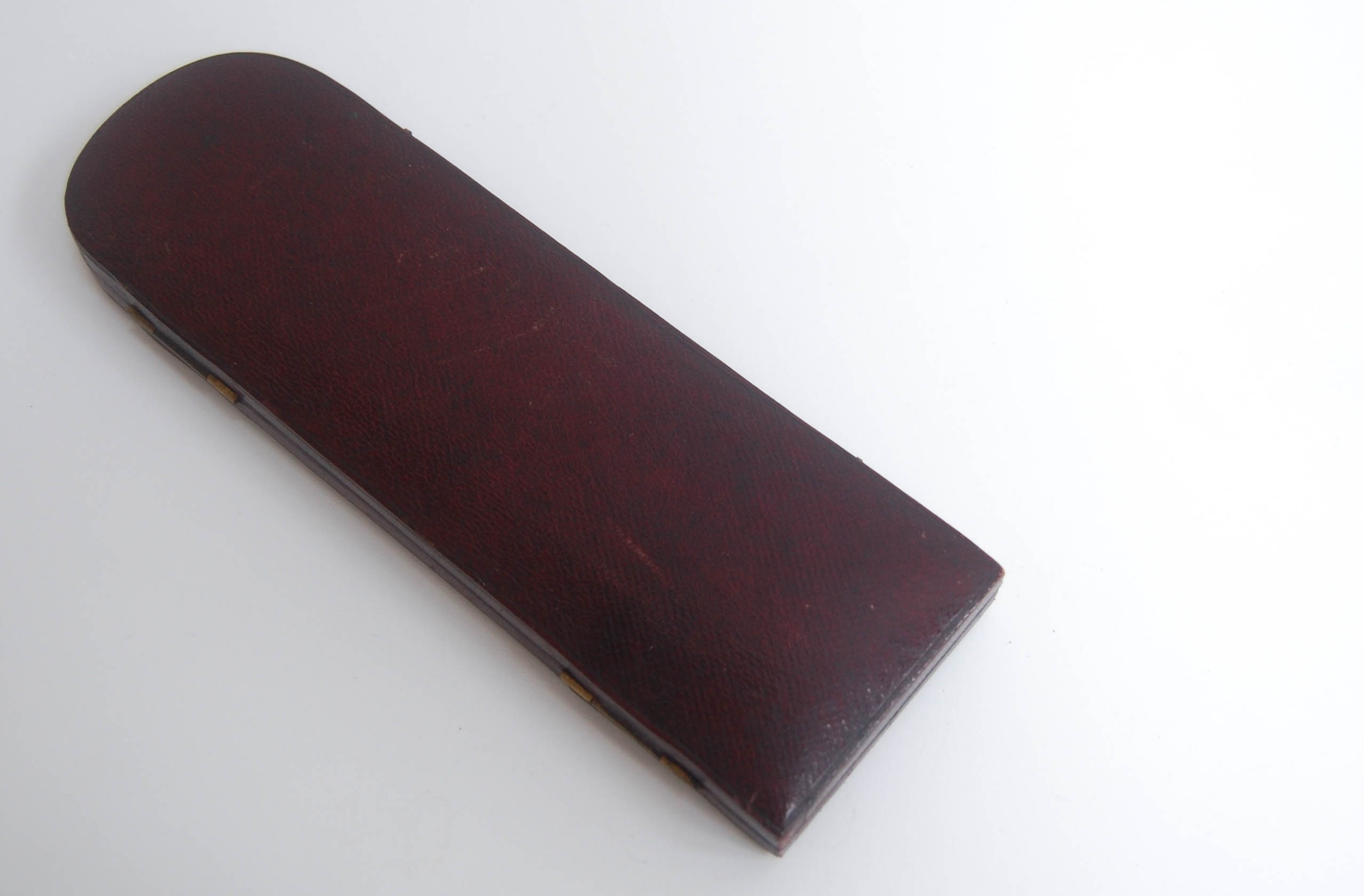
This rare and unusual thermometer set is contained within an immaculate red morocco leather case with original red velvet and silk lined interior. The hinged case is secured by two hook and eye catches which are both still present. As a testament to the craftsmanship of this piece, both catches are set upon brass washers to ensure that the movement of the catch does not rub the leather whilst being operated. This was a top quality instrument during its time and the care and attention is very evident.
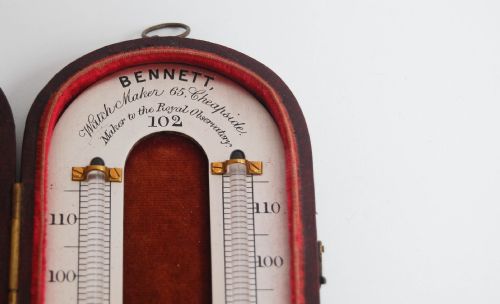
Meteorological instruments such as these have a number of associated names, hygrometer meaning the measurement of moisture or water, the name psychrometer (cold meter) was used by the German inventor Ernst Ferdinand August (1795-1870) and during the same period in 1836, the Surgeon, John Abraham Mason was presenting his new, Mason’s Hygrometer. An article in the Record of General Science describes a “new hygrometer illustrated by experiments and a comparison of its results with Sir John Leslie’s”. Leslie had in 1805 developed an air thermometer based upon Galileo’s thermoscope. Sadly, Mason’s name is no longer commonly associated with his invention but its continued manufacture into the 1840’ and 50’s is testament to its superior accuracy.
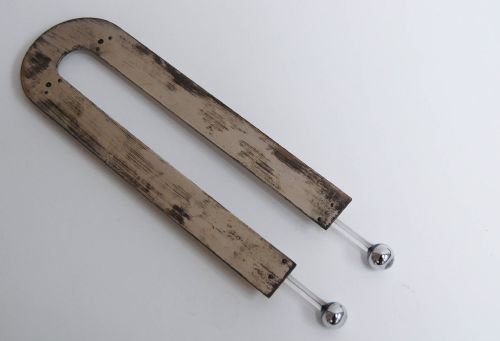
It is now more commonly dubbed, the wet and dry thermometer relating to the comparison of two thermometers, one with a wet bulb and the other dry. This is essentially the same as Mason’s pattern where one thermometer is kept wet by means of a water soaked sock covering one bulb and the other kept dry. The evaporation of water from the sock has the effect of lowering the temperature reading on the wet thermometer and the difference against the dry thermometer is used to calculate relative humidity of the air.
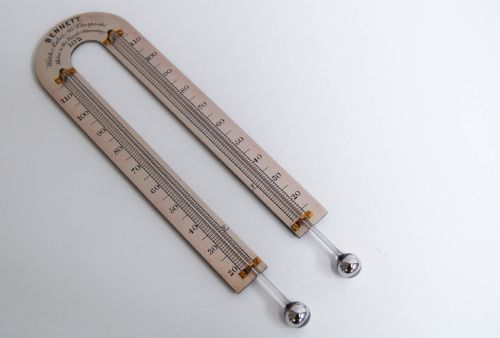
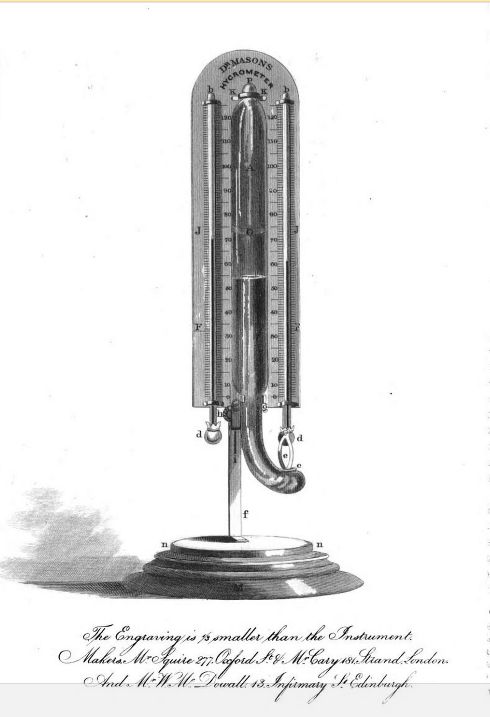
This example by Bennett is a small portable version of the Mason’s hygrometer being incorporated into its own carrying case, a larger version with a stand is contained in the collection of The Museum of the History of Science in Oxford.
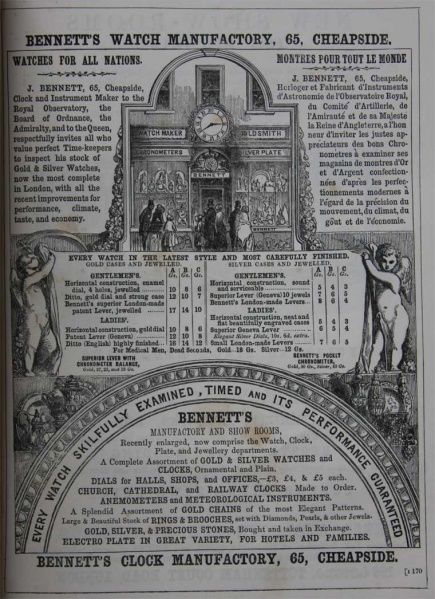
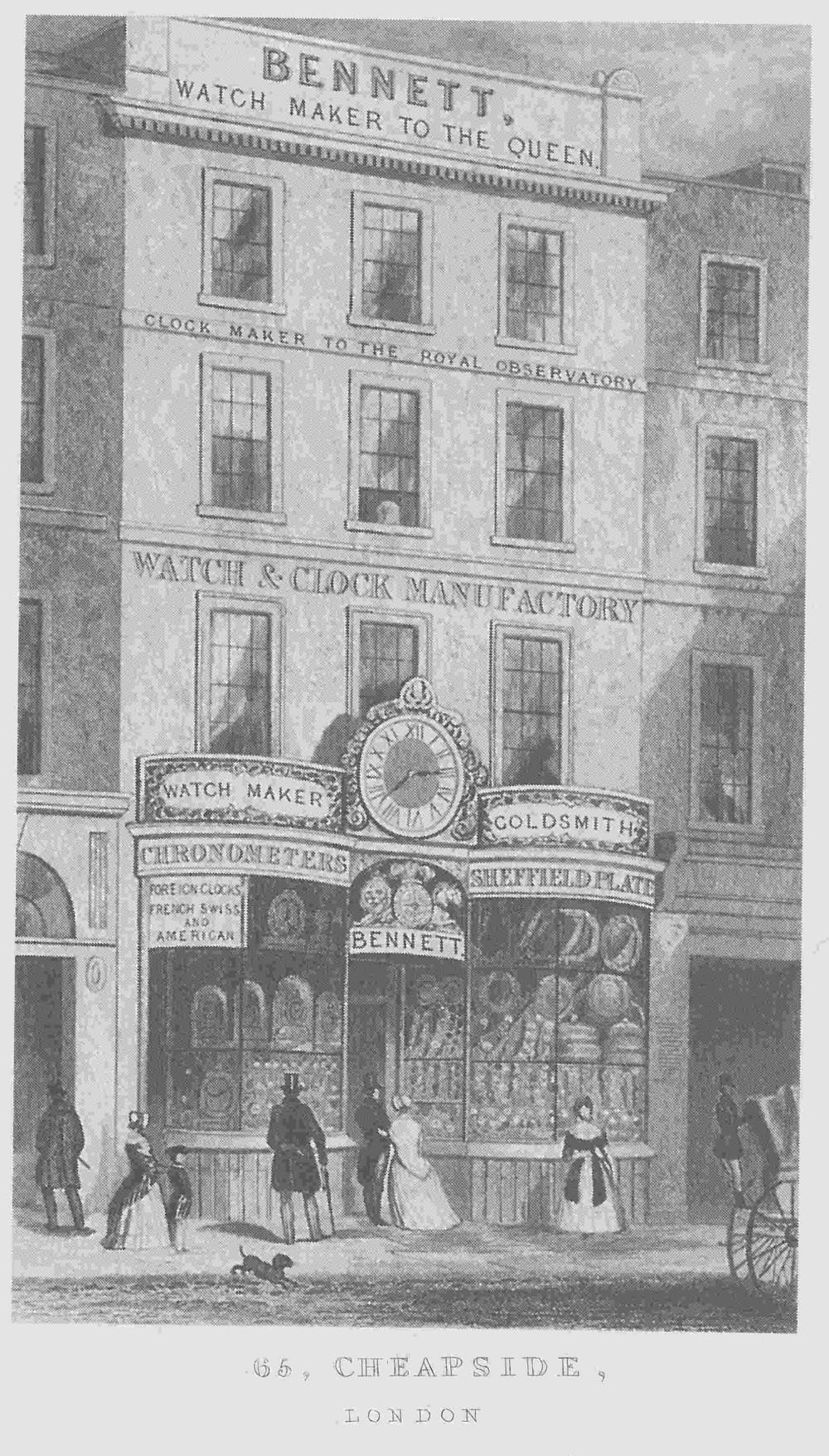
The maker John Bennett (later Sir John Bennett) came from a Greenwich watchmaking family. Following his father’s early death, he starting his own business at 65 Cheapside in 1847. He continued at that address but expanded the shop into the premises at 64 Cheapside in 1865. Bennett built his career on quality products backed up with the use of shrewd advertising and his purchase of Stand number 1 at The Great Exhibition and the advertisement on the title page of the Exhibition supplement bought him to the forefront of public attention.
The 1850’s marked continuing success for John Bennett’s business with him receiving a Royal Appointment from Queen Victoria in 1858, commissions from The Royal Observatory at Greenwich and from The Board of Ordnance. A flamboyant character with a proven flair for marketing, he installed his “Big Ben” clock at the Cheapside premises at the same time as the installation of the famous clock in Westminster and it is reported that the crowds were so large that the surrounding streets had to be closed down. Bennett’s version featured two huge automaton representing Gog & Magog, the fabled keepers of the City of London and following the demolition of the site in 1928, Henry Ford bought the structure and carried it back with him to America. It can still be seen at the Henry Ford Museum to this day complete with clo

Physical Dimensions
Height
21cm (8.27")
Width
7cm (2.76")
Depth
2cm (0.79")
Declaration

Jason Clarke Antiques has dated this piece to the 1850s.

Reference Numbers
Sellingantiques Reference
SA551131
Description
An Early Victorian Mason’s Hygrometer or Wet & Dry Thermometer engraved to Bennett Watchmaker, 65 Cheapside, Maker to The Royal Observatory.
The instrument is comprised of two thermometers affixed by four brass clasps to a silvered U shaped scale plate.
Jason Clarke Antiques

Both using a Fahrenheit scale, the left (dry bulb) registers 20 to 115 degrees whilst the right (wet bulb) measures from 15 – 115 degrees. The maker’s name is engraved to the top as follows, “Bennett, Watchmaker 65 Cheapside, Maker to The Royal Observatory”.

fig 1. Early Victorian Mason's Hygrometer or Wet & Dry Thermometer by Bennett of 65 Cheapside London

This rare and unusual thermometer set is contained within an immaculate red morocco leather case with original red velvet and silk lined interior. The hinged case is secured by two hook and eye catches which are both still present. As a testament to the craftsmanship of this piece, both catches are set upon brass washers to ensure that the movement of the catch does not rub the leather whilst being operated. This was a top quality instrument during its time and the care and attention is very evident.

fig 2. Early Victorian Mason's Hygrometer or Wet & Dry Thermometer by Bennett of 65 Cheapside London

Meteorological instruments such as these have a number of associated names, hygrometer meaning the measurement of moisture or water, the name psychrometer (cold meter) was used by the German inventor Ernst Ferdinand August (1795-1870) and during the same period in 1836, the Surgeon, John Abraham Mason was presenting his new, Mason’s Hygrometer. An article in the Record of General Science describes a “new hygrometer illustrated by experiments and a comparison of its results with Sir John Leslie’s”. Leslie had in 1805 developed an air thermometer based upon Galileo’s thermoscope. Sadly, Mason’s name is no longer commonly associated with his invention but its continued manufacture into the 1840’ and 50’s is testament to its superior accuracy.

fig 3. Early Victorian Mason's Hygrometer or Wet & Dry Thermometer by Bennett of 65 Cheapside London

It is now more commonly dubbed, the wet and dry thermometer relating to the comparison of two thermometers, one with a wet bulb and the other dry. This is essentially the same as Mason’s pattern where one thermometer is kept wet by means of a water soaked sock covering one bulb and the other kept dry. The evaporation of water from the sock has the effect of lowering the temperature reading on the wet thermometer and the difference against the dry thermometer is used to calculate relative humidity of the air.

fig 4. Early Victorian Mason's Hygrometer or Wet & Dry Thermometer by Bennett of 65 Cheapside London

This example by Bennett is a small portable version of the Mason’s hygrometer being incorporated into its own carrying case, a larger version with a stand is contained in the collection of The Museum of the History of Science in Oxford.

fig 5. Early Victorian Mason's Hygrometer or Wet & Dry Thermometer by Bennett of 65 Cheapside London

The maker John Bennett (later Sir John Bennett) came from a Greenwich watchmaking family. Following his father’s early death, he starting his own business at 65 Cheapside in 1847. He continued at that address but expanded the shop into the premises at 64 Cheapside in 1865. Bennett built his career on quality products backed up with the use of shrewd advertising and his purchase of Stand number 1 at The Great Exhibition and the advertisement on the title page of the Exhibition supplement bought him to the forefront of public attention.

fig 6. Early Victorian Mason's Hygrometer or Wet & Dry Thermometer by Bennett of 65 Cheapside London

The 1850’s marked continuing success for John Bennett’s business with him receiving a Royal Appointment from Queen Victoria in 1858, commissions from The Royal Observatory at Greenwich and from The Board of Ordnance. A flamboyant character with a proven flair for marketing, he installed his “Big Ben” clock at the Cheapside premises at the same time as the installation of the famous clock in Westminster and it is reported that the crowds were so large that the surrounding streets had to be closed down. Bennett’s version featured two huge automaton representing Gog & Magog, the fabled keepers of the City of London and following the demolition of the site in 1928, Henry Ford bought the structure and carried it back with him to America. It can still be seen at the Henry Ford Museum to this day complete with clo

Height
21cm (8.27")
Width
7cm (2.76")
Depth
2cm (0.79")
Date of Manufacture

Jason Clarke Antiques has dated this piece to the 1850s.

Reference Numbers
Sellingantiques Ref
SA551131
Jason Clarke Antiques
Sellingantiques verified Since Jul 2015
Dealer Profile

You can view the stock and full dealer information on the Jason Clarke Antiques Profile Page
PDF SHARE
SAVE
Early Victorian Mason's Hygrometer or Wet & Dry Thermometer by Bennett of 65 Cheapside London
1 / 11
Archive I Early Victorian Mason's Hygrometer or Wet & Dry Thermometer by Bennett of 65 Cheapside London
Early Victorian Mason's Hygrometer or Wet & Dry Thermometer by Bennett of 65 Cheapside London
Archive II Early Victorian Mason's Hygrometer or Wet & Dry Thermometer by Bennett of 65 Cheapside London View II
Archive III Early Victorian Mason's Hygrometer or Wet & Dry Thermometer by Bennett of 65 Cheapside London View III
Archive IV Early Victorian Mason's Hygrometer or Wet & Dry Thermometer by Bennett of 65 Cheapside London View IV
Archive V Early Victorian Mason's Hygrometer or Wet & Dry Thermometer by Bennett of 65 Cheapside London View V
Archive VI Early Victorian Mason's Hygrometer or Wet & Dry Thermometer by Bennett of 65 Cheapside London View VI
Archive VII Early Victorian Mason's Hygrometer or Wet & Dry Thermometer by Bennett of 65 Cheapside London View VII
Archive VIII Early Victorian Mason's Hygrometer or Wet & Dry Thermometer by Bennett of 65 Cheapside London View VIII
Archive IX Early Victorian Mason's Hygrometer or Wet & Dry Thermometer by Bennett of 65 Cheapside London View IX
Archive X Early Victorian Mason's Hygrometer or Wet & Dry Thermometer by Bennett of 65 Cheapside London View X
Archive XI Early Victorian Mason's Hygrometer or Wet & Dry Thermometer by Bennett of 65 Cheapside London View XI
Enlarged Archival View
Telephone 07815 046645
Location
Newbury
Berkshire
United Kingdom
Verified Since Jul 2015
Items For Sale 80
Items Sold 607
Jason Clarke Antiques
Verified Since Jul 2015
View Dealer Info
Location: Newbury, Berkshire, United Kingdom
Verified
Jul 2015
For Sale
80
Sold
607
Early Victorian Mason's Hygrometer or Wet & Dry Thermometer by Bennett of 65 Cheapside London
Ref: SA551131
Early Victorian Mason's Hygrometer or Wet & Dry Thermometer by Bennett of 65 Cheapside London
Detail View 1
Detail View 2
Detail View 3
Detail View 4
Detail View 5
Detail View 6
Detail View 7
Detail View 8
Detail View 9
Detail View 10
Archival Detail
Every single antique dealer on our platform is individually approved by our internal team. We verify their professional trade history, ethical standards, and photographic quality to ensure a secure, high-standard buying environment. Upon joining, every dealer agrees to a strict 9-point code of conduct. While issues can occasionally arise, our dealers typically resolve them swiftly and directly with the buyer. In fact, since our founding in 2002, Sellingantiques has only had to step in to help resolve an issue on roughly five occasions—a true testament to the quality of our dealers and their dedication to your happiness.
Our dealers are highly experienced in packing and shipping fragile, high-value antiques. Because you are in direct contact with the dealer, you will be able to easily go through all available shipping and insurance options together to ensure your item arrives safely.
Antiques are the ultimate green purchase. By choosing historical pieces over newly manufactured goods, you completely eliminate the carbon footprint of modern mass production while preserving exceptional, timeless craftsmanship.
items
Add keywords to the filter
Price
£100
£250000
Era
Movements
Material
Origin
Stock Location
Freshness
Online Payments
Categories