Jason Clarke Antiques has dated this piece to the 1860s.
This early version of R&J Beck’s Large Best microscope is featured in Richard Beck’s work, “A Treatise on the Construction, Proper Use, and Capability of Smith, Beck & Beck’s Achromatic Microscopes (1865)”.
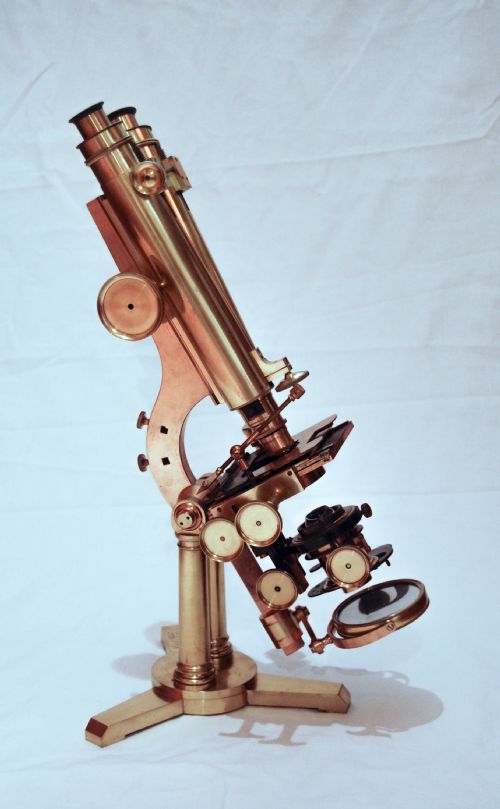
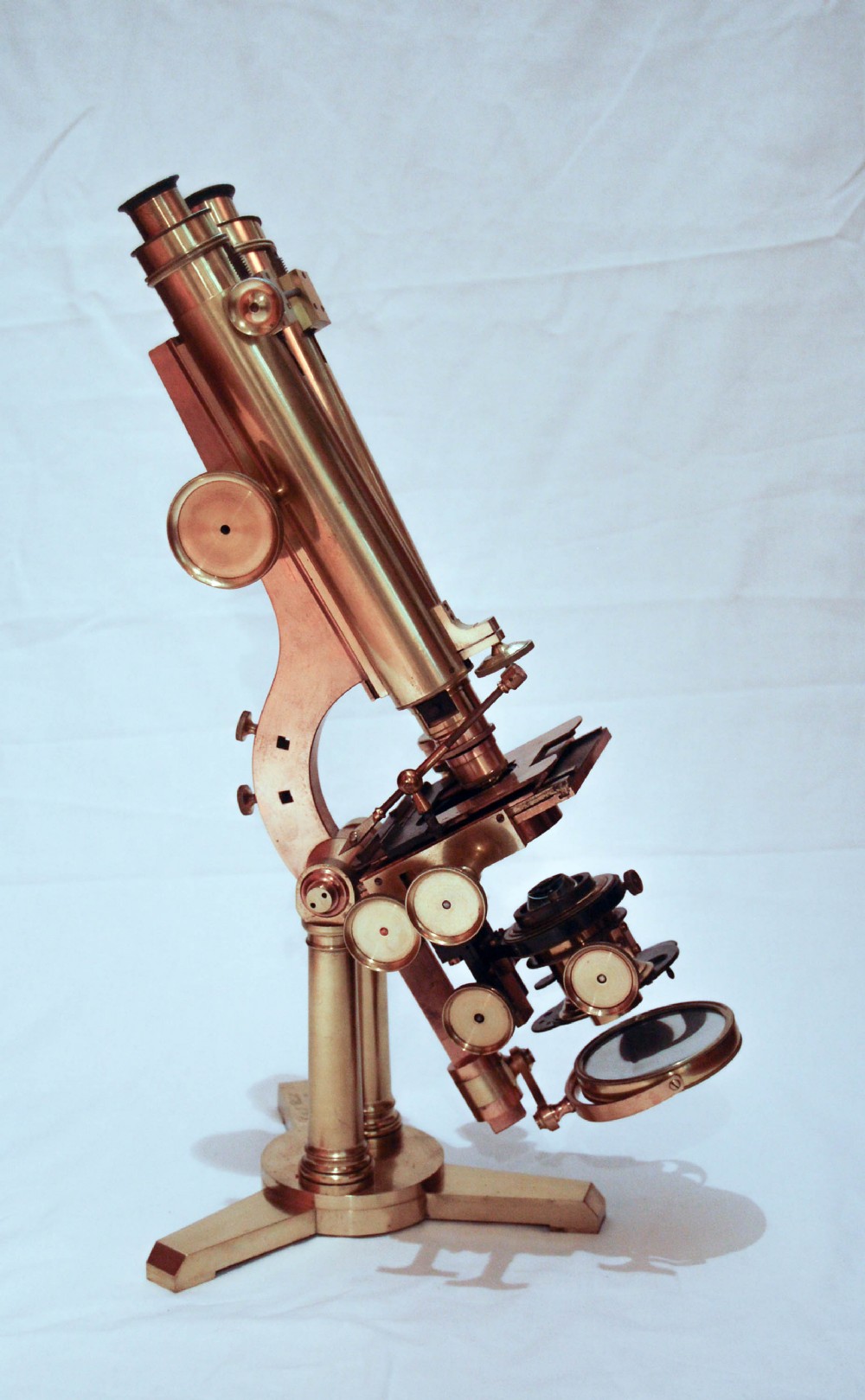
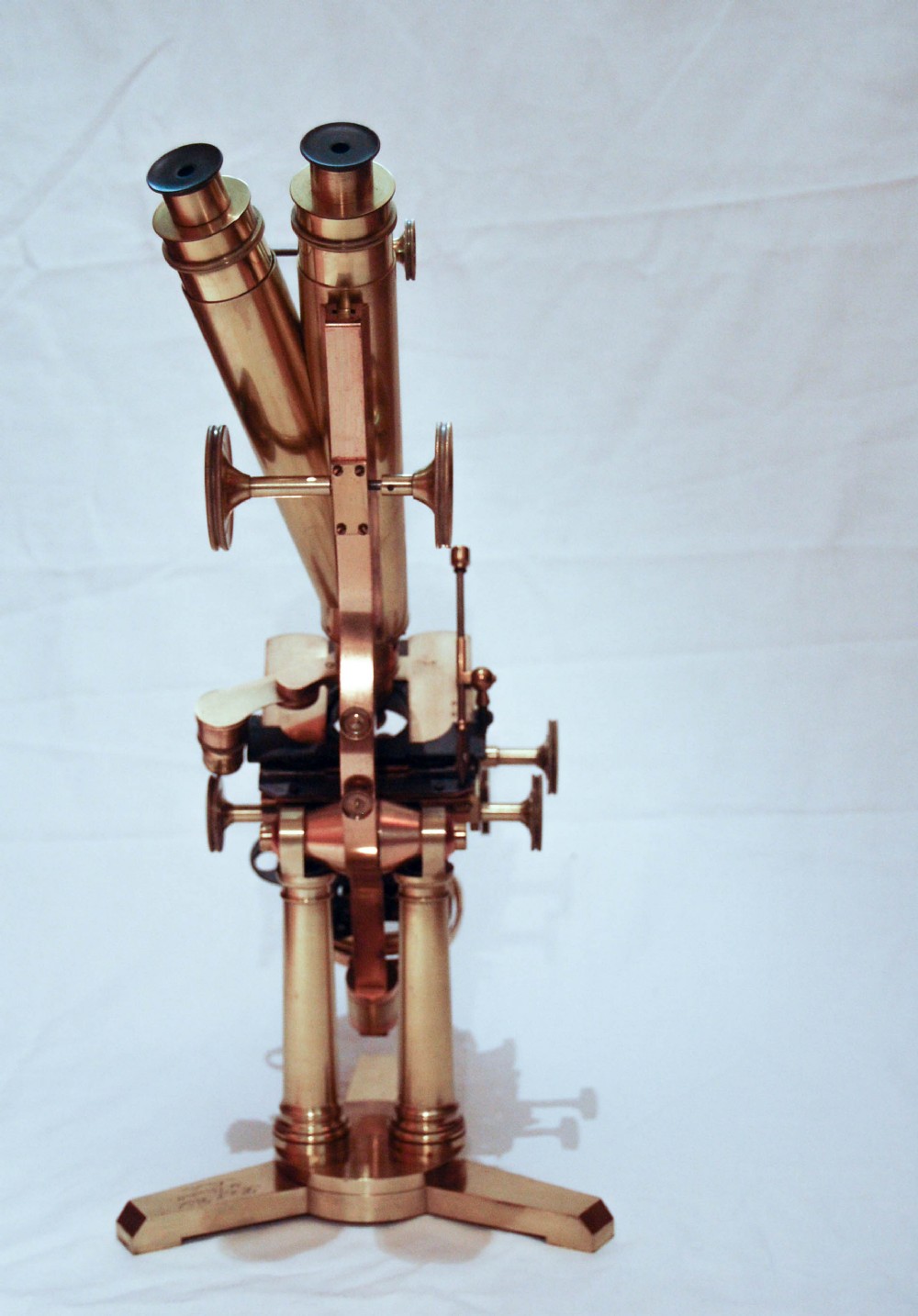
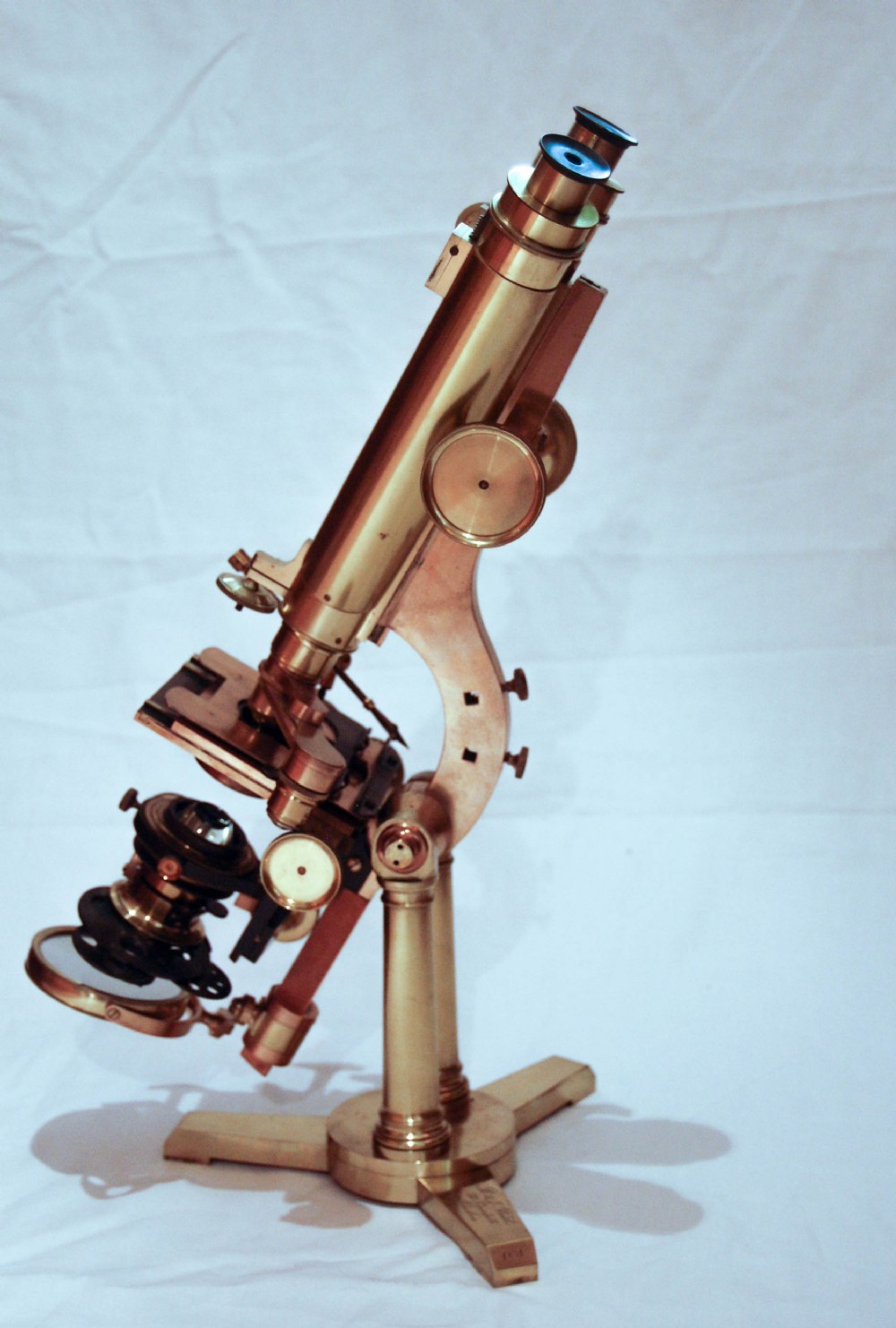
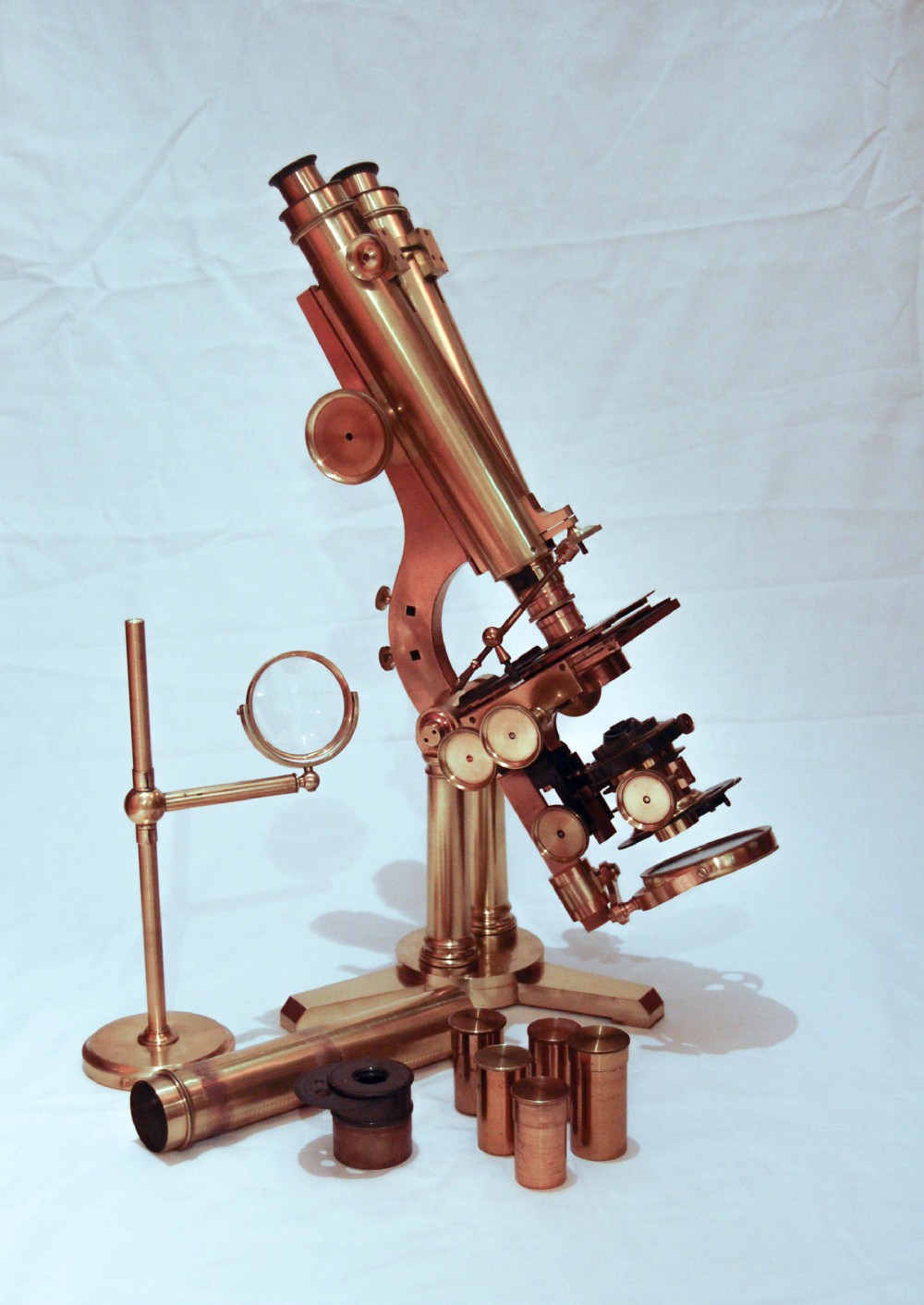
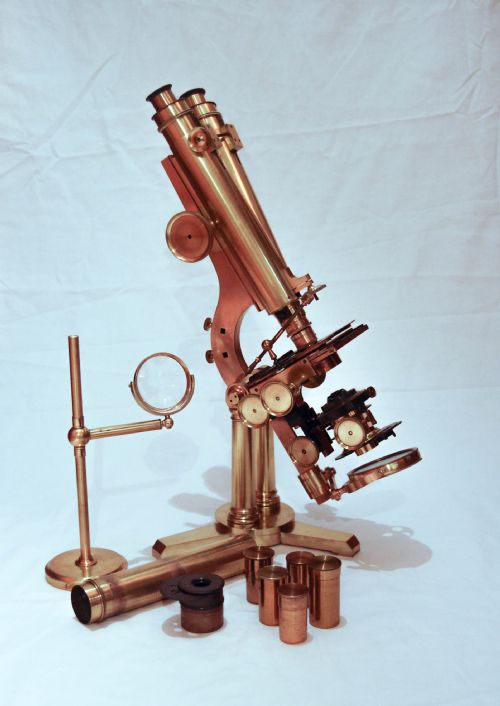
The microscope consists of a Wenham’s binocular body with three brass milled heads to provide motion of the body, fine adjustment of focus and for the adjustment of the draw tubes to compensate for differences in distance between the user’s eyes. The body also maintains its original prism for binocular use and may be removed to return the microscope to a monocular setting. The objective glass is also fitted with a double nosepiece to allow for two objective glasses to be fitted to the microscope at the same time.
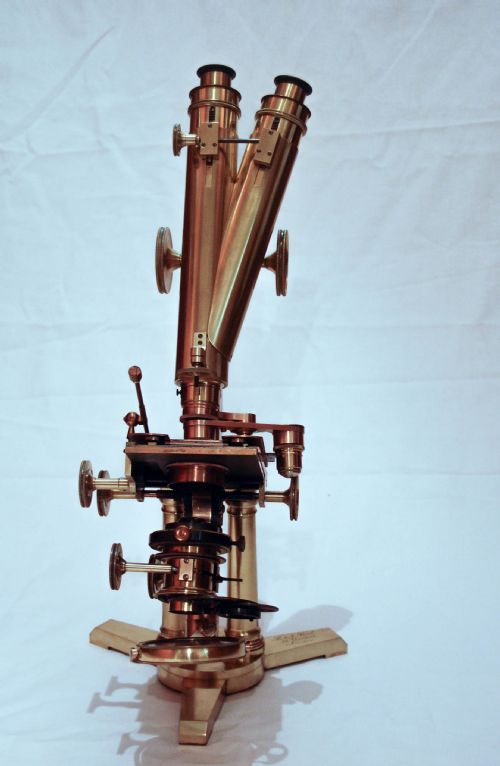
The brass top stage has a ledge for resting the subject and a sliding piece above for clamping slides or objects as necessary and two further milled heads to the side for allowing horizontal and vertical movement of the subject once in position. The stage also includes a set of small forceps for holding small objects.
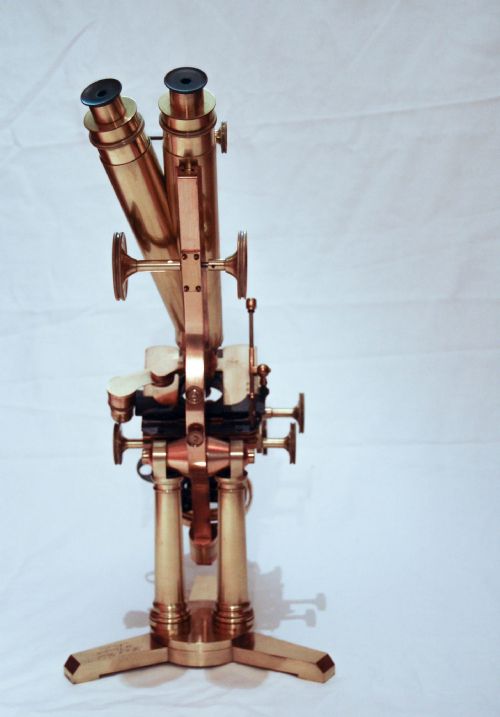
Below the stage is positioned a short tube for fitting a diaphragm (diaphragm included in the box), however the microscope is provided with the addition of a parabolic condenser unit fixed within the cylindrical fitting below. The fitting has its own milled adjustment head but the condenser also has its own triple diaphragm unit and milled head for fine adjustment. The condenser was used, in order to collect and to concentrate distant light sources provided by the mirror below it. The mirror remains in superb order and horizontal and vertical movement.
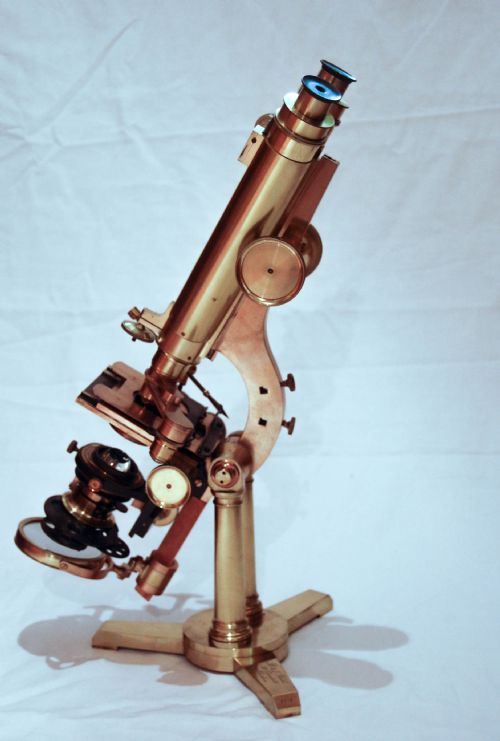
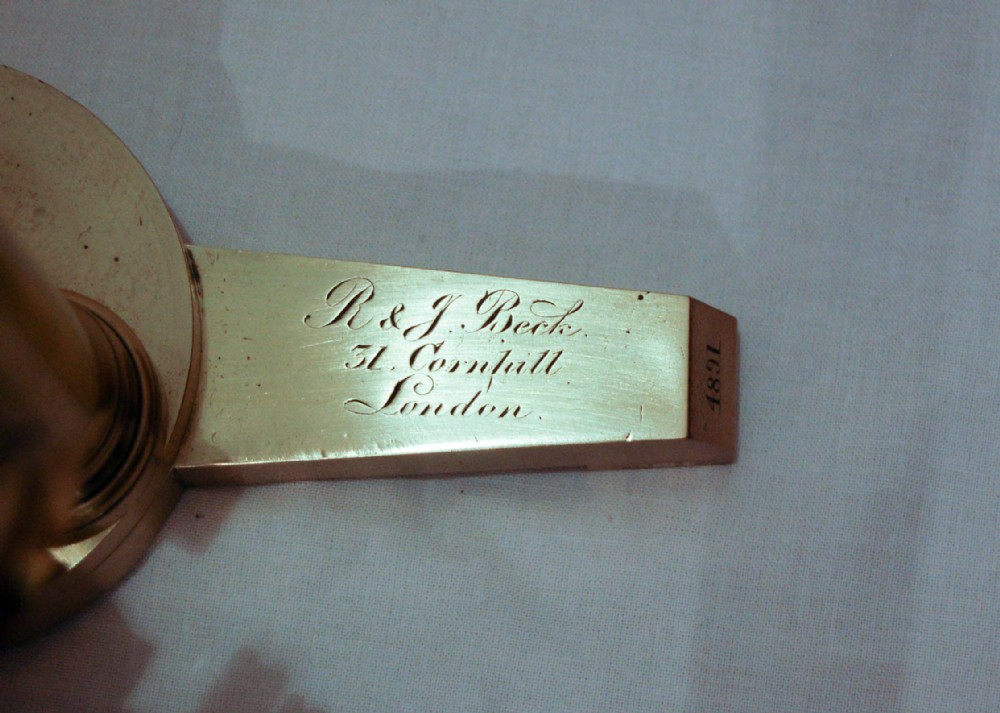
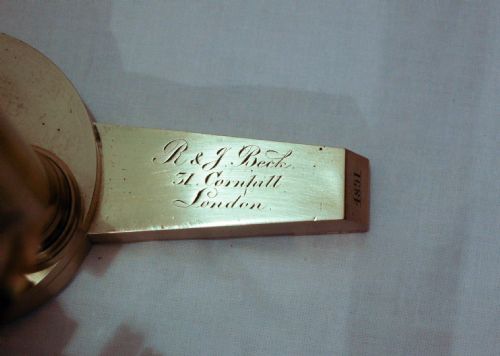
The microscope rests upon R&J Beck’s “number one” stand which has a rotating tripod base and vertical and horizontal positioning at the joint above, and is engraved to the foot with, “R&J Beck, 31 Cornhill. London with the serial number 4891 to the side.
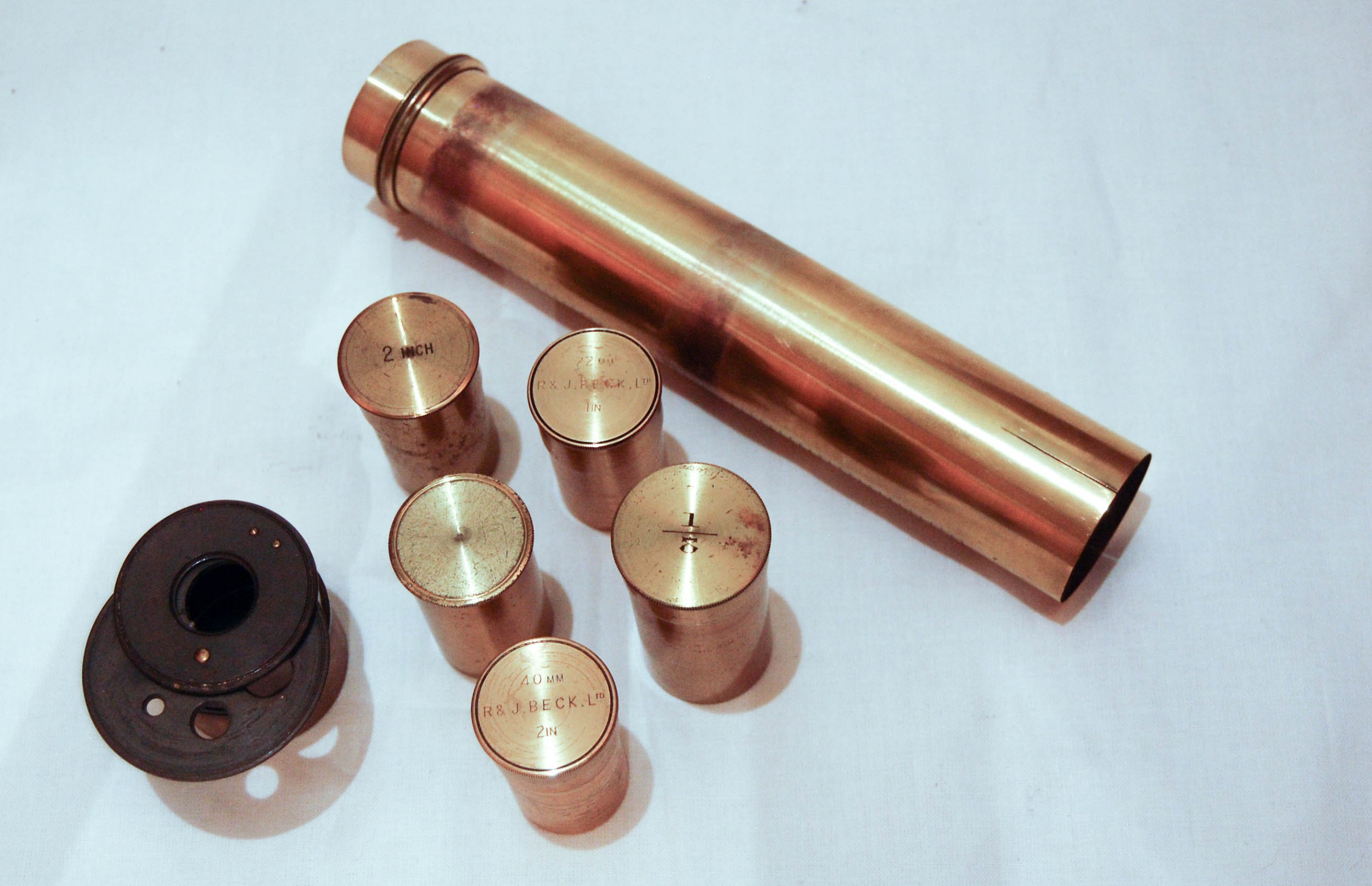
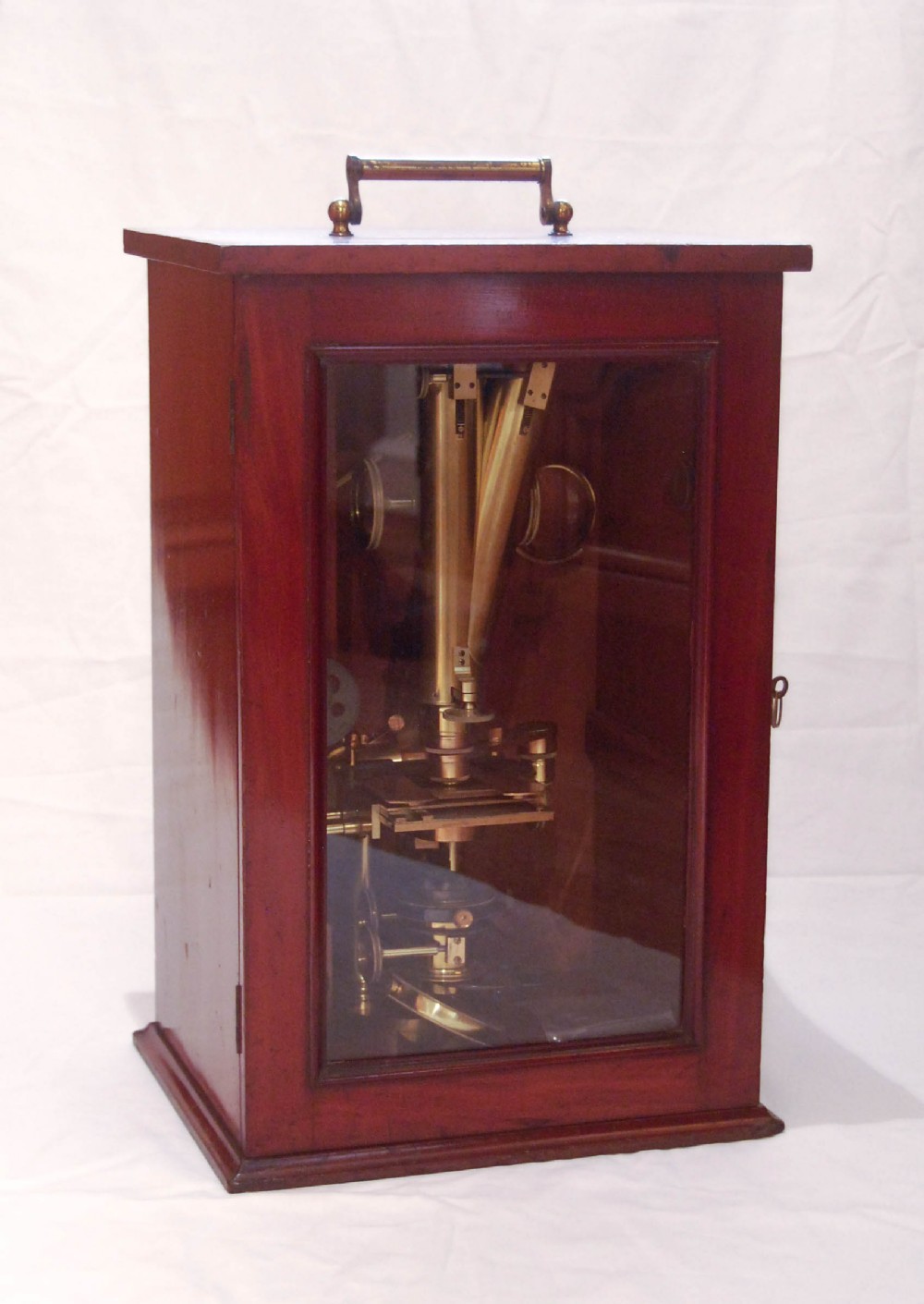
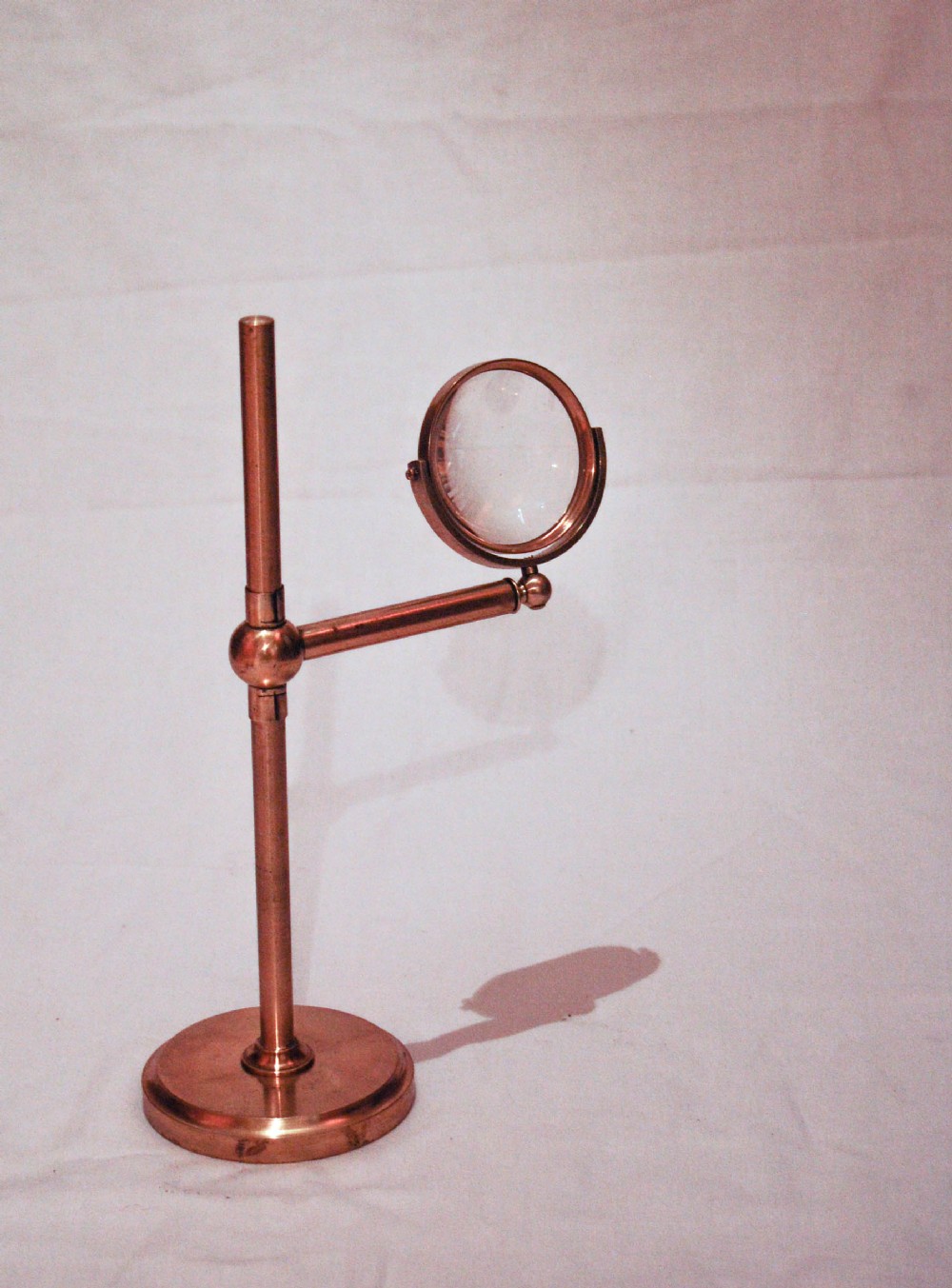
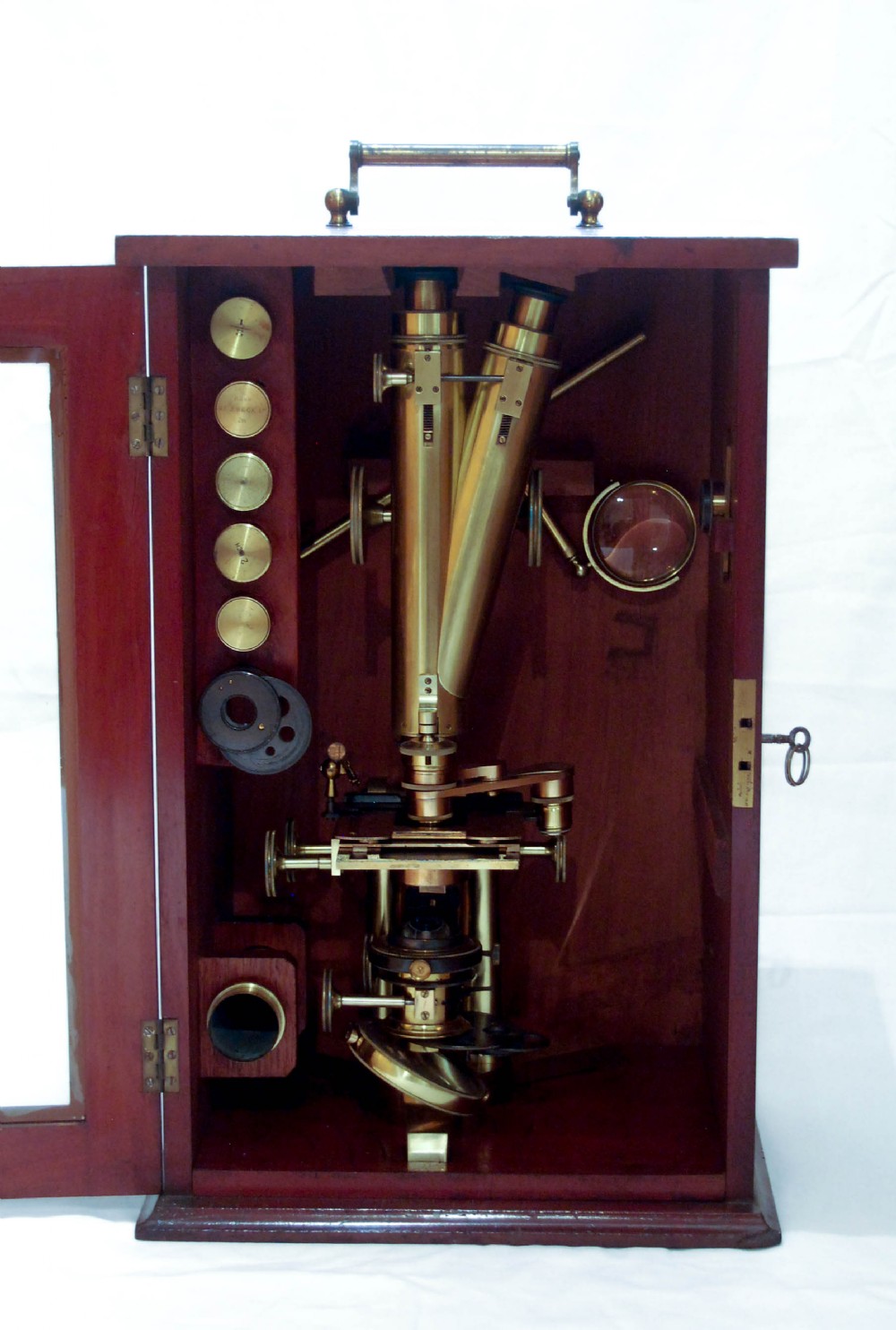
The glass fronted mahogany case has original brass handle to the top with working key and maintains its fitted mahogany base with velvet lined indents for the microscope to rest upon and which allows for the microscope to be slid in and out with ease. It contains a large bullseye condenser for capturing light-sources to the mirror and is affixed to the back of the case in two parts. Assembly is achieved by screwing the post into the base before use. Including the two objective glasses already attached to the microscope (R&J Beck engraved one and two inch objective glasses), the case contains five further cases and four objectives:
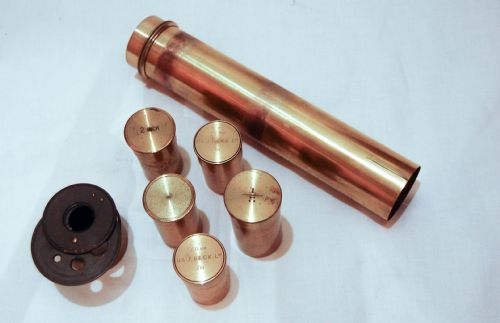
Two inch unsigned
One inch signed R&J Beck with engraved lid to R&J Beck Ltd
Objective glass with case marked with “one eighth” to the lid
R&J Beck Ltd 2 inch case with Argus one inch objective inside
An empty case with two inch engraved to the lid.
Below the fittings for the objectives is contained the original draw tube, a diaphragm and a live box is affixed to the opposite wall.
This an extremely early example of an R&J Beck “Large Best” binocular microscope. It is fitted with their “number one” stand and is complete with its original fitted case. The microscope can be minutely compared to the example used in Plate II of Richard Beck’s “A Treatise on the Construction, Proper Use, and Capability of Smith, Beck & Beck’s Achromatic Microscopes (1865)” which is described as their “First Class Microscope on No1 Stand”, their flagship model of the period. Interestingly the serial numbering on the same microscope on Plate XXV is 3640 which shows that R&J Beck maintained their numbering system following the change in company name from S
Jason Clarke Antiques has dated this piece to the 1860s.
You can view the stock and full dealer information on the Jason Clarke Antiques Profile Page
Victorian Cased "Large & Best" Achromatic Binocular Microscope by R&j Beck London