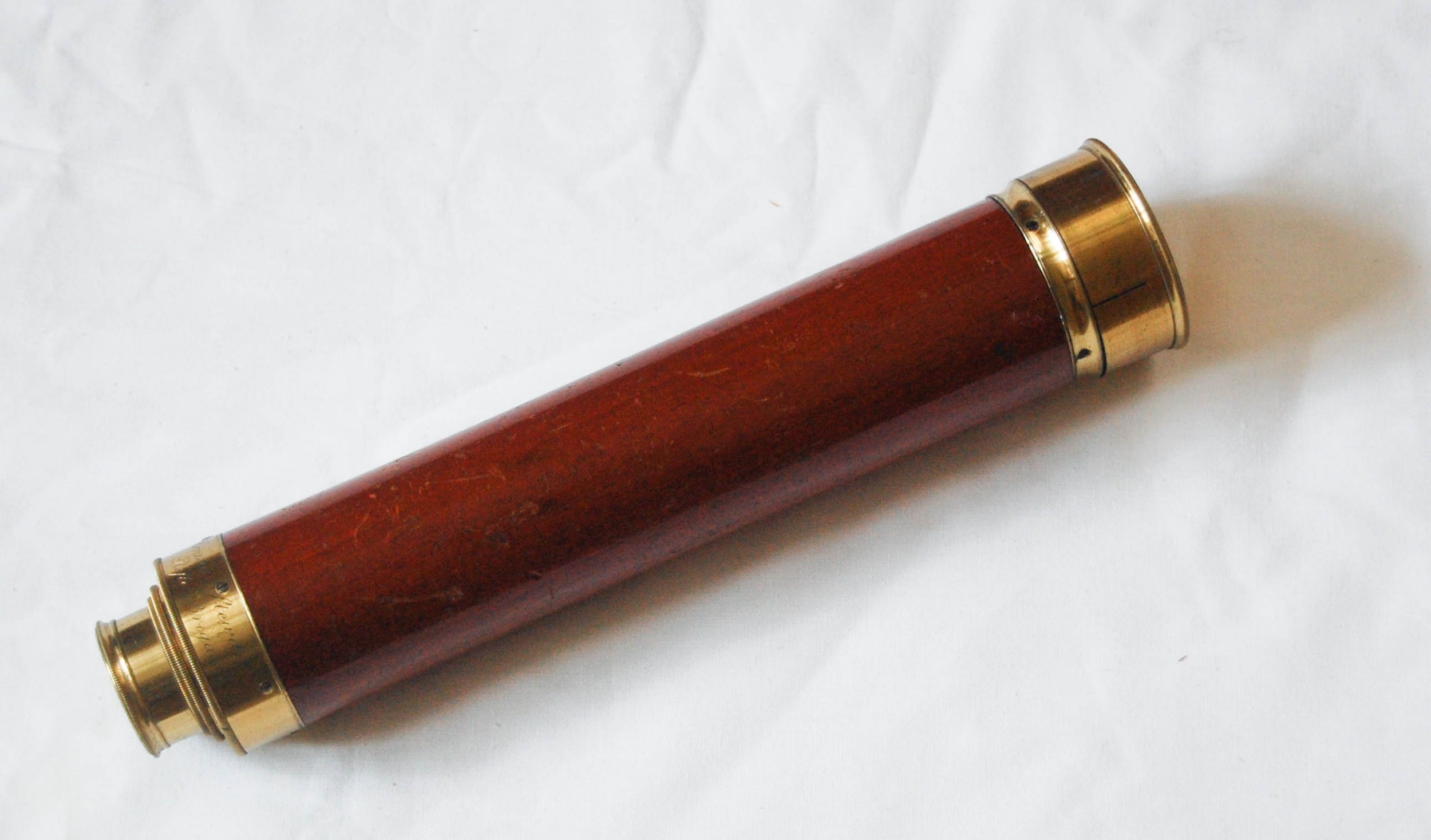
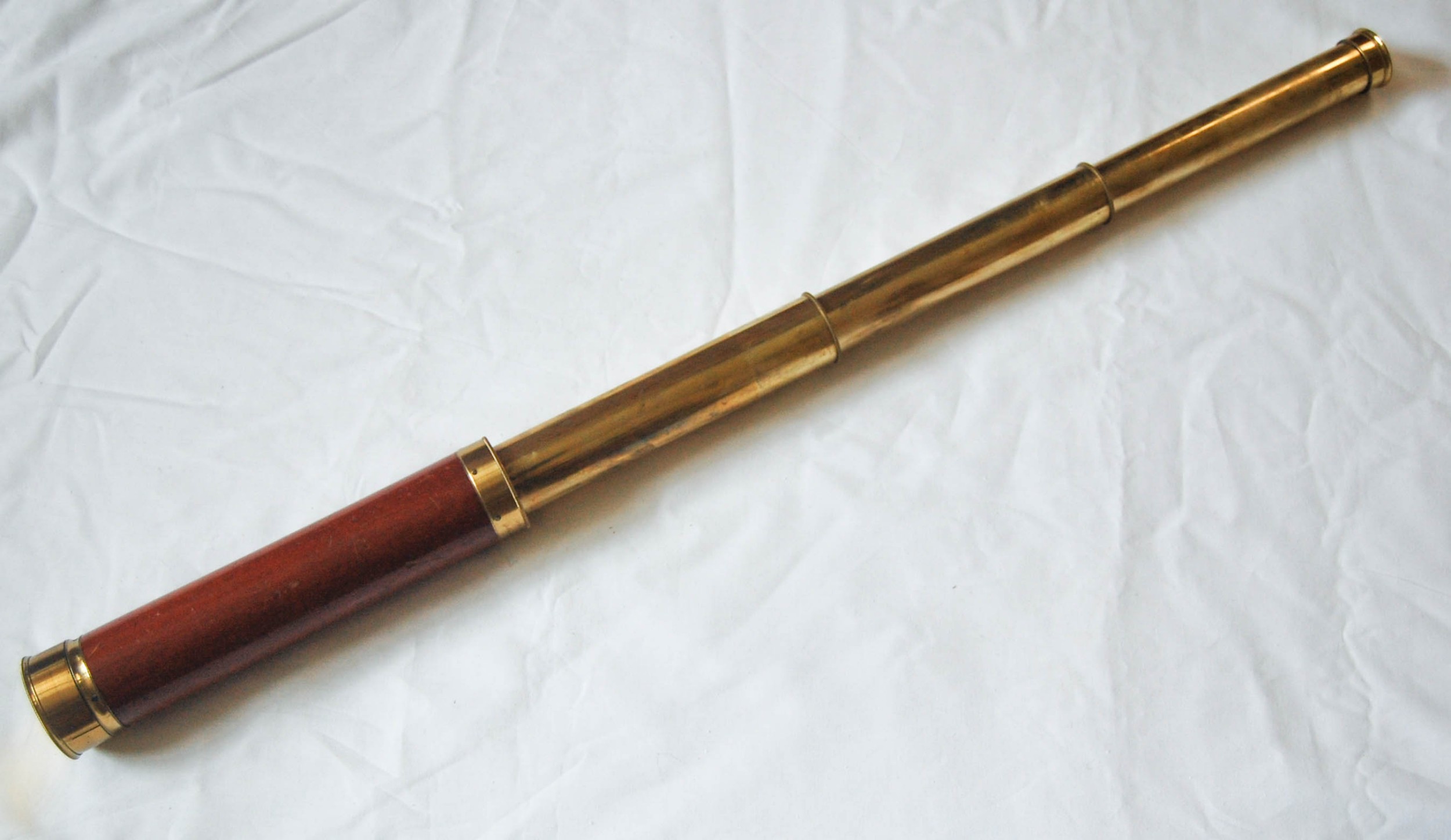
Jason Clarke Antiques has dated this piece to the 1800s.
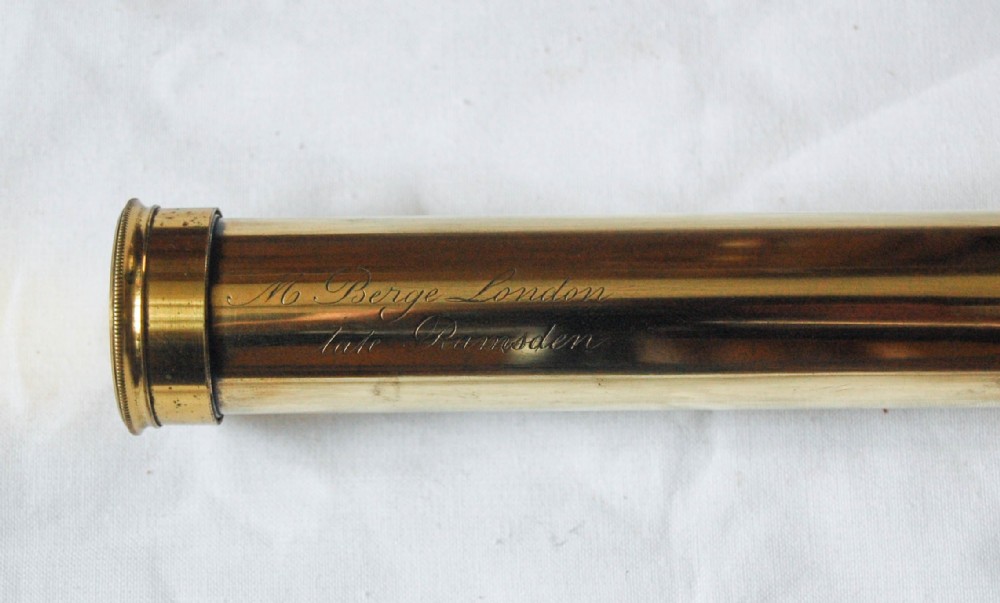
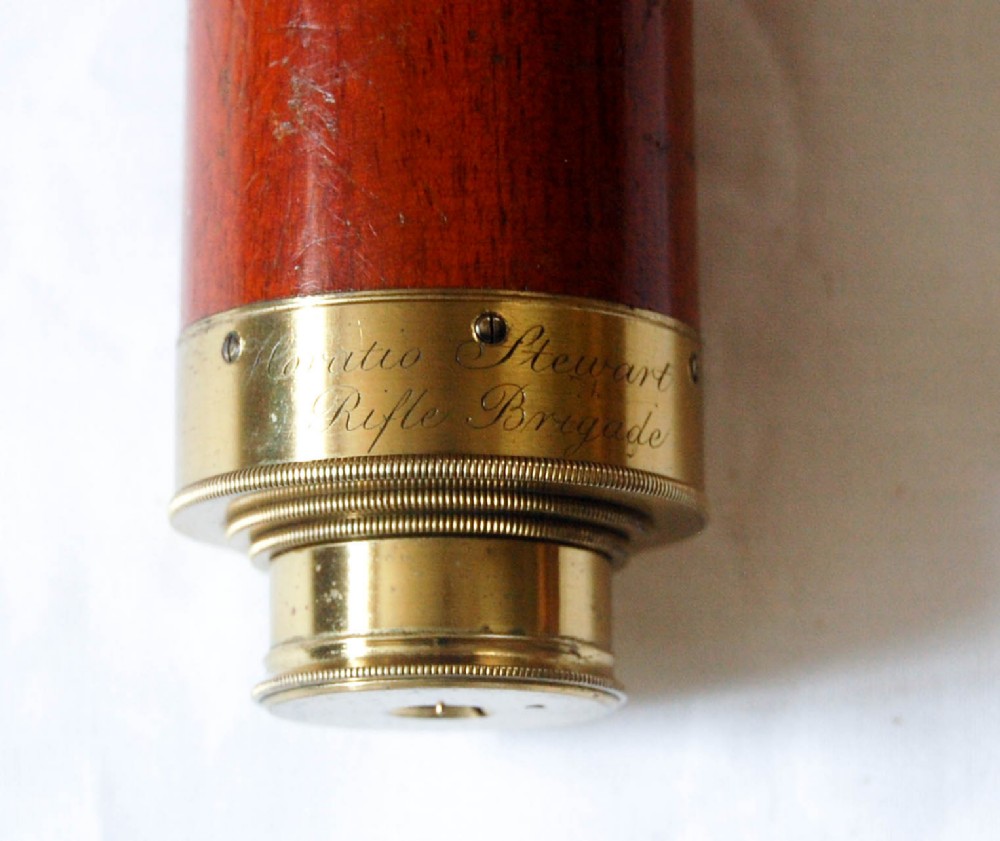
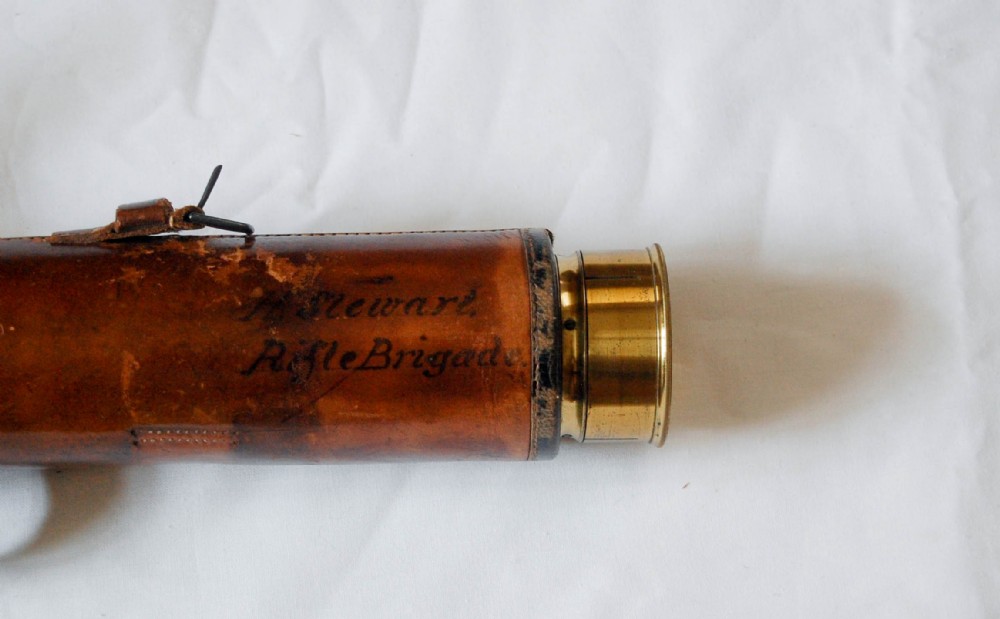
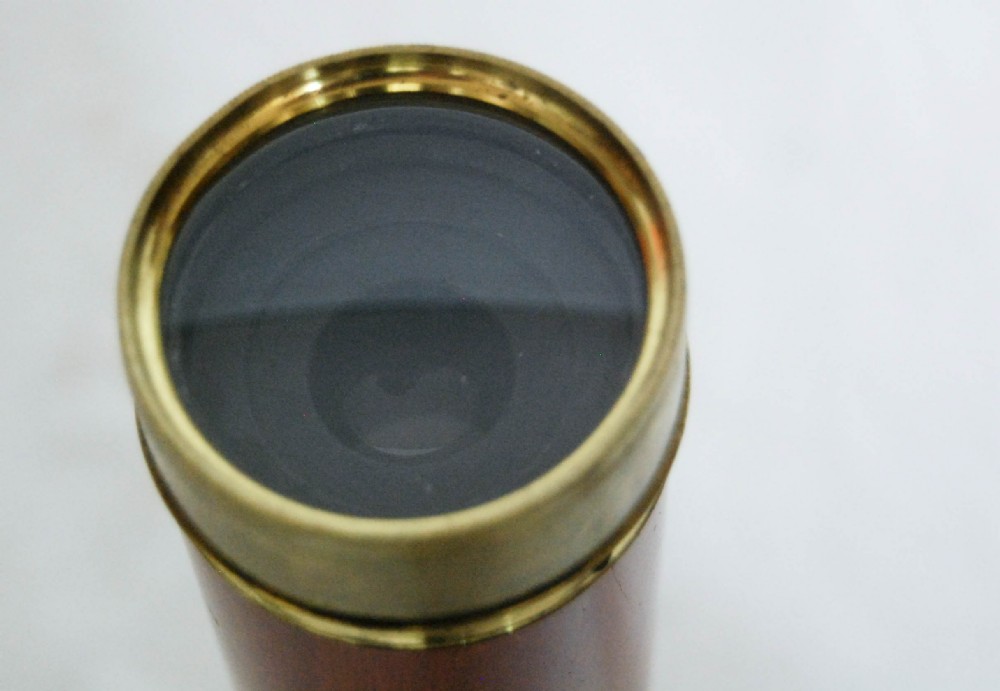
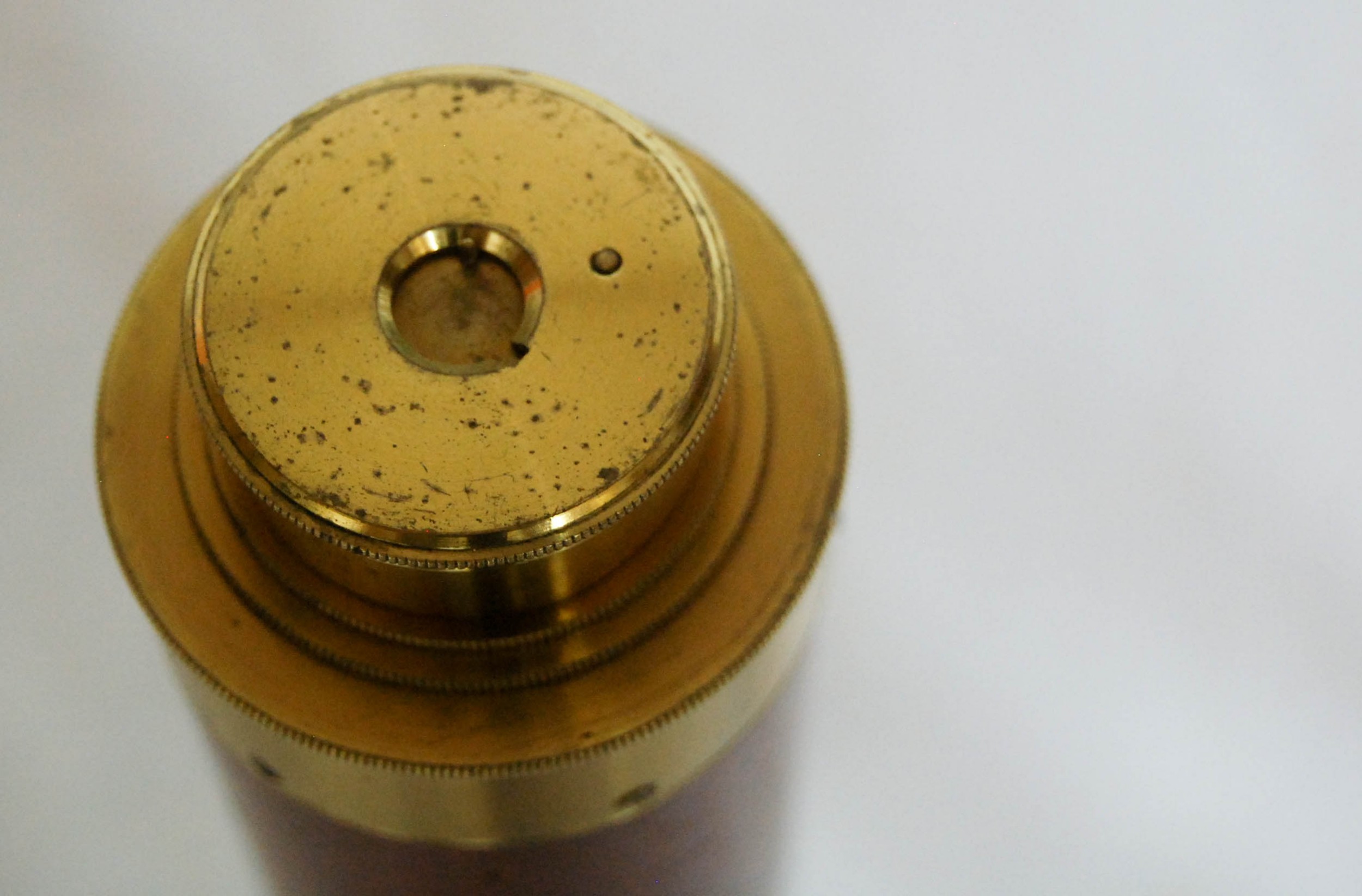
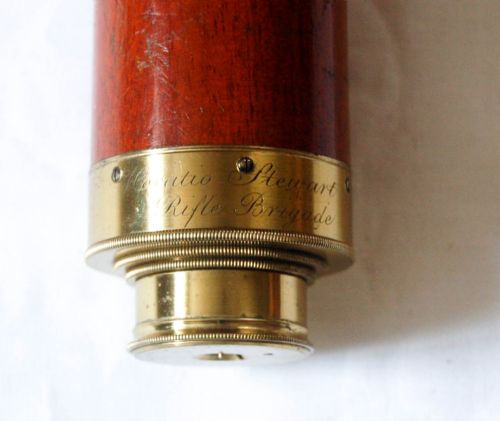
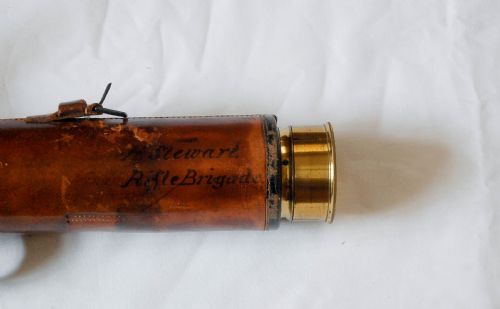
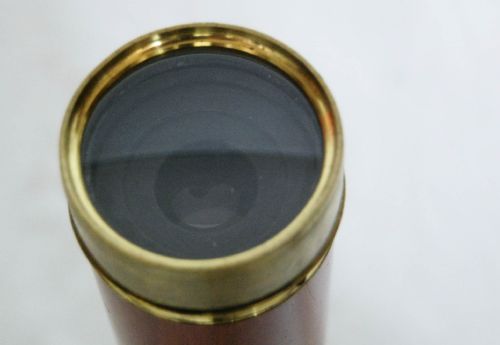
The telescope itself is further inscribed to “Horatio Stewart, Rifle Brigade” with the maker’s engraving to the first draw running left to right away from the eyepiece as is normal for telescopes from this period. It is marked to, “M. Berge, London. Late Ramsden.”
Of itself this piece is an item of superior quality coming from the workshops of Matthew Berge. His early instruments are signed “Late Ramsden” as he took over the business of the notable scientific instrument maker, Jesse Ramsden following his death in November of 1800. Berge had been Ramsden’s foreman for many years prior to this, so was well placed to continue Ramsden’s legacy. He was in fact an executor of his will.
Berge continued to trade from Ramsden’s workshop at 199 Piccadilly after paying off debts associated with repairs and building work. The shop became 196 Piccadilly following the building of Regent Street and Piccadilly that was taking place at this point. He continued to produce quality scientific instrument until his death in 1819.
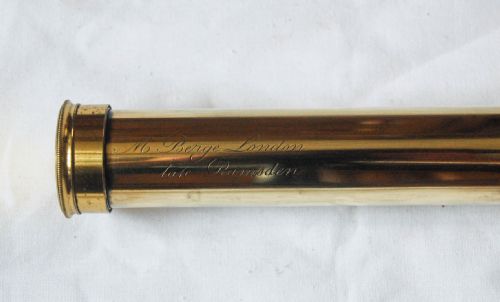
Berge initially signed his instruments “Late Ramsden” following his securing of Ramsden’s business so we can sensibly date this telescope to between 1801 & 1805 at the latest which does leave an interesting conundrum in respect of its initial ownership as Horatio Stewart was not born until at least 1805. It is likely that the telescope was originally owned by his father Sir William Stewart, founder of the Rifle Brigade and given to his son on his entering into service with the Brigade in April 1823 as a second lieutenant.
Horatio Stewart is thought to have been named in remembrance of Admiral Horatio Nelson whom his father had a close relationship with prior to his demise at the Battle of Trafalgar. He had previously been stationed on Nelson’s ship HMS Elephant during the campaign in The Baltic. Given Horatio’s birth year and Nelson’s year of death, this story holds particular weight. He was commissioned in 1823, gained his lieutenancy in October 1825 and his Captaincy in March of 1829 before finally exchanging to half pay in March of 1833. He died at Corsbie, at the family home in September 1835 and although the cause of his death remains a mystery, it is surmised that illness may have led him to revert to half pay, two years prior.
The years of Horatio’s active service were somewhat of a fallow period for the Rifle Brigade following their heroic exploits during the Peninsula campaign and later at Waterloo. There are few records available for his exploits other than him leading a battalion to the Kent coast in order to tackle an increasing problem with bands of smugglers in the area. Their formidable presence must have dulled the smuggler’s enthusiasm as no record of any confrontation exists.
His service must have been rather disappointing when his father’s exploits were considered. Sir William Stewart was a senior military figure having formed the Rifle Corps with Coote Manningham in 1800. Lieutenant Colonel Stewart was their first commanding officer and devised many of the drills and manoeuvres associated with the regiment. After his posting to Nelson’s fleet in 1801, he had the honour of delivering the news of the naval victory at the Battle of Copenhagen to London and was promoted to full Colonel shortly after. Nelson, continued to talk fondly of Stewart prior to his death and numerous letters can be found in the Stewart family’s “Cumloden papers”.
In 1802, the regiment was properly formed out of the experimental Rifle Corps (95th rifle
Jason Clarke Antiques has dated this piece to the 1800s.
You can view the stock and full dealer information on the Jason Clarke Antiques Profile Page
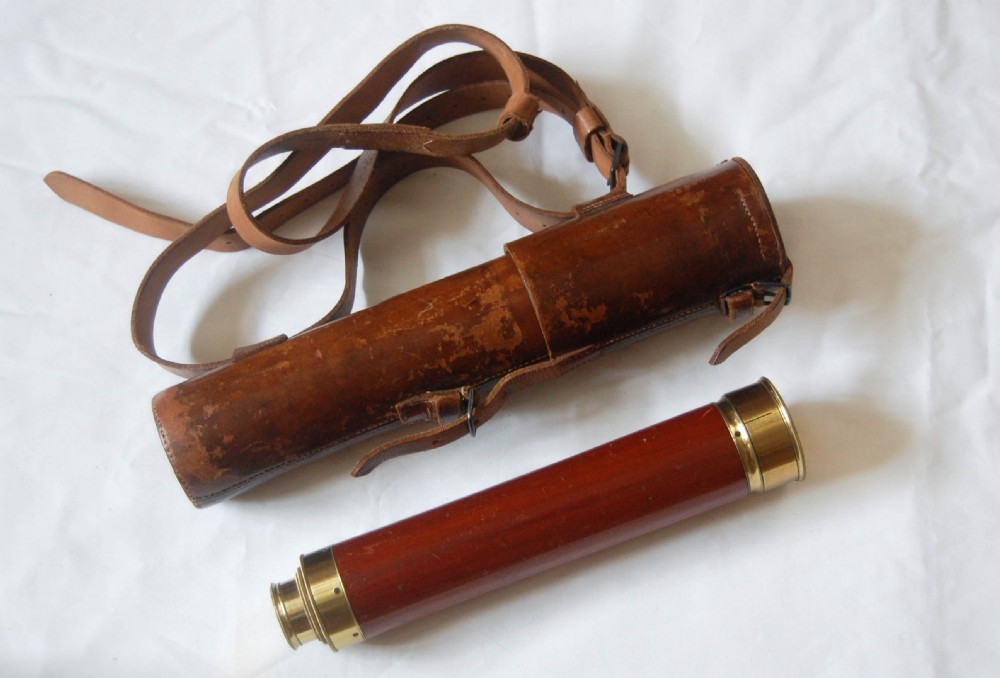
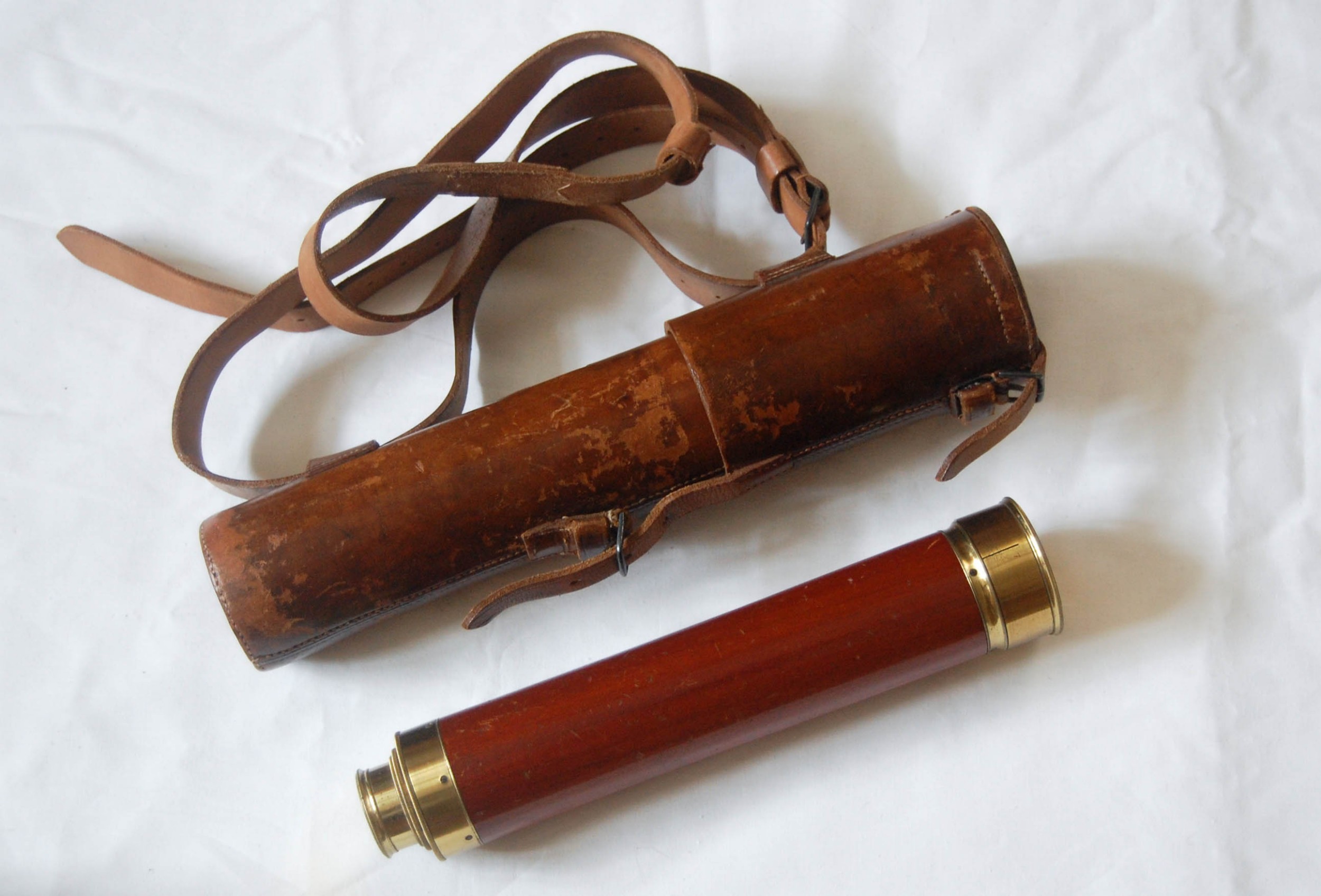
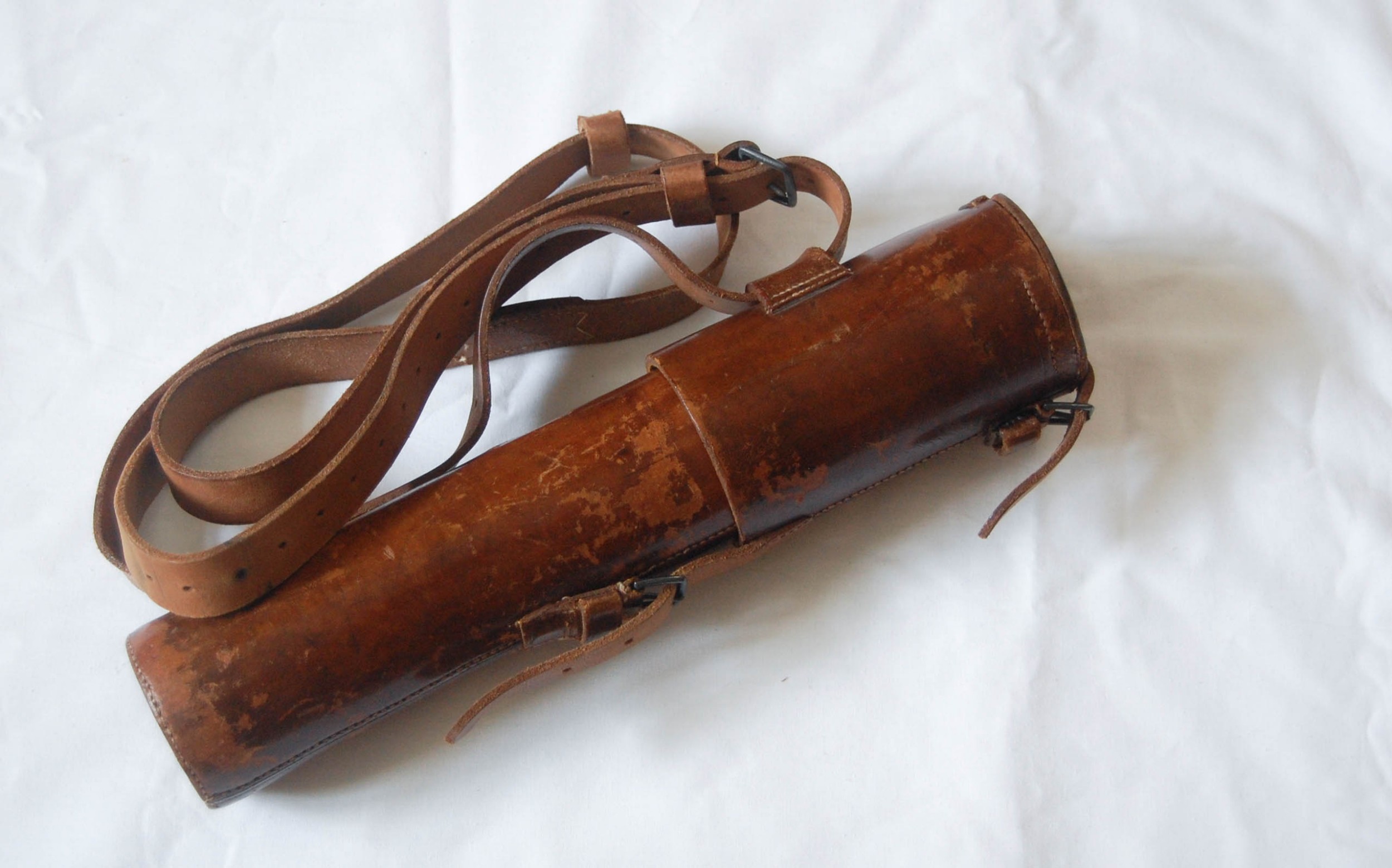
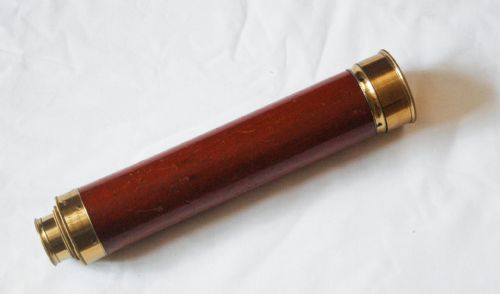
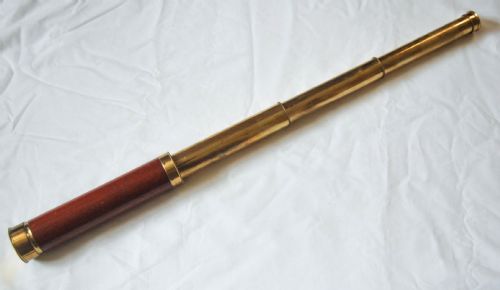
Three Draw Telescope by Matthew Berge (Late Ramsden) Owned by Horatio Stewart 95th Rifles