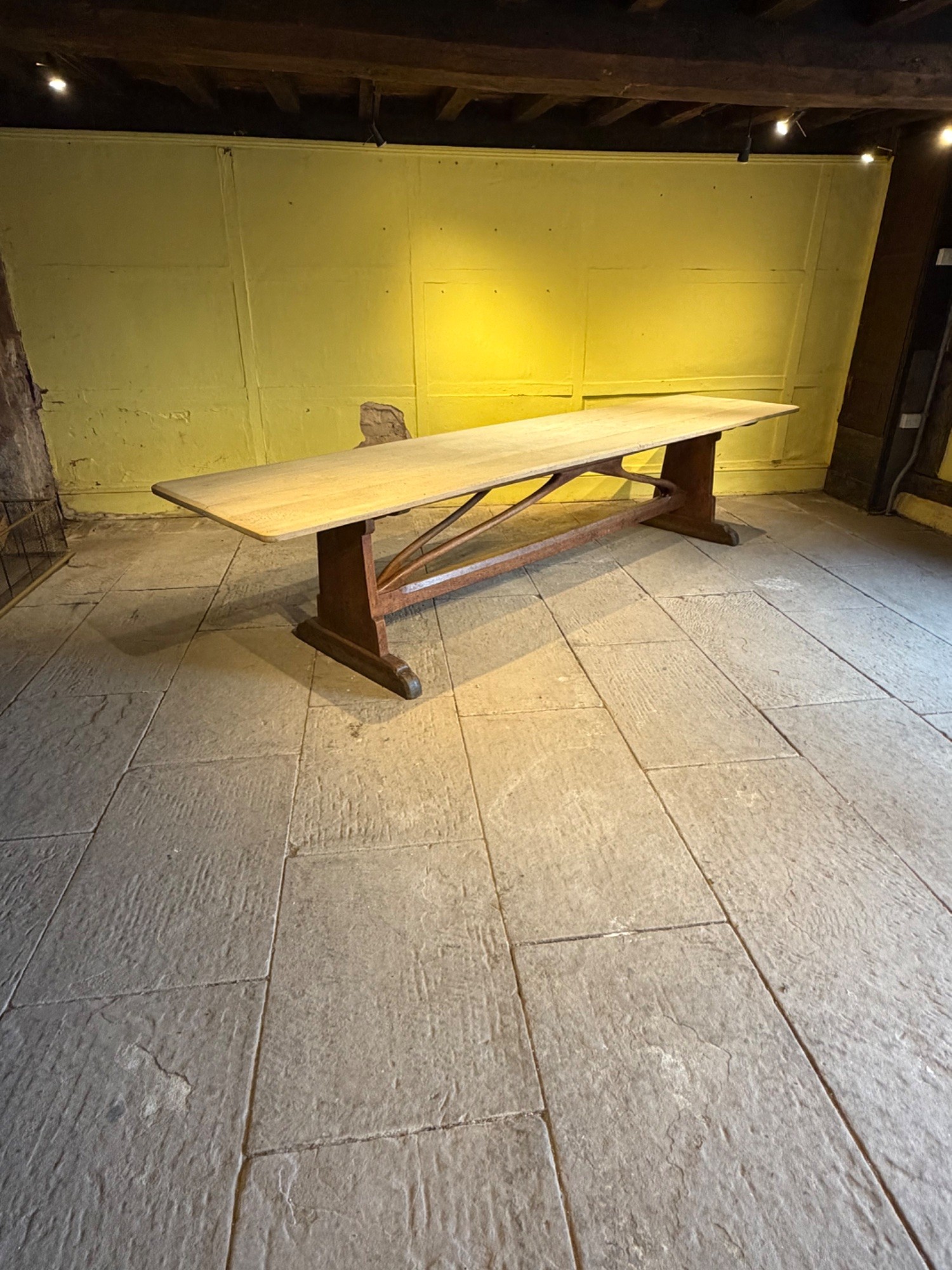
The Rendcomb College Refectory Table — Gloucestershire, 1955
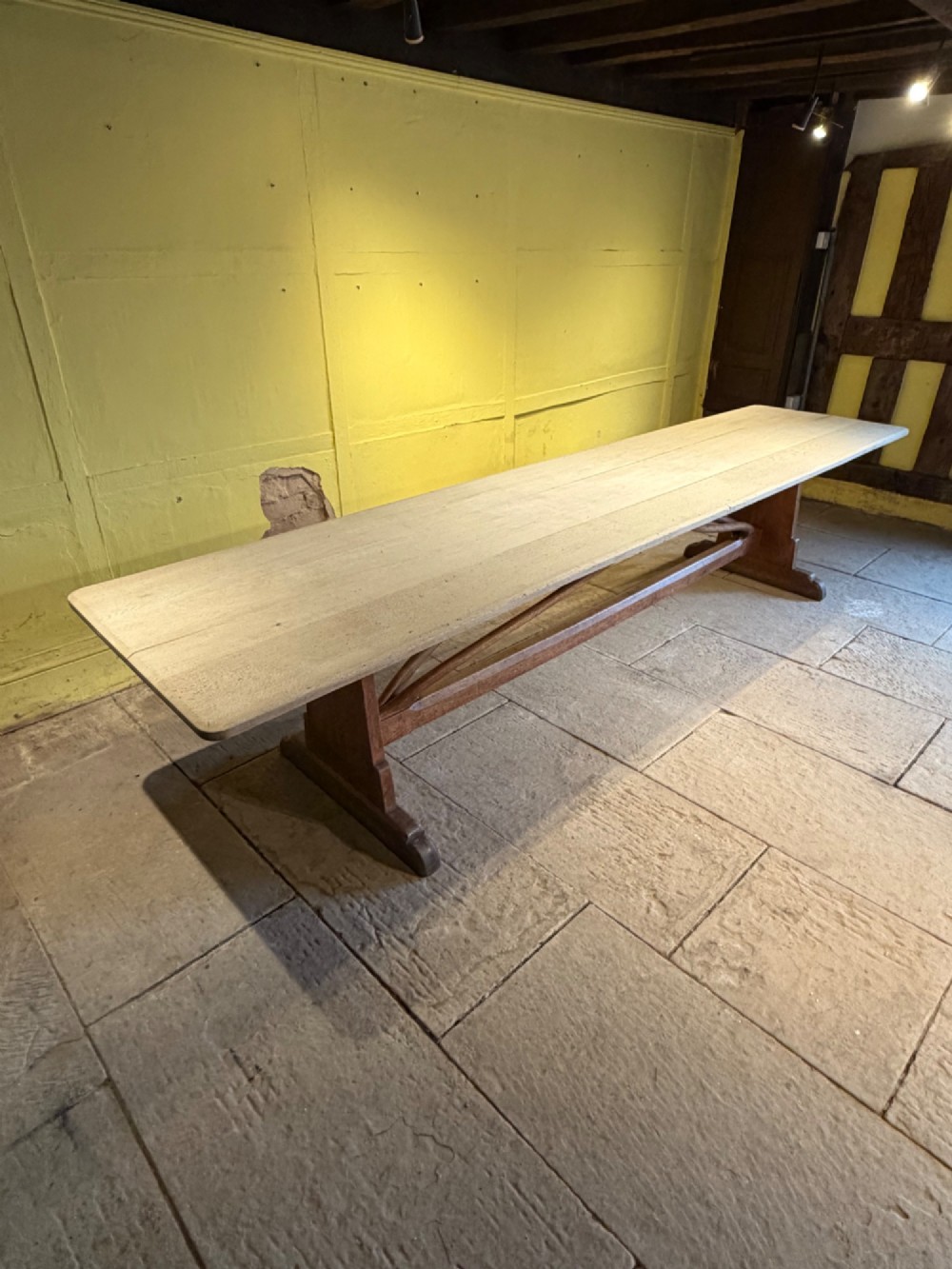
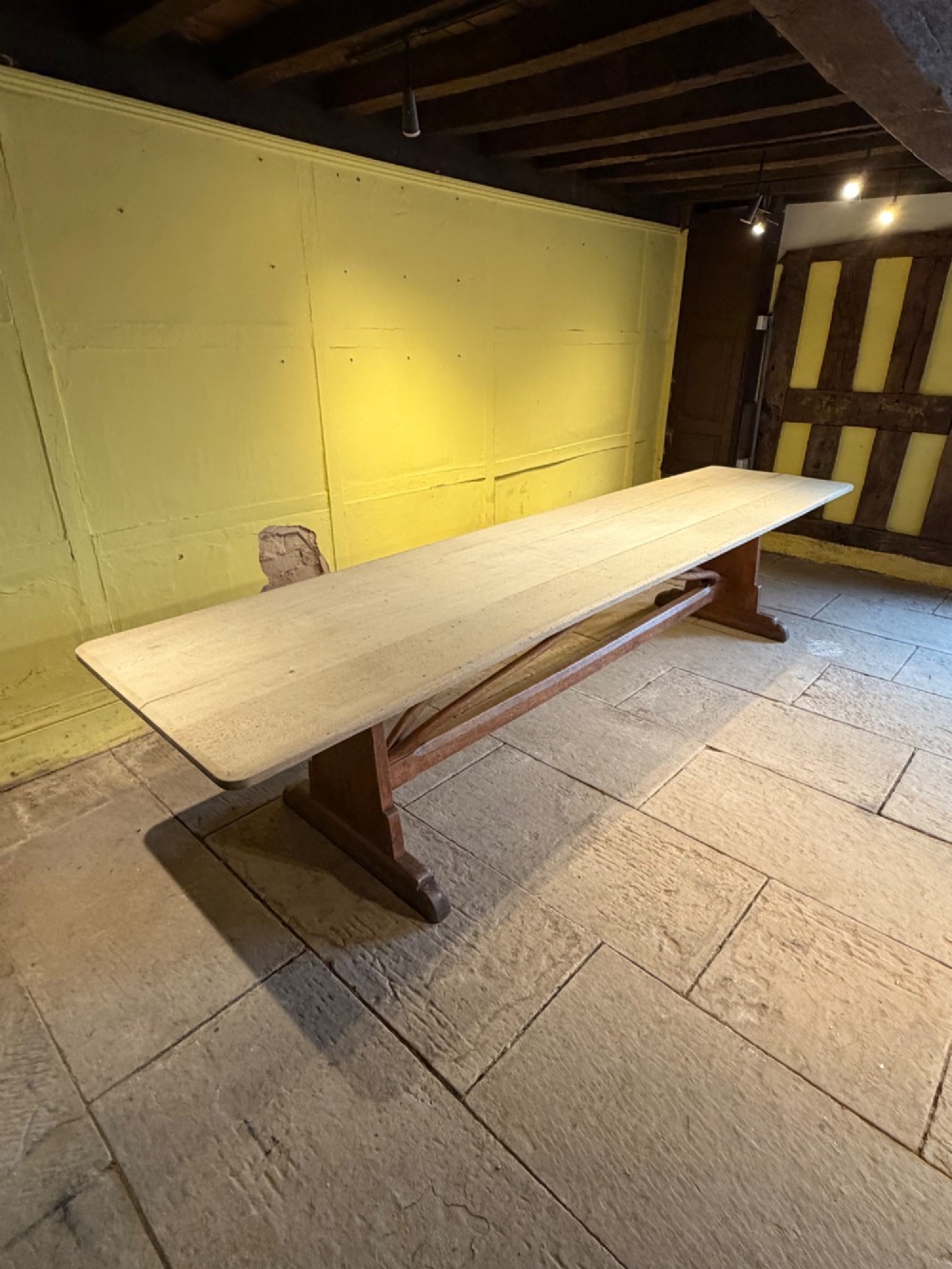
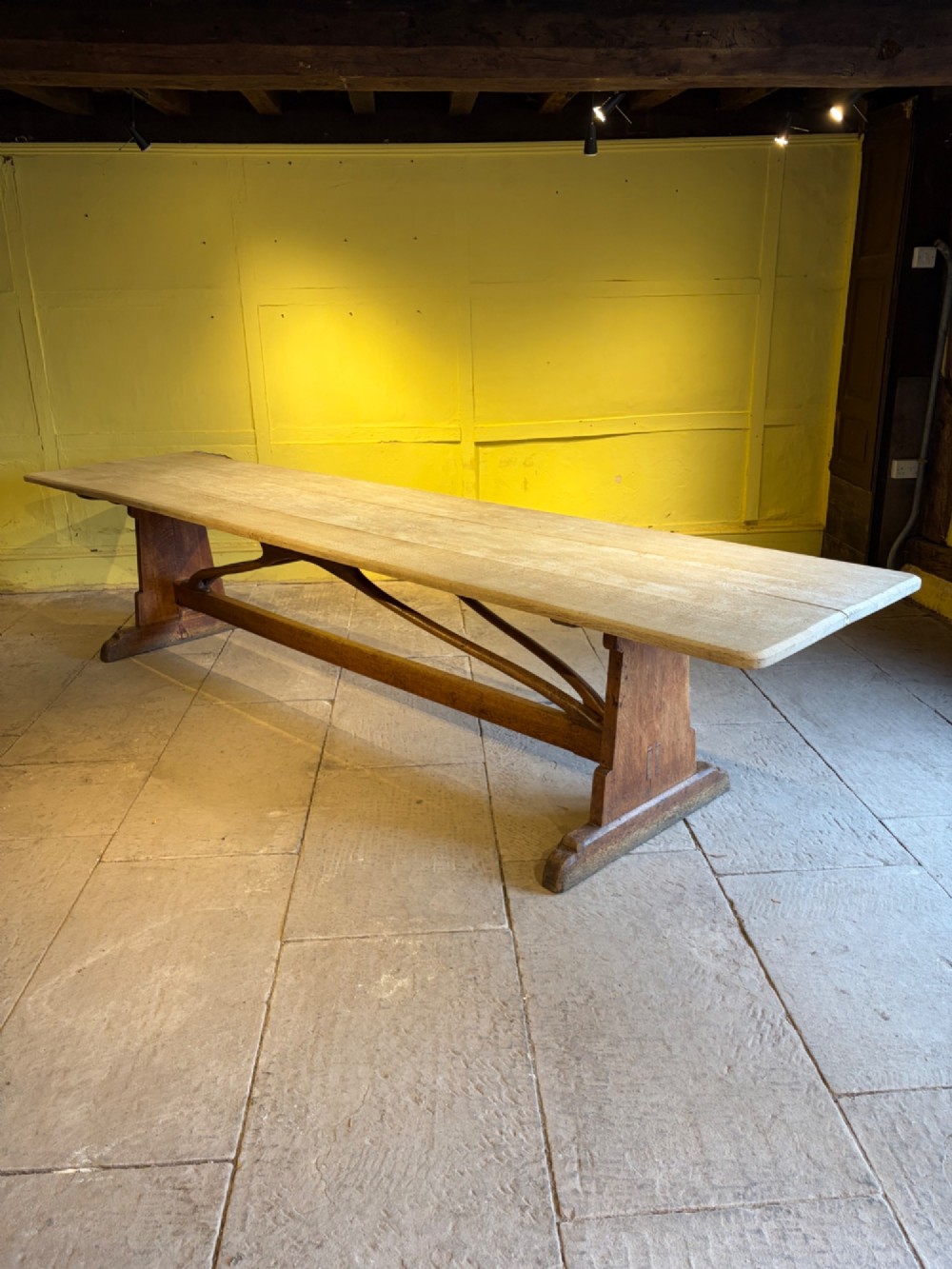
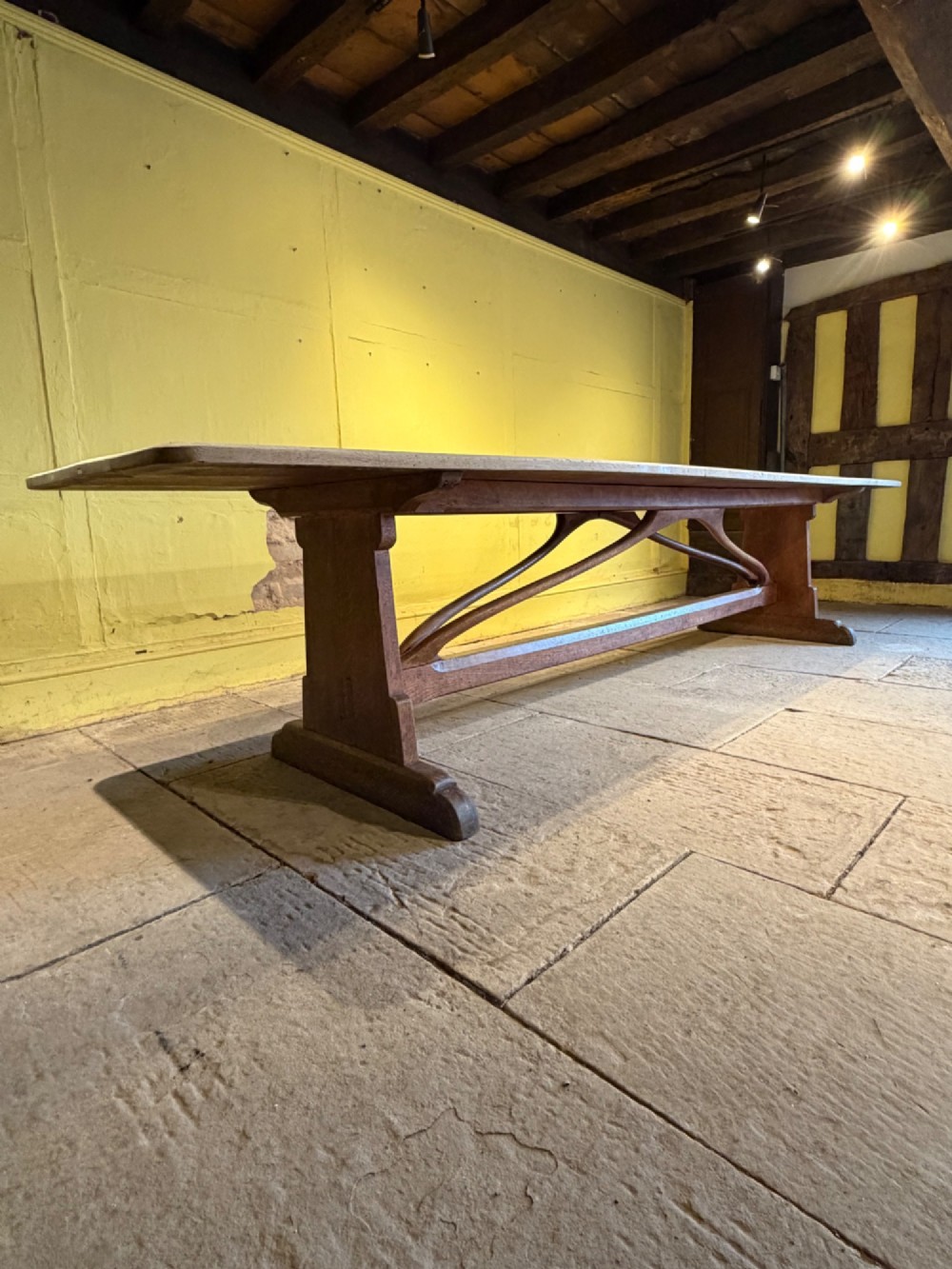
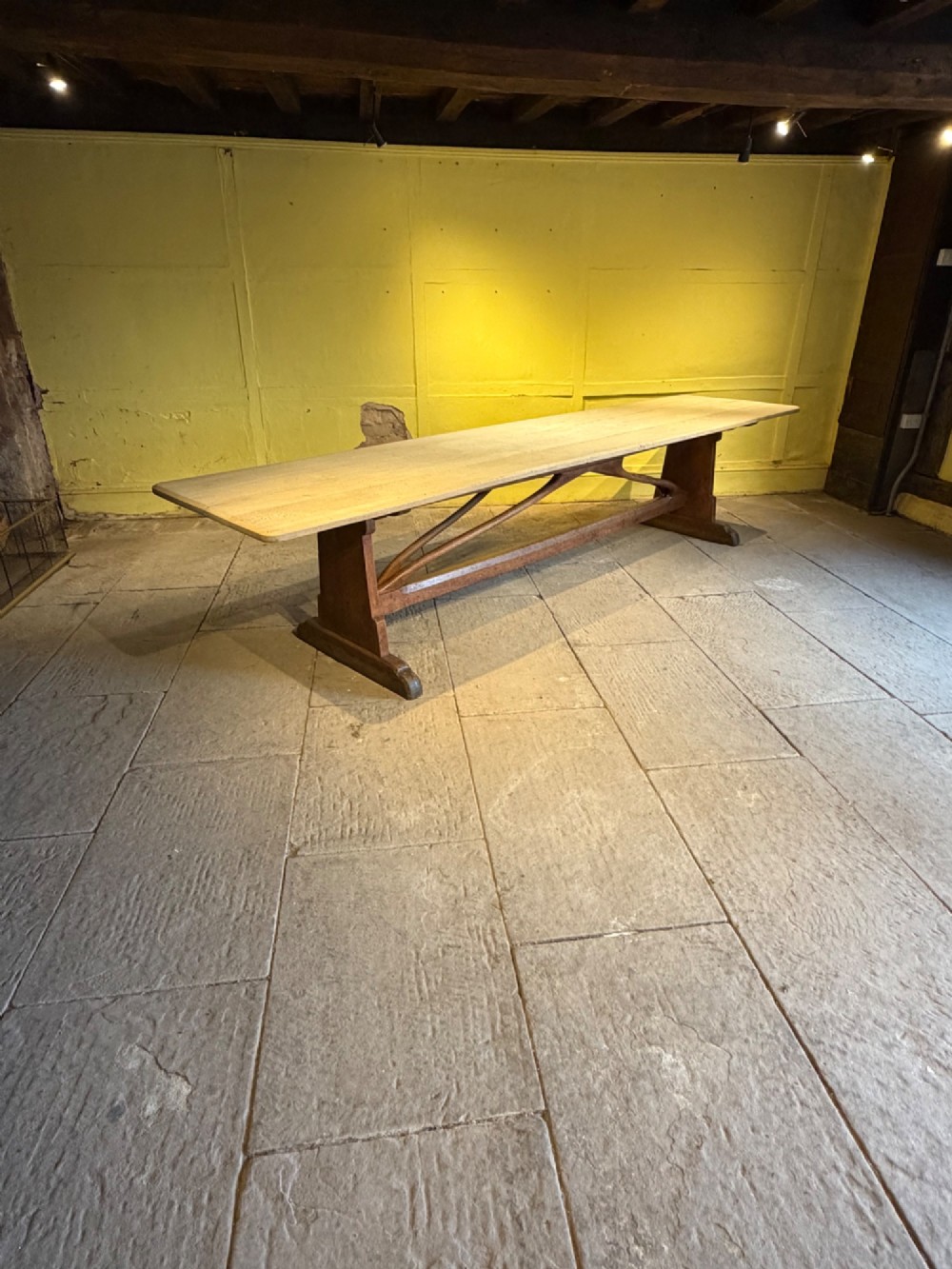
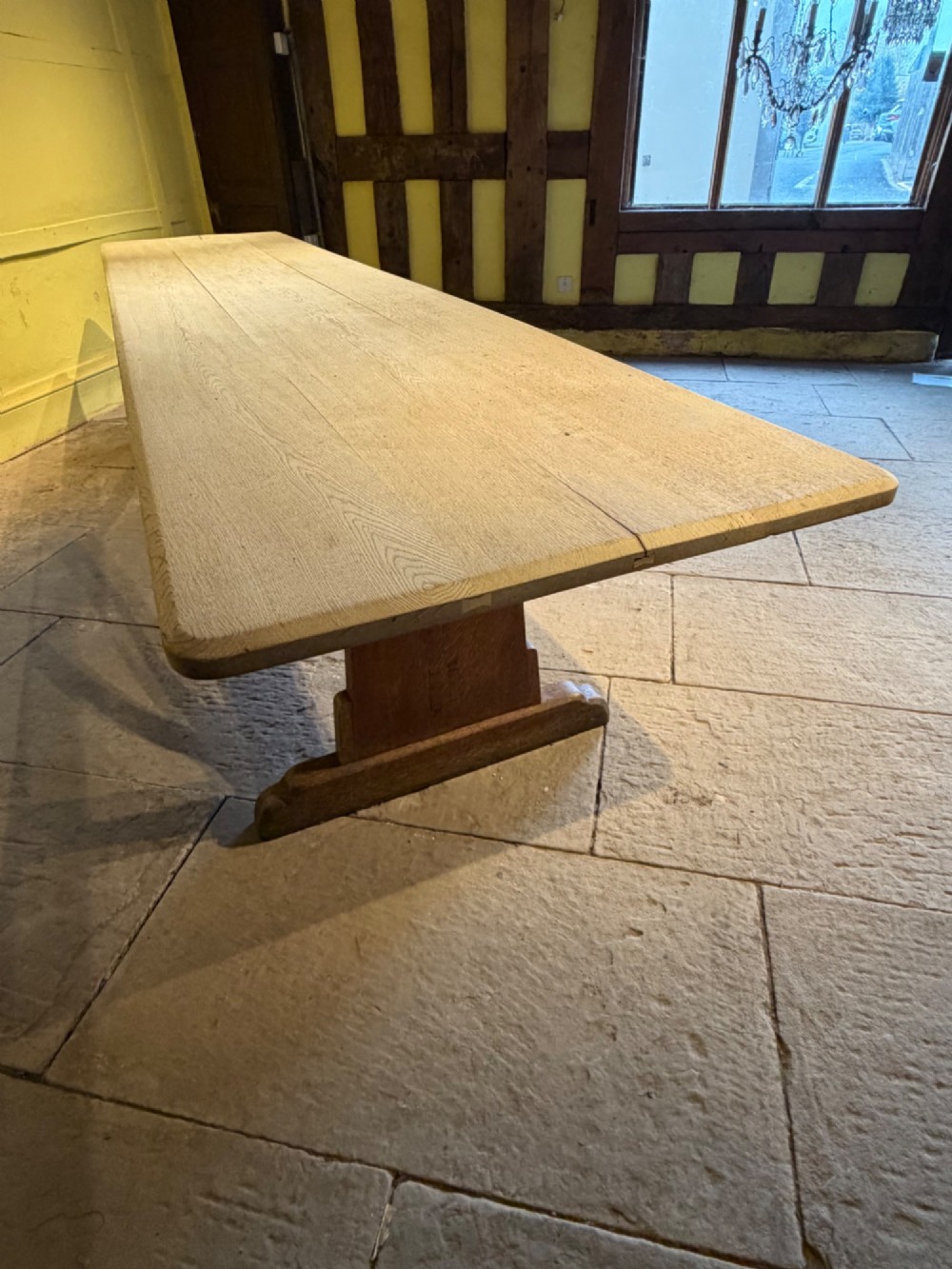
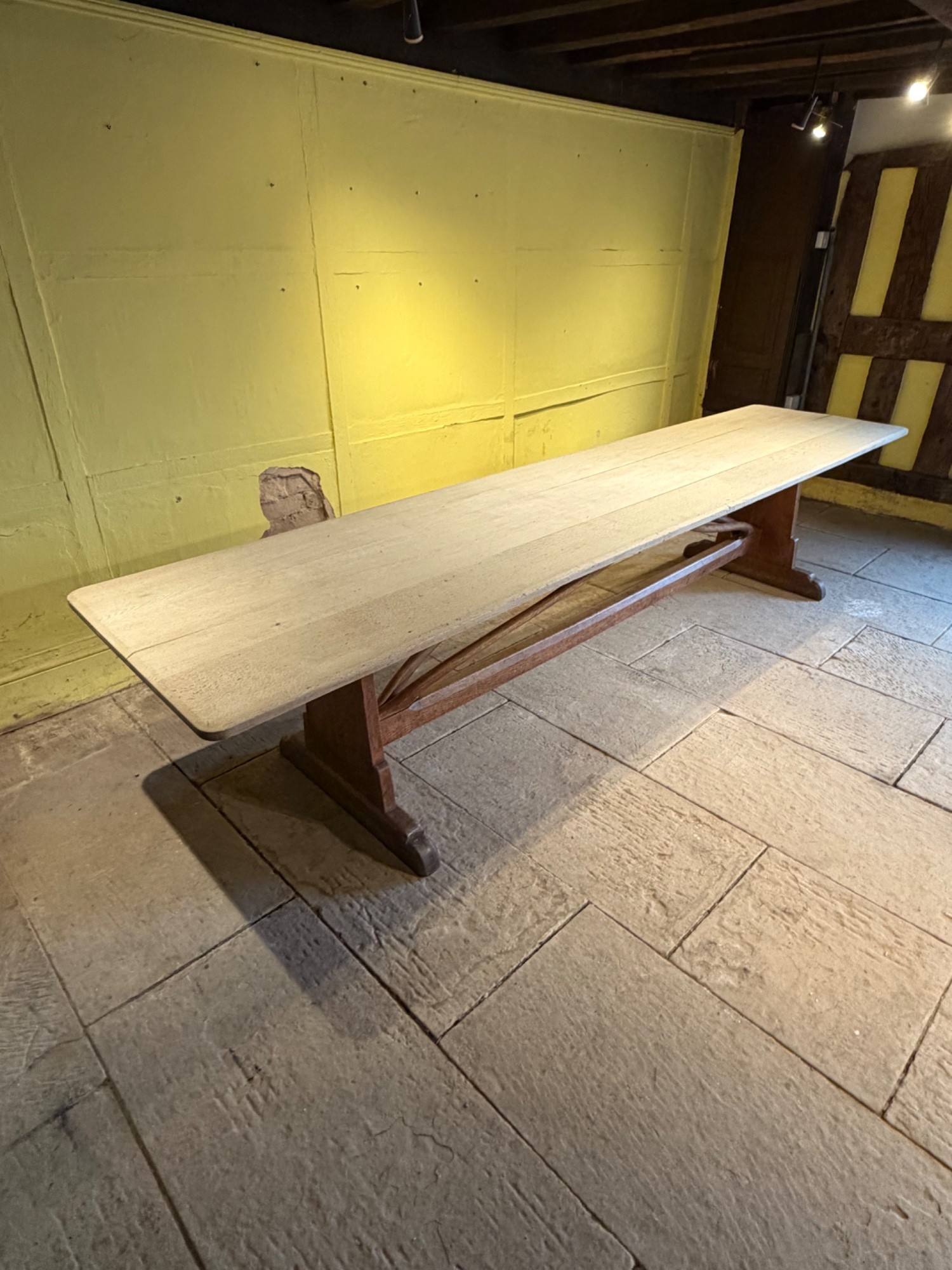
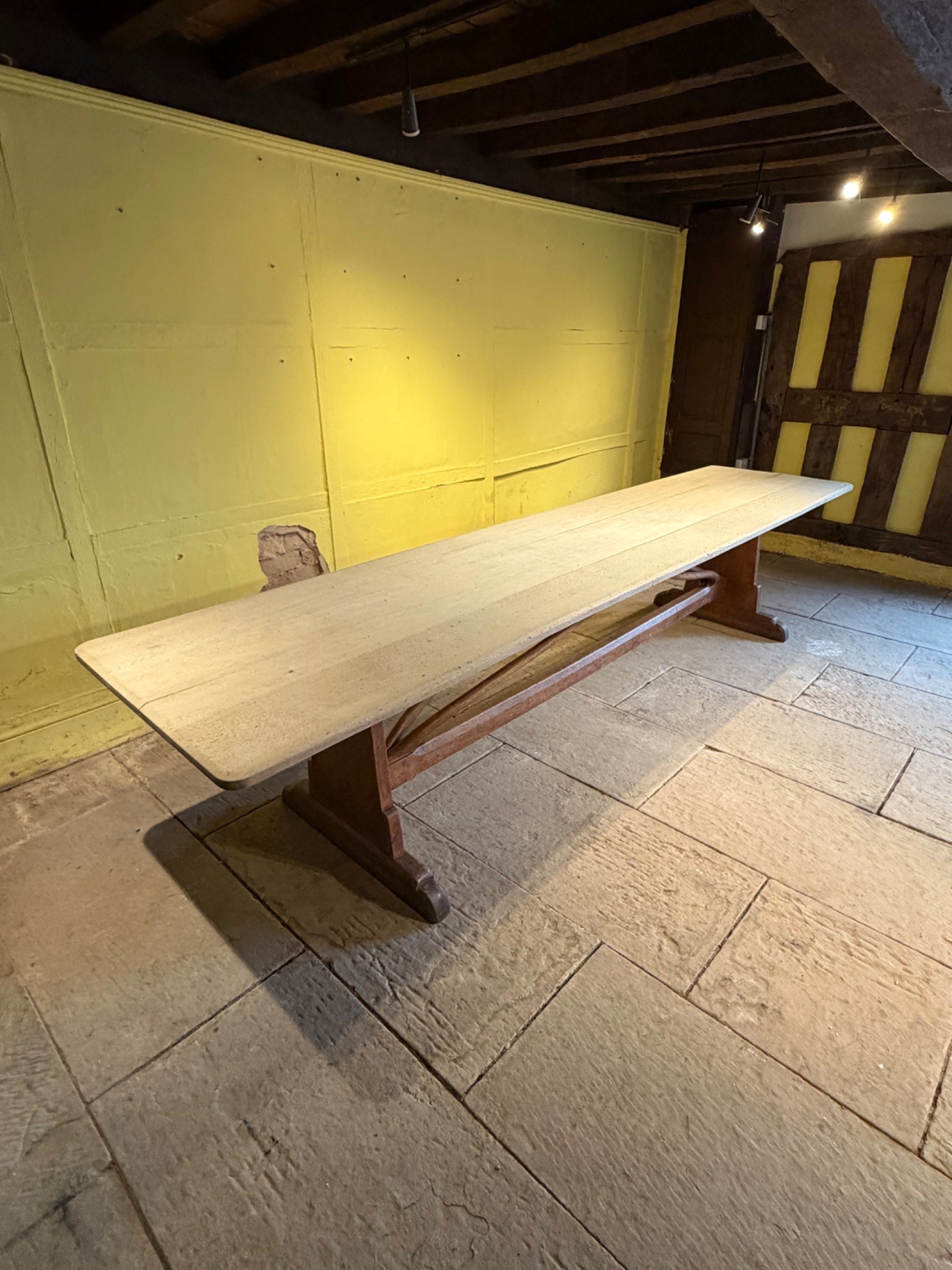
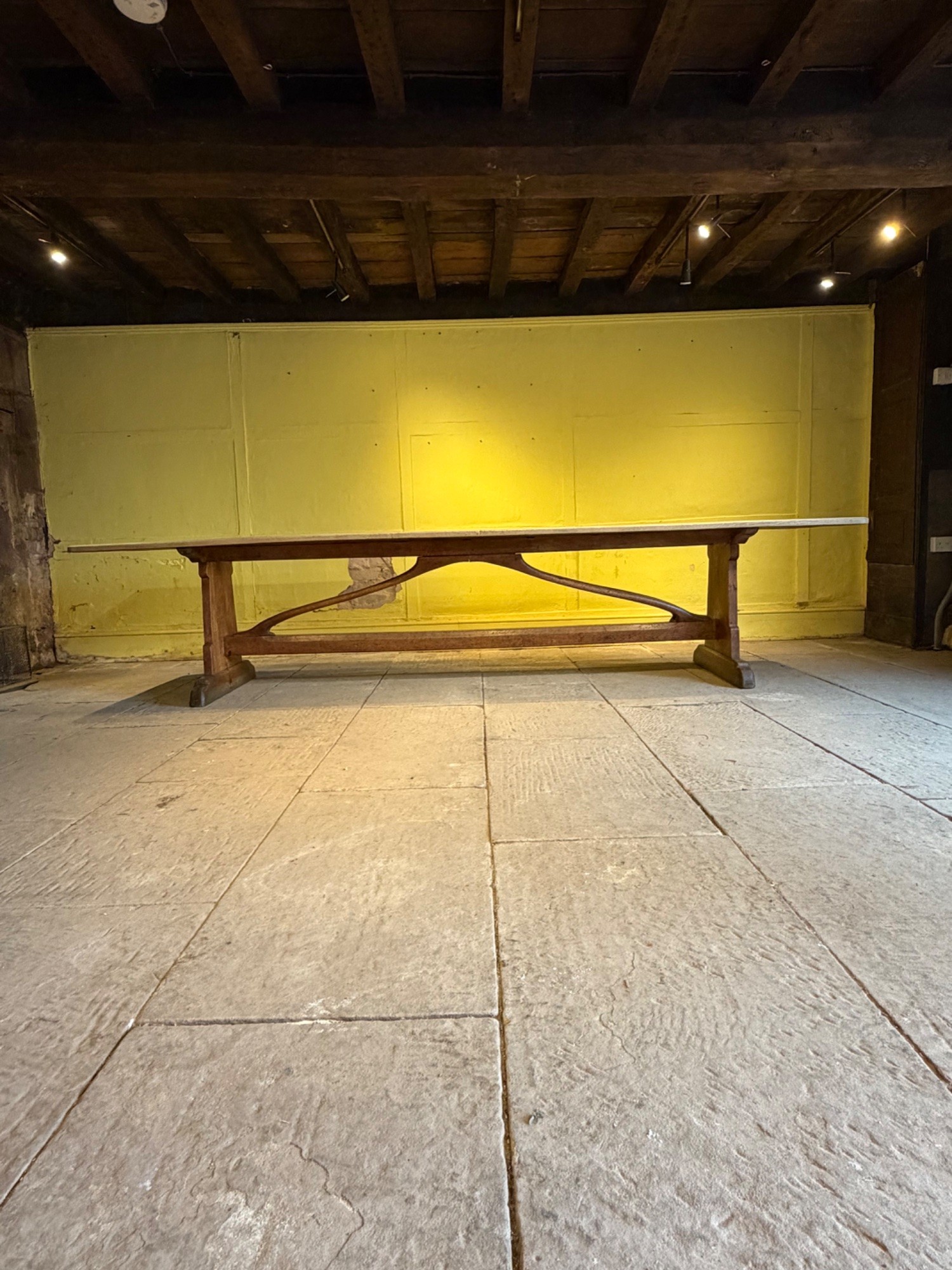
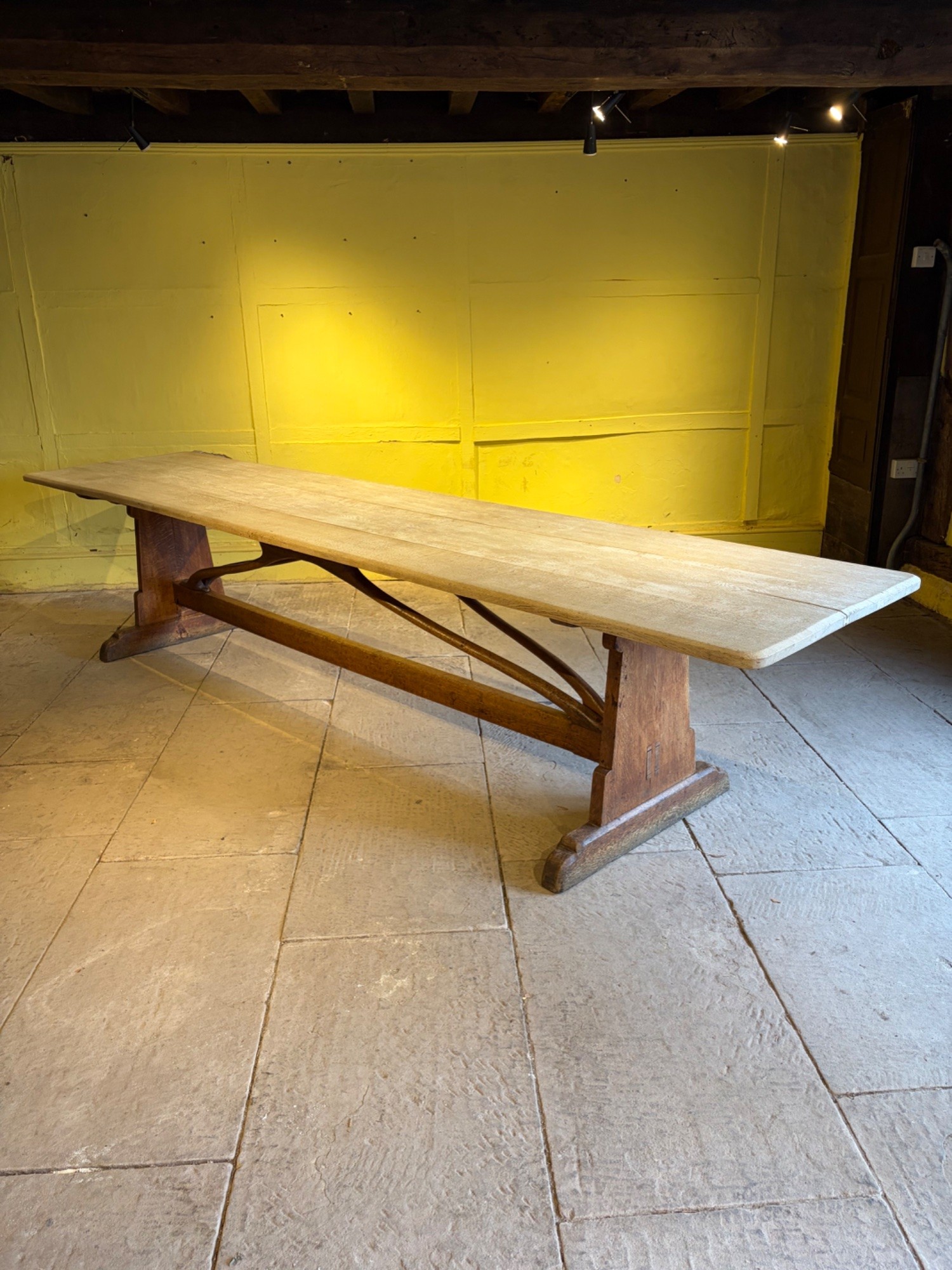
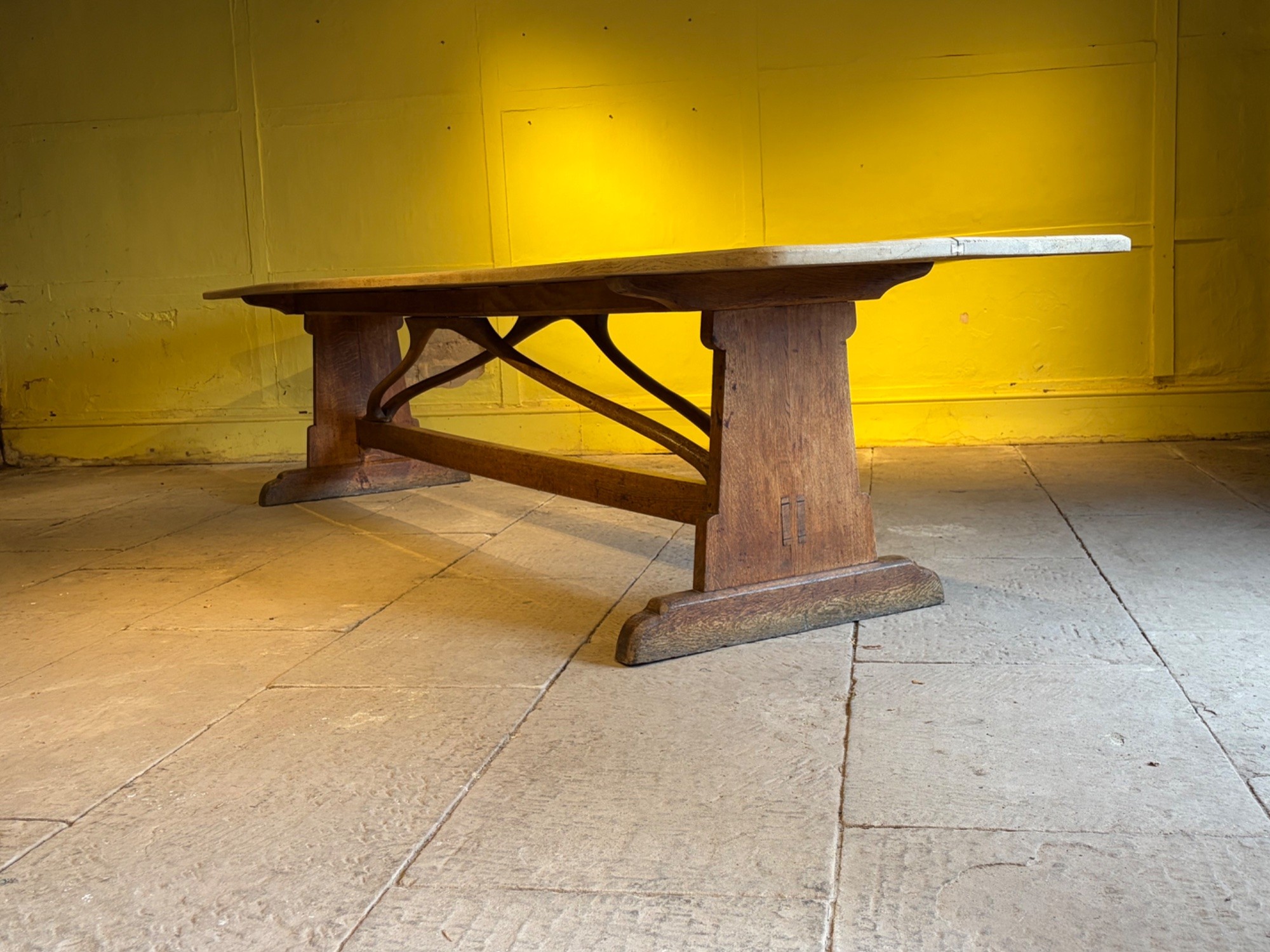
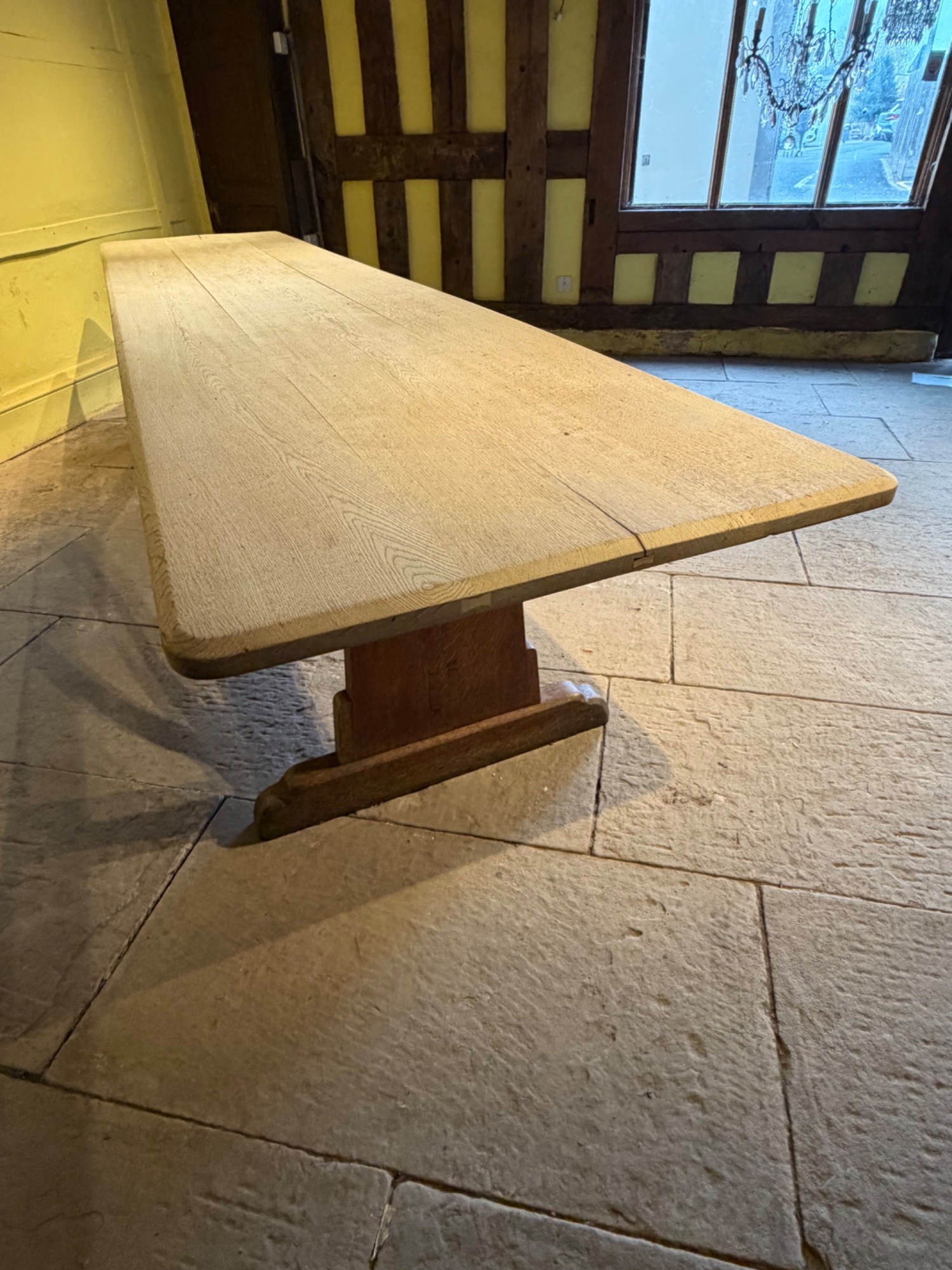
An exceptionally long refectory table made for Rendcomb College in Gloucestershire in 1955, with its original three-plank Japanese oak top and original trestle base. Measuring 11 ft 7 in (353 cm) long, it was designed by Gilbert F. Graty, the college’s woodwork master. The college’s contemporary account records that D. R. G. Griffiths volunteered to make the table and its accompanying benches. The furniture was first used on 31 October 1955.
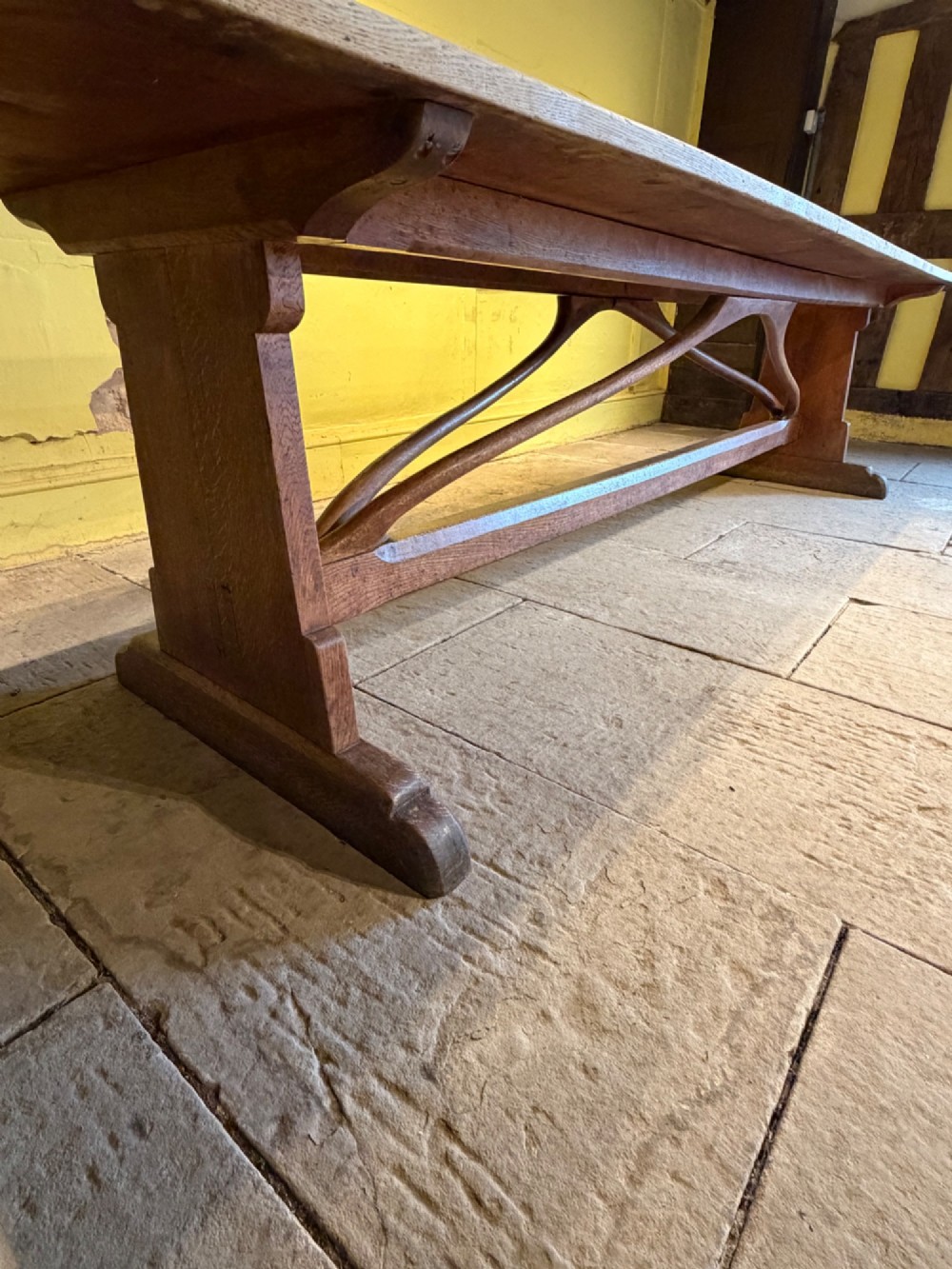
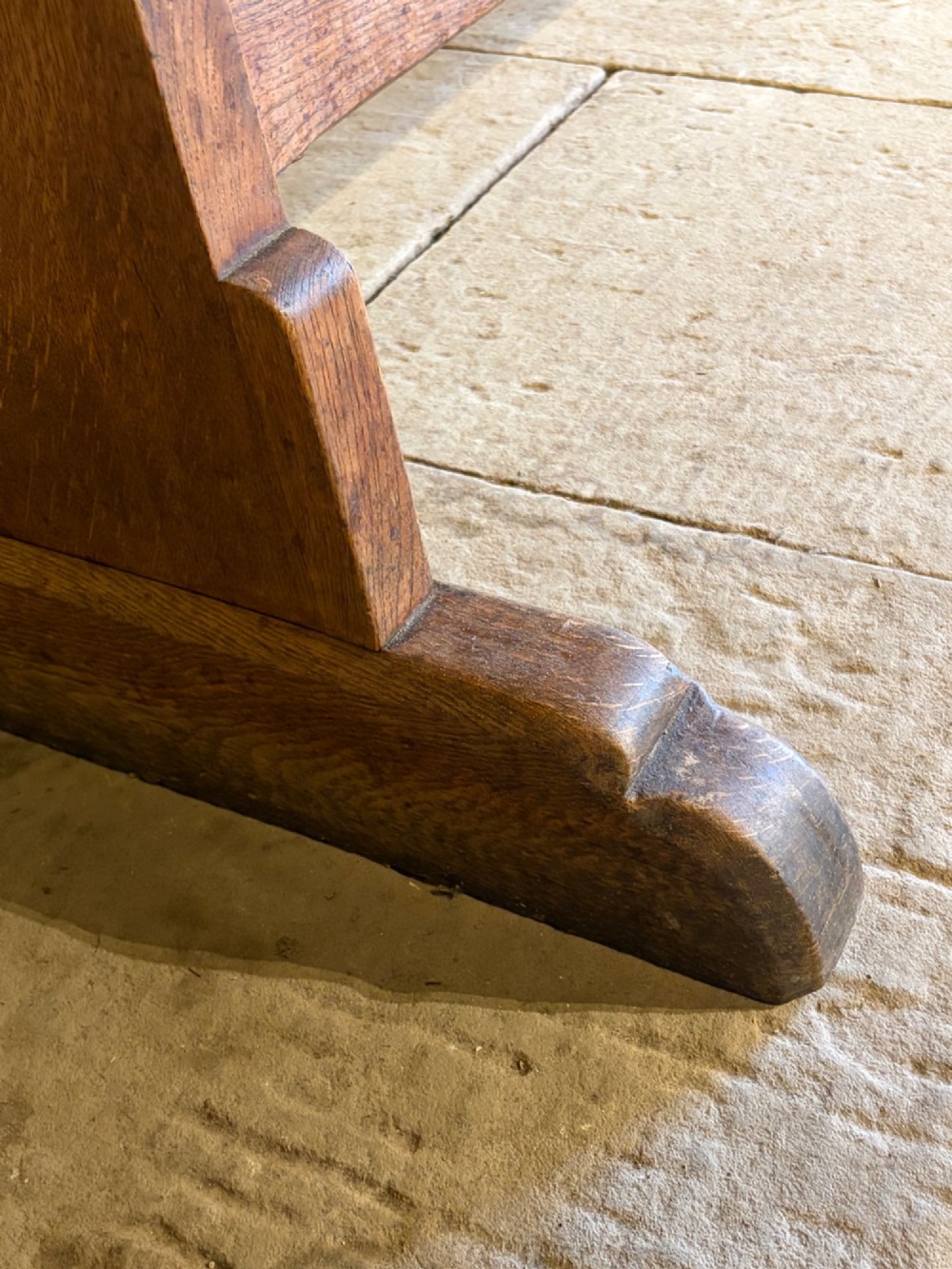
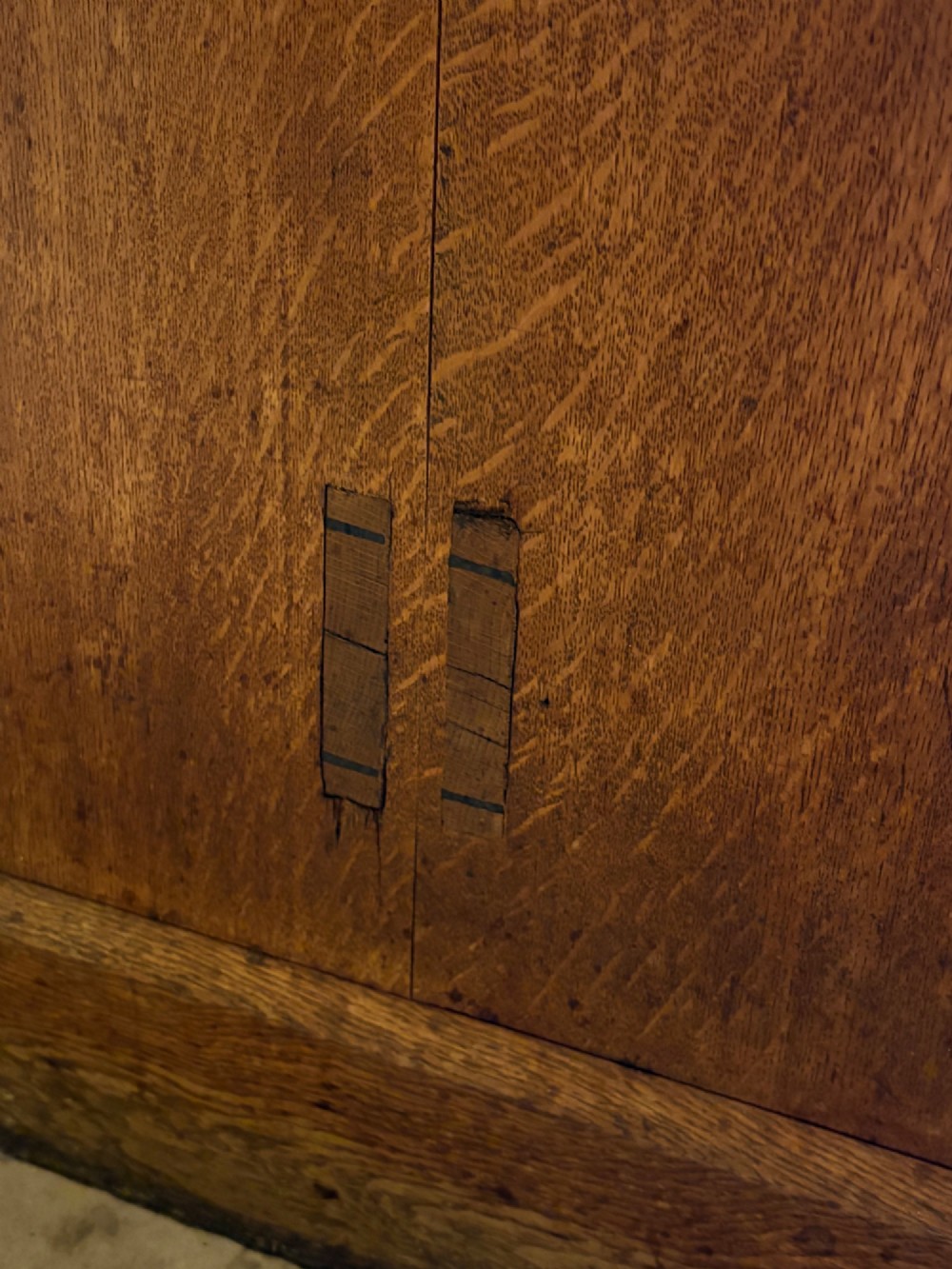
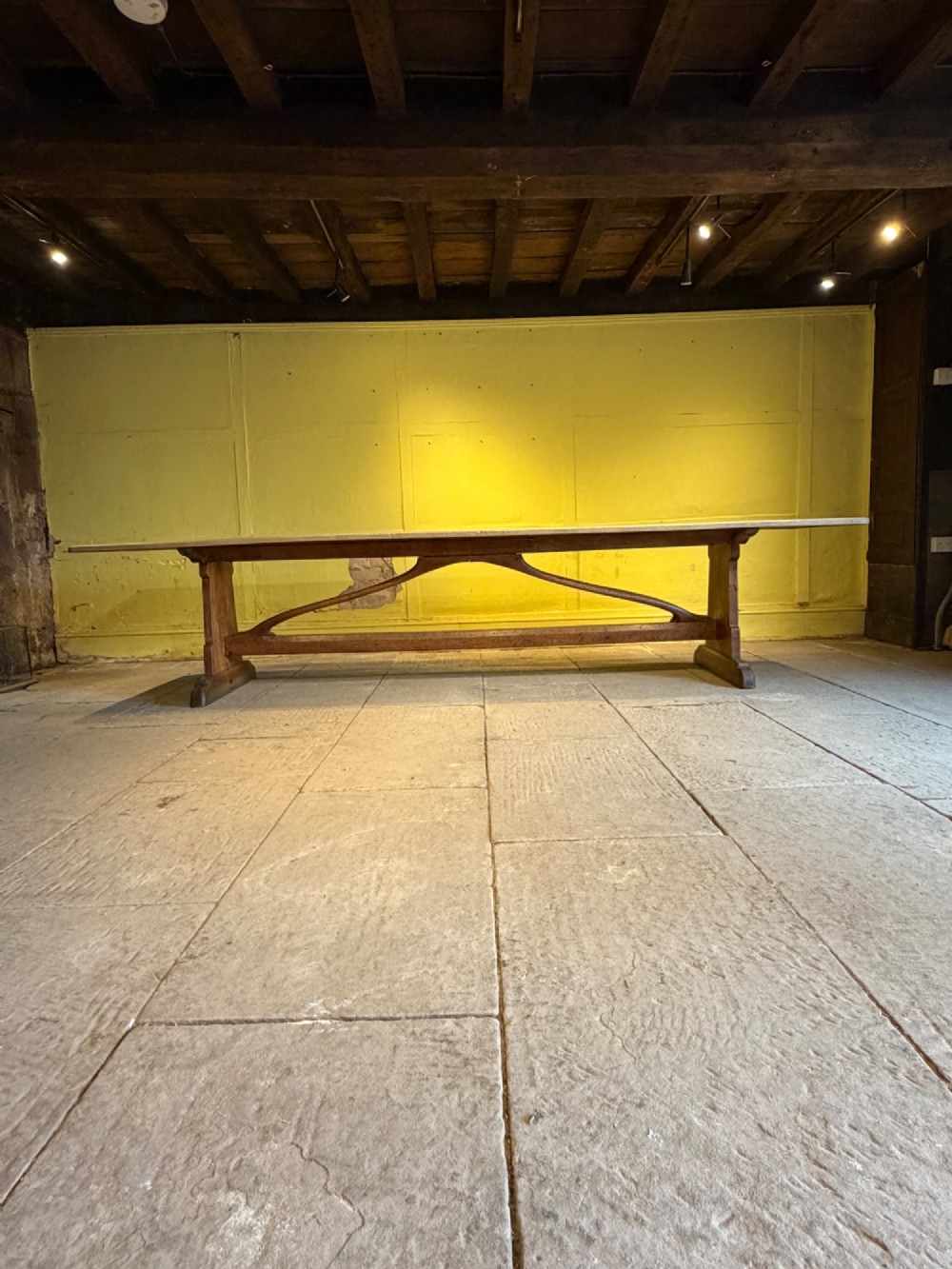
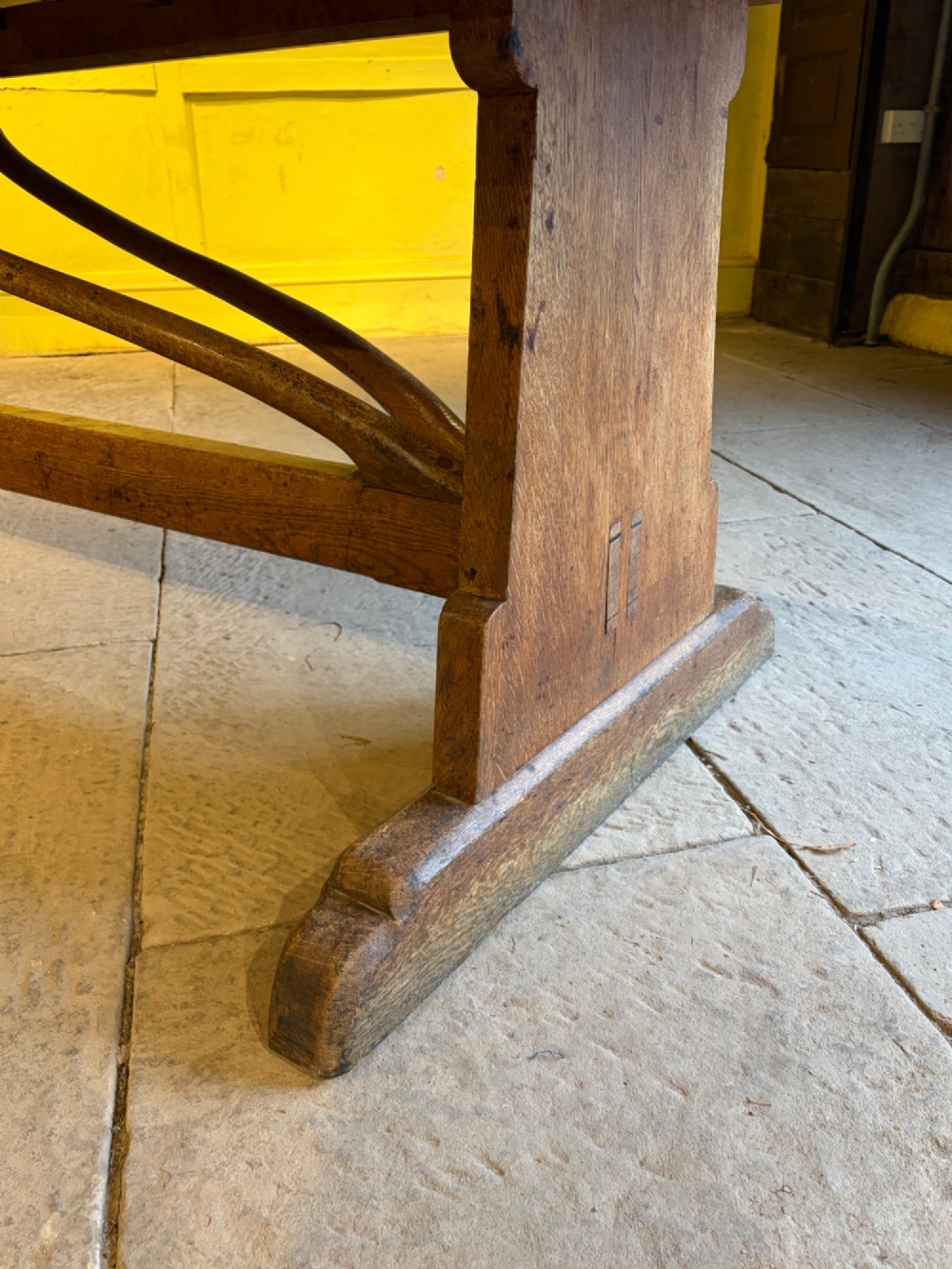
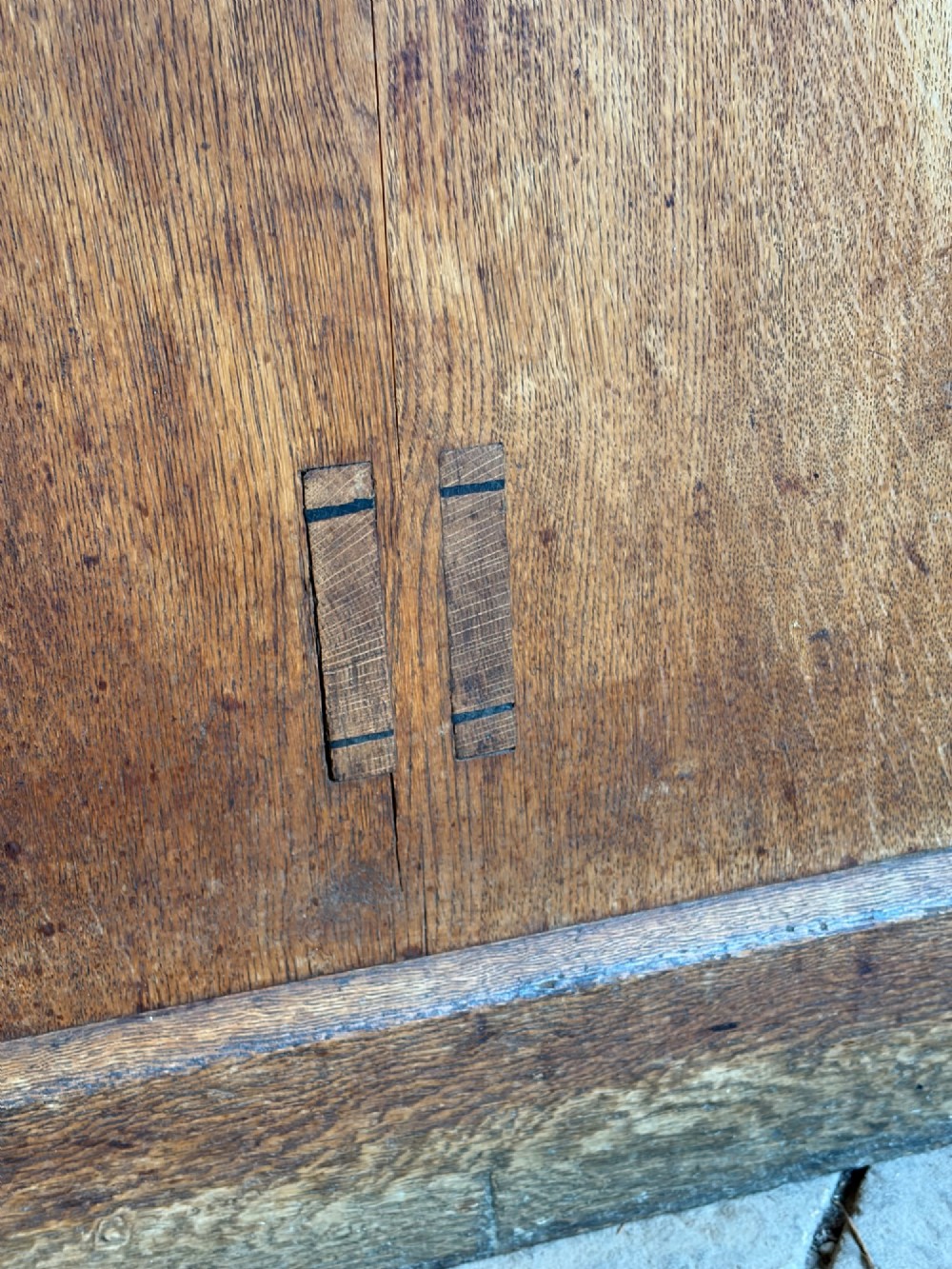
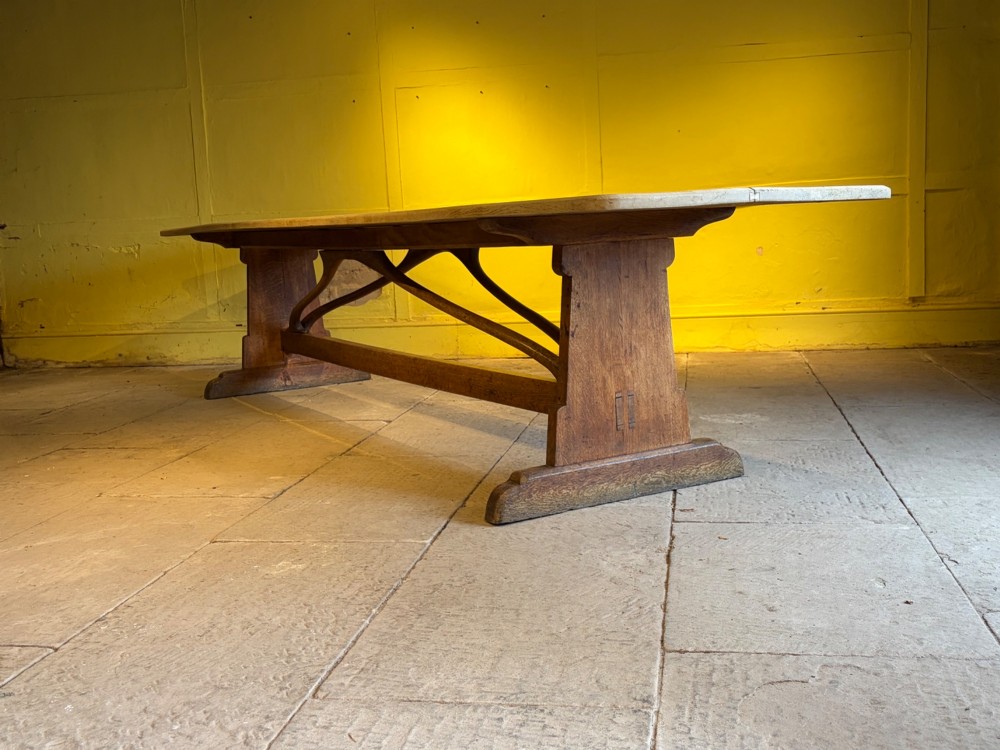
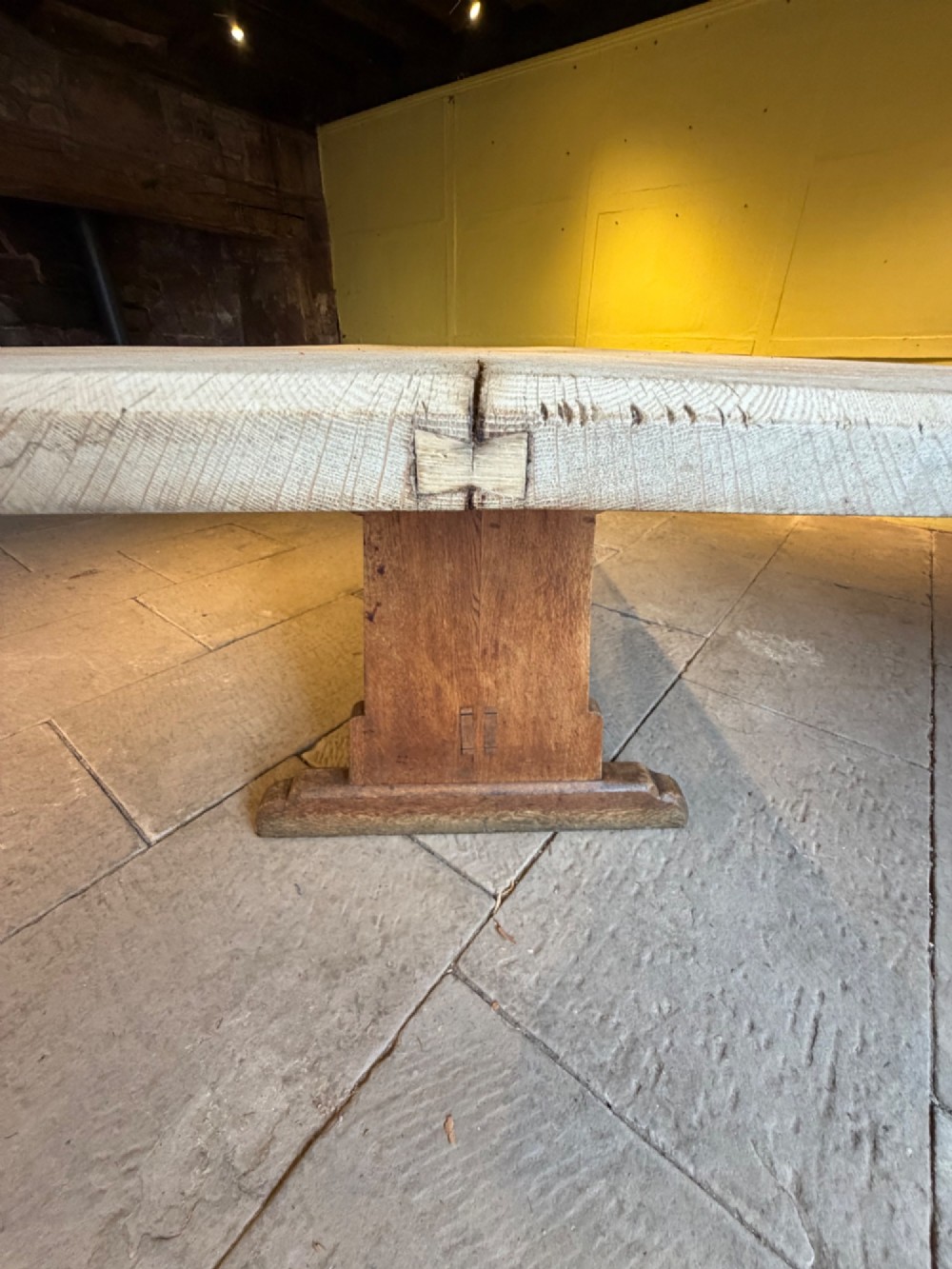
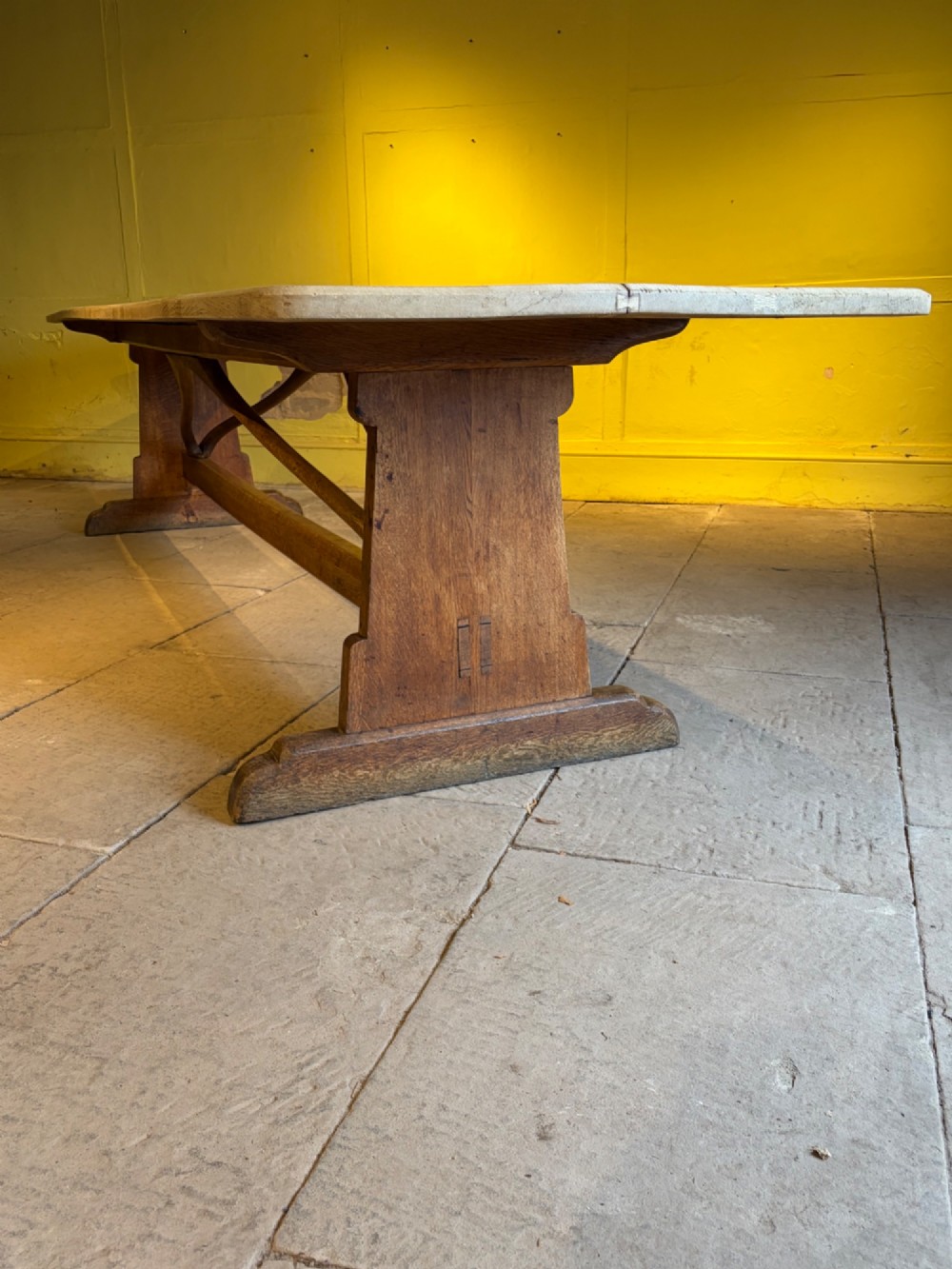
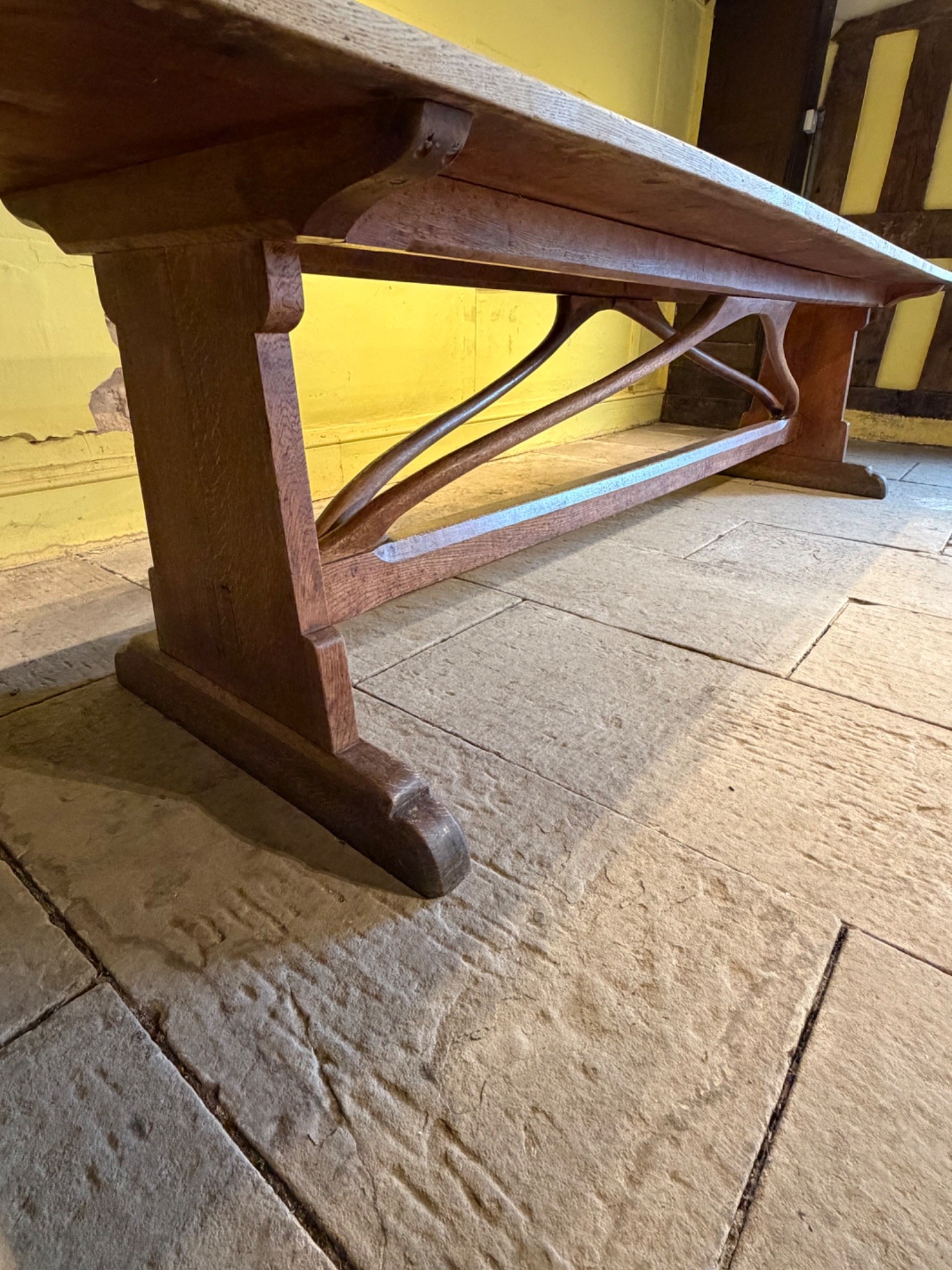
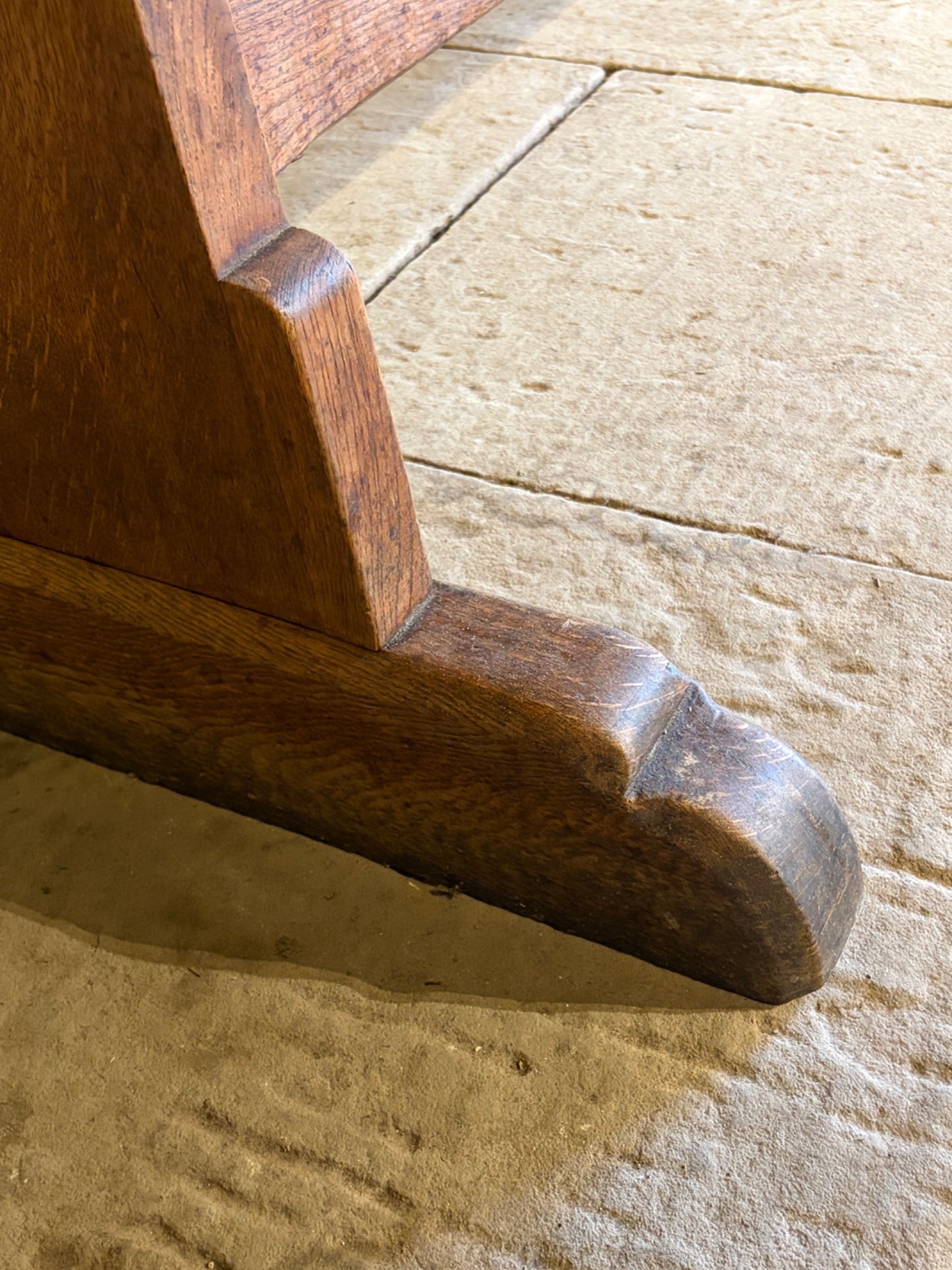
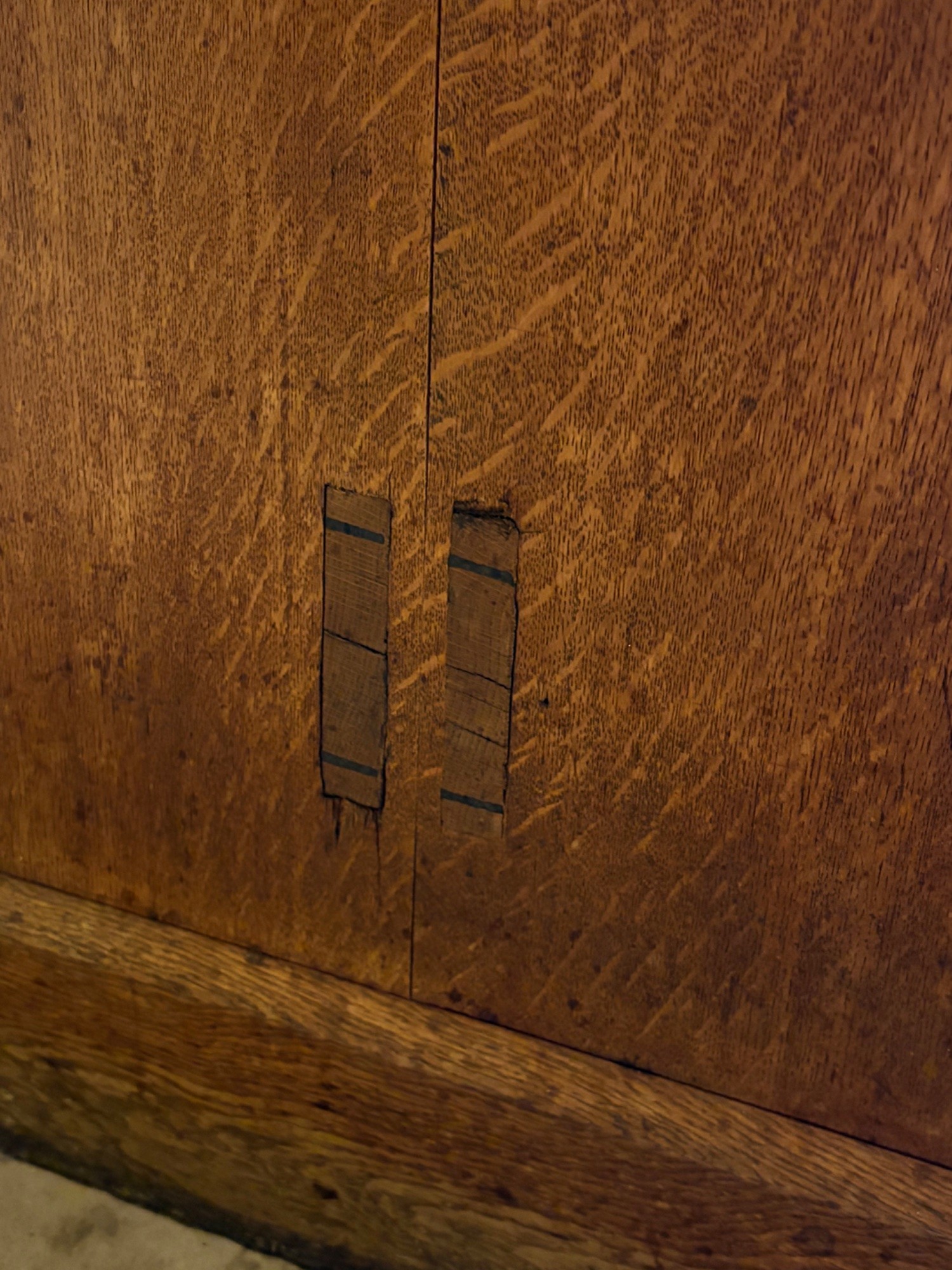
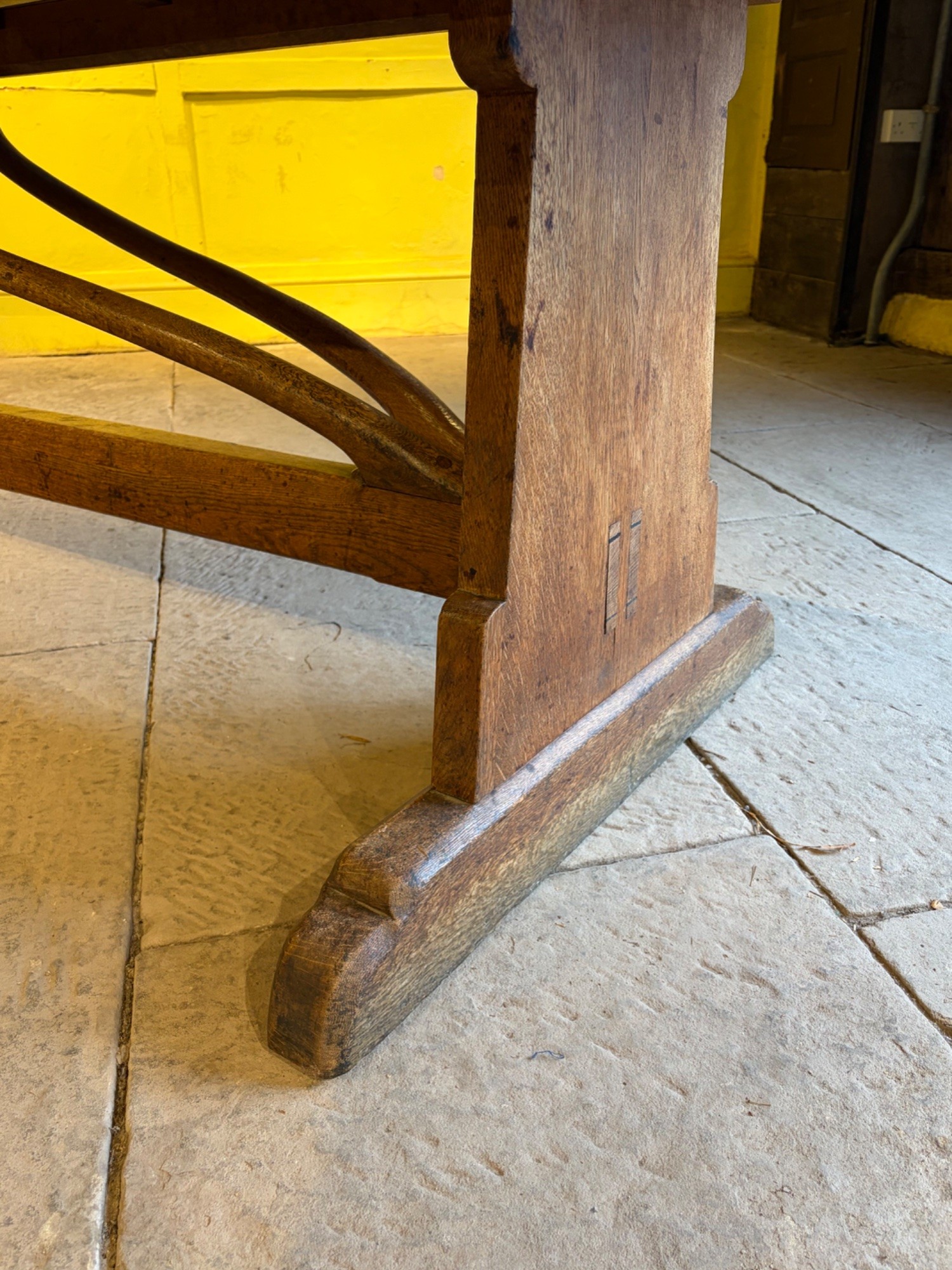
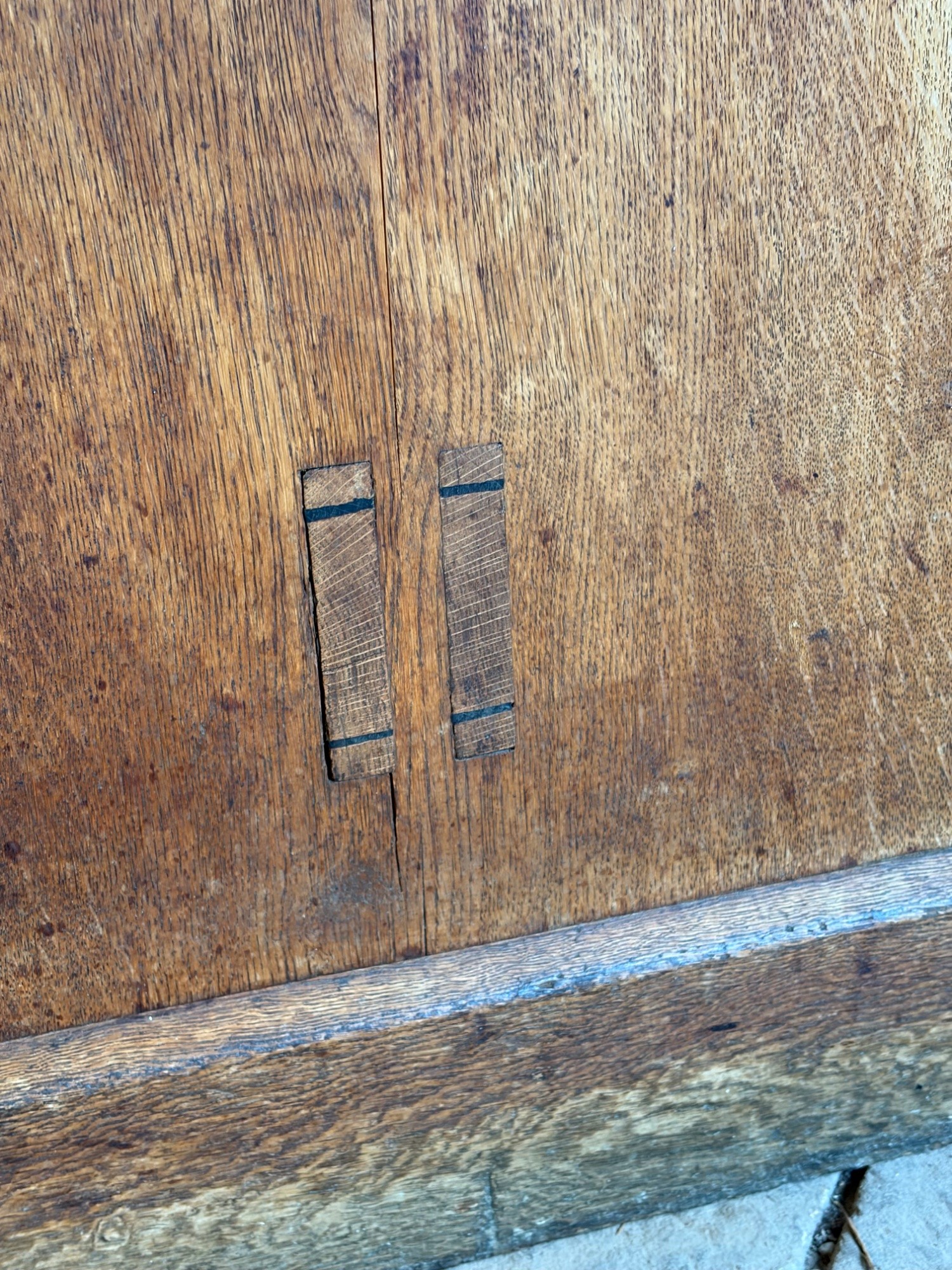
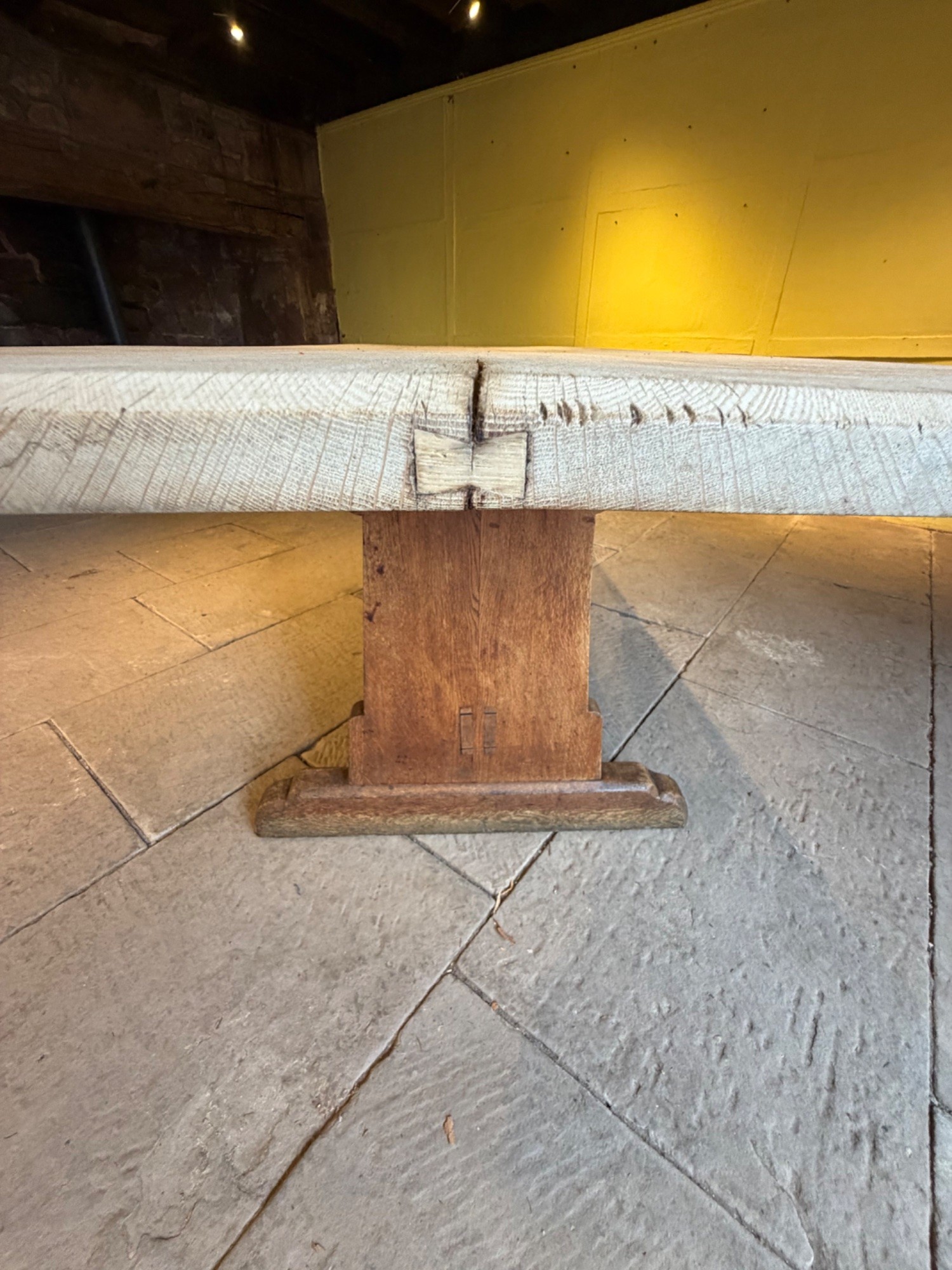
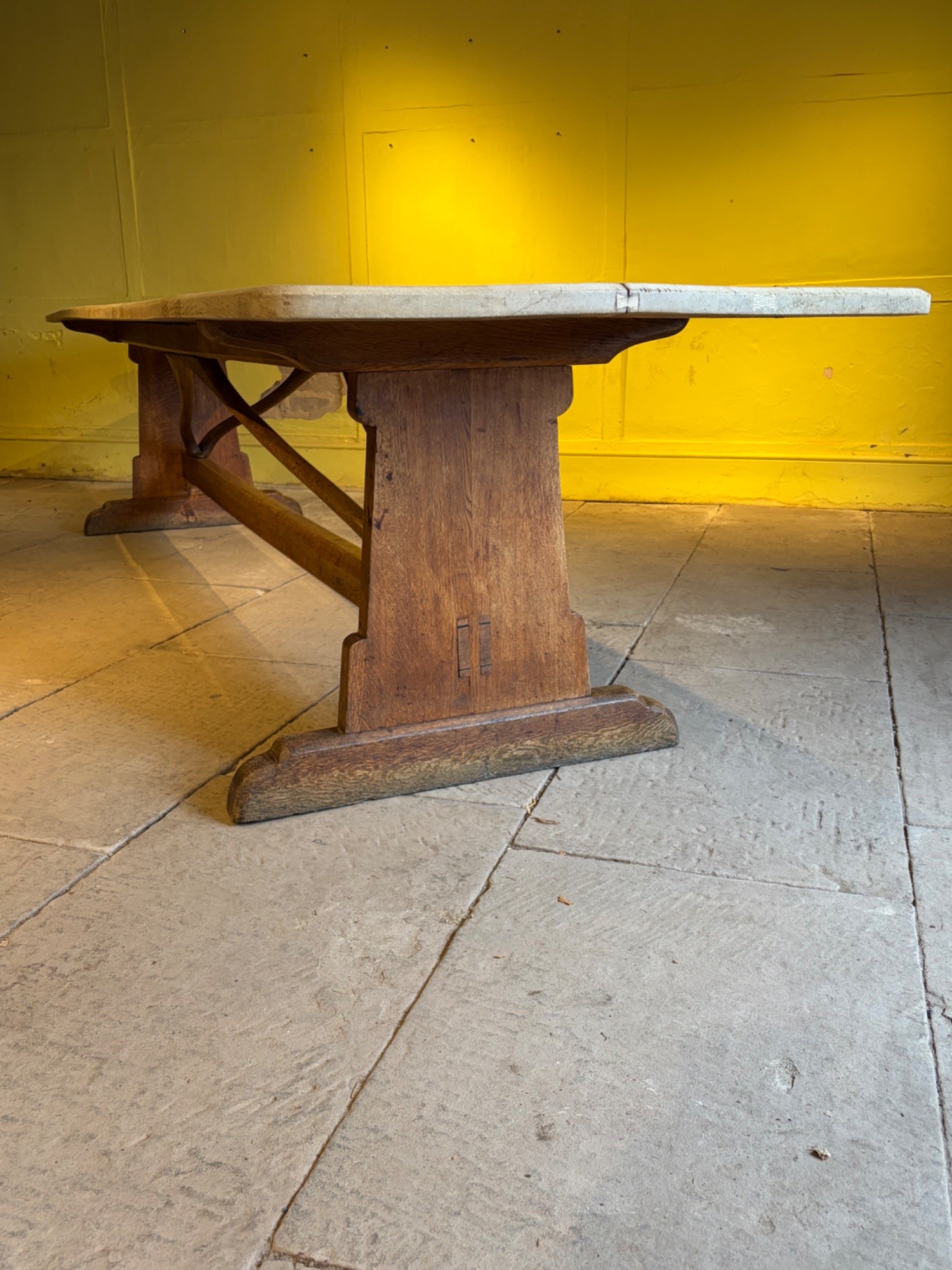
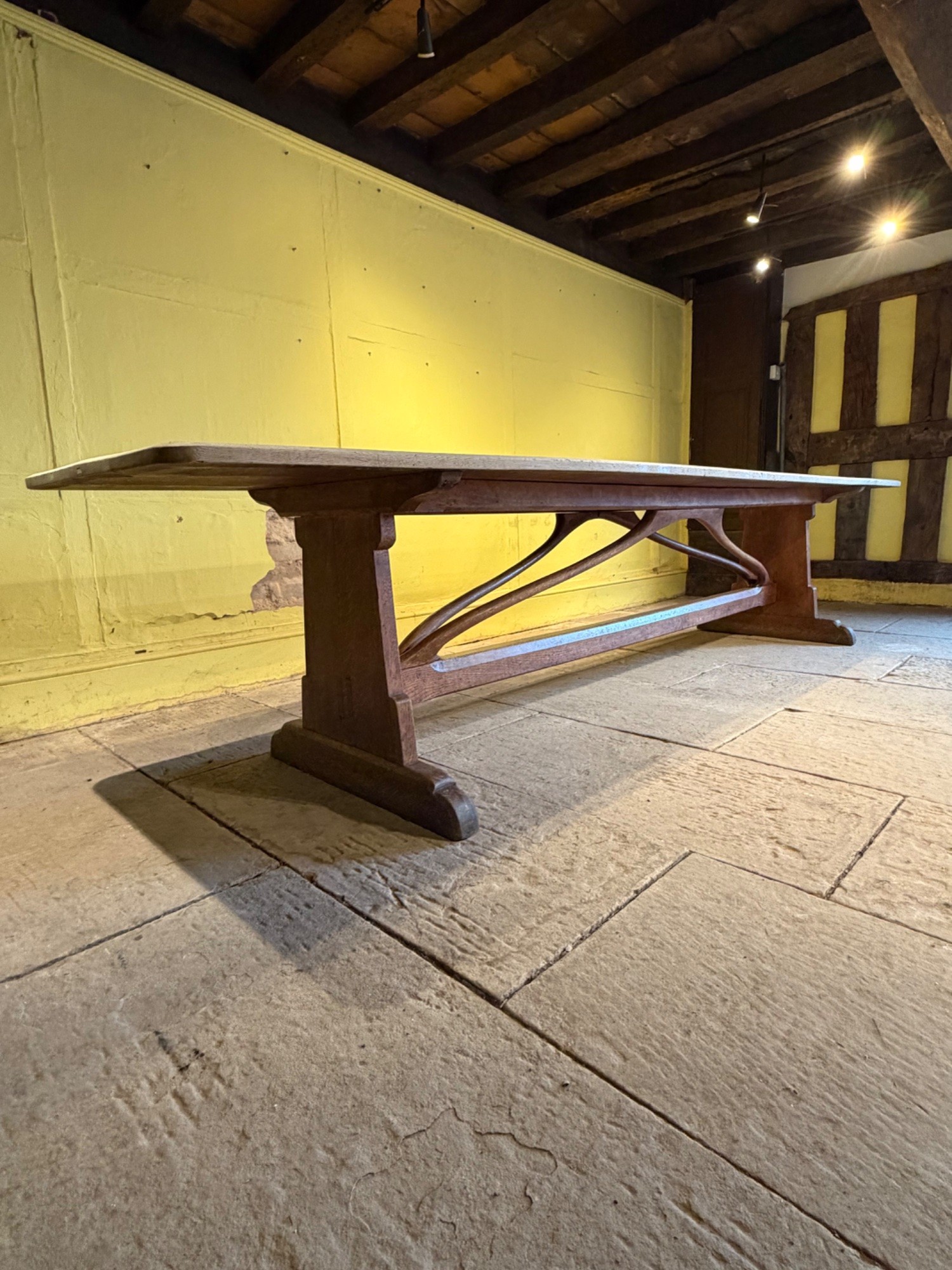
The top is formed from three broad boards rubbed together at the joints. It rests on two substantial trestle ends, each with an upright board jointed into a broad transverse foot and an upper batten. Two chamfered rails run beneath the top, with a third stretcher set lower down. Four shaped diagonal braces link the rails, creating a distinctive wishbone profile beneath the table. The college described the effect as ‘fan-vaulting’. The bracing stiffens the long frame against the strain of moving a table of this size.
The broad expanse of Japanese oak and the sculptural underframe give the table its character. Its exposed joinery and shaped stretchers recall the Cotswold Arts and Crafts tradition, particularly the refectory tables of Edward Barnsley. Here, those qualities are expressed on the scale of a college dining table, with a top nearly twelve feet long made from just three boards.
The table was made to ease overcrowding in the college dining hall. The Rendcomb College Chronicle records that Japanese oak was the only timber available in the sizes required. Teams helped plane, sand and polish the top, and the table was finished with several coats of beeswax. It was so large that final assembly took place in the gymnasium annexe where it was to be used, as the completed table could not have been moved out of the workshop in one piece.
Provenance
Made for Rendcomb College, Gloucestershire, in 1955.
Originality
Retains its original three-plank Japanese oak top and trestle base.
Dimensions
11 ft 8” in long (approximately 356cm).
Literature
Rendcomb College Chronicle, March 1956, pp. 11–12, “For This Relief Much Thanks”.
Worth noting!
Oliver Morel who was a former pupil at Rendcomb also worked for Sidney Barnsley at the Froxfield workshop, he later returned to Rendcomb where he taught woodwork after the Second World War.