





English Oak Refectory Table
An english oak refectory table brings centuries of robust carpentry and communal dining history directly into a modern home.

English Oak Refectory Table
An english oak refectory table stands as a heavy, long dining surface rooted in centuries of communal dining traditions. The selection spans from authentic seventeenth-century origins through eighteenth-century Georgian examples to later nineteenth-century pieces and twentieth-century revivals.
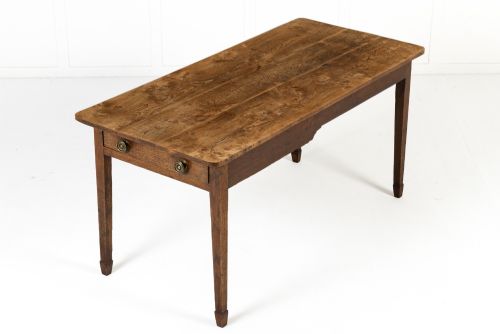
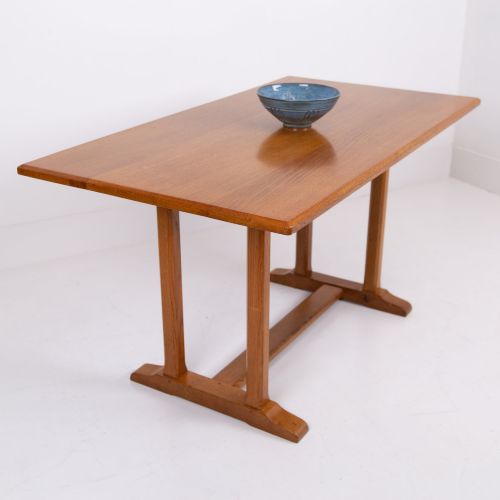
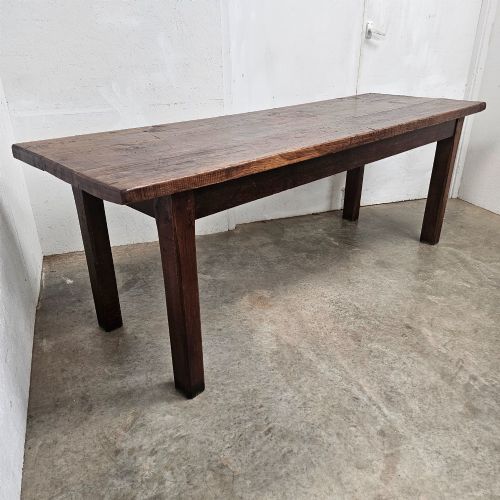
Buyers commonly encounter sturdy farmhouse formats alongside trestle bases and draw-leaf extending variants. These forms reflect both practical domestic utility and stylistic revivals that mimic earlier centuries.
The materials extend beyond primary timber to include beech, elm, pitch pine, and brass details. Pieces range from compact six-seat country kitchen tables to grand formats accommodating twelve diners.
Materials and construction
Makers relied primarily on solid oak, often selected for wide planks to form thick table tops alongside secondary timbers like beech and elm for framing and structural support. Carpenters utilised traditional joinery techniques, securing heavy tops to trestles or four-legged bases with pegs and tenons.
Surfaces received hand-finishing, leaving natural grain patterns visible, whilst later periods introduced bleached treatments or rich golden tones. Structural longevity derived from dense hardwoods that resisted the heavy wear of daily farmhouse and tavern life.
English Oak Refectory Table Retail Price Guide 2026
Typical asking prices for english oak refectory table among the pieces listed under this phrase on Sellingantiques today, from the lower quarter to the upper quarter. They describe what is for sale here now, not the wider market.
Some tables retain ink stains from centuries of kitchen accounts tallied directly beside the dinner plates.
Distinctions in craftsmanship
Quality rests upon the thickness and selection of the timber planks, where multiple narrow boards differ substantially from wide, single-growth boards. The integrity of the original joints and the stability of the trestle or leg framing determine structural endurance.
Proportion and execution distinguish period originals and faithful revivals from utilitarian later interpretations. Subtle hand-carved details and balanced stretcher placement elevate certain examples above standard workshop output.
The English Oak Refectory Table Glossary
- Refectory table
- A long dining table historically used in monasteries and large halls. These surfaces evolved into domestic dining staples characterised by substantial length and stretcher-supported legs.
- Draw-leaf
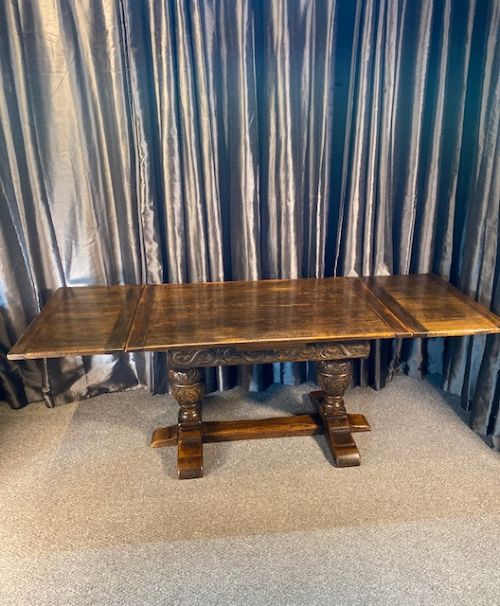
- An extending mechanism featuring two hidden leaves beneath the main top that pull outward to lengthen the surface. This ingenious design allows daily dining space to expand easily for guests.
- Trestle base
- A support structure where the top rests on vertical frames or feet connected by a horizontal beam. This configuration maximises legroom along the length of the table.
- Dresser base
- A lower cabinet framework without upper shelving, often sharing similar timber and stylistic traits with contemporary dining tables. They served utility functions in large country kitchens.
- Jacobean style
- A heavy, ornate aesthetic popular in the seventeenth century and revived in later eras, featuring turned legs and geometric carving. It imparts a dark, architectural presence to furniture.
English Oak Refectory Table: Frequently Asked Questions
How are refectory tables used today?
These pieces serve primarily as substantial family dining tables or large kitchen work surfaces. Their generous length accommodates daily meals as well as large gatherings.
Positioning them requires careful thought regarding surrounding space, ensuring adequate room for chairs and movement around the heavy wooden base.
What timber was used for these tables?
Oak forms the primary material for nearly all examples, valued for its density and durability. Secondary woods such as elm, beech, and pitch pine appear in framing, stretchers, or secondary boards.
Bleached and golden oak finishes also occur, reflecting different periods of taste and subsequent interior alterations.
How do I identify seventeenth-century originals?
Authentic early pieces display hand-cut joinery, pegged joints, and timber surfaces shaped by primitive adzes and saws. The wear patterns on the edges and feet reveal centuries of genuine domestic use.
Revival pieces from the Victorian and Edwardian eras often replicate these older forms but utilise later machine-sawn timber and standardised fixings.
Do extending mechanisms vary?
Draw-leaf designs represent the main extending format found among these listings, allowing the surface area to increase without removing the main top. Other tables rely on fixed, permanent lengths designed to seat specific numbers of diners permanently.
Selecting between fixed and extending versions depends entirely on the spatial requirements of the dining room.