
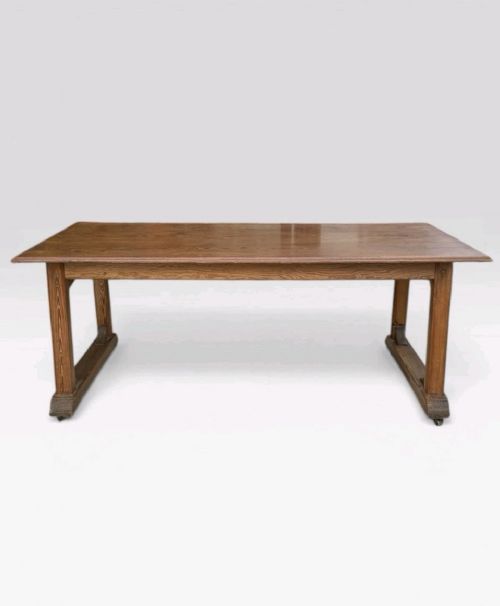


Medium Oak Dining Table
A medium oak dining table anchors a room with straightforward grain and solid construction, drawing on decades of daily use.

Medium Oak Dining Table
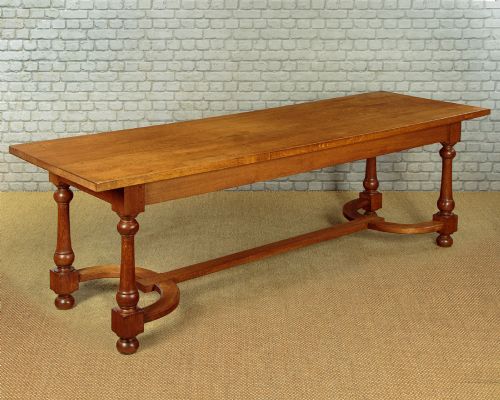
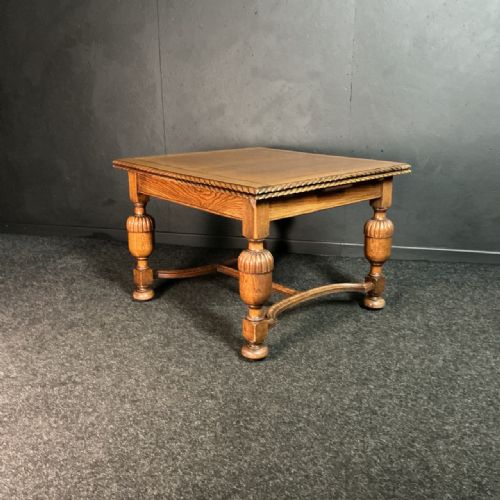
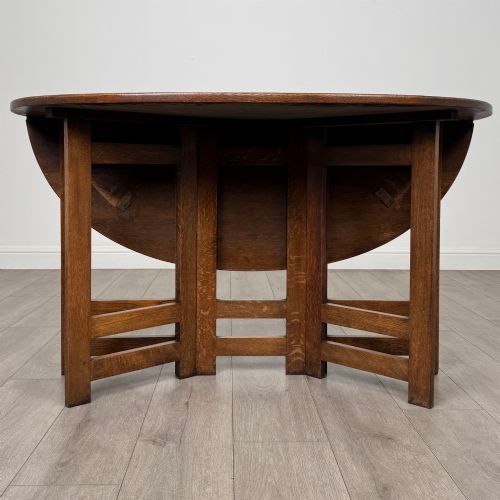
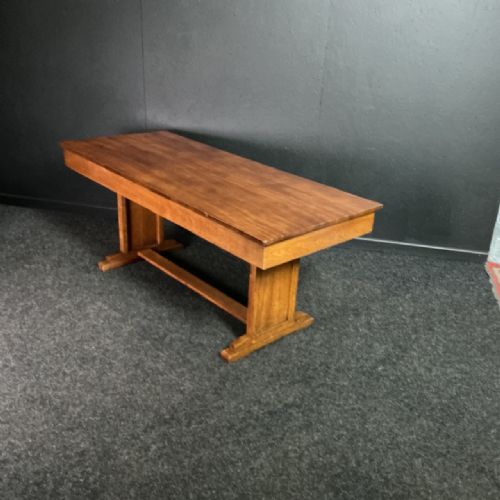
A medium oak dining table represents a sturdy group of dining and library tables built primarily in the early twentieth century and the nineteenth century. Buyers searching for a medium oak dining table typically encounter refectory forms, draw leaf designs, and gateleg variants finished in rich, honest timber.
The pieces appearing on this page span several revival styles including Tudor, Jacobean, and Gothic alongside the simpler lines of the Arts and Crafts movement. Most examples date from the Edwardian era up to the nineteen-thirties, reflecting a strong preference for domestic utility and traditional woodworking traditions.
How they were made
Every piece listed in this category relies on solid oak, utilising the natural strength and distinct grain patterns of the timber to build stable frames. Workshops constructed these tables to withstand heavy communal or domestic use without losing structural integrity.
Joinery methods reflect traditional cabinetmaking, employing pegged tenons, stretcher bases, and folding gateleg mechanisms where space-saving adaptability was required. Surface finishes were kept simple to let the warmth of the medium oak speak for itself.
Listings span the nineteenth century through to the nineteen-thirties, showcasing Arts and Crafts, Gothic Revival, and Tudor Revival styles exclusively in solid oak.
What varies in quality
Quality in a medium oak dining table lies in the selection of the timber and the architectural integrity of the base construction. Heavier refectory tables with well-balanced stretcher supports demonstrate superior craftsmanship compared to simpler utilitarian frames.
Design ambition also separates standard production items from pieces bearing specific stylistic influences or attributed to notable designers of the Arts and Crafts period. The presence of clever mechanisms, such as smooth draw leaf extensions or barley twist turnings, elevates the interest of the piece.
Sir Robert Lorimer
The Medium Oak Dining Table Glossary
- Refectory table
- A long, narrow dining table traditionally used in monastic refectories and later adopted for domestic dining rooms. These tables feature strong stretcher bases to keep the legs steady.
- Draw leaf table
- A dining table equipped with two hidden leaves stored beneath the main top that pull out to extend the surface length. This clever mechanism allows the table to expand quickly for guests.
- Gateleg table
- A drop-leaf table where one or more legs swing out on a gate-like hinge to support the raised flaps. It provides a versatile footprint that folds away when not in use.
- Arts and Crafts
- A design movement valuing handcraft, honest materials, and traditional construction over mass-produced ornamentation. Pieces from this tradition often display clean lines and exposed joinery.
- Barley twist
- A decorative turning technique resembling a twisted rope, commonly found on the legs of tables from the seventeenth century onwards and revived in later periods.
Medium Oak Dining Table: Frequently Asked Questions
How do I seat six people comfortably?
Look for refectory or draw leaf formats that provide sufficient leg clearance underneath the frieze. Extending mechanisms allow you to adapt the surface area when you host larger gatherings.
Gateleg designs also offer flexibility, though you must consider the placement of the swinging legs relative to dining chairs.
Are these tables suitable for daily use?
Solid oak construction makes these tables exceptionally resilient for everyday family meals and kitchen activities. The dense timber absorbs routine wear while developing a deeper patina over time.
Using placemats and coasters helps protect the original surface from moisture and heat marks without hiding the grain.
How do I distinguish Edwardian from earlier styles?
Edwardian tables often blend traditional proportions with lighter Arts and Crafts simplicity or revival detailing. Earlier nineteenth-century examples tend to carry heavier Gothic or Jacobean proportions with darker finishes and bolder turnings.
Examining the construction of the underside and the wear on the timber helps confirm the age of the piece.
Will a gateleg table fit a small kitchen?
Gateleg tables work exceptionally well in compact spaces because both leaves drop down to form a narrow console. You can raise one or both sides depending on how much surface area you need for dining.
Check the floor clearance and leg span to ensure standard dining chairs tuck underneath neatly when the leaves are down.