
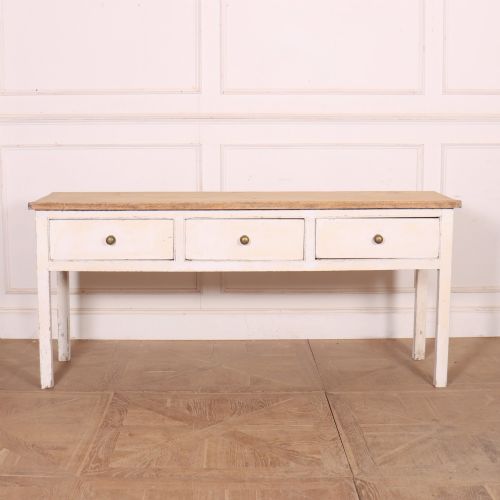
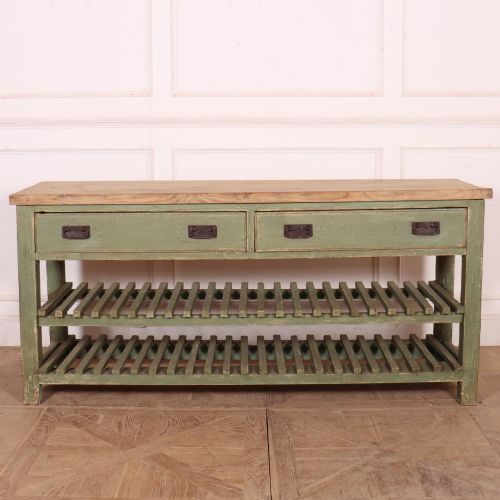
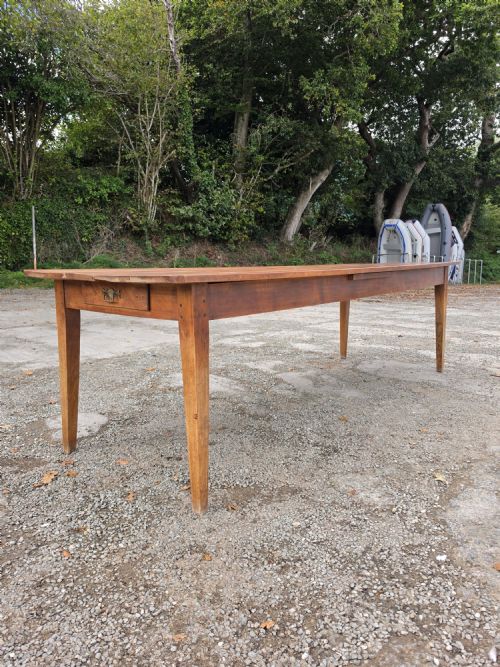
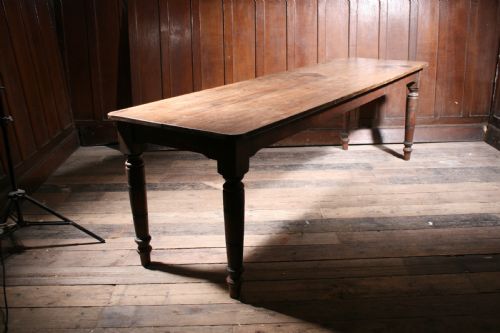
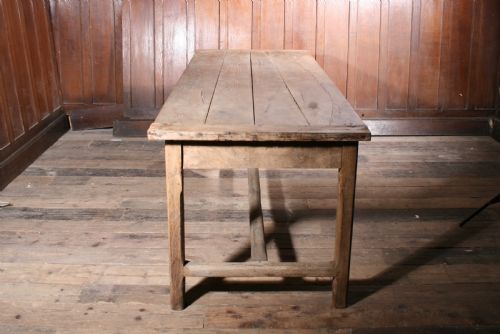
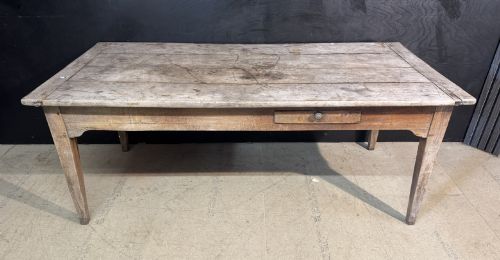
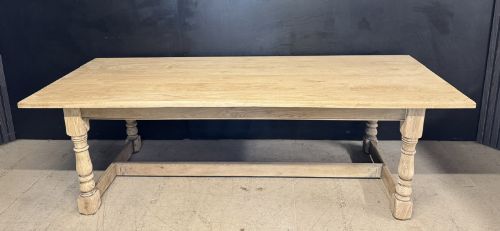
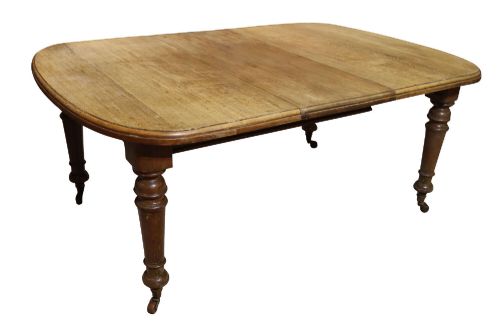
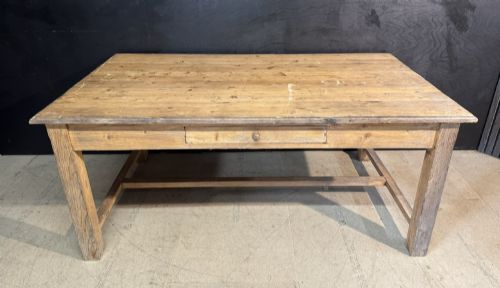
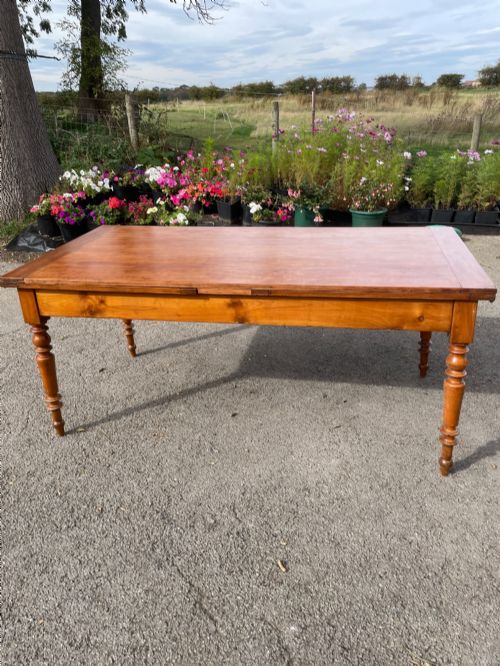
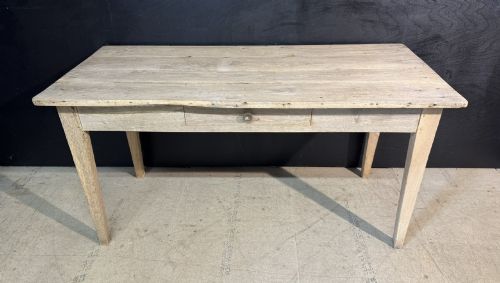
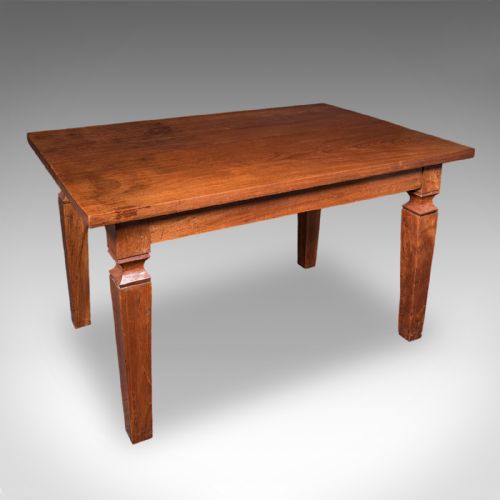
Vintage Kitchen Table
A vintage kitchen table brings honest utility and enduring character to the heart of the home.

Vintage Kitchen Table
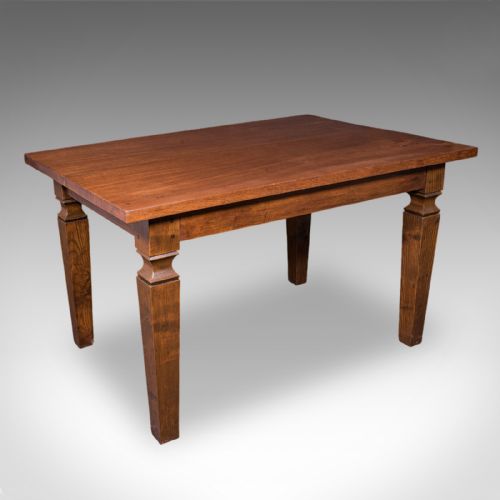
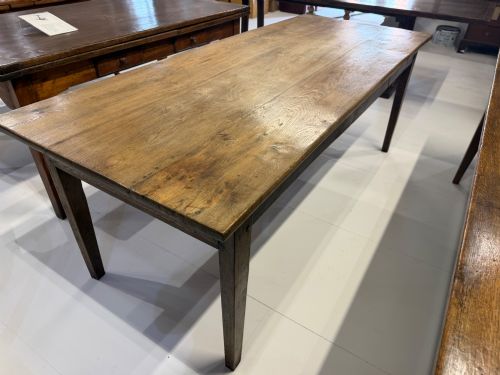
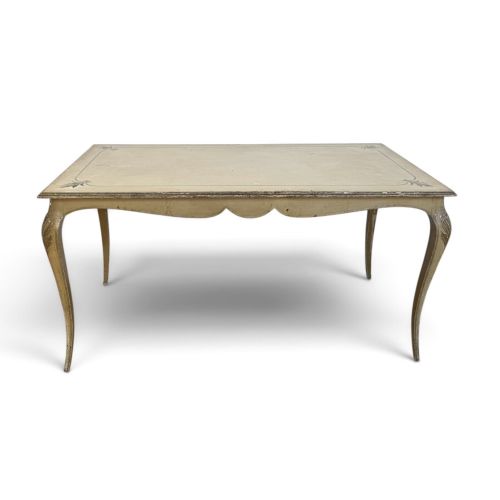
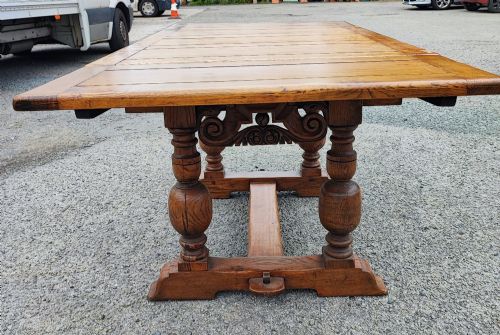
When you search for a vintage kitchen table, you encounter practical surfaces built to withstand daily domestic labour across past centuries. These pieces encompass sturdy refectory designs, extending draw-leaf variants, and practical drop-leaf formats suited to both compact and expansive rooms.
The selections here span periods from the Victorian era and Edwardian times through to the early decades of the twentieth century. Oak and pine dominate the offerings, joined by regional timbers such as beech, fruitwood, and pitch pine in varied provincial styles.
Beyond standard dining boards, the category includes specialised forms such as butchers blocks, harvest tables, dairy tables, and serving pieces. These functional objects reflect the varied culinary and workspace demands of earlier British and French homes.
Materials and construction
Cabinet makers and joiners relied heavily on solid hardwoods and softwoods like oak, pine, and beech to construct frames that endured decades of heavy use. Carpenters utilised traditional joinery methods, incorporating draw-leaf mechanisms, tapered legs, bobbin turnings, and trestle ends to ensure stability.
Surfaces frequently show the marks of hand-planing and scrubbing, reflecting the physical reality of daily food preparation and cleaning. Secondary woods and iron or brass hardware appear where structural reinforcement or drawers required durable metal fastenings.
Listings feature oak, pine, beech, and fruitwood across forms spanning the Victorian era, Edwardian period, and early twentieth century.
Assessing construction and preservation
Quality rests in the integrity of the timber selection and the retention of original structural elements rather than uniform surface perfection. Tables utilising dense oak or seasoned pitch pine with sound joints sit at the upper end of the scale compared to altered or heavily patched pieces.
The degree of original patination on scrubbed tops or painted bases determines the visual success of the piece. Fine examples maintain their original mechanisms, such as smooth-operating draw-leaves or intact drawers, without compromising the underlying framework.
The Vintage Kitchen Table Glossary
- Draw-leaf table
- A dining table with two sliding leaves stored beneath the main top that pull out to extend the surface length. This clever mechanism allows the table to accommodate extra diners without requiring separate stored boards.
- Refectory table
- A long, narrow dining table traditionally used in communal dining halls and later adapted for domestic kitchens. These pieces typically feature sturdy legs connected by longitudinal stretchers for added stability.
- Scrub top
- A plain wooden tabletop left unvarnished so it could be scrubbed clean with water and sand or soap. This treatment lightened the pine or fruitwood over decades of active kitchen use.
- Harvest table
- A large utilitarian table used during seasonal agricultural gatherings and farm meals. They are characterised by generous proportions and robust timber construction.
- Trestle ends
- Support structures consisting of horizontal feet connected to vertical uprights or shaped panels at each end of the table. This design maximises legroom for those seated along the sides.
Vintage Kitchen Table: Frequently Asked Questions
How do I date a kitchen table?
Dating relies on examining the timber species, tool marks, joinery techniques, and hardware present on the frame and drawers. Stylistic clues such as tapered legs, bobbin turnings, or draw-leaf mechanisms also point toward specific decades like the Victorian era or the Edwardian period.
Comparing construction methods against known regional styles helps narrow down the origin. Subtle wear patterns on scrubbed tops further indicate the extent of active domestic use over the centuries.
Are these tables suitable for daily use?
These pieces were originally constructed for heavy domestic labour, making them exceptionally robust for modern dining and food preparation. Solid oak and pine frameworks absorb daily activity while developing a richer character over time.
Routine maintenance involves using appropriate waxes or oils to protect the wood without sealing away historic patination. Careful placement away from direct heat sources ensures the timber remains stable.
What is the difference between oak and pine tables?
Oak tables offer dense, heavy construction with prominent grain patterns and typically denote formal or substantial farmhouse origins. They resist heavy impact well and often feature carved details or refectory framing.
Pine tables present a softer, lighter appearance that frequently includes painted finishes or scrubbed tops associated with dairy and harvest work. They bring a brighter, vernacular aesthetic to domestic interiors.
How do draw-leaf mechanisms work?
A draw-leaf table contains two concealed leaves positioned directly beneath the main surface. Lifting the primary top slightly allows these end leaves to slide outward into place, extending the overall length smoothly.
This ingenious system avoids the need to store separate table leaves in a cupboard. It provides flexible seating arrangements for everyday meals and larger gatherings alike.