



Country House Prep Table
Country house prep tables are robust utilitarian surfaces built for hard domestic labour, prized today for their honest character and generous proportions.
Country House Prep Table
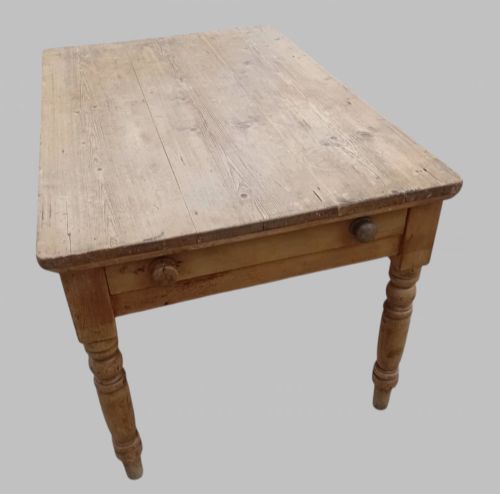
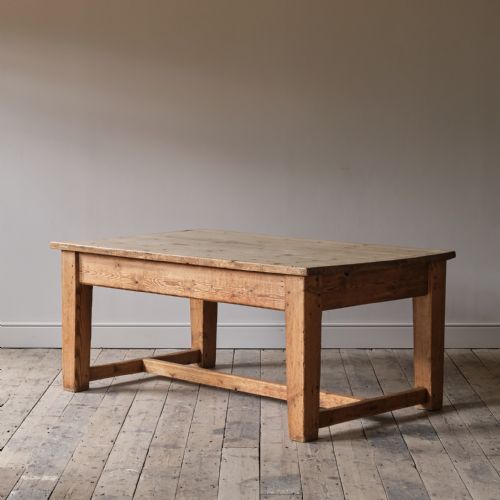
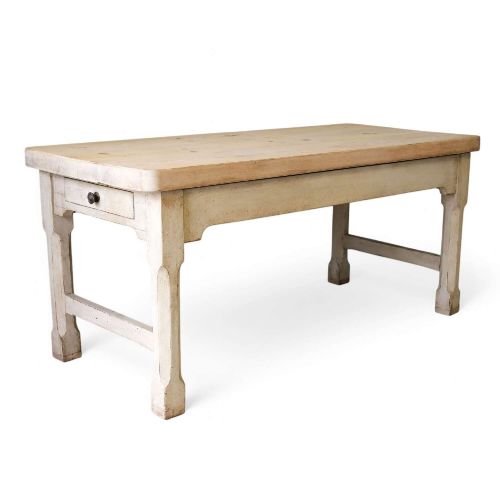
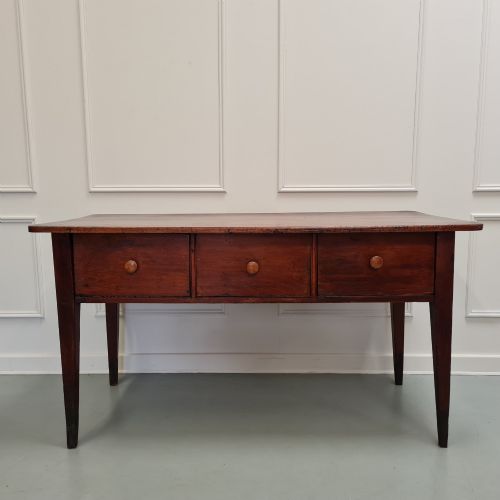
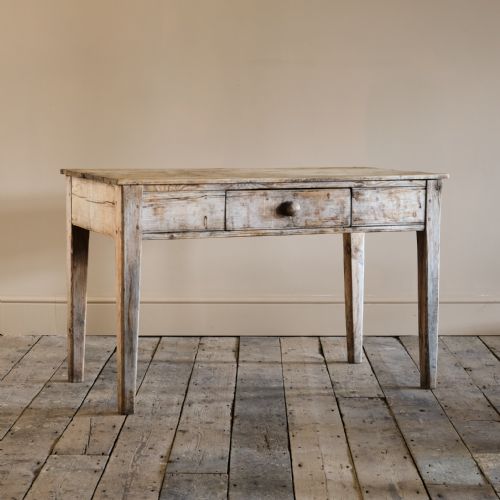
A country house prep table is a heavy-duty working surface originally built for food preparation in large domestic kitchens, sculleries and servants quarters. When you search for country house prep table, you encounter substantial utilitarian pieces designed for heavy daily use rather than formal entertaining.
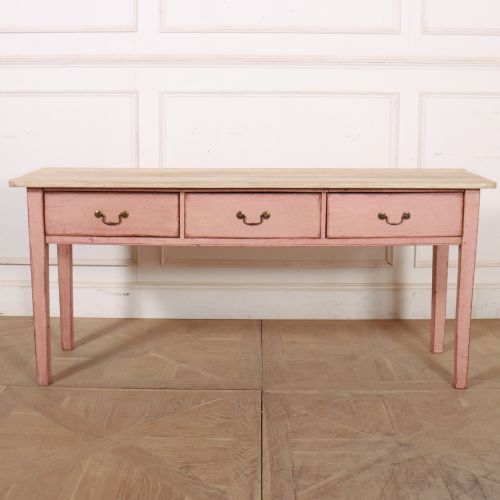
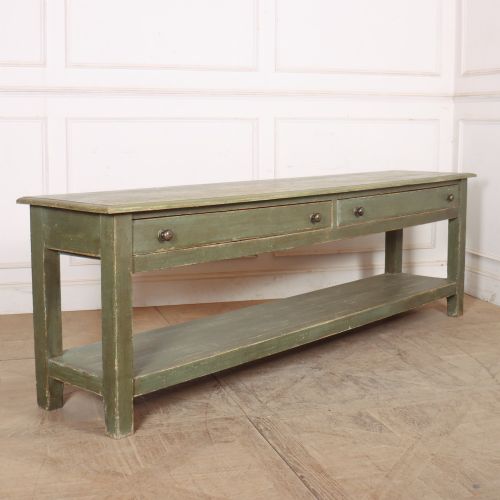
The pieces appearing here span the nineteenth century and the early twentieth century, alongside specific regional interpretations such as English, French and Scandinavian examples. Common forms include large serving tables, kitchen tables, dresser bases and pastry tables equipped with single drawers or lower potboards.
Makers and workshops ranged from local joiners producing sturdy pine items for sculleries to institutional suppliers like the Arnold School providing robust oak dining and prep tables. Surviving specimens often show decades of honest wear, scrubbed timber tops, and later or original coats of paint on their bases.
Materials and construction methods
Construction relies heavily on durable domestic timbers chosen for utility and strength, predominantly pine and oak alongside elm, ash and cherry. Joinery is straightforward and functional, designed to withstand heavy downward pressure and constant scrubbing.
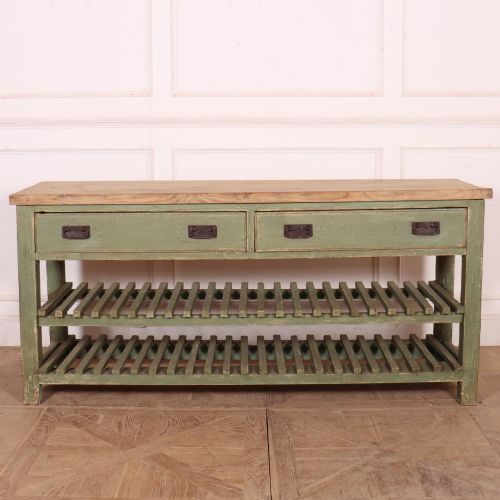
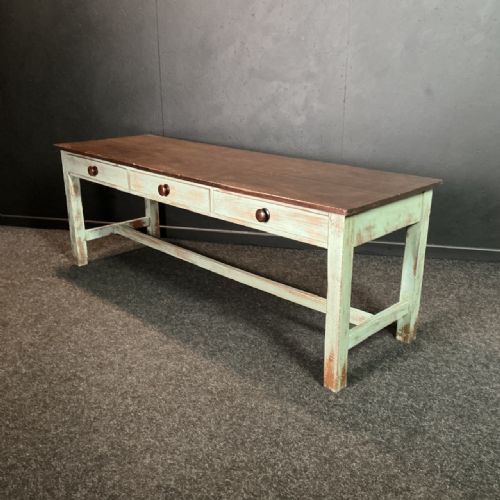
Surfaces frequently feature scrubbed natural timber tops paired with painted timber bases finished in original or later coats of paint. Additional structural elements incorporate iron brackets, brass fittings and lower pot-shelves or potboards for storing heavy kitchen implements.
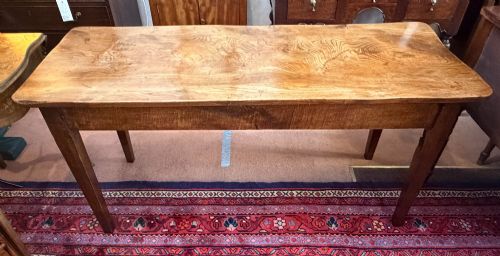
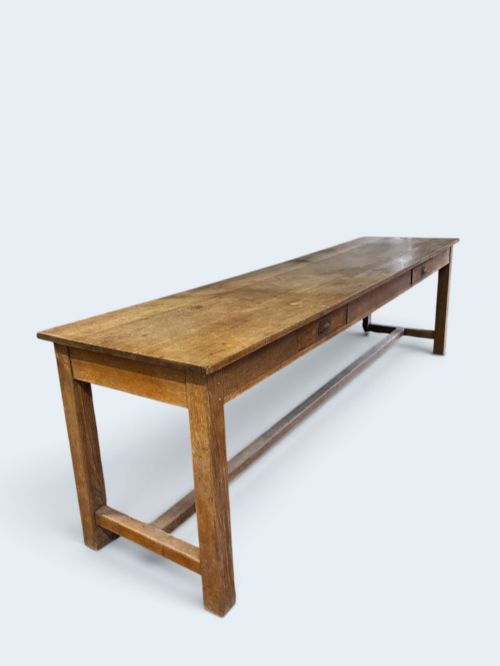
Listings feature nineteen-century pine, oak, ash, and elm prep tables alongside painted timber and iron-accented regional variants.
Judging quality and integrity
Quality in a prep table rests upon the proportion and scale of the timber, the integrity of the original construction, and the preservation of honest patina. Tables with deep, scrubbed tops and substantial framing stand apart from lighter, more altered examples.
The Country House Prep Table Glossary
- Potboard
- A lower shelf fitted beneath a table or dresser base, traditionally used for storing heavy pots and pans. This practical addition provides extra stability to the frame.
- Scrubbed top
- A wooden table surface cleaned repeatedly with water and a stiff brush over decades, resulting in a pale, smooth grain. This treatment highlights the natural texture of the pine or oak.
- Dresser base
- The lower section of a kitchen dresser, often functioning independently as a serving or preparation table with integrated drawers. These pieces provide substantial under-counter storage.
- Refectory table
- A long, narrow dining table traditionally used in communal halls, characterised by sturdy legs linked with floor-level stretchers. Versions from the twentieth century often display robust oak construction.
- Trestle table
- A table supported by two or more vertical frames connected by a horizontal beam, allowing maximum legroom along the length. French examples often utilise scrubbed tops on folding or fixed trestle bases.
Country House Prep Table: Frequently Asked Questions
What is a country house prep table?
A country house prep table is a heavy, utilitarian wooden table built for food preparation in large domestic kitchens and sculleries.
These pieces prioritise sturdy construction and large working surfaces over decorative ornamentation, often featuring scrubbed pine tops and deep utility drawers.
How were these tables originally used?
Domestic staff utilised these tables for chopping meat, kneading dough, rolling pastry and organising provisions before cooking.
The lower potboards and drawers kept heavy copper pots and preparation tools close at hand during busy kitchen hours.
How do I clean a scrubbed pine top?
Scrubbed pine surfaces respond best to warm water, mild soap and a stiff natural-bristle brush moved along the grain.
Avoid harsh chemical strippers or modern varnishes that destroy the historic patina built up through decades of kitchen use.
Are original painted finishes common?
Original paint finishes survive on a selection of bases, though many pieces have received later coats of paint over the decades.
Both original and historic later paints add significant decorative character and protect the underlying timber from moisture.