


Vintage Kitchen Prep Island
A vintage kitchen prep island brings practical work space and decades of utilitarian character into the heart of a home.
Vintage Kitchen Prep Island
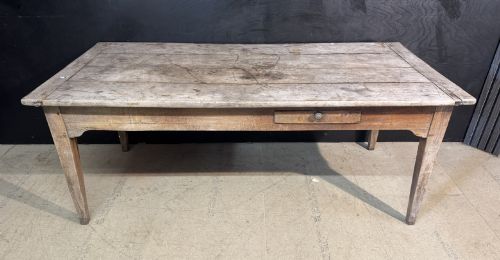
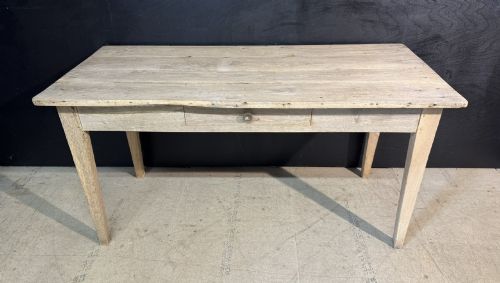
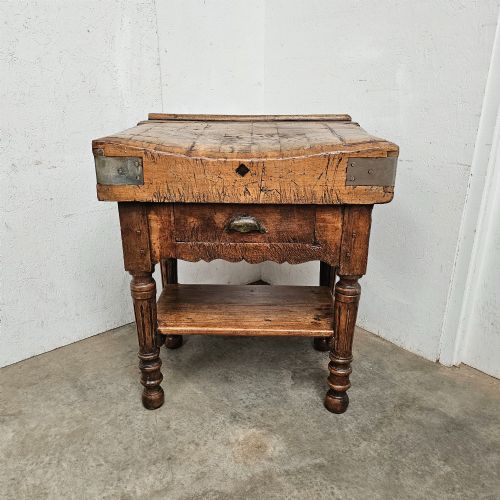
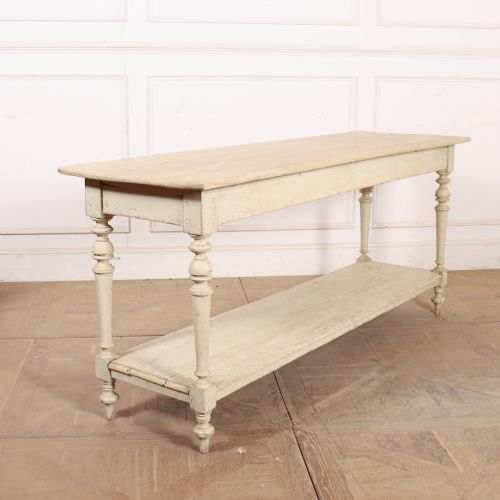
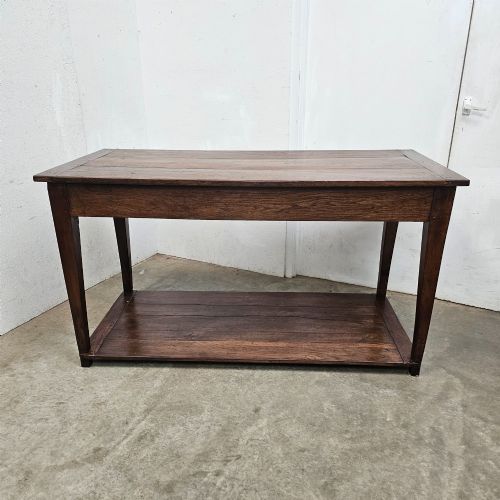
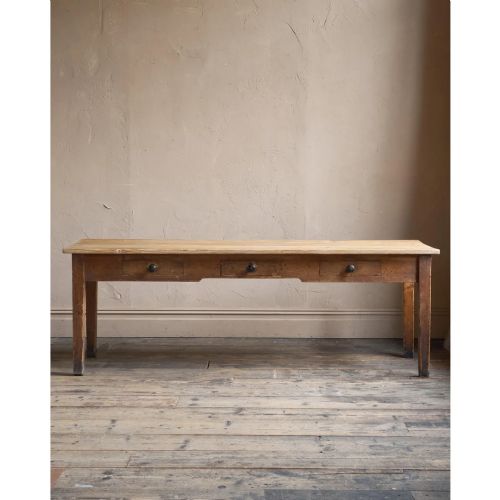
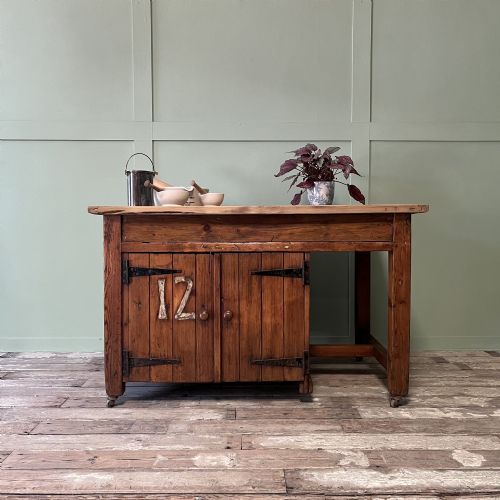
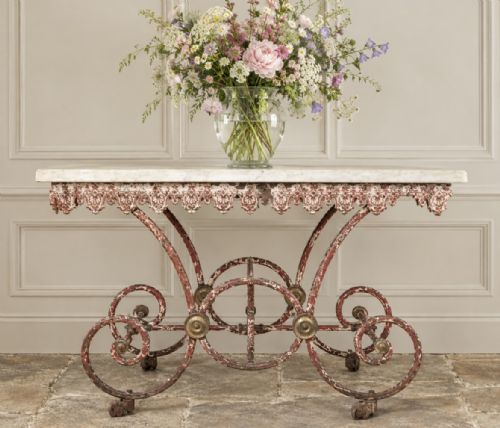
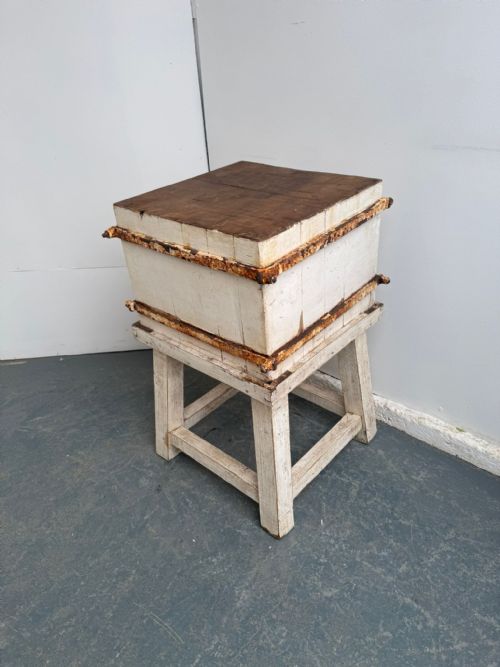
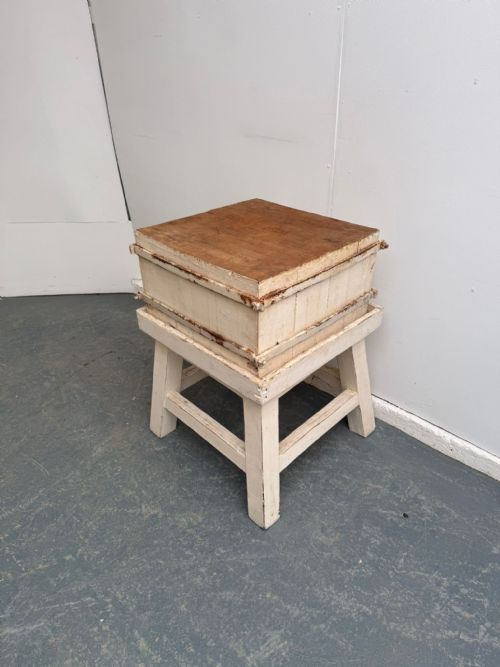
A vintage kitchen prep island covers heavy timber work tables, butchers blocks, and drapers tables originating from the nineteenth and early twentieth centuries. These pieces span English, French, Scandinavian, and Hungarian workshops, taking forms designed originally for bakers, butchers, and sculleries.
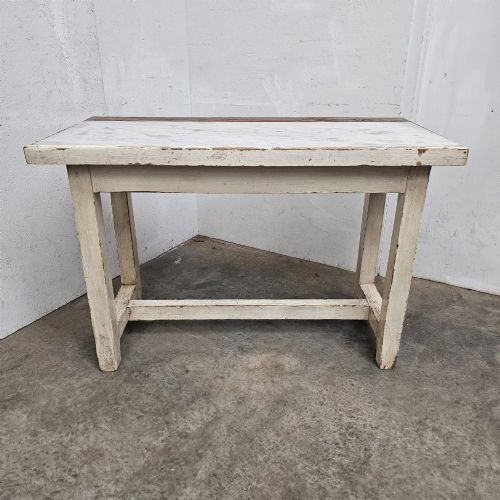
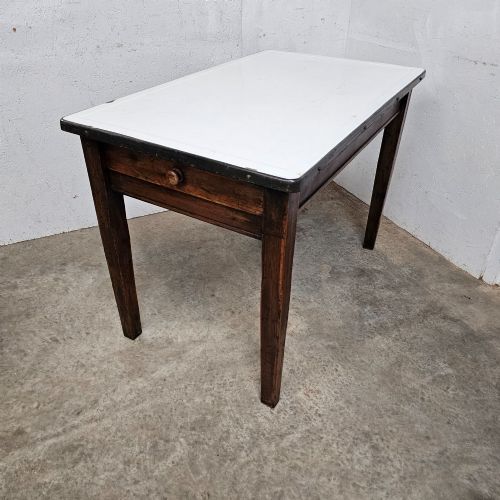
The most common examples on this page are pine and oak prep tables, often featuring practical drawers, lower tiers, or thick wooden chopping surfaces. French provincial and rustic farmhouse styles dominate, offering substantial proportions suited to modern culinary spaces.
Materials and construction
Construction relies heavily on solid pine and oak for the frames and tops, supplemented by beech, elm, and iron details. Butchers blocks utilise dense end-grain timber designed to withstand heavy cleaver work, while drapers tables and work tables employ sturdy mortise and tenon joinery.
Surfaces show decades of honest wear, with painted finishes, scrubbed pine, and bleached oak appearing alongside bronze and brass mounts. Many pieces combine wood tops with iron or painted wooden bases for stability.
Listings feature items from the nineteenth century up to the 1950s, constructed in pine, oak, beech, elm, marble, and iron.
Measures of quality
Quality rests in the integrity of the original timber and the proportion of the base to the working top. Thick, uncompromised solid oak or pine tops and robust original underframes elevate a piece significantly above later adaptations.
The character of the surface finish matters deeply, with genuine period patina and original paintwork holding greater interest than over-restored timber. Hardware such as iron braces and bronzed mounts also distinguishes standard utility tables from finer workshop examples.
Trussant & Cie·Hennes France
The Vintage Kitchen Prep Island Glossary
- Butchers block
- A heavy, thick wooden table designed for meat preparation. These typically feature dense end-grain timber tops built to absorb heavy impacts.
- Drapers table
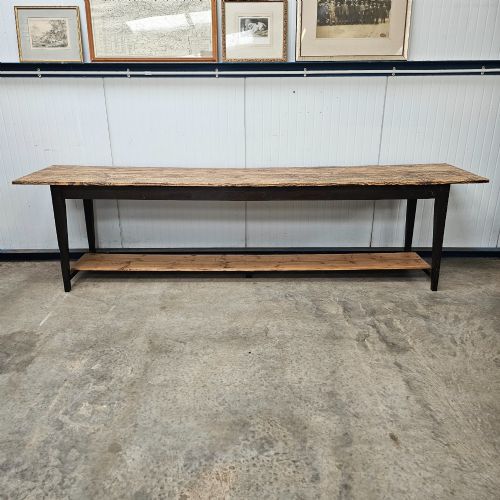
- A long, wide wooden table originally utilised in textile shops for folding cloth. They frequently incorporate lower tiers and drawers.
- Scullery table
- A utilitarian wooden table built for washing up and food preparation in large country houses. They use robust timbers like pine and oak.
- Mortise and tenon
- A traditional woodworking joint where a projecting tenon fits tightly into a matching mortise hole. This method provides immense structural rigidity.
Vintage Kitchen Prep Island: Frequently Asked Questions
How do I choose the right size?
Consider the floor space in your kitchen and allow ample room to walk around all sides of the table. Measure doorways and stairwells beforehand to ensure smooth delivery.
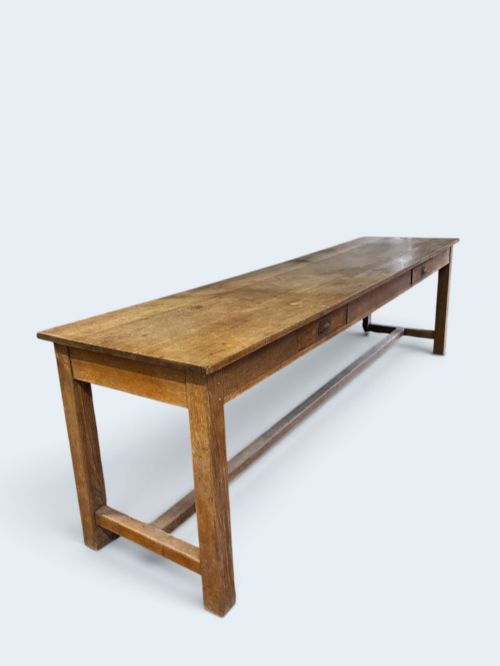
Keep in mind that many pieces here have generous proportions, particularly the four-metre drapers tables and long harvest tables.
Are these tables suitable for daily cooking?
These tables were built for rigorous daily work in bakeries, butcher shops, and country houses. Their solid timber construction handles food preparation exceptionally well.
Routine maintenance with food-safe oils helps protect scrubbed pine and oak surfaces from moisture and stains.
How do I care for a wooden top?
Wipe surfaces clean with a damp cloth and mild soap, avoiding harsh chemical cleaners that strip the natural patina. Periodically apply mineral oil or beeswax to nourish dry timber.
Keep solid wood tables away from direct heat sources to prevent the wood from splitting over time.
What is the difference between a drapers table and a prep table?
Drapers tables are typically longer and feature multiple tiers designed for displaying or folding textiles in nineteenth-century shops. Prep tables focus on culinary tasks, often including drawers for utensils and thick timber tops.
Both serve wonderfully as kitchen islands today, though drapers tables offer a more elongated silhouette.