
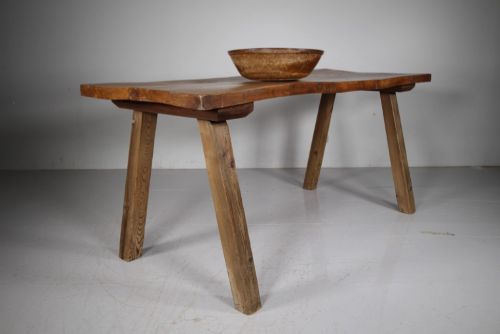
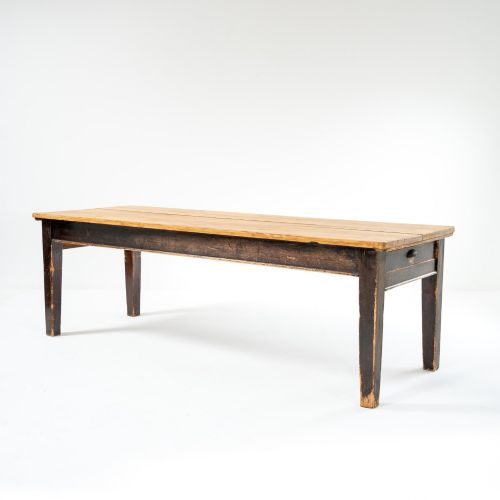
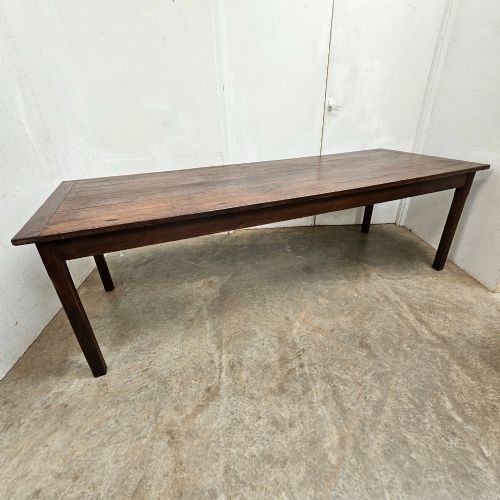
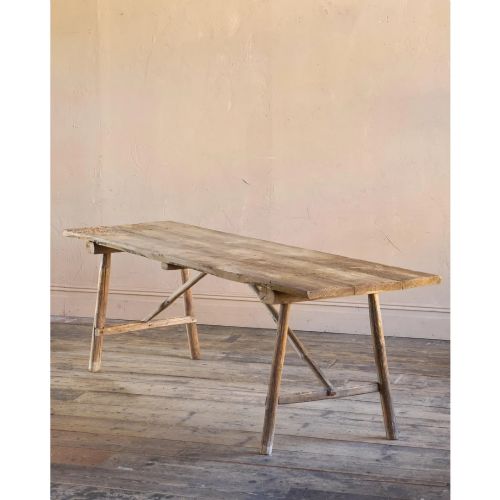
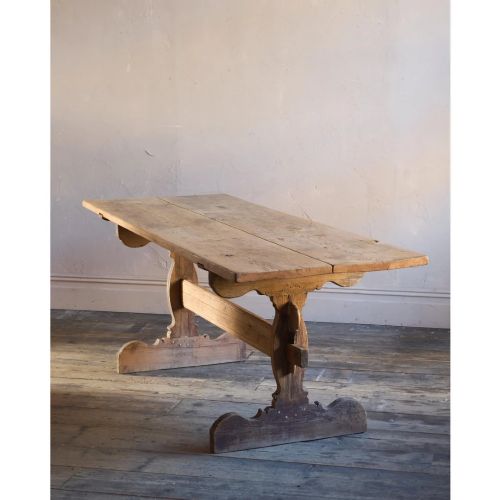
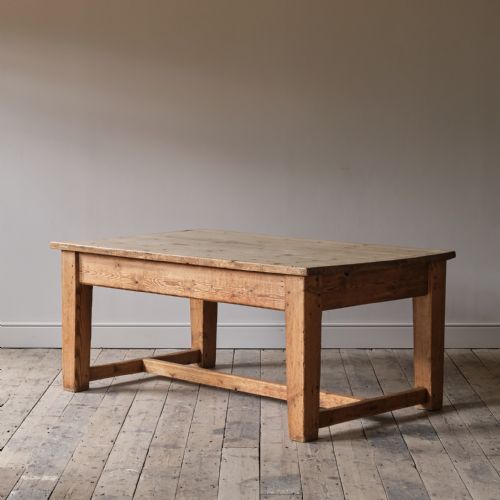
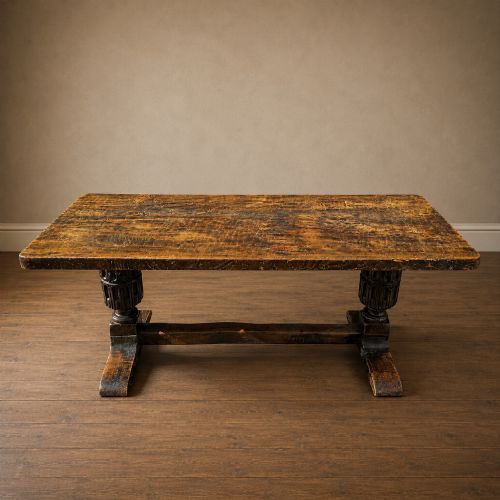
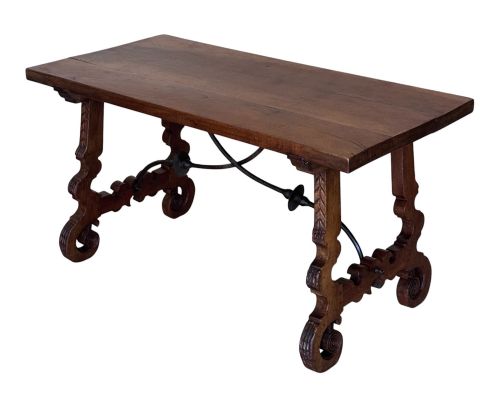
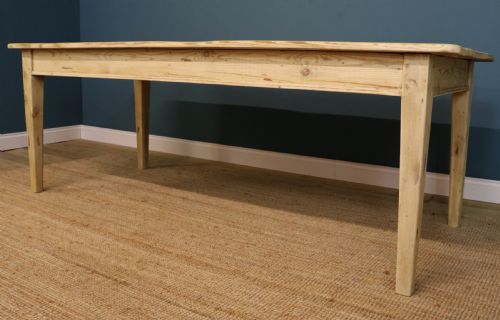
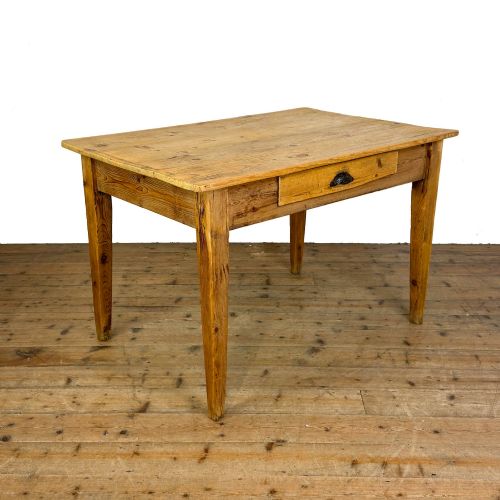


Wooden Farm Dining Table
A wooden farm dining table brings decades of honest utility and sturdy presence into a modern interior.
Wooden Farm Dining Table
A wooden farm dining table is a hard-wearing domestic surface designed for daily communal meals, kitchen preparation, and family gathering. These pieces span centuries of rural craftsmanship, taking forms such as refectory, harvest, trestle, and kitchen tables.
The pieces available here emerge from periods including the seventeenth, eighteenth, and nineteenth centuries, alongside early twentieth-century examples. Originating from English, French, Spanish, and Scandinavian workshops, they reflect regional domestic traditions across Europe.
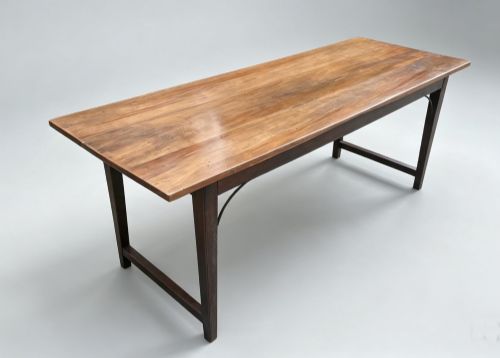
Buyers are most likely to encounter nineteenth-century pine, oak, and fruitwood examples equipped with drawers or trestle ends. Larger formats, including harvest tables reaching notable lengths, appear frequently alongside compact kitchen tables.
Materials and construction
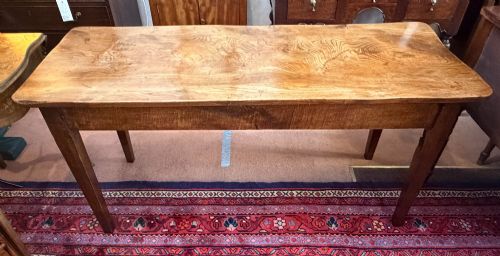
Carpenters built these tables using domestic timbers such as oak, elm, pine, fruitwood, cherrywood, and walnut, often pairing different woods for tops and bases. Single-plank elm tops and heavy oak beams demonstrate the structural reliance on robust regional timber.
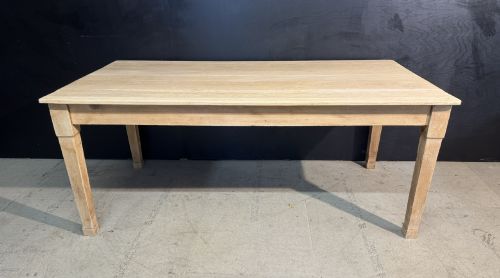
Joinery methods rely on traditional pegged joints, refectory framing, and trestle supports designed to bear substantial weight. Surfaces frequently display layers of old paint, Falu red pigment, or bleached finishes developed through generations of use.
Listings feature oak, pine, elm, fruitwood, and cherrywood, spanning the seventeenth century to the 1930s.
Quality and character
The distinction between ordinary and exceptional tables rests in the integrity of the timber selection and the retention of original surfaces. Tables featuring single planks of elm or dense French oak command attention for their material substance.
Proportion and structural honesty separate simpler utilitarian benches from refined regional pieces. Integrated drawers, shaped trestle ends, and untouched patination elevate the visual weight of a dining table.
The Wooden Farm Dining Table Glossary
- Refectory table
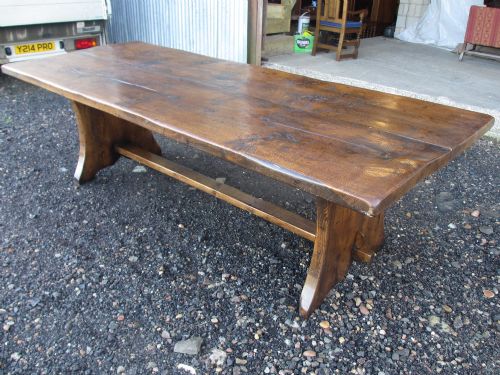
- A long, narrow dining table traditionally used in monastic dining halls and later adopted in farmhouses. These tables typically feature sturdy legs joined by low stretchers.
- Harvest table
- A large dining table designed to accommodate farm workers during seasonal feasts. They often include drop leaves or extended lengths to seat many people.
- Trestle table
- A table supported by two or more upright frames connected by a horizontal beam. This construction provides maximum legroom along the length of the top.
- Fruitwood
- Timber derived from fruit-bearing trees such as cherry, pear, or apple. It offers a warm tone and fine grain utilised in regional cabinetmaking.
Wooden Farm Dining Table: Frequently Asked Questions
How do I clean a wooden farm dining table?
Wipe surfaces down with a slightly damp cloth and dry them immediately to protect the aged grain. Avoid harsh chemical cleaners that strip the historic patination.
Apply natural beeswax periodically to nourish dry timbers, particularly on pine and fruitwood surfaces that see daily use.
What is the difference between a refectory and a harvest table?
Refectory tables traditionally feature fixed legs connected by stretcher rails beneath a heavy wooden top. They originated as monastic dining boards before moving into domestic farmhouses.
Harvest tables are typically longer and were designed to seat large groups of workers during seasonal gatherings. They frequently employ trestle bases or simpler leg arrangements.
How can I tell the period of an antique table?
Examine the tool marks, timber selection, and construction joints beneath the top. Seventeenth-century examples often display hand-split oak and peg joinery, while nineteenth-century pieces frequently utilise pine or fruitwood with turned legs.
Surface patination and layers of old paint or wax build up over generations, offering clues to the age and origin of the piece.
Can I use an antique farm table daily?
These tables were built for heavy domestic labour and communal dining, making them exceptionally well-suited for modern family life. Their robust timber frames absorb regular use with ease.
Using placemats and coasters helps protect the historic surface from excessive moisture while allowing the wood to age gracefully.