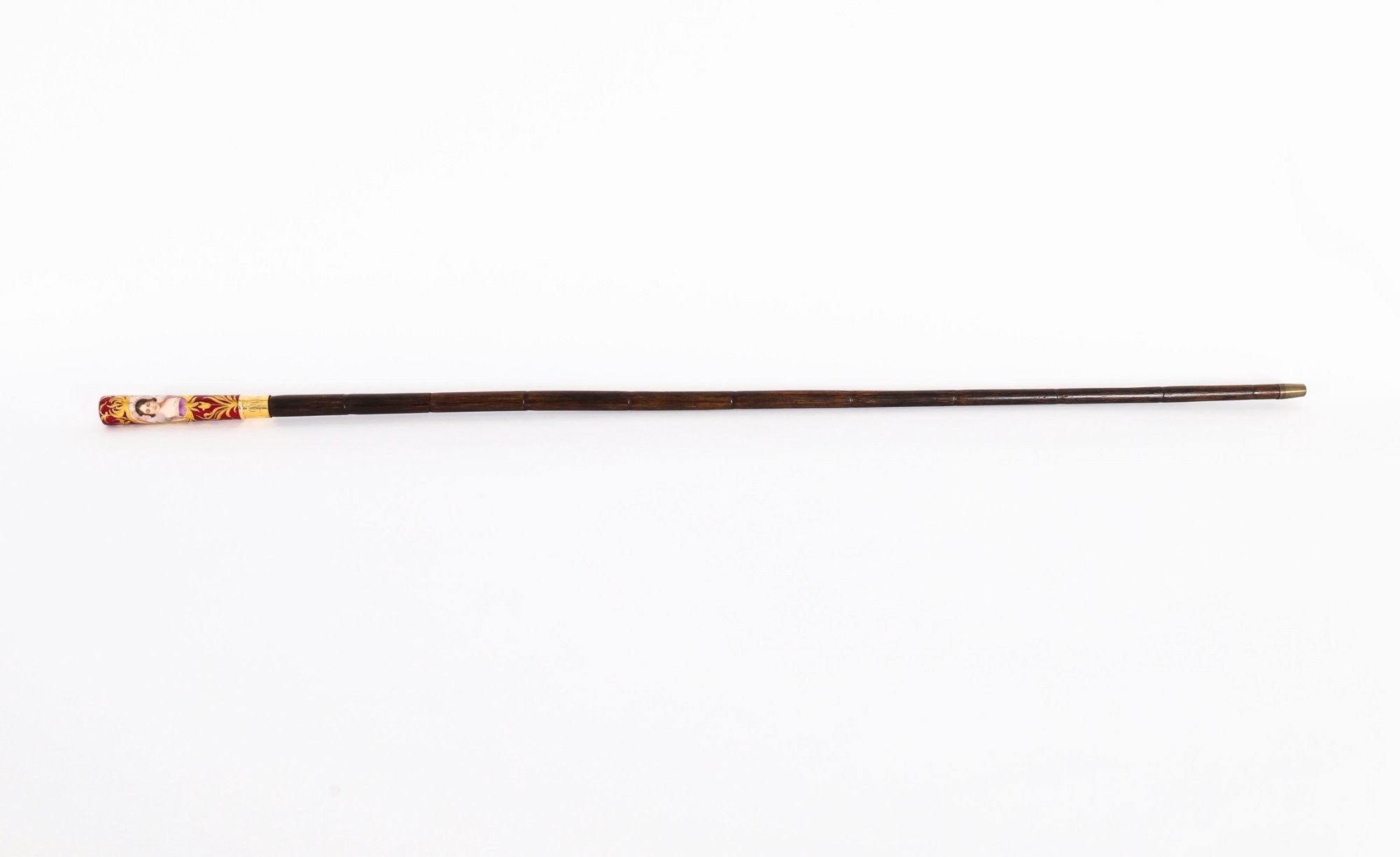
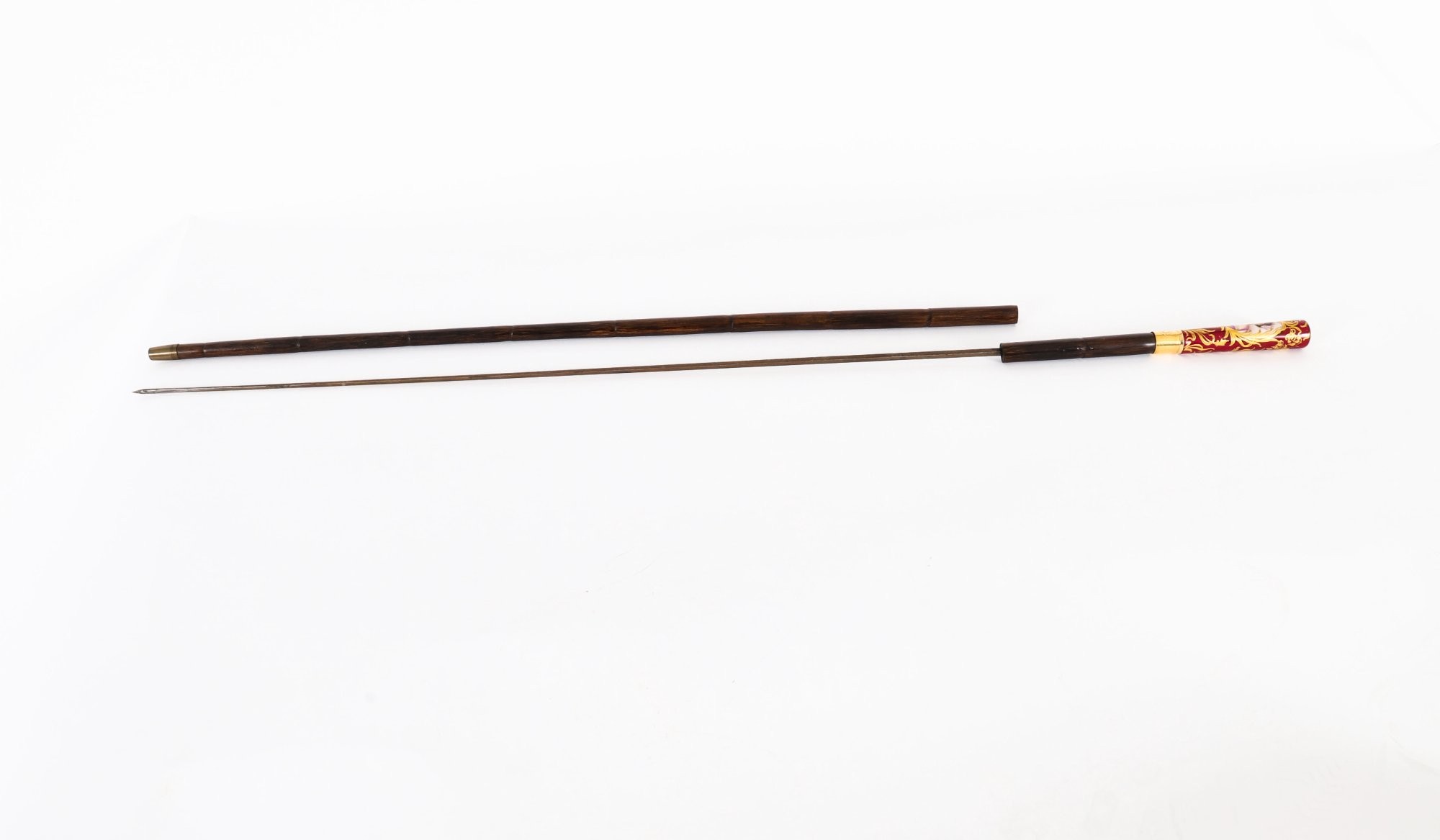
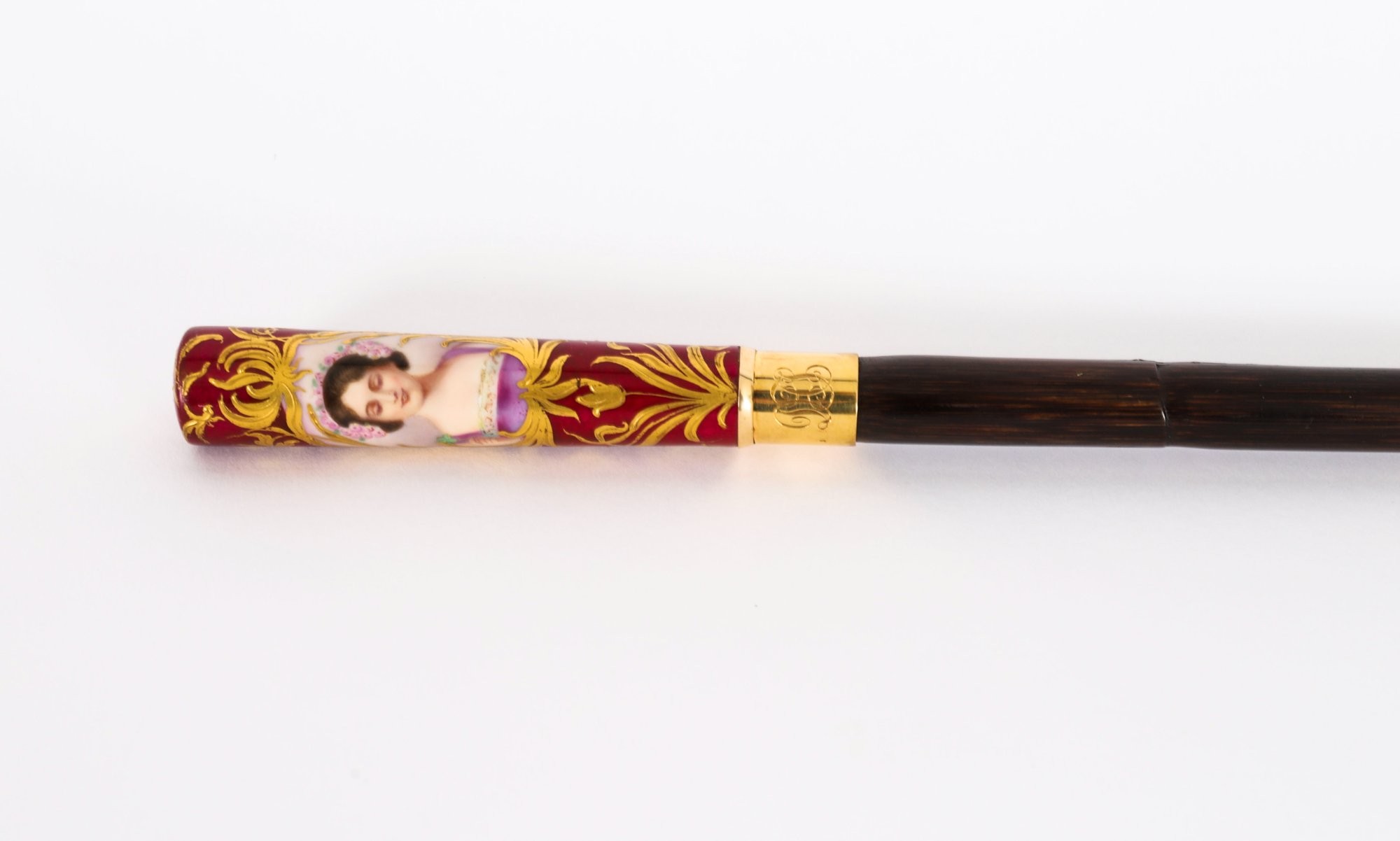
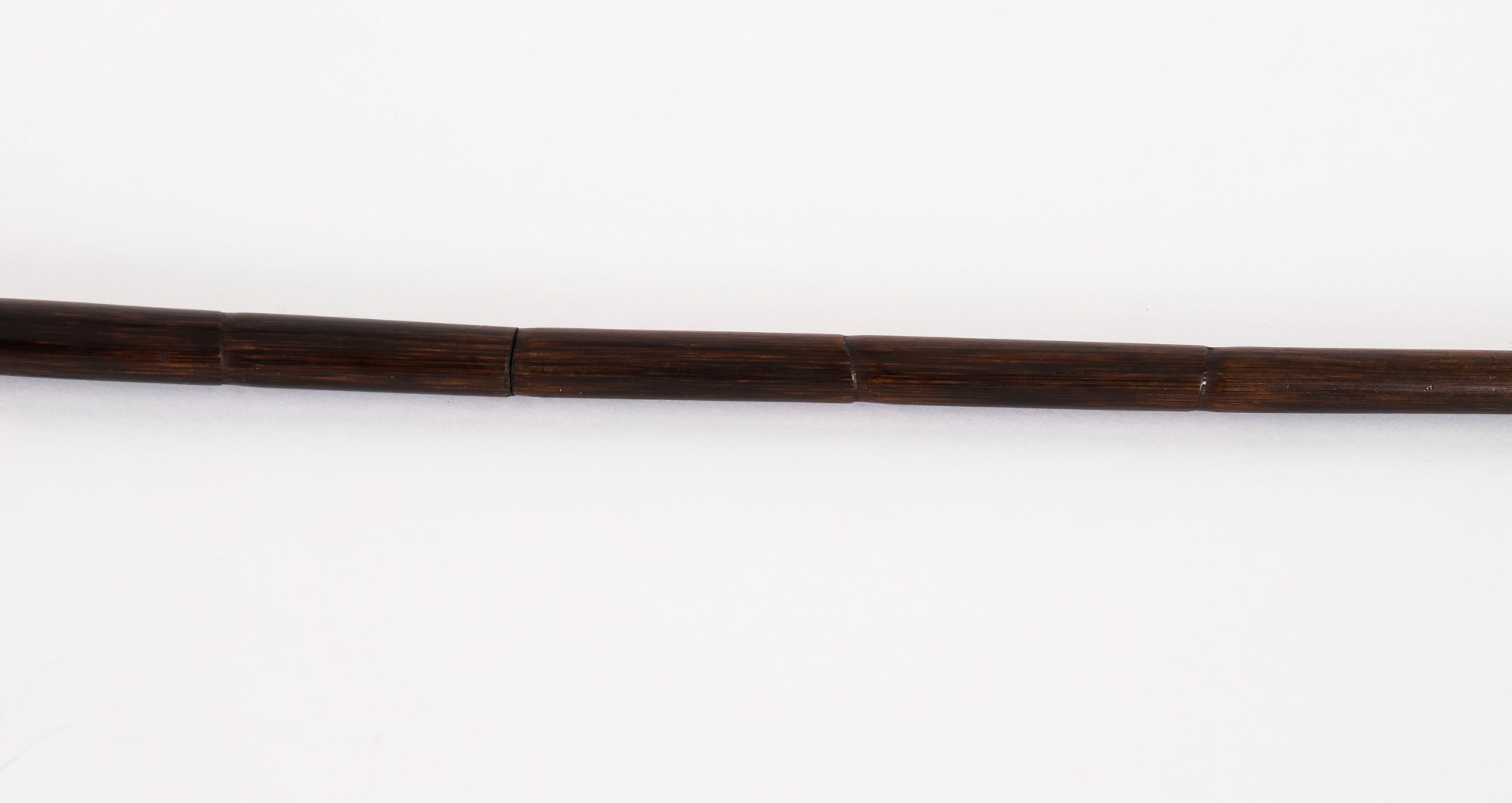
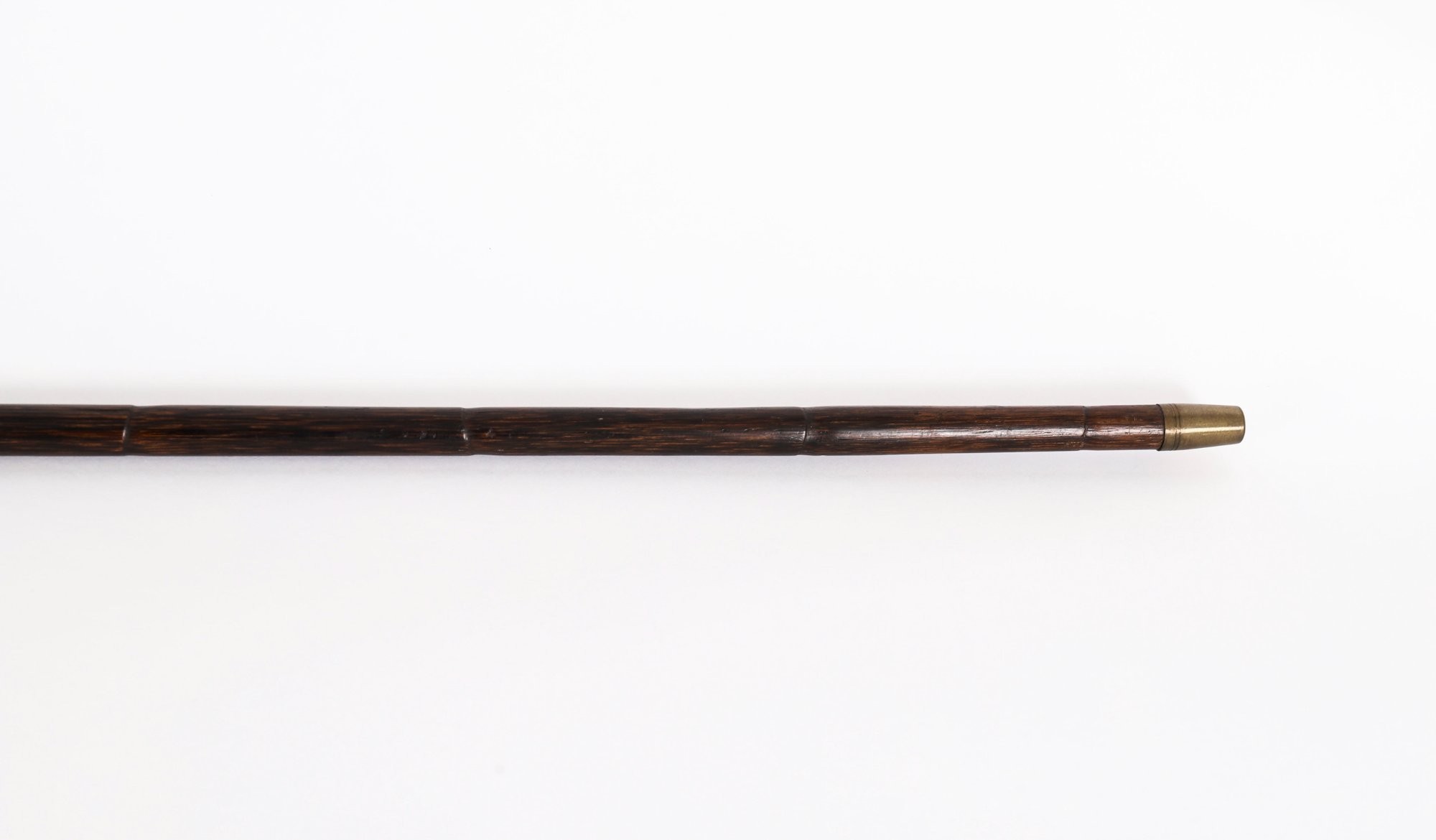
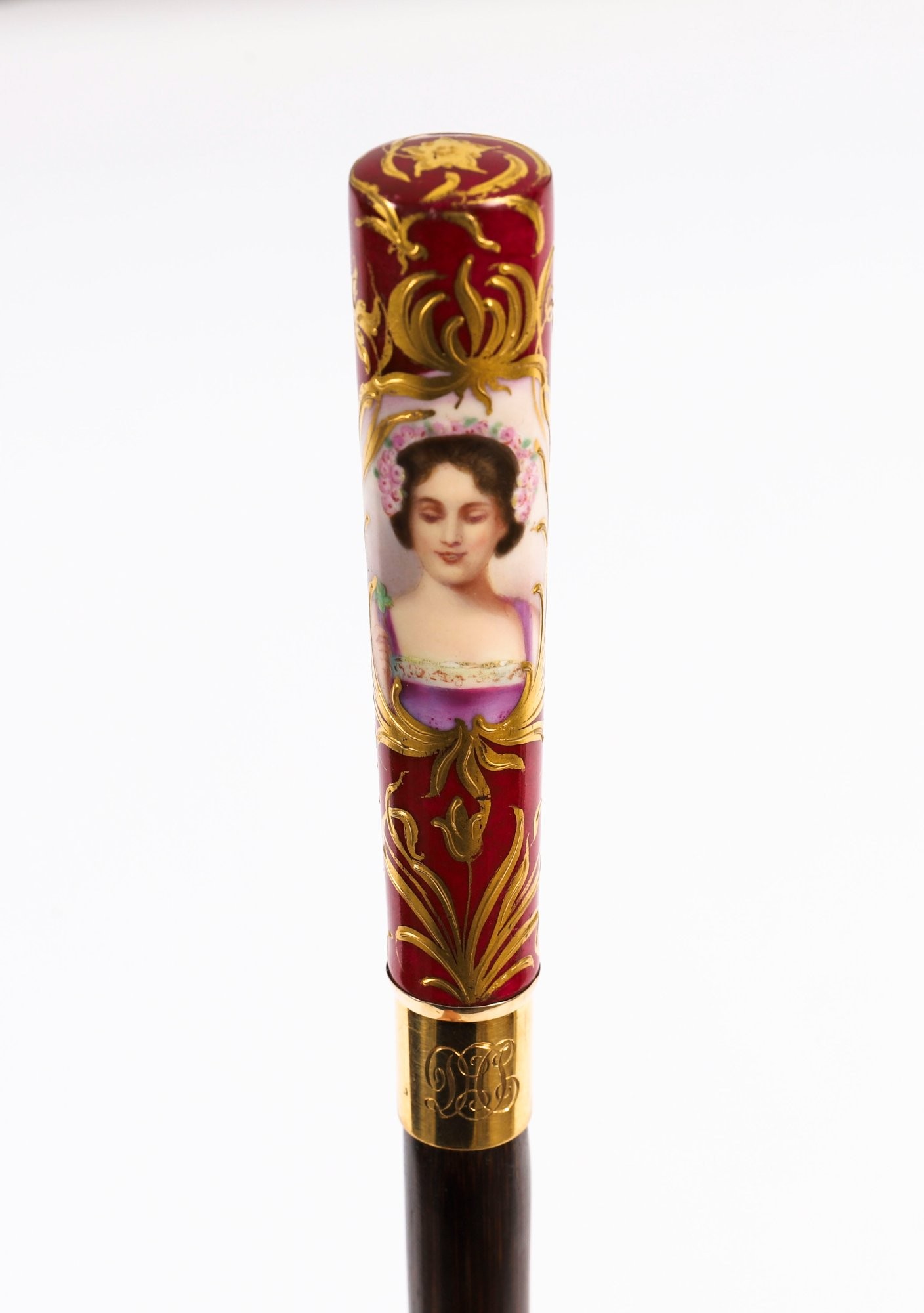
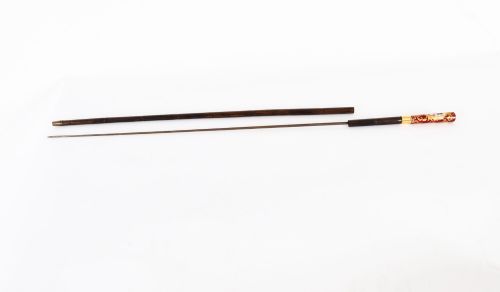
Regent Antiques has dated this Sevres Porcelain Sword Cane to the 1890s.
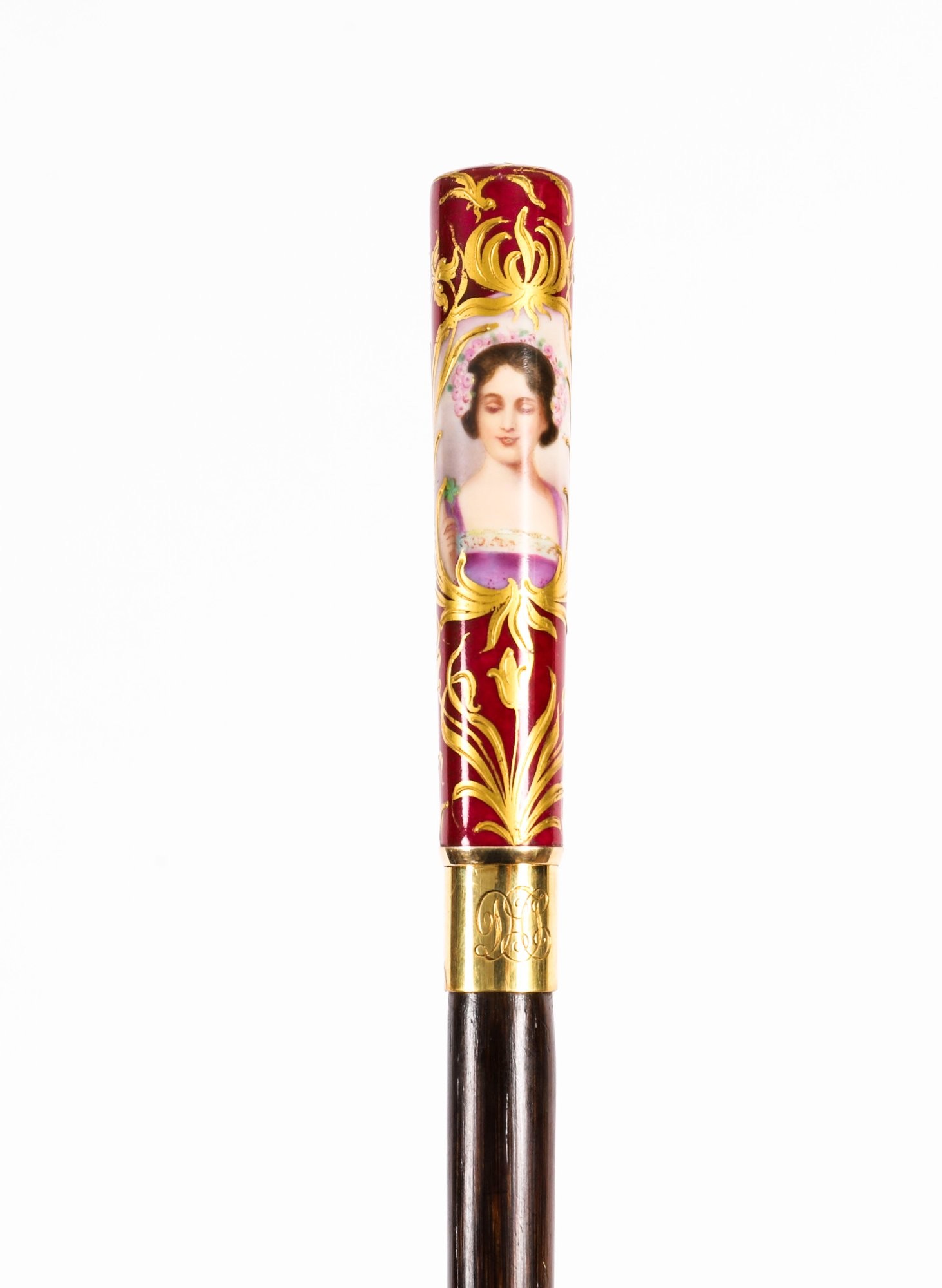
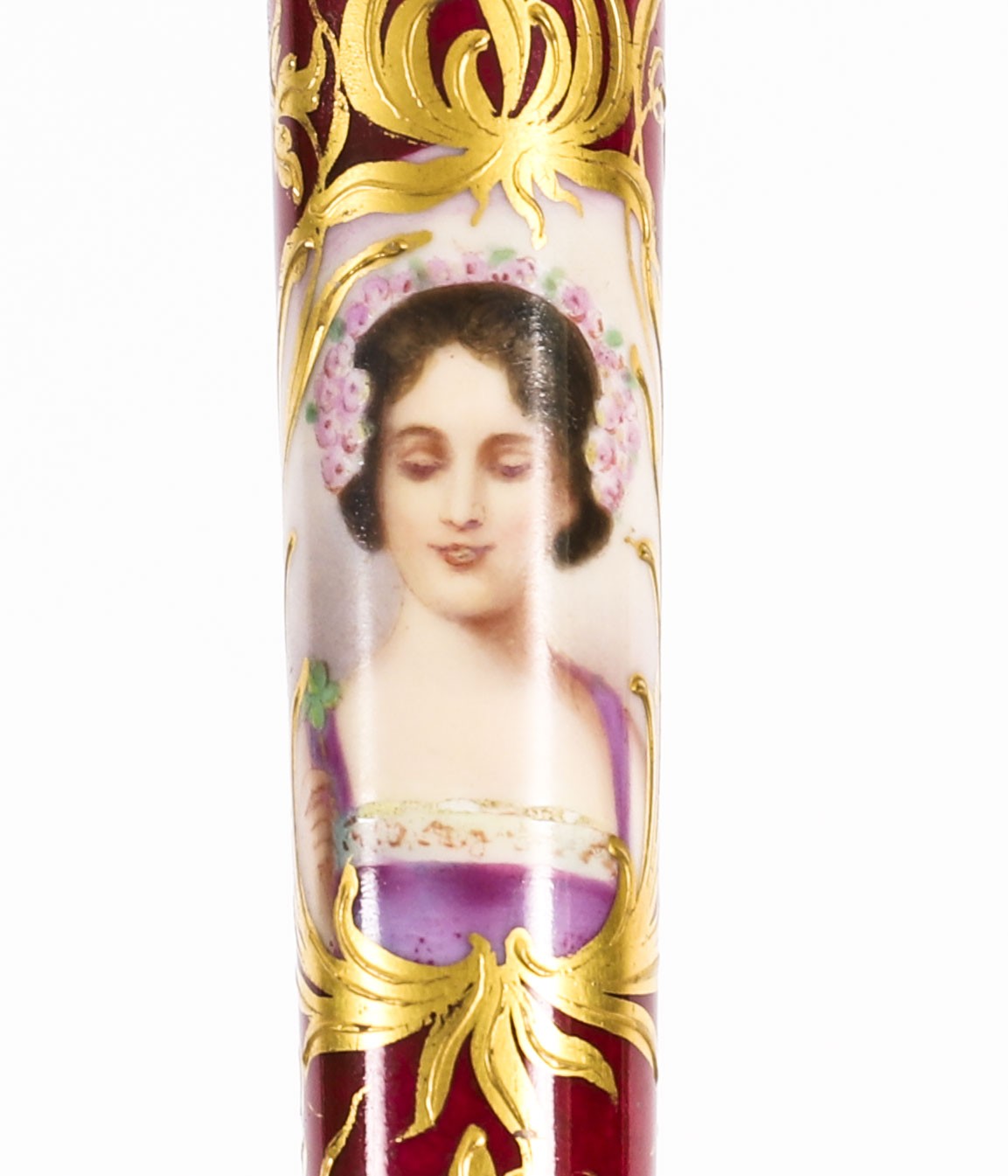
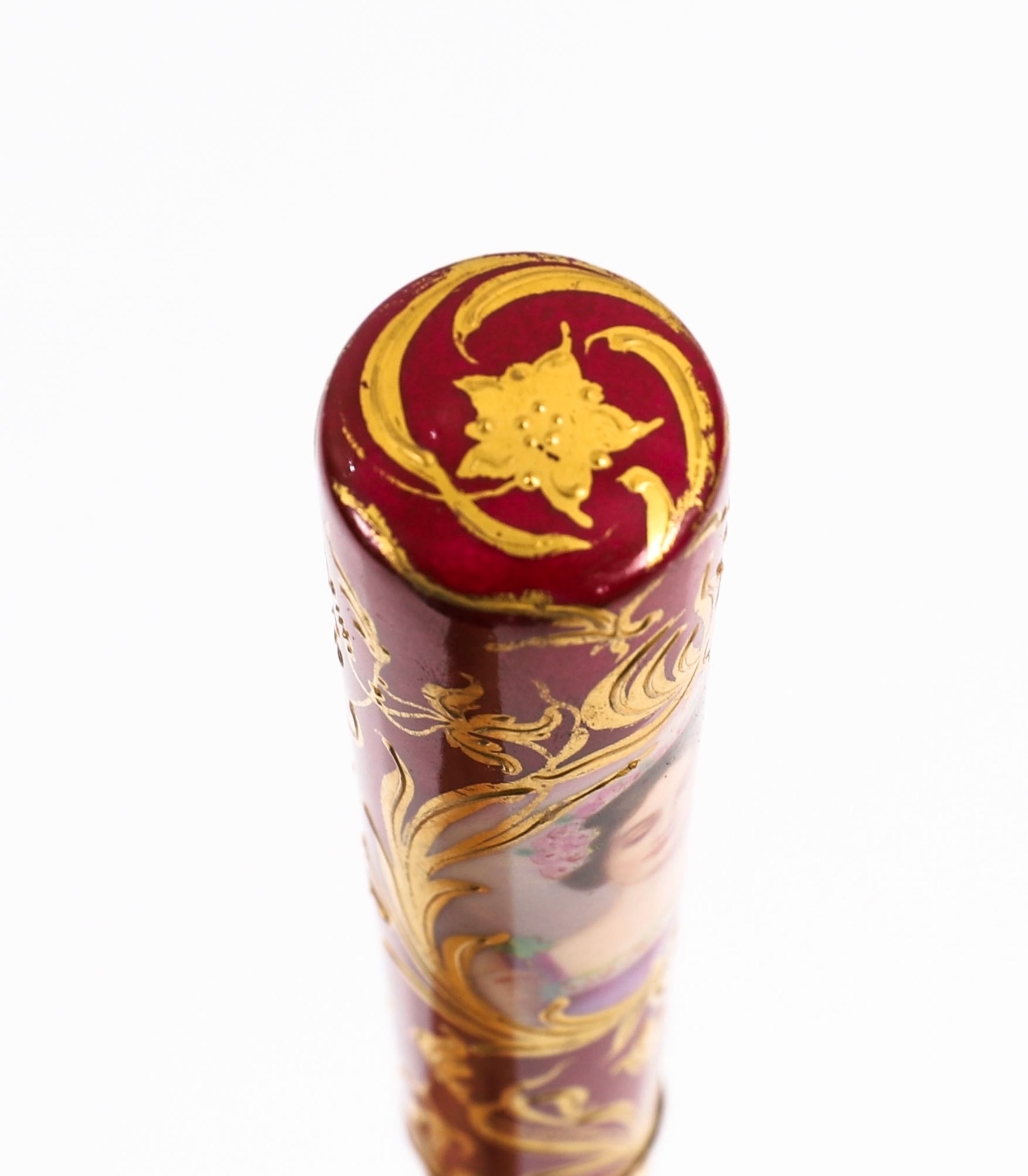
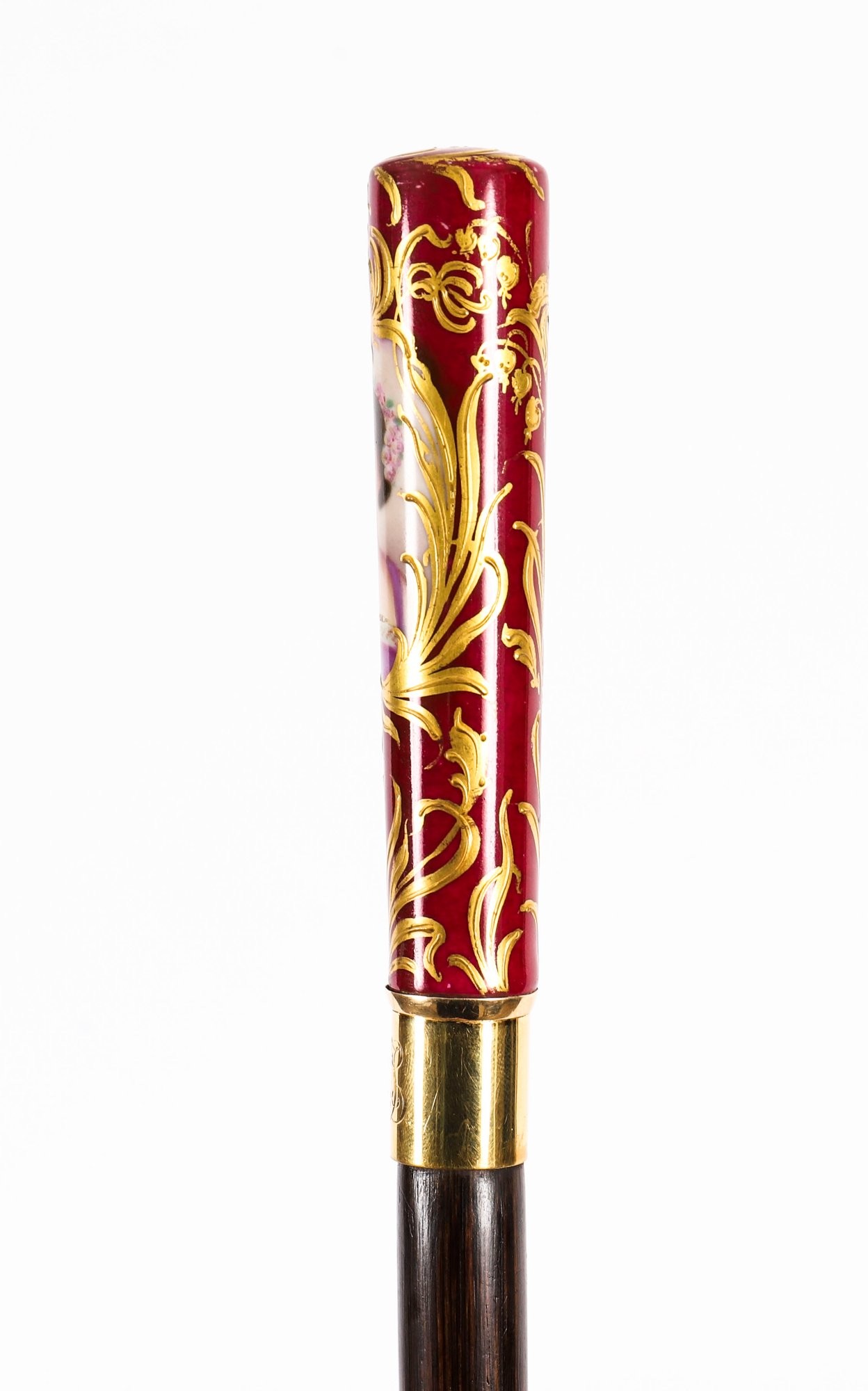
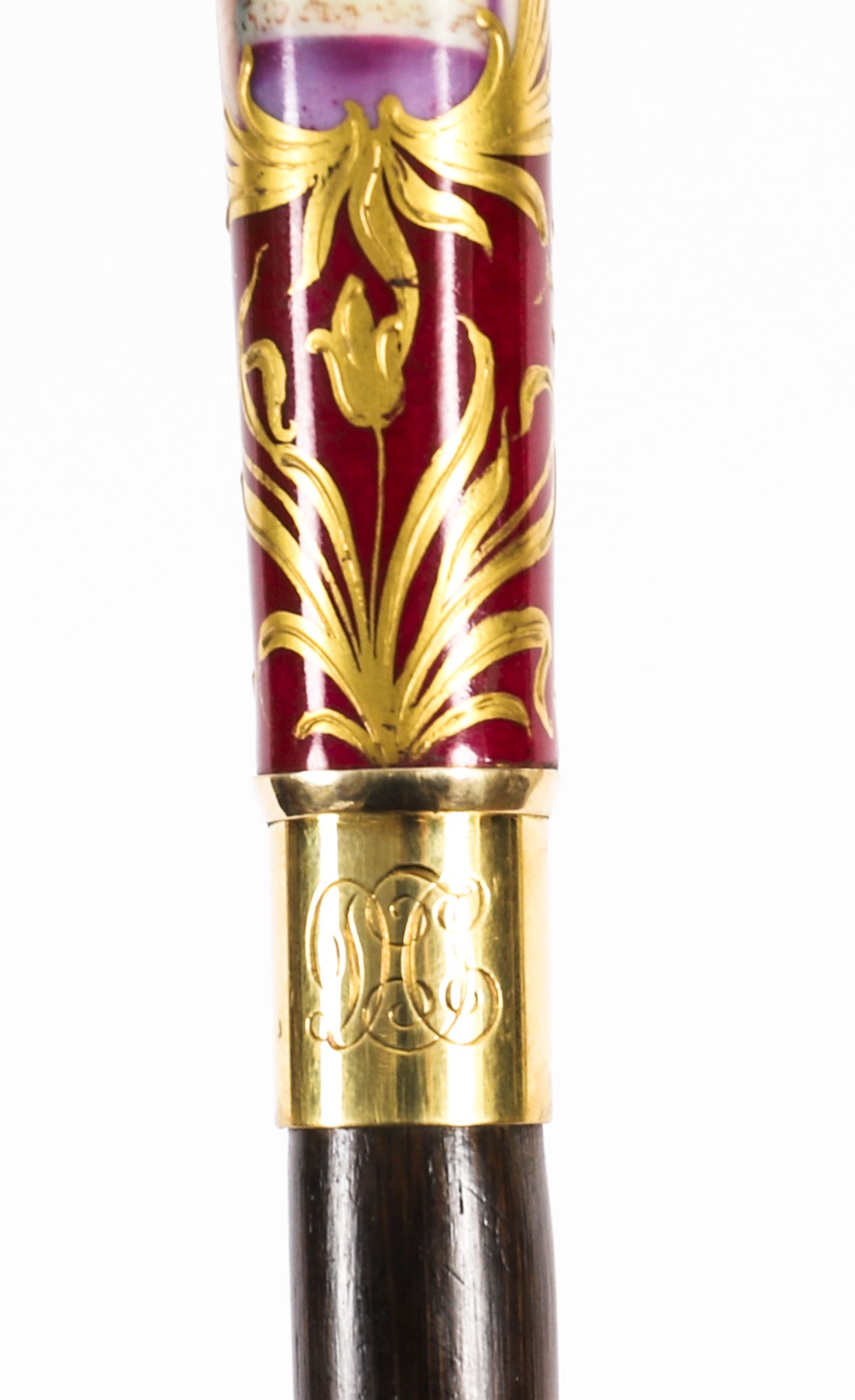
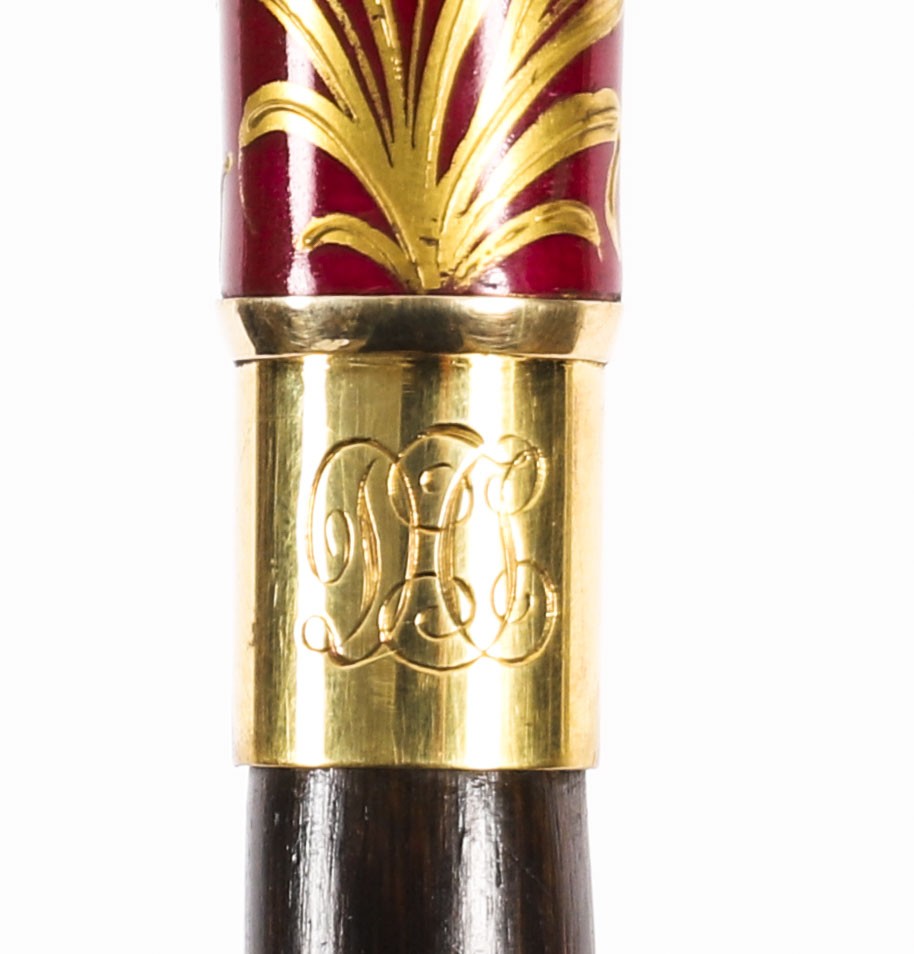
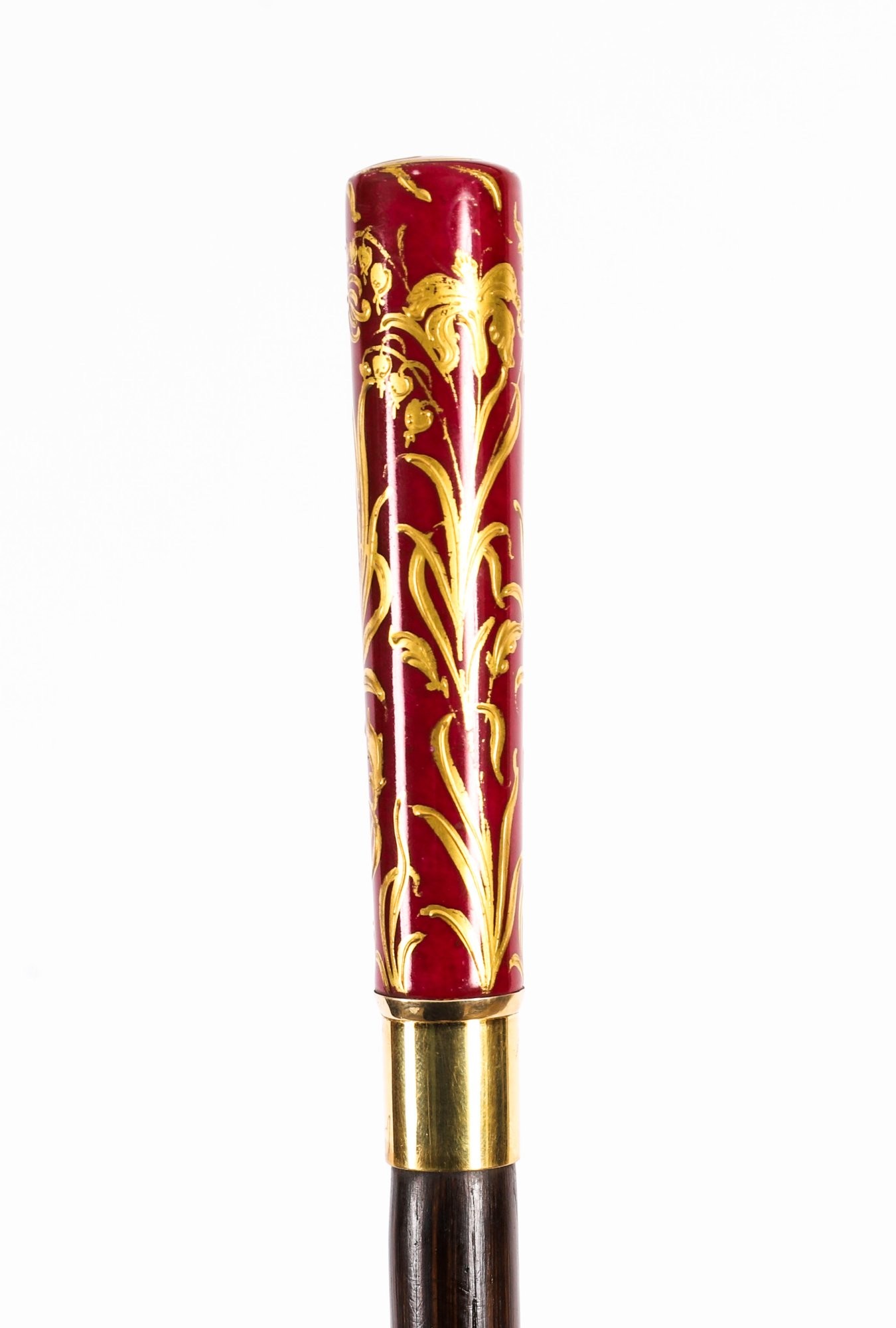
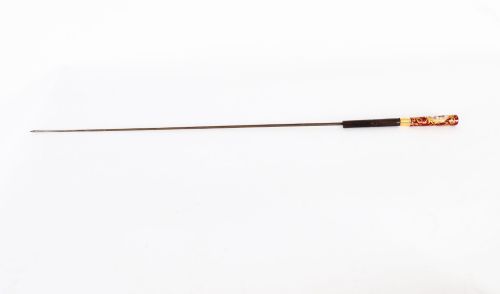
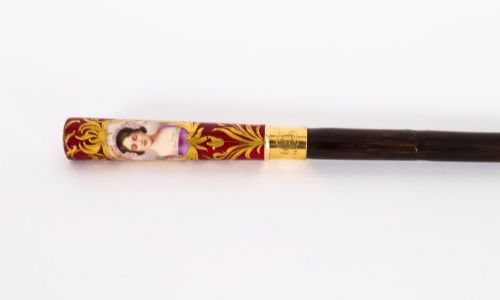
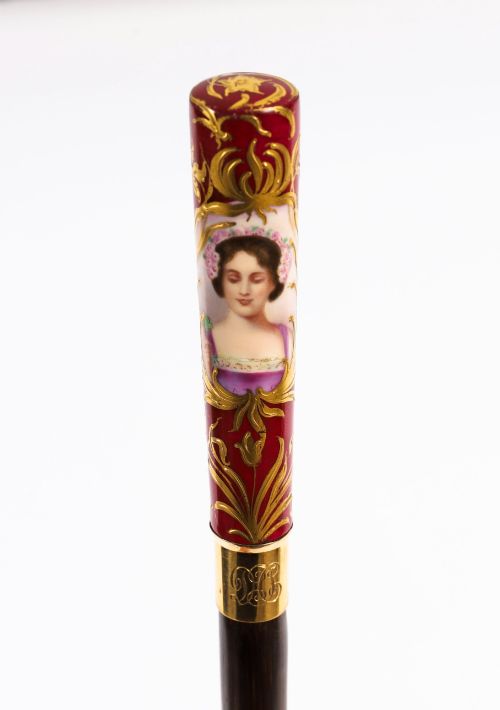
The sword stick features a finely painted Sèvres porcelain handle decorated with a 'mardi gras purple' ground, with a superb portrait panel of a young lady, with gilded floral highlights and a gold plate band.
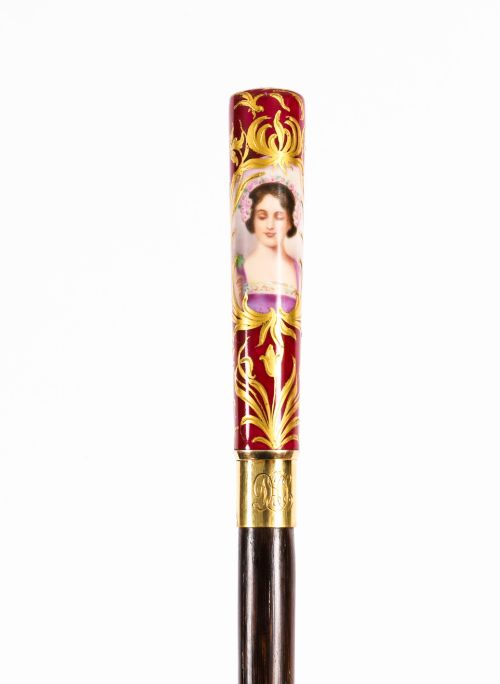
Add an extravagant element to your daily life with this stylish antique walking cane.
Condition:
In excellent condition; please see photos for confirmation.
Dimensions in cm:
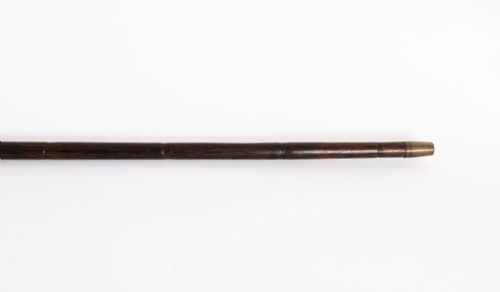
Height 89 cm x Width 2 cm x Depth 2 cm - Stick
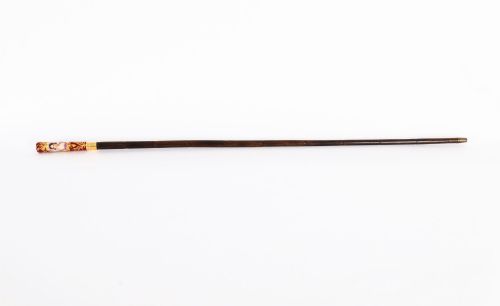
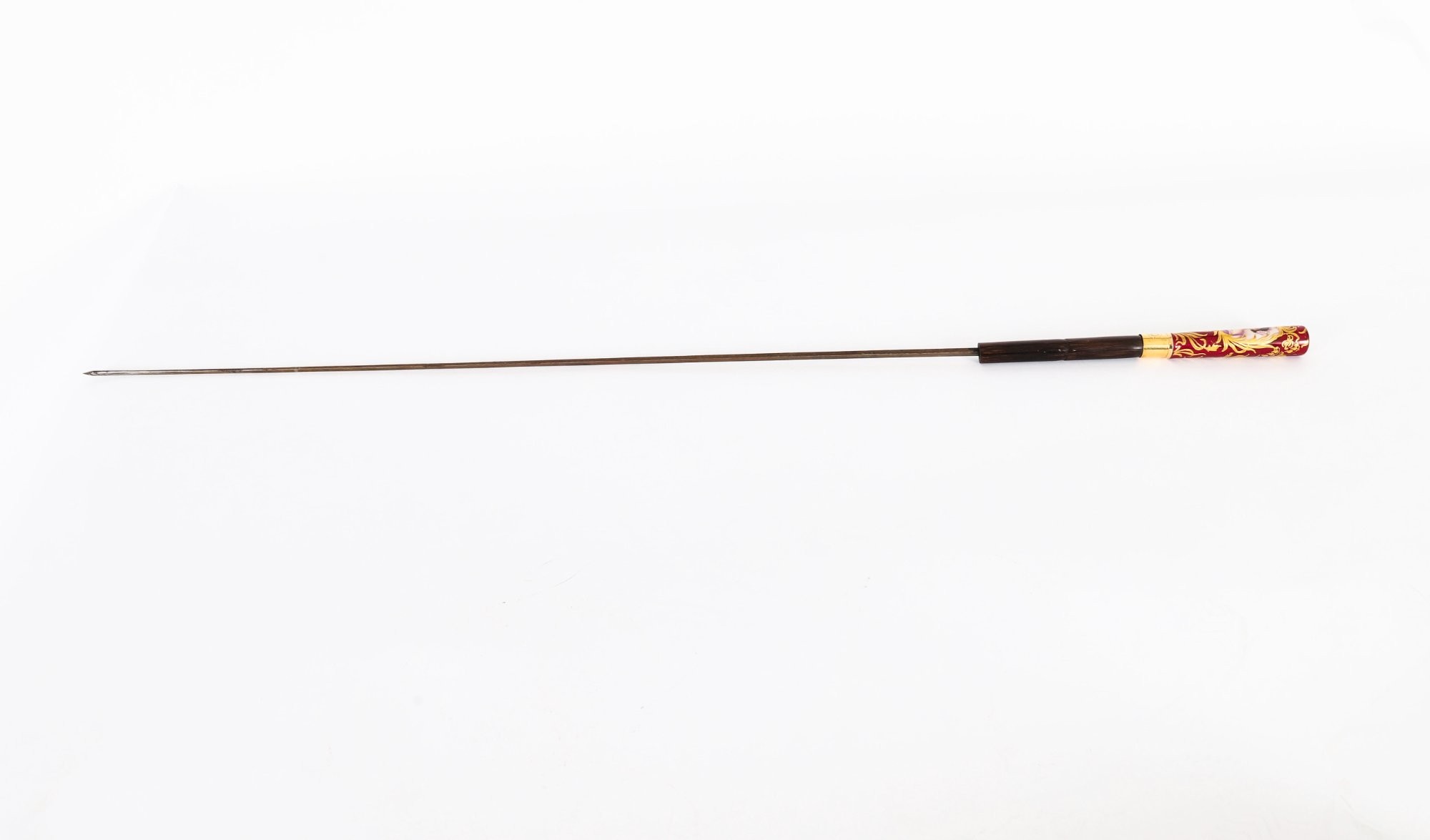
Height 63 cm - Blade
Dimensions in inches:
Height 2 foot, 11 inches x Width 1 inch x Depth 1 inch - Stick
Height 2 feet, 1 inch - Blade
Size of cane that you need
Convert your height into inches. For example, if you are 5' 10” in your shoes, your height is 70 inches. Divide by two and then add ½ inch to determine your approximate cane size. In our example, if you are 70 inches tall (5' 10”), your approximate cane size would be 35” plus ½”= 35.5 inches.
Sèvres Porcelain
Traces its roots in France to early craftsmen who had small manufacturing operations in such places as Lille, Rouen. St. Cloud, and most notably Chantilly. It is from Chantilly that a cadre of workers migrated to the Château de Vincennes near Paris to form a larger porcelain manufactory in 1738.
French King Louis XV, perhaps inspired by his rumoured relationship with mistress Madame de Pompadour, took an intense interest in porcelain and moved the operation in 1756 to even larger quarters in the Paris suburb of Sevres. Sèvres was also conveniently near the home of Madame de Pompadour and the King's own Palace at Versailles.
The Sevres Porcelain manufactory always seemed to be in dire financial straits despite the incredibly fine works it produced. In fact, the king's insistence that only the finest items be created may have contributed to the difficulties. Only a limited number of European nobility could afford the extravagant prices demanded for such works. King Louis XV and eventually his heir, the ill-fated Louis XVI, were obliged to invest heavily in the enterprise. Ultimately, the Sèvres Porcelain Factory produced items under the name of "Royal," and thus the well-known Sevres mark was born. King Louis XV even mandated laws that severely restricted other porcelain production in France so as to retain a near monopoly for his Sevres Porcelain.
Sèvres Porcelain may have given the makers of Meissen and Dresden a run for their money by the end of the 18th century, but the French Revolution did. By 1800, the Sevres Porcelain Works were practically out of business due to the economic devastation of the new French Republic.
About the time when Napoleon Bonaparte named himself Emperor of France (1804), a new director was named for the Sevres Porcelain Manufactory. Alexandre Brongniart, highly educated in many fields, resurrected Sevres Porcelain. Soft-paste porcelain was eliminated thanks to the earlier discovery of kaolin near Limoges. For four decades until his death, Brongniart presided over monumental progress for Sevres Porcelain, catering not only to Napoleon himself, but at last to include the more financially profitable mid-priced market in the emerging middle class.
Partridge Wood
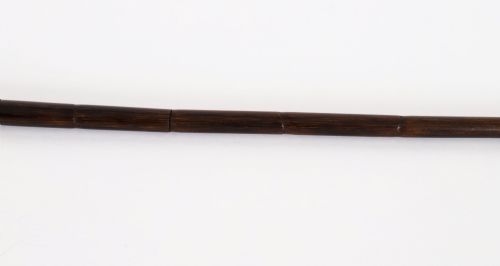
also known as Angelim, is a South American hardwood most commonly identified with the species Andira inermis. It is found from southern Mexico through Central America and into northern South America. The wood is named for its distinctive surface pattern, which resembles the mottled feathers of a partridge. Because of its relative scarcity and the skill required to finish it well, partridge wood has long been regarded as a specialist material, valued more for its character and visual interest than for uniformity.
Our reference: A5238a
Regent Antiques has dated this Sevres Porcelain Sword Cane to the 1890s.
We specialise in english and continental furniture, silver, porcelain and decorative items.
You can view the stock and full dealer information on the Regent Antiques Profile Page
Regent Antiques is a registered member of LAPADA CINOA
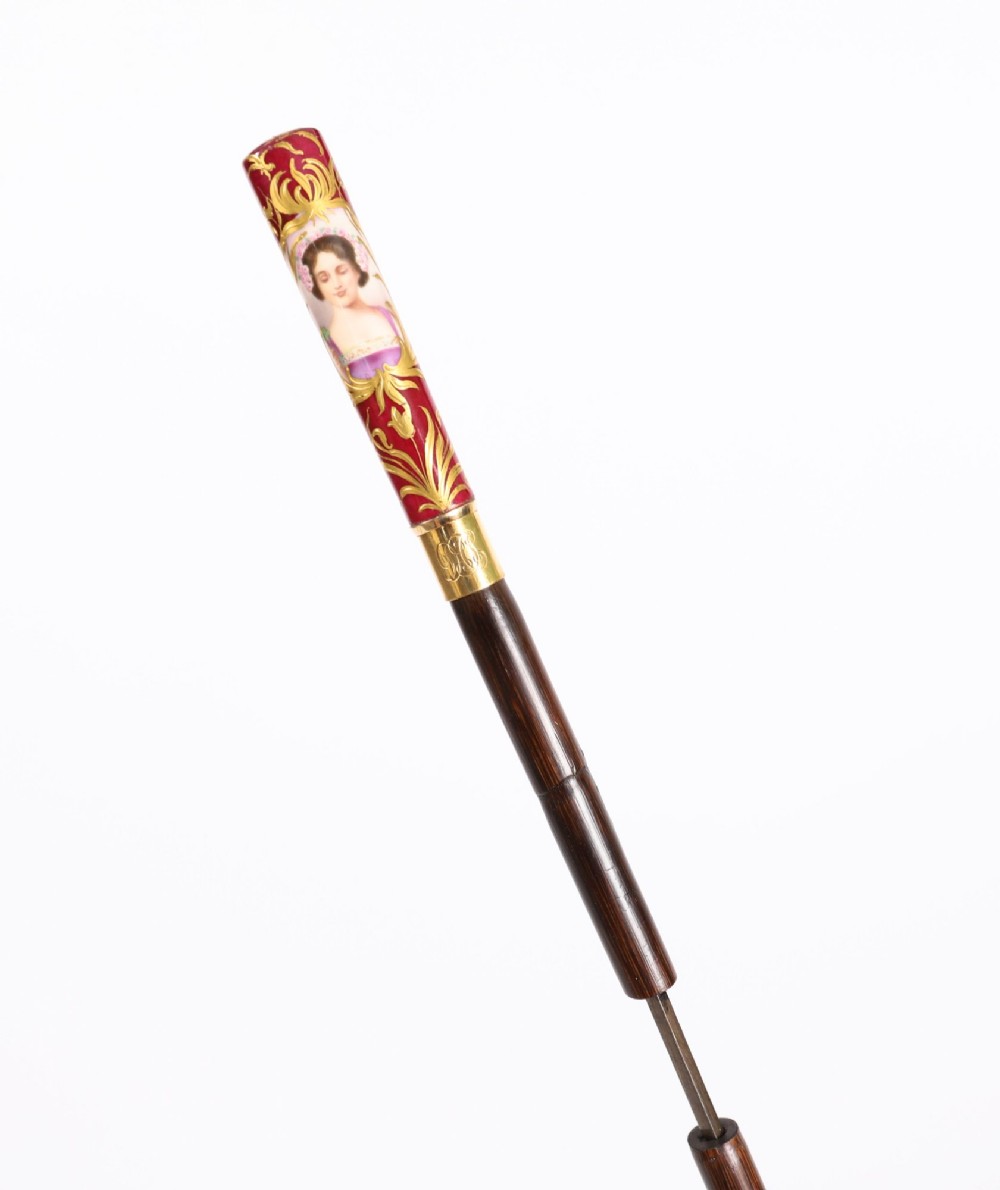
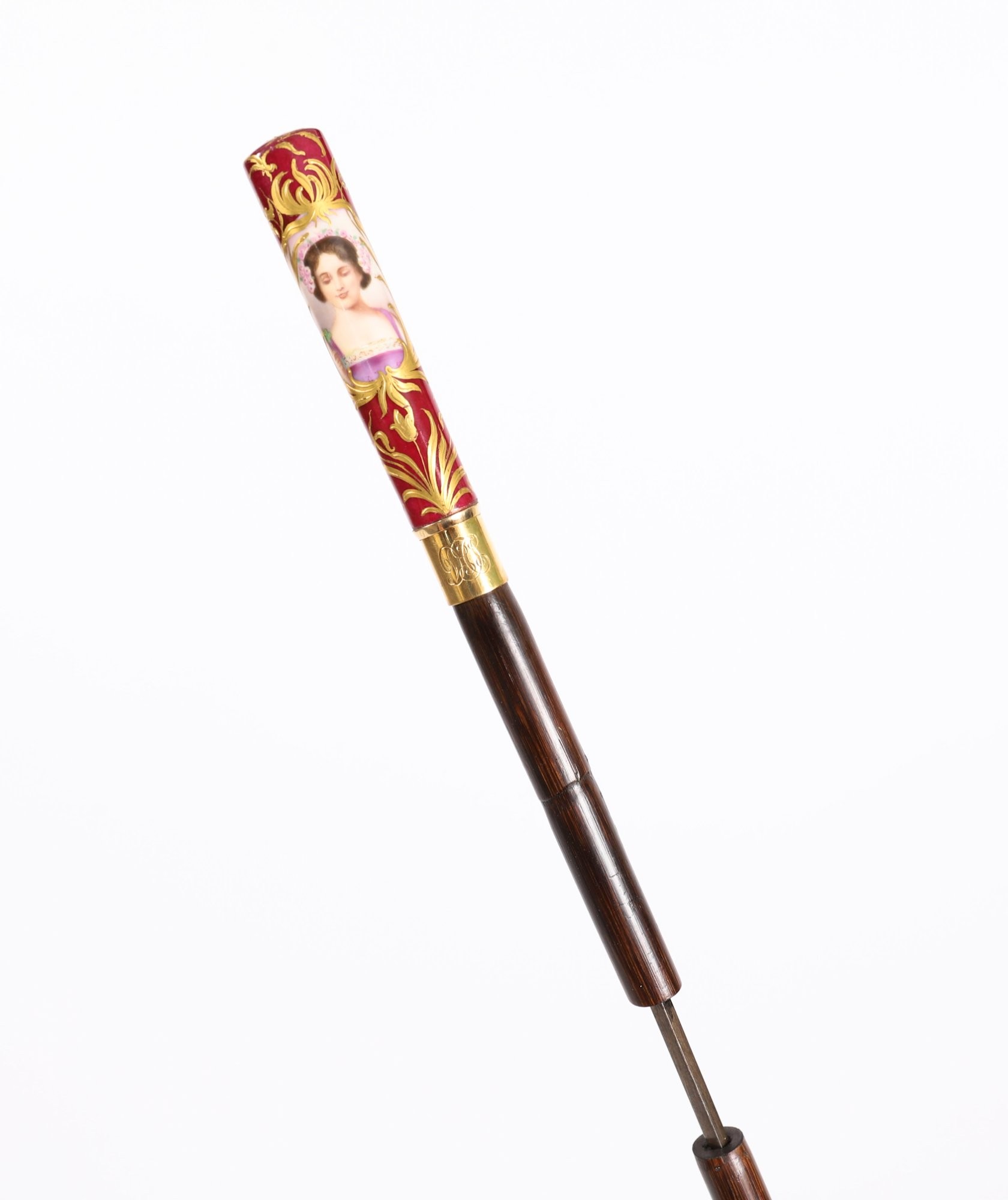
Antique French Sevres Porcelain Walking / Sword Stick 19th C 89cm / 35 Inches