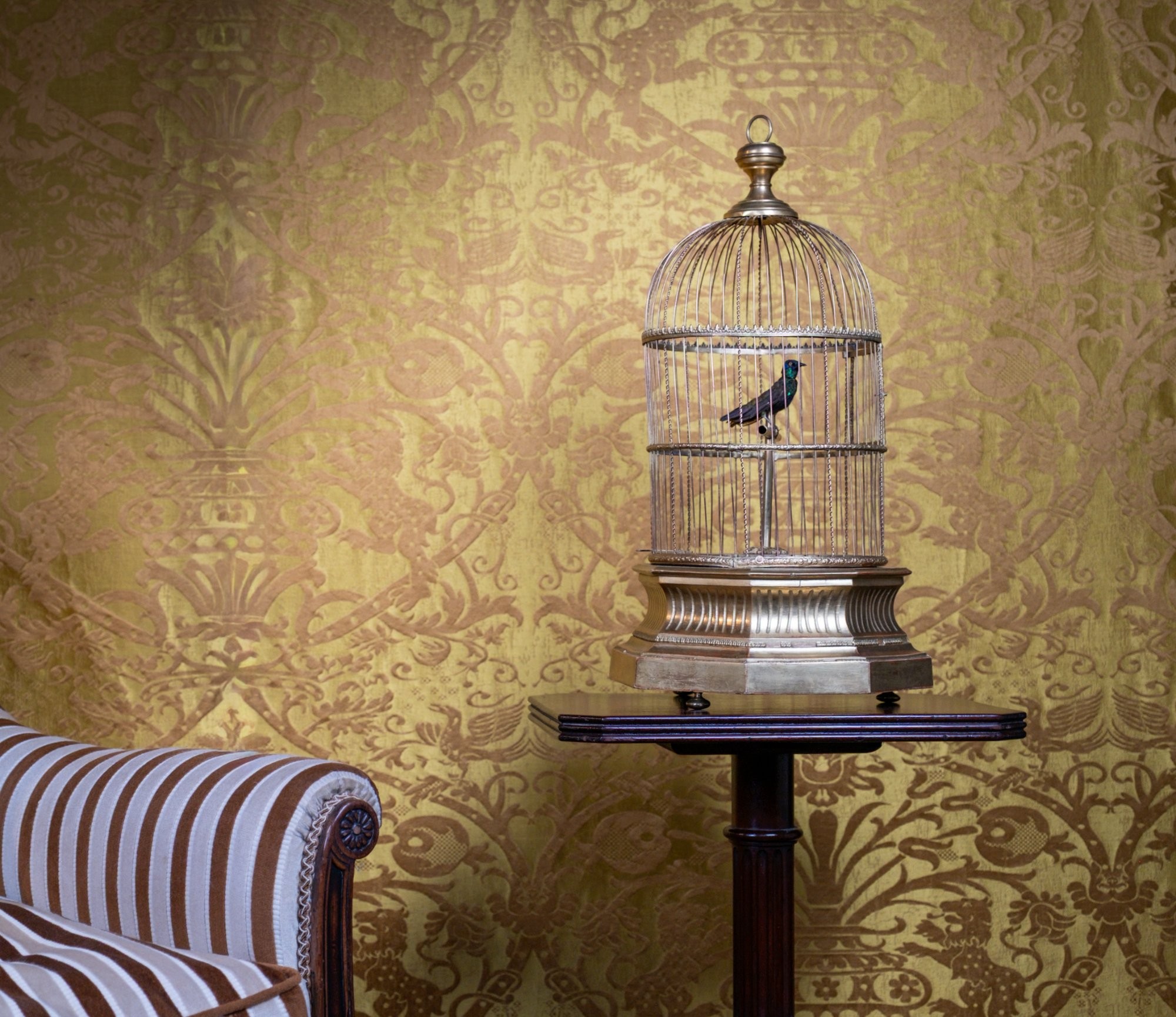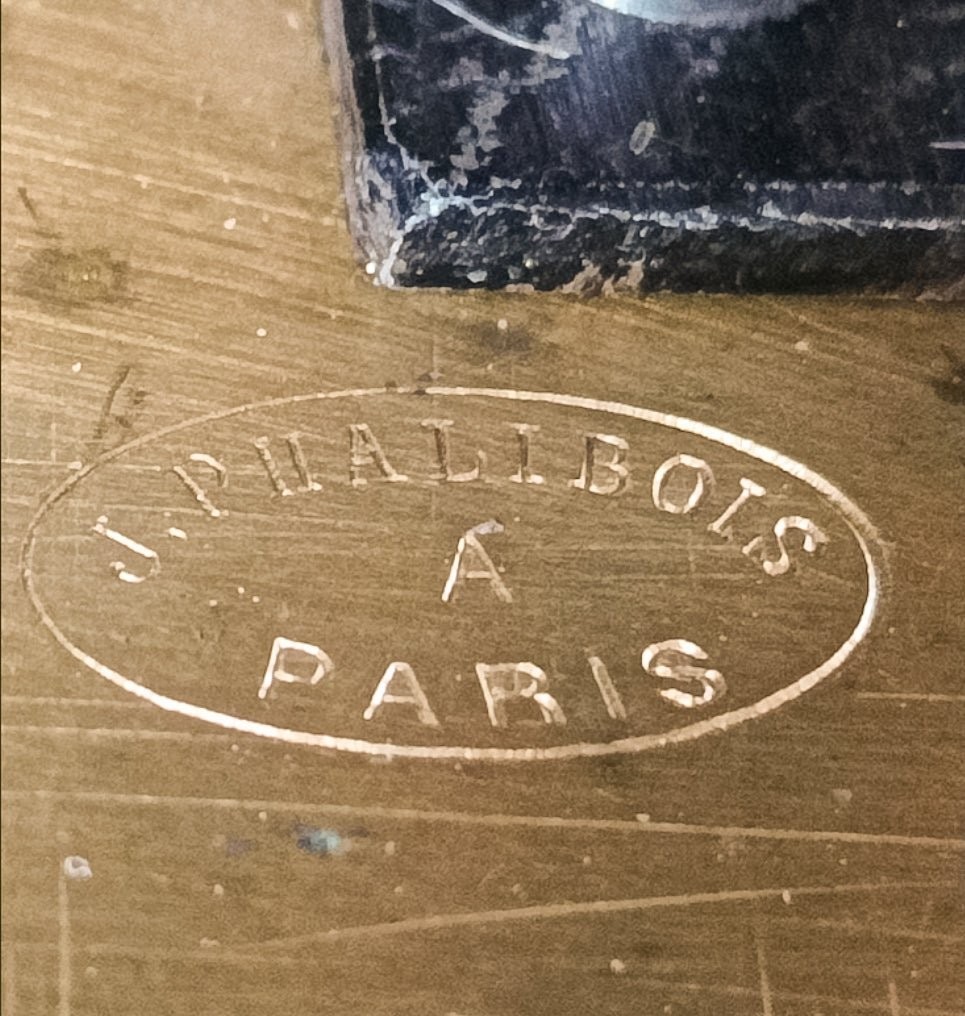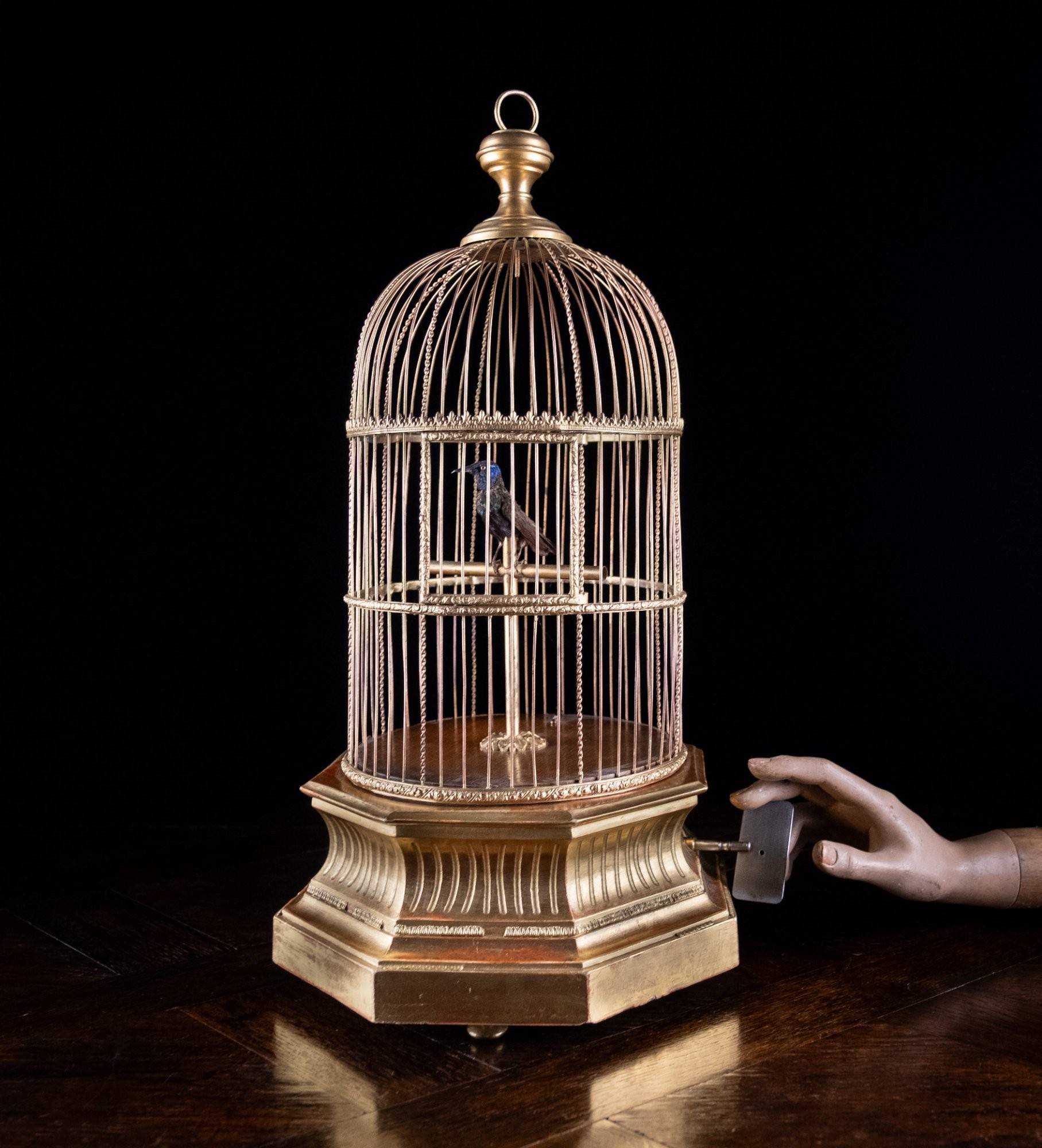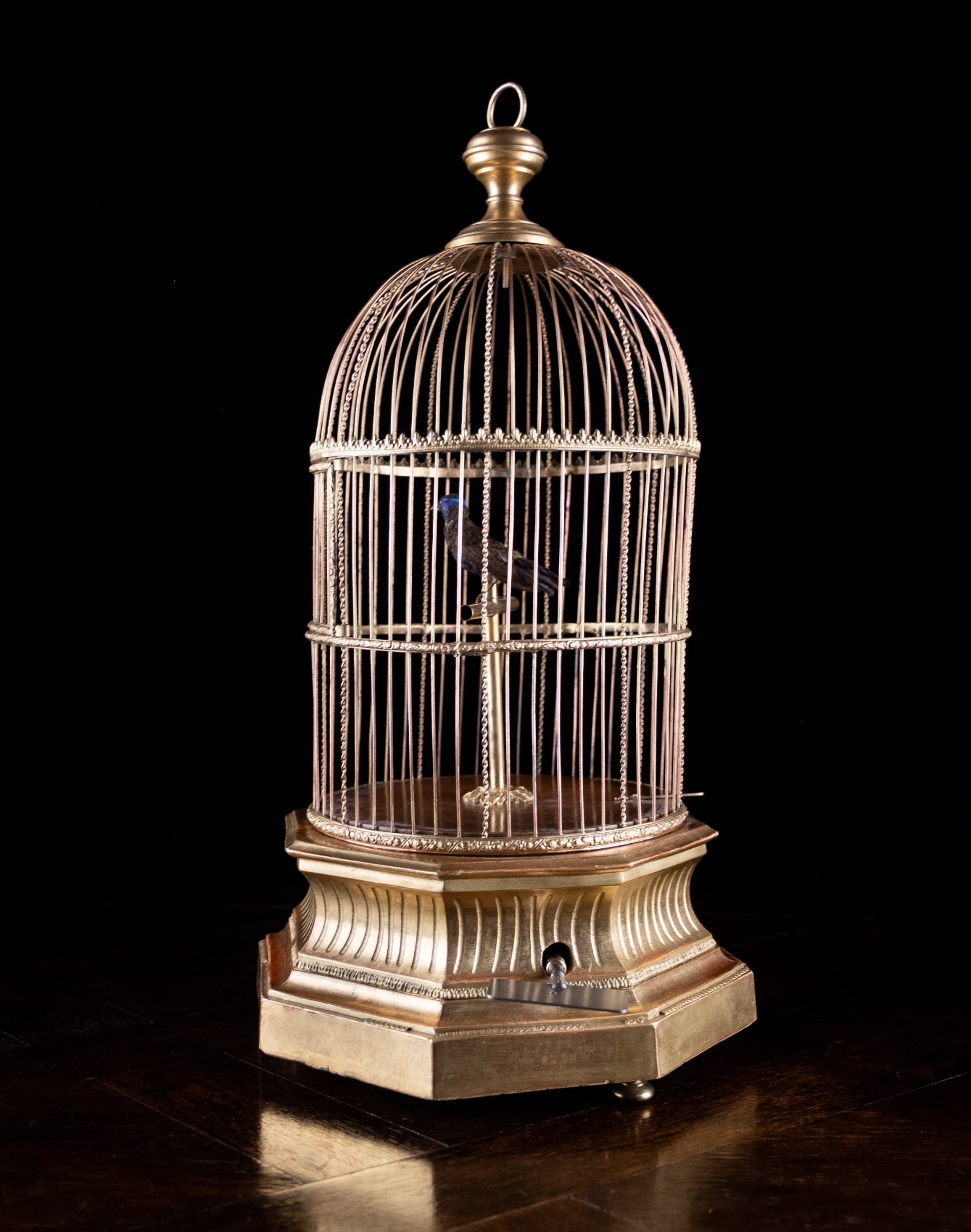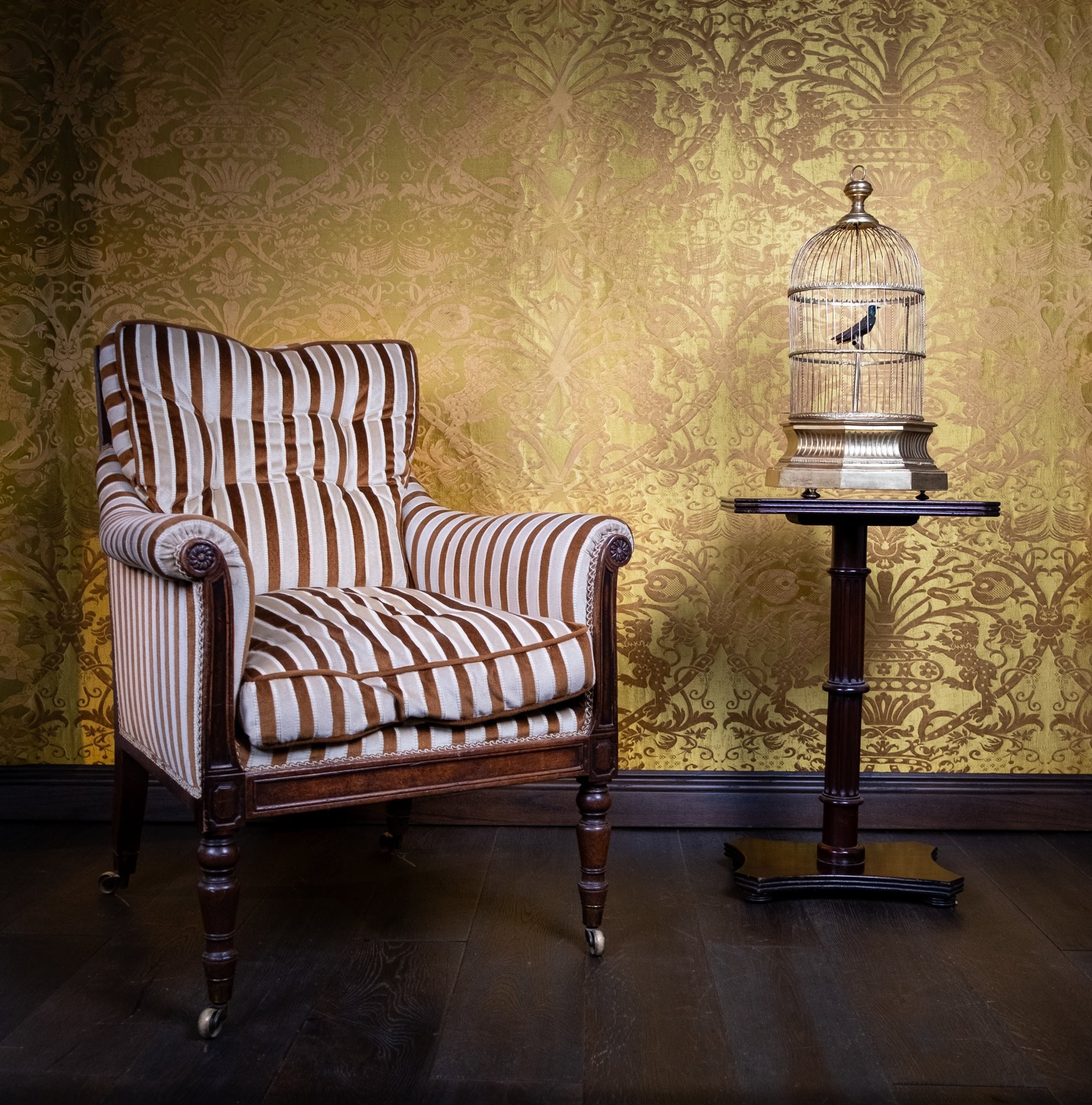
Harrington Antiques has dated this Antique Singing Bird Automaton to the 1880s.
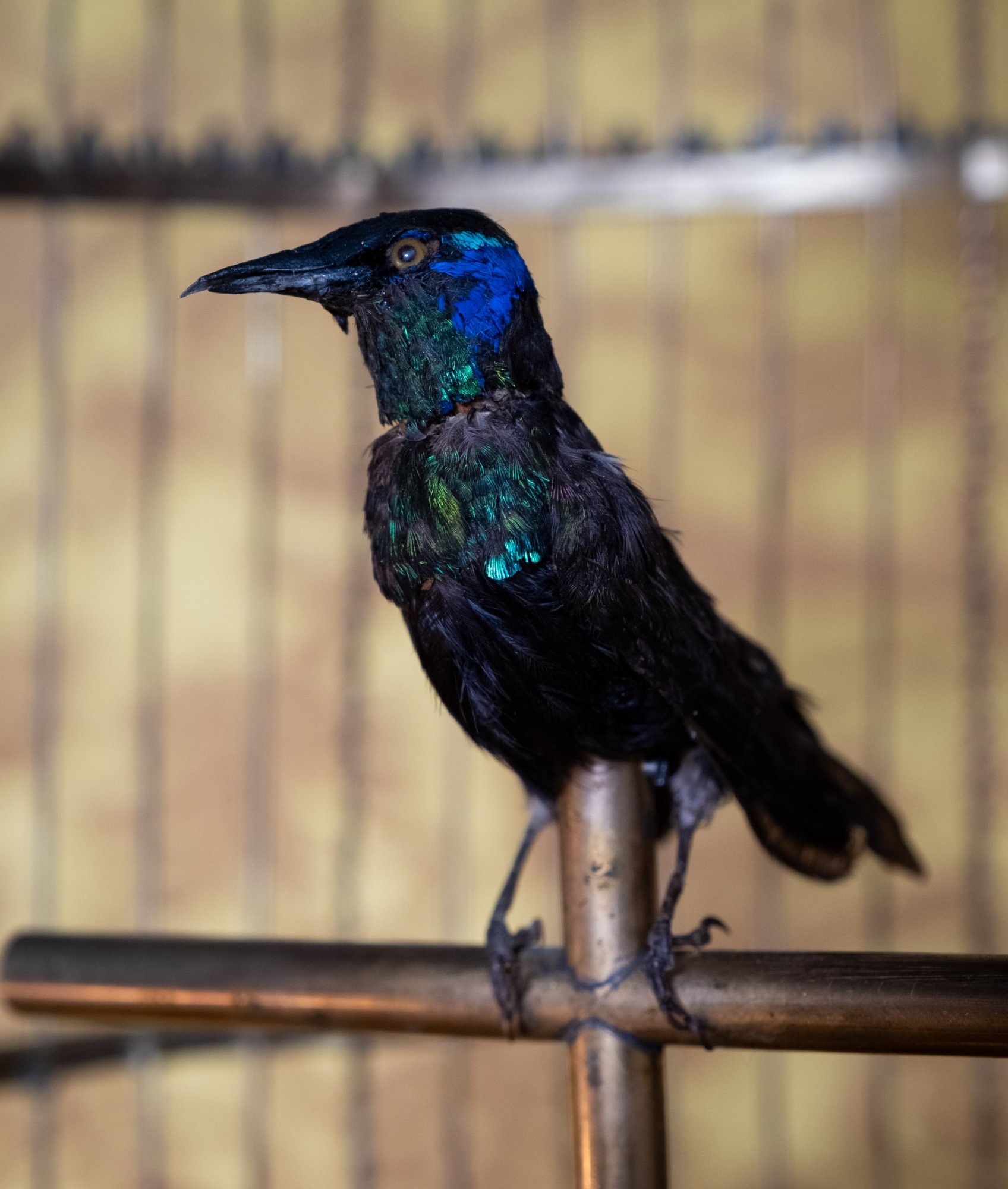
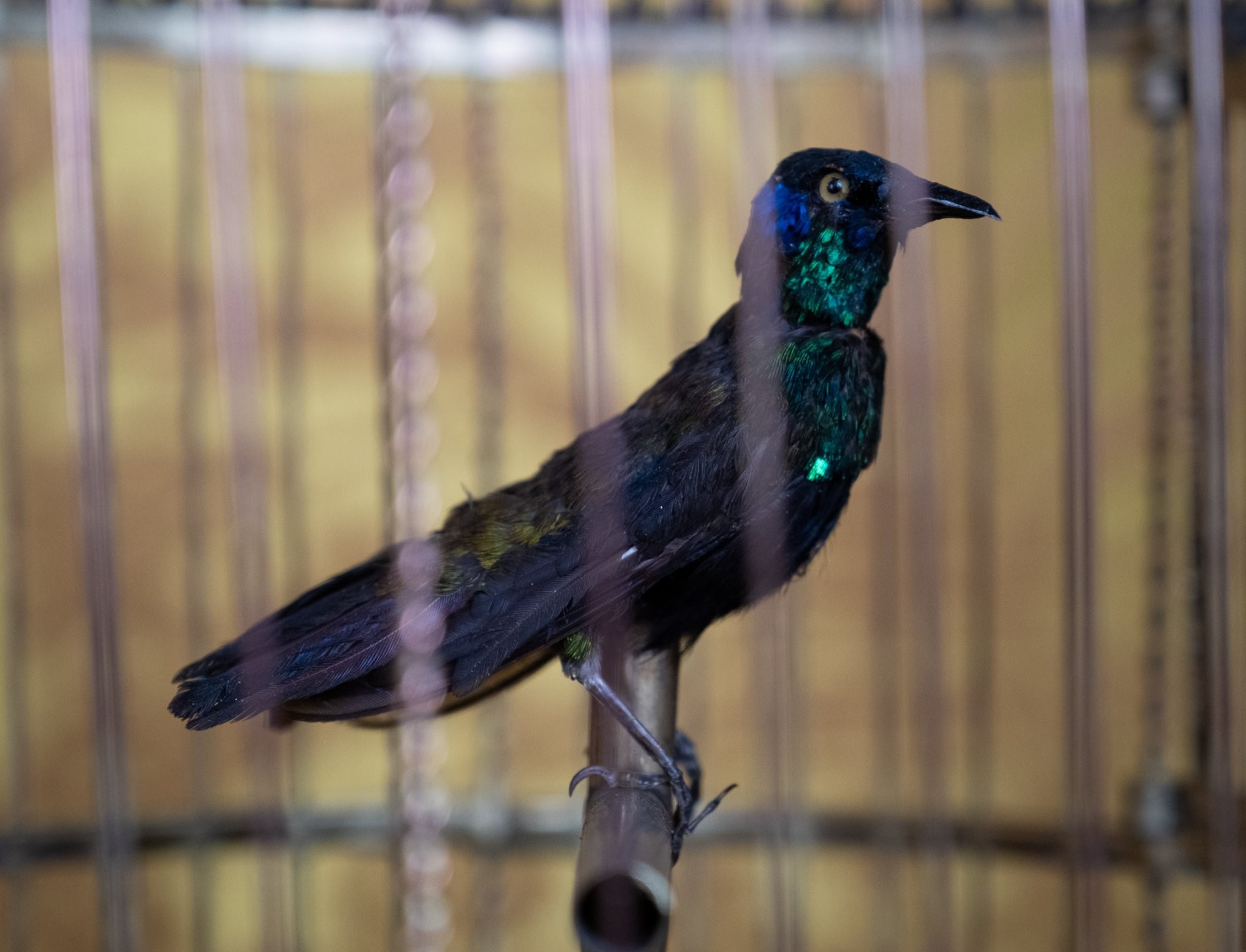
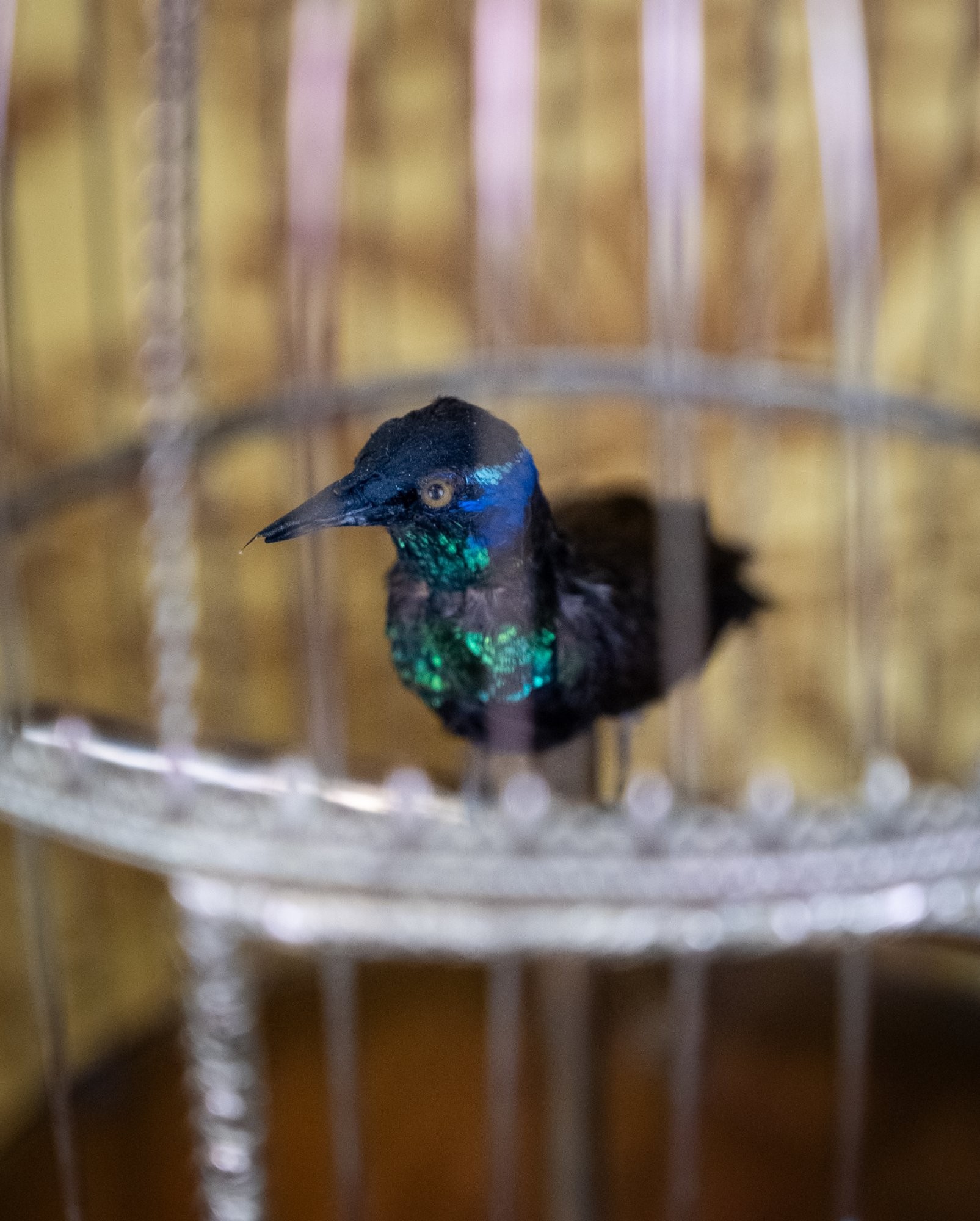
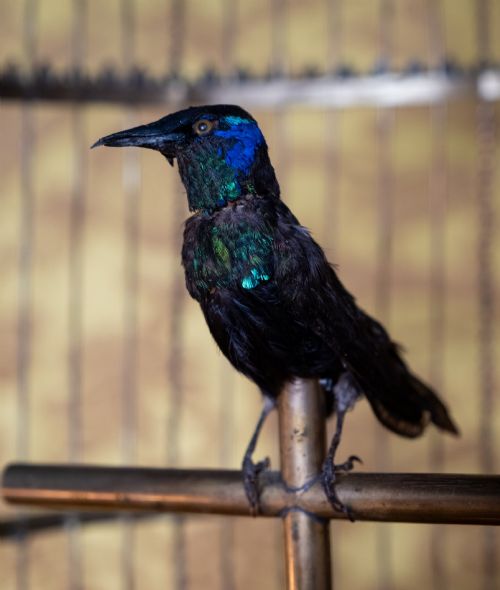
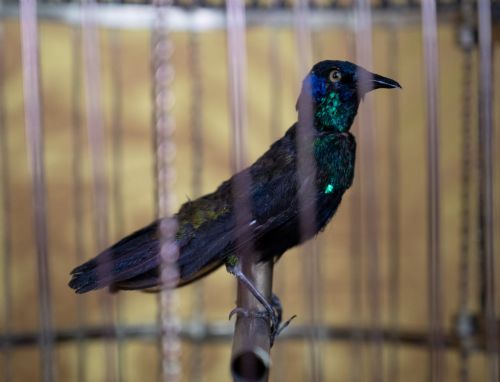
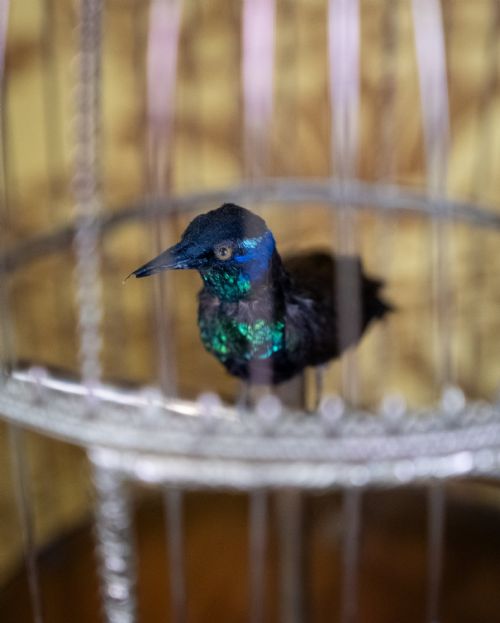
Phalibois' bird automata typically feature realistic or taxidermy birds with vibrant feathered plumage (often with iridescent green, blue, or orange highlights), housed in domed wire cages, on tree perches, or inside elaborate landscape scenes. Powered by clockwork or going-barrel movements, they synchronise continuous birdsong with realistic physical movements, including an articulated beak, moving head, and fluttering tail-feathers.
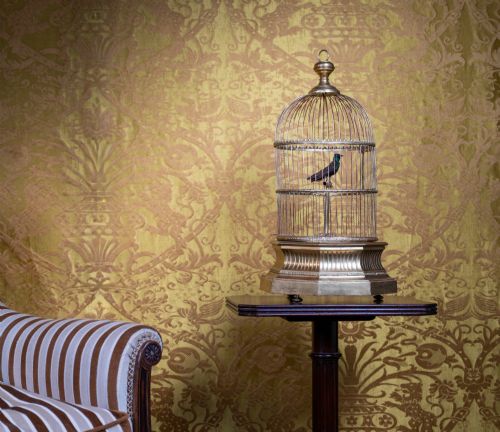
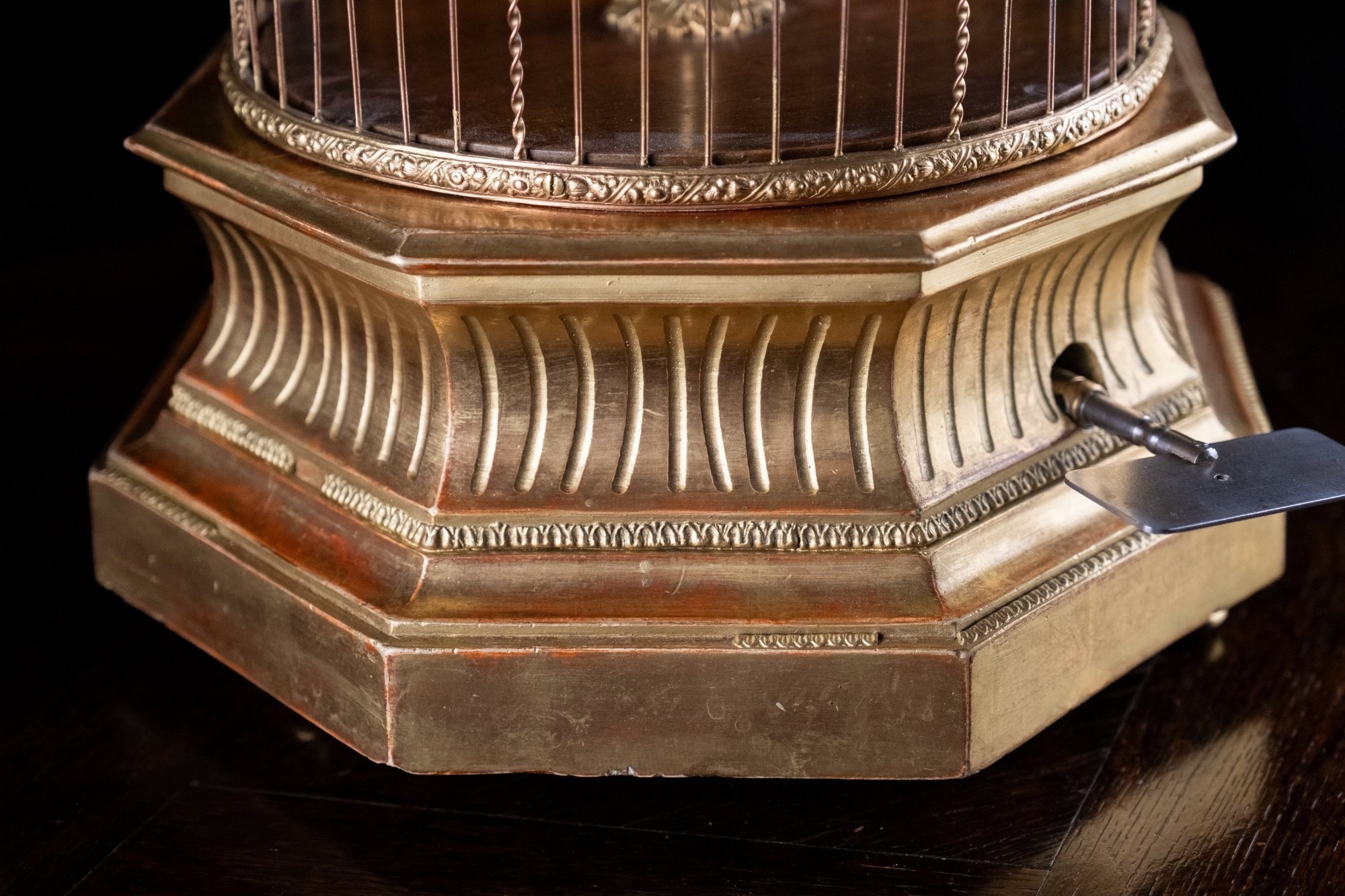
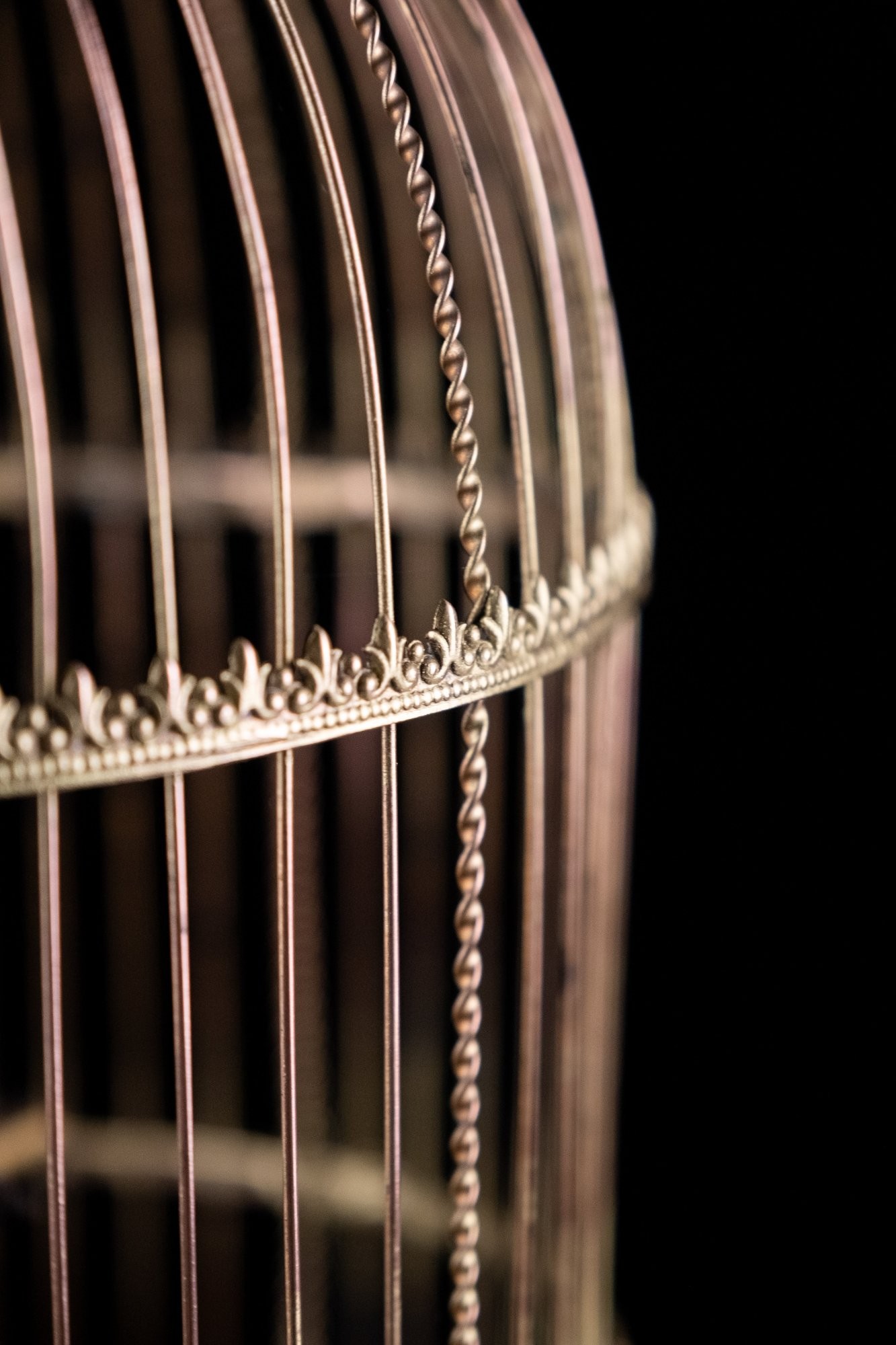
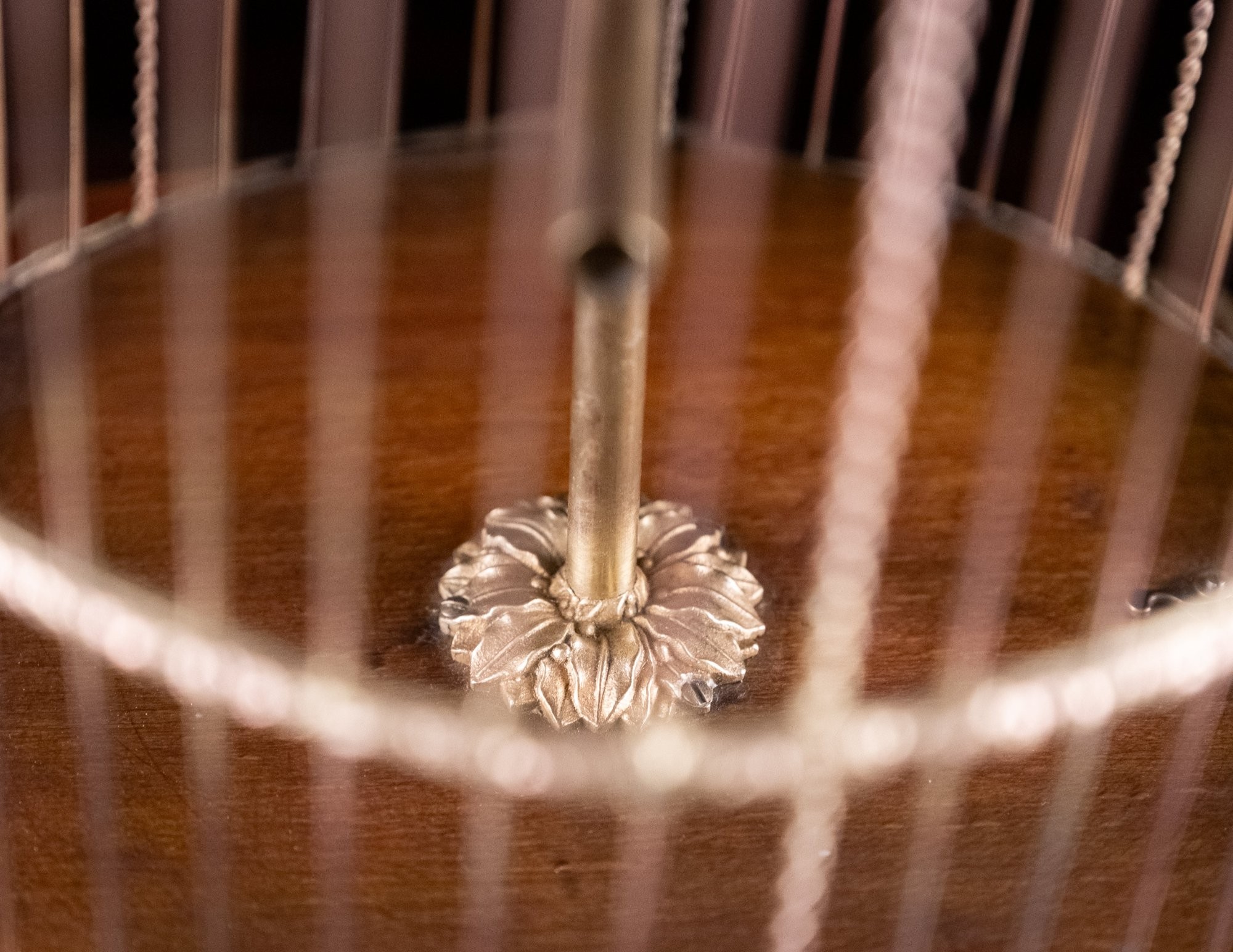
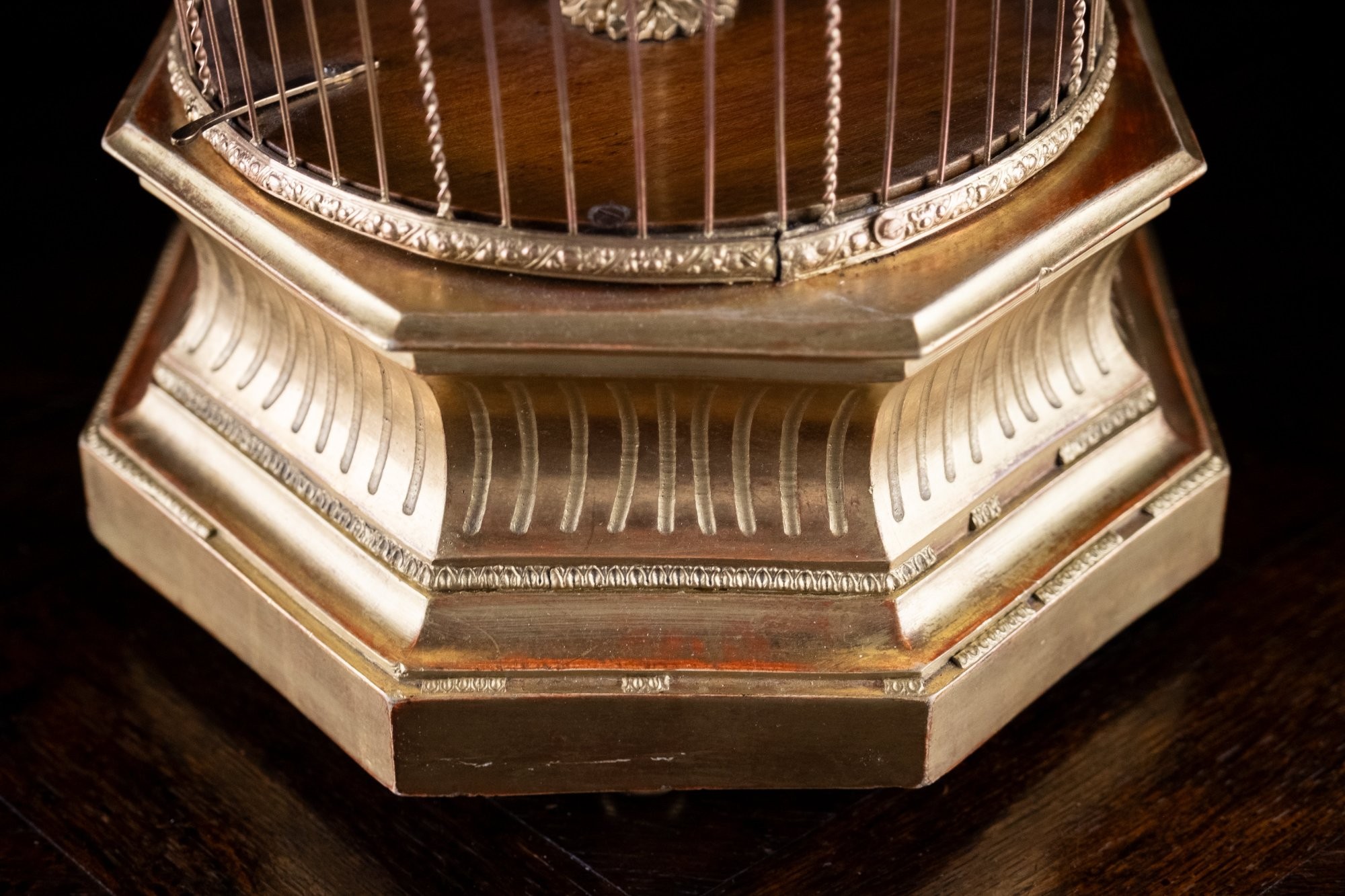
This shining example of J. Phalibois' craftsmanship has an iridescent bird sitting upon its brass perch within a gilded cage which boasts a fine rope twist and fleur de lis design throughout. The fluted gilt wood base houses the substantial ket which, when wound, springs the bird into song.
Dimensions:-
Height: 62cm
Width: 32cm
Depth: 32cm
ABOUT THE MAKER
In the 1870s and 1880s, Jean Marie Phalibois specialised in creating mechanical or animated pictures and scenes, particularly fashionable in that period. The report of a journalist who visited the third Paris World's Fair (Exposition Universelle) in 1878 gives an idea of this unique form of mechanics. Soon after his participation in the Exposition Universelle of 1878, while continuing to produce mechanical paintings and "musical fantasies" on a large scale, Phalibois created the first automata – several papier-mache figures equipped with musical mechanism and the mechanism that set the figure in motion. Between 1884 and 1888, he produced automata in full human size, a rarity among Parisian manufacturers of the time.
Since 1887, the son of Jean Marie son, Édouard Henry Phalibois, had been playing an increasingly important role in the firm business. He possessed creative temperament, played the clarinet, and in the documents of the 1880s, he called himself a "musical performer". In 1893, J.M. Phalibois retired and on 23 January the same year, the firm and all its assets passed to Henry. Seven years later, on October 4, 1900. J.M. Phalibois died. In 1925, the son of Henry, Raymond Phalibois, took over the company. He stopped making automata and concentrated on the automata trade rather than manufacturing them.
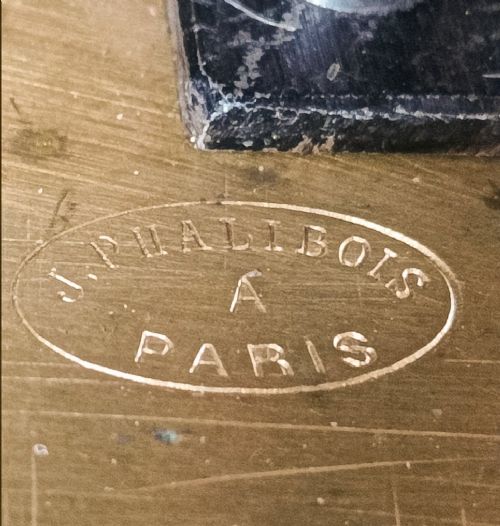
In 1995, after one hundred years of history, Roullet & Decamp decided to close down. Its automata, including those made by Phalibois, became the basis of two museums; le musée de l'Automate Soulac-sur-Mer, Gironde and Museum of Window-Actors in Falaise, Normandy. All sides of Jean Marie and Henry Phalibois creative work are represented in the museum Collection repository: mechanical singing birds, mechanical scenes and pictures, separate automata and groups of them, as well as the famous "Whistler".
Today, works by Phalibois on the open market are rare.
DELIVERY
UK Mainland: FREE
We use trusted door-to-door couriers for UK and international delivery.
We are able to deliver to most of mainland UK free of charge (excluding the Scottish Highlands). We aim to deliver your piece within 7-10 working days, however please allow up to 3 weeks following cleared payment for delivery. Collection in person is welcome by prior arrangement.
We are able to deliver internationally please do contact us with your location for an accurate delivery quote.
Harrington Antiques has dated this Antique Singing Bird Automaton to the 1880s.
Antiques & decorative interior pieces.
You can view the stock and full dealer information on the Harrington Antiques Profile Page
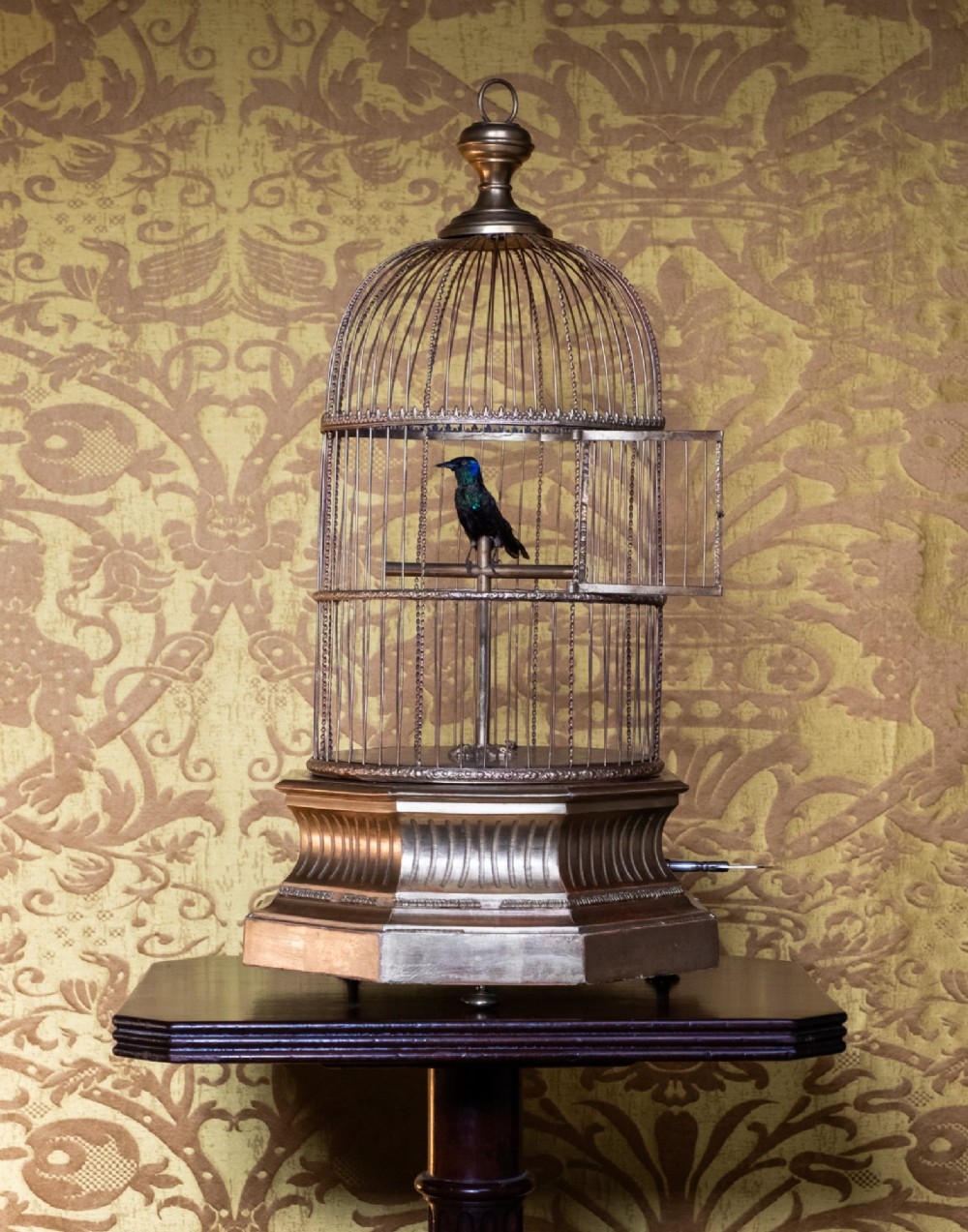
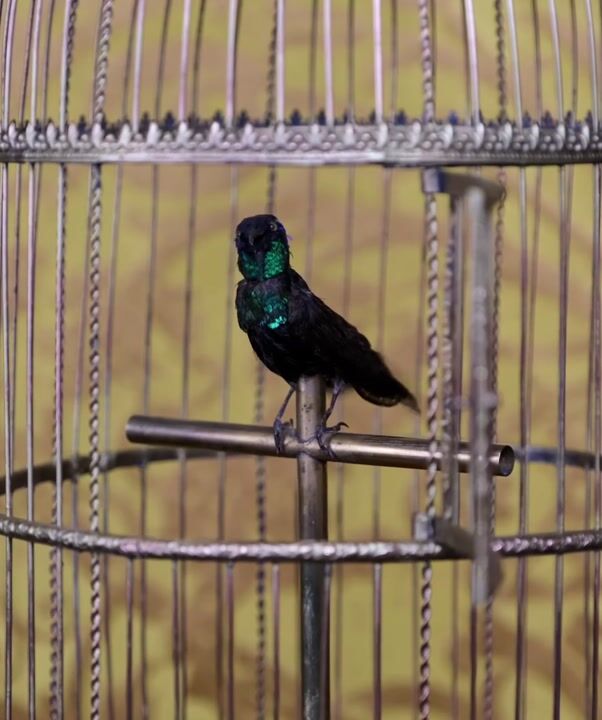
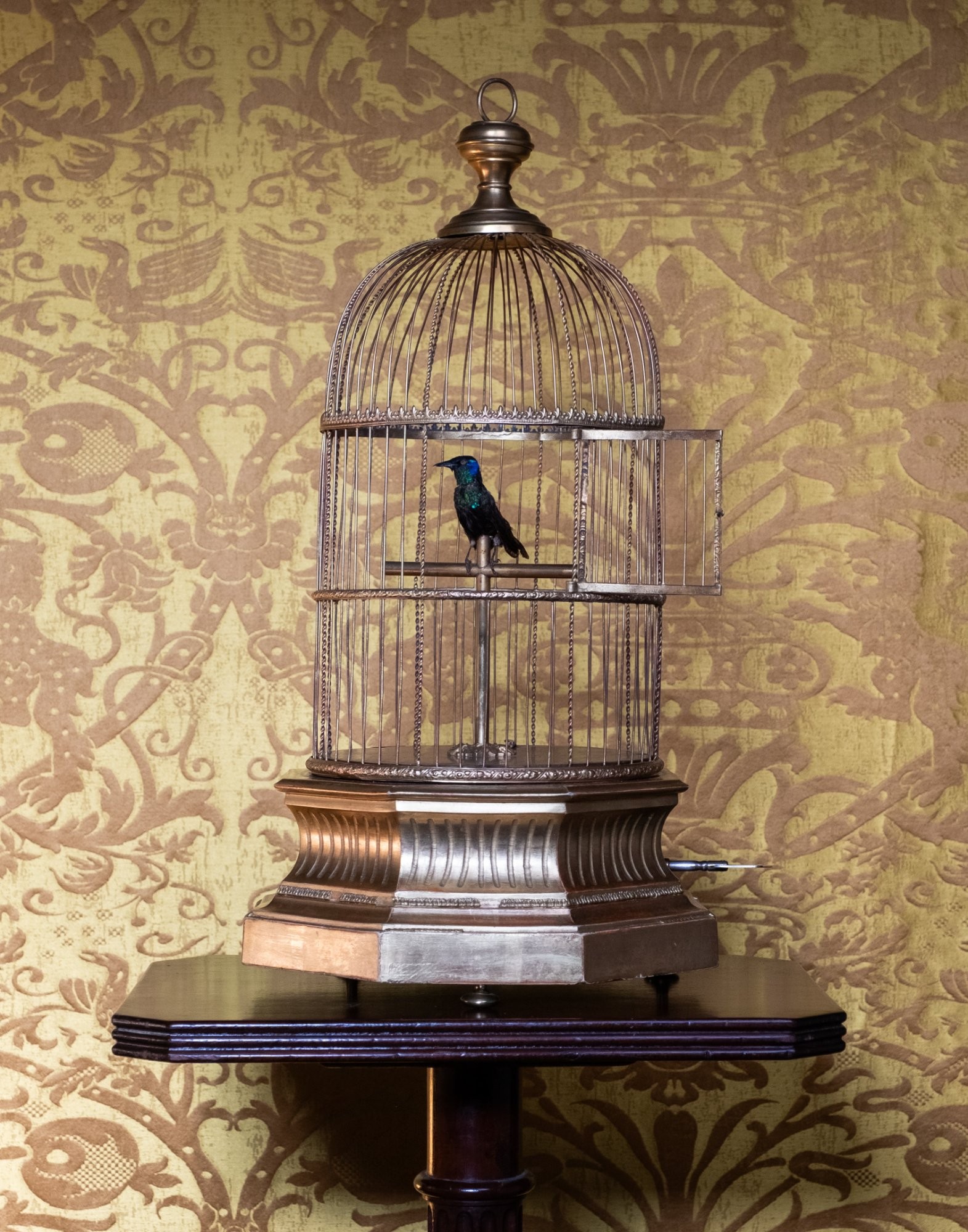
Singing Bird Automaton by Jean-marie Phalibois (1835-1900)