41,332  PAGES BROWSED TODAY PAGES TODAY • 176 ANTIQUES UPLOADED TODAYNEW ARRIVALS
GIFTS
176 ITEMS ADDED TODAY
Sort Order
Items Per Page
Browse Categories
Sort order
Relevant Links
Items per page
ID #SA1239624
FOR SALE
£4,950
Email Phone
Save
Extremely Rare Pair of English 15th Century Oak Heraldic Panels with Rare Concentric Circle Apotropaic Witch Marks & Scorch Marks
For sale by Folk and Fable Antiques
for sale €5,792     $6,287
£4,950
Folk and Fable Antiques

Folk and Fable Antiques

Sellingantiques Verified Since Oct 2026
Browse dealers 14 items
Id #SA1239624
PDF SHARE
SAVE

Extremely Rare Pair of English 15th Century Oak Heraldic Panels with Rare Concentric Circle Apotropaic Witch Marks & Scorch Marks

Pre 16th century
Description

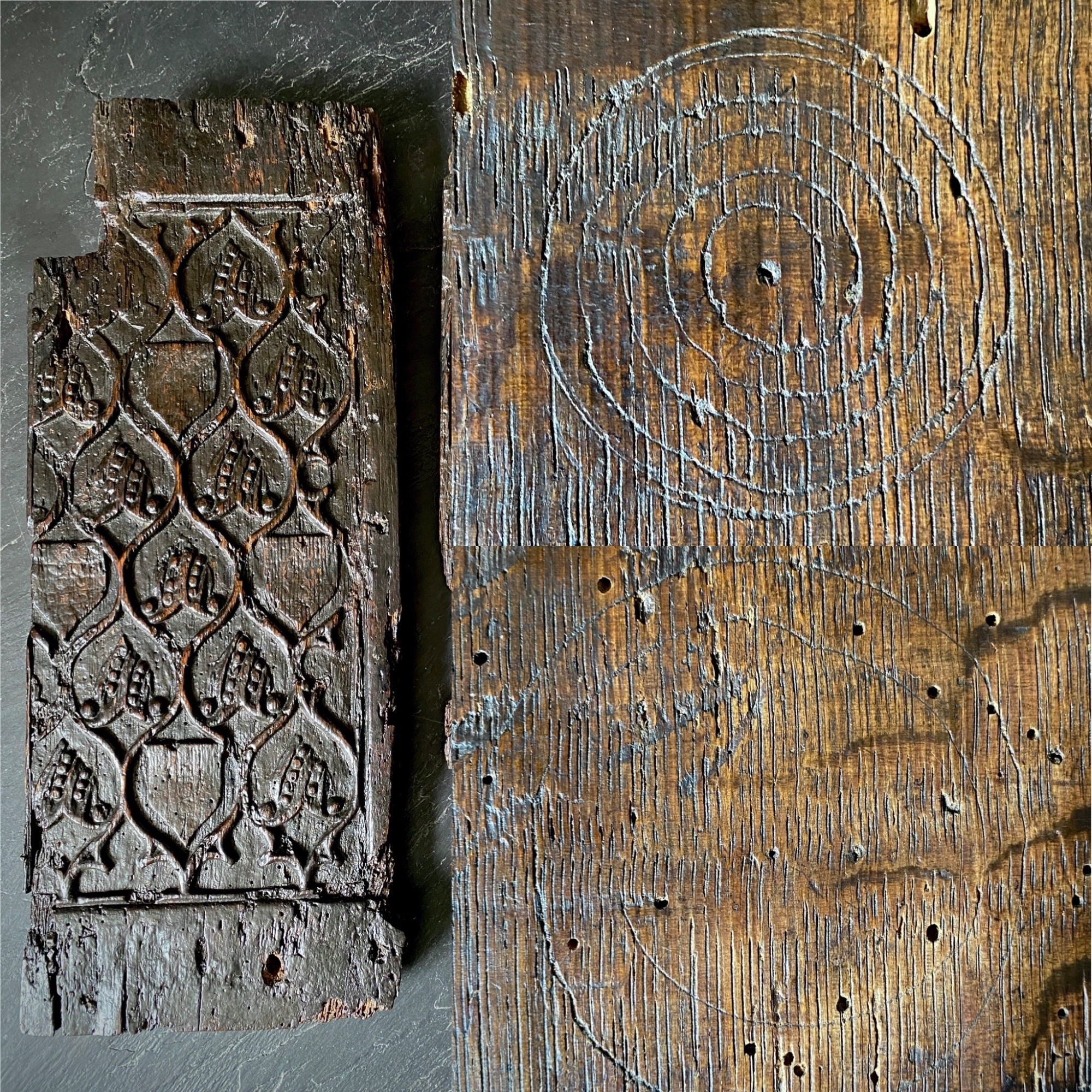
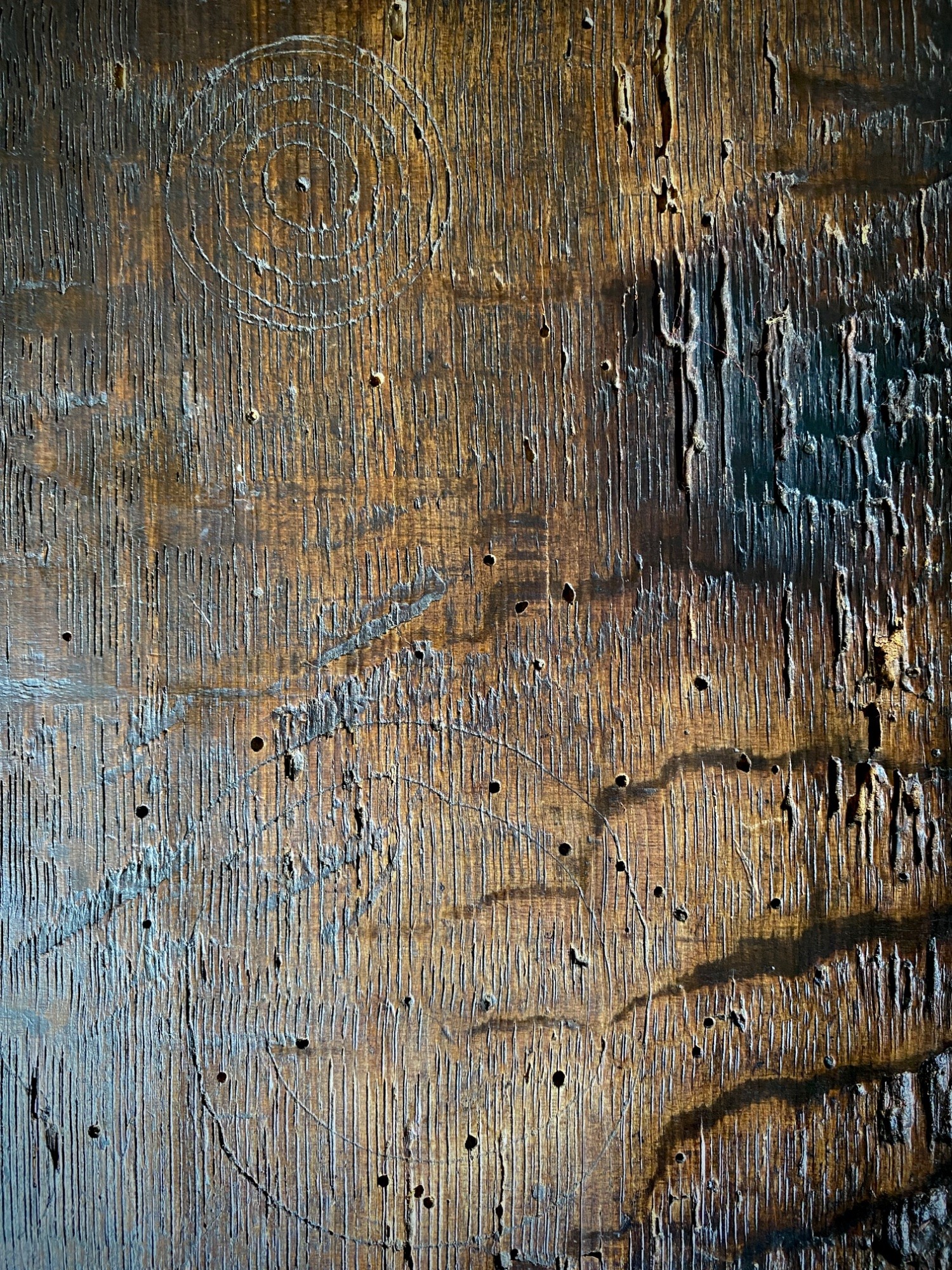
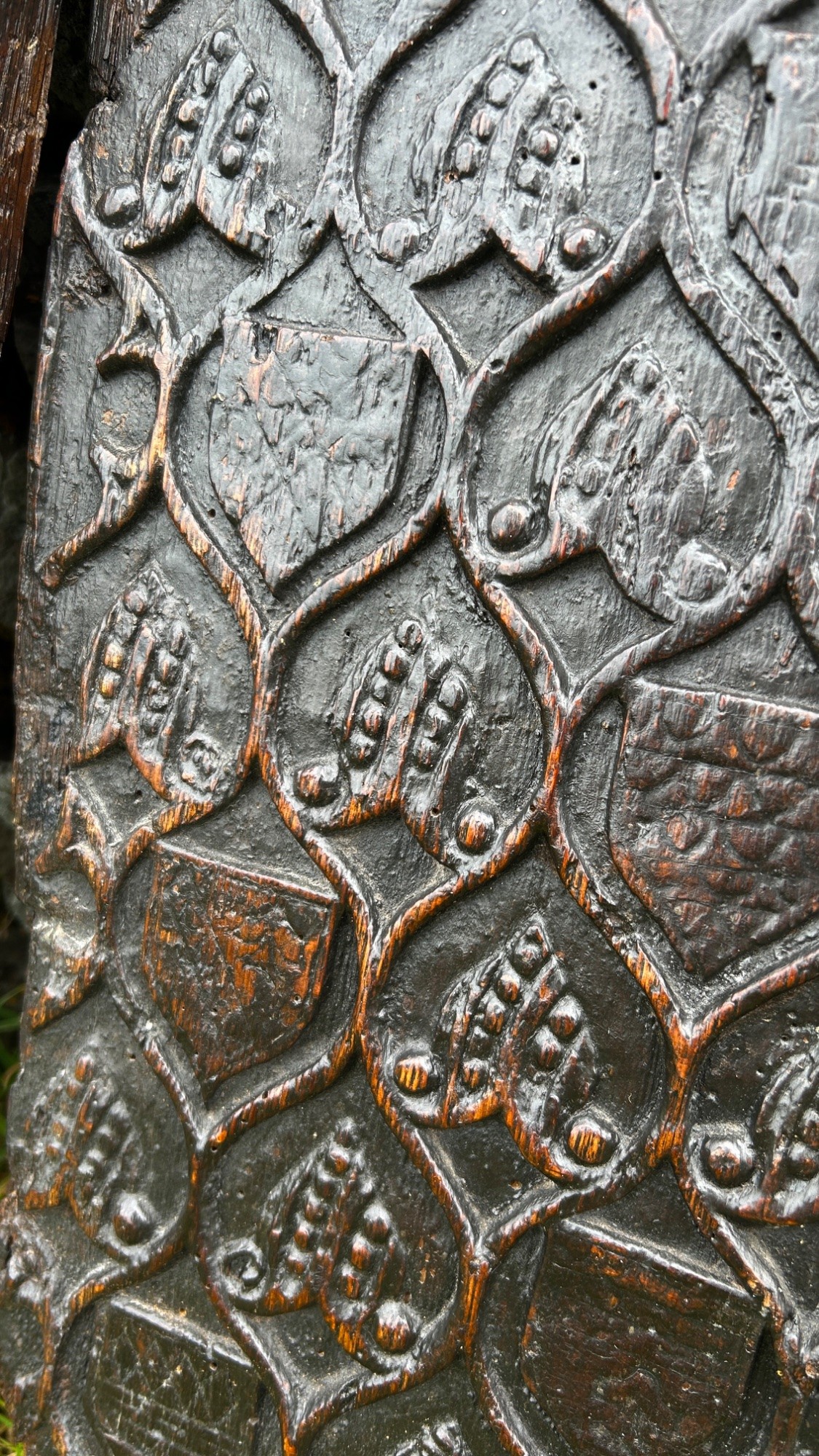
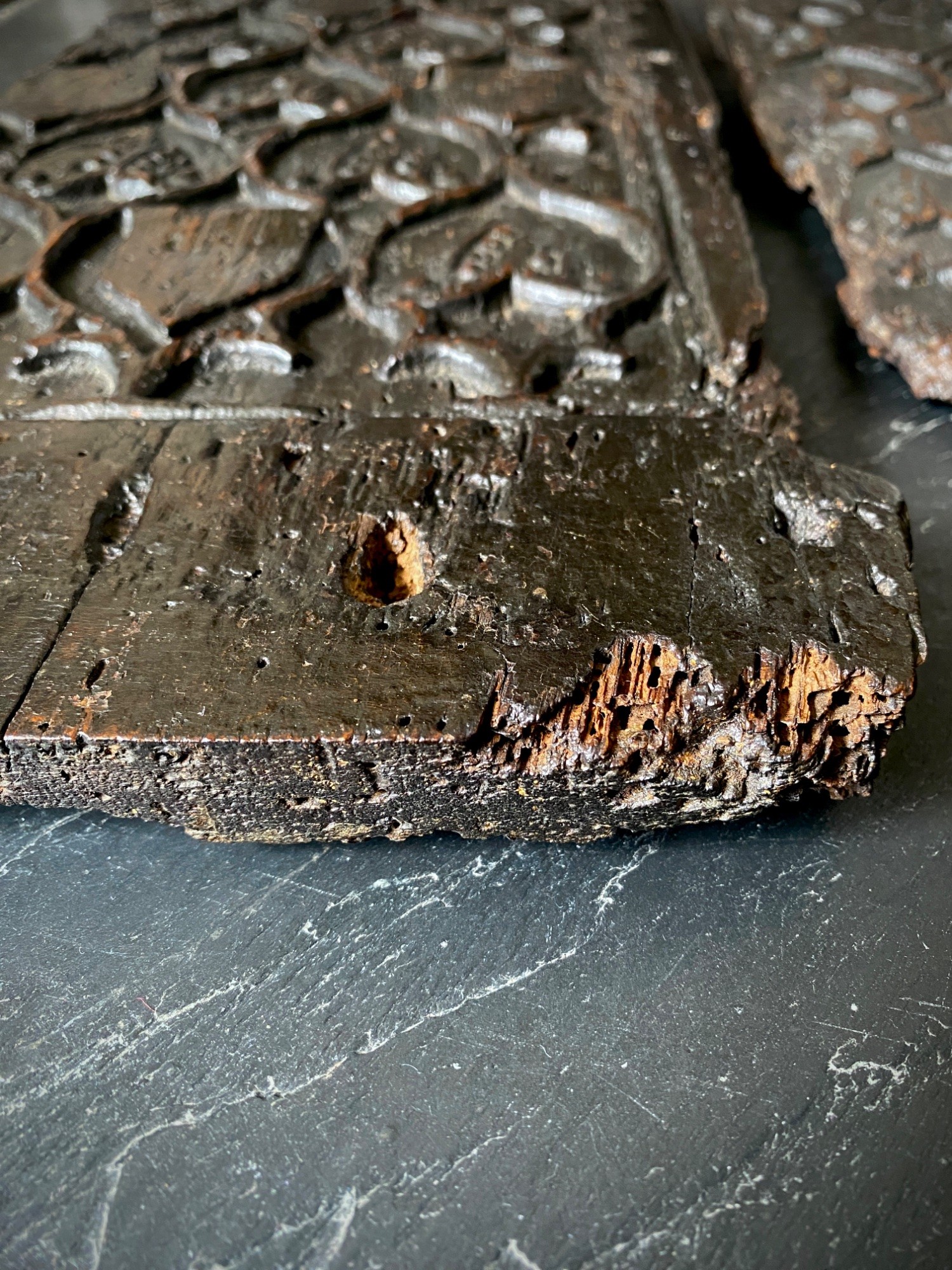
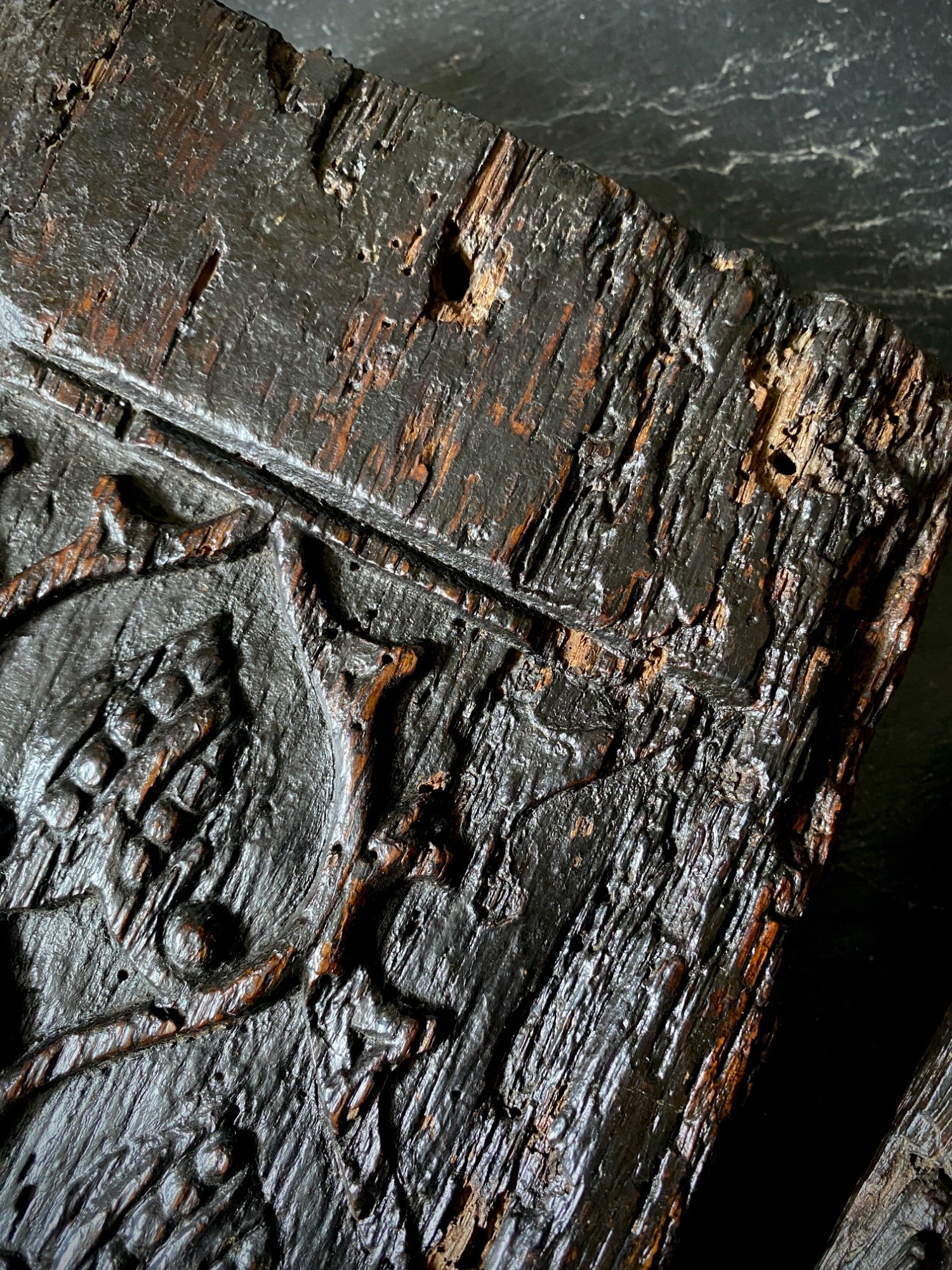
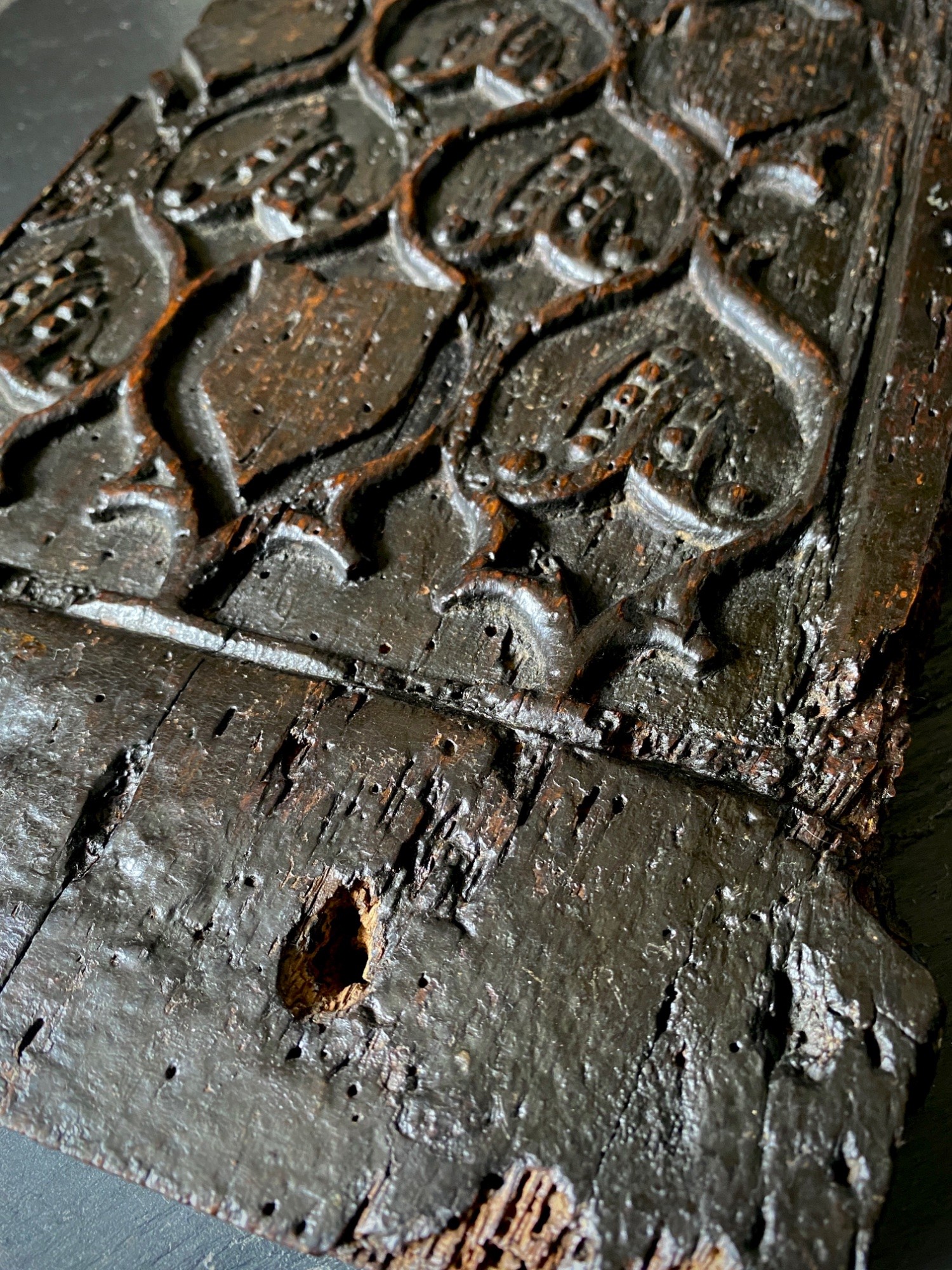
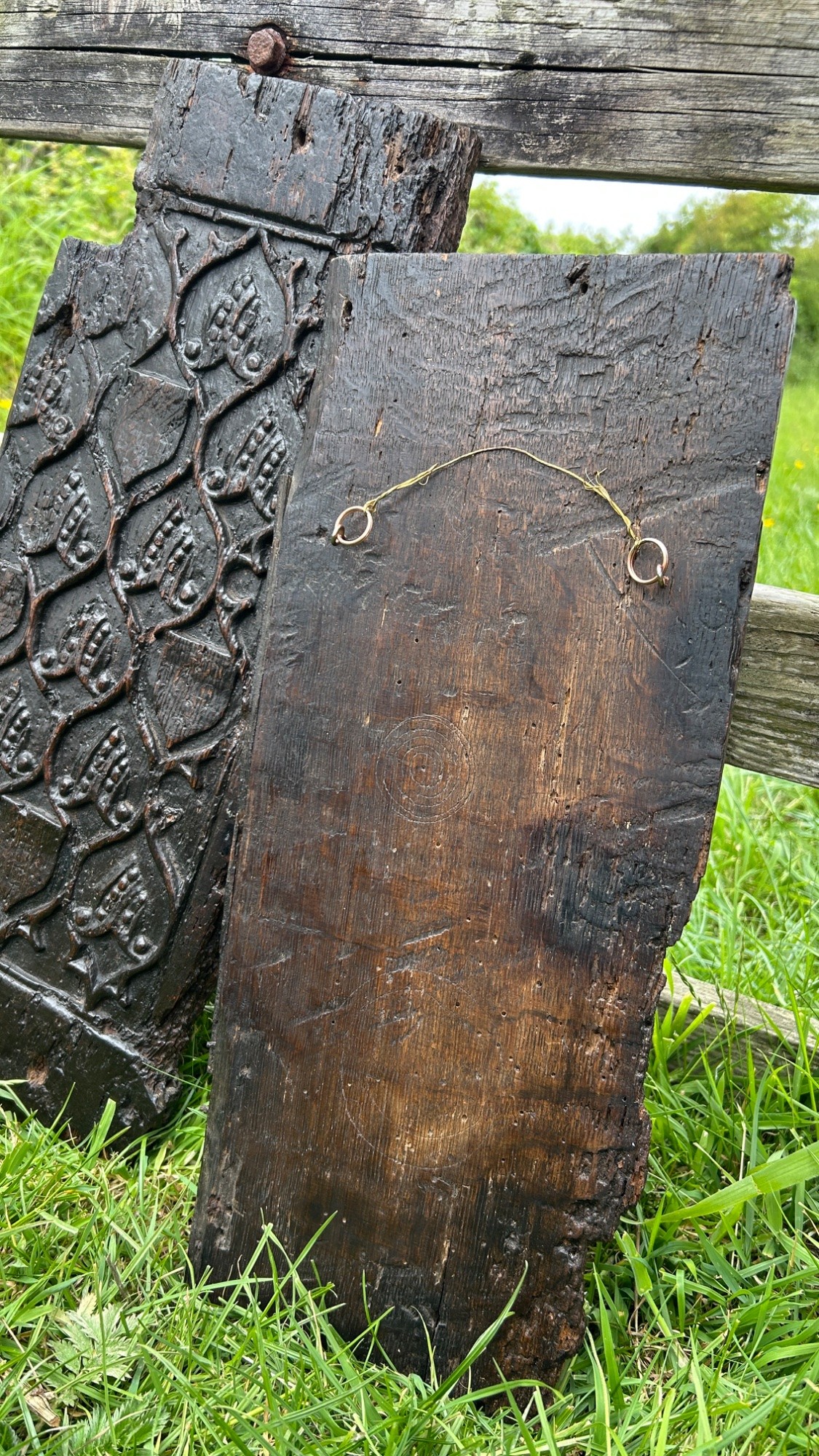
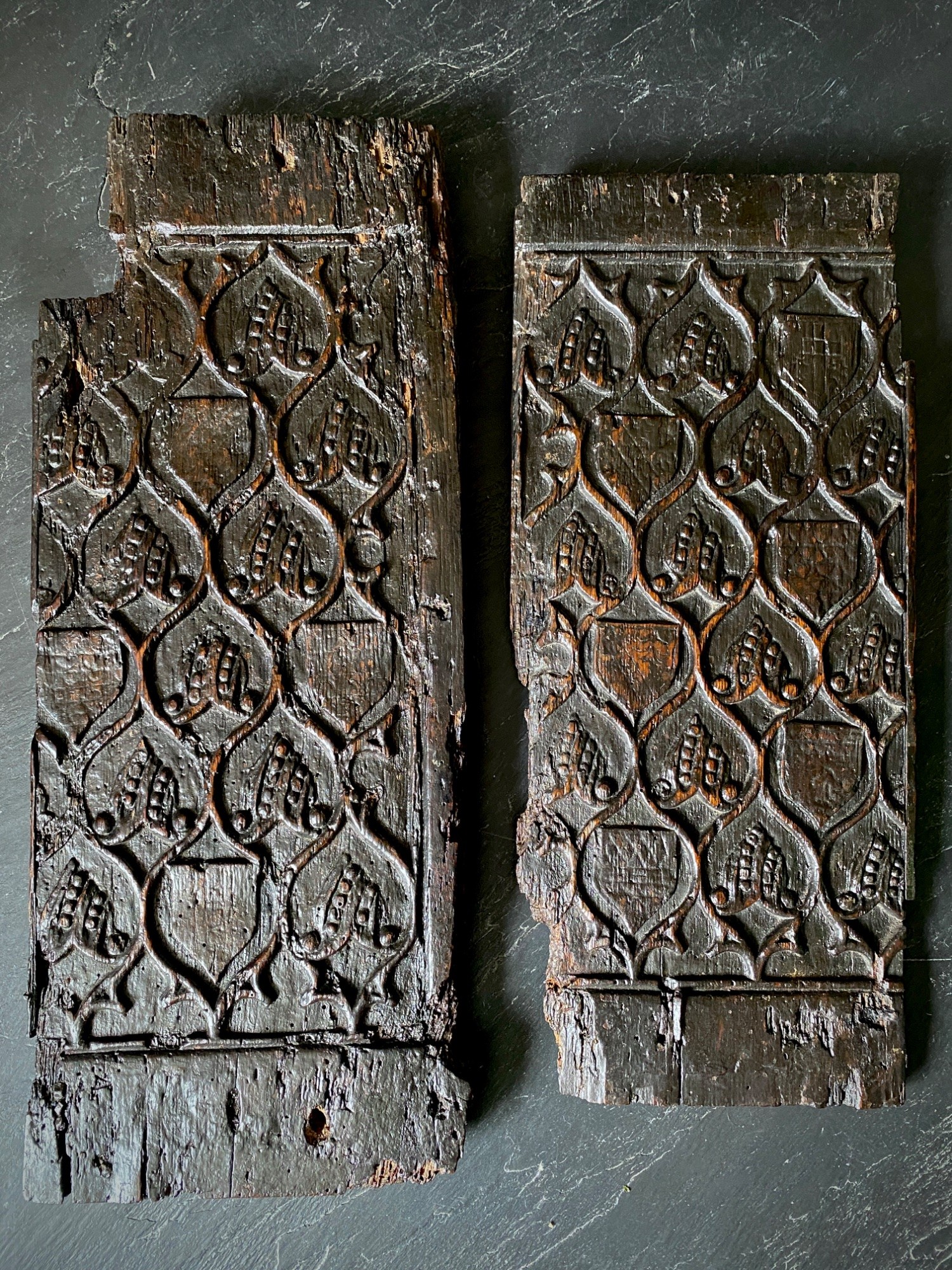
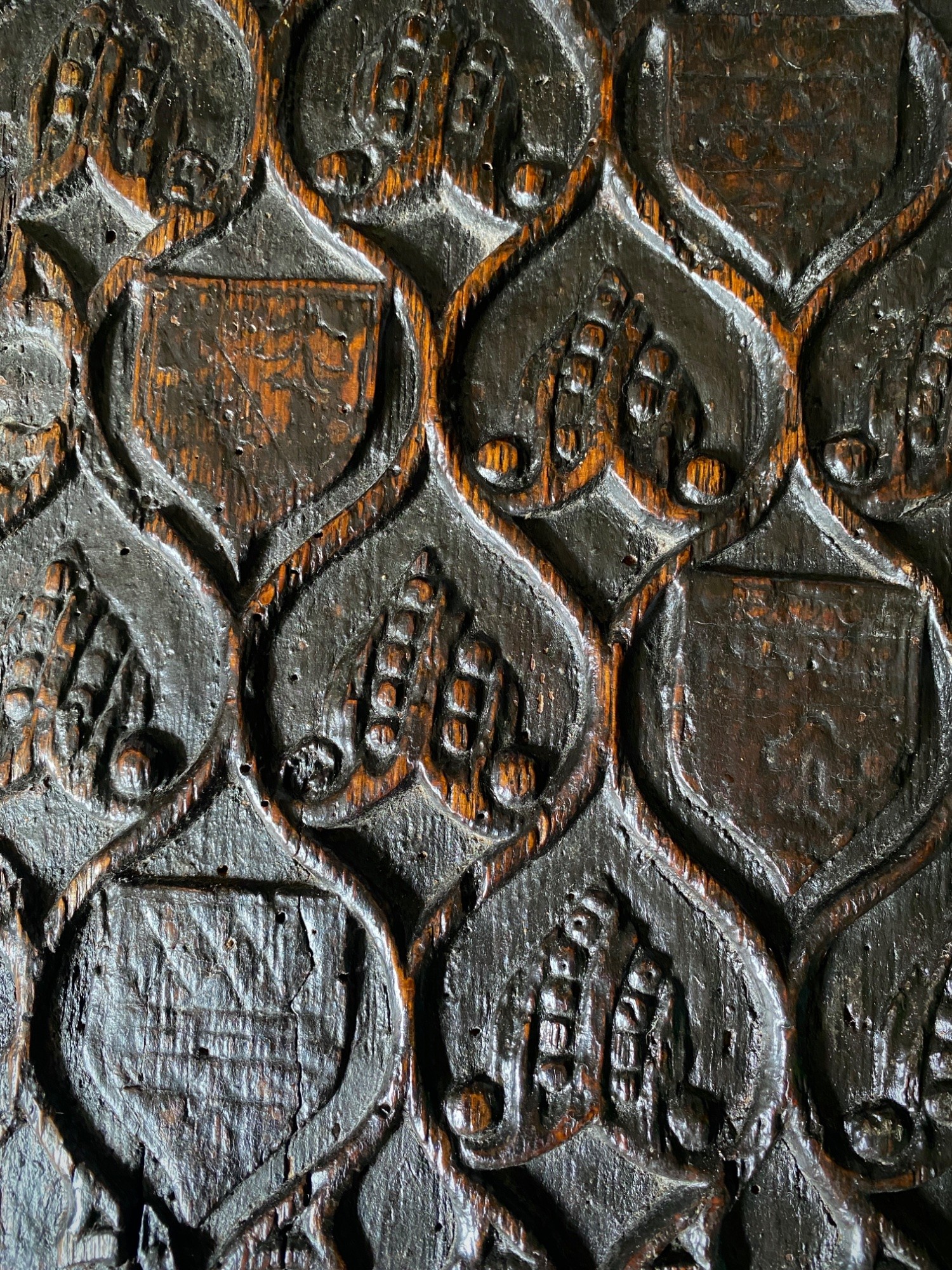
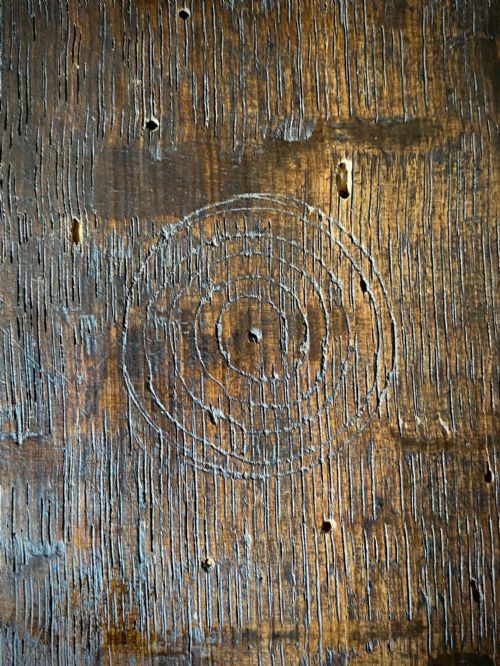
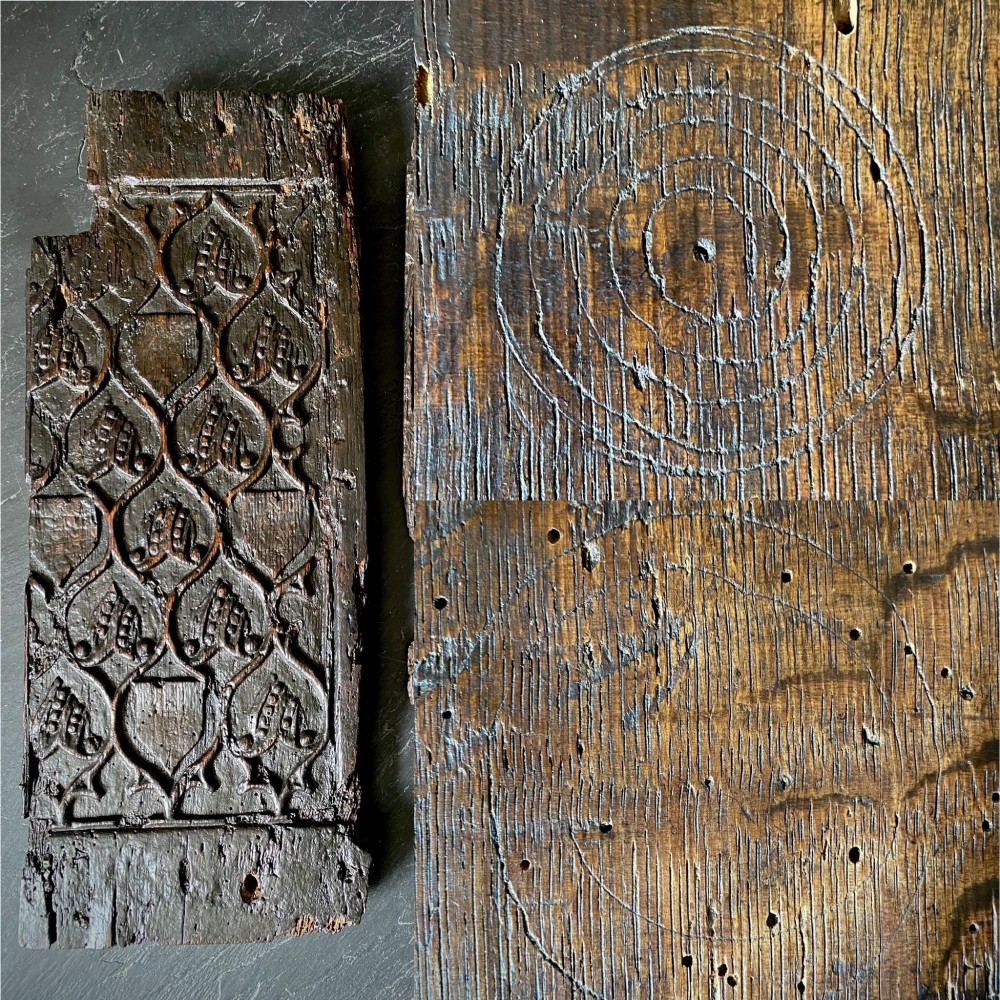
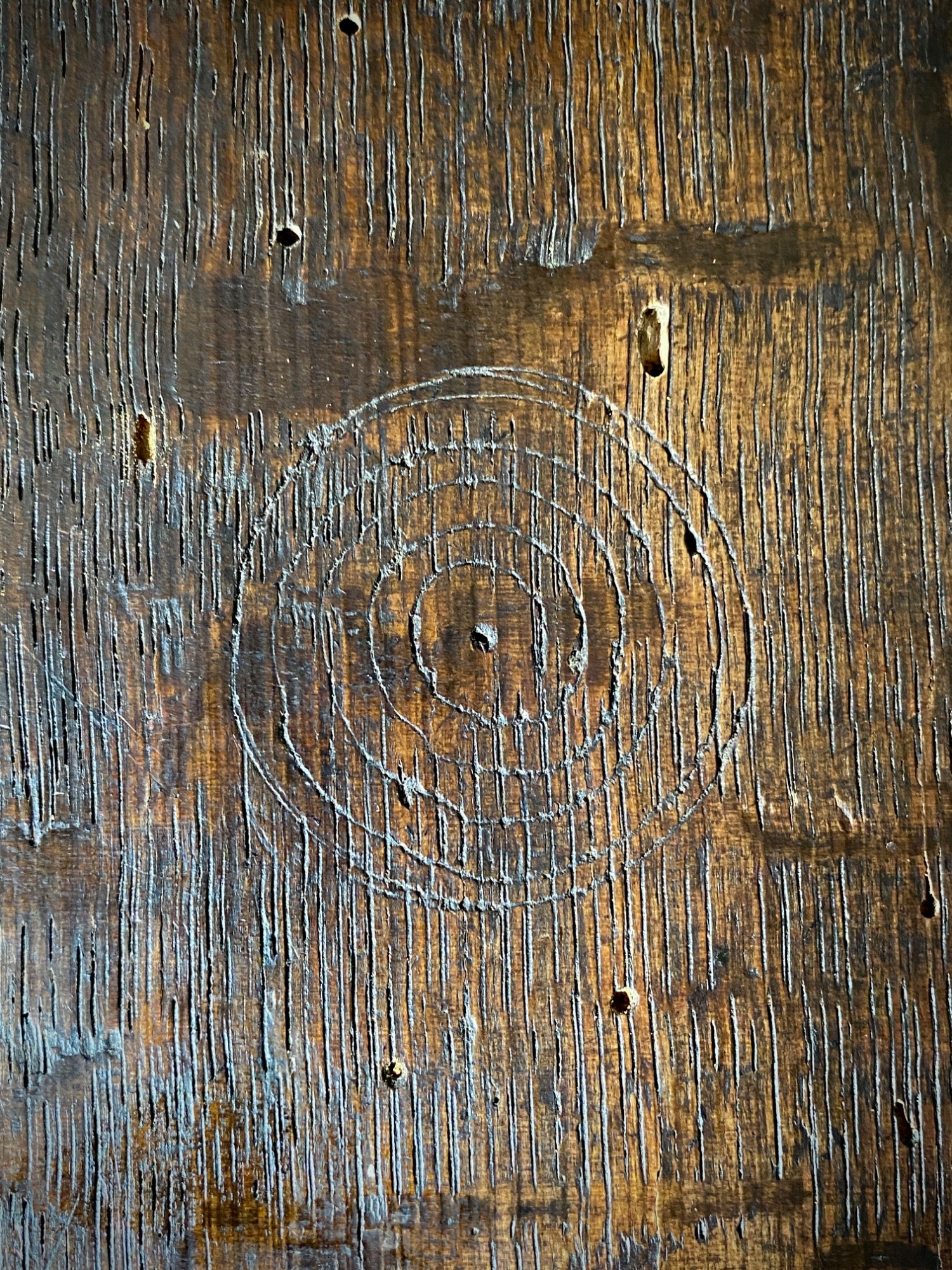
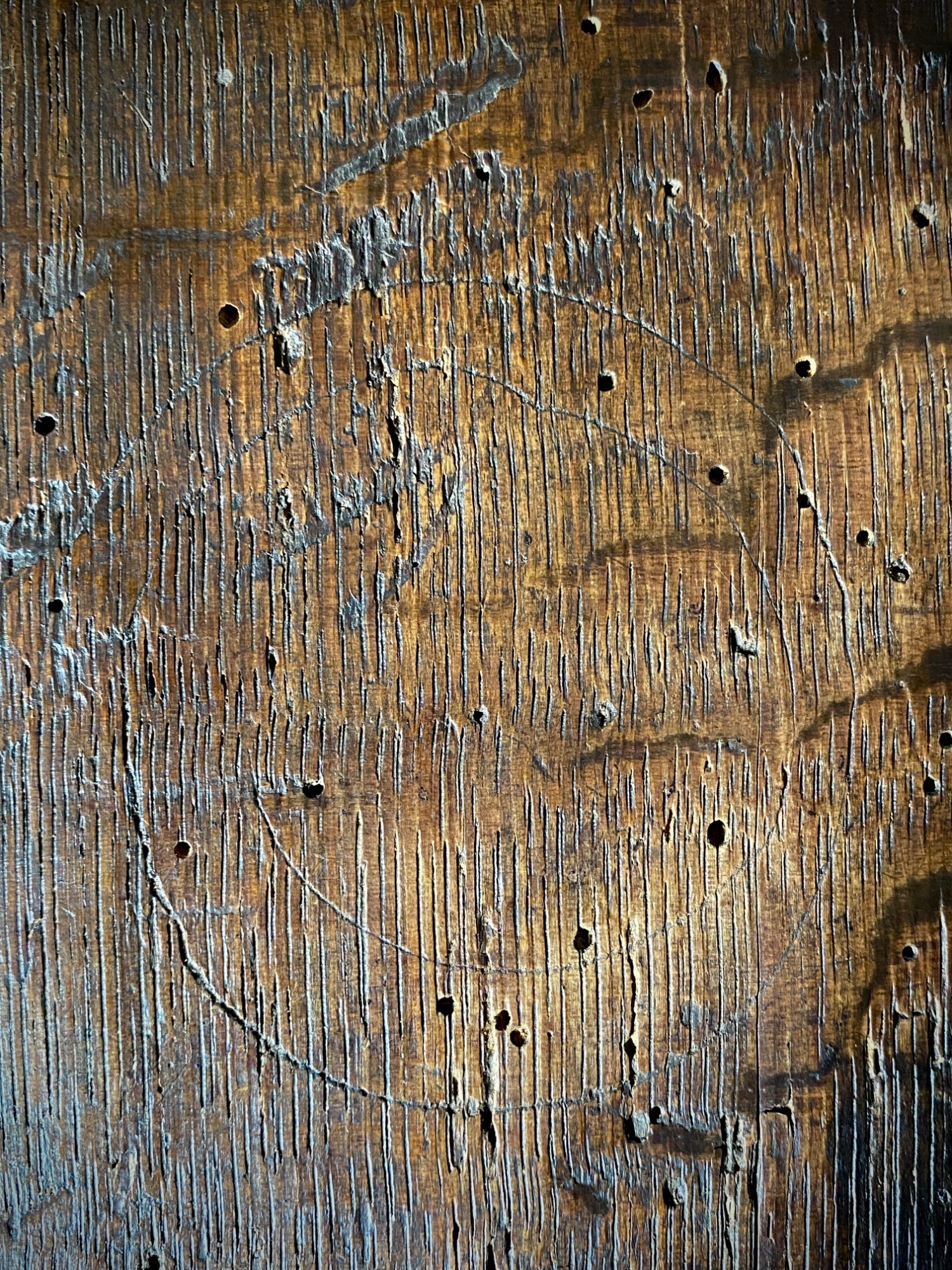
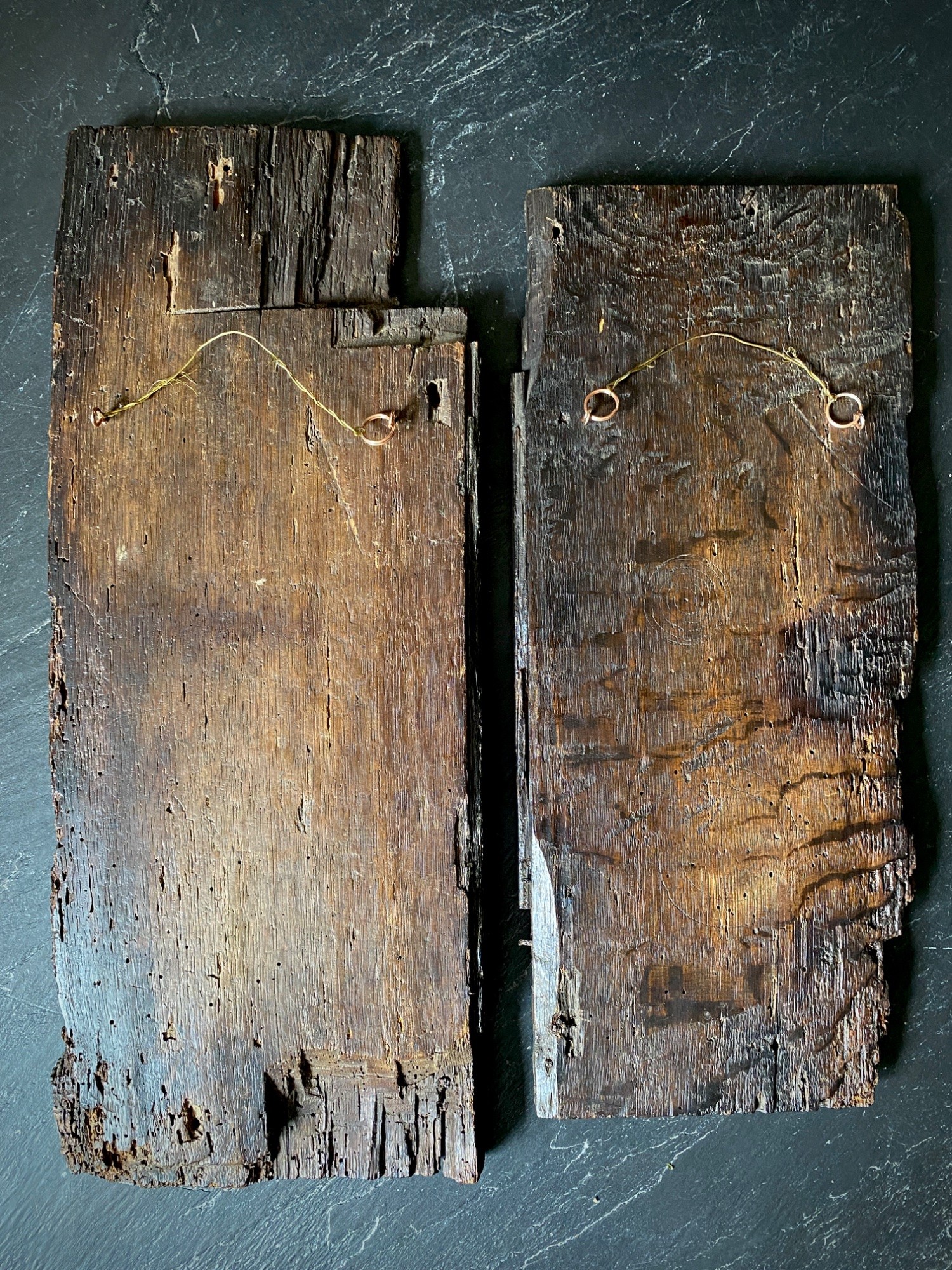
A rare pair of English 15th century oak heraldic panels, each depicting crests showing faint remnants of heraldry and crosses, accompanied by stylised clusters of fruit enclosed within blind tracery. On the reverse of one panel are two sets of concentric circles: one of a distinctive bullseye form or spiral, and another simpler example consisting of two circles.

Concentric circles and spirals are believed to have served an apotropaic function, intended to disorientate malevolent entities. Some historians have also suggested that they may represent the Five Holy Wounds of Christ or a protective eye.

Such marks have been recorded in church architecture and rural buildings throughout England, including Devon. These are particularly rare examples and, in the case of the bullseye or spiral motif, represent an especially early form of apotropaic marking.

My research has led me to another surviving example at Littlehempston Church, Devon. Although the church is believed to date from the 14th century, much of the present structure was constructed or rebuilt during the 15th century, corresponding closely with the date of these panels.

Within Littlehempston Church, near the south door, is a male effigy bearing concentric circles scored into the side of the head. Historians have interpreted these marks as having an apotropaic, or protective, purpose. It closely resembles the concentric circles found on the reverse of my panel.

I have also identified an example of the simpler two circle motif at the Archbishop’s Palace complex in Kent (Medieval Barn / Great Hall remains). A matching apotropaic mark appears on a section of wall within the lean-to portion of the barn and former Great Hall. The date of this structure also corresponds with the period of these panels.

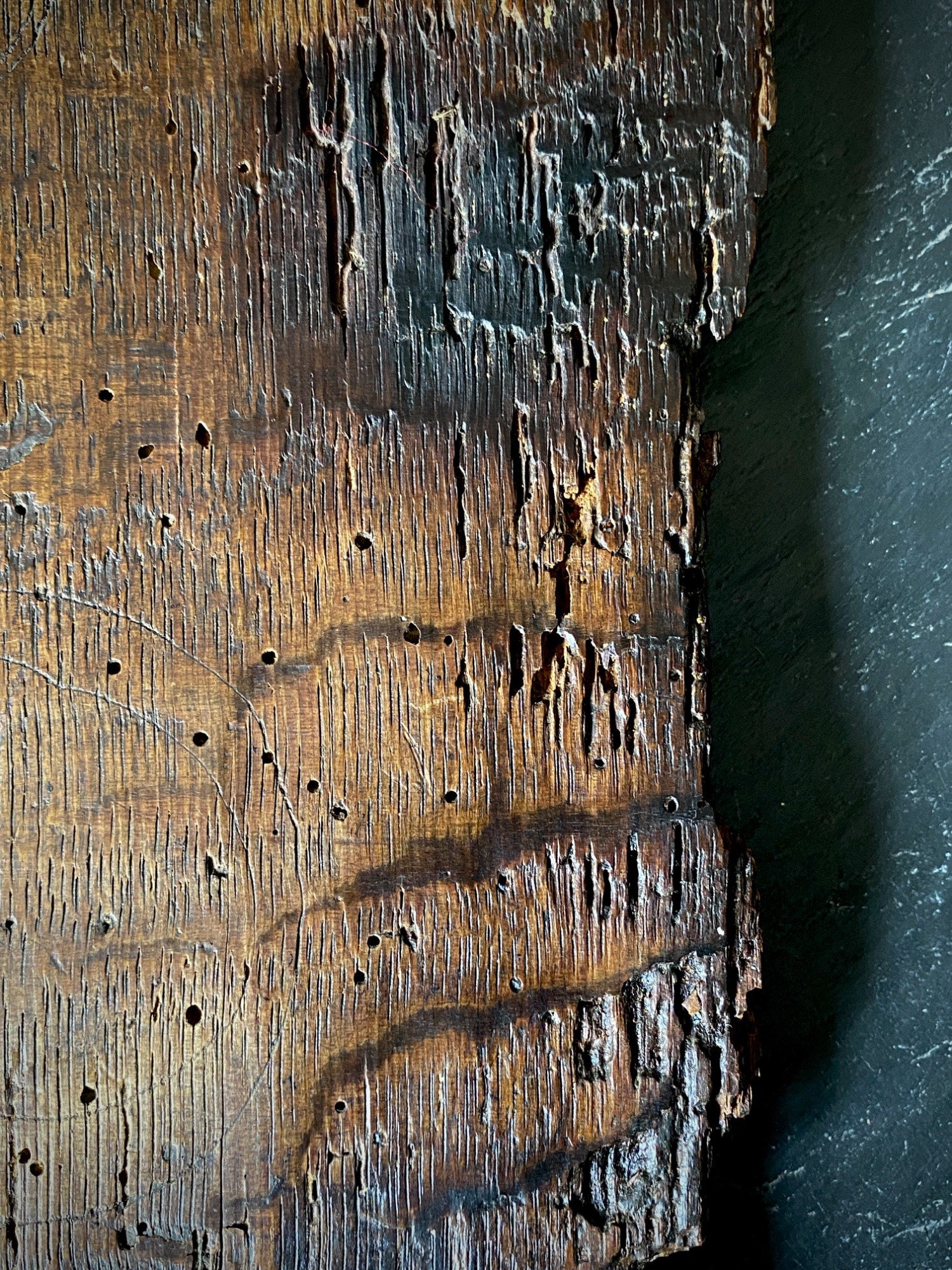
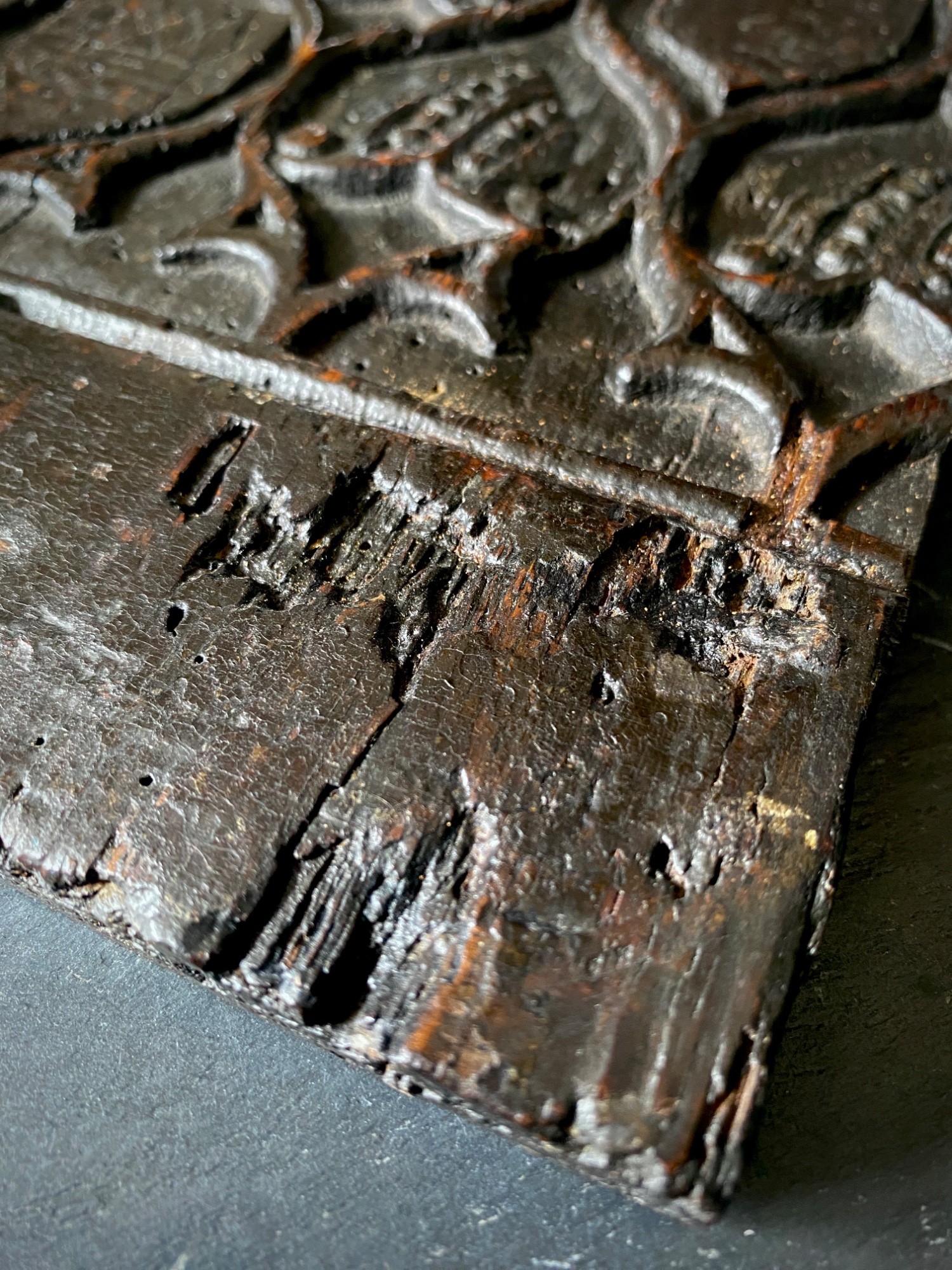
There is more. In addition to the concentric circles, traces of scorch marks can also be found on the panels.

The association between fire and protection from evil was central to many folk beliefs. It is widely thought that such scorch marks were deliberately created as part of apotropaic practices intended to avert evil influences or bad luck from buildings. Numerous examples survive in historic buildings throughout Britain.

These are exceptionally rare examples of medieval apotropaic protection marks and are among the earliest I have encountered.

Condition is good, commensurate with age and use. Structurally stable. Age related wear. Signs of old woodworm.

Measures: Panel (1) 42.5cm (L) x 18.5cm (W) x 1.5cm (D) Panel (2) 48cm (L) x 19cm (W) x 2cm (D)

Weighs: Panel (1) 500 grams & Panel (2) 1000 grams

Declaration

Folk and Fable Antiques has dated this Carved Oak Heraldic Panel to a period before the 16th Century.
Reference Numbers
Sellingantiques Reference
SA1239624
Description
A rare pair of English 15th century oak heraldic panels, each depicting crests showing faint remnants of heraldry and crosses, accompanied by stylised clusters of fruit enclosed within blind tracery.
“
On the reverse of one panel are two sets of concentric circles: one of a distinctive bullseye form or spiral, and another simpler example consisting of two circles.
Folk and Fable Antiques
fig 1. A carved dark oak panel featuring a repetitive geometric foliage pattern beside a detailed close-up of incised concentric circles and ritual marks on the wood grain.
fig 1. Extremely Rare Pair of English 15th Century Oak Heraldic Panels with Rare Concentric Circle Apotropaic Witch Marks & Scorch Marks

Concentric circles and spirals are believed to have served an apotropaic function, intended to disorientate malevolent entities. Some historians have also suggested that they may represent the Five Holy Wounds of Christ or a protective eye.
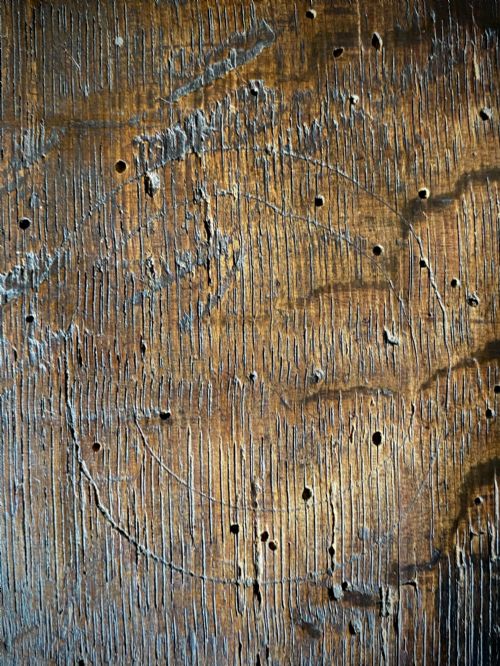
fig 2. A carved dark oak panel featuring a repetitive geometric foliage pattern beside a detailed close-up of incised concentric circles and ritual marks on the wood grain.
fig 2. Extremely Rare Pair of English 15th Century Oak Heraldic Panels with Rare Concentric Circle Apotropaic Witch Marks & Scorch Marks

Such marks have been recorded in church architecture and rural buildings throughout England, including Devon. These are particularly rare examples and, in the case of the bullseye or spiral motif, represent an especially early form of apotropaic marking.
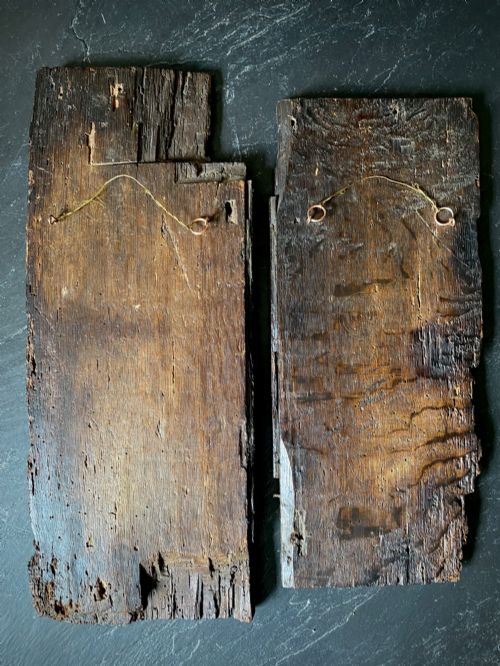
fig 3. A carved dark oak panel featuring a repetitive geometric foliage pattern beside a detailed close-up of incised concentric circles and ritual marks on the wood grain.
fig 3. Extremely Rare Pair of English 15th Century Oak Heraldic Panels with Rare Concentric Circle Apotropaic Witch Marks & Scorch Marks

My research has led me to another surviving example at Littlehempston Church, Devon. Although the church is believed to date from the 14th century, much of the present structure was constructed or rebuilt during the 15th century, corresponding closely with the date of these panels.
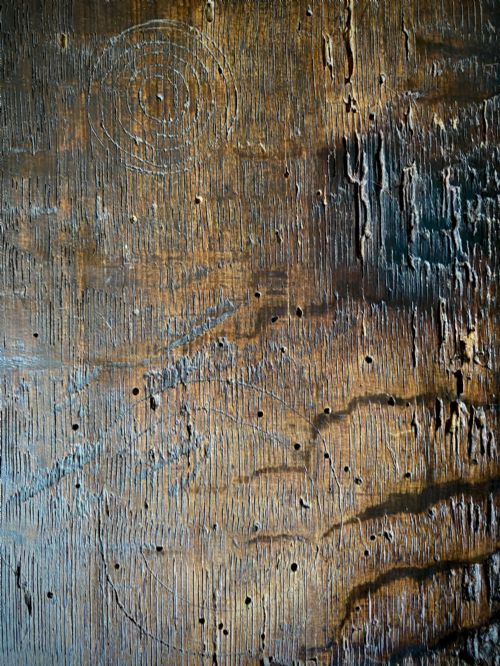
fig 4. A carved dark oak panel featuring a repetitive geometric foliage pattern beside a detailed close-up of incised concentric circles and ritual marks on the wood grain.
fig 4. Extremely Rare Pair of English 15th Century Oak Heraldic Panels with Rare Concentric Circle Apotropaic Witch Marks & Scorch Marks

Within Littlehempston Church, near the south door, is a male effigy bearing concentric circles scored into the side of the head. Historians have interpreted these marks as having an apotropaic, or protective, purpose. It closely resembles the concentric circles found on the reverse of my panel.
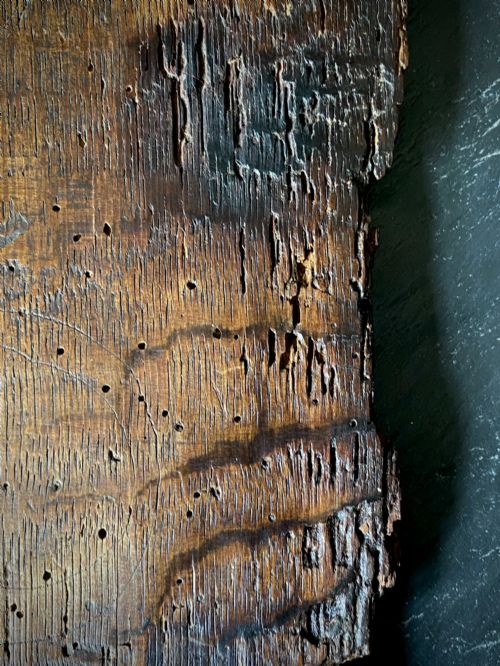
fig 5. A carved dark oak panel featuring a repetitive geometric foliage pattern beside a detailed close-up of incised concentric circles and ritual marks on the wood grain.
fig 5. Extremely Rare Pair of English 15th Century Oak Heraldic Panels with Rare Concentric Circle Apotropaic Witch Marks & Scorch Marks

I have also identified an example of the simpler two circle motif at the Archbishop’s Palace complex in Kent (Medieval Barn / Great Hall remains). A matching apotropaic mark appears on a section of wall within the lean-to portion of the barn and former Great Hall. The date of this structure also corresponds with the period of these panels.
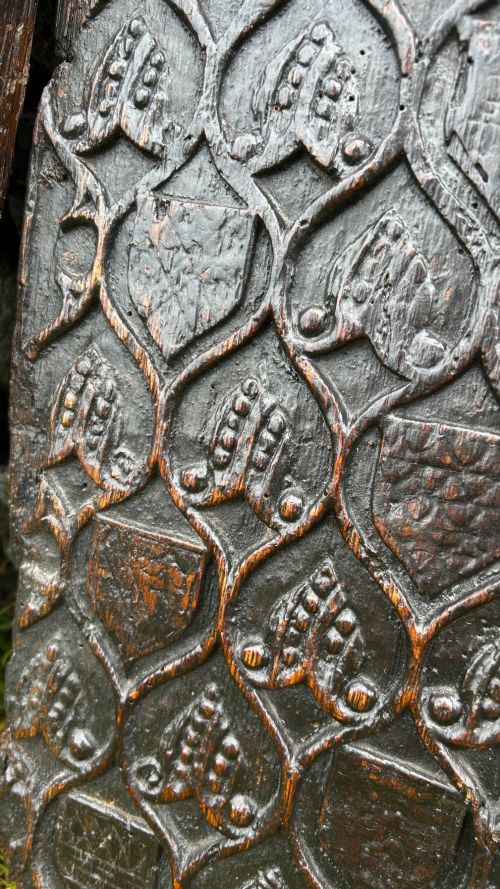
fig 6. A carved dark oak panel featuring a repetitive geometric foliage pattern beside a detailed close-up of incised concentric circles and ritual marks on the wood grain.
fig 6. Extremely Rare Pair of English 15th Century Oak Heraldic Panels with Rare Concentric Circle Apotropaic Witch Marks & Scorch Marks

There is more. In addition to the concentric circles, traces of scorch marks can also be found on the panels.

The association between fire and protection from evil was central to many folk beliefs. It is widely thought that such scorch marks were deliberately created as part of apotropaic practices intended to avert evil influences or bad luck from buildings. Numerous examples survive in historic buildings throughout Britain.
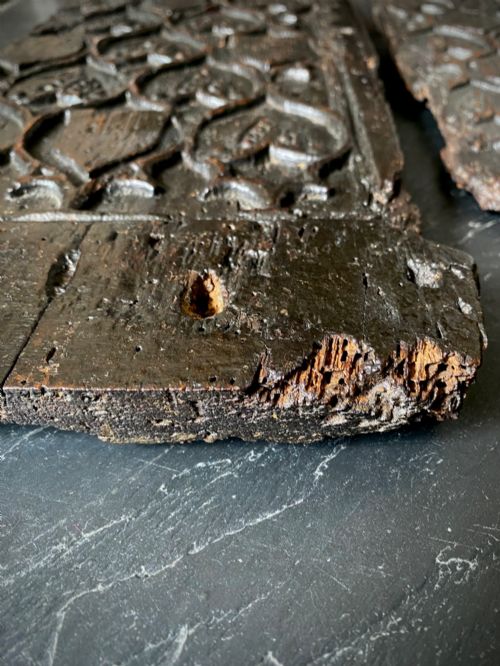
fig 7. A carved dark oak panel featuring a repetitive geometric foliage pattern beside a detailed close-up of incised concentric circles and ritual marks on the wood grain.
fig 7. Extremely Rare Pair of English 15th Century Oak Heraldic Panels with Rare Concentric Circle Apotropaic Witch Marks & Scorch Marks

These are exceptionally rare examples of medieval apotropaic protection marks and are among the earliest I have encountered.

Condition is good, commensurate with age and use. Structurally stable. Age related wear. Signs of old woodworm.

Measures: Panel (1) 42.5cm (L) x 18.5cm (W) x 1.5cm (D) Panel (2) 48cm (L) x 19cm (W) x 2cm (D)

Weighs: Panel (1) 500 grams & Panel (2) 1000 grams

Date of Manufacture

Folk and Fable Antiques has dated this Carved Oak Heraldic Panel to a period before the 16th Century.
Reference Numbers
Sellingantiques Ref
SA1239624
Folk and Fable Antiques
Sellingantiques verified Since Oct 2026
Dealer Profile

You can view the stock and full dealer information on the Folk and Fable Antiques Profile Page
PDF SHARE
SAVE
A carved dark oak panel featuring a repetitive geometric foliage pattern beside a detailed close-up of incised concentric circles and ritual marks on the wood grain.
1 / 14
Archive I A carved dark oak panel featuring a repetitive geometric foliage pattern beside a detailed close-up of incised concentric circles and ritual marks on the wood grain.

Extremely Rare Pair of English 15th Century Oak Heraldic Panels with Rare Concentric Circle Apotropaic Witch Marks & Scorch Marks
Archive II A carved dark oak panel featuring a repetitive geometric foliage pattern beside a detailed close-up of incised concentric circles and ritual marks on the wood grain. View II
Archive III A carved dark oak panel featuring a repetitive geometric foliage pattern beside a detailed close-up of incised concentric circles and ritual marks on the wood grain. View III
Archive IV A carved dark oak panel featuring a repetitive geometric foliage pattern beside a detailed close-up of incised concentric circles and ritual marks on the wood grain. View IV
Archive V A carved dark oak panel featuring a repetitive geometric foliage pattern beside a detailed close-up of incised concentric circles and ritual marks on the wood grain. View V
Archive VI A carved dark oak panel featuring a repetitive geometric foliage pattern beside a detailed close-up of incised concentric circles and ritual marks on the wood grain. View VI
Archive VII A carved dark oak panel featuring a repetitive geometric foliage pattern beside a detailed close-up of incised concentric circles and ritual marks on the wood grain. View VII
Archive VIII A carved dark oak panel featuring a repetitive geometric foliage pattern beside a detailed close-up of incised concentric circles and ritual marks on the wood grain. View VIII
Archive IX A carved dark oak panel featuring a repetitive geometric foliage pattern beside a detailed close-up of incised concentric circles and ritual marks on the wood grain. View IX
Archive X A carved dark oak panel featuring a repetitive geometric foliage pattern beside a detailed close-up of incised concentric circles and ritual marks on the wood grain. View X
Archive XI A carved dark oak panel featuring a repetitive geometric foliage pattern beside a detailed close-up of incised concentric circles and ritual marks on the wood grain. View XI
Archive XII A carved dark oak panel featuring a repetitive geometric foliage pattern beside a detailed close-up of incised concentric circles and ritual marks on the wood grain. View XII
Archive XIII A carved dark oak panel featuring a repetitive geometric foliage pattern beside a detailed close-up of incised concentric circles and ritual marks on the wood grain. View XIII
Archive XIV A carved dark oak panel featuring a repetitive geometric foliage pattern beside a detailed close-up of incised concentric circles and ritual marks on the wood grain. View XIV
Enlarged Archival View
Telephone 07788216610
Location
United Kingdom
Verified Since Oct 2026
Items For Sale 14
Folk and Fable Antiques
Verified Since Oct 2026
View Dealer Info
Location: United Kingdom
Verified
Oct 2026
For Sale
14
A carved dark oak panel featuring a repetitive geometric foliage pattern beside a detailed close-up of incised concentric circles and ritual marks on the wood grain.
Extremely Rare Pair Of English 15th Century Oak Heraldic Panels With Rare Concentric Circle Apotropaic Witch Marks & Scorch Marks
Ref: SA1239624
A carved dark oak panel featuring a repetitive geometric foliage pattern beside a detailed close-up of incised concentric circles and ritual marks on the wood grain.
Detail View 1
Detail View 2
Detail View 3
Detail View 4
Detail View 5
Detail View 6
Detail View 7
Detail View 8
Detail View 9
Detail View 10
Detail View 11
Detail View 12
Detail View 13
Archival Detail
Every single antique dealer on our platform is individually approved by our internal team. We verify their professional trade history, ethical standards, and photographic quality to ensure a secure, high-standard buying environment. Upon joining, every dealer agrees to a strict 9-point code of conduct. While issues can occasionally arise, our dealers typically resolve them swiftly and directly with the buyer. In fact, since our founding in 2002, Sellingantiques has only had to step in to help resolve an issue on roughly five occasions—a true testament to the quality of our dealers and their dedication to your happiness.
Our dealers are highly experienced in packing and shipping fragile, high-value antiques. Because you are in direct contact with the dealer, you will be able to easily go through all available shipping and insurance options together to ensure your item arrives safely.
Antiques are the ultimate green purchase. By choosing historical pieces over newly manufactured goods, you completely eliminate the carbon footprint of modern mass production while preserving exceptional, timeless craftsmanship.
Written by Sellingantiques from the dealer’s photographs and listing
  • ObjectWall Panels
  • PeriodPre 16th century
  • StyleMedieval Gothic
  • MaterialOak
  • ColourDark Brown
  • MotifsDiaper pattern relief carving, Concentric circle apotropaic marks, Scorch marks

This pair of English 15th century oak heraldic wall panels belongs to the medieval Gothic style. The dark brown timber displays diaper pattern relief carving, crests with faint remnants of heraldry and crosses, stylised clusters of fruit enclosed within blind tracery, incised concentric circles, scorch marks, and old woodworm holes. Panel one measures 42.5cm by 18.5cm by 1.5cm, and panel two measures 48cm by 19cm by 2cm. Collectors can display these structural items on a narrow wall space within a study, hallway, or living area. The front surface of each panel presents dense repetitive geometric foliage work, while the reverse reveals ritual marks scored directly into the vertical wood grain. These historical architectural artifacts suit traditional interiors focused on early English folk traditions and protective apotropaic symbols.

During the 15th century, carved oak panels were produced for ecclesiastical buildings, manor houses, and civic structures, often incorporating heraldic motifs, organic diaper patterns, or symbolic devices to denote ownership and status.

Medieval panels were typically hand-carved from dense, native heartwood oak using gouges and chisels, often featuring mortise-and-tenon framing or hand-hewn boards showing tool marks and natural grain contraction.

Genuine period pieces exhibit irregular hand-carving, natural shrinkage across the grain, iron gall ink or ritual apotropaic markings, and deep patina resulting from centuries of oxidisation and handling.

These architectural fragments can be mounted as framed wall art, displayed on easel stands within open shelving, or styled alongside minimalist contemporary furnishings to create a stark textural contrast.

Maintain a stable humidity level, dust gently with a soft dry brush, avoid water or chemical cleaners, and apply a thin layer of natural beeswax sparingly to protect the patinated timber.
items
Add keywords to the filter
Price
£100
£250000
Era
Period
Style
Material
Origin
Stock Location
Recently Added
Online Payments
Categories