57,510  PAGES BROWSED TODAY PAGES TODAY • 152 ANTIQUES UPLOADED TODAYNEW ARRIVALS
GIFTS
152 ITEMS ADDED TODAY
Sort Order
Items Per Page
Browse Categories
Sort order
Relevant Links
Items per page
ID #SA1238035
FOR SALE
£380
Email Phone
Save
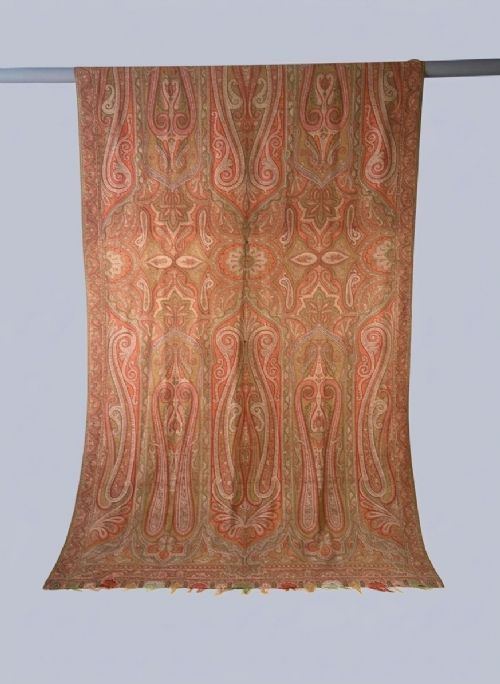
19th Century Scottish Paisley Wool Shawl
For sale by The English Interior
for sale €445     $483
£380
The English Interior

The English Interior

Sellingantiques Verified Since Jul 2023
Browse dealers 74 items
  • About Us
    Specialist dealer in 17th century to the 20th century fine art, furniture and decorative antiques for your home.
Relevant Links
Id #SA1238035
PDF SHARE
SAVE

19th Century Scottish Paisley Wool Shawl

19th century
Description

A particularly fine and vibrant 19th century Scottish Paisley Shawl.

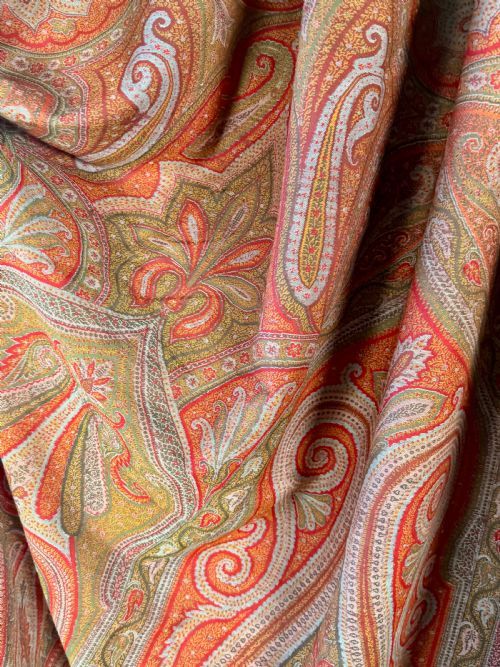
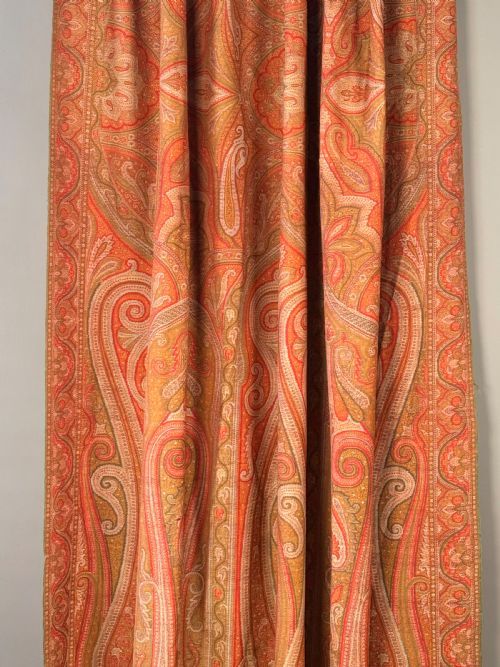
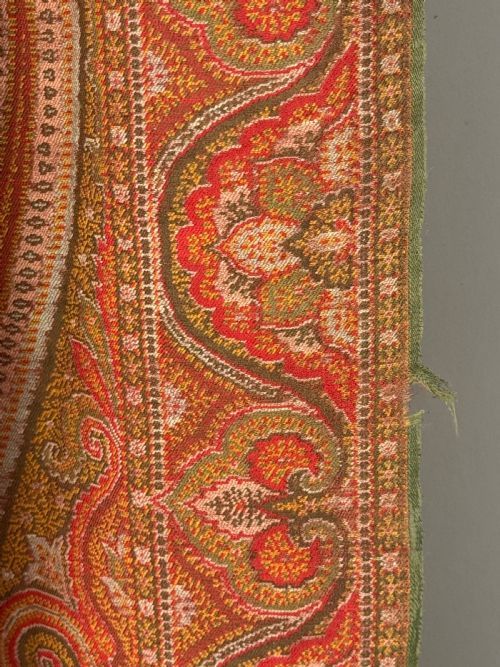
Wonderful scrolling paisley design in oranges russets and greens
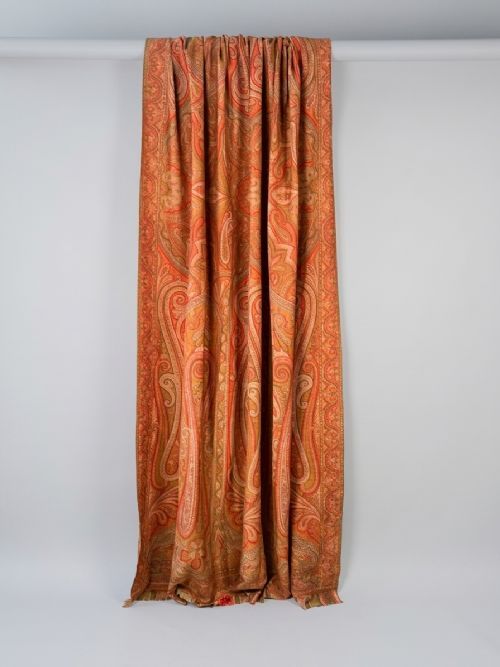
Of huge size over 160cm x 360cm so a huge amount of material for projects ( cushions, lampshades etc)

The shawl is In good age related condition, so I do think that not may also be possible to conserve it as the real of damage are all small.

There are approximately 6 to 8 areas of damage, and these are mostly to centre where has been folded
The Paisley Shawls have been for long regarded as masterpieces of design and weaving, worthy to rank with the best tapestries, and greater than the finest brocades. It is to be regretted, therefore, that there is so much misapprehension and even ignorance among their admirers, and that the art and craft of their manufacture is almost forgotten. The generation that made them is dead and gone, those that knew them a little are almost gone, and only a modicum of knowledge of the technique of both design and weaving has survived. Even in 1903, Matthew Blair in " The Paisley Shawl" deplored the loss of all information regarding the bead-lam lappet, the deil or douge, and other strangely named objects. We cannot hope to compensate for this loss. We can only offer a brief sketch of the evolution and history of the Paisley Shawl for the benefit of those whose knowledge is even more imperfect than ours.
The production of " Paisley " shawls in Paisley lasted only seventy years, but the industry had its origin very much further back than the weaving of the first shawl about 1800. The shawls of Kashmir which were copied by the Paisley weavers were known to the Roman Caesars. Their designs are prehistoric.
Kashmir made shawls which were famous all over Asia from very early times ; but, though many went to the Russian nobles, few reached Western Europe till the latter part of the eighteenth century. Napoleon's officers are said to have been the means of introducing them from Egypt to France. A famous beauty, Mme Emile Gaudin, made them fashionable, and a regular trade in them sprang up with the Levant. The British Fleet was active in the Mediterranean about that time, which may explain the arrival of Kashmir shawls in this country.

A Kashmir shawl might take three people more than a year to make, so fine and so laborious were the methods of embroidery and hand weaving used. They were consequently very valuable, and such shawls became the property of princes and nobles, and were commonly given as royal gifts. The specimens which reached Europe fell into similar hands. A French trade journal Le Cachemirien, of designs copied from Indian examples cites the owners of the shawls - the King of the Belgians, the Due de Berri, and others. It was the nobility of Britain who acquired them too. In spite of their high price, the demand for Kashmir shawls became so great that it could hardly be satisfied. Then, inevitably, a cheaper variety was desired. Efforts to copy the Indian examples were made. These soon succeeded, and eventually the Indian trade was almost entirely superseded. This happened first in France, where Paris and Lyons became the centres of manufacture, next in Norwich and Edinburgh, and only lastly in Paisley, where about 1800 a Mr Paterson made the first attempt to copy an Indian shawl.

Paisley was important as a weaving town from Stewart times, and had profited from the teaching of Flemish weavers to become one of the leading producers of cloth in Scotland. In the eighteenth century its silks and gauzes eclipsed Spitalfields for a time ; it also had a name for fine lawn and for damask. Its weavers had therefore a command of the technique necessary before the copying of Indian designs could be attempted. But even the technique of damask weaving, which used a harness " draw-loom " to produce patterns, was inadequate for the task

Physical Dimensions
Height
360cm (141.73")
Width
160cm (62.99")
Depth
1cm (0.39")
Declaration

The English Interior has dated this Antique Paisley Wool Shawl to the 19th Century.

Reference Numbers
Sellingantiques Reference
SA1238035
Description
A particularly fine and vibrant 19th century Scottish Paisley Shawl.

Wonderful scrolling paisley design in oranges russets and greens

“
Of huge size over 160cm x 360cm so a huge amount of material for projects ( cushions, lampshades etc).
The English Interior
fig 1. A large 19th-century woven wool Paisley shawl in terracotta red, green, and cream featuring elaborate repeating boteh patterns hanging vertically.
fig 1. 19th Century Scottish Paisley Wool Shawl

The shawl is In good age related condition, so I do think that not may also be possible to conserve it as the real of damage are all small.

There are approximately 6 to 8 areas of damage, and these are mostly to centre where has been folded

fig 2. A large 19th-century woven wool Paisley shawl in terracotta red, green, and cream featuring elaborate repeating boteh patterns hanging vertically.
fig 2. 19th Century Scottish Paisley Wool Shawl

The Paisley Shawls have been for long regarded as masterpieces of design and weaving, worthy to rank with the best tapestries, and greater than the finest brocades. It is to be regretted, therefore, that there is so much misapprehension and even ignorance among their admirers, and that the art and craft of their manufacture is almost forgotten. The generation that made them is dead and gone, those that knew them a little are almost gone, and only a modicum of knowledge of the technique of both design and weaving has survived. Even in 1903, Matthew Blair in " The Paisley Shawl" deplored the loss of all information regarding the bead-lam lappet, the deil or douge, and other strangely named objects. We cannot hope to compensate for this loss. We can only offer a brief sketch of the evolution and history of the Paisley Shawl for the benefit of those whose knowledge is even more imperfect than ours.

fig 3. A large 19th-century woven wool Paisley shawl in terracotta red, green, and cream featuring elaborate repeating boteh patterns hanging vertically.
fig 3. 19th Century Scottish Paisley Wool Shawl

The production of " Paisley " shawls in Paisley lasted only seventy years, but the industry had its origin very much further back than the weaving of the first shawl about 1800. The shawls of Kashmir which were copied by the Paisley weavers were known to the Roman Caesars. Their designs are prehistoric.

fig 4. A large 19th-century woven wool Paisley shawl in terracotta red, green, and cream featuring elaborate repeating boteh patterns hanging vertically.
fig 4. 19th Century Scottish Paisley Wool Shawl

Kashmir made shawls which were famous all over Asia from very early times ; but, though many went to the Russian nobles, few reached Western Europe till the latter part of the eighteenth century. Napoleon's officers are said to have been the means of introducing them from Egypt to France. A famous beauty, Mme Emile Gaudin, made them fashionable, and a regular trade in them sprang up with the Levant. The British Fleet was active in the Mediterranean about that time, which may explain the arrival of Kashmir shawls in this country.

A Kashmir shawl might take three people more than a year to make, so fine and so laborious were the methods of embroidery and hand weaving used. They were consequently very valuable, and such shawls became the property of princes and nobles, and were commonly given as royal gifts. The specimens which reached Europe fell into similar hands. A French trade journal Le Cachemirien, of designs copied from Indian examples cites the owners of the shawls - the King of the Belgians, the Due de Berri, and others. It was the nobility of Britain who acquired them too. In spite of their high price, the demand for Kashmir shawls became so great that it could hardly be satisfied. Then, inevitably, a cheaper variety was desired. Efforts to copy the Indian examples were made. These soon succeeded, and eventually the Indian trade was almost entirely superseded. This happened first in France, where Paris and Lyons became the centres of manufacture, next in Norwich and Edinburgh, and only lastly in Paisley, where about 1800 a Mr Paterson made the first attempt to copy an Indian shawl.

Paisley was important as a weaving town from Stewart times, and had profited from the teaching of Flemish weavers to become one of the leading producers of cloth in Scotland. In the eighteenth century its silks and gauzes eclipsed Spitalfields for a time ; it also had a name for fine lawn and for damask. Its weavers had therefore a command of the technique necessary before the copying of Indian designs could be attempted. But even the technique of damask weaving, which used a harness " draw-loom " to produce patterns, was inadequate for the task

Height
360cm (141.73")
Width
160cm (62.99")
Depth
1cm (0.39")
Date of Manufacture

The English Interior has dated this Antique Paisley Wool Shawl to the 19th Century.

Reference Numbers
Sellingantiques Ref
SA1238035
The English Interior
Sellingantiques verified Since Jul 2023

Specialist dealer in 17th century to the 20th century fine art, furniture and decorative antiques for your home.

Dealer Profile

You can view the stock and full dealer information on the The English Interior Profile Page
PDF SHARE
SAVE
A large 19th-century woven wool Paisley shawl in terracotta red, green, and cream featuring elaborate repeating boteh patterns hanging vertically.
1 / 5
Archive I A large 19th-century woven wool Paisley shawl in terracotta red, green, and cream featuring elaborate repeating boteh patterns hanging vertically.

19th Century Scottish Paisley Wool Shawl

Archive II A large 19th-century woven wool Paisley shawl in terracotta red, green, and cream featuring elaborate repeating boteh patterns hanging vertically. View II
Archive III A large 19th-century woven wool Paisley shawl in terracotta red, green, and cream featuring elaborate repeating boteh patterns hanging vertically. View III
Archive IV A large 19th-century woven wool Paisley shawl in terracotta red, green, and cream featuring elaborate repeating boteh patterns hanging vertically. View IV
Archive V A large 19th-century woven wool Paisley shawl in terracotta red, green, and cream featuring elaborate repeating boteh patterns hanging vertically. View V
Enlarged Archival View
Telephone 07860 363 882
Location
The Duke of Somersets House
Kirkgate
Tadcaster
North Yorkshire
LS24 9AD
United Kingdom

By appointment only.
Verified Since Jul 2023
Items For Sale 74
Items Sold 65
The English Interior
Verified Since Jul 2023
View Dealer Info
Location: The Duke of Somersets House, Kirkgate, Tadcaster, North Yorkshire, LS24 9AD , United Kingdom, , By appointment only.
Verified
Jul 2023
For Sale
74
Sold
65
A large 19th-century woven wool Paisley shawl in terracotta red, green, and cream featuring elaborate repeating boteh patterns hanging vertically.
19TH CENTURY SCOTTISH PAISLEY WOOL SHAWL
Ref: SA1238035
A large 19th-century woven wool Paisley shawl in terracotta red, green, and cream featuring elaborate repeating boteh patterns hanging vertically.
Detail View 1
Detail View 2
Detail View 3
Detail View 4
Archival Detail
Every single antique dealer on our platform is individually approved by our internal team. We verify their professional trade history, ethical standards, and photographic quality to ensure a secure, high-standard buying environment. Upon joining, every dealer agrees to a strict 9-point code of conduct. While issues can occasionally arise, our dealers typically resolve them swiftly and directly with the buyer. In fact, since our founding in 2002, Sellingantiques has only had to step in to help resolve an issue on roughly five occasions—a true testament to the quality of our dealers and their dedication to your happiness.
Our dealers are highly experienced in packing and shipping fragile, high-value antiques. Because you are in direct contact with the dealer, you will be able to easily go through all available shipping and insurance options together to ensure your item arrives safely.
Antiques are the ultimate green purchase. By choosing historical pieces over newly manufactured goods, you completely eliminate the carbon footprint of modern mass production while preserving exceptional, timeless craftsmanship.
Written by Sellingantiques from the dealer’s photographs and listing
  • ObjectTextiles & Linens
  • Period19th century
  • StyleVictorian
  • MaterialWool
  • ColourTerracotta Red
  • MotifsBoteh pattern, Jacquard weave, Fringed edge
  • SizeH 360 cm (142 in) x W 160 cm (63 in) x D 1 cm (0 in)

This 19th-century Victorian textile piece is a Scottish Paisley wool shawl in terracotta red, green, and cream. The woven wool fabric features an elaborate repeating boteh pattern and a jacquard weave, finished with a fringed edge. It measures 360 cm high, 160 cm wide, and 1 cm deep. The shawl exhibits small areas of damage predominantly situated in the centre corresponding to folding patterns, alongside visible signs of age consistent with a 19th-century manufacturing origin. In a contemporary domestic setting, the piece can be placed over the back of a sofa or utilised for soft furnishing projects such as cushions and lampshades.

Paisley wool shawls originated in the early 19th century in Paisley, Scotland, where local weavers adapted Kashmir shawl patterns using Jacquard looms to produce highly detailed textiles for European fashion.

These shawls were typically woven from fine wool, sometimes blended with silk or cotton, utilising complex Jacquard looms to form intricate multi-coloured woven patterns rather than printed designs.

Authentic period pieces feature a woven Jacquard structure with visible reverse-side floats or tied ends, intricate boteh motifs, natural dyes yielding muted terracotta or olive tones, and hand-finished fringes.

An antique shawl can be draped across the back of a sofa, layered over the foot of a bed, or mounted inside a shallow frame as a decorative wall hanging to add historical texture to a room.

Store the textile flat in acid-free tissue paper, keep it away from direct sunlight to prevent colour fading, and avoid hanging it for long periods to prevent stress on the wool fibres.
items
Add keywords to the filter
Price
£100
£250000
Era
Period
Style
Material
Origin
Stock Location
Recently Added
Online Payments
Categories