38,246  PAGES BROWSED TODAY PAGES TODAY 182 ANTIQUES UPLOADED TODAYNEW ARRIVALS
182 ITEMS ADDED TODAY
Sort Order
Items Per Page
Browse Categories
Sort order
Items per page
ID #SA1233174
FOR SALE
£3,250
Email
Save
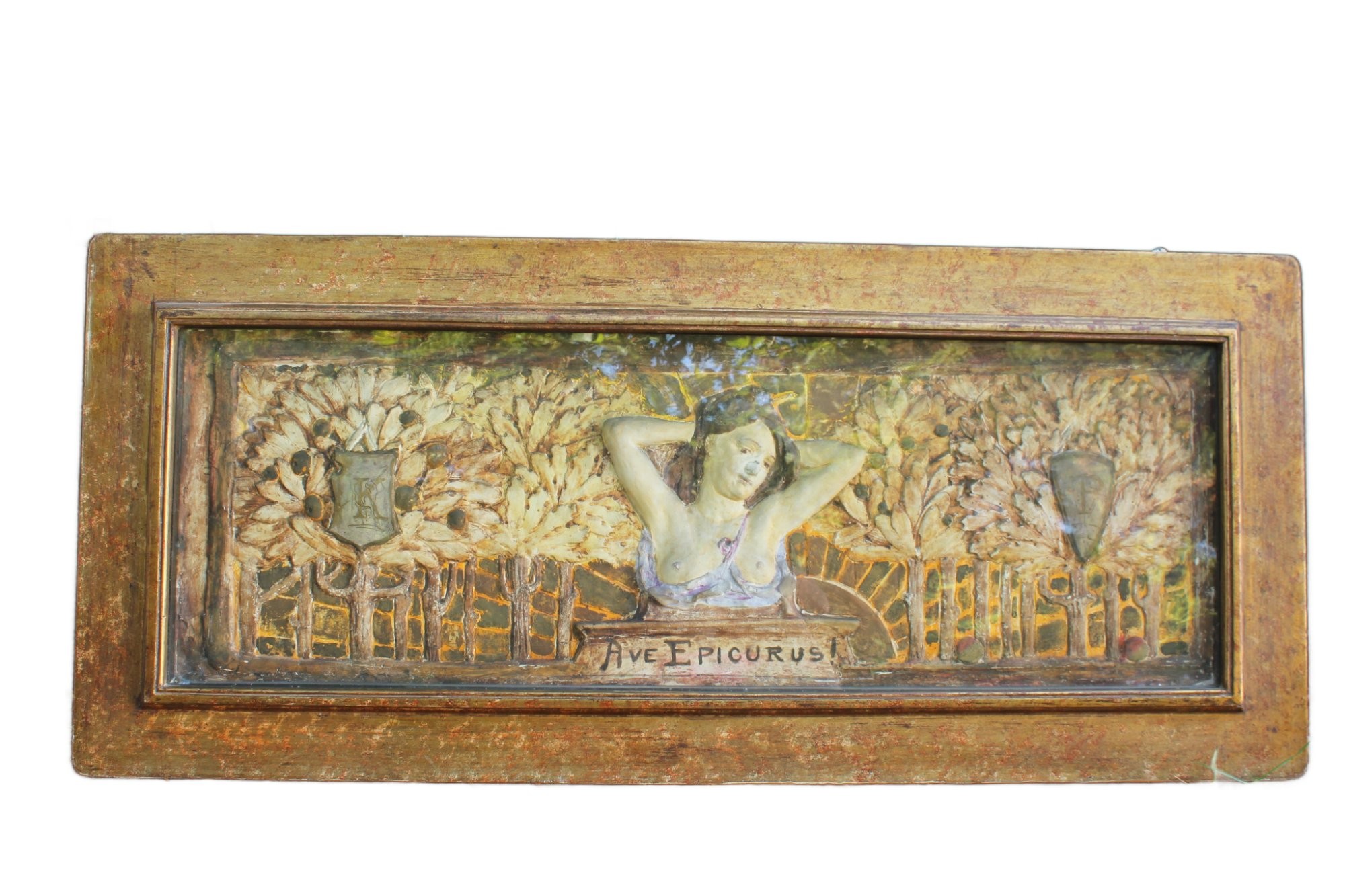
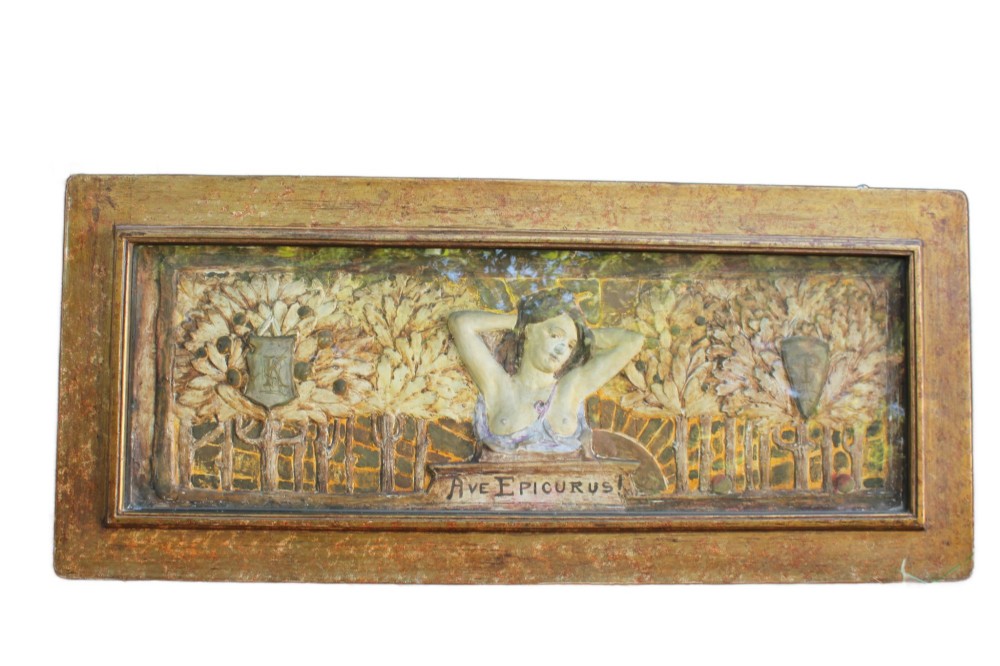
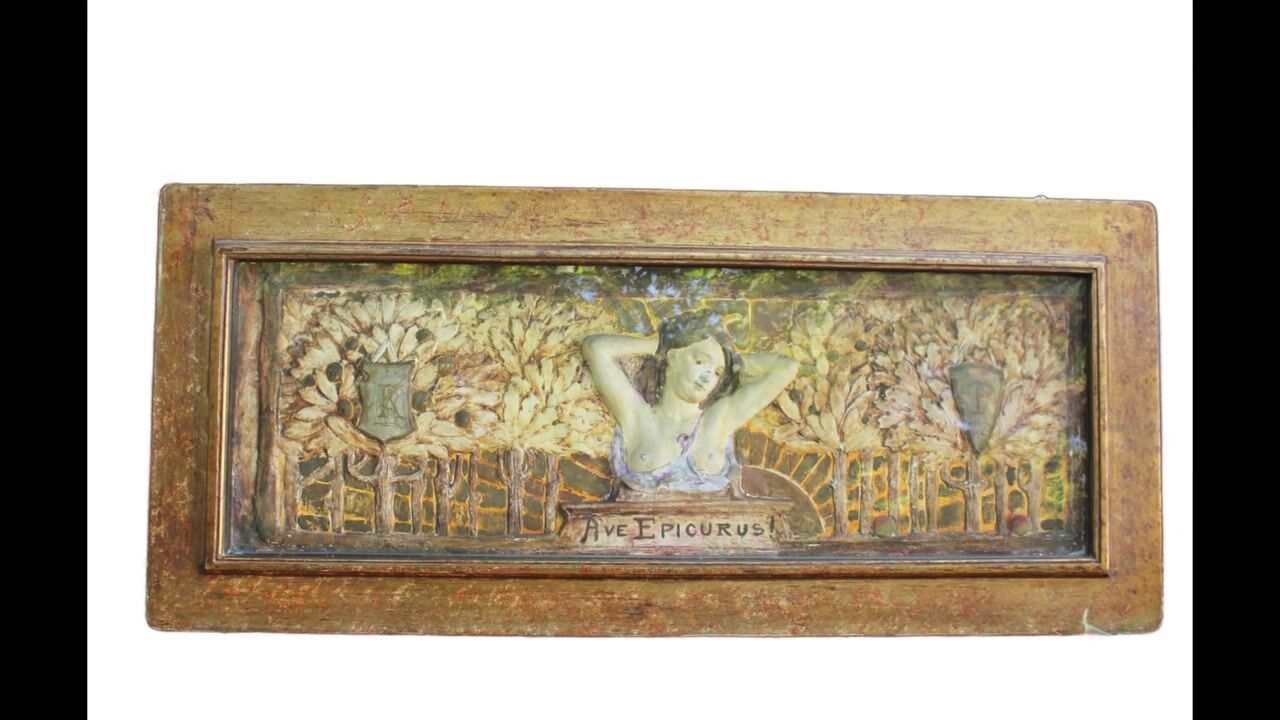
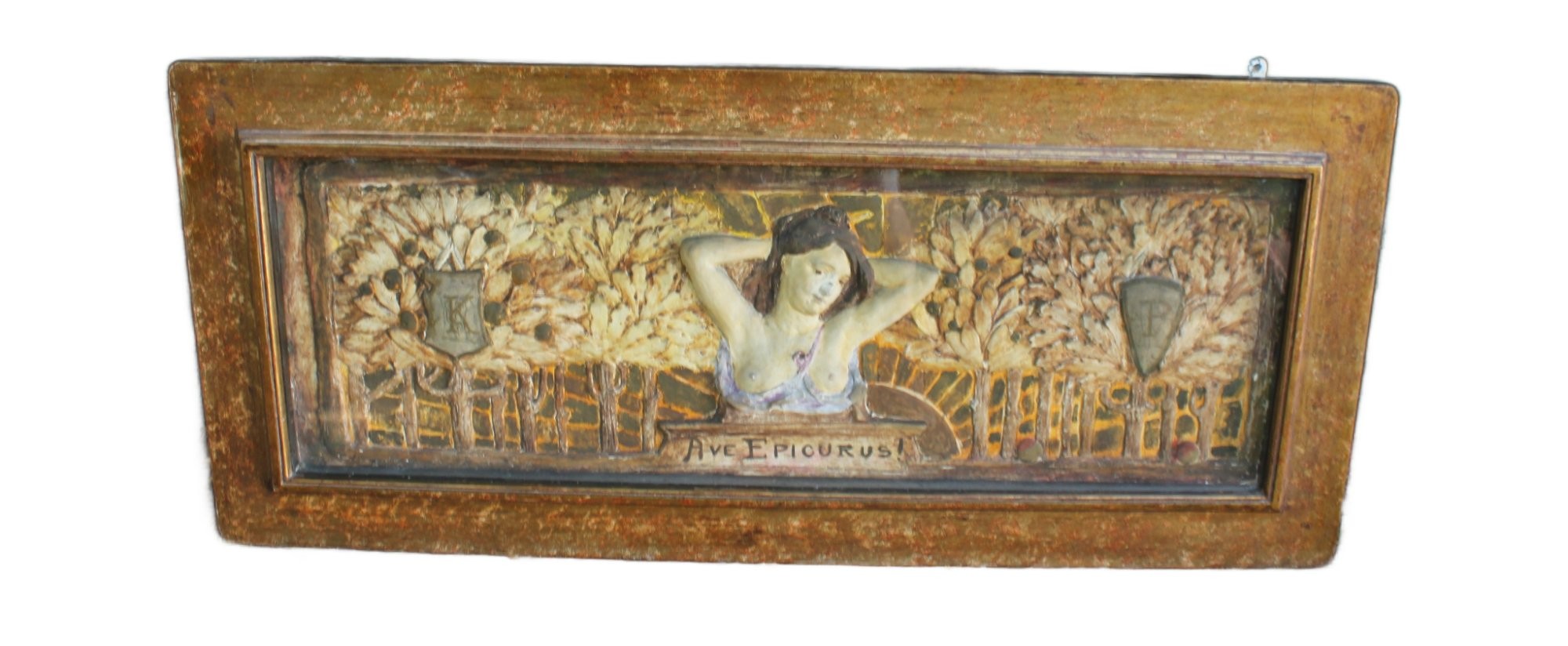
Rare British Arts & Crafts Polychrome Plaster Relief “Ave Epicurus!”, C.1900
Antiques Decorative (Sussex)
for sale €3,803     $4,128
£3,250
Antiques Decorative (Sussex)

Antiques Decorative (Sussex)

Sellingantiques Verified Since May 2024
View Dealers Stock Page
  • About Us
    Timeless treasures: elevate your space with decorative art and antiques
Id #SA1233174
PDF SHARE
SAVE

Rare British Arts & Crafts Polychrome Plaster Relief “Ave Epicurus!”, C.1900

1900 - 1920
Description

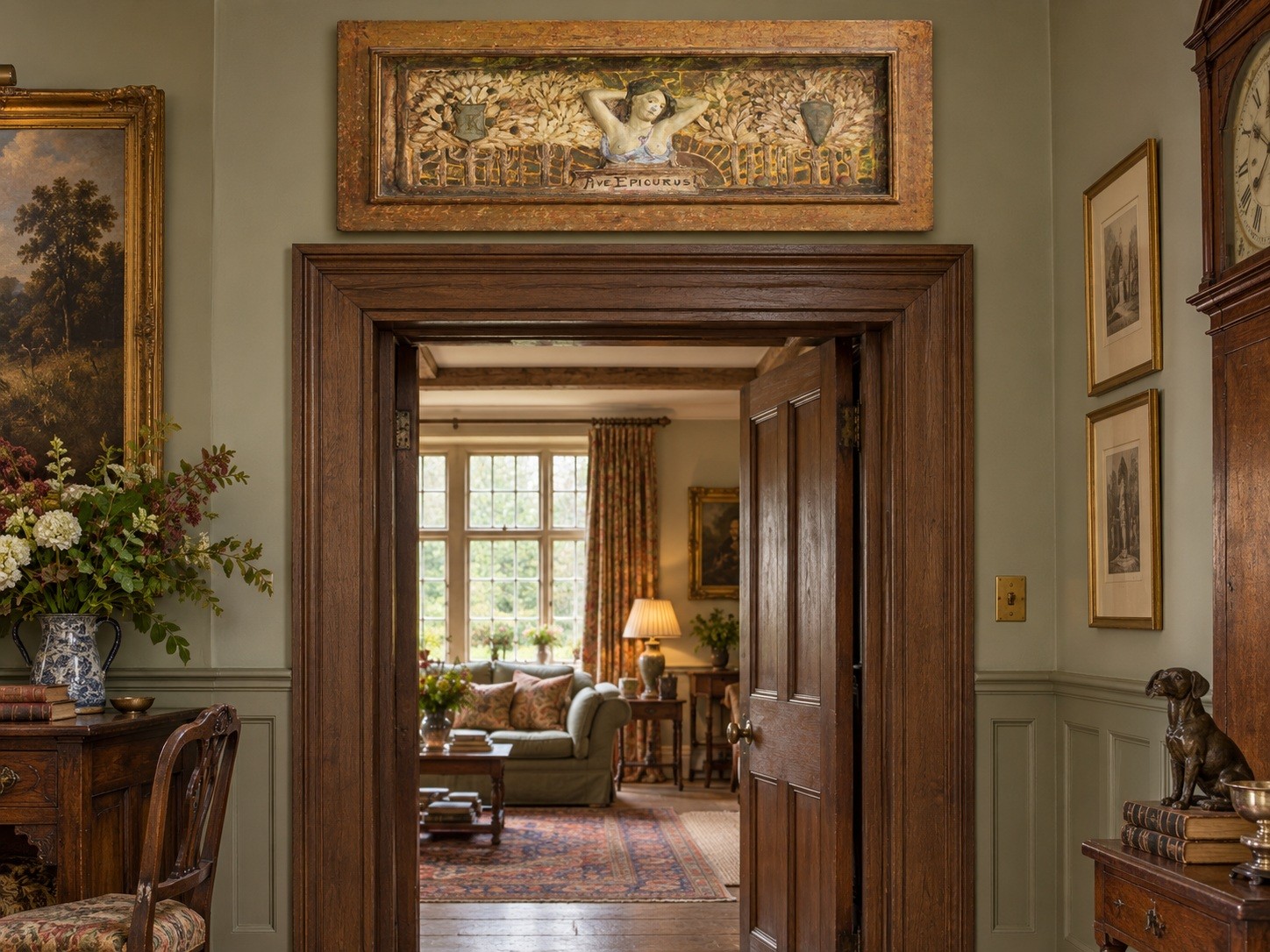
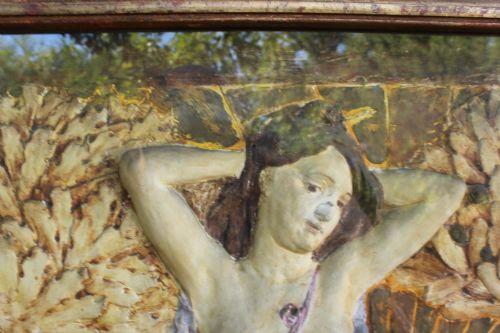
A highly unusual and richly modelled British Arts & Crafts polychrome plaster relief panel, dating to around 1895–1908.

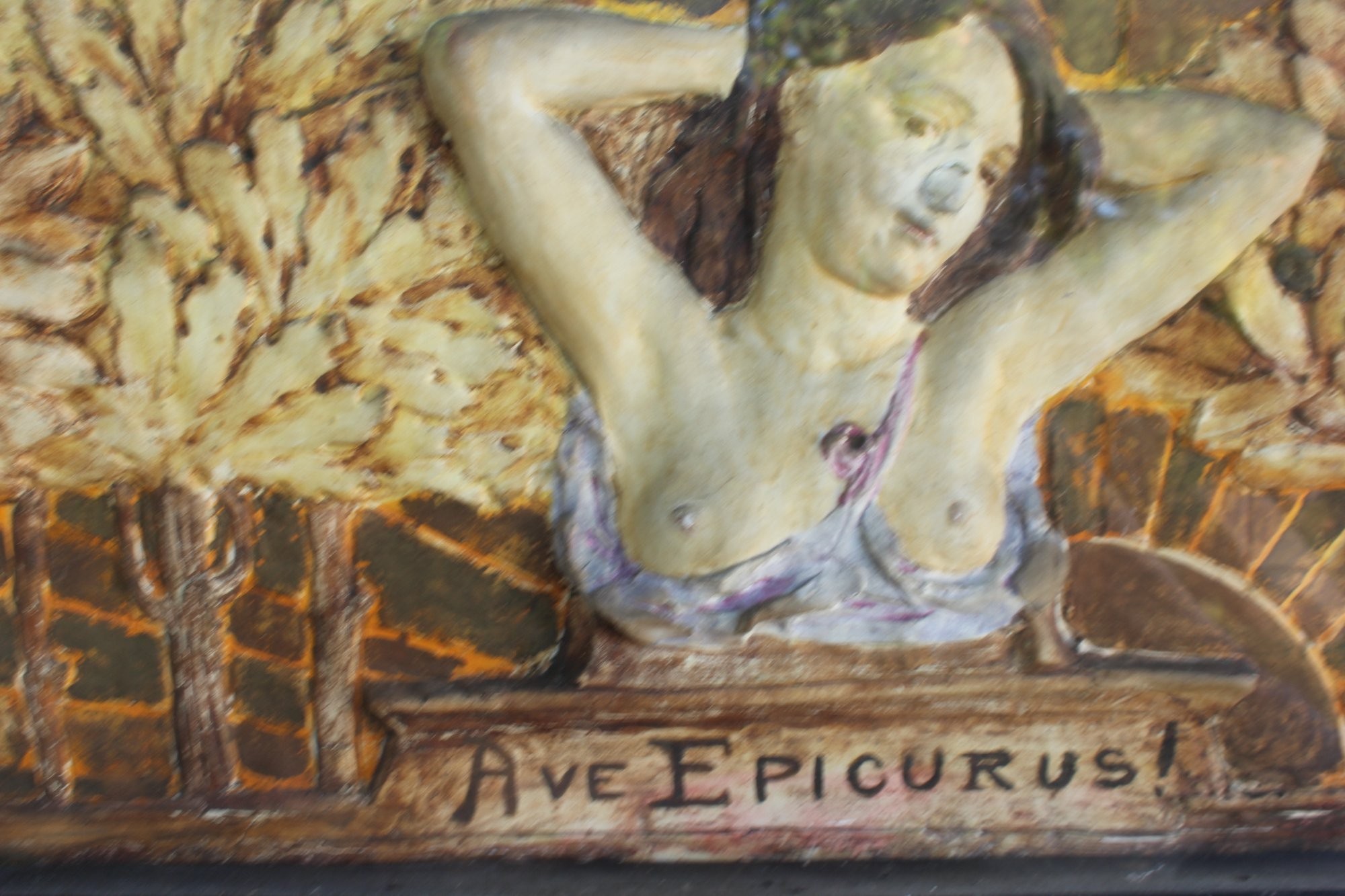
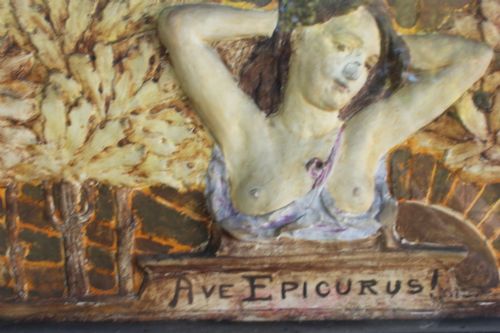
The composition centres on a semi-nude allegorical female figure set amongst luxuriant fruiting foliage, stylised architectural elements and two enigmatic monogrammatic devices. Beneath the figure is the striking inscription:
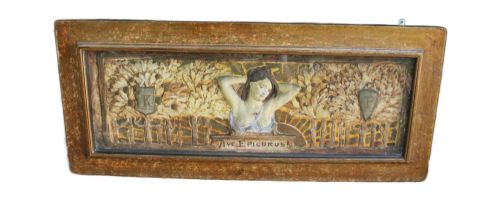
The relief has been hand-coloured in a restrained palette of muted greens, warm ochres, cream and gold, with the surface retaining an attractive aged patina and considerable decorative character.

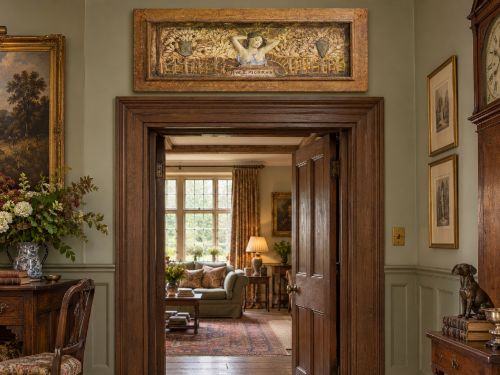
Its elongated horizontal format strongly suggests that it was originally conceived as part of an architectural interior scheme, perhaps as an overdoor, overmantel, frieze panel, dining-room feature or decorative element within a hospitality or entertaining interior, rather than as a conventional framed artwork.
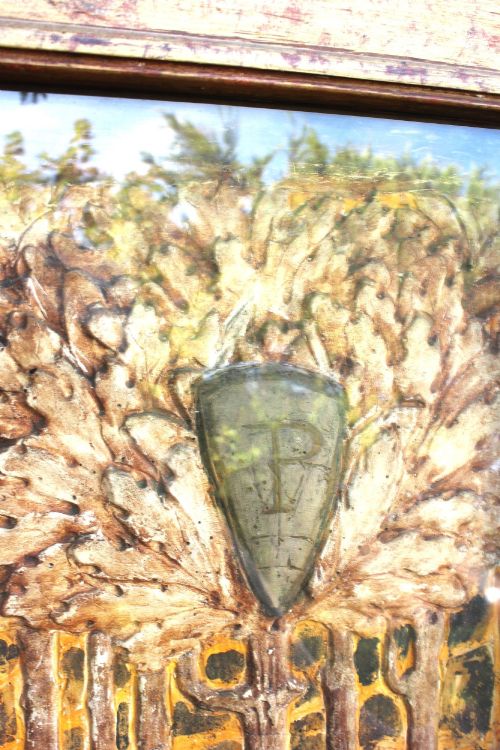
The imagery appears to form an allegory of pleasure, abundance, cultivation and the good life. The abundant foliage, fruit, classical female figure and reference to Epicurus all support this interpretation.
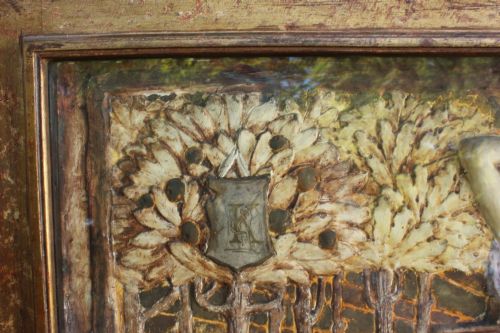
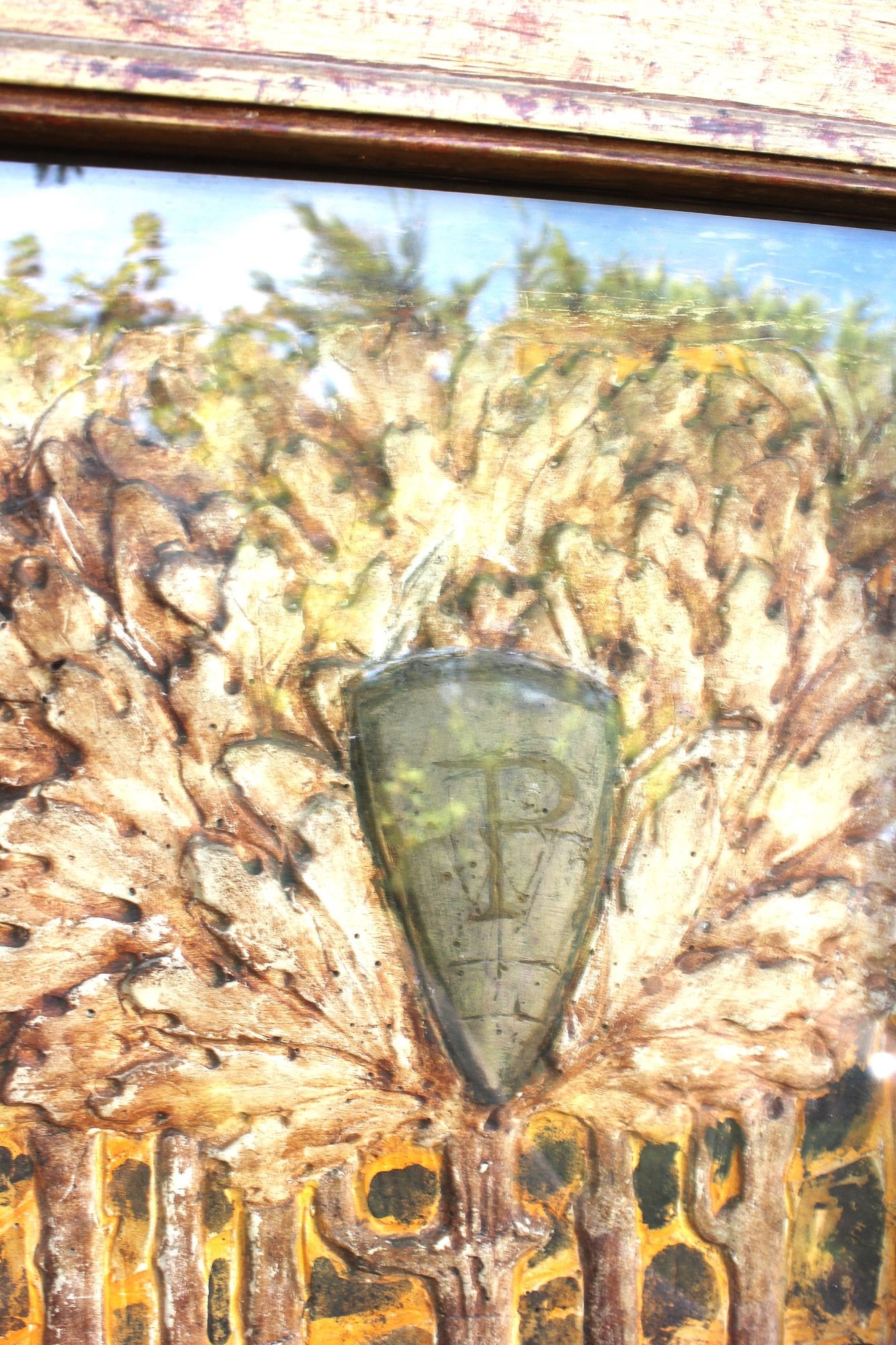
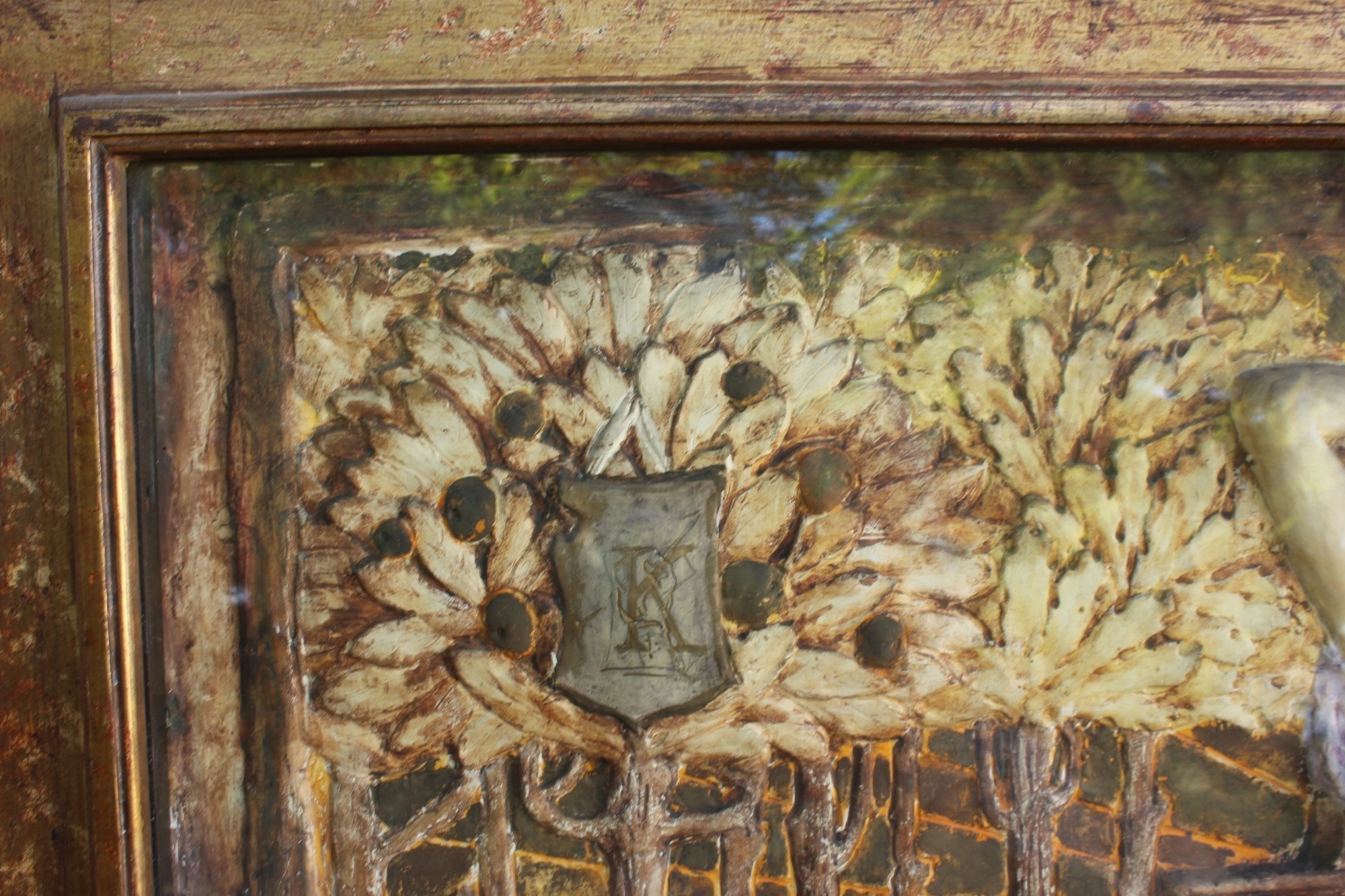
The two flanking cartouches contain complex interlaced monograms or emblematic devices. Their exact meaning remains unresolved, but their prominent and symmetrical positioning suggests that they may relate to the original patron, proprietors, establishment or commission rather than serving simply as an artist’s signature.
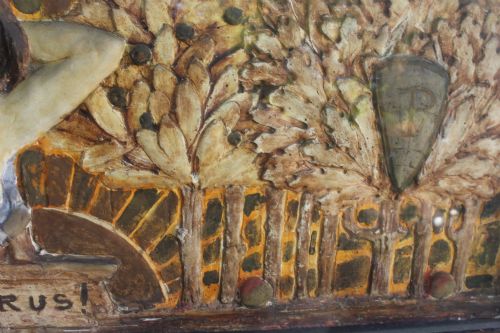
The panel belongs firmly within the late Victorian and Edwardian British tradition of Arts & Crafts coloured plaster and gesso relief.

Close stylistic and technical comparisons can be made with the work of artists and designers including:
William James Neatby

Robert Anning Bell

George Frampton

George Percy Bankart

decorative plasterwork associated with the Bromsgrove Guild

William James Neatby is a particularly interesting comparison. He is documented as producing coloured plaster reliefs and major decorative schemes for restaurants and public interiors during this period.
A possible connection with the New Gaiety Restaurant, Strand, London, particularly the J. Lyons refurbishment of 1908, remains an intriguing research lead. Contemporary descriptions of the Gaiety explicitly invoked Epicurean themes and referred to a green-and-gold frieze within the grill room. However, no direct documentary or photographic match to this particular panel has yet been established, so this remains a research hypothesis rather than a provenance claim.
Acquired at auction in the South West of England, where it was catalogued simply as an Arts & Crafts decorative plaster plaque.

Its unusual subject, large scale, original polychrome surface and highly individual inscription immediately suggested that it was something considerably more specialised than a standard decorative cast.
Subsequent research has placed it within the world of British Arts & Crafts architectural decoration around the turn of the 20th century, when artists and specialist workshops were producing coloured plaster, gesso and modelled relief work for private houses, restaurants, clubs, hotels and public interiors.

The inscription “Ave Epicurus!”, together with the abundant fruiting foliage and semi-nude allegorical figure, strongly suggests that the work was created for a room associated with dining, hospitality or entertaining.

The identity of the original designer, workshop and building remains under active research.

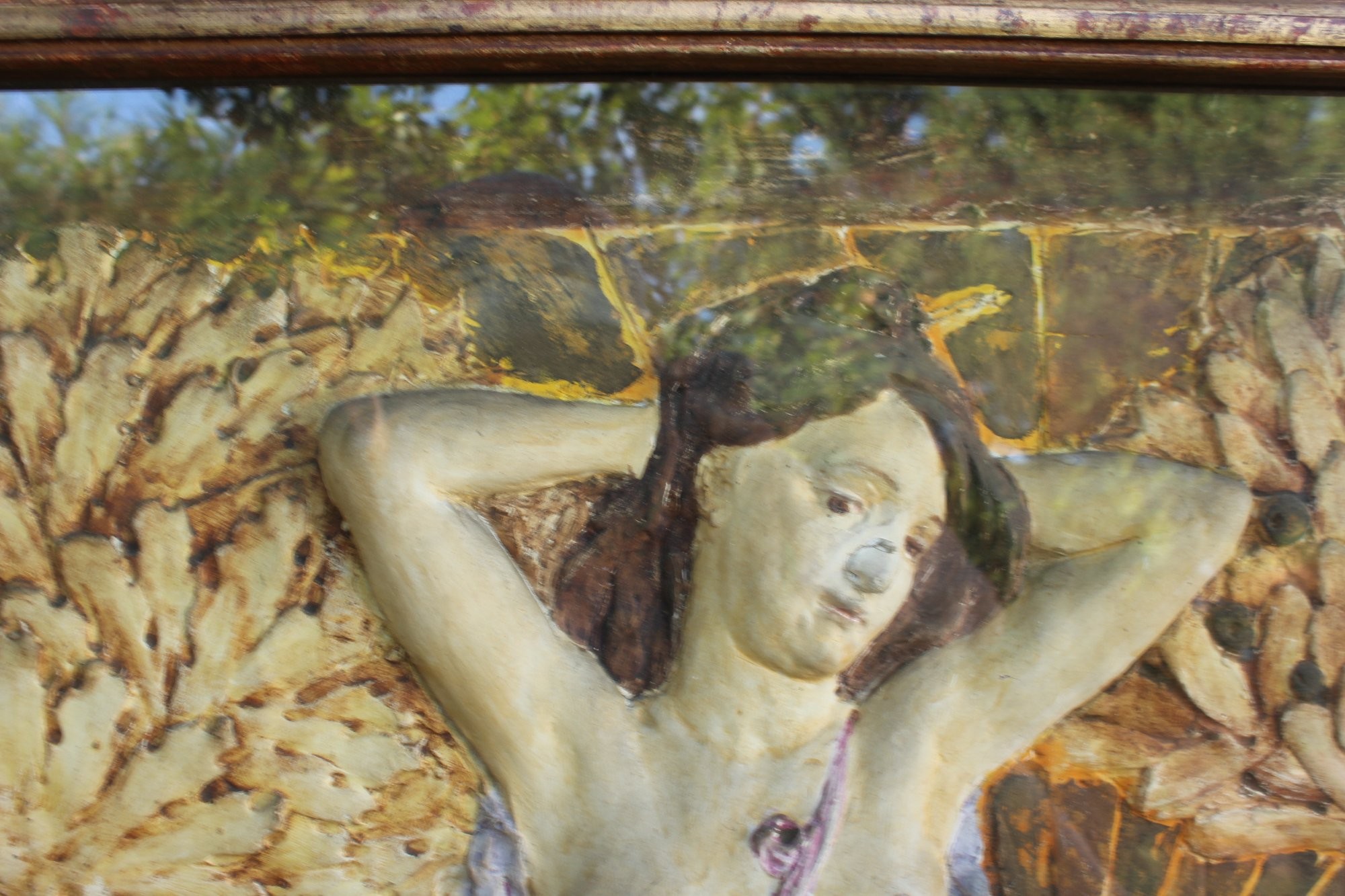
Condition

Age-related patination.

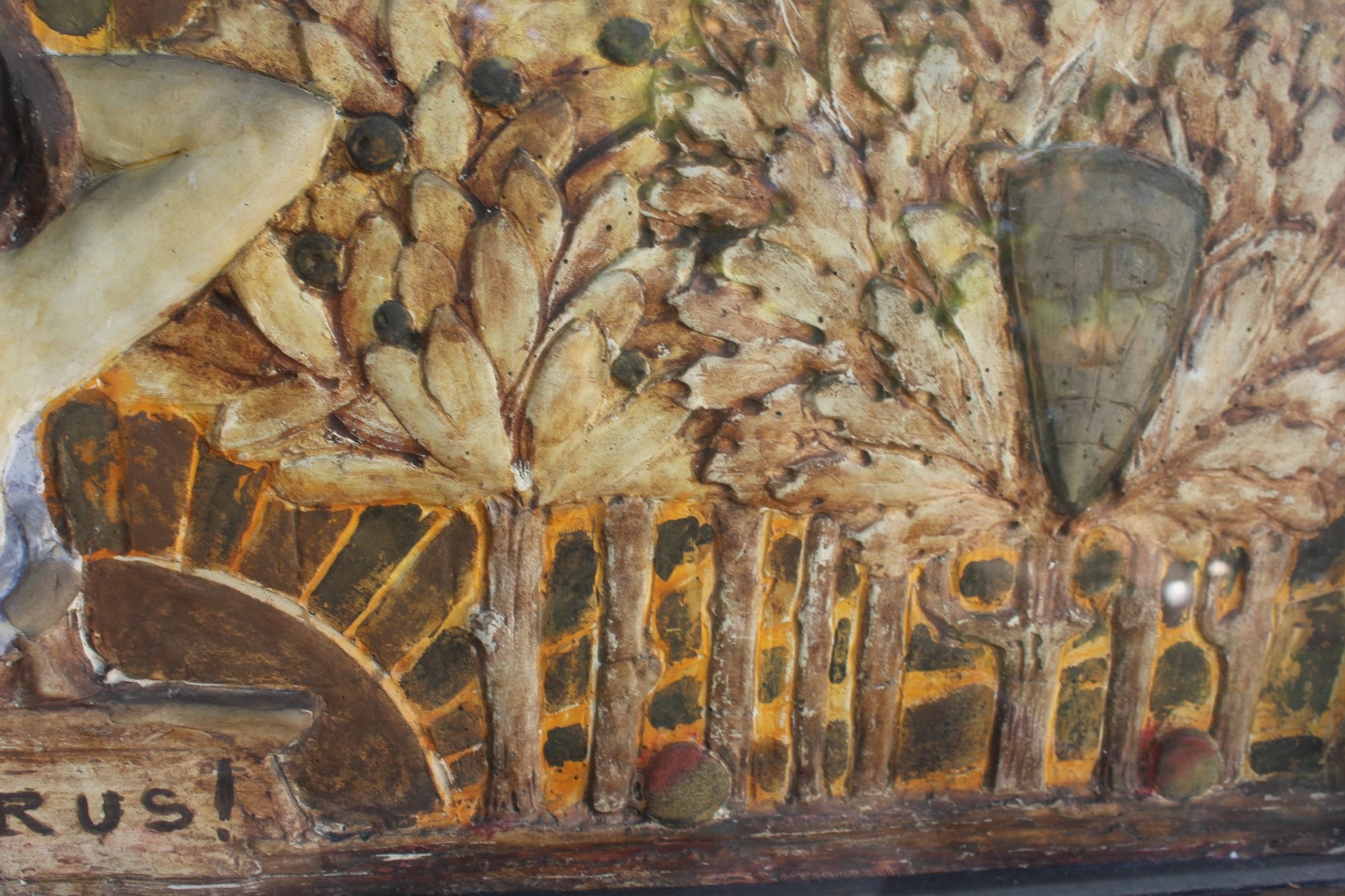
There are areas of wear, rubbing, minor surface losses and age-related cracking consistent with the material and age. Historic repair to nose

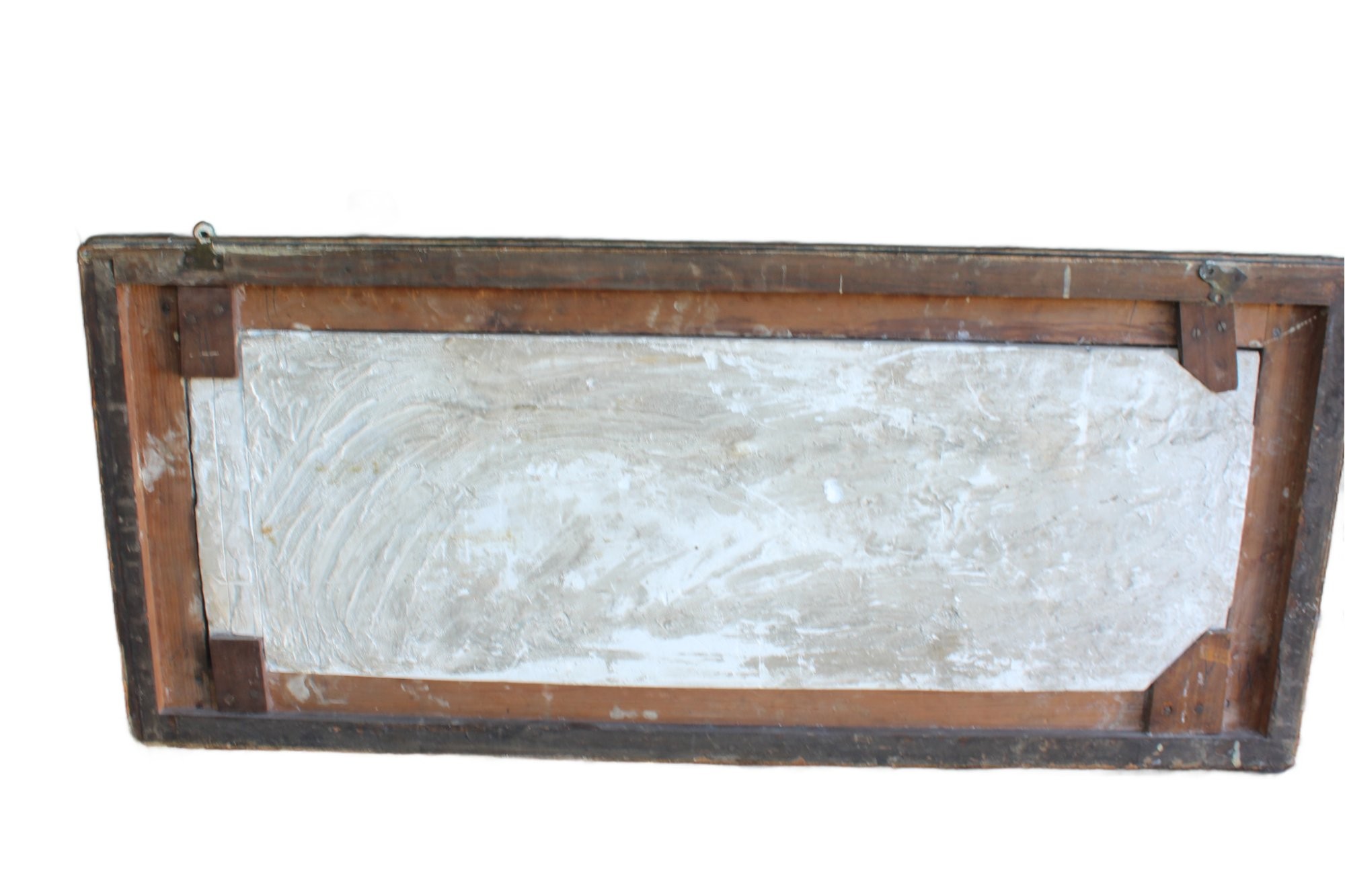
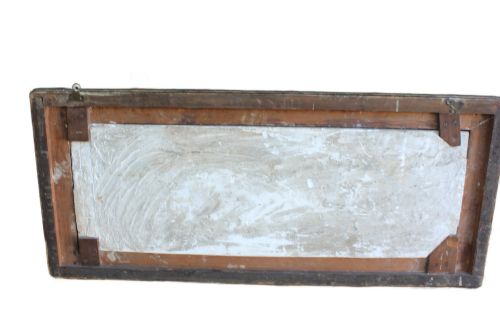
The substantial plaster relief is mounted within a timber support and gilt frame. The present framing may be later than the original architectural installation.

Please study the photographs carefully as they form an important part of the condition description.

Measurements

Width: approximately 104 cm

Height: approximately 34 cm

Physical Dimensions
Height
34cm (13.39")
Width
104cm (40.94")
Depth
6cm (2.36")
Declaration

Antiques Decorative (Sussex) has dated this Arts Crafts Plaster Relief to the 1900s.

Reference Numbers
Sellingantiques Reference
SA1233174
Dealers Notes

Shipping Options Delivery Time Price

Furniture Shipping UK Delivery in 1-2 weeks £75

Paintings UK, £35

Paintings rest of world please contact for a quote

EU Furniture delivery Contact us for a quote delivery within 4 weeks

*International delivery buyers are responsible for import charges and local taxes*

**Worldwide delivery Contact us for a quote**

For payments don't hesitate to get in touch with us for Visa/credit/bank transfer.

Description
A highly unusual and richly modelled British Arts & Crafts polychrome plaster relief panel, dating to around 1895–1908.
The composition centres on a semi-nude allegorical female figure set amongst luxuriant fruiting foliage, stylised architectural elements and two enigmatic monogrammatic devices.
Antiques Decorative (Sussex)

Beneath the figure is the striking inscription:

fig 1. A rectangular Arts and Crafts polychrome plaster relief featuring a central classical figure framed by trees and inscribed Ave Epicurus within a gilt frame.
fig 1. Rare British Arts & Crafts Polychrome Plaster Relief “Ave Epicurus!”, C.1900

The relief has been hand-coloured in a restrained palette of muted greens, warm ochres, cream and gold, with the surface retaining an attractive aged patina and considerable decorative character.

Its elongated horizontal format strongly suggests that it was originally conceived as part of an architectural interior scheme, perhaps as an overdoor, overmantel, frieze panel, dining-room feature or decorative element within a hospitality or entertaining interior, rather than as a conventional framed artwork.

fig 2. A rectangular Arts and Crafts polychrome plaster relief featuring a central classical figure framed by trees and inscribed Ave Epicurus within a gilt frame.
fig 2. Rare British Arts & Crafts Polychrome Plaster Relief “Ave Epicurus!”, C.1900

The imagery appears to form an allegory of pleasure, abundance, cultivation and the good life. The abundant foliage, fruit, classical female figure and reference to Epicurus all support this interpretation.

fig 3. A rectangular Arts and Crafts polychrome plaster relief featuring a central classical figure framed by trees and inscribed Ave Epicurus within a gilt frame.
fig 3. Rare British Arts & Crafts Polychrome Plaster Relief “Ave Epicurus!”, C.1900

The two flanking cartouches contain complex interlaced monograms or emblematic devices. Their exact meaning remains unresolved, but their prominent and symmetrical positioning suggests that they may relate to the original patron, proprietors, establishment or commission rather than serving simply as an artist’s signature.

fig 4. A rectangular Arts and Crafts polychrome plaster relief featuring a central classical figure framed by trees and inscribed Ave Epicurus within a gilt frame.
fig 4. Rare British Arts & Crafts Polychrome Plaster Relief “Ave Epicurus!”, C.1900

The panel belongs firmly within the late Victorian and Edwardian British tradition of Arts & Crafts coloured plaster and gesso relief.

Close stylistic and technical comparisons can be made with the work of artists and designers including:

fig 5. A rectangular Arts and Crafts polychrome plaster relief featuring a central classical figure framed by trees and inscribed Ave Epicurus within a gilt frame.
fig 5. Rare British Arts & Crafts Polychrome Plaster Relief “Ave Epicurus!”, C.1900

William James Neatby

Robert Anning Bell

George Frampton

George Percy Bankart

decorative plasterwork associated with the Bromsgrove Guild

William James Neatby is a particularly interesting comparison. He is documented as producing coloured plaster reliefs and major decorative schemes for restaurants and public interiors during this period.

fig 6. A rectangular Arts and Crafts polychrome plaster relief featuring a central classical figure framed by trees and inscribed Ave Epicurus within a gilt frame.
fig 6. Rare British Arts & Crafts Polychrome Plaster Relief “Ave Epicurus!”, C.1900

A possible connection with the New Gaiety Restaurant, Strand, London, particularly the J. Lyons refurbishment of 1908, remains an intriguing research lead. Contemporary descriptions of the Gaiety explicitly invoked Epicurean themes and referred to a green-and-gold frieze within the grill room. However, no direct documentary or photographic match to this particular panel has yet been established, so this remains a research hypothesis rather than a provenance claim.

fig 7. A rectangular Arts and Crafts polychrome plaster relief featuring a central classical figure framed by trees and inscribed Ave Epicurus within a gilt frame.
fig 7. Rare British Arts & Crafts Polychrome Plaster Relief “Ave Epicurus!”, C.1900

Acquired at auction in the South West of England, where it was catalogued simply as an Arts & Crafts decorative plaster plaque.

Its unusual subject, large scale, original polychrome surface and highly individual inscription immediately suggested that it was something considerably more specialised than a standard decorative cast.

fig 8. A rectangular Arts and Crafts polychrome plaster relief featuring a central classical figure framed by trees and inscribed Ave Epicurus within a gilt frame.
fig 8. Rare British Arts & Crafts Polychrome Plaster Relief “Ave Epicurus!”, C.1900

Subsequent research has placed it within the world of British Arts & Crafts architectural decoration around the turn of the 20th century, when artists and specialist workshops were producing coloured plaster, gesso and modelled relief work for private houses, restaurants, clubs, hotels and public interiors.

The inscription “Ave Epicurus!”, together with the abundant fruiting foliage and semi-nude allegorical figure, strongly suggests that the work was created for a room associated with dining, hospitality or entertaining.

The identity of the original designer, workshop and building remains under active research.

Condition

Age-related patination.

There are areas of wear, rubbing, minor surface losses and age-related cracking consistent with the material and age. Historic repair to nose

The substantial plaster relief is mounted within a timber support and gilt frame. The present framing may be later than the original architectural installation.

Please study the photographs carefully as they form an important part of the condition description.

Measurements

Width: approximately 104 cm

Height: approximately 34 cm

Height
34cm (13.39")
Width
104cm (40.94")
Depth
6cm (2.36")
Date of Manufacture

Antiques Decorative (Sussex) has dated this Arts Crafts Plaster Relief to the 1900s.

Reference Numbers
Sellingantiques Ref
SA1233174
Antiques Decorative (Sussex)
Sellingantiques verified Since May 2024

Timeless treasures: elevate your space with decorative art and antiques

Dealer Profile

You can view the stock and full dealer information on the Antiques Decorative (Sussex) Profile Page
PDF SHARE
SAVE
A rectangular Arts and Crafts polychrome plaster relief featuring a central classical figure framed by trees and inscribed Ave Epicurus within a gilt frame.
1 / 9
Archive I A rectangular Arts and Crafts polychrome plaster relief featuring a central classical figure framed by trees and inscribed Ave Epicurus within a gilt frame.

Rare British Arts & Crafts Polychrome Plaster Relief “Ave Epicurus!”, C.1900
Archive II A rectangular Arts and Crafts polychrome plaster relief featuring a central classical figure framed by trees and inscribed Ave Epicurus within a gilt frame. View II
Archive III A rectangular Arts and Crafts polychrome plaster relief featuring a central classical figure framed by trees and inscribed Ave Epicurus within a gilt frame. View III
Archive IV A rectangular Arts and Crafts polychrome plaster relief featuring a central classical figure framed by trees and inscribed Ave Epicurus within a gilt frame. View IV
Archive V A rectangular Arts and Crafts polychrome plaster relief featuring a central classical figure framed by trees and inscribed Ave Epicurus within a gilt frame. View V
Archive VI A rectangular Arts and Crafts polychrome plaster relief featuring a central classical figure framed by trees and inscribed Ave Epicurus within a gilt frame. View VI
Archive VII A rectangular Arts and Crafts polychrome plaster relief featuring a central classical figure framed by trees and inscribed Ave Epicurus within a gilt frame. View VII
Archive VIII A rectangular Arts and Crafts polychrome plaster relief featuring a central classical figure framed by trees and inscribed Ave Epicurus within a gilt frame. View VIII
Archive IX A rectangular Arts and Crafts polychrome plaster relief featuring a central classical figure framed by trees and inscribed Ave Epicurus within a gilt frame. View IX
Enlarged Archival View
Telephone 07565 761917
Location
East Sussex
United Kingdom

By appointment only.
Verified Since May 2024
Items For Sale 63
Items Sold 38
Antiques Decorative (Sussex)
Verified Since May 2024
View Dealer Info
Location: East Sussex, United Kingdom, , By appointment only.
Verified
May 2024
For Sale
63
Sold
38
A rectangular Arts and Crafts polychrome plaster relief featuring a central classical figure framed by trees and inscribed Ave Epicurus within a gilt frame.
Rare British Arts & Crafts Polychrome Plaster Relief “Ave Epicurus!”, c.1900
Ref: SA1233174
A rectangular Arts and Crafts polychrome plaster relief featuring a central classical figure framed by trees and inscribed Ave Epicurus within a gilt frame.
Detail View 1
Detail View 2
Detail View 3
Detail View 4
Detail View 5
Detail View 6
Detail View 7
Detail View 8
Archival Detail
Every single antique dealer on our platform is individually approved by our internal team. We verify their professional trade history, ethical standards, and photographic quality to ensure a secure, high-standard buying environment. Upon joining, every dealer agrees to a strict 9-point code of conduct. While issues can occasionally arise, our dealers typically resolve them swiftly and directly with the buyer. In fact, since our founding in 2002, Sellingantiques has only had to step in to help resolve an issue on roughly five occasions—a true testament to the quality of our dealers and their dedication to your happiness.
Our dealers are highly experienced in packing and shipping fragile, high-value antiques. Because you are in direct contact with the dealer, you will be able to easily go through all available shipping and insurance options together to ensure your item arrives safely.
Antiques are the ultimate green purchase. By choosing historical pieces over newly manufactured goods, you completely eliminate the carbon footprint of modern mass production while preserving exceptional, timeless craftsmanship.

Emerging in the late 19th and early 20th centuries, these reliefs combined sculpted plaster or gesso with hand-painted polychrome finishes, often featuring allegorical, nature-inspired, or classical motifs framed in simple wooden mounts.

Craftsmen moulded or hand-carved gesso and plaster onto sturdy wooden backings, applying layer-by-layer pigments, gilding, and varnishes to create a textured, three-dimensional decorative surface.

Authentic pieces typically exhibit age-appropriate crazing in the paint film, hand-applied polychromy, natural wear to gilt surfaces, and period-correct backing boards or mounting hardware.

Position the relief as a focal point above a mantelpiece, sideboard, or within a gallery wall alongside period ceramics and warm hardwood furnishings to complement contemporary or traditional schemes.

Dust gently using a soft, dry camel-hair brush, avoiding water or chemical cleaning solvents that could compromise the fragile painted pigments or gesso layer.
items
Add keywords to the filter
Price
£100
£250000
Era
Movements
Material
Origin
Stock Location
Freshness
Online Payments
Categories