





Arts and Crafts Plaque
An arts and crafts plaque brings tactile metalwork and carved timber directly into a room, offering honest craftsmanship from the turn of the twentieth century.
Arts and Crafts Plaque
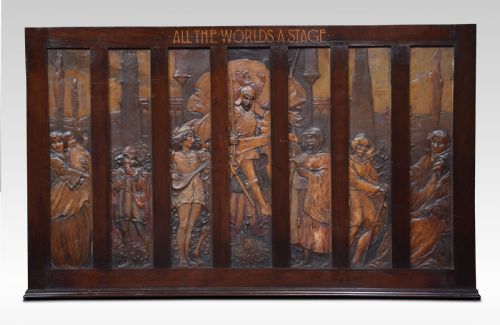
An arts and crafts plaque encompasses decorative metal chargers, carved wood panels, and polychrome plaster reliefs designed for wall display. These objects emerge primarily from the late nineteenth century and the Edwardian era, reflecting a broader movement away from industrial uniformity.
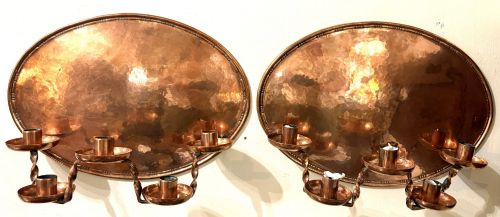
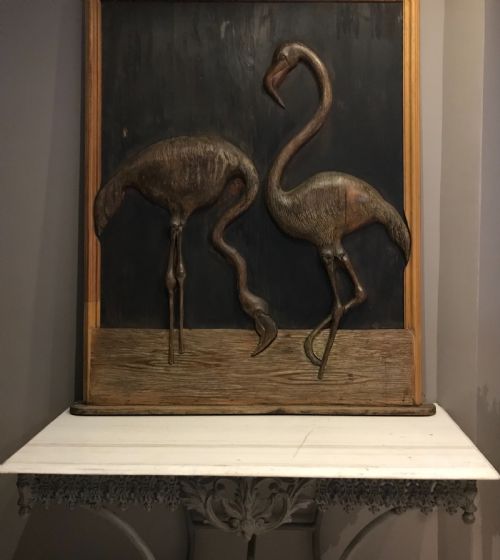
The versions most common on this page range from beaten copper chargers bearing pomegranate and foliage motifs to carved oak panels featuring animal subjects. Wall sconces, fire screens, and framed ceramic or plaster reliefs also populate the selection.
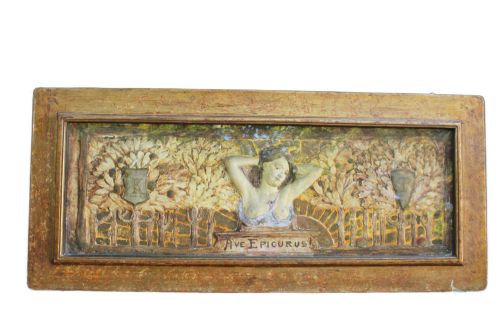
Makers and workshops utilised natural motifs and literary quotations, shaping materials by hand to create focal points for domestic interiors. Each piece relies on tactile surfaces rather than painted illusion to establish its character.
Materials and manual techniques
Makers worked predominantly in metals such as copper, brass, and pewter, employing hammering and embossing techniques to raise patterns from the reverse side. This repoussé method yielded textured surfaces where light catches the tool marks left by the artisan.
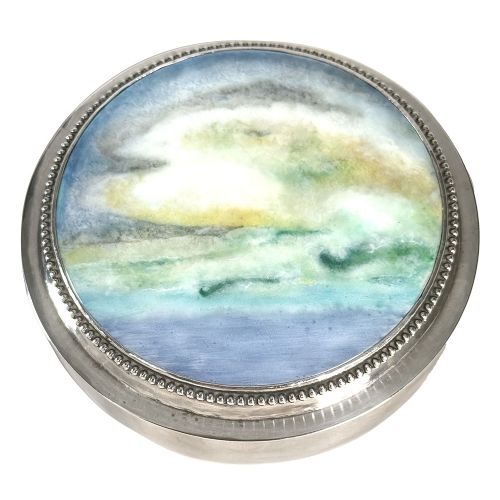
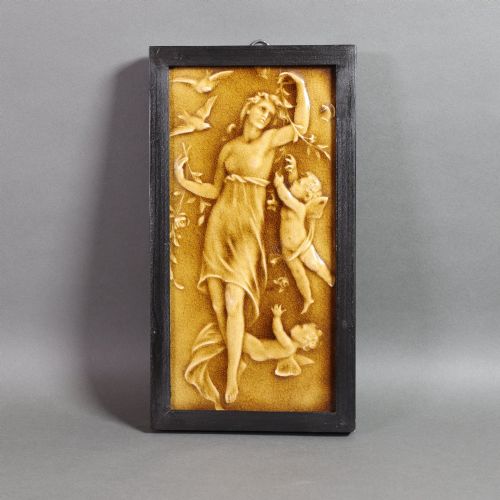
Woodworkers carved directly into oak, walnut, and other timbers to produce high-relief panels depicting figures, birds, and botanical scenes. Plaster and gesso formed the base for polychrome painted reliefs, while earthenware and enamels introduced colour to metallic and ceramic plaques.
The listings demonstrate a strong material division between beaten copper and carved oak.
Distinctions in execution
Quality rests in the crispness of the hand-beaten relief and the confidence of the chisel or hammer work. Superior copper and brass chargers display deep, deliberate embossing that retains its definition across intricate foliage and animal motifs.
Carved wooden panels separate themselves through the depth and undercut of the relief, where feathers, flora, and figures emerge with anatomical and botanical clarity. Weaker examples rely on shallow scoring and generic surface decoration.
Faulkner Bronze Company·Reginald Robert Tomlinson·A E Jones
The Arts and Crafts Plaque Glossary
- Repoussé
- A metalworking technique where a design is hammered into relief from the reverse side. This method allows artisans to create tactile, three-dimensional patterns on copper and brass plaques.
- Charger
- A large ornamental plate intended for display on a wall or sideboard rather than for dining use. These pieces often feature central motifs surrounded by hammered borders.
- Polychrome
- Painted or executed in several colours. This term describes plaster and ceramic reliefs that retain their original applied pigments.
- Gesso
- A plaster-like mixture applied to a surface as a base for painting or low-relief moulding. It provides a smooth ground for detailed polychrome finishes.
Arts and Crafts Plaque: Frequently Asked Questions
How were arts and crafts plaques displayed?
These pieces were designed primarily for interior wall mounting, positioned to catch light on their metallic surfaces or to provide a focal point above a fireplace. Larger copper chargers and carved timber panels served as architectural ornaments within domestic spaces.
Smaller ceramic and plaster reliefs frequently hung in hallways or reception rooms, integrating handmade art into everyday nineteenth-century living.
How do I date an arts and crafts plaque?
Dating relies on stylistic markers, material trends, and recorded workshop attributions spanning from the late nineteenth century into the 1930s. Edwardian examples often incorporate specific literary inscriptions or naturalistic animal motifs.
Physical evidence such as tool marks, framing methods, and backing boards assists in placing a piece within its historical manufacturing window.
Are these plaques signed by makers?
Certain pieces bear maker stamps, initials, or workshop attributions, though many examples remain unsigned. Copper and brass items sometimes carry guild marks or signatures associated with prominent arts and crafts centres.
Unsigned pieces are attributed through characteristic hand-beating techniques, motif choices, and material handling typical of specific regional schools.