



Gothic Relief Wall Hanging
These gothic relief wall hanging pieces bring deep architectural weight to a room, offering tactile panels and chargers carved or cast with historic figures.
Gothic Relief Wall Hanging
When you search for a gothic relief wall hanging, you encounter substantial wooden panels, metal chargers, and framed tableaux that project historical scenes directly from the wall. The evidence shows these pieces span from the eighteenth century through the nineteenth century, capturing centuries of revivalist interest.
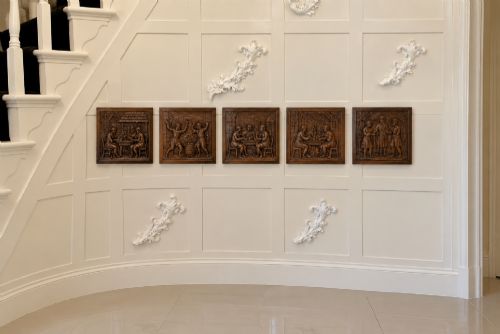
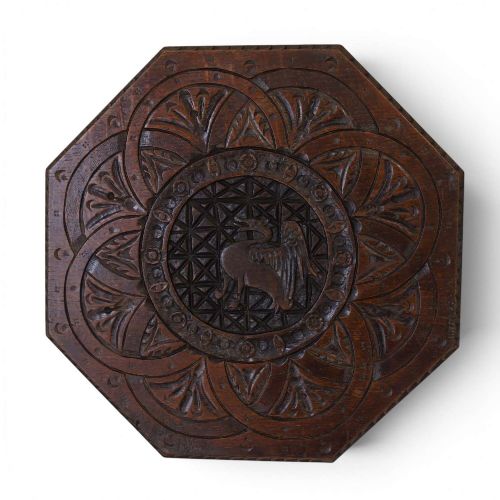
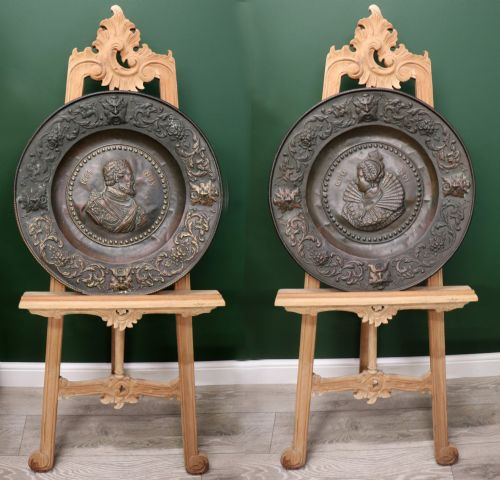
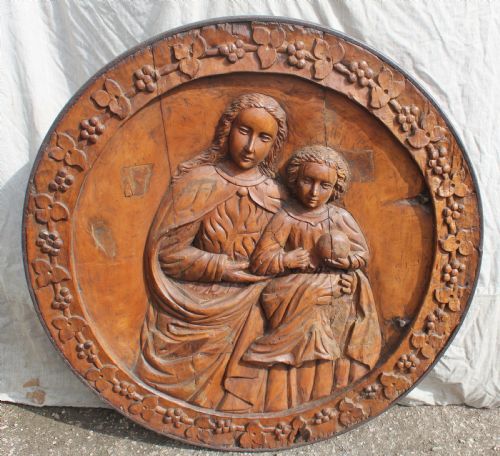
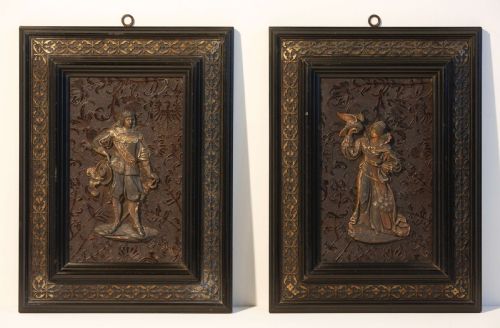
You are most likely to meet nineteenth-century examples on this page, particularly oak and fruitwood carvings alongside metal plaques in copper, bronze, and white metal. Forms range from large carved panels and former tabletops to paired wall chargers decorated with royal portraits.
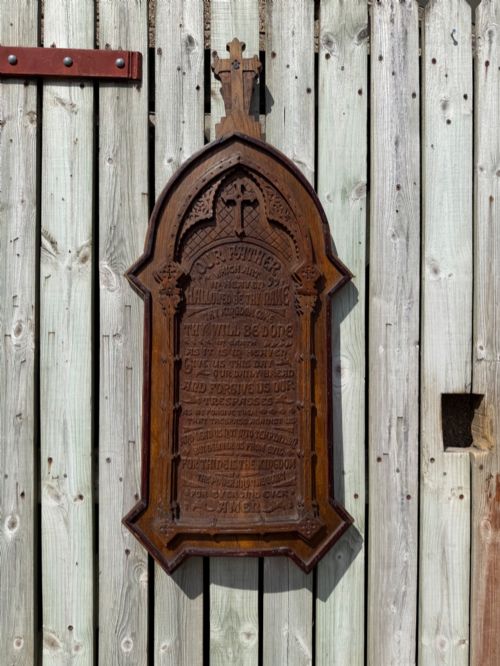
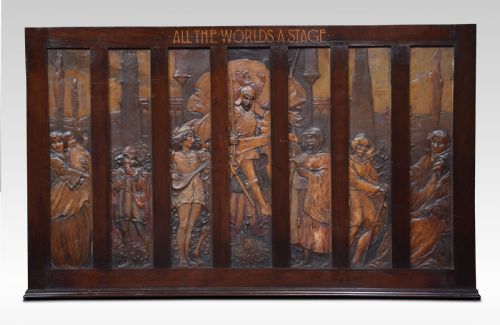
The decorative subjects draw heavily on historical figures, literary references, and religious texts, such as carved depictions of the Lord's Prayer, Colonel Sir Edward Massey, and sixteenth-century monarchs. These works frequently channel Gothic Revival, Baroque Revival, and Arts and Crafts aesthetics.
How they were made
Makers shaped these pieces primarily from timber and metal, utilising oak, walnut, fruitwood, and ebonised wood alongside copper, bronze, and white metal. Carved wood examples rely on deep relief work cut into the grain, while metal versions employ casting and gilding techniques.
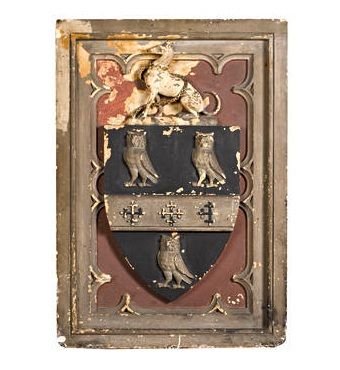
Surface treatments vary from plain polished timber and painted plaster to gilded bronze and patinated copper surfaces. These construction methods ensure the high-relief figures stand out strongly against their backgrounds.
Listings span multiple centuries, uniting eighteenth-century traditional oak panels with nineteenth-century copper chargers and Victorian fruitwood carvings.
What varies in quality
Depth of carving and sharpness of cast detail separate ordinary items from superior works, as seen in the facial definition of portrait plaques and figurative scenes. The choice of material also dictates the character of the piece, with dense hardwoods and gilded bronze commanding greater visual presence than softer plaster.
Compositional complexity marks the distinction between standard wall plaques and exceptional tableaux, particularly where multiple figures interact within architectural or literary narratives. The integrity of the original framing and the preservation of surface patination further define the standing of each piece.
The Gothic Relief Wall Hanging Glossary
- Gothic Revival
- An architectural and decorative style drawing inspiration from medieval design forms. It dominated much of the nineteenth-century production seen here.
- Wall Charger
- A large decorative plate designed for display on a wall rather than dining use. These often feature prominent portraits or historical scenes in metal.
- Relief
- Sculptural technique where figures project from a flat background. High relief elements stand out boldly, creating strong shadows.
- Armorial
- Relating to heraldry and family coats of arms. These panels display formal lineage and crests.
- Tabletop
- A flat horizontal surface from furniture that occasionally finds a second life as a wall plaque. This conversion practice appears among nineteenth-century examples.
Gothic Relief Wall Hanging: Frequently Asked Questions
How were these wall panels originally displayed?
Many of these pieces were integrated directly into historic interior wood panelling or mounted in prominent reception rooms to display lineage, literacy, or piety. They functioned as architectural statements rather than movable pictures.
Over time, items such as former tabletops or chargers were adapted specifically for wall mounting to showcase intricate metalwork and deep wood carving.
What materials predominate in these pieces?
Solid woods form the backbone of the selection, with oak, walnut, and fruitwood appearing frequently alongside ebonised wood and carved wooden panels. These materials provide the dense foundation required for deep figurative relief.
Metals also feature prominently, ranging from copper wall chargers to white metal and gilded bronze relief plaques that introduce reflective surfaces to the display.
How do I date a gothic relief wall hanging?
Dating relies on identifying the underlying material, the style of the carving, and the historical subjects depicted. Nineteenth-century revival pieces often combine Gothic motifs with Victorian framing techniques.
Earlier eighteenth-century panels display simpler, more utilitarian framing around traditional rural or narrative scenes. Examining the backboards and joinery helps confirm the period of manufacture.
How do I live with a heavy wooden relief?
These substantial pieces require secure wall fixings capable of supporting the weight of dense hardwoods and cast metals. Position them away from direct heat sources to prevent timber splitting or warping.
Pairing dark oak and patinated copper with plain walls allows the deep relief shadows and historic portraits to command the space effectively.