

Antique Decorative Relief Carving
Antique decorative relief carving brings sculptural depth to walls and furniture through centuries of bronze, wood, and brass craftsmanship.
Antique Decorative Relief Carving
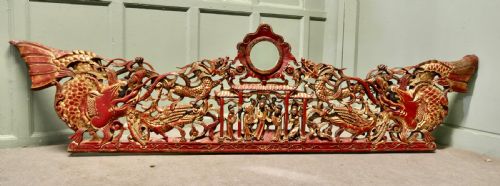
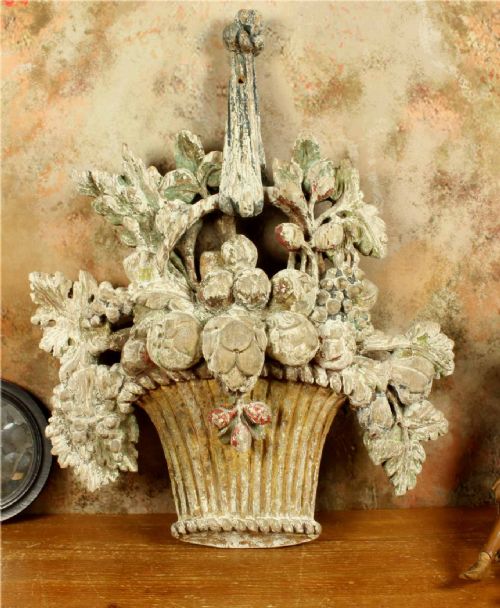
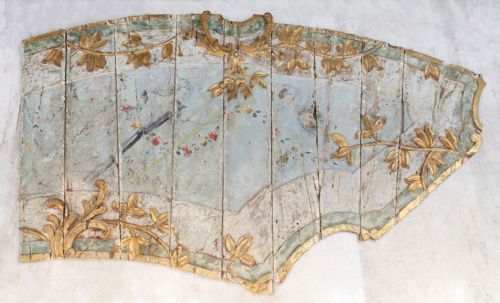
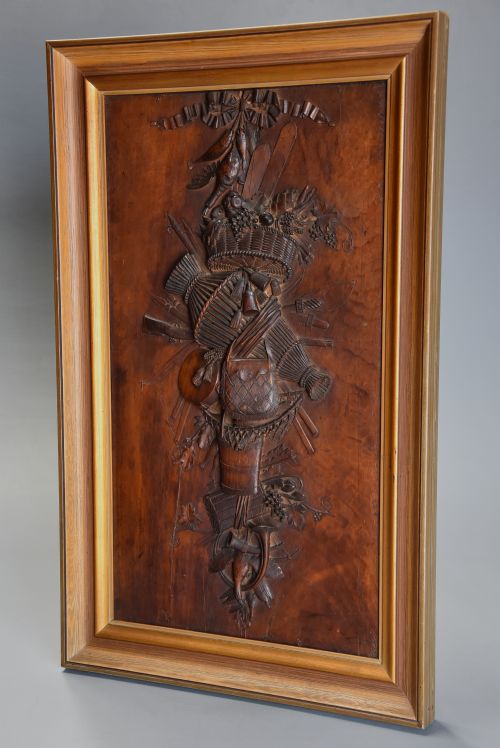
When searching for antique decorative relief carving, collectors encounter wall panels, architectural fragments, and carved wooden architectural pediments from the eighteenth and nineteenth centuries. These items range from French boiserie wall panels to English ceiling boss panels and carved fruitwood trophy carvings.
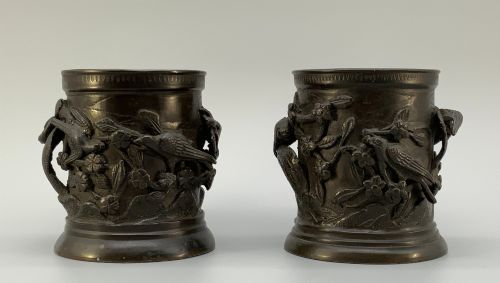
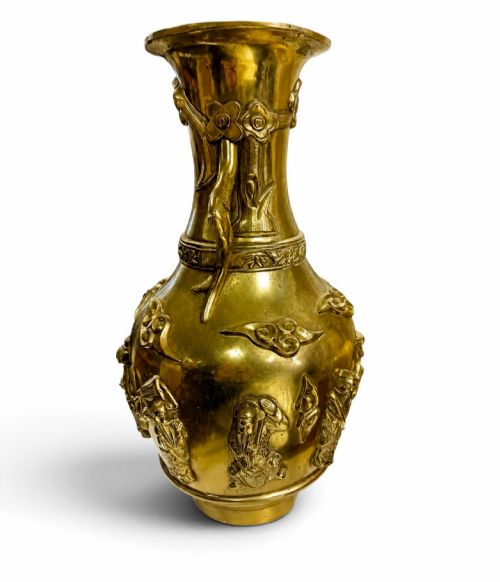
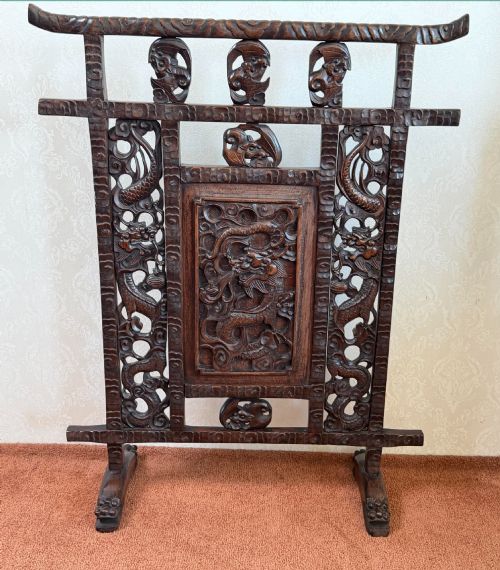
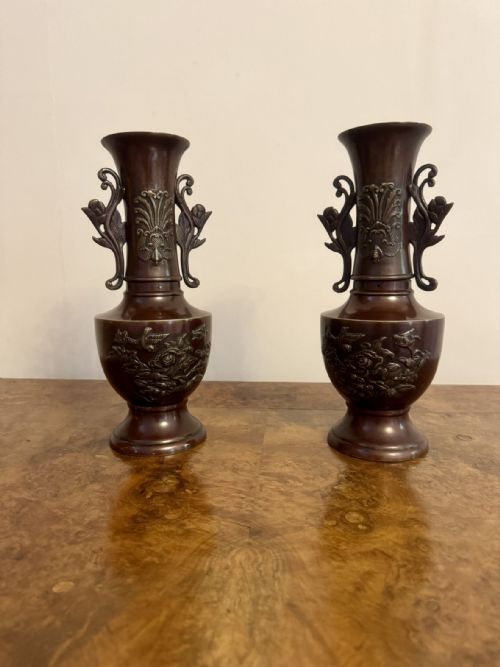
The selection on this page relies heavily on nineteenth-century examples, including Victorian pieces, Japanese Meiji bronzes, and Chinese hardwood screens. Architectural salvage and cast iron firebacks also appear alongside decorative vases and wall panels.
Origin points span Europe and Asia, featuring French, Italian, Dutch, Chinese, and Japanese items. Buyers often find pieces derived from domestic interiors, civic structures, and religious buildings.
How they were made
Makers shaped these items through traditional carving and casting techniques applied to wood, bronze, brass, and cast iron. Oak, fruitwood, and walnut provide the wooden reliefs, often enhanced with gesso or gold leaf.
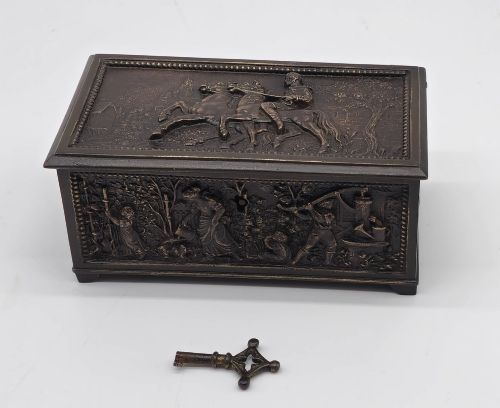
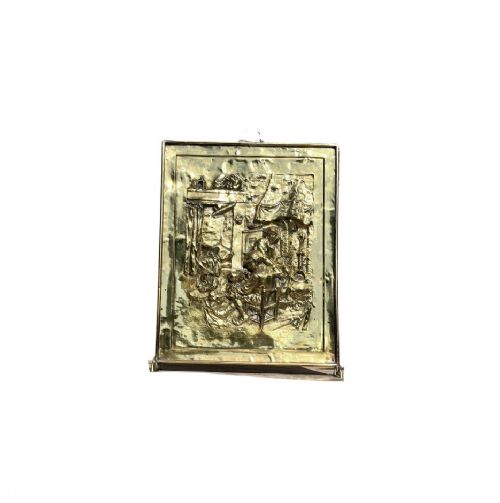
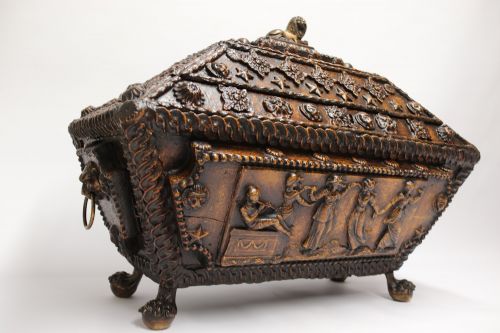
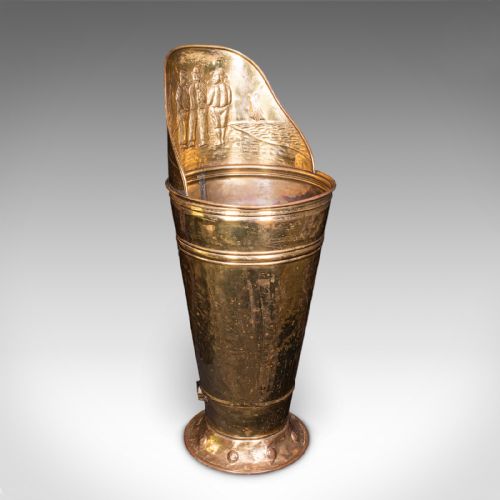
Metal pieces utilise copper alloys, bronze, and brass, cast or worked into high-relief depictions of figures, birds, and floral motifs. Artisans combined subtractive carving in timber with additive methods in metal casting and gesso application.
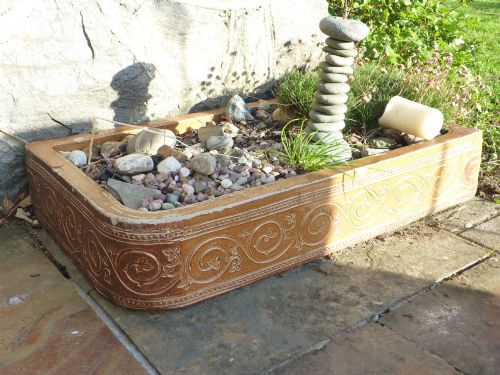
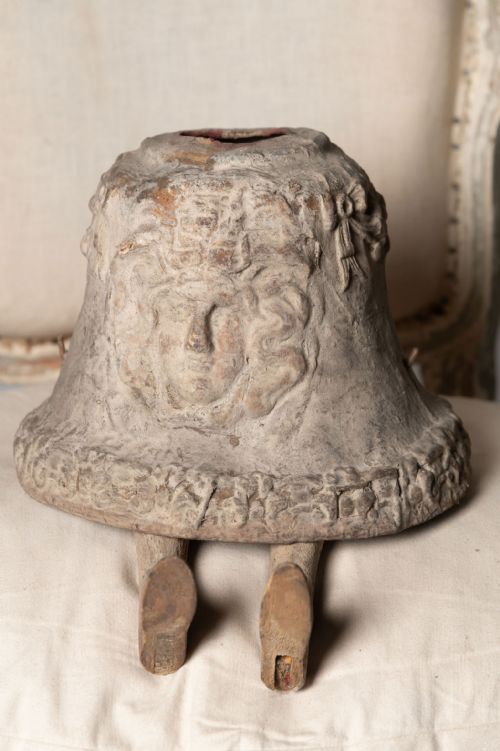
Object forms range from Sicilian cart fragments and fairground ride pieces to bronze vases, window planters, and intricately carved wooden ceiling bosses.
What varies in quality
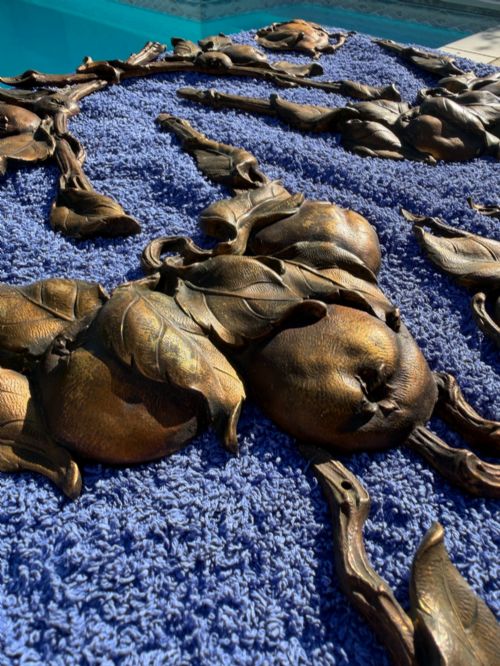
The degree of undercut and the crispness of the modelling separate ordinary mouldings from exceptional sculptural reliefs. Fine examples exhibit deep undercutting that casts genuine shadows, whereas lesser works rely on shallow surface stamping or soft casting.
Material selection and the skill of the carver or metalworker dictate the lasting definition of the design. Continental fruitwood trophy carvings and Japanese Meiji bronzes demonstrate superior definition compared to mass-produced architectural fragments.
Poix Blin·Guichard Carriès·Grinling Gibbons·Doulton Lambeth
The Antique Decorative Relief Carving Glossary
- Relief carving
- Sculpture where figures or designs project from a flat background. High relief projects significantly, while low relief stays closer to the plane.
- Boiserie
- French wood panelling applied to interior walls, often carved with decorative motifs. These panels frequently incorporate symmetrical floral and architectural details.
- Ceiling boss
- A decorative projecting block of wood or stone placed at the intersection of ribs in a ceiling. Eighteenth-century oak examples show deep structural carving.
- Pediment
- A triangular or ornamental gable above a door, window, or piece of furniture. Carved wooden pediments often feature scrolling foliage and central cartouches.
- Gesso
- A plaster-like mixture applied to wood or canvas as a base for gilding or painting. It allows for sharp moulded details before the application of gold leaf.
Antique Decorative Relief Carving: Frequently Asked Questions
How do I hang a heavy wooden carved panel?
Heavy wooden wall panels require secure fixing directly into wall studs or masonry using appropriate metal brackets. Distributing the weight evenly prevents warping and protects the antique structure.
Ensure the mounting hardware matches the specific weight and depth of the timber frame. Professional installation is recommended for large architectural fragments.
Can bronze relief panels be displayed outside?
Bronze and brass items withstand sheltered outdoor environments but suffer pitting and accelerated corrosion in damp, unshielded locations. Moisture reacts with copper alloys over time.
Indoor placement preserves the original patina and prevents environmental degradation. Regular dusting keeps the metal surface stable.
How should I clean antique gesso and gold leaf?
Gesso and gold leaf require extremely gentle care using a dry, soft-bristled brush to remove dust. Moisture dissolves old gesso grounds and strips delicate leafing.
Avoid liquid cleaners, polishes, and abrasive cloths entirely. Professional restoration is necessary if the surface layer begins to flake.
What is the difference between architectural salvage and furniture carvings?
Architectural salvage originates from buildings, including ceiling roses, pediments, and boiserie panels designed as part of a room. Furniture carvings form integral parts of tables, cabinets, or frames.
Salvage pieces usually display larger scale and bolder relief intended for room-length viewing. Furniture elements feature finer, close-up detailing suited to domestic proximity.