




Antique Marquetry Wall Art
These antique marquetry wall art pieces bring together fine woods and precise inlay to transform a plain room.
Antique Marquetry Wall Art
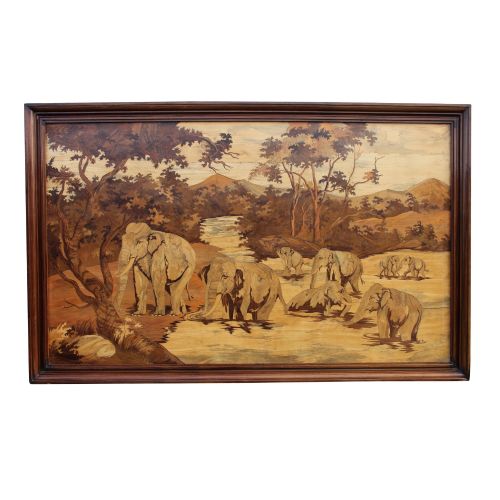
When you search for antique marquetry wall art, you encounter a diverse range of decorative objects designed to hang on the wall. The selection spans centuries of craftsmanship, taking the form of framed pictures, mirrors, plaques, and architectural dioramas.
You are most likely to meet Victorian and Edwardian examples on this page, alongside pieces from the Regency, Art Deco, and Arts & Crafts periods. Forms range from Tunbridge ware wall plaques and Scottish School mirrors to large specimen wood panels and barometers.
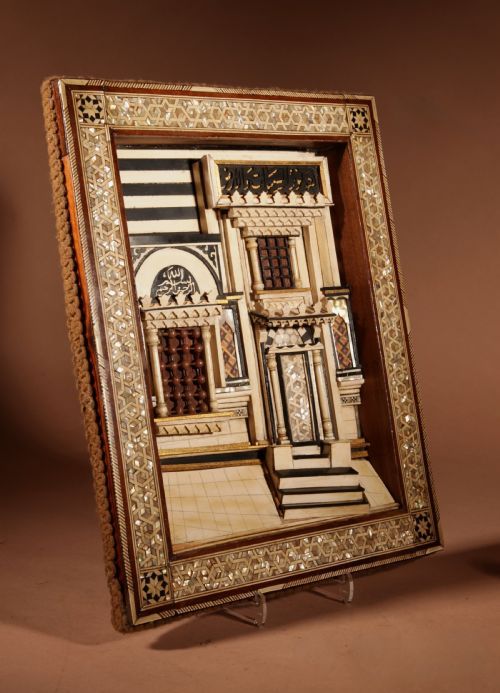
Origins vary widely across the inventory, encompassing English workshops, Scottish makers, Italian pietre dure work, Anglo-Indian panels, and Moorish revival designs. Each piece utilises fitted veneers and natural timber grains to create pictorial scenes or geometric patterns directly on the wall.
How they were made
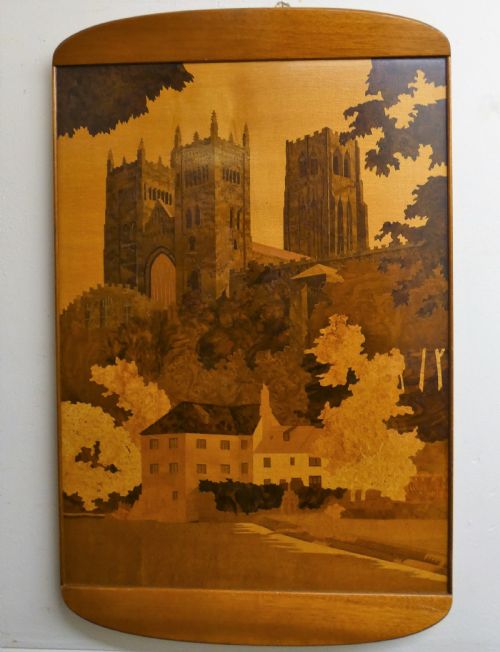
Maker workshops built these wall pieces using solid timber foundations overlaid with thin veneers of walnut, rosewood, satinwood, teak, sycamore, and beech wood. Craftsmen cut these contrasting woods by hand to assemble intricate pictorial scenes and geometric compositions.
Specialised techniques such as Tunbridge ware mosaic work and pietre dure marble inlay appear alongside traditional woodworking joints and glass framing. Metal elements like silver-gilt details or barometer mechanisms integrate directly into the wooden structures.
What varies in quality
The standard of an antique marquetry wall art piece depends on the precision of the veneer cutting and the complexity of the wood selection. Finer examples display a vast array of natural timber tones that create depth and perspective without relying on painted surface details.
The integration of the secondary materials, whether bevelled glass, cast barometer bezels, or carved wooden frames, distinguishes standard production from superior workshop output. The ambition of the design, from simple geometric plaques to architectural diorama reliefs, dictates the overall execution.
Rowley Gallery·A.J Rowley
The Antique Marquetry Wall Art Glossary
- Marquetry
- The art of forming decorative patterns and pictures by fitting together small pieces of wood veneer onto a structural base. This technique relies on contrasting natural wood colours to form the image.
- Tunbridge Ware
- A distinct type of British wood mosaic work produced in Kent, featuring tiny blocks of various naturally coloured timbers arranged to create pictorial wall plaques and picture frames.
- Pietre Dure
- An inlay technique using cut and fitted polished coloured stones to create images, appearing here in Italian marble picture panels. It provides a stone counterpart to wooden marquetry.
- Diorama
- A three-dimensional architectural model or scene designed for display, represented here in relief panels depicting building facades. These pieces project outward from the flat wall surface.
- Silver-Gilt
- Silver that has been coated with a thin layer of gold, utilised by specific makers to accent mirror frames and inlaid wall panels.
Antique Marquetry Wall Art: Frequently Asked Questions
What is antique marquetry wall art?
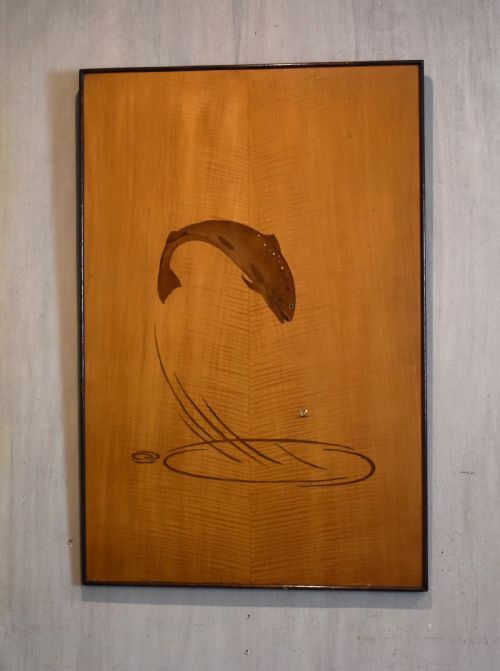
Antique marquetry wall art encompasses decorative wooden panels, mirrors, plaques, and pictures created with inlaid veneers. These pieces utilise natural wood grains and colours to depict scenes, animals, and architectural subjects.
Items range from British Tunbridge ware and Arts & Crafts mirrors to Indian panels and Italian stone pictures. They function as both functional wall furnishings and standalone decorative artworks.
How do I hang a heavy marquetry panel?
Hanging these wall pieces requires securing them to solid wall studs or using appropriate masonry anchors given the weight of the timber and glass. Ensure the hanging wire or mounting brackets on the back of the frame are structurally sound before mounting.
Keep wooden panels away from direct sunlight and dramatic humidity shifts to protect the delicate veneer inlays. Stable indoor environments prevent the wood from warping or splitting over time.
How do I date an antique wood panel?
Dating relies on examining the construction methods, framing styles, and the specific types of timber veneer utilised. Stylistic cues from periods like Art Deco, Arts & Crafts, or the Victorian era provide clear chronological markers.
Signatures, stamps, or labels on the reverse of the frames or panels frequently identify the workshop or maker. Comparing the pictorial subject matter and materials to documented examples helps confirm the period.
What is the difference between marquetry and inlay?
Marquetry involves covering the entire surface of a structure with fitted pieces of veneer to form a picture or pattern. The veneer pieces are assembled together first before being applied to the wooden base.
Inlay generally refers to cutting recesses into a solid wood object and inserting contrasting materials into those cavities. Both techniques appear across antique wall pieces to create decorative surfaces.