41,073  PAGES BROWSED TODAY PAGES TODAY 84  ANTIQUES UPLOADED TODAY NEW ARRIVALS
Sort Order
Items Per Page
ID #SA1230503
FOR SALE
£195
Email Buy
Save
A Collection of Antique Bone Prisoner of War Teetotums
Opus Antiques
for sale €228     $248
£195
Opus Antiques

Opus Antiques

Sellingantiques Verified Since Oct 2014
View Dealers Stock Page
  • About Us
    Antique treen, boxes & decorative georgian items
Id #SA1230503
PDF SHARE
SAVE

A Collection of Antique Bone Prisoner of War Teetotums

19th century
For Sale by Opus Antiques
Description

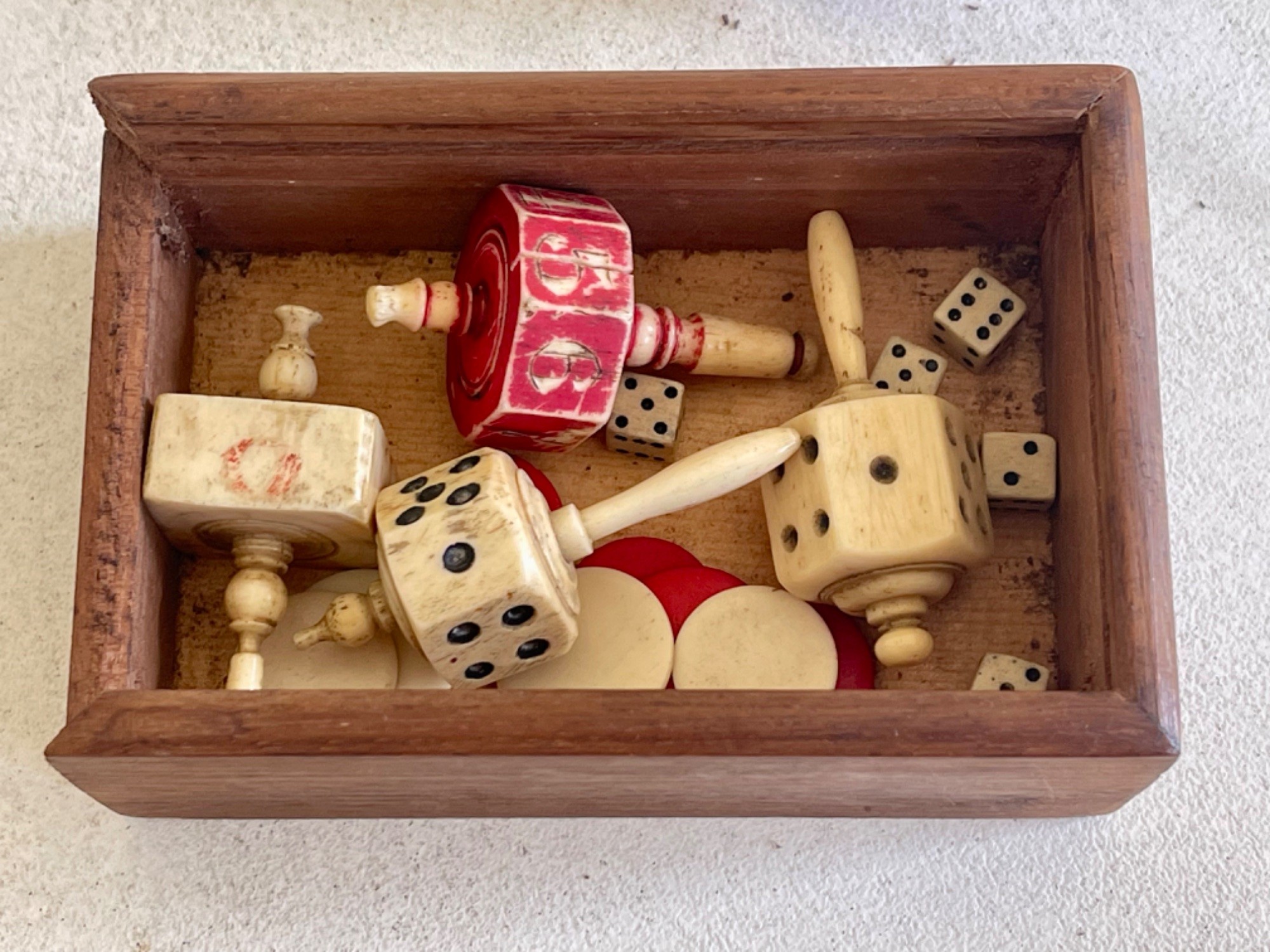
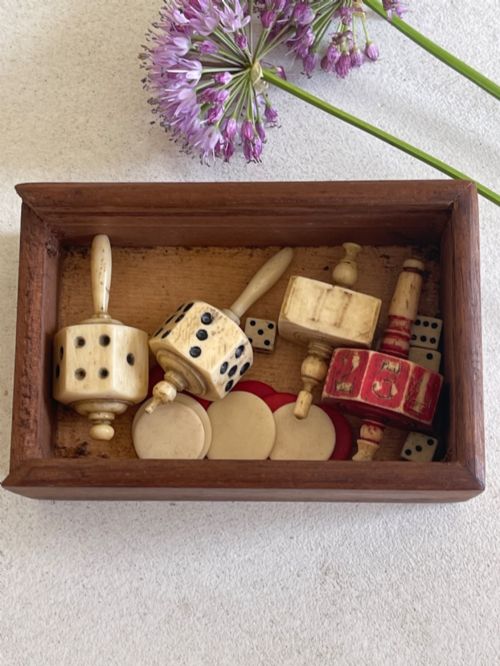
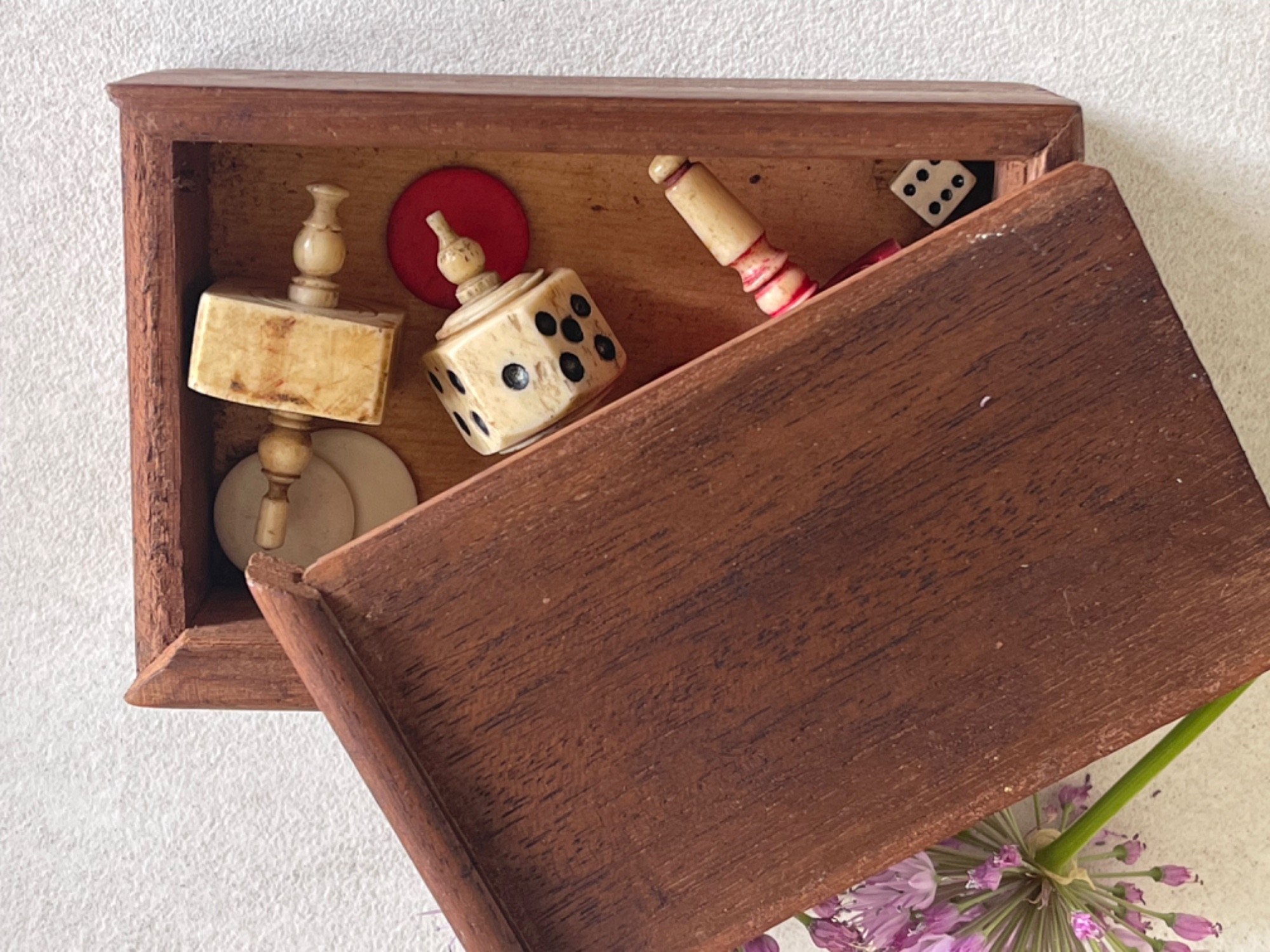
This is a small collection of four antique bone teetotums.

The box also contains four small  some bone dice.

Many antique teetotums (spinning dice/tops) were made by prisoners of war, particularly French prisoners held in Britain during the Napoleonic Wars (1703–1815). Captives carved these detailed multi-sided gaming pieces out of leftover beef or ox bone to pass the time and sell to guards or locals for money.
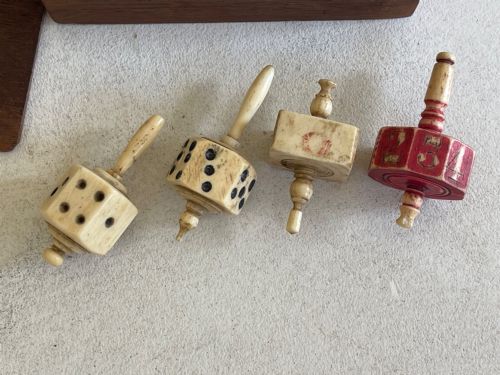
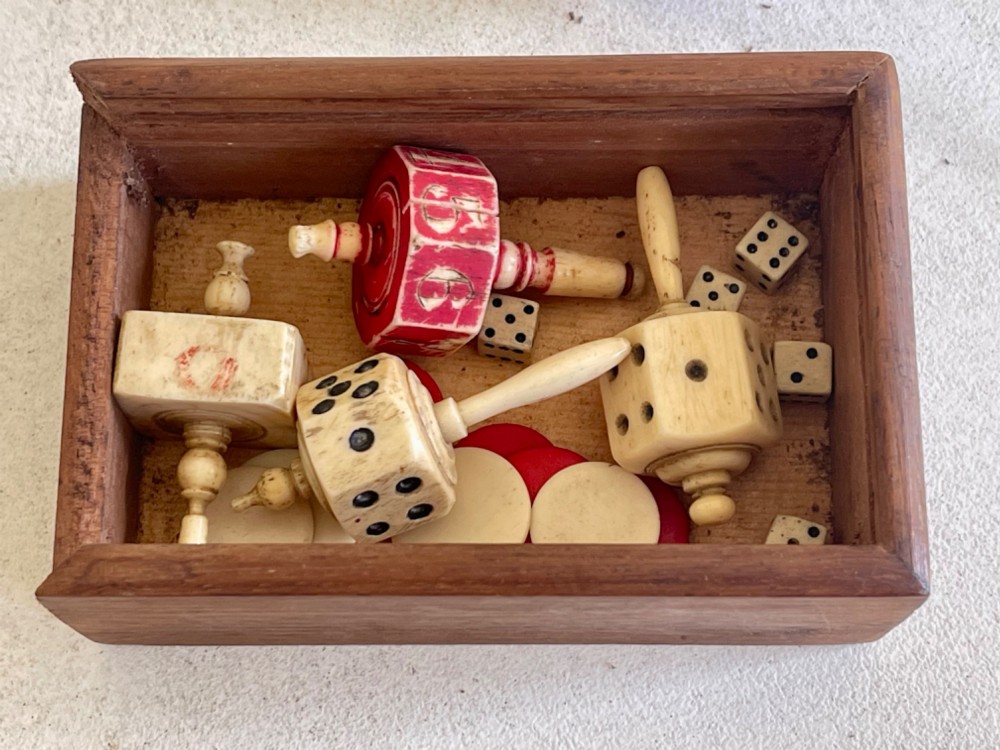
One  of the teetotums is a Put and Take example- see below for the game

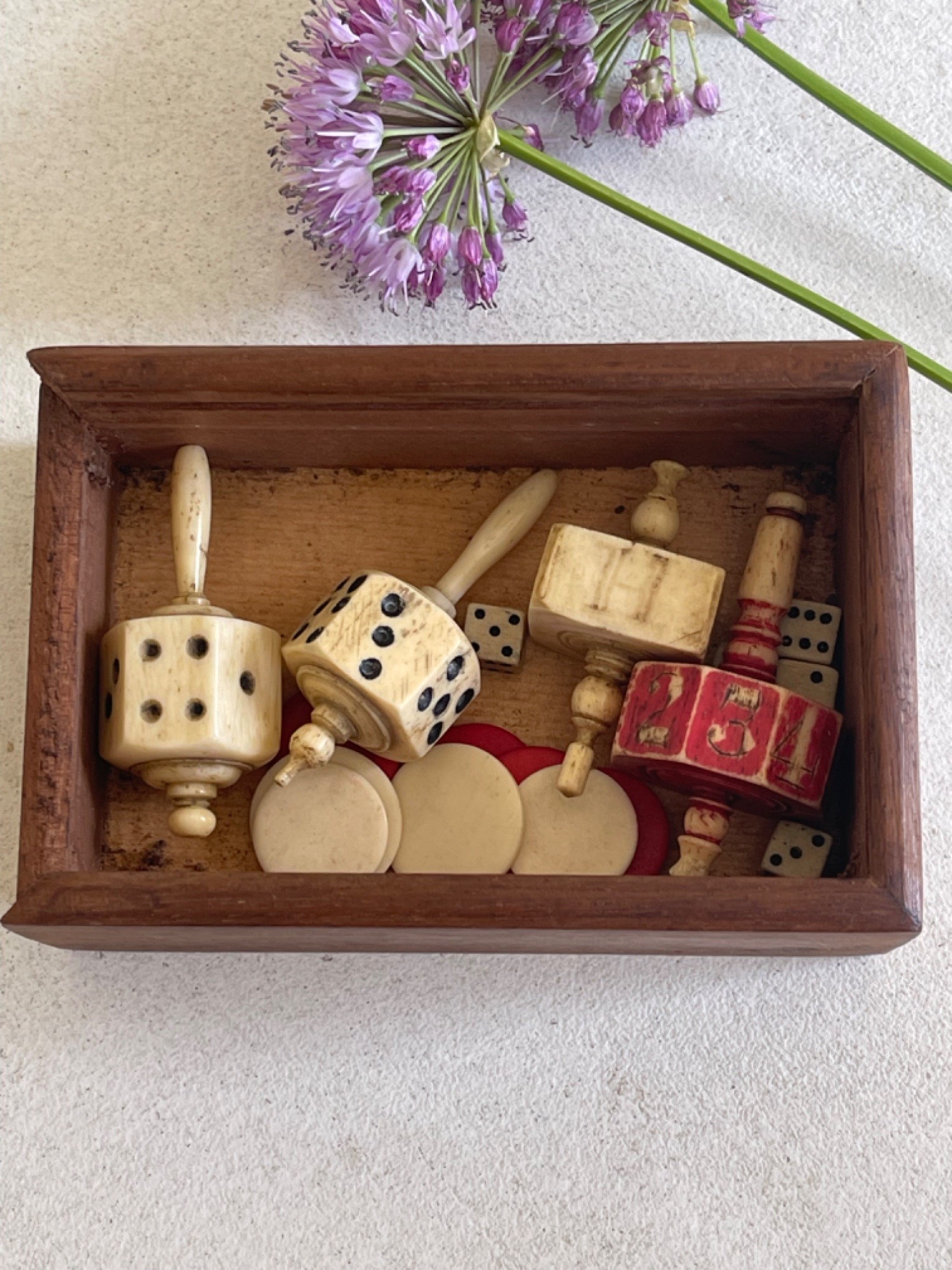
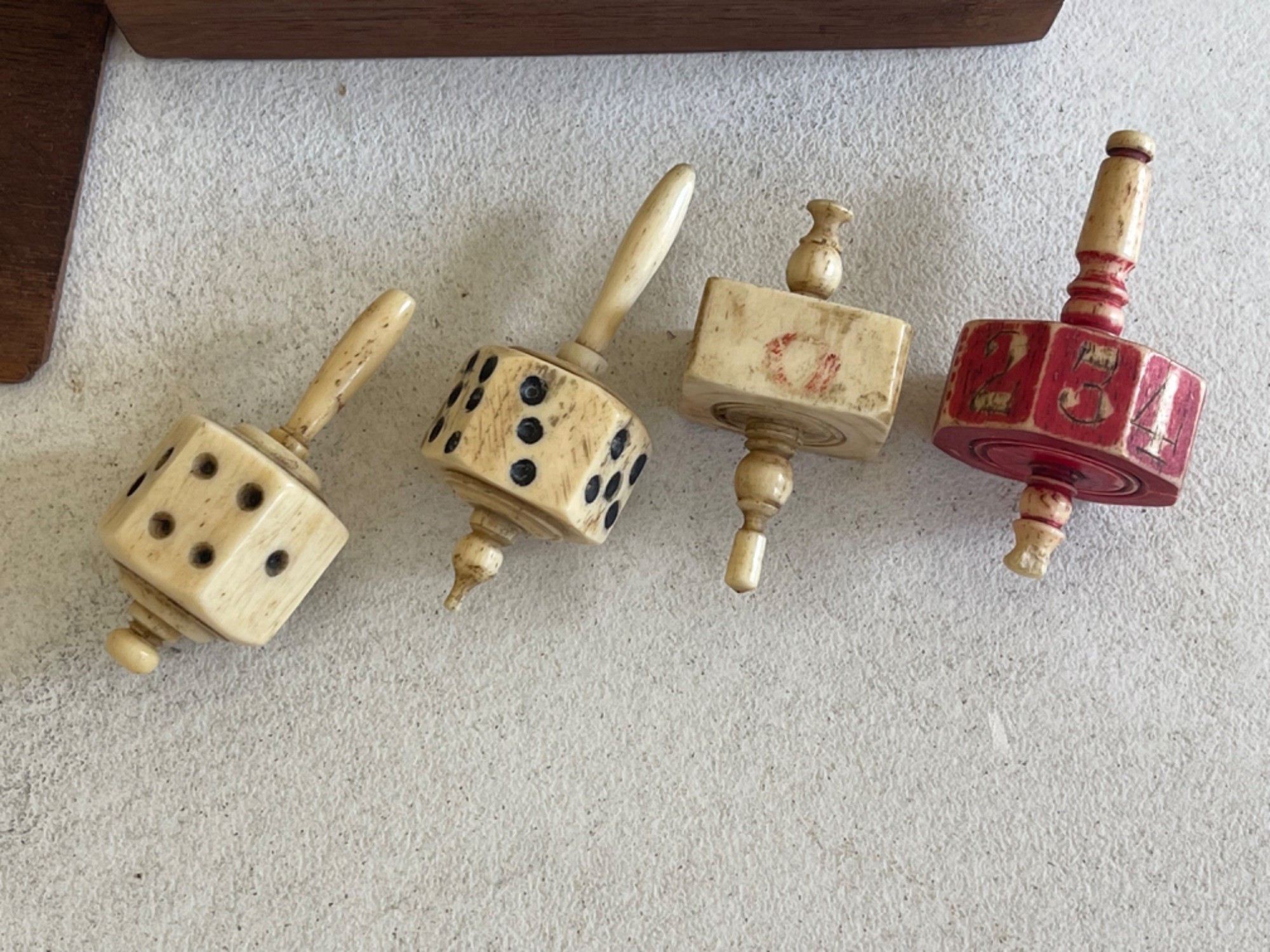
One is an 8 sided teetotal stained red.

There are two slightly different teetotums with dots instead of numbers, these would have been used as dice, spinning rather than shaking the dice.
A teetotum was a many faceted spinning top usually 4,6,8 or 12 sides marked with distinctive numbers or letters, many were made by Prisoners of War. They were used for playing games, mostly of the gambling variety and serves in place of dice.
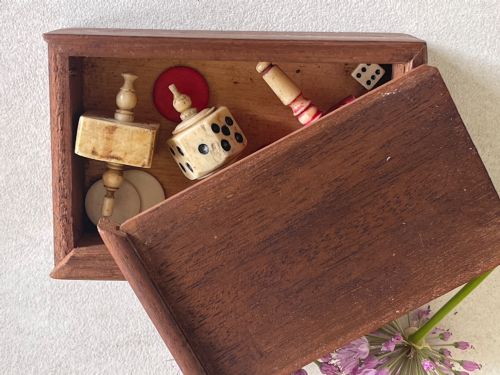
A common gambling game played was called Put and Take. This was played with the examples which had the letters on P, T, H and N. The players either had to put money in the pot or take it out.

One of the Teetotums is for playing  Put and Take game.

Every player starts with an equal number of game pieces, counters, or coins (such as tokens, chips, or small coins). All players place an agreed-upon starting stake into the middle to form the "pot".Taking Turns: Players take turns spinning the teetotum. The Action: When the top stops, read the letter or symbol facing up.

P = Player puts and agreed stake in the pot eg 1 or 2 counters.

T= The player can take an agreed amount out from the pot.

H - The player takes half  out of the pot

N The player takes nothing.

If the pot becomes empty each player puts in an agreed new stake.

The game continues for a set number of rounds, the winner is the one with the most winnings.

Declaration

Opus Antiques has dated this Antique Bone Teetotum Collection to the 19th Century.

Reference Numbers
Sellingantiques Reference
SA1230503
Dealers Notes

Own a piece of history

Description
This is a small collection of four antique bone teetotums.

The box also contains four small  some bone dice.

Many antique teetotums (spinning dice/tops) were made by prisoners of war, particularly French prisoners held in Britain during the Napoleonic Wars (1703–1815).
Opus Antiques

Captives carved these detailed multi-sided gaming pieces out of leftover beef or ox bone to pass the time and sell to guards or locals for money.

fig 1. A rectangular wooden box holding hand-carved bone teetotum spinning tops, miniature dice, and red and white counter discs.
fig 1. A Collection of Antique Bone Prisoner of War Teetotums

One  of the teetotums is a Put and Take example- see below for the game

One is an 8 sided teetotal stained red.

There are two slightly different teetotums with dots instead of numbers, these would have been used as dice, spinning rather than shaking the dice.

fig 2. A rectangular wooden box holding hand-carved bone teetotum spinning tops, miniature dice, and red and white counter discs.
fig 2. A Collection of Antique Bone Prisoner of War Teetotums

A teetotum was a many faceted spinning top usually 4,6,8 or 12 sides marked with distinctive numbers or letters, many were made by Prisoners of War. They were used for playing games, mostly of the gambling variety and serves in place of dice.

fig 3. A rectangular wooden box holding hand-carved bone teetotum spinning tops, miniature dice, and red and white counter discs.
fig 3. A Collection of Antique Bone Prisoner of War Teetotums

A common gambling game played was called Put and Take. This was played with the examples which had the letters on P, T, H and N. The players either had to put money in the pot or take it out.

One of the Teetotums is for playing  Put and Take game.

Every player starts with an equal number of game pieces, counters, or coins (such as tokens, chips, or small coins). All players place an agreed-upon starting stake into the middle to form the "pot".Taking Turns: Players take turns spinning the teetotum. The Action: When the top stops, read the letter or symbol facing up.

P = Player puts and agreed stake in the pot eg 1 or 2 counters.

T= The player can take an agreed amount out from the pot.

H - The player takes half  out of the pot

N The player takes nothing.

If the pot becomes empty each player puts in an agreed new stake.

The game continues for a set number of rounds, the winner is the one with the most winnings.

Date of Manufacture

Opus Antiques has dated this Antique Bone Teetotum Collection to the 19th Century.

Reference Numbers
Sellingantiques Ref
SA1230503
Opus Antiques
Opus Antiques
Sellingantiques verified Since Oct 2014

Antique treen, boxes & decorative georgian items

Dealer Profile

You can view the stock and full dealer information on the Opus Antiques Profile Page
PDF SHARE
SAVE
A rectangular wooden box holding hand-carved bone teetotum spinning tops, miniature dice, and red and white counter discs.
1 / 4
Archive I A rectangular wooden box holding hand-carved bone teetotum spinning tops, miniature dice, and red and white counter discs.

A Collection of Antique Bone Prisoner of War Teetotums
Archive II A rectangular wooden box holding hand-carved bone teetotum spinning tops, miniature dice, and red and white counter discs. View II
Archive III A rectangular wooden box holding hand-carved bone teetotum spinning tops, miniature dice, and red and white counter discs. View III
Archive IV A rectangular wooden box holding hand-carved bone teetotum spinning tops, miniature dice, and red and white counter discs. View IV
Enlarged Archival View
Telephone 07941 285 532
Location
North Devon
United Kingdom
Verified Since Oct 2014
Items For Sale 95
Items Sold 2,367
Opus Antiques
Opus Antiques
Verified Since Oct 2014
View Dealer Info
Location: North Devon, United Kingdom
Verified
Oct 2014
For Sale
95
Sold
2,367
A rectangular wooden box holding hand-carved bone teetotum spinning tops, miniature dice, and red and white counter discs.
A Collection Of Antique Bone Prisoner of War Teetotums
Ref: SA1230503
A rectangular wooden box holding hand-carved bone teetotum spinning tops, miniature dice, and red and white counter discs.
Detail View 1
Detail View 2
Detail View 3
Archival Detail
Every single antique dealer on our platform is individually approved by our internal team. We verify their professional trade history, ethical standards, and photographic quality to ensure a secure, high-standard buying environment. Upon joining, every dealer agrees to a strict 9-point code of conduct. While issues can occasionally arise, our dealers typically resolve them swiftly and directly with the buyer. In fact, since our founding in 2002, Sellingantiques has only had to step in to help resolve an issue on roughly five occasions—a true testament to the quality of our dealers and their dedication to your happiness.
Our dealers are highly experienced in packing and shipping fragile, high-value antiques. Because you are in direct contact with the dealer, you will be able to easily go through all available shipping and insurance options together to ensure your item arrives safely.
Antiques are the ultimate green purchase. By choosing historical pieces over newly manufactured goods, you completely eliminate the carbon footprint of modern mass production while preserving exceptional, timeless craftsmanship.

A teetotum is a multi-sided spinning top marked with letters or numbers, historically used in place of dice for games of chance. During the Napoleonic Wars, French prisoners of war quartered in Britain carved gaming pieces and teetotums from bone to sell at local markets.

These items were hand-crafted from bovine bone retrieved from daily food rations. Artisans used simple hand tools, small lathes, and pocket knives to turn spindles, incise numbers or dice pips, and coloured the engravings using natural dyes such as red pigment or soot.

Authentic pieces show evidence of hand-carving and lathe-turning, including minute asymmetry and small tool marks. Over time, genuine bone develops a cream or soft yellowish patina, subtle surface cracking along the grain, and signs of manual pigment application within incised details.

A collection of carved bone teetotums can be arranged inside a wooden tray or a glass-topped display box on a bookshelf or desk. Positioning them alongside leather-bound volumes or within a glass display cabinet highlights their historic construction.

Dust bone objects gently using a soft, dry microfibre cloth or a clean camel-hair brush, avoiding wet cleaning agents or chemical solvents. Store items in a climate-controlled environment away from direct sunlight, high humidity, or heat sources to prevent structural cracking.
items
Add keywords to the filter
Price
£100
£250000
Era
Movements
Material
Origin
Stock Location
Freshness
Online Payments
Categories