


Antique Wooden Box Gaming Set
An antique wooden box gaming set brings parlour entertainment and intricate craftsmanship together in fitted timber compartments.
Antique Wooden Box Gaming Set
Buyers examining an antique wooden box gaming set encounter fitted timber cases designed to house pastimes such as chess, backgammon, dominoes, and card games. These pieces span the nineteenth and early twentieth centuries, encompassing Victorian and Edwardian periods.
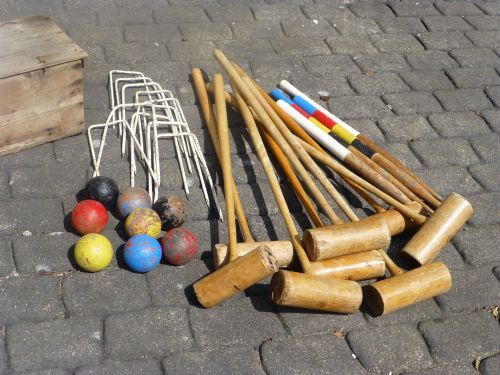
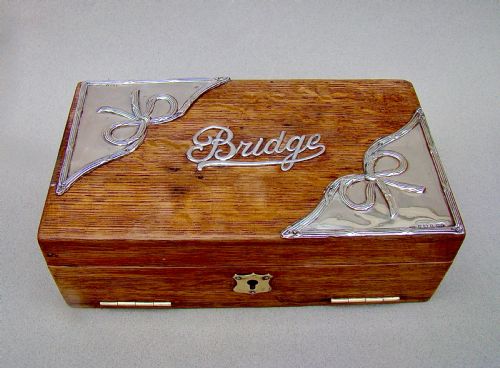
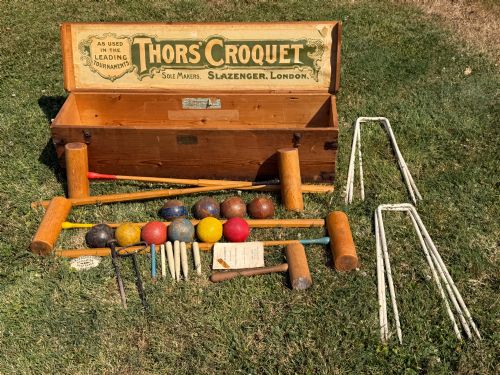
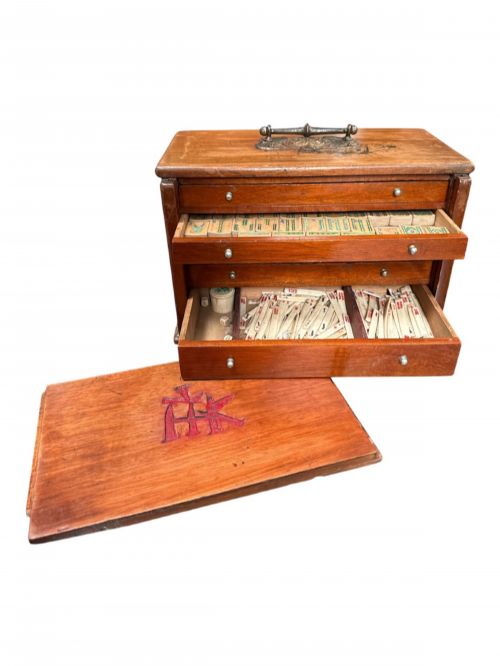
The most frequent form encountered on this page is the games compendium, alongside specific containers holding chess sets, dominoes, or croquet equipment. Materials range from mahogany and walnut to pine and boxwood, often featuring internal compartments or folding boards.
Originating from British workshops and international makers, these objects reflect domestic leisure and social gatherings of the period. Surviving examples retain their original containers, whether simple pine boxes or elaborately inlaid cabinets.
Materials and construction methods
Cabinet makers utilised hardwoods such as mahogany, walnut, and satinwood alongside softer timbers like pine for structural carcases and exterior boxes. Surface decoration frequently involved veneer work, inlay, and specialised techniques like Tunbridge ware.
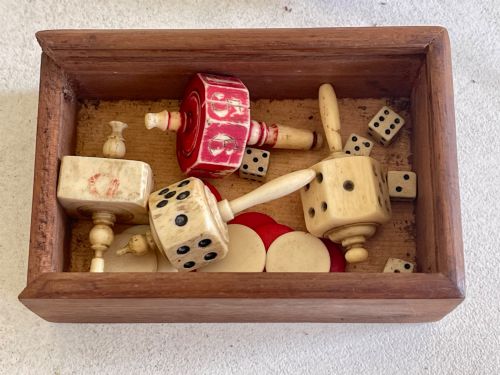
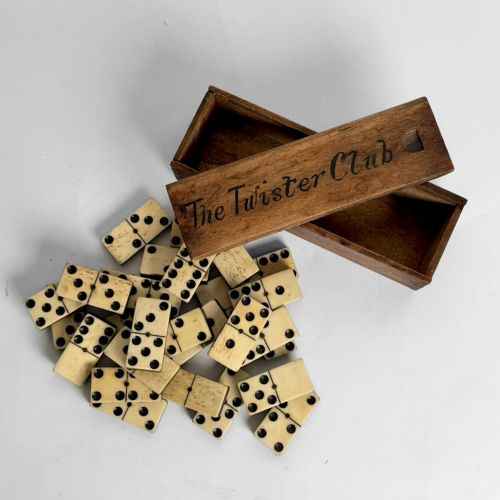
Internal components display traditional turning, carving, and jointing methods, particularly in boxwood and ebony chess pieces, bone dominoes, and fitted wooden partitions. Silver mounts and brass hardware secure closures and hinges across compendium boxes.
Exterior finishes rely on traditional polishing methods that highlight the natural grain of the wood, while game pieces receive careful hand-turning and weighting to ensure balance during play.
Listings feature wooden box gaming sets spanning the Victorian and Edwardian eras, constructed from boxwood, mahogany, walnut, and pine.
Distinctions in quality
Superior examples demonstrate meticulous precision in the joinery of the timber box and the internal partitions, ensuring that every game piece rests securely in its dedicated recess. The choice of cabinet woods, from burr walnut to finely figured mahogany, dictates the visual distinction of the exterior.
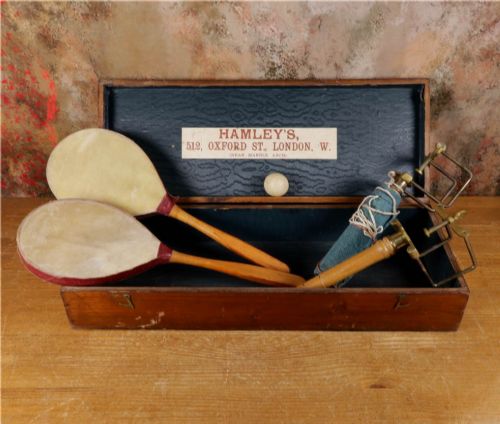
Detailing in the game pieces themselves separates standard sets from the finest work, visible in the hand-carved knight chess pieces, balanced Staunton proportions, and crisp turning of boxwood and ebony. Maker attribution, through branding or original fitted labels, further elevates the standing of a compendium.
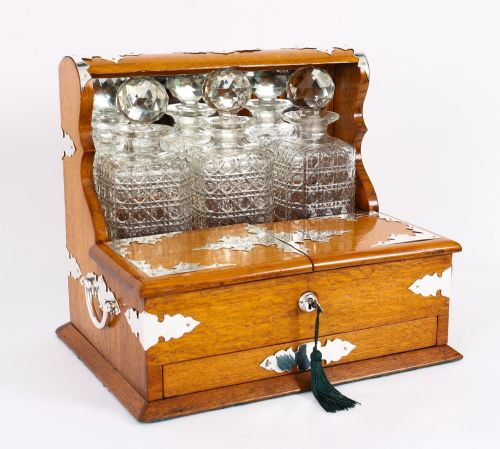
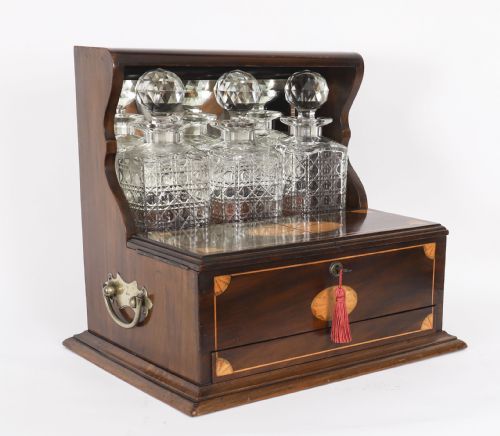
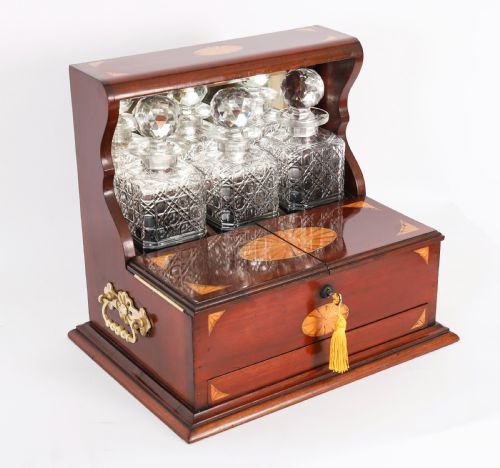
The preservation of original elements, including matching counters, unbroken crystal decanters in tantalus combinations, and undamaged Tunbridge ware mosaic patterns, determines the integrity of the surviving set.
Levi and Salaman·Slazenger·A W Gamage·F H Ayres Ltd·British Chess Company
The Antique Wooden Box Gaming Set Glossary
- Compendium
- A single fitted box containing multiple games and pastimes. These multi-tier containers often house chess, backgammon, cribbage, and cards.
- Tantalus
- A locking beverage cabinet featuring exposed decanters. Frequently incorporated into larger Victorian and Edwardian games boxes.
- Tunbridge Ware
- Woodworking characterised by mosaic decoration formed from thousands of tiny tinted wood prisms. Creates geometric and pictorial designs on small boxes.
- Teettotum
- A multi-sided spinning top used in gambling and parlour games. Often carved from bone by prisoners of war during the nineteenth century.
Antique Wooden Box Gaming Set: Frequently Asked Questions
What games fit inside a compendium?
Compositions typically include folding boards for chess and backgammon, alongside compartments for draughts, dominoes, and playing cards. Some larger boxes also integrate cribbage boards and dice.
Interior trays lift out to reveal secondary layers holding counters, markers, and shakers, organising multiple pursuits within a single wooden cabinet.
How do I care for antique timber boxes?
Keep wooden games boxes away from direct sunlight and steady temperature fluctuations to prevent timber splitting and veneer lifting. Apply occasional microcrystalline wax to nourish polished surfaces.
Handle internal components carefully, storing bone and boxwood pieces in dry conditions to protect delicate turned details and natural patination.
Were these sets used for travel?
Many smaller boxes and folding boards were specifically designed for portability during journeys by train or carriage. Peg-in-board chess sets kept pieces secure while in motion.
Larger compendiums and croquet sets remained stationary in country houses and parlours, intended for permanent placement on side tables or in games rooms.
How do I distinguish Victorian from Edwardian boxes?
Victorian boxes often display heavier proportions, rich burr walnut or rosewood veneers, and elaborate brass or mother of pearl inlay. Workmanship prioritises dense ornamentation and deep polishing.
Edwardian examples frequently show lighter oak or mahogany construction, cleaner lines, and simpler silver mounts, reflecting changing aesthetic preferences towards the start of the twentieth century.